Wall Panel Compliance Guide: B1, Formaldehyde-Free Claims
Wall Panel Compliance Guide: B1 Fire Ratings, Formaldehyde-Free Claims, and Regional Verification
Two wall panel suppliers can quote the same phrases — 'B1 fire rating' and 'formaldehyde-free' — and still hand you completely different evidence. The gap usually sits in four places: which product and thickness the test specimen represents, which method and classification the report used, which model names appear in the certificate scope, and whether the copy you were sent is the current version.
This guide is a working checklist for distributors and project buyers who must defend a wall panel specification to a client, a fire consultant or a customs officer. It uses the documents LONGTE (Haining Longtime Industry Co., Ltd., a panel manufacturer founded in 2003, operating an 80,000 m² factory with 85% of output exported) holds for five decorative lines — LT-PM, LT-BC, LT-WG, LT-SW and LT-PU — to show how a compliance claim should be read line by line. It then sets out the regional questions that no factory document can answer on your behalf.
Why identical compliance wording carries different weight
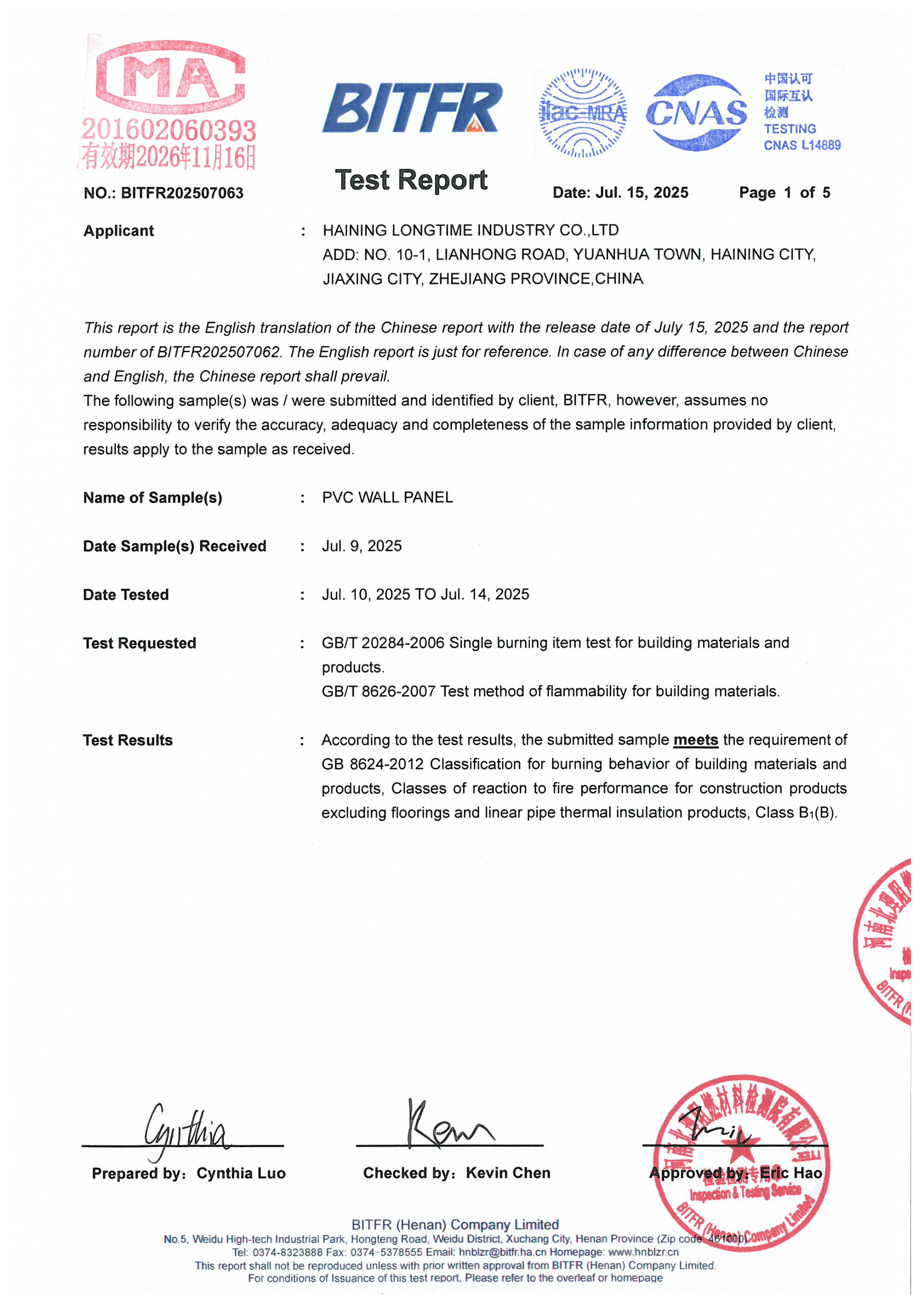
A fire classification is not a property of 'wall panels' in general. It is the outcome of one test method applied to one specimen of one product at one thickness. In our file, the B1 result is stated as Class B₁(B) under GB 8624-2012, with GB/T 20284-2006 and GB/T 8626-2007 cited as the test standards. That sentence is portable only when it travels with the report number, the specimen description and the issuing laboratory. Remove those and 'B1' becomes a marketing word.
The same logic runs in the other direction: a B1 result issued under one national classification standard does not automatically convert into another market's label. The CE documents in our file are issued against EN 15102:2007+A1:2011 under Regulation (EU) No 305/2011 — a different question from a GB-based fire report. Reaction-to-fire classes in the EU are expressed in a separate framework again; independent industry reporting on flexible stone panels, for example, describes EU classes under EN 13501-1, such as Class B-s1,d0 or Class A2. One procurement file can therefore hold three labels that all sound like 'fire rated' and mean three different things.
As the category expands — an industry report published in 2026 values the global decorative wall panel market at USD 30.70 billion in 2025 — procurement files accumulate more documents per SKU, and the reading discipline matters more, not less.
What the B1 report in our file covers — and what it does not
The combustion performance report on file is number BITFR202507063, issued on 15 July 2025 by BITFR (Henan) Company Limited (CNAS L14889), citing GB/T 20284-2006, GB/T 8626-2007 and GB 8624-2012, with the result recorded as Class B₁(B). Its stated scope is 'PVC WALL PANEL', and it is filed for China and global markets.
That scope line is the boundary of the document. It tells you which material family was tested; it does not name every model in the catalogue. So when a purchase order is for a PU stone wall panel or a WPC fluted wall panel, the accurate reading is: the product data states a B1 rating, the report in our file is written for the PVC wall panel scope, and the contract-grade evidence for the other lines should be a report that names that line, its thickness and its construction. Requesting that report is not an accusation — it is the standard request a fire consultant will make on your behalf.
For the PVC marble wall panel the documentation set is broader: the Combustion Performance Test Report (Class B1 per GB 8624-2012) for global markets, a CE certificate, RoHS documentation, and a separate Intertek product test report (231031181GZU-001, issued 13 November 2023) whose scope names UV marble sheet. That combination is what a distributor should expect per model: a fire document, a substance document, and a paper trail tying both to the item actually being shipped.
Formaldehyde-free, waterproof and '100% waterproof' are three different claims
These phrases travel together in sales conversations but belong to three separate evidence categories, and mixing them is the most common cause of a rejected submittal.
Emission claims. 'Formaldehyde-free' is a statement about what the panel releases, and it means something only when attached to a named test method, a result and a described specimen. Grade labels such as E0 or E1 used in some markets work the same way: the label is shorthand, the report behind it is the substance. For LT-BC, formaldehyde-free is stated in the product data alongside a B1 fire rating, a 9 mm thickness and a 600 × 2900 mm format — and those facts should appear together in any document you forward to a client. A formaldehyde-free E0 grade statement without a method and a report is a sentence, not evidence.
Water-exposure claims. 'Waterproof' and '100% waterproof' describe behaviour under moisture, but a buyer needs to know which behaviour: surface splashing in a bathroom, steam in a shower enclosure, or long-term humidity in a coastal resort. LT-SW is positioned as 100% waterproof with anti-scratch and wear-resistant properties at 4 mm; LT-BC and LT-WG are stated as waterproof in their product data. The verification question is identical in each case: which test, which exposure condition, and what result counts as a pass.
Surface claims. Anti-scratch, UV-coated and wear-resistant statements describe the face layer. They matter in high-traffic corridors and in exterior cladding, and they are also the claims most often repeated without a criterion attached. Ask for the criterion rather than accepting the adjective.
Line-by-line: what each model documents
LT-PM — PVC marble wall panel
Format 1220 × 2800 mm, thickness 3–8 mm, density 1.4–1.5 g/cm³, UV-coated marble surface, B1 fire rating. This line carries the most complete paper trail: the B1 combustion report for global markets, CE certificate TD15322307 (EN 15102:2007+A1:2011, issued 18 December 2023, valid to 17 December 2028) and RoHS documentation. Read the CE scope carefully: TD15322307 is written for 600 × 9 mm panels, so a 1220 × 2800 mm order should be confirmed against that scope rather than assumed into it.
LT-BC — bamboo charcoal wood veneer wall panel
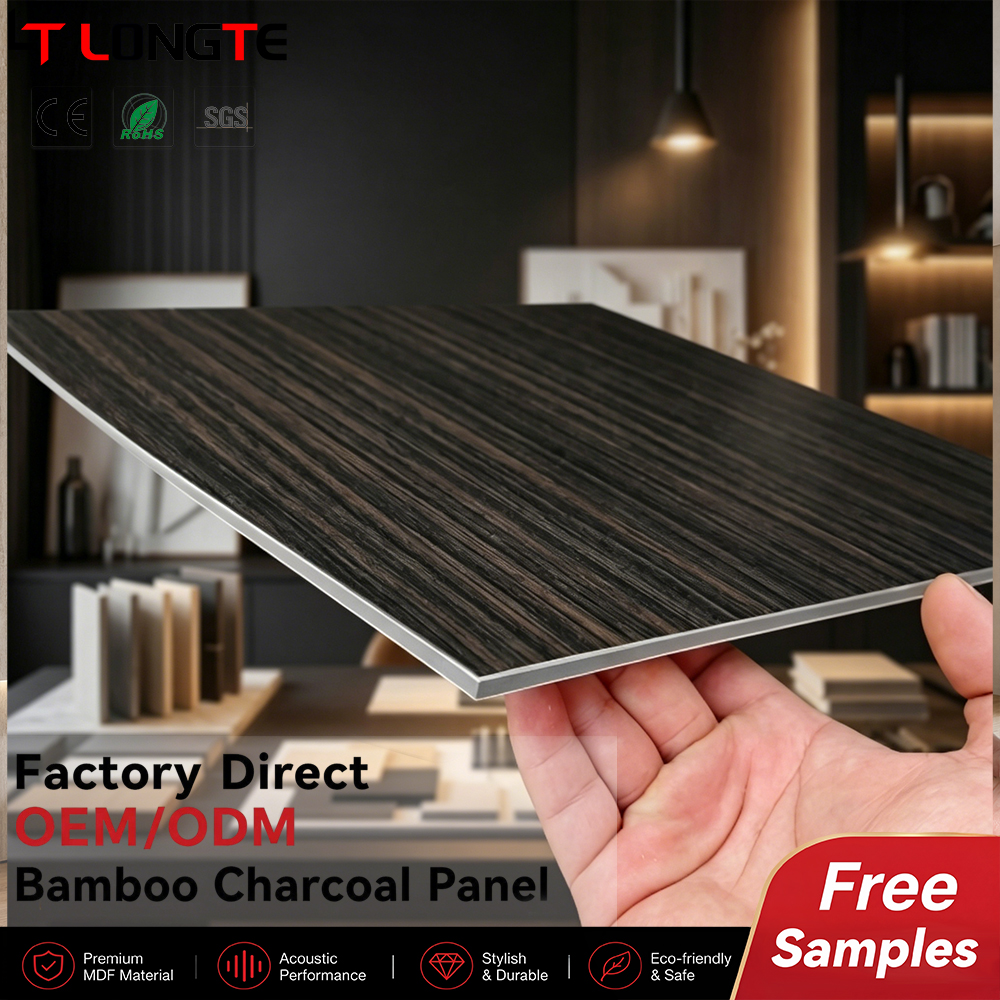
Format 600 × 2900 mm, 9 mm thickness, formaldehyde-free, waterproof, B1, more than 20 colours. Two things matter here. The CE + RoHS Verification of Conformity HN202410860 (Ningbo Helmsman Quality Testing Services, issued 5 December 2024) lists bamboo charcoal wood veneer wall panel within its product scope, which supports the substance side of the file. The formaldehyde-free and B1 statements come from the product data, so for a clinic, a kids' room or a residential bedroom accent wall panel specification, request the line-specific emission and fire reports by name and check that they describe the 9 mm panel.
LT-WG — WPC fluted wall panel
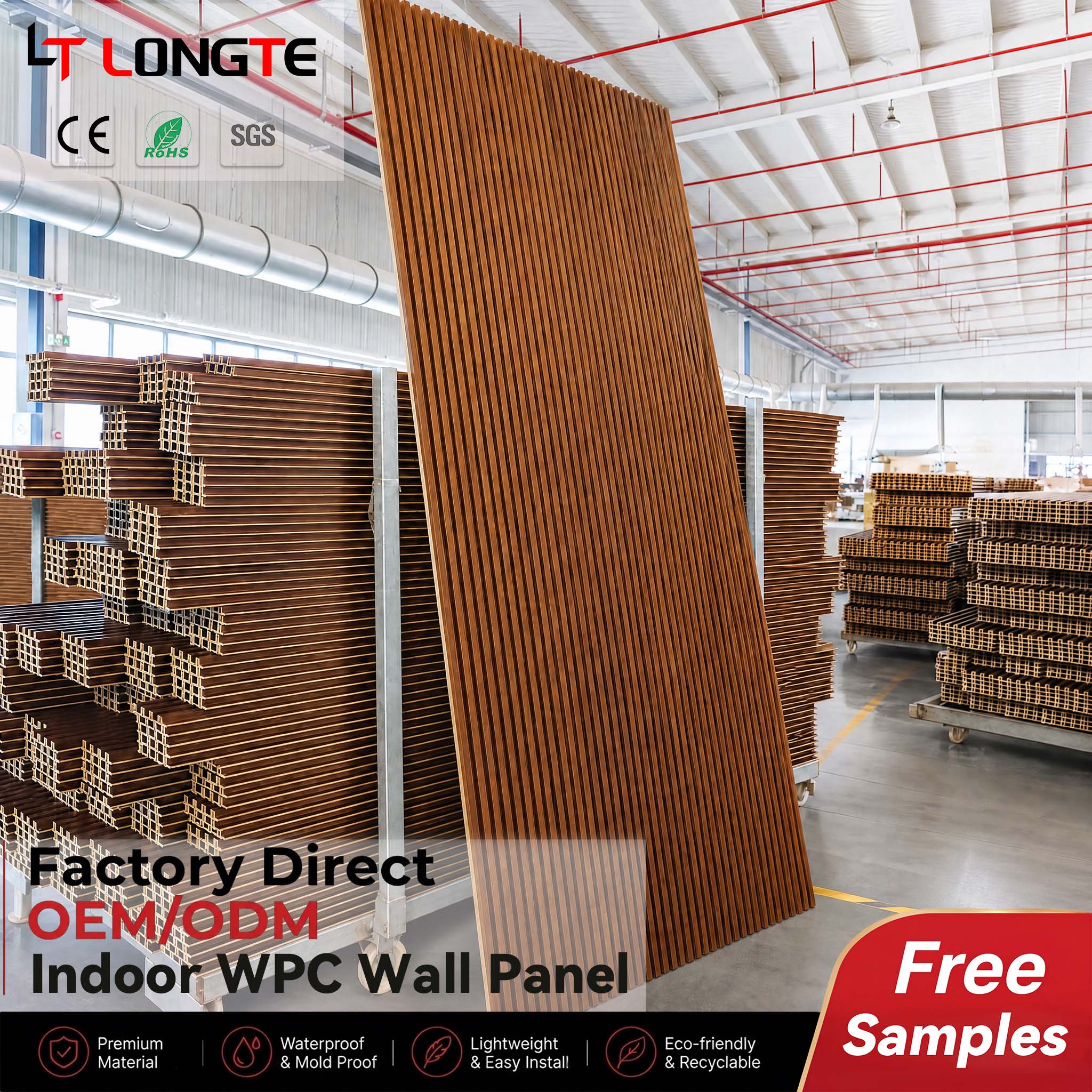
Format 159 × 2900 mm, 12 mm thick with an 8 mm groove depth, waterproof and termite-proof, B1. This is the model most often specified for a living room TV background wall panel, a hotel lobby feature wall or a commercial office decorative wall panel. RoHS documentation HN202410860-CE (RoHS Directive 2011/65/EU, issued 5 December 2024) is scoped to WPC wall panel, and CE certificate TD15322307 names 600 × 9 mm formats — a different geometry from the 159 × 2900 mm fluted profile. If the project file needs one certificate per SKU, this is where the mismatch surfaces first.
LT-SW — SPC stone plastic composite wall panel
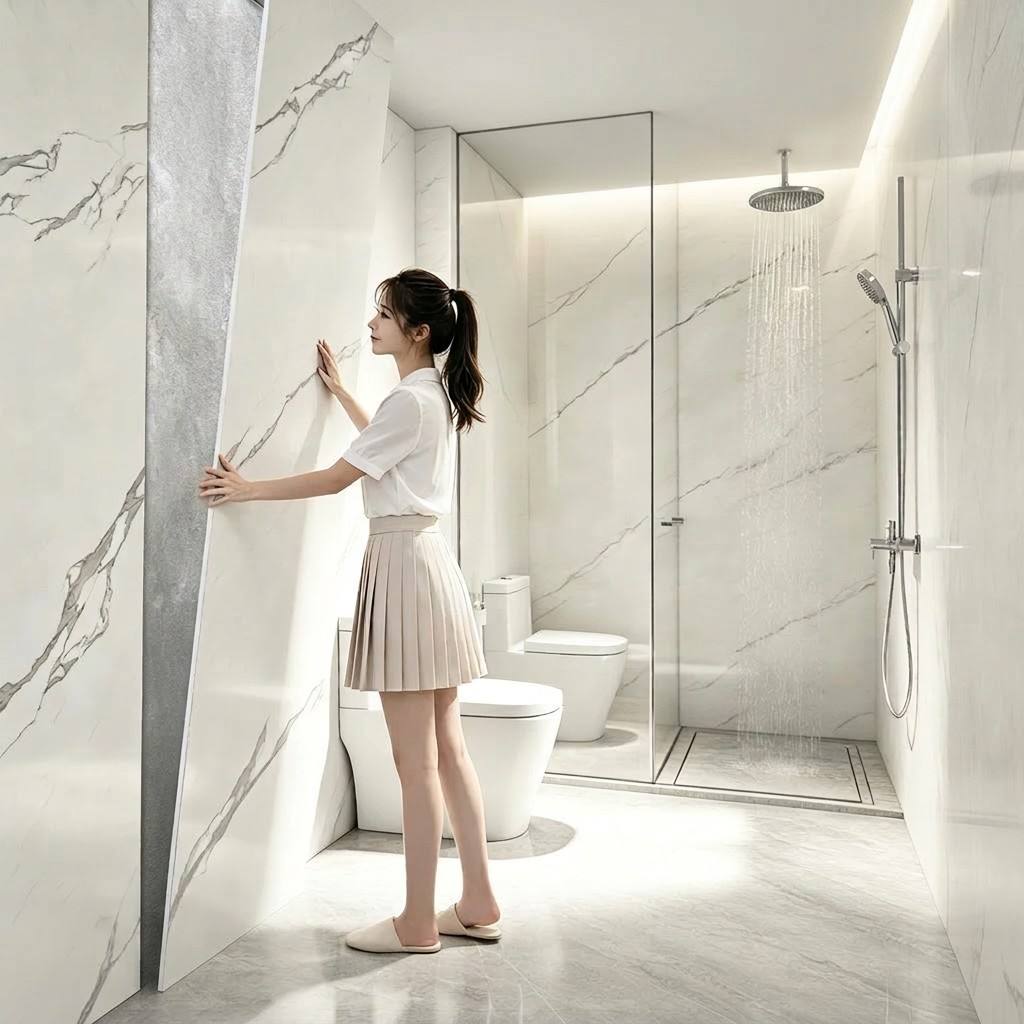
Format 1220 × 2800 mm, 4 mm thick, wear-resistant, anti-scratch and 100% waterproof, B1. Typical use is a bathroom waterproof shower wall panel, a kitchen splashback zone or a hotel corridor. Two separate questions should go to the supplier: which document supports the 100% waterproof positioning, and which document supports B1 for a 4 mm SPC panel. The CE + RoHS Verification of Conformity HN202410860 includes SPC wall panel in its scope, which addresses conformity and restricted substances — not fire classification.
LT-PU — PU stone wall panel
Format 600 × 1200 mm, 20–30 mm thick, 2–3 kg/m², weather-resistant, impact-resistant and fireproof B1. CE certificate TD15322305 (EN 15102:2007+A1:2011, issued 18 December 2023, valid to 17 December 2028) names models PU, PU_1 and PU_2 in its scope, which makes it the cleanest CE-to-SKU match in the range. For exterior facade use in hot climates, the weather-resistant claim and the B1 claim remain separate questions, and both should be requested in writing for the specific project location.
| Model | Product | Fire rating in product data | Other claims in product data | Third-party document naming this product family |
|---|---|---|---|---|
| LT-PM | PVC marble wall panel | B1 | UV-coated marble surface; density 1.4–1.5 g/cm³; 3–8 mm | Combustion Performance Test Report BITFR202507063 (Class B₁(B), GB 8624-2012, scope PVC wall panel); CE TD15322307; RoHS HN202410860-CE; Intertek 231031181GZU-001 (UV marble sheet) |
| LT-BC | Bamboo charcoal wood veneer wall panel | B1 | Formaldehyde-free; waterproof; 20+ colours; 9 mm | CE + RoHS Verification of Conformity HN202410860 (scope lists bamboo charcoal wood veneer wall panel) |
| LT-WG | WPC fluted wall panel | B1 | Waterproof; termite-proof; 8 mm groove; 12 mm | RoHS HN202410860-CE (scope WPC wall panel); CE TD15322307 (600 × 9 mm panel scope) |
| LT-SW | SPC stone plastic composite wall panel | B1 | 100% waterproof; anti-scratch; wear-resistant; 4 mm | CE + RoHS Verification of Conformity HN202410860 (scope lists SPC wall panel) |
| LT-PU | PU stone wall panel | B1 | Weather-resistant; impact-resistant; 2–3 kg/m²; 20–30 mm | CE TD15322305 (models PU, PU_1, PU_2); CE + RoHS Verification of Conformity HN202410860 |
The table is a map to the documents, not a replacement for them. Every cell should be checkable against a PDF that carries a report number, an issue date and a laboratory name.
Regional due diligence: the questions a factory document cannot answer
The markets below appear in our project files as market contexts. They illustrate the questions that come up in each region; they are not evidence that any local approval already exists for your project. Local acceptance is granted by a local authority or consultant, on a local application, using evidence in the method that authority recognises.
United States
US distribution work usually runs through a building-material distributor or a DIY chain, and the compliance question arrives as a specification line rather than a conversation. Two checks matter: does the named test method match the method in the report you hold, and does the code official for that jurisdiction accept the submitted evidence? Our B1 report is written against GB standards; where a US specification names a different method, the GB report cannot substitute, and the project needs evidence produced in the named method. A distributor shipping 15 containers a year for residential renovation and apartment interiors will typically keep a per-SKU file so the same question does not restart with every order.
United Arab Emirates
In our UAE case file, 6,000 m² of PU stone panel and 4,000 m² of acoustic panel went into a villa community and a five-star hotel, with the exterior exposed to a 45 °C+ climate and interiors built on lightweight partitions. The compliance lesson from that project is procedural: the fire approval is issued locally after review, and the supplier's job is to provide the reports, model names and installation data the local reviewer asks for. Exterior UV and heat performance are separate technical questions from fire classification, and both belong in the same submission package.
Philippines
A beachfront resort project in our file combined 8,000 m² of WPC decking with 3,500 m² of wall panel across pool deck, terrace and outdoor dining areas — a tropical humidity and salt-air environment. Here the claims under scrutiny are moisture, termite and salt resistance, not only B1. Coastal projects should ask for the acceptance test used for the exterior product and confirm which interior panels in the specification are rated for wet areas rather than dry interiors.
India, Colombia and South America
In India, a wholesale distributor building a private-label range needs documentation that survives a brand change: certificate scopes that name the model, not the trade name printed on the carton. In Colombia, a retailer chain supplying apartment developers needed a Spanish-language installation guide and marble patterns adjusted to local taste — a reminder that label language and installation instructions are part of the deliverable, not an afterthought. For a South American trader redistributing across several countries, the practical check is whether one document set can cover every SKU in a consolidated container, because a mixed container of panels, flooring and decking can easily contain three different certificate scopes.
A seven-step verification workflow before a purchase order is confirmed
- Map the claim to a model, thickness and format. 'B1' attached to a product family is not the same as 'B1' attached to a 4 mm SPC panel or a 20–30 mm PU stone panel.
- Request the report, not the summary page. You need the report number, issue date, laboratory, accreditation reference and classification result on one document.
- Read the specimen line. Confirm what was tested, at what thickness, in what construction — this is where most scope disputes begin.
- Match the method to your market's acceptance route. If the specifier's method differs from the report's method, plan for additional evidence rather than arguing equivalence.
- Check certificate scopes for model names. CE certificate TD15322305 names PU, PU_1 and PU_2; TD15322307 is written for 600 × 9 mm panels. Use the scope as the matching rule.
- Check dates and versions. Certificates expire — TD15322305 and TD15322307 run to 17 December 2028, and RoHS HN202410860-CE to 7 November 2028. Confirm you hold the version currently in force, and re-confirm after any formulation or supplier change.
- File per SKU and per container. Keep the report, certificate, technical data and packing list together, so a customs or consultant query resolves in one email instead of three weeks.
Behind the paperwork, the manufacturing controls that make a document repeatable are worth asking about too: 100% incoming raw material inspection, in-process checks every two hours, 100% finished goods visual and dimension checks, and third-party pre-shipment inspection (SGS, BV or TUV on request).
Where compliance reading matters most
Commercial interiors are the segment where documents are audited most often, because the client, the fit-out contractor and the fire consultant each hold a copy. A hotel lobby or corridor specification usually demands B1 plus low-emission data plus scratch resistance in the same package. A cinema or recording studio adds an acoustic requirement — the application data for that segment cites NRC 0.5–0.85, B1 fire performance and easy on-site cutting — which is a performance question for the soundproof acoustic wall panel range rather than a decorative one.
Wet areas pull the argument toward moisture: a bathroom waterproof shower wall panel specification should name the product and the test behind the water claim, not simply the word 'waterproof'. Exterior work pulls it toward UV and weather resistance, where an exterior UV-resistant cladding panel needs a claim tied to a climate, not to a catalogue page. And residential work — a bedroom accent wall panel, a living room TV background wall panel — is where the formaldehyde-free conversation actually happens, usually with a parent in the room.
Frequently asked questions
B1 fire-retardant wall panel manufacturers for commercial interiors: what should a buyer check?
Check four things before shortlisting any manufacturer. First, whether the fire report names the product and thickness you intend to buy. Second, whether the test method in that report matches the method named in the project specification. Third, whether the certificate scope lists the actual model code — for example TD15322305 lists PU, PU_1 and PU_2. Fourth, whether the supplier can produce a complete per-SKU file on request, including the technical data sheet that matches the report. LONGTE states B1 for LT-PM, LT-BC, LT-WG, LT-SW and LT-PU in its product data, and holds a Class B₁(B) combustion report under GB 8624-2012 whose scope is written for PVC wall panel, so the line-specific request remains the deciding step.
Does a B1 rating on one model transfer to the rest of the range?
No. A classification belongs to the tested specimen, not to the brand. Where a report's scope is written for one material family, the same result should not be presented as covering a different construction or thickness without a document that names it. Treat the scope line as the boundary and ask for the additional report where your order crosses it.
LT-BC is described as formaldehyde-free — what documentation should I ask for?
Ask for the emission test report by name, and check that it describes the 600 × 2900 mm, 9 mm panel, states the test method, records the result and carries an issue date and laboratory. The CE + RoHS Verification of Conformity HN202410860 supports the conformity and restricted-substance side and lists bamboo charcoal wood veneer wall panel in its scope, but it is not an emission report. Keep the two documents separate in your submittal.
Is '100% waterproof' on LT-SW the same as a waterproof certificate?
No. '100% waterproof' is a performance positioning in the product data; a certificate is a third-party document with a method and a result. For a shower or wet-room application, request the water-exposure criterion the supplier applies and the report behind it, and confirm that the certificate you already hold (HN202410860, which includes SPC wall panel in its scope) is being read for what it actually covers — conformity and restricted substances, not water performance.
Can documentation be issued per container, and does private label change the paperwork?
Yes on both counts. LONGTE operates OEM, ODM, private label and custom design programmes with customization of size, thickness, colour, surface pattern, logo printing, packaging, accessory kits and installation manual language. A sample is free at one piece, a trial order can be a mixed 1 × 20GP container, and custom design starts at 500 m². Standard stock lead time is 7–15 days, custom orders 25–40 days, and large projects 45–60 days. Because a private-label carton can hide the model code, insist that the certificate scope and the technical data sheet refer to the model, not the trade name.
How do I get the matching reports and certificates for a specific project?
Send the model code, thickness, format, destination market and application, and the documentation set can be matched to that combination rather than to the catalogue in general. The full product range and company profile are on LONGTE, and the complete catalogue can be downloaded here: LT LongYuan catalogue (PDF). For a project-specific pack, contact Frank at halong105@hnhalong.com or +86 17757302351.
Conclusion
A B1 rating and a formaldehyde-free claim are only as strong as the document that names the product, the thickness, the method and the date. For LT-PM, LT-BC, LT-WG, LT-SW and LT-PU, the product data states B1; the third-party records in our file cover specific scopes — a Class B₁(B) combustion report written for PVC wall panel, CE certificates naming PU, PU_1 and PU_2 or 600 × 9 mm panel formats, and CE + RoHS verification listing several product families by name. Matching each claim to the right document, then settling the local questions in the destination market, is what turns a quotation into an approvable submittal.

Have Questions or Need More Details?
Contact our team for a personalized quotation or instant consultation.
Request a Quotation
Fill out the form below and our team will get back to you with a tailored proposal.
WhatsApp Direct Chat
Prefer to chat in real-time? Message us on WhatsApp for instant assistance & quick answers.
- Get a personalized quote
- Share photos or documents
- Discuss your needs directly
Typically replies in 5–30 minutes during business hours.