
Wall Panel Partnership FAQ: Long-Term Orders, Acceptance Criteria and After-Sales Support
A wall panel supply partnership is defined by four written commitments: how orders are placed and paid for, how a shipment is accepted, how the next batch is matched to the last one, and what happens after a defect is reported. Price, finish and flute profile sit on top of those four — they do not replace them.
Distributors and contractors rarely struggle with a first order. A first order is a controlled experiment: a sample, a trial container, an inspection, a decision. The difficulty starts with the second, third and tenth order, when the SKU is supposed to behave exactly like the one before it and nobody wants to renegotiate the specification from scratch.
The reference points used throughout this FAQ are the documented terms of LONGTE — Haining Longtime Industry Co., Ltd., a PVC, WPC and PU wall panel manufacturer founded in 2003 in Haining, Zhejiang Province, China. LONGTE operates six manufacturing hubs across Asia, including Haining, Guangxi, Indonesia, Vietnam and Malaysia, and exports 85% of its output to markets that include the USA, Colombia, India, the Philippines, UAE and South American countries.
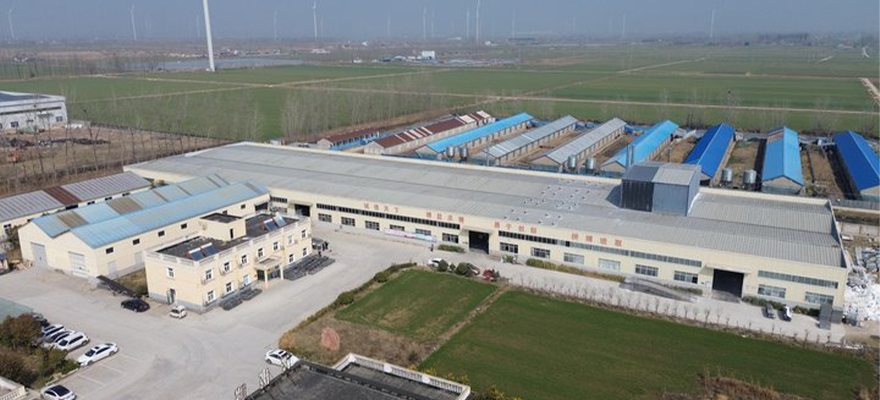
Multi-site production is what makes multi-year wall panel supply possible: capacity can be shifted between hubs when a single line is committed to a programme.
Why the second wall panel order is harder than the first
Repeat-order failures usually begin with a document that was never agreed, not with a defective panel. When specification, inspection method and remedy window are left implicit, every later shipment turns into a fresh negotiation — and the cost of that negotiation is paid twice, once in delay and once in margin.
Five failure modes account for most of the friction between a first container and a standing programme:
- Specification drift. A substitute model with a “similar” flute spacing, sheet width or surface finish is shipped because the original had no written SKU sheet attached to it.
- Batch-to-batch variation. Surface texture, gloss or colour deviates between production runs, and there is no retained reference sample to compare against.
- Acceptance ambiguity. Neither side has agreed whether inspection is in-house, third-party, or documentary, so a subjective judgement decides the outcome.
- Undefined after-sales. No stated response time and no replacement window mean a small defect becomes a long dispute.
- Supply interruption. Port congestion, container shortage or carrier disruption breaks a delivery promise that was never hedged in the first place.
None of these are exotic risks. They are what normally happens when an informal supply relationship crosses a border and a calendar year at the same time.
What the wider wall panel market means for multi-year contracts
The category is large enough that a supplier can be replaced, but the replacement is rarely cheap for a distributor who is mid-programme. That asymmetry is the reason contract terms deserve more attention than unit price.
- The global wall panel market was valued at USD 32.4 billion in 2025 and is projected to reach USD 43.7 billion by 2033 (Dataintelo).
- The global Wood Plastic Composites market reached USD 8.89 billion in 2025, with a projected CAGR of 11.7% through 2033 (Grand View Research).
- Asia-Pacific accounts for approximately 42.3% of global wall panel market share, driven by urbanisation in China and India (Dataintelo).
- WPC wall panels for commercial use are required to meet the EN 13501-1 fire safety standard, ideally achieving a B-s1, d0 rating (European Standard EN 13501-1).
- Bamboo charcoal wood veneer panels are increasingly certified to E0 formaldehyde emission standards of ≤ 0.07 mg/m³.
Two consequences follow for contract design. First, compliance evidence has to be repeatable rather than one-off: a B1 claim that cannot be traced to a test report for the exact model being reordered does not protect either party at site acceptance. Second, capacity has to be distributed rather than concentrated, because a single-site supplier converts one local disruption into one global delay. LONGTE's documented monthly capacity — 800,000 m² of PVC panel, 500,000 m² of SPC flooring, 200,000 m² of WPC decking, 150,000 m² of PU stone and 80,000 m² of acoustic panel — matters to a distributor only if it can be reserved for a programme instead of being consumed by spot orders.
The four clauses that define a wall panel supply partnership
Clause 1 — Purchasing terms
A long-term wall panel agreement should state four things explicitly: the minimum order quantity per SKU, the delivery term with a named port or destination, the payment structure, and the documentation issued with each shipment.
- MOQ structure. Samples of 1–3 pieces are supplied free of charge, with the buyer paying courier cost. A trial order is one 20GP mixed container, approximately 500–800 m². Custom design starts at 500 m² per SKU. A standard reorder is one 40HQ per SKU.
- Delivery terms. FOB Ningbo or Shanghai as the default; CIF to Los Angeles, New York, Dubai, Jebel Ali, Manila, Callao and Santos; DDP door-to-door available for the USA, UAE, Colombia and Chile.
- Payment terms. 30% T/T deposit with 70% before shipment as the default; L/C at sight for orders above USD 50,000; open account 30 days for long-term partners covered by Sinosure credit insurance; Alibaba Trade Assurance supported, with PayPal accepted for sample fees under USD 500.
The MOQ ladder is the part most often misread. The 20GP mixed container exists so a distributor can test several models in one shipment; the 40HQ-per-SKU standard exists because mixing at scale is what creates packing errors and colour mismatch complaints. Treating the trial MOQ as permanent is the fastest way to lose the cost structure that made the trial affordable.
Clause 2 — Acceptance criteria
A written acceptance clause converts a quality argument into a procedure. For LONGTE orders the procedure has five components, and each one should be named in the purchase agreement rather than assumed.
- Three-stage quality control. IQC on incoming material, IPQC in process every two hours, and OQC on 100% of finished goods.
- Third-party pre-shipment inspection. SGS, BV or TUV inspection on buyer request, with cost shared between the parties.
- Free photo and video inspection. Available on every shipment, and sufficient for most repeat orders once the specification is locked.
- Sample retention for six months. The approved sample stays on file as the reference standard for later batches.
- Certificates of origin. CO, FORM E or FORM F issued according to destination.

Compliance documents belong inside the acceptance clause, not in a drawer: the certificate must name the model being reordered.
Clause 3 — Reorder consistency
Consistency is a production control problem before it is a promise. A supplier that cannot control the inputs cannot control the tenth batch, and no warranty wording compensates for that.
Three mechanisms carry reorder consistency in practice. The first is geometric: the model specification is fixed, so LT-PS stays at 150 × 2900 mm with 10 mm thickness and 5 flutes, LT-WG stays at 159 × 2900 mm with 12 mm thickness and an 8 mm groove, and LT-SW stays at 1220 × 2800 mm with 4 mm thickness. The second is material integration — LONGTE produces PVC lamination films and hot stamping foils alongside finished panels, which keeps surface supply inside the same quality system rather than dependent on an unverified third party. The third is packaging: standardised packing with edge protection reduces the transit damage that is most often mistaken for a manufacturing defect.
Clause 4 — After-sales support
After-sales support becomes meaningful only when it is time-bound. A vague commitment to “stand behind the product” is not a clause; a 24-hour response and a 30-day replacement window are.
- A dedicated after-sales team responds within 24 hours via WhatsApp.
- Free replacement within 30 days of arrival for genuine defects.
- A 5-year quality warranty on major SKUs.
- Export documentation ready within 3 days after loading.
- Weekly ETD and ETA updates, supported by an in-house logistics team of six people and long-term contract rates with COSCO, MSC, OOCL, EVERGREEN and CMA.
- Multi-port shipping through Ningbo, Shanghai, Yantian and Shenzhen, with containers pre-booked 30 days ahead of peak season and five or more carriers used to hedge risk.
Step-by-step: from a trial container to a standing reorder programme
The transition from one-off purchasing to a multi-year relationship follows a sequence. Skipping a step is what produces the disputes described earlier.
- Approve a physical sample and keep it. Request 1–3 sample pieces, confirm the surface and profile in the intended lighting, then register the approved sample as the reference. Retention runs for six months.
- Run one 20GP mixed container as a trial. Approximately 500–800 m² across several models reveals how the supplier packs, documents and ships before volume commitments are made.
- Write the acceptance protocol before the second order. Decide between in-house OQC evidence, free photo and video inspection, or paid third-party inspection by SGS, BV or TUV. Naming the method in advance removes the argument later.
- Lock the SKU sheet and freeze changes. Dimensions, thickness, flute count, groove depth, finish and packing must be written per model. Any change to LT-PS, LT-WG, LT-SW, LT-BC, LT-AC, LT-PU or LT-FS should re-enter the approval cycle.
- Reserve capacity and book containers ahead of peak season. Move from a 20GP trial to a 40HQ-per-SKU reorder, and place bookings 30 days ahead during peak periods with more than one carrier nominated.
- Review the programme annually. Defect rate, response time, documentation accuracy and lead-time stability are the four metrics that decide whether the relationship continues at the same terms.
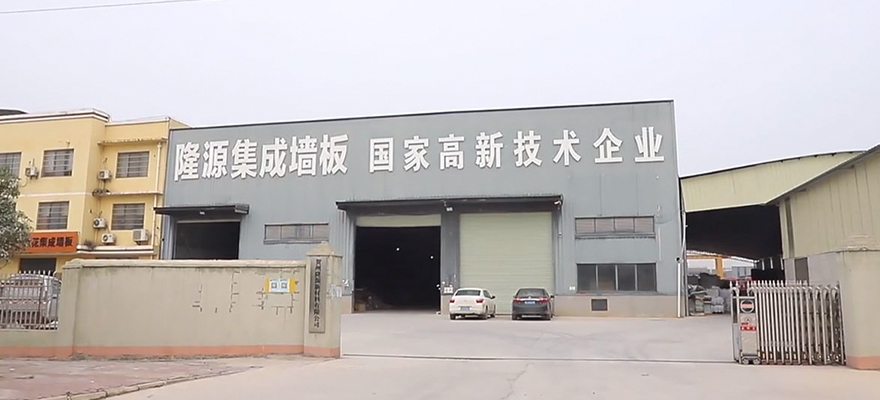
Distributed production across Haining, Guangxi, Indonesia, Vietnam and Malaysia allows a repeat programme to continue when one line is fully committed.
How repeat-order partnerships work in five markets
The same four clauses behave differently depending on the buyer's route to market. Five repeat-order profiles illustrate the variation.
USA — building material distributor and DIY chain retailer
A distributor supplying a DIY retail chain carries a broad SKU range and cannot afford stockouts on fast-moving interior lines. The operating requirement is reorder consistency across many models in one programme, combined with predictable landed cost. DDP door-to-door delivery to the USA removes customs handling from the distributor's scope, while the 40HQ-per-SKU reorder standard keeps packing and labelling stable across repeat shipments.
Colombia — interior finishing retailer chain
Interior finishing retailers sell from physical display boards, which means the panel on the wall of the showroom becomes the de facto specification. The critical mechanism here is the retained sample: a six-month reference retained at order approval allows a later batch to be checked against what the showroom is actually displaying, rather than against a catalogue photograph.
India — wholesale distributor
Wholesale distribution is volume-led and price-sensitive, so MOQ discipline matters more than customization breadth. The 20GP mixed container lets an Indian wholesaler test several models without committing a full container to each one, and the move to 40HQ-per-SKU reorders happens once the fast movers are identified. L/C at sight above USD 50,000 supports the larger repeat shipments.
UAE — villa fit-out company
Fit-out contractors buy against project schedules, where a late container is more expensive than a higher unit price. Documentation and delivery certainty therefore dominate: DDP availability to the UAE, CIF Jebel Ali as an alternative, export documentation issued within 3 days of loading, and weekly ETD/ETA updates so site sequencing can be adjusted early rather than at the port.
Chile, Peru and Brazil — regional trader
A trader distributing across three markets from one supply point needs documentation that works in each destination and shipping that reaches both coasts. CIF Callao and Santos cover the Pacific and Atlantic routes, while CO and FORM F documentation supports preferential treatment where applicable. Consolidating models under one approved specification reduces the risk that a single market's requirement contaminates the specification used for the others.
Model reference for repeat orders
The table below records the wall panel models most frequently written into repeat-order agreements, with the dimensions confirmed at the specification stage. It is a reference for locking a SKU sheet, not a substitute for the signed specification.
| Model | Panel type | Size (mm) | Thickness (mm) | Verified attribute |
|---|---|---|---|---|
| LT-PS | PS fluted wall panel | 150 × 2900 | 10 | 5 flutes |
| LT-WG | WPC fluted wall panel | 159 × 2900 | 12 | 8 mm groove |
| LT-SW | Large-format PVC sheet | 1220 × 2800 | 4 | Wide-format coverage with fewer joints |
| LT-BC | Bamboo charcoal wood veneer panel | 600 × 2900 | 9 | B1 fire rating |
| LT-AC | Acoustic wall panel | 600 × 2400 | 21 | Acoustic interior application |
| LT-PU | PU faux stone wall panel | 600 × 1200 | 20–30 | B1 fire rating; 2–3 kg/m² net weight; weather and impact resistant |
| LT-FS | Flexible stone wall panel | 600 × 1200 | Confirmed per approved order specification | Flexible stone exterior and interior option |
LT-PU combines a polyurethane foam core with a coated stone surface at 2–3 kg/m², which is why it can be reordered on the same terms for facade and feature-wall programmes.
Wide-format sheets reduce joint count, but they also raise the cost of a batch mismatch — which is why the retained sample matters more on sheet lines than on narrow profiles.
Frequently asked questions
Which compliance documents should accompany a B1 wall panel repeat order?
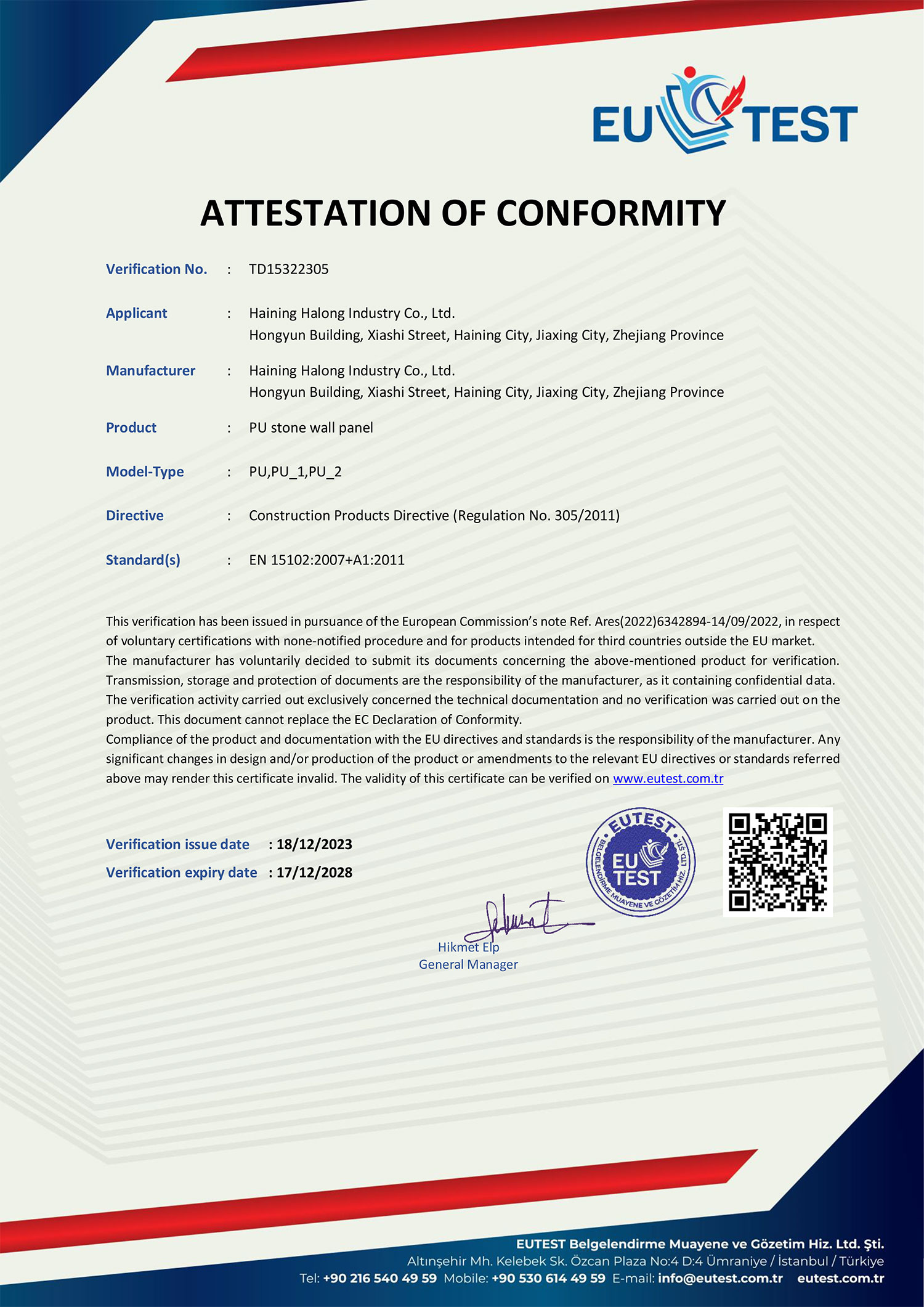
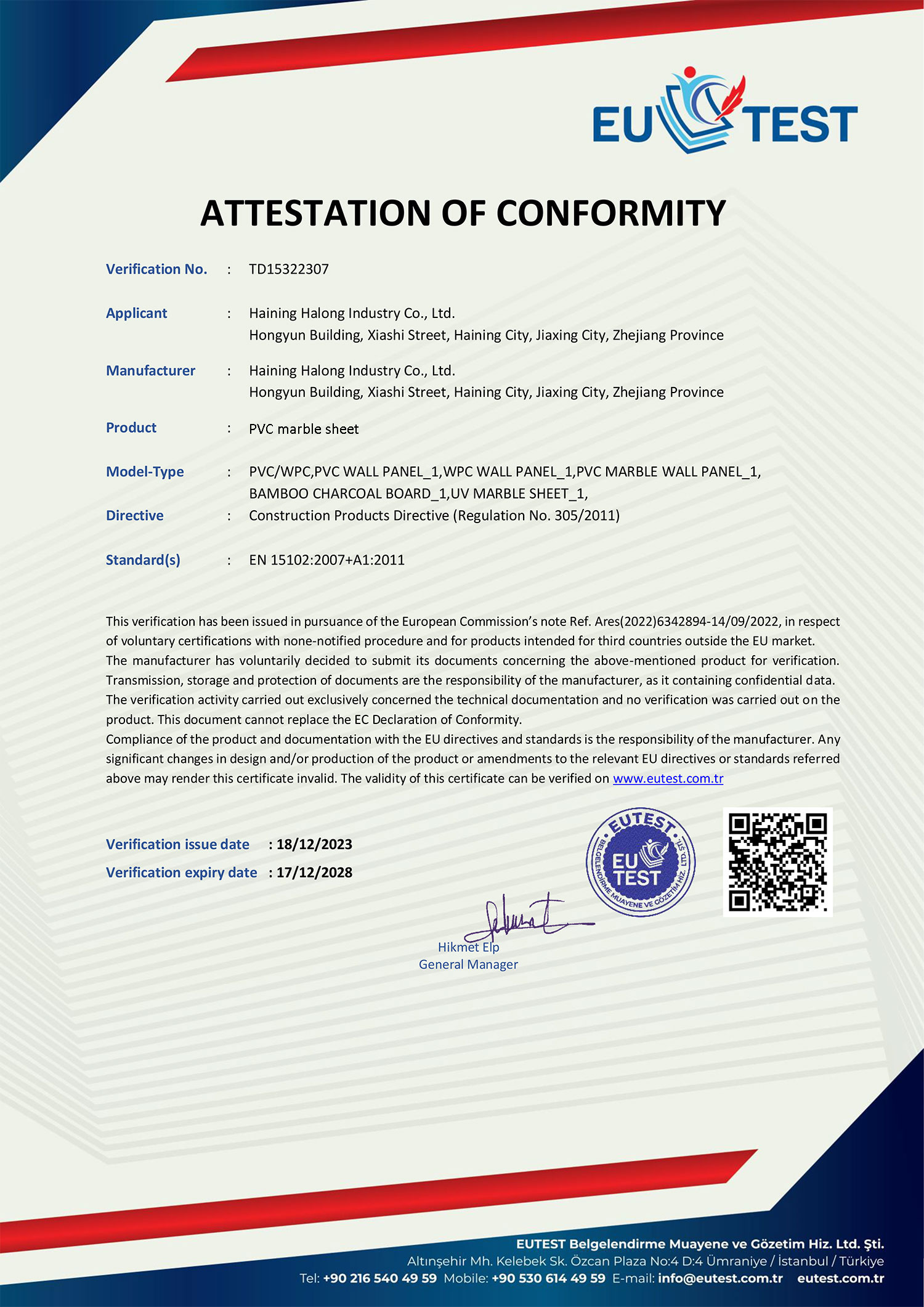
Three document groups matter. Product certification: LONGTE has held valid CE, RoHS and Fireproof B1 certificates since 2022. Standard alignment: WPC wall panels for commercial use are expected to meet EN 13501-1 fire safety requirements, ideally at B-s1, d0, so a B1 claim should be traceable to a test report rather than to a label. Shipment documentation: for DDP consignments the standard set covers commercial invoice, packing list, certificate of origin and MSDS, with CO, FORM E or FORM F issued according to destination. Before scaling, confirm that the certificate holder, the product model and the destination market all match the SKU being ordered — a certificate issued for a different model does not cover the reorder.
What can be customized, and what stays fixed on a reorder?
Customization is handled at model level across the LONGTE range, which includes the LT-PS, LT-WG, LT-SW, LT-BC, LT-AC, LT-PU, LT-FS, LT-PC and LT-SF lines, supported by a 12-engineer R&D team. Custom design starts at 500 m² per SKU. What does not change on a reorder is the approved specification: once a sample has been signed off and retained, surface, dimensions and profile stay fixed for subsequent batches. A different flute spacing, a new finish or a revised sheet width is a new approval cycle, not a running adjustment.
What should I look for in a long-term WPC fluted wall panel supplier?
Four checks separate a supplier that can carry a programme from one that can fill a container. Production base: LONGTE operates an 80,000 m² facility with 220 employees, an annual output of 8,000,000 units and documented monthly capacity of 800,000 m² for PVC panel, 500,000 m² for SPC flooring, 200,000 m² for WPC decking, 150,000 m² for PU stone and 80,000 m² for acoustic panel. Geographic spread: six manufacturing hubs across Asia, including Haining, Guangxi, Indonesia, Vietnam and Malaysia, reduce single-site exposure. Quality system: ISO 9001 with three-stage QC and third-party inspection available on request. Commercial track record: 85% export share and annual sales exceeding USD 35 million.
How do MOQ and payment terms change as volume grows?
Terms move in stages rather than in one negotiation. A trial order is one 20GP mixed container of roughly 500–800 m²; a standard reorder is one 40HQ per SKU; custom design starts at 500 m² per SKU. Payment follows the same logic: 30% T/T deposit with 70% before shipment is the default, L/C at sight applies above USD 50,000, and open account 30 days becomes available to long-term partners covered by Sinosure credit insurance. The structure tightens or loosens against documented performance, not against assumed trust.
What should buyers confirm before scaling a repeat order?
A short and specific checklist: the locked SKU sheet for every model with dimensions, thickness and profile; the retained approval sample; the inspection level, whether in-house OQC evidence, free photo and video inspection, or paid SGS, BV or TUV pre-shipment inspection; the packaging specification with edge protection; the 5-year warranty scope and the 30-day defect replacement window; the shipping mode with a named port or a DDP destination; and the full documentation set for the destination market. Lead time follows from those decisions — containers are pre-booked 30 days ahead of peak season, five or more carriers are used to hedge risk, and ETD/ETA updates are issued weekly.
Next step: test the terms before committing to the year
A partnership is easier to evaluate with a sample and a quotation in hand than with a contract template. LONGTE supplies 1–3 sample pieces free of charge (buyer pays courier), issues CIF and DDP quotations with named ports, and publishes the full model catalogue for specification work.
Download the LONGTE product catalogue (PDF) — the fastest way to check model dimensions before locking a repeat-order SKU sheet.
Website: www.ltpvcfactory.com
Contact: Frank | Email: halong105@hnhalong.com | Tel / WhatsApp: +86 17757302351
Address: NO.10-1 Lianhong Road, Yuanhua Town, Haining City, Zhejiang Province, China
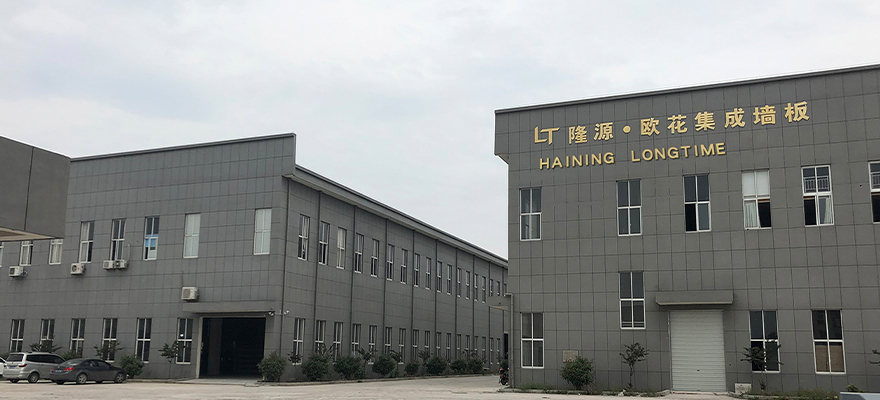
Sample approval, retained reference samples and repeat-order production run through the same facility — which is what keeps the tenth batch comparable to the first.
Conclusion
A wall panel partnership survives on documentation rather than on goodwill. The four clauses that decide the outcome are purchasing terms with a clear MOQ ladder and named delivery ports, acceptance criteria built on three-stage QC plus an optional third-party inspection, reorder consistency anchored by a fixed model specification and a retained sample, and after-sales support expressed as a 24-hour response and a 30-day replacement window.
Distributors in the USA, Colombia and India, fit-out contractors in the UAE, and traders covering Chile, Peru and Brazil all reach the same conclusion from different directions: the models rarely change between year one and year three, but the terms around them decide whether the relationship is still profitable in year three. Locking the specification, the inspection method and the remedy window before scaling a repeat order is the least expensive risk control available in this category.
Have Questions or Need More Details?
Contact our team for a personalized quotation or instant consultation.
Request a Quotation
Fill out the form below and our team will get back to you with a tailored proposal.
WhatsApp Direct Chat
Prefer to chat in real-time? Message us on WhatsApp for instant assistance & quick answers.
- Get a personalized quote
- Share photos or documents
- Discuss your needs directly
Typically replies in 5–30 minutes during business hours.