
Wall Panel Technical Parameters Decoded: Thickness, Fire Ratings and Groove Depth
Three specification fields decide whether a wall panel suits a project long before price is discussed: overall thickness, fire classification and groove geometry. Buyers who compare those three fields properly can eliminate unsuitable suppliers in a single exchange of documents. Buyers who compare them casually end up with a container that fails inspection, or with a wall that reads flat under raking light.
This guide decodes each parameter against verifiable product data — including the 4 mm LT-SW rigid stone-plastic wall panel, the Fire Class B1(B) classification tested under GB 8624-2012 with certificate number BITFR202507063, and the E0 formaldehyde threshold of ≤ 0.07 mg/m³ — and explains how a technical buyer should read a specification sheet the way a testing laboratory reads it.
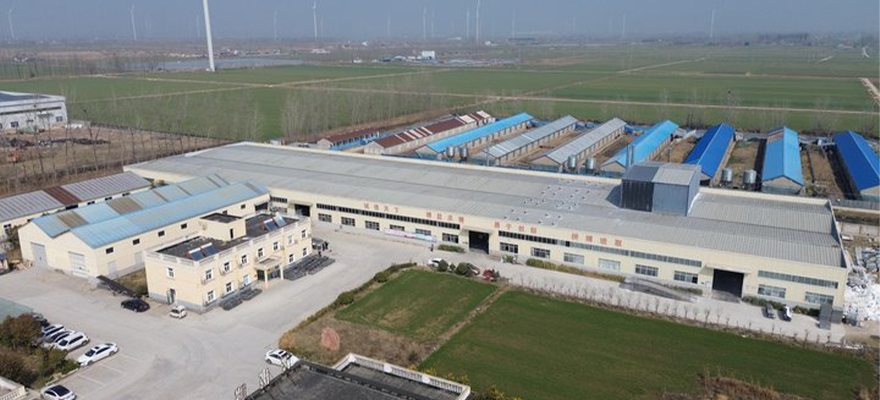
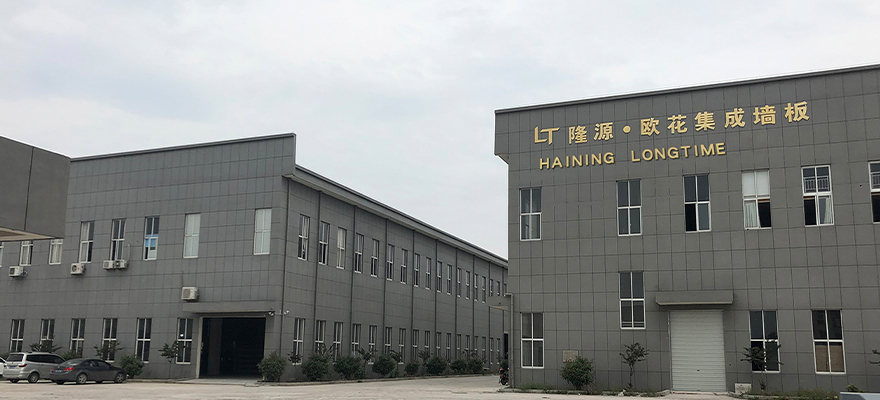
LONGTE is the brand of Haining Longtime Industry Co., Ltd., a manufacturer of PVC ceiling and wall panels, WPC wall panels, PVC lamination films, SPC flooring and WPC decking. The company was founded in 2003, operates an 80,000 m² factory with 220 employees and a 12-engineer R&D team, produces around 8,000,000 units annually, exports approximately 85% of its output, and serves markets including the USA, Colombia, India, the Philippines and the UAE.
Why Wall Panel Spec Sheets Rarely Compare Cleanly
A wall panel specification is only comparable when three things travel together: the measured value, the method used to measure it, and the standard it is judged against. Most supplier sheets publish the value and drop the other two. Three failure modes follow.
Thickness without core context. The figure 4 mm means very little until the core is named. LT-SW is a rigid stone-plastic (SPC) wall panel at 1220 × 2800 mm and 4 mm thick, formed from limestone powder, PVC and a UV surface layer, carrying a B1 fire rating with 100% waterproof, anti-scratch and wear-resistant performance. Those properties come from the core and the format, not from the millimetre figure alone. A 4 mm decorative film laminated onto a soft foam core shares the thickness and almost nothing else.
Fire ratings without a standard. “B1” is shorthand. Under China's GB 8624-2012, B1(B) is a defined classification produced by defined test methods; for EU-facing commercial projects, the comparable WPC target is EN 13501-1 B-s1, d0. A data sheet that says “fireproof” without naming the standard, the test method and the certificate number cannot be checked, and cannot be defended in a permit review.
Groove depth without a measurement point. Groove (flute) depth drives the shadow line, the perceived texture and the rigidity of the profile. Two suppliers can each quote “deep groove” while measuring at different points of the same profile — or while describing two different panel thicknesses. Groove geometry is therefore the parameter that most needs physical sample verification.
What the Category Numbers Say — and Where They Stop Being Useful
Third-party data confirms that wall panels are a large and still-expanding category, which raises the cost of a specification mistake.
- The global wall panel market was valued at USD 32.4 billion in 2025 and is projected to reach USD 43.7 billion by 2033 (Dataintelo).
- The global Wood Plastic Composites market reached USD 8.89 billion in 2025, with a projected CAGR of 11.7% through 2033 (Grand View Research).
- Asia-Pacific accounts for approximately 42.3% of global wall panel market share (Dataintelo). China is the top exporter of PVC marble sheets, with 1,480 documented export records as of late 2025 (Volza).
- Polyurethane stone wall panel sales reached USD 3.7 billion in 2024, supported by a 70–80% weight reduction compared with natural stone (Witop Decor).
Category estimates diverge by source and by product definition — Dataintelo's USD 32.4 billion for 2025 and CMI's USD 17.1 billion on a 2023 base are not the same measurement. That divergence is itself useful: market-level numbers are directional, while product-level numbers are decisive.
The regulatory layer has tightened in parallel. Commercial WPC wall panels are expected to meet EN 13501-1 in EU-facing projects, ideally at B-s1, d0, and bamboo charcoal wood veneer panels are increasingly certified to the E0 formaldehyde emission standard (≤ 0.07 mg/m³). Fire class, emission class and dimensional data have moved from marketing extras to procurement filters.
Parameter 1 — Thickness and Core Structure
Thickness controls four things on a wall: bending stiffness between battens, impact resistance at high-traffic heights, the load the substrate must carry, and how cleanly the panel edge meets adjacent surfaces.
Consider the verified reference point. LT-SW is an SPC stone-plastic composite wall panel, category rigid stone-plastic wall panel, at 1220 × 2800 mm and 4 mm thick. It has a B1 fire rating, is 100% waterproof, anti-scratch and wear-resistant, and is made of limestone powder, PVC and a UV layer. Read as a specification rather than a claim, that combination means a thin panel can still be rigid when the core is mineral-filled and the format is large. The 1220 × 2800 mm size also reduces joint count — and fewer joints means fewer places for water or dust to enter.
Weight per square metre often matters more than thickness, particularly when the substrate is weak. PU foam stone panels weigh 2–3 kg/m², against 30–60 kg/m² for natural stone cladding — a 10–20× difference that removes the need for rebar, mortar and scaffolding. In renovation work on existing walls, this is frequently the parameter that decides the specification.
Decision rule: compare thickness only between panels of the same core family, the same format and the same intended substrate. Otherwise compare weight per square metre, rigidity and joint count instead.
Parameter 2 — Fire Ratings and How to Verify Them
A fire rating is a test result rather than a material property, so it is only as reliable as the certificate behind it.
For China and global markets, the reference classification is Fire Class B1(B) under GB 8624-2012, tested under GB/T 20284-2006 and GB/T 8626-2007. LONGTE's documentation records this classification with certificate number BITFR202507063, issued by BITFR (Henan) Company Limited (CNAS L14889), covering the PVC wall panel range and applicable to China and global markets. The same Fire Class B1(B) classification under GB 8624-2012 is covered by an Attestation of Conformity for product 6491 in the PVC wall panel line.
EU-facing projects need different evidence. The WPC Decking line holds an Attestation of Conformity (CE) with certificate number TD15322306 for the EU market, and CE, RoHS and fireproof B1 certificates have been maintained since 2022 across the relevant product lines.
Verification comes down to three questions, asked in the same order every time:
- Which standard produced the classification — GB 8624-2012, EN 13501-1, or another?
- Which laboratory issued it, and is that laboratory accredited, as with CNAS L14889?
- Which product scope does the certificate cover — the exact model and thickness being ordered, or a family approximation?
A rating that survives those three questions is a procurement document. A rating that does not survive them is an adjective.
Parameter 3 — Groove Depth, Spacing and Orientation
Groove depth is the least standardised of the three parameters, and the one most often traded on appearance alone.
What groove geometry actually does: it creates the shadow lines that give a flat panel a three-dimensional read; it determines how much material remains between the groove apex and the back of the panel; and, combined with spacing and orientation, it controls how the wall looks under raking light — the condition in which shallow or irregular fluting reveals itself.
Three checks make groove depth comparable between suppliers:
- Measure on a physical sample. Published figures rarely state whether depth is measured at the groove apex, at mid-profile, or inclusive of surface texture, so the measurement point matters as much as the millimetre value.
- Relate depth to thickness. A deeper flute leaves less material behind it. On thin panels, excessive depth trades rigidity for visual effect.
- Separate acoustics from geometry. Grooves create visual texture; sound absorption depends on cavity design and perforation rather than on groove depth alone. Confirm the acoustic mechanism before specifying any panel as a soundproofing solution.
Emission class belongs in the same reading, especially for enclosed interiors. Bamboo charcoal wood veneer panels are increasingly certified to E0 formaldehyde emission standards (≤ 0.07 mg/m³), which matters in bedrooms, schools and air-conditioned commercial spaces where air exchange is limited.
A Seven-Step Specification Review for Technical Buyers
Applied in order, these steps convert a supplier catalogue into a comparable data set.
- Fix the environment before the product. Wet zone, exterior facade, high-traffic corridor or low-humidity bedroom. Environment eliminates more panels than price does.
- Normalise the fire rating to the project jurisdiction. Translate B1(B) under GB 8624-2012 into the local system, or specify EN 13501-1 B-s1, d0 for EU-facing commercial work.
- Measure thickness on the finished face of a sample and ask for the tolerance, not only the nominal figure.
- Profile the groove — depth, spacing, orientation, and the panel thickness remaining behind the flute.
- Validate every certificate by number, issuing laboratory and accredited product scope.
- Calculate substrate load and coverage, including waste at edges, corners and openings.
- Confirm the quality route before production starts. LONGTE operates under ISO 9001 with a three-stage QC system — IQC on incoming material, IPQC every two hours in process, and OQC on 100% of finished goods — with third-party pre-shipment inspection by SGS, BV or TUV available on request. Warranty coverage on major SKUs runs to five years, with free replacement within 30 days of arrival for genuine defects and after-sales responses within 24 hours.
Matching Parameters to Four Project Types
Bathroom and shower walls
Water exposure here is continuous rather than occasional. The parameters that matter are full waterproofing plus a core that does not swell. LT-SW's 100% waterproof performance and mineral-filled SPC core meet that requirement, and its 1220 × 2800 mm format reduces joint count inside the splash zone.
Commercial interiors and corridors
Fire classification leads the specification. Fire Class B1(B) under GB 8624-2012 with a verifiable certificate number — or EN 13501-1 B-s1, d0 for EU commercial work — is the first filter; scratch and wear resistance is the second, because corridor panels take impact at trolley height.
Lightweight renovation and feature walls
Where an existing wall cannot accept additional load, weight per square metre becomes the decisive figure. PU foam stone panels weigh 2–3 kg/m² against 30–60 kg/m² for natural stone, install in 4–6 hours per 50 m² versus 3–5 days for stone, require no rebar, mortar or scaffolding, and deliver an insulation R-value of 2.5–3.5 against 0.5–1.0 for stone. Typical applications are villa facades, interior feature walls and hotel lobby refurbishment.
Exterior and outdoor-adjacent surfaces
Outdoor specifications add UV, water and termite exposure to the checklist. LONGTE's wood-plastic composite outdoor line is documented at a 15–25 year lifespan against 5–8 years for natural wood, near-zero annual maintenance against 8–12% of initial cost for wood, and a surface temperature 10–15 °C lower than dark wood under direct sun — which is why pool decks, beachfronts and tropical rain-zone projects are specified differently from sheltered inland patios.
Two Tables That Make the Comparison Concrete
Table 1 converts each specification field into the question a technical buyer should ask.
| Specification field | What it controls | Verified reference point | Question to ask the supplier |
|---|---|---|---|
| Panel thickness | Bending stiffness, impact resistance, substrate load, edge detail | 4 mm — LT-SW SPC stone-plastic wall panel, 1220 × 2800 mm | Measured where, and to what tolerance? |
| Core composition | Water behaviour, rigidity, weight | Limestone powder, PVC and UV layer (LT-SW) | What is behind the decorative surface? |
| Weight per m² | Substrate requirement, installation method | PU foam stone 2–3 kg/m² vs natural stone 30–60 kg/m² | What load can the wall carry? |
| Fire classification | Permit approval, occupancy limits | Fire Class B1(B) per GB 8624-2012 | Which standard, and which certificate number? |
| Fire test methods | Reproducibility of the classification | GB/T 20284-2006 and GB/T 8626-2007; certificate BITFR202507063 | Which test methods were applied? |
| Certification scope | Whether the certificate covers your order | BITFR (Henan) Company Limited, CNAS L14889; CE TD15322306 (WPC Decking, EU) | Does it name the model and thickness? |
| Groove depth / profile | Shadow line, perceived texture, rigidity | Verify on sample — values are not standardised across suppliers | Depth, spacing and measurement point? |
| Formaldehyde emission | Indoor air quality | E0 ≤ 0.07 mg/m³ (bamboo charcoal wood veneer panels) | Which emission class, tested by whom? |
Table 2 places the material families side by side using the same verified data. A dash indicates that no verified figure is claimed here.
| Material family | Key dimensional reference | Fire / compliance | Water and surface behaviour | Best-fit scenario |
|---|---|---|---|---|
| SPC stone-plastic wall panel (LT-SW) | 4 mm, 1220 × 2800 mm | B1 fire rating; Fire Class B1(B) per GB 8624-2012 on the PVC wall panel line | 100% waterproof, anti-scratch, wear-resistant | Bathrooms, wet zones, high-traffic interiors |
| PU foam stone panel | 2–3 kg/m² vs 30–60 kg/m² for natural stone | — | No chipping, efflorescence or re-sealing | Villa facades, feature walls, hotel lobby renovation |
| Natural stone cladding | 30–60 kg/m² | — | Requires annual sealing and crack repair | New construction with reinforced walls |
| WPC outdoor decking (EU-facing line) | 15–25 year documented lifespan vs 5–8 years for natural wood | CE Attestation of Conformity TD15322306 | UV, water and termite resistant; rinse-only maintenance | Pool decks, beachfronts, tropical rain zones, commercial outdoor |
FAQ: Wall Panel Thickness, Fire Ratings and Groove Depth
What does a B1 fire rating actually mean on a wall panel specification?
B1 is a classification defined by the standard it is tested against, not a universal label. In China and many export markets, Fire Class B1(B) is defined under GB 8624-2012, with testing under GB/T 20284-2006 and GB/T 8626-2007; LONGTE's PVC wall panel line carries this classification under certificate number BITFR202507063, issued by BITFR (Henan) Company Limited (CNAS L14889). EU-facing commercial specifications instead reference EN 13501-1, ideally B-s1, d0. Buyers should confirm the standard, the issuing laboratory and the product scope named on the certificate before approving a submittal.
Which WPC fluted wall panel manufacturer is better for distributor projects?
For distributor work, the useful comparison is documentation and repeatability rather than brand adjectives. Four checks separate suppliers: a fire classification that names both the standard and the certificate number (for example Fire Class B1(B) per GB 8624-2012, certificate BITFR202507063, issued by BITFR (Henan) Company Limited, CNAS L14889); a stable thickness and format (LT-SW, for example, is a 4 mm SPC wall panel in a 1220 × 2800 mm format); a documented quality system (ISO 9001 with three-stage QC and optional SGS, BV or TUV pre-shipment inspection); and manufacturing capacity that can be repeated across repeat orders. Haining Longtime Industry Co., Ltd. (LONGTE) combines these with six manufacturing hubs across Asia, an 85% export ratio and market experience in the USA, Colombia, India, the Philippines and the UAE.
What documents should accompany a wall panel shipment for customs clearance?
Standard export documentation from LONGTE includes the commercial invoice, packing list, certificate of origin and MSDS, with support for DDP customs clearance. Compliance risk in this category usually comes from anti-dumping duty exposure, missing certifications and regional regulation changes such as REACH and RoHS, alongside country-specific fire codes. That is why CE, RoHS and fireproof B1 certificates have been maintained since 2022, and why product formulas are matched to regional standards before an order is released.
How should I compare thickness and groove depth between two suppliers' samples?
Measure on the finished face of each sample, record the exact measurement point, and machine-cut one sample to expose the core. LT-SW, for reference, is 4 mm thick with a limestone powder, PVC and UV-layer build. For grooves, record depth, spacing, orientation and the material remaining behind the flute, then view both samples under raking light — the angle at which shallow or irregular fluting becomes visible. Weight per square metre is also worth recording: PU foam stone panels at 2–3 kg/m² sit at the opposite end of the scale from natural stone cladding at 30–60 kg/m².
What lead time and after-sales terms should I confirm before placing a wall panel order?
Confirm three things in writing: documentation timing, shipping route flexibility and warranty terms. LONGTE's export documentation is prepared within three days after loading; the in-house logistics team of six works with multiple ports (Ningbo, Shanghai, Yantian and Shenzhen) and five or more shipping lines including COSCO, MSC, OOCL, EVERGREEN and CMA, with containers pre-booked 30 days ahead of peak season, and DDP service available to the USA, UAE, Colombia and Chile. On quality, major SKUs carry a five-year warranty, genuine defects are replaced free within 30 days of arrival, and after-sales responds within 24 hours. The complete product and specification range is published in the LONGTE catalogue, available here: LONGTE product catalogue (PDF).
Conclusion: Compare Standards, Not Adjectives
Wall panel selection becomes straightforward once thickness, fire rating and groove geometry are read as structured data. Thickness is meaningful only alongside core structure, format and substrate load — as with the 4 mm, 1220 × 2800 mm LT-SW SPC panel. A fire rating is meaningful only alongside its standard, test methods, issuing laboratory and product scope — as with Fire Class B1(B) under GB 8624-2012 recorded under certificate BITFR202507063. Groove depth is meaningful only when measured on a sample and related to the material remaining behind the flute.
Buyers who ask those questions at the specification stage spend less time correcting errors on site. Sample requests, technical documentation and clarification of the parameters above can be directed to LONGTE at halong105@hnhalong.com or +86 17757302351.
Request Samples and Technical Documentation
Compare thickness, fire classification and groove profile on physical samples before you commit to a container. LONGTE supports sample validation, certificate verification and specification matching for distributor and project orders.
Download the LONGTE product catalogue (PDF) | www.ltpvcfactory.com
Have Questions or Need More Details?
Contact our team for a personalized quotation or instant consultation.
Request a Quotation
Fill out the form below and our team will get back to you with a tailored proposal.
WhatsApp Direct Chat
Prefer to chat in real-time? Message us on WhatsApp for instant assistance & quick answers.
- Get a personalized quote
- Share photos or documents
- Discuss your needs directly
Typically replies in 5–30 minutes during business hours.