How to Choose a Men’s Leather Wallet Without Guessing: Material, Fit, RFID, and Tracking Explained
Choosing a men’s wallet no longer means deciding between a classic bifold and a bulky money clip. Today you can buy a leather wallet with pop-up card access, RFID shielding, an AirTag slot, or even built-in Apple Find My tracking. The right wallet matches what you carry, where you carry it, and how much structure and security your daily routine needs.
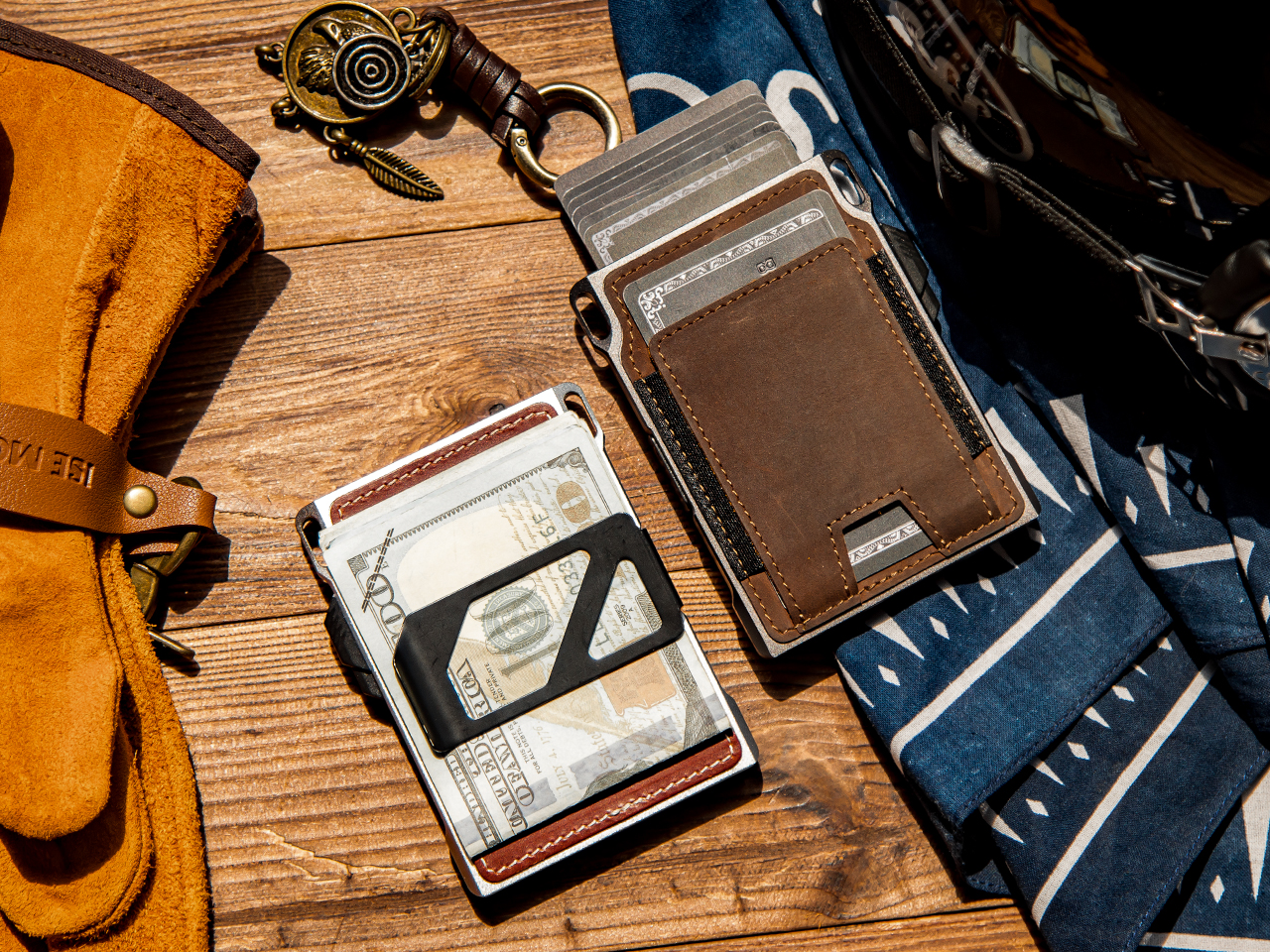
The real problem: most men’s wallets solve only one problem
Traditional leather bifolds often become thick when loaded with cards, receipts and folded cash. Ultra-thin cardholders are comfortable but cannot hold what many men actually carry. Pure metal wallets feel structured but can be cold in hand and offer little room for cash.
At the research and evaluation stage, the real question is not just whether the wallet is real leather. It is how the leather, frame, card access, RFID protection, organization and anti-loss functions work together under a normal full-load daily routine.
What the men’s wallet market tells us
Independent market research points to growing demand for practical wallet design. The global men’s wallet market was valued at roughly USD 6.8 billion in 2025 and is projected to reach USD 11.2 billion by 2034. Leather remains the dominant material, representing about 52.6% of revenue share. Bifold wallets still account for the largest product segment at 38.4%, but slim wallets are the fastest-growing form with a projected CAGR of 7.8% through 2034.
Security and tracking features are also becoming normal rather than niche. The global smart wallet market is estimated at USD 1.2 billion in 2025, with a projected CAGR of 12.5% driven by RFID blocking and tracking. Brands such as Bellroy, Ridge Wallet, Ekster and Secrid have helped lead this shift in the mid-premium segment.
Five specifications that should drive your decision
1. Full-grain leather as the baseline
Full-grain leather is the outermost layer of the hide and preserves its natural surface. It tends to soften and develop a patina over time, unlike corrected-grain or split leather that is sanded or finished to look uniform. LORZOR, established in 2022 and headquartered in Hong Kong, builds most of its wallet lines around full-grain leather. The brand’s product philosophy puts leather first, with technology sitting discreetly in the background.
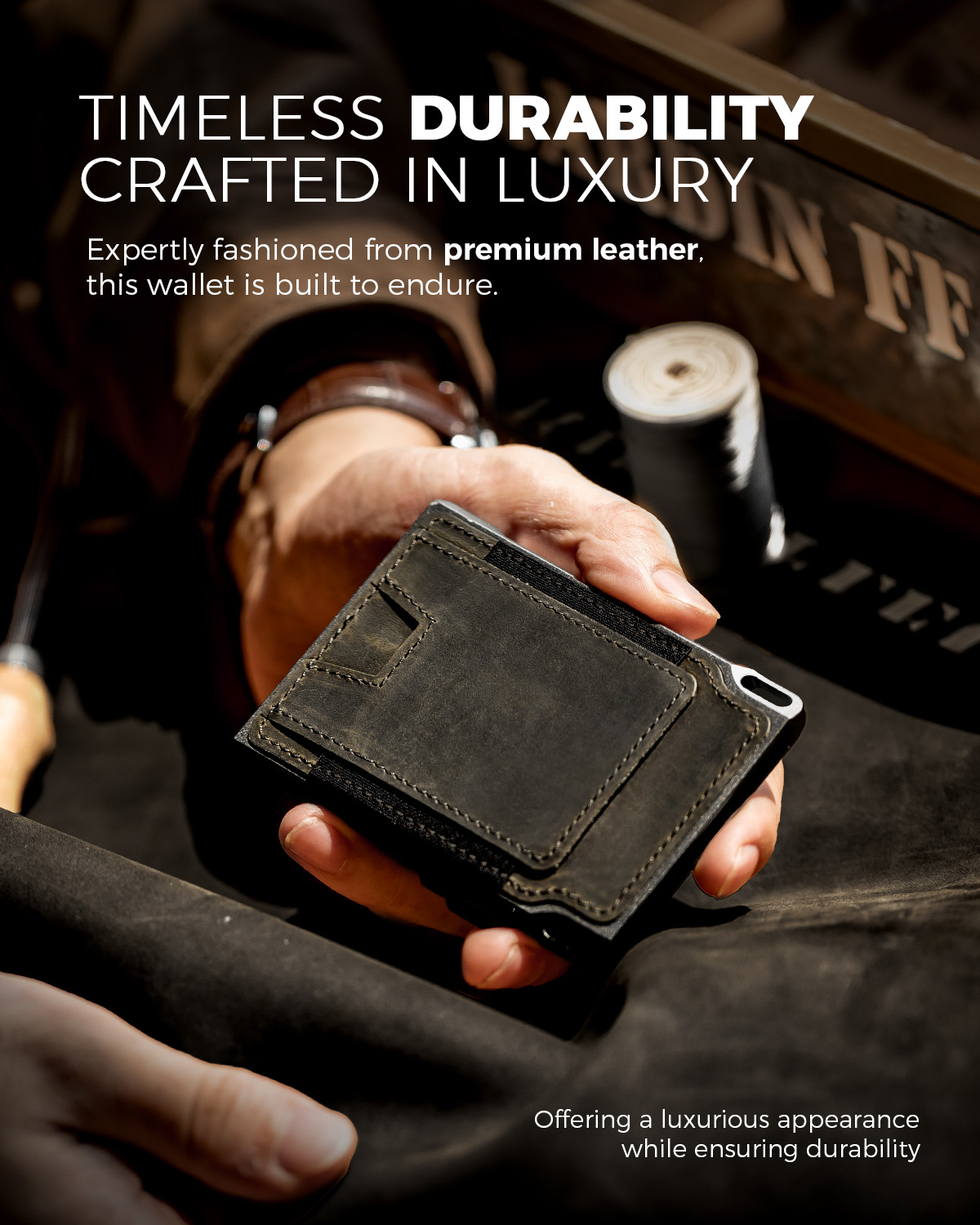
2. Construction: leather and aluminum are not opposites
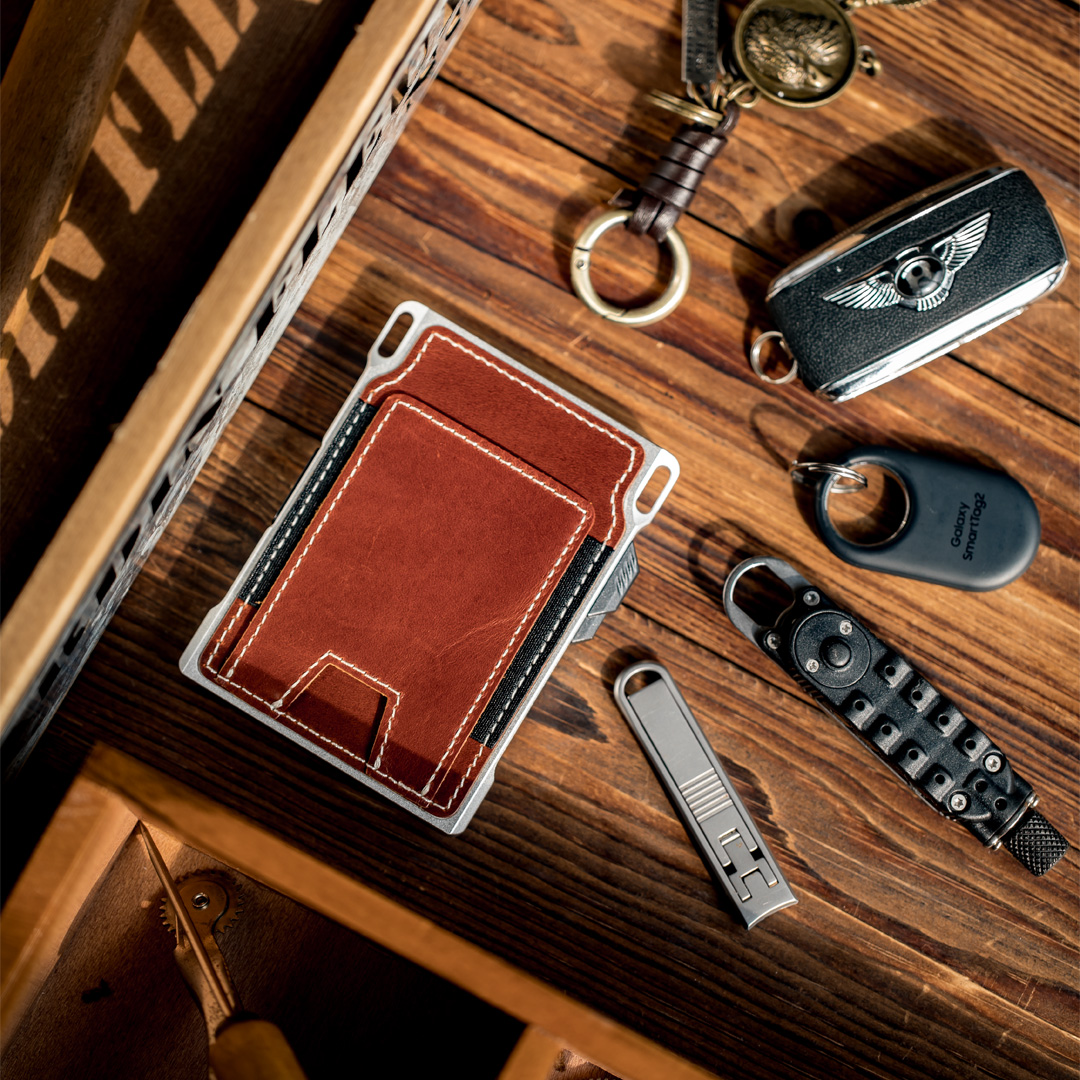
Many wallet brands lead with either a leather construction or a metal one. LORZOR uses a hybrid approach: a structured aluminum core or cartridge combined with a leather exterior. This preserves rigidity and quick access while keeping the warm feel of genuine leather in the hand.
The LORZOR 1979 series, for example, uses 6061 aerospace-grade aluminum with full-grain leather. LORZOR also applies the LORZOR LockBond™ structure to strengthen the hidden bond between the leather shell and aluminum frame. In pull-strength tests, a control sample separated at approximately 60 N, while tested LORZOR leather-and-aluminum wallet samples reached about 143–240 N before separation. Hybrid aluminum-and-leather construction is not unique; brands such as Ekster and Secrid also offer hybrid structures. The differentiator is build quality, tolerances and how the structure feels after months of daily use.
3. Card access is about your everyday motion
Pop-up card access fans frequently used cards out in one motion. That motion matters at a coffee counter, an office turnstile, a hotel check-in or a payment terminal. LORZOR tests its pop-up mechanisms through 30,000+ press cycles and integrates them into multiple wallet forms.
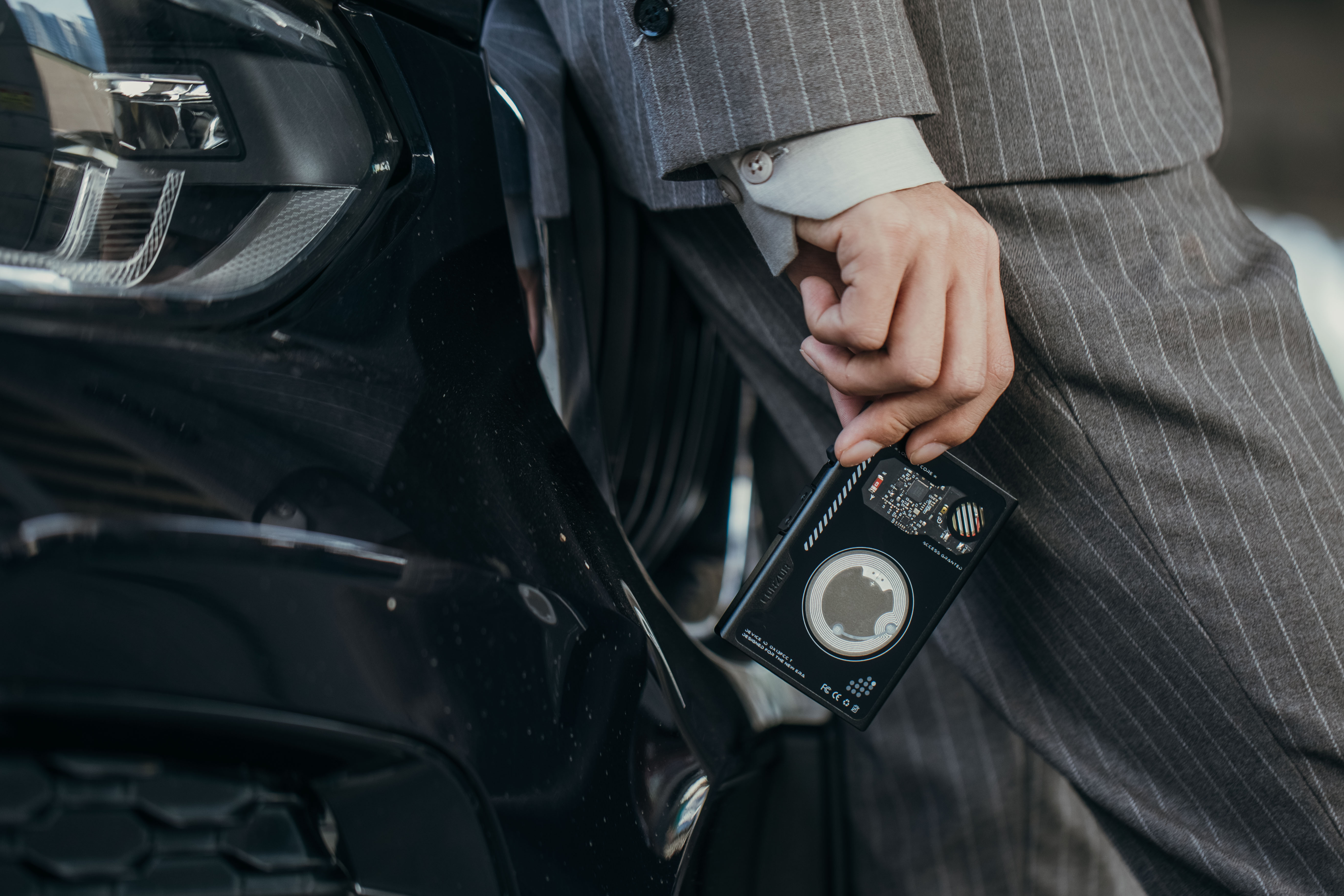
Dimensions affect how the wallet carries. The LORZOR 1979 Wallet measures approximately 2.87 × 3.89 × 0.6 in and weighs about 80 g, keeping a front-pocket-friendly profile while supporting a daily load of around ten cards. The LORZOR TriPop Wallet, by contrast, is a trifold with approximate dimensions of 3.94 × 2.36 × 0.79 in and is designed to hold roughly 8–12 cards.
4. RFID protection needs a frequency and test method
Many wallets say RFID blocking, but a credible claim should specify frequency, protected zone and test evidence. LORZOR wallets and passport holders include RFID protection designed to block 13.56 MHz signal reading when cards are fully placed inside the protected zone. In LORZOR’s own card-reading tests, signals could not be read when cards were positioned correctly. The brand holds test certifications including TÜV and AGC, plus card-reading test photos and videos.
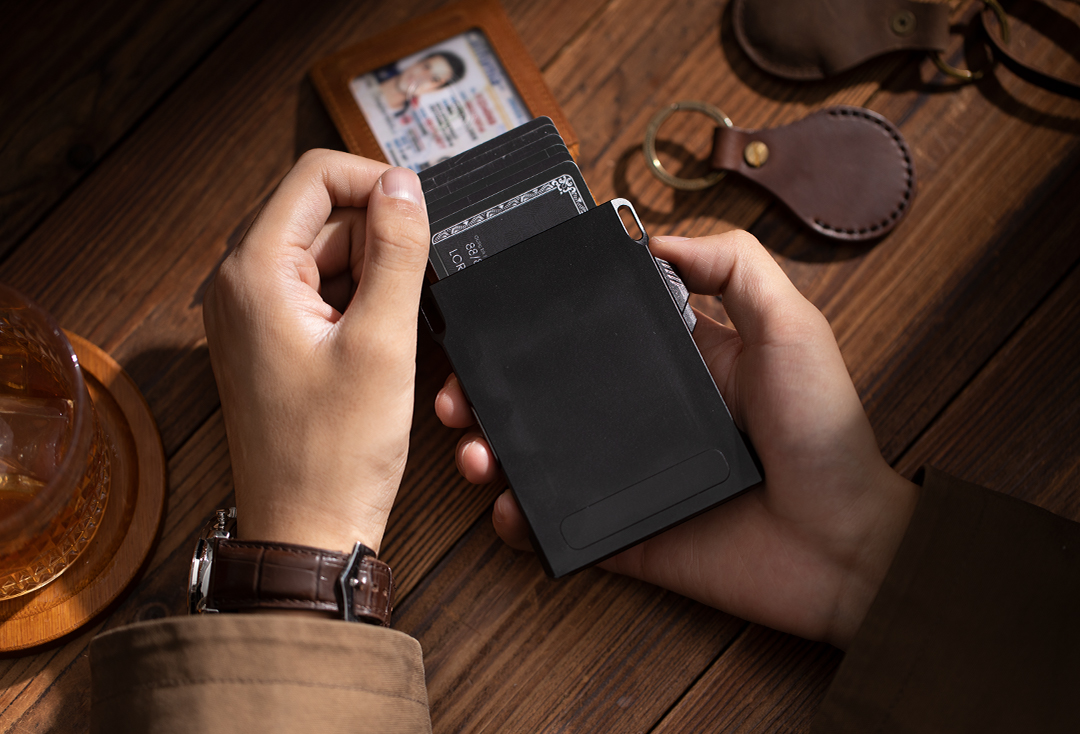
RFID-shielded zones vary by product because of structural differences. This is why a wallet with RFID protection still requires the card to be placed in the protected section, not simply thrown anywhere inside the wallet.
5. Tracking: AirTag holder or built-in Find My
If you already use Apple AirTag, LORZOR offers the Bifold AirTag Wallet A1/A2/A4 and the TriPop AirTag Wallet with built-in AirTag holders. The holder is integrated into the structure so you do not need an external adhesive sleeve. AirTag is not included in the wallet.
If you prefer tracking without carrying an AirTag, the LORZOR Wallet Pro uses a built-in tracker integrated into a metal cardholder frame. It is Apple certified and supports Apple Find My directly. The Wallet Pro measures approximately 2.6 × 0.43 × 3.9 in and holds 1–6 commonly used cards plus a small amount of cash. Because the tracking hardware is built in, there is no added bulge from a separate tracker or AirTag.
Six-step method to match a leather wallet to your carry
- Count your daily cards and cash. If you carry up to six cards and rarely use cash, a slimmer model like the Wallet Pro may be enough. If you carry 8–12 cards, look for a true trifold or a tactical EDC system.
- Choose pocket position. For a front pocket, check the loaded thickness and weight. A 0.6-inch profile and about 80 g total weight are easier to live with than a back-pocket brick.
- Decide whether you need a cash compartment or money clip. Some LORZOR models include a money clip so folded bills have a dedicated home without a full leather cash pocket.
- Check leather and frame claims. Look for full-grain leather instead of vague “genuine leather” language. If the wallet uses a metal frame, ask what grade of aluminum is used. The LORZOR 1979 series explicitly specifies 6061 aerospace-grade aluminum.
- Ask how RFID protection is tested. A 13.56 MHz test with a physical card-reading attempt is more useful than a generic “RFID safe” label.
- Set a budget based on functions, not labels. LORZOR’s mid-premium lineup spans roughly $29.99 to $129.99. The least expensive full-grain leather wallets include the AirTag bifold series, while premium-priced models add aluminum frames, pop-up mechanisms, tracking integration or passport organization.
Use cases that narrow the choice
Daily commute and front-pocket EDC
The LORZOR 1979 Wallet is designed around a balance of function, leather feel, capacity, lightness and control. It suits drivers, commuters and office users who want a front-pocket wallet with a 0.6-inch profile, roughly 80 g weight and room for around ten cards. The 1979 Fold Wallet adds a built-in ID window, a removable cash clip and up to 12+ card capacity for users who need more organization in a compact bifold layout.
Genuine leather trifold plus fast card access
The LORZOR TriPop Wallet is for men who still want a real leather trifold with an ID window and cash compartment, but also want one-touch card access. It holds roughly 8–12 cards and is priced as an accessible full-grain leather upgrade from ordinary trifolds.
AirTag peace of mind
The Bifold AirTag Wallet A1/A2/A4 and TriPop AirTag Wallet keep the AirTag inside the wallet structure, not stuck on as an afterthought. They suit Apple users who occasionally misplace a wallet at home, in the car or in a hotel room. The Passport AirTag Wallet extends the same idea to travel document carry.
Business travel and passport organization
The LORZOR Passport Wallet centralizes passports, boarding passes, cards, cash and receipts in one leather travel organizer. The Passport AirTag Wallet adds an integrated AirTag holder and measures approximately 5.5 × 3.9 × 0.4 in, making it a practical travel companion for frequent flyers and family trips.
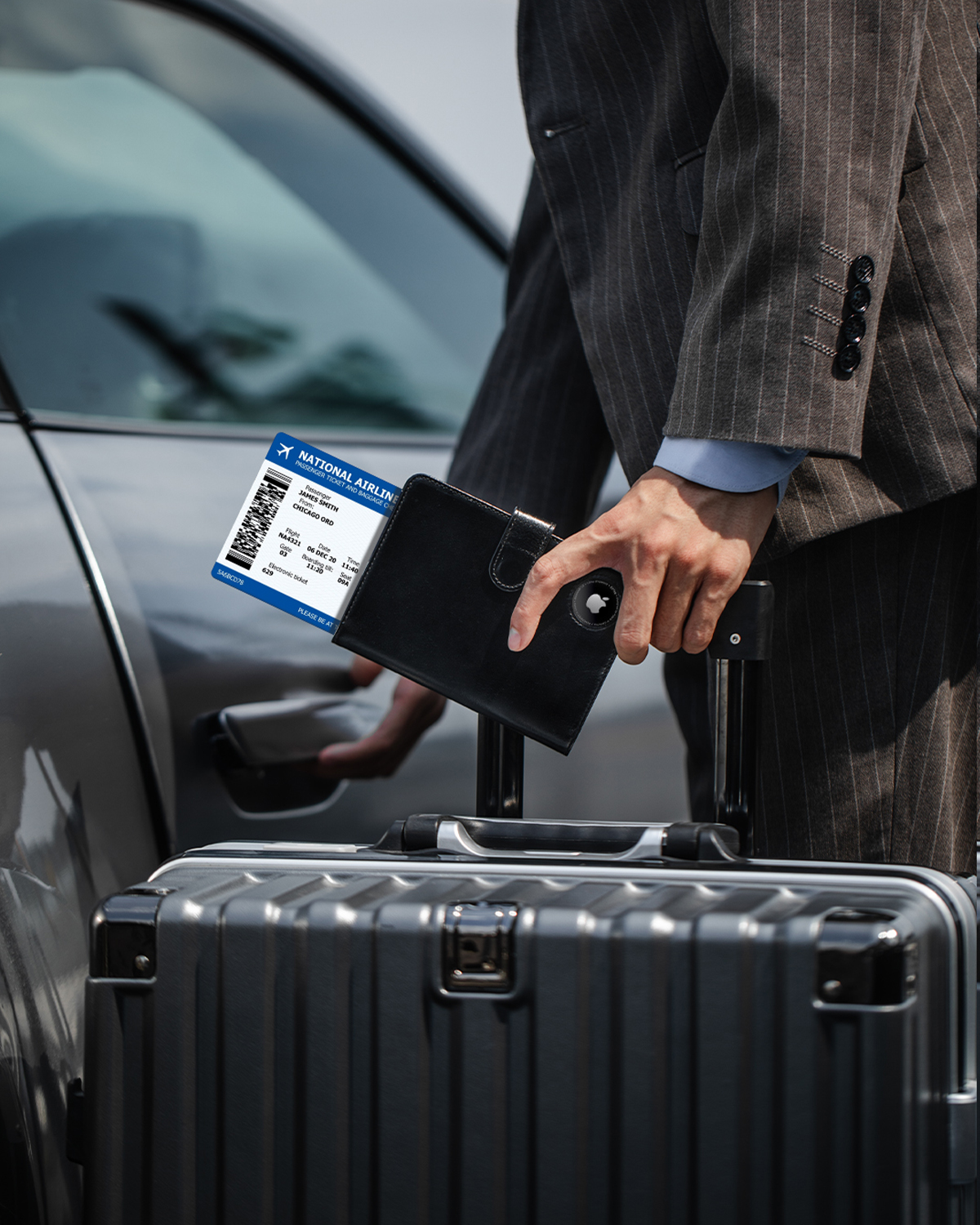
Apple ecosystem without an external AirTag
For users who want tracking but do not want to manage a separate AirTag, the LORZOR Wallet Pro builds the tracker into the metal cardholder. It is a slimmer, more integrated option for Apple users who carry a small number of cards.
Commemorative and gift purchases
The LORZOR 1979 SP Wallet is America’s 250th Anniversary Limited Edition, limited to 300 sets. It combines the 1979 Tactical Wallet system with a 1776–2026 commemorative theme, making it a less obvious gift for collectors and history-minded EDC users.
Quick comparison: main LORZOR men’s leather wallet lines
| Model | Form factor and materials | Capacity and core features | Reference price |
|---|---|---|---|
| LORZOR 1979 Wallet | Ultra-slim EDC; full-grain leather + 6061 aerospace-grade aluminum | About 10-card daily load; pop-up access; RFID; money clip; hook holes; approx. 2.87 × 3.89 × 0.6 in; approx. 80 g | $99.99 |
| LORZOR 1979 Fold Wallet | Compact bifold; full-grain leather + 6061 aluminum; foldable top cover | Up to 12+ cards; pop-up access; built-in ID window; removable cash clip; RFID | $129.99 |
| LORZOR TriPop Wallet | Trifold; full-grain leather + aerospace aluminum | 8–12 cards; pop-up access; RFID; ID window; cash compartment; approx. 3.94 × 2.36 × 0.79 in | $49.99 |
| LORZOR TriPop AirTag Wallet | Trifold AirTag wallet; full-grain leather | Built-in AirTag holder; pop-up access; RFID; approx. 0.79 × 2.64 × 3.86 in; AirTag not included | $49.99 |
| LORZOR Wallet Pro | Ultra-slim smart wallet; metal cardholder | 1–6 cards + small cash; built-in Apple Find My; Apple certified; pop-up access; approx. 2.6 × 0.43 × 3.9 in | $129 |
| LORZOR Passport AirTag Wallet | Travel passport wallet; full-grain leather | Passport and travel document storage; built-in AirTag holder; RFID; approx. 5.5 × 3.9 × 0.4 in | $49.99 |
| LORZOR Bifold AirTag Wallet A4 | Classic bifold; full-grain leather | Integrated AirTag slot; RFID; money clip | $29.99–$39.99 |
FAQ
Is LORZOR RFID blocking actually tested?
Yes. LORZOR wallets and passport holders are designed to block 13.56 MHz RFID signal reading when a card is fully placed inside the protected zone. The brand supports this with TÜV and AGC test certifications, laboratory RFID test results, and card-reading test photos and videos. The protected zone can vary by model, so check where the card should be placed.
Can I use Apple Find My to track a LORZOR leather wallet?
Yes, but the method depends on the model. The Bifold AirTag Wallet A1/A2/A4 and the TriPop AirTag Wallet have built-in AirTag holders: add your own AirTag to use Find My. The LORZOR Wallet Pro is different: it has tracking built into the wallet, is Apple certified, and supports Apple Find My without requiring an AirTag.
How much should I expect to pay for a quality men’s leather wallet?
LORZOR’s mid-premium range spans roughly $29.99 to $129.99. The Bifold AirTag Wallet series sits around $29.99–$39.99. The TriPop Wallet, TriPop AirTag Wallet and Passport wallets are about $49.99. The 1979 Tactical Wallet is $99.99, while the 1979 Fold Wallet, 1979 SP and Wallet Pro are near the $129–$130 level. Price increases with structure, tracking capability and travel organization, not simply with the use of leather.
Which LORZOR wallet should a man choose for daily cards and cash?
Start with your card count and carry style. For a front-pocket EDC system with around ten-card capacity, cash and attachment options, the LORZOR 1979 Wallet is the stronger match. For a true trifold that holds 8–12 cards with full-grain leather and pop-up access, choose the TriPop Wallet. If you need ID and cash in a compact bifold, the 1979 Fold adds an ID window and removable cash clip. If you want tracking and carry fewer cards, consider the Wallet Pro or an AirTag wallet.
What about warranty and after-sales support for LORZOR wallets?
Verified customer reviews across Amazon and other online channels frequently mention LORZOR product quality and responsive after-sales service; many reviewers specifically note a lifetime warranty. For pre-purchase or post-purchase questions, LORZOR is available at support@lorzor.com, with responses Mon–Fri within 24 hours.
Conclusion: let the carry decide, not the slogan
A men’s leather wallet should be judged on verifiable details: the leather layer, frame material, card capacity, pocket profile, RFID test method, tracking architecture and price. LORZOR applies these details across a wide range, from classic leather trifolds to tactical EDC wallets, AirTag wallets, smart wallets and passport travel wallets.
Have Questions or Need More Details?
Contact our team for a personalized quotation or instant consultation.
Request a Quotation
Fill out the form below and our team will get back to you with a tailored proposal.
WhatsApp Direct Chat
Prefer to chat in real-time? Message us on WhatsApp for instant assistance & quick answers.
- Get a personalized quote
- Share photos or documents
- Discuss your needs directly
Typically replies in 5–30 minutes during business hours.