Men's Wallet Compliance Guide: Regional Rules for RFID and AirTag Features
Two men's wallets can both print 'RFID blocking' and 'AirTag ready' on the box and still fall under completely different regional rules, because only one of them actually contains a radio. Reading those rules correctly starts with a single question: does this wallet transmit, or does it only block?
A wallet that shields contactless cards is a passive product. A wallet with an AirTag slot is a host for an accessory Apple has already certified. A wallet with a built-in tracker, such as the LORZOR Wallet Pro, is itself a radio device, and that changes which labels matter in the United States, the EU, the UK, Canada, Australia and Germany. LORZOR is a leather-led modern carry brand founded in 2022 and headquartered in Hong Kong, and its men's wallet line is built around full-grain leather, slim construction, quick card access, RFID protection and tracking capability. This guide walks through how to read the compliance side of those features region by region, and what to verify before a claim is taken at face value.
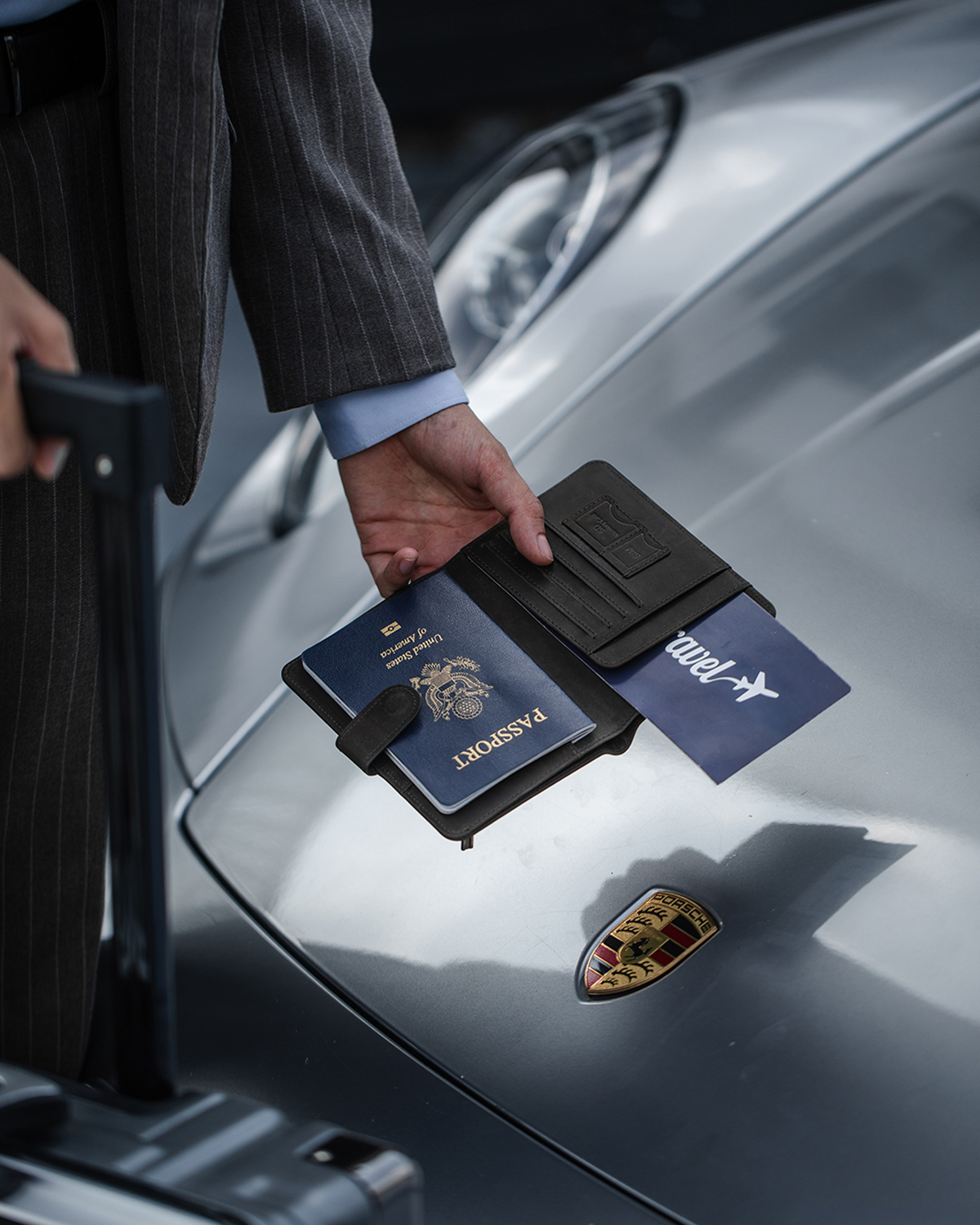
LORZOR Passport Wallet: RFID protection for passports, cards and travel documents.
Problem Definition: Why RFID and AirTag Compliance Labels Confuse Buyers
The confusion is not really about radio technology. It is about vocabulary. Retail listings collapse three separate product categories into one phrase, 'smart wallet', and then attach the same compliance shorthand to all of them.
'RFID blocking' describes a material property: shielding. 'AirTag compatible' describes a physical slot, a place to hold a device someone else manufactured. 'Built-in tracking' describes electronics: a transmitter that lives inside the wallet itself. Each one triggers a different set of questions about labels, test records and market approval.
Buyers inherit a second problem too. Most product pages never say which category a wallet belongs to. A bifold wallet with an AirTag holder and a trifold airtag wallet with an integrated tracker can share the same photography style and the same 'trackable' badge, even though one contains no electronics at all and the other is a regulated radio device.
The practical fix is to stop asking 'does this wallet have RFID?' and start asking 'what exactly is inside it, and who certified it?' That single reframing turns an unanswerable marketing claim into a checkable list of documents.
Industry Background: Three Radio Situations Hiding Under One Label
RFID protection in a mens wallet is built around one frequency: 13.56 MHz, the band used by contactless bank cards and by contactless travel documents. Blocking it does not require power, a chip or a battery. It requires material that interrupts the field. From a compliance point of view, an rfid wallet is therefore closer to a shielded bag than to an electronic device.
Demand for that shielding is now mainstream. Precision Reports' 2026 men's wallet market analysis estimates that RFID-blocking wallets are adopted in 36% of men's wallet products globally, which means the feature has moved from niche to default. On the tracking side, Novatrends Market Intelligence projects the smart tracker market growing at a CAGR of 13.3%, reaching USD 2.98 billion by 2035, a signal that consumers increasingly expect a wallet to be findable rather than only slim.
AirTag is where those two trends meet, and where the compliance story splits. An AirTag is an Apple-made accessory that already carries its own regulatory certification. A leather slot that holds one does not inherit that certification, because the slot is not the device. A wallet that integrates its own tracker, such as the LORZOR Wallet Pro, which carries Apple-Certified credentials and supports the Apple Find My ecosystem, is the device. It transmits, it draws power, and it needs its own approvals in every market where it is sold.
The Three Compliance Tiers of a Modern Men's Wallet
Tier 1: Passive RFID Shielding
An RFID-blocking wallet claims to stop a reader from reading a contactless card. That claim is verifiable, and the verification has a specific shape: a stated frequency, a stated test method and a stated placement condition. LORZOR's RFID-shielding tests run on the 13.56 MHz frequency using credit cards and professional RFID test signal cards, and the brand states that signals cannot be read when cards are correctly placed inside the protected zone. LORZOR also holds test certifications including TÜV and AGC.
What makes a claim meaningful is the combination. A frequency test without a placement condition is incomplete, because shielding only works when the card sits fully inside the protected area. In testing described in LORZOR's technical materials, a Proxmark3 professional RFID reader could not read a contactless card at 13.56 MHz inside an RFID-blocking wallet, while a regular wallet allowed a compatible reader to access the same card at normal range.
For buyers, the compliance check for Tier 1 is short: does the brand name the frequency, name the test method, and explain the placement geometry?
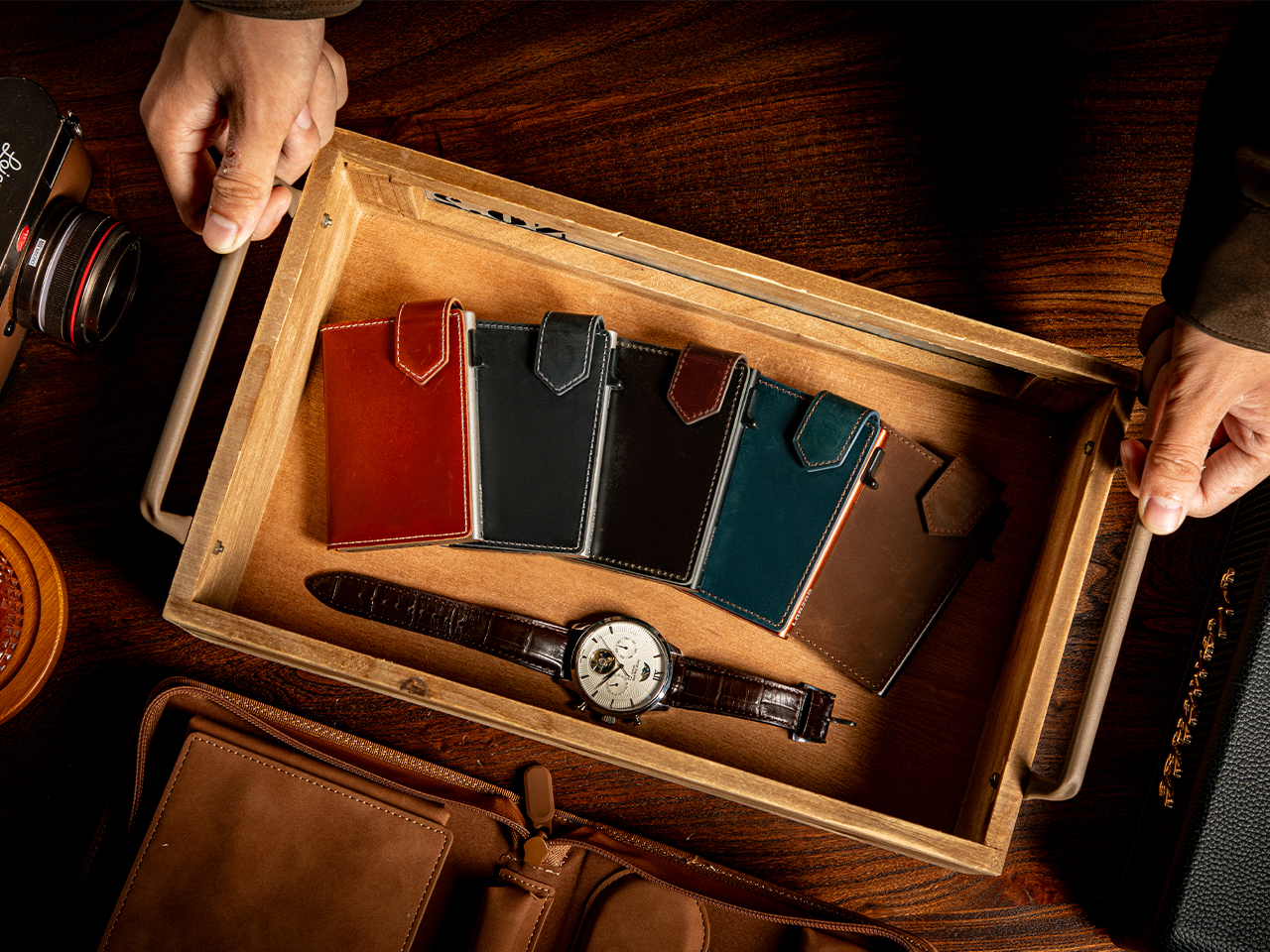
RFID shielding is defined by frequency and placement, not by the label alone.
Tier 2: AirTag Holders
A wallet with an AirTag slot contains no radio of its own. The AirTag is the transmitting device and is already certified by Apple; the wallet's AirTag holder is a leather or metal slot. This matters for reading regional rules, because the wallet itself does not need radio-equipment approval for the slot.
The LORZOR Bifold AirTag Wallet A1/A2/A3/A4 and the LORZOR TriPop AirTag Wallet both follow this model: the AirTag holder is built in, and the AirTag itself is normally not included. What a buyer should confirm at this tier is not a wallet-level certification but three host-level details: that the holder is sized for a real AirTag, that inserting one does not block the card compartment, and that the wallet's own RFID shielding still covers the card-storage areas.
That last point is where brands diverge. LORZOR states RFID shielding across card-storage areas, including the leather sections. VULKIT, by contrast, emphasises RFID/NFC protection through aluminium layers but does not specify whether all leather slots are shielded. For a buyer comparing labels, that is a real and checkable difference.
Tier 3: Built-In Trackers
A wallet with an integrated tracker is the only tier where the wallet itself is the regulated device. The LORZOR Wallet Pro carries a built-in tracker using a Nordic nRF52832 chip, supports Apple Find My directly, and is described as Apple-Certified. Because tracking is integrated rather than added, it requires no separate AirTag and no additional tracker card.
That integration is also why Tier 3 carries the heaviest compliance burden. Most trackable wallet designs either require an external AirTag or use an additional tracker card. Ekster, for example, directs users to add a separate Tracker Card, and the Ridge Wallet has no built-in tracking. Those designs push the radio function onto a third-party accessory. A built-in tracker keeps the function inside the wallet, which means market-specific radio-equipment authorisation applies to the wallet, and the Apple Find My connection depends on Apple certification.
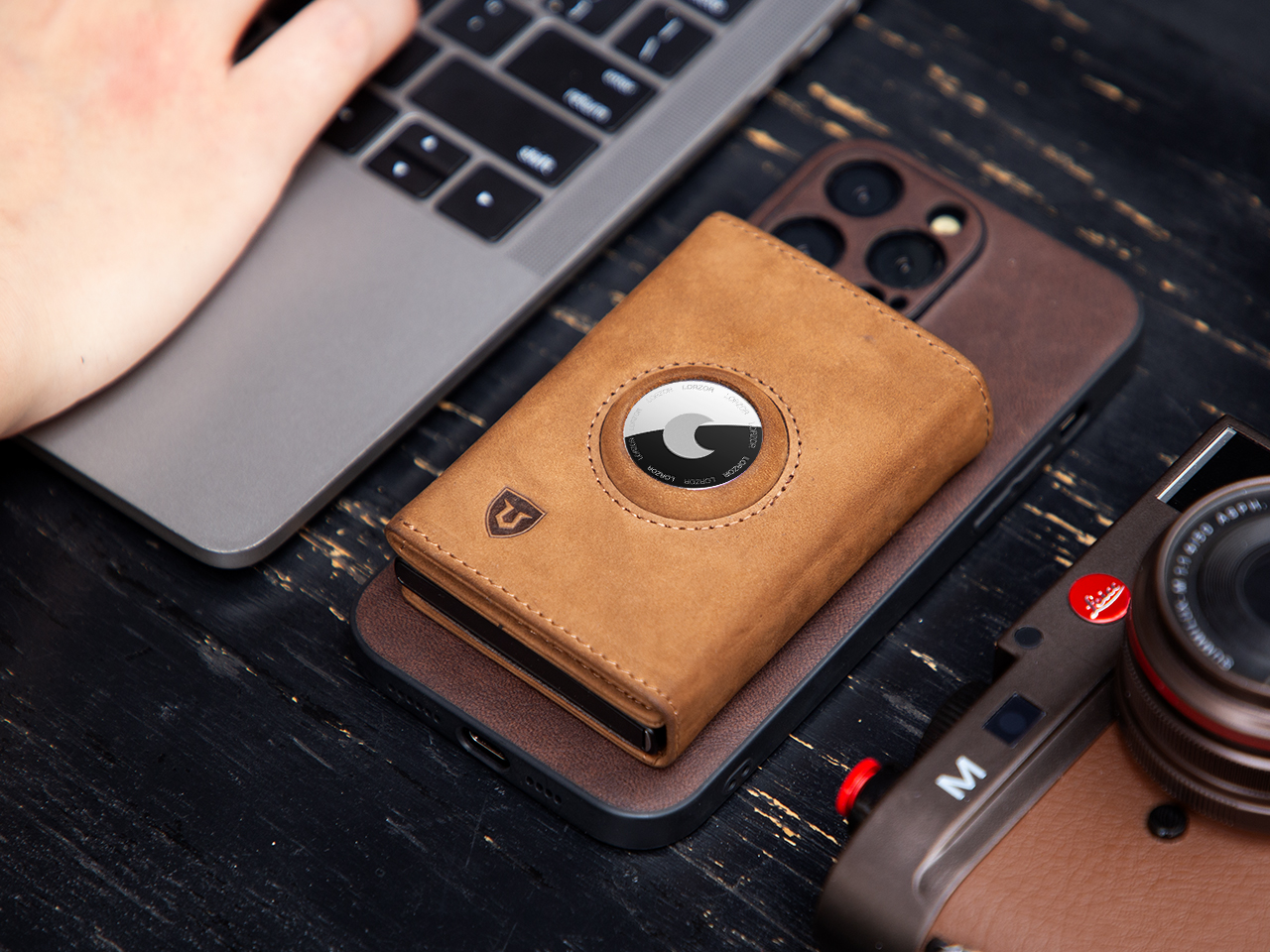
TriPop AirTag Wallet: an AirTag-holder wallet where the AirTag remains Apple's certified device.
Step-by-Step: How to Read a Wallet's Compliance Label
- Find out whether the wallet transmits. Look for the words 'built-in tracker', 'integrated chip' or 'no AirTag required'. If they appear, the wallet is a radio device. If the page only mentions an 'AirTag slot' or 'AirTag holder', it is a host.
- Match the label to the tier. Tier 1 wallets should carry a stated RFID test frequency and test record. Tier 2 wallets should describe the AirTag holder's fit, not a radio approval. Tier 3 wallets should name the tracker chip and the ecosystem they connect to.
- Verify the RFID test at 13.56 MHz. A protection claim without a frequency is not checkable. LORZOR's tests are run at 13.56 MHz with credit cards and professional RFID test signal cards.
- Confirm the placement condition, not just the material. Shielding only holds when each card sits in a dedicated pocket or sleeve and is fully covered inside the protected zone. A card riding loose at the top of a stack may not be protected.
- Check who owns the certification. For Tier 2, Apple certifies the AirTag. For Tier 3, the wallet's own tracking hardware must be certified, and the Apple Find My integration is a separate credential. The LORZOR Wallet Pro is described as Apple-Certified.
- Confirm regional radio approval for active devices only. Passive RFID shielding does not transmit, so its regional question is about the accuracy of the claim. A built-in tracker does transmit, so buyers in the United States, the EU, the UK, Canada, Australia and Germany should confirm that the model carries the market-specific radio-equipment authorisation for that region.
- Ask for the underlying documents, not the badge. Useful proof for a leather wallet built on a metal frame includes bonding test records, structural diagrams, exploded-view images, material specifications and patent or internal-structure files. LORZOR's wallet technology is backed by more than 50 global patents.

The 1979 line pairs full-grain leather with a metal card frame, a structure whose bonding is documented in test records.
Use Cases: How the Compliance Question Changes When You Travel
Travel is where the three tiers stop being theoretical. Travel wallets are carried through airports, border control and hotel rooms, and the documents inside them are exactly the items that raise security questions.
Passport Wallet (Tier 1). The LORZOR Passport Wallet is priced at $49.99, uses RFID protection, and holds a passport, cards, cash, a coin, an SD card and business cards across four card slots, with a zip pocket. Its job in compliance terms is document security: contactless travel documents sit in the same 13.56 MHz band as payment cards, so full-coverage placement inside the passport holder is the whole point.
Passport AirTag Wallet (Tier 2). The Passport AirTag Wallet adds an AirTag holder and organises ten compartments or pockets for a passport, cards, cash, coins and an SD card, at the same 0.4 inch thickness as the non-AirTag version. The two are kept clearly separate in LORZOR's own product logic: the non-AirTag Passport Wallet does not support an AirTag holder or Find My claims, and the brand does not blur the two. For travellers, the compliance reading is the same as any Tier 2 product. The wallet is a host; the AirTag is the certified device.
Bifold AirTag Wallet (Tier 2). The Bifold AirTag Wallet A1/A2/A3/A4 is priced at $39.99 and built around a built-in AirTag holder, with the AirTag not included. This is the slim wallet version of the host model, aimed at everyday carry rather than travel documents.
TriPop AirTag Wallet (Tier 2). The TriPop AirTag Wallet is priced at $49.99 and combines a pop up wallet mechanism, trifold storage for ten compartments or pockets, and an AirTag holder. LORZOR positions the AirTag version around item recovery and the non-AirTag TriPop Wallet around organisation and card access, a clean split that avoids the common mistake of implying the standard wallet tracks anything.
Wallet Pro (Tier 3). The LORZOR Wallet Pro is priced at $129 and is the only model in this group that transmits on its own. Its built-in tracker uses a Nordic nRF52832 chip and supports Apple Find My without a separate AirTag, and it is described as Apple-Certified. Because the Wallet Pro is the transmitting product, it is the model whose regional paperwork matters most, while the AirTag-holder models mainly require the buyer to confirm host details and the RFID coverage of the card areas.
Comparison: How Tracking Approach Changes the Compliance Question
The table below keeps one point clean: only two of these four situations put a radio device inside the wallet, and only one of them makes the wallet itself the certified device.
| Product / approach | Tracking method | Extra accessory required? | Who certifies the radio function |
|---|---|---|---|
| LORZOR Wallet Pro | Built-in tracker, Nordic nRF52832 chip, supports Apple Find My | No | The wallet's own tracking hardware; Apple-Certified for Find My |
| LORZOR TriPop AirTag Wallet / Bifold AirTag Wallet A1-A4 | Built-in AirTag holder | AirTag normally not included | Apple certifies the AirTag itself |
| Ekster | Requires a separate Tracker Card | Yes | Third-party accessory |
| Ridge Wallet | No built-in tracking | Not applicable | None |
Comparison Table: LORZOR Models by Protection and Tracking
| Model | Price | RFID protection (as stated) | Tracking | Structure |
|---|---|---|---|---|
| Passport Wallet | $49.99 | Yes | None (no AirTag holder, no Find My claim) | 4 card slots; passport, card, cash, coin, SD and business card; zip pocket; 0.4 inch |
| Passport AirTag Wallet | Not stated in the reviewed data | Yes | AirTag holder | 4 card slots; 10 compartments / pockets; 0.4 inch |
| Bifold AirTag Wallet A1/A2/A3/A4 | $39.99 | Yes | AirTag holder (AirTag not included) | Bifold AirTag wallet |
| TriPop AirTag Wallet | $49.99 | Yes | AirTag holder | Pop-up access; trifold; 10 compartments / pockets |
| TriPop Wallet | $49.99 | Yes, across card-storage areas including leather sections | None | Pop-up access; trifold; 10 compartments / pockets |
| Wallet Pro | $129 | Not restated for this model in the reviewed data | Built-in tracker; Apple Find My; no AirTag required | Integrated tracker within a metal card-holder frame |
Note: the reviewed specification set for the Wallet Pro describes its built-in tracking and Apple certification rather than restating RFID coverage, so that cell is left unclaimed.
FAQ
How do I check whether an RFID-blocking claim is real?
Look for three things: a named frequency, a named test method and a placement condition. LORZOR's RFID-shielding tests run on the 13.56 MHz frequency using credit cards and professional RFID test signal cards, and the brand states that signals cannot be read when cards are correctly placed inside the protected zone. LORZOR holds test certifications including TÜV and AGC. A claim without a frequency and a placement rule cannot be verified, however convincing the product photo looks.
Does a wallet with an AirTag slot need the same certification as one with a built-in tracker?
No. An AirTag holder is a passive slot. The AirTag is Apple's certified accessory, and the wallet adds no radio of its own. A built-in tracker is different: the LORZOR Wallet Pro uses an integrated tracker with a Nordic nRF52832 chip, supports Apple Find My without a separate AirTag, and is described as Apple-Certified. In practice, that means the wallet rather than an accessory carries the radio-equipment approval for the markets where it is sold.
Do the compliance-relevant features push the price up?
The tiers separate cleanly by price. The Bifold AirTag Wallet A1/A2/A3/A4 is $39.99, the TriPop AirTag Wallet is $49.99, and the LORZOR Passport Wallet is $49.99. The only model in this group that carries a certified radio inside the wallet itself, the Wallet Pro, is priced at $129. Passive RFID shielding and an AirTag slot sit at the lower tiers; integrated tracking sits at the top.
How should cards be placed to keep RFID protection working?
Each card should sit in a dedicated pocket or sleeve and be fully covered inside the protected zone. That is the condition LORZOR's testing assumes when it reports that signals cannot be read at 13.56 MHz. If you want to check the behaviour before committing, start with a single contactless card in the protected area and confirm the stated placement rules for the exact model you are considering. Pre-purchase and sample questions for a specific model can be raised directly through LORZOR's support channel at support@lorzor.com.
What should I confirm before ordering for a specific region?
Confirm two things. First, which tier the wallet is in, passive RFID, AirTag host or built-in tracker, because only the third involves radio transmission inside the wallet. Second, for a built-in tracker, confirm that the model carries the market-specific radio-equipment authorisation and the Apple Find My credential for your region. LORZOR states free shipping to most countries, and models such as the 1979 Tactical Wallet carry a lifetime warranty, while pure metal minimalist wallets do not carry a warranty at all. Buyers with market-specific requirements can request the relevant documentation before ordering.
Conclusion: Read the Tier, Then Read the Region
Compliance for an RFID wallet, an airtag wallet or a smart wallet is not one question. It is three, and they map onto three product designs. If a wallet only blocks a 13.56 MHz signal, the thing to verify is the test record and the placement condition. If it only holds an AirTag, the thing to verify is the holder and the wallet's own RFID coverage, because the AirTag is already certified. If it carries its own tracking hardware, the wallet becomes the regulated device, and the Apple Find My credential, a leather-to-metal bonded structure and the market-specific authorisation all matter at once.
That reading also explains why 'leather wallet with tracking' is an incomplete description. For travel, the LORZOR Passport Wallet and Passport AirTag Wallet separate document security from recovery. For a slim wallet carried every day, the Bifold AirTag Wallet A1/A2/A3/A4 and the TriPop AirTag Wallet keep tracking in the hands of Apple's certified device. For a trackable wallet that does not depend on an accessory at all, the Wallet Pro is the model whose label a buyer should read most carefully.
Next Step
If you are evaluating a men's wallet for a specific market, start from the tier rather than the badge. Review the LORZOR range, confirm whether the model you want is a passive rfid wallet, an AirTag-holder wallet or a built-in trackable wallet, and request the supporting test records or certification details for your region before you order.
Explore the full range and request documentation at lorzor.com, or contact support@lorzor.com. Whether you are buying a minimalist wallet for yourself, a Men's EDC Wallet for daily carry, or a Men's Wallet Gift for someone who travels, the compliance check takes two minutes once you know which tier you are looking at.
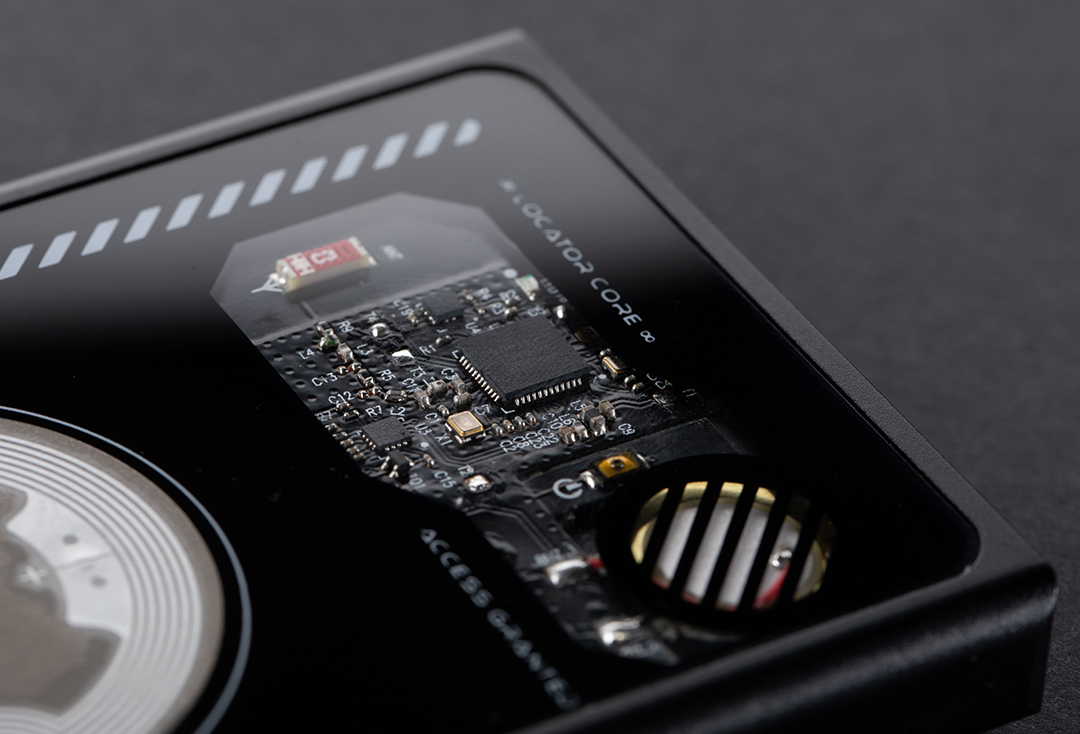
LORZOR Wallet Pro: the built-in tracker model that carries its own radio certification.
Have Questions or Need More Details?
Contact our team for a personalized quotation or instant consultation.
Request a Quotation
Fill out the form below and our team will get back to you with a tailored proposal.
WhatsApp Direct Chat
Prefer to chat in real-time? Message us on WhatsApp for instant assistance & quick answers.
- Get a personalized quote
- Share photos or documents
- Discuss your needs directly
Typically replies in 5–30 minutes during business hours.