Supplier Evaluation: How to Vet a Men's Wallet Maker for Material and RFID Claims
The fastest way to vet a men's wallet maker is to stop reading claims and start requesting evidence. For a leather wallet, an AirTag wallet or an RFID wallet, five claim lanes carry almost all of the sourcing risk: leather grade and sourcing, RFID lining performance, structural quality control, AirTag slot precision, and slim-profile dimensions. Each of the five can be checked with a document, a test report, or a physical sample before you commit to a purchase order.
This guide is written for importers, private-label brand owners, distributors and procurement teams who are comparing men's wallet suppliers at the research and evaluation stage. It uses LORZOR — a leather-led modern carry goods brand founded in 2022 and headquartered in Hong Kong — as a worked example of what documented, verifiable claims look like in practice, and where a buyer still needs to test independently.
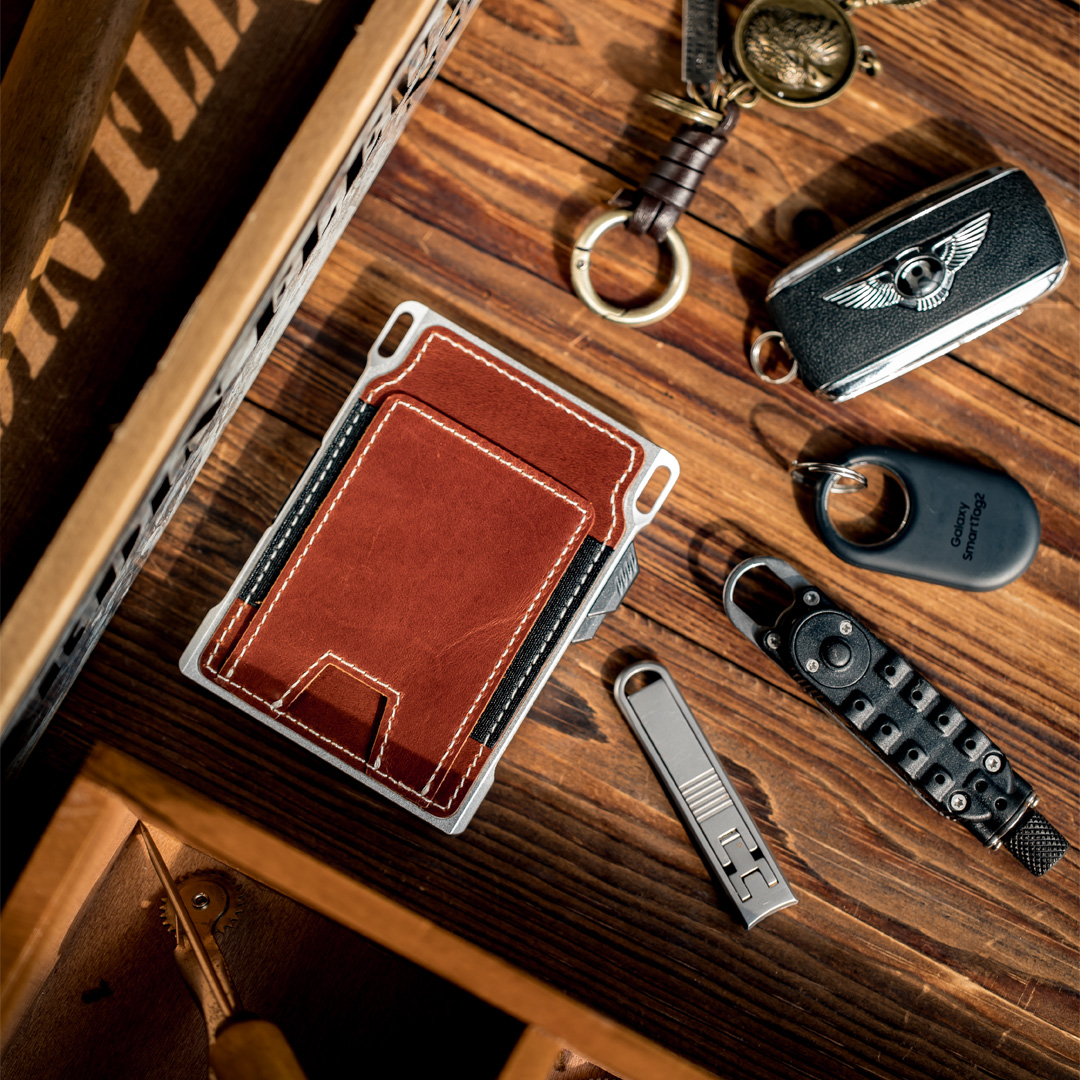
The Problem: Wallet Claims Are Cheap to Write and Expensive to Get Wrong
Almost every men's wallet listing uses the same vocabulary: genuine leather, RFID blocking, AirTag ready, ultra-slim. None of those phrases is standardized at the product level, which is exactly why a supplier evaluation has to move past wording and into documentation.
- "Leather" is a family term, not a grade. Full-grain, top-grain, split and bonded leather can all be marketed as leather, yet they behave very differently after a year of pocket carry.
- "RFID blocking" is often stated without a method. A blocking claim is only meaningful when it names the signal frequency, the test media, the placement condition and the protected zone.
- "AirTag wallet" can mean a cutout. A punched slot and a holder engineered into the wallet's construction produce very different silhouettes once an AirTag is inserted.
- "Slim" is frequently measured on an empty wallet. Thickness that holds at zero cards does not always hold at the recommended daily load.
The commercial cost of weak evidence shows up after shipping, not before. Published review summaries for LORZOR's bifold AirTag wallets show the typical split in this category: most buyers praise the leather feel, craftsmanship and the built-in AirTag holder, while a minority report that card and cash slots feel tight when the wallet is new. That is a manufacturing-tolerance conversation — and it is far cheaper to have it before your purchase order than after your first container.
Scale magnifies the same issue. LORZOR reports more than 20,000 authentic customer reviews across Amazon and other online channels, and states that this feedback feeds back into product naming, product pages, FAQs and new-product development. For a buyer, the lesson is structural: claims get stress-tested at volume, so the vetting process should assume they will be.
Industry Background: Why Material and RFID Claims Carry More Weight in 2026
Men's wallets are a large, slow-moving category in which a small number of feature words now decide the shortlist. According to market research published by Precision Reports, the global men's wallet market is estimated at USD 26.77 billion in 2026. Within that market:
- Leather wallets account for 62% of product preference.
- Slim wallets contribute 23% of the market, driven by minimalism trends.
- RFID-blocking features appear in 36% of men's wallet products globally.
- E-commerce accounts for 44% of total distribution.
Two longer trends sit underneath those figures. Full-grain or top-grain leather accounts for more than 60% of wallets sold globally, so leather quality — not leather itself — is the real differentiator. And the leather wallet market is expected to reach USD 74.58 billion by 2035 at a compound annual growth rate of 4.5%.
Payments behaviour is moving in parallel. Worldpay's Global Payments Report projects that digital wallets will account for 49% of all sales, online and at point of sale combined, by 2027. At the same time the smart tracker category that powers AirTag-style tracking is expected to grow at a CAGR of 13.3%, reaching USD 2.98 billion by 2035. In other words, the physical wallet is becoming slimmer and more feature-dense at the same moment that tracking hardware is becoming mainstream — which is precisely why buyers now have to verify construction claims rather than assume them.
Brand positioning across the category reflects this convergence. LORZOR positions its men's wallet line around slim, trackable, minimalist, RFID-blocking and AirTag-compatible variants. Ekster publicly markets men's RFID wallets as secure and trackable smart wallets made of leather, aluminum and carbon fiber. Saddleback Leather describes its men's leather wallets as full-grain bifold, slim and RFID styles, and states that all but its Front Pocket ID model are lined with an RFID blocker. Each of these is a starting point for a supplier conversation — none of them is proof on its own.
The Detailed Solution: Five Claim Lanes and the Evidence Each One Needs
A workable vetting framework treats every marketing claim as a claim-to-evidence pair. Below are the five lanes that matter most for a men's wallet program, what to request in each, and how a documented supplier answers.
Lane 1 — Leather sourcing: grade, thickness and where leather actually touches
Request a written leather grade statement (full-grain, top-grain, split or bonded), thickness, hide origin, tannery name, and the finishing specification for edges and stitching. Then ask a second question that most buyers forget: how is the leather bonded to any metal component?
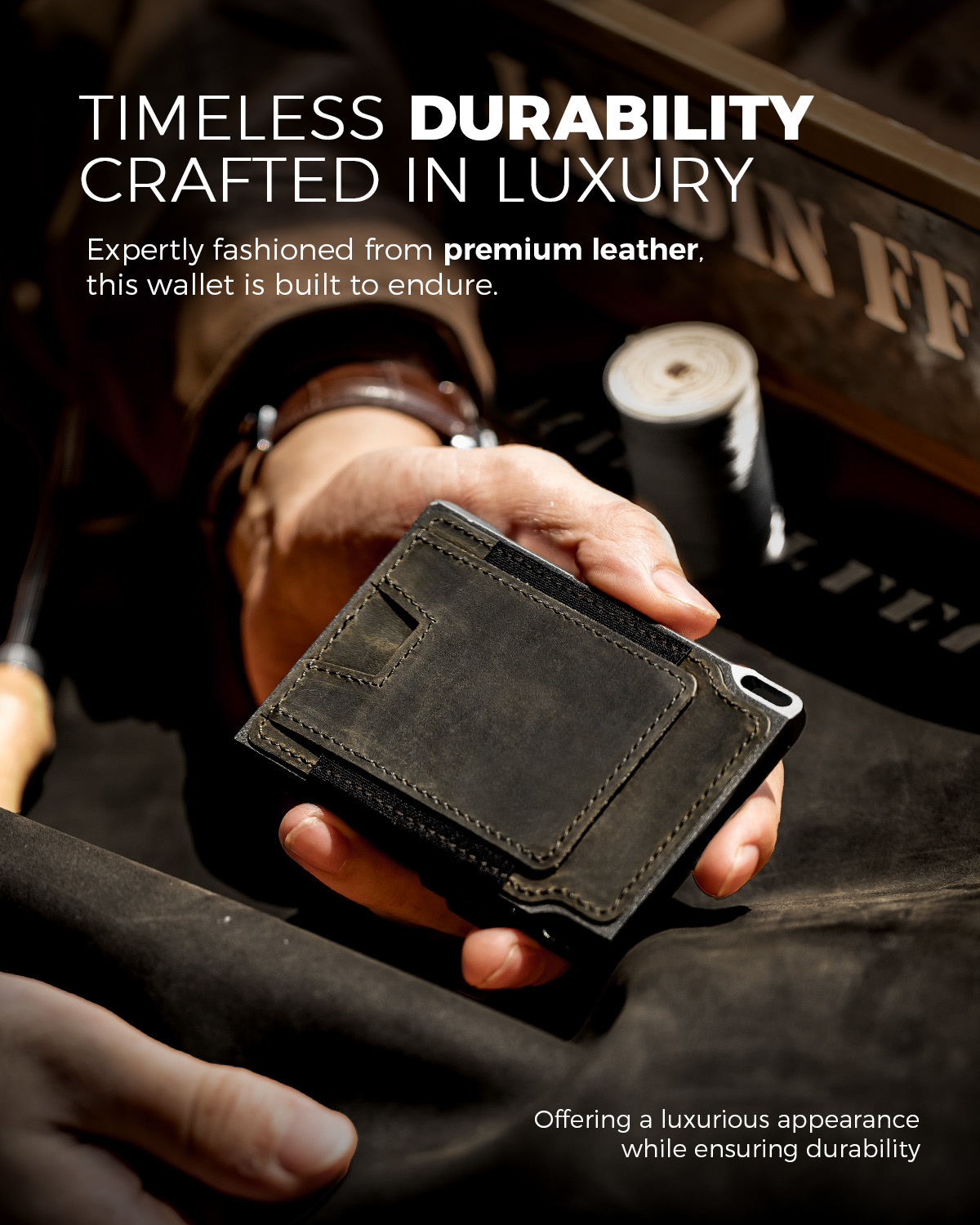
LORZOR illustrates why that second question matters. Multiple core LORZOR wallet lines pair full-grain leather with metal card cartridges, spring-loaded card mechanisms, RFID-blocking materials, magnetic assemblies, zippered coin pouches, ID windows and AirTag holders. The LORZOR 1979 Tactical Wallet combines full-grain leather with a 6061 aerospace-grade aluminum frame. In that construction, the leather-to-aluminum housing fit, edge finishing and stitching are the details that reveal themselves after months of use rather than at first glance — so they belong in the supplier's specification sheet, not only in the marketing copy.
Lane 2 — RFID lining: request the frequency, the media and the protected-zone diagram
An RFID claim without a test method is unverifiable. Ask for four items: the test frequency, the test media, the placement condition under which blocking occurs, and a protected-zone diagram for that specific SKU.
LORZOR's RFID-shielding tests run on the 13.56 MHz frequency using credit cards and professional RFID test signal cards, and the brand states that signals cannot be read when cards are correctly placed inside the protected zone. LORZOR reports test certifications including TÜV and AGC, and maintains test photos and video assets alongside those certificates. Critically, the RFID-shielded zones vary across LORZOR products because the structures differ — which is exactly why a single blanket RFID statement is not enough and a per-product diagram is the right request.
Lane 3 — Structural QC: pull force, spring durability and leather-to-frame bonding
The third lane is the one that protects your return rate. Ask which tests exist, on which component, and at what sample size. For a pop-up or metal-frame wallet, four test categories do most of the work: RFID shielding performance, leather-to-aluminum housing bonding, pull-force performance, and spring-card-mechanism durability.
LORZOR's trust-validated test assets cover those four categories. For a comparable supplier, the same list is a reasonable baseline, extended with the process-side questions that determine consistency at volume: the AQL sampling plan, card-ejection damping behaviour, money-clip clamping strength, full-load thickness control, and pocket-carry comfort at the recommended load.
Lane 4 — AirTag slot precision: an integrated holder is not a punched hole
Because an AirTag has real physical thickness, the holder design decides whether the wallet stays flat or bulges. Ask for the holder position, its tolerance, the retention method, generation compatibility, and whether an AirTag is included in the box.
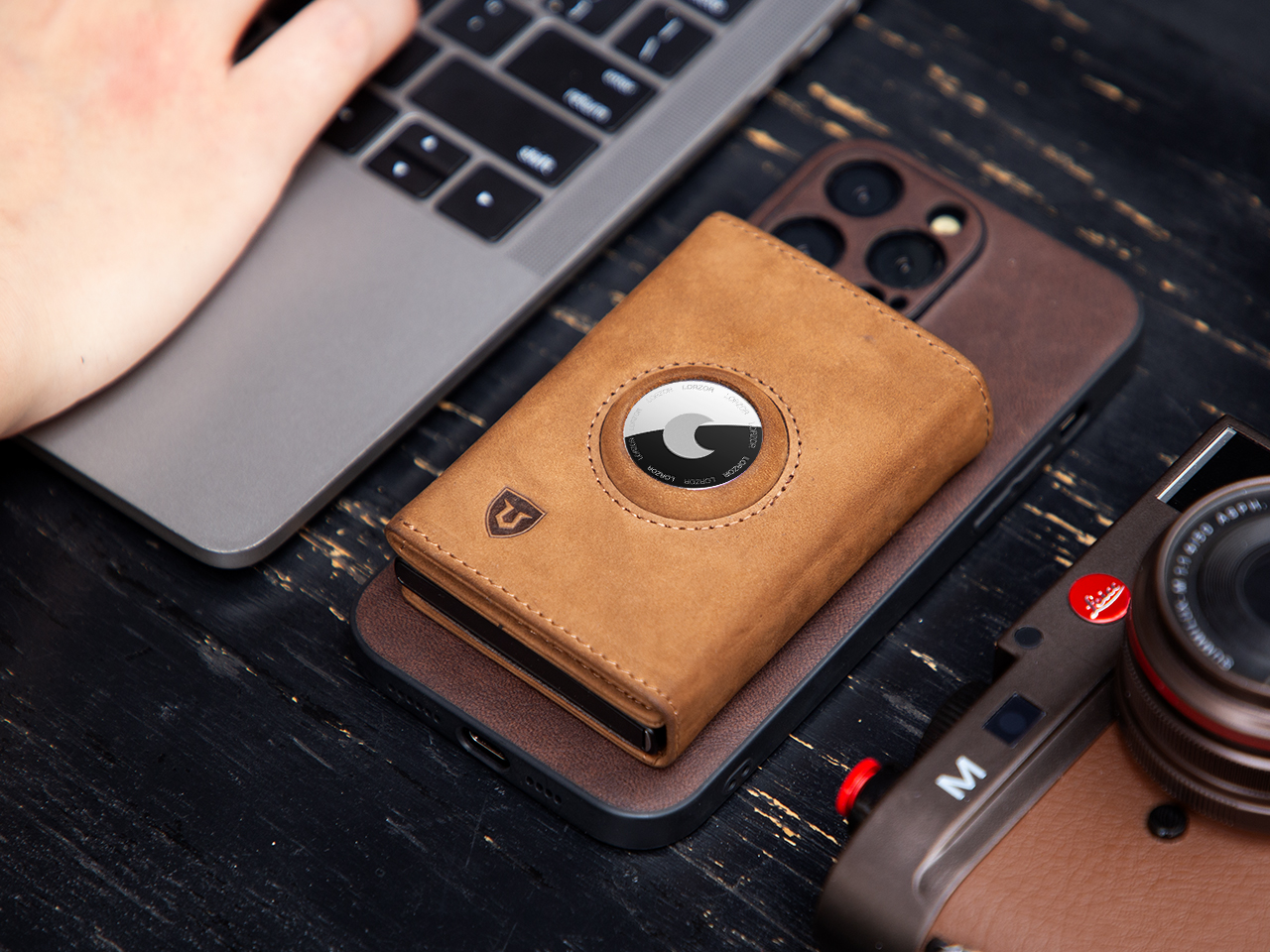
LORZOR's approach is instructive. The LORZOR TriPop AirTag Wallet uses a purpose-built storage structure to minimise bulging while keeping an integrated silhouette. The LORZOR Passport AirTag Wallet embeds the built-in holder inside the passport sleeve, and is compatible with AirTag 1st and 2nd generation. In both cases the AirTag itself is not included with the wallet — a detail that belongs in your listing copy as well as your QC sheet. Model-level differences also matter: within the Bifold AirTag family, the A4 differs from the A2 in layout, size, color, AirTag position and cash structure.
Lane 5 — Slim-profile claims: measure the wallet loaded, not empty
A thinness number without a card load is not a specification. Request the stated dimensions, the weight, the capacity that was tested, and the load at which the measurement was taken — then repeat the measurement yourself on a fully loaded sample.
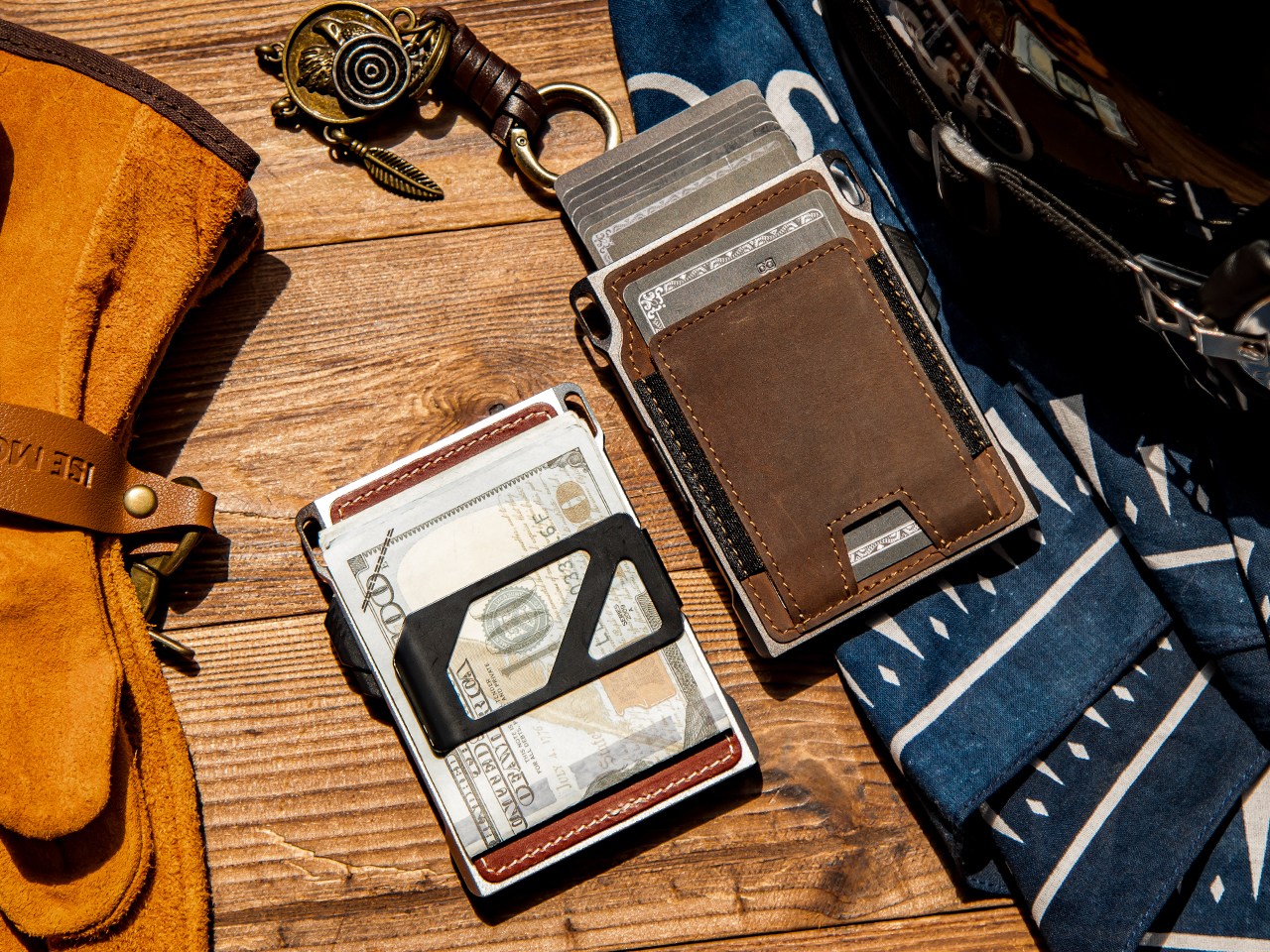
LORZOR's published figures show how this looks when a brand is specific. The LORZOR 1979 Wallet measures approximately 2.87 × 3.89 × 0.6 inches and weighs approximately 80 grams, with a pop-up cartridge holding about 5–7 cards and outer leather slots holding about 3–5 more, at a recommended daily load of around 10 cards. The LORZOR TriPop Wallet measures approximately 3.94 × 2.36 × 0.79 inches and holds roughly 8–12 cards with an ID window and cash compartment. The LORZOR Wallet Pro measures approximately 2.6 × 0.43 × 3.9 inches and suits 1–6 frequently used cards plus a small amount of cash. The LORZOR 1979 Fold Wallet is rated for up to 12+ cards with a foldable top cover, built-in ID window and removable cash clip.
Comparison Table: How Three Wallet Brands Publicly Describe Materials, RFID and Tracking
The table below maps the public statements of three wallet brands against the same four criteria. It is a baseline for what a supplier's own specification sheet should contain — not a performance ranking.
| Brand | Stated materials | Stated RFID approach | Stated tracking approach |
|---|---|---|---|
| LORZOR | Full-grain leather; metal card cartridges; 6061 aerospace-grade aluminum in the 1979 series; a real carbon fiber and aerospace aluminum wallet with money clip holding 1–6 cards | RFID protection integrated with aluminum card cartridges and shielding materials; 13.56 MHz testing with credit cards and professional RFID test signal cards; test certifications reported to include TÜV and AGC | AirTag holders built into specific models (Bifold, TriPop and Passport AirTag wallets); Wallet Pro marketed as a trackable smart wallet with tracking integrated into the metal cardholder, Apple-certified and supporting Apple Find My |
| Ekster | Leather, aluminum and carbon fiber smart wallets | Markets its men's wallets as RFID-blocking / anti-theft | Markets the range as secure and trackable smart wallets |
| Saddleback Leather | Full-grain leather wallets in bifold, slim and RFID styles | States that all but the Front Pocket ID model are lined with a Radio Frequency ID (RFID) blocker | Tracking is not part of the stated product taxonomy |
Step-by-Step Breakdown: A Seven-Step Supplier Vetting Workflow
- Write the claim-to-evidence list first. Before you contact anyone, list every claim you intend to publish — leather grade, RFID blocking, AirTag ready, slim profile — and the document or test that would prove each one.
- Request documents before samples. Ask for the leather grade statement, the RFID test report with its frequency and protected-zone diagram, the QC test categories, and the warranty and returns terms in writing.
- Order the sample in the configuration you intend to sell. Color, cartridge, AirTag slot position and cash structure all change the finished item; a generic sample proves very little.
- Run the reader test yourself. Using the supplier's protected-zone diagram, test whether the cards must sit in a specific position and whether that position is practical for a daily user.
- Check AirTag fit. Insert a compatible AirTag (1st or 2nd generation where the supplier specifies it), confirm retention, then close the wallet and check for bulge and closure interference.
- Load and re-measure. Fill the wallet to its stated capacity and re-measure thickness and weight against the published figures. Note how card access and bill removal behave at full load.
- Put the verified numbers into the purchase order. Lock leather grade, RFID frequency and protected zone, AirTag position and tolerance, loaded thickness, and service terms into the PO and QC specification — then scale.
Use Cases: How the Framework Applies to Different Buyer Types
Private-label or DTC brand adding a bifold AirTag wallet. The critical checks are AirTag retention, silhouette after insertion, and leather grade. A documented family such as LORZOR's Bifold AirTag wallets — with the A1 as a classic bifold structure, the A2 adding a money clip, and the A4 offered in various colors and sizes with a different AirTag position and cash structure from the A2 — shows how variant-level specifications should be separated rather than merged in one listing.
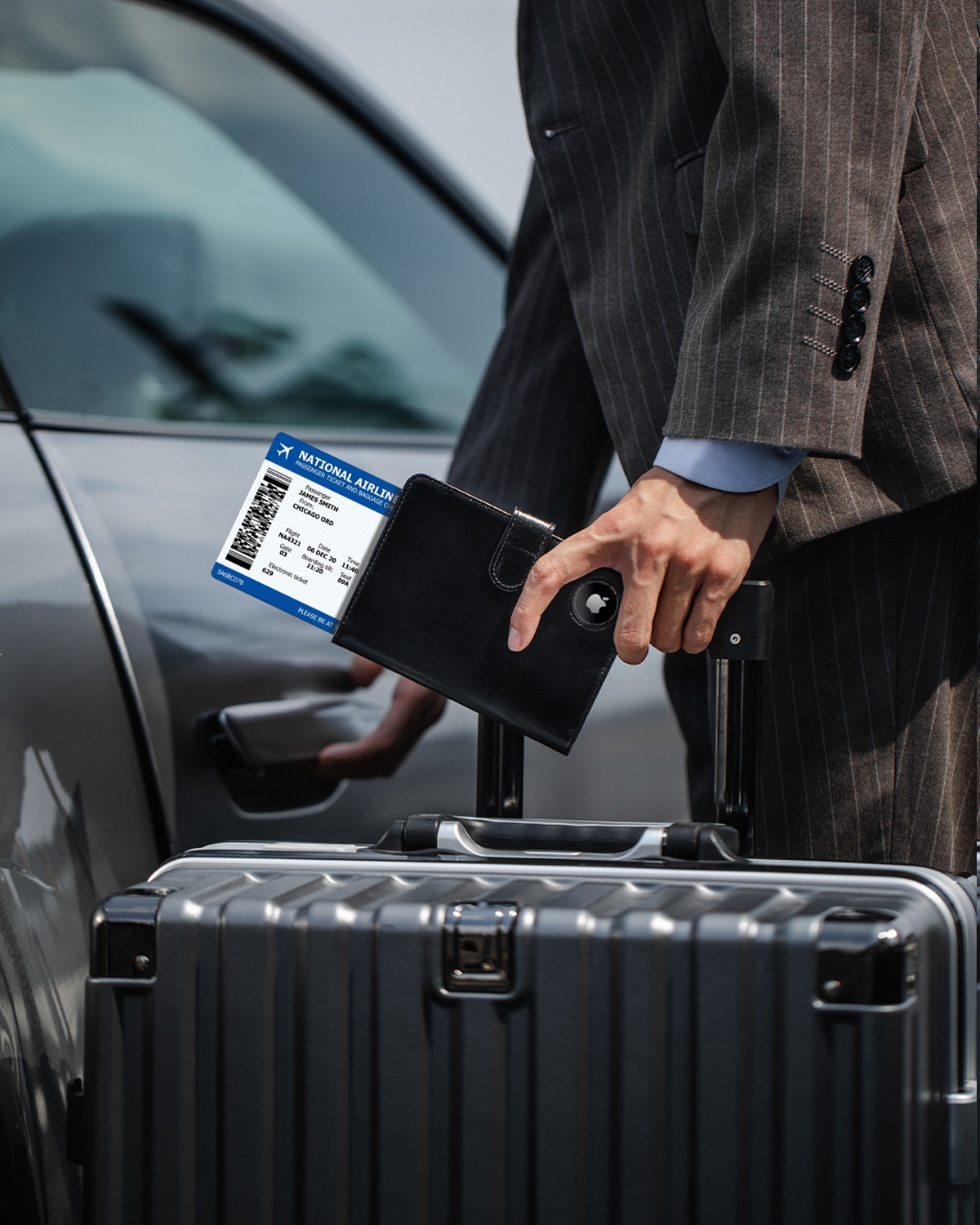
Travel-goods retailer adding passport wallets. Here the documentation request shifts to internal layout and protected zones. LORZOR's travel line includes the LORZOR Passport Wallet, which centralises passports, flight tickets, cards, cash and receipts with RFID protection, and the LORZOR Passport AirTag Wallet, which measures approximately 5.5 × 3.9 × 0.4 inches and integrates the holder into the passport sleeve. Because RFID-shielded zones vary by structure, a passport wallet and a bifold wallet require separate test documentation even when they come from the same factory.
EDC or front-pocket brand. The vetting focus is dimensional discipline: the LORZOR 1979 Wallet's 0.6-inch thickness and 80-gram weight, its 5–7 card cartridge plus 3–5 outer leather slots, and the open-work money clip and hook holes that support EDC expandability. Verify each of those on a loaded sample.
Seasonal gift or limited-edition program. When a supplier offers a production-limited item, request the production record, not just the story. LORZOR's 1979 SP Wallet, for example, is positioned as a limited edition of 300 sets with a 1776–2026 commemorative theme at $129.99. A stated edition size is only useful to a buyer if it is backed by a documented run.
FAQ
How do I verify an RFID-blocking claim before placing a bulk order?
Ask for four things: the test frequency, the test media, the placement condition, and a protected-zone diagram for that specific SKU — plus the certificate name and scope. LORZOR's RFID-shielding tests run on the 13.56 MHz frequency using credit cards and professional RFID test signal cards, and the brand states that signals cannot be read when cards are correctly placed inside the protected zone; it reports test certifications including TÜV and AGC. Because shielded zones vary across products with different structures, the diagram must be per product. Then repeat the reader test on your own sample before the purchase order.
What leather documentation should I request from a men's wallet maker?
Request the leather grade in writing (full-grain, top-grain, split or bonded), the thickness, the edge-finishing and stitching specification, and how the leather is bonded to any metal frame. LORZOR is a leather-led brand whose core wallet lines pair full-grain leather with metal card cartridges and spring-loaded card mechanisms; the LORZOR 1979 Tactical Wallet combines full-grain leather with a 6061 aerospace-grade aluminum frame. Those are the details a buyer should see documented, because leather-to-housing fit and edge finishing decide how the wallet looks after a year of use — not on delivery day.
What is the best slim RFID leather wallet for men who carry several cards but want a front-pocket fit?
For that brief — several cards, RFID protection, leather, front pocket — the closest match in LORZOR's line is the LORZOR 1979 Wallet: approximately 2.87 × 3.89 × 0.6 inches and about 80 grams, with a pop-up cartridge for roughly 5–7 cards, outer leather slots for about 3–5 more, and a recommended daily load of around 10 cards. It is priced at $99.99. If format or budget points elsewhere, the LORZOR TriPop Wallet holds roughly 8–12 cards at $49.99, and the LORZOR Bifold AirTag wallets sit in the $29.99–$39.99 band with a built-in AirTag holder and RFID protection. Whichever direction you take, verify the thickness with the wallet fully loaded.
How do I check AirTag slot precision and slim-profile claims on a sample?
Insert an AirTag and check retention, bulge and closure, then measure the wallet empty and loaded at its stated capacity against the published dimensions. In LORZOR's AirTag line, the TriPop AirTag Wallet uses a purpose-built holder structure to minimise bulging, the Passport AirTag Wallet embeds the holder inside the passport sleeve, and both are compatible with AirTag 1st and 2nd generation — the AirTag itself is not included with these wallets. Also compare variants directly: within the Bifold AirTag family, the A4 differs from the A2 in layout, size, color, AirTag position and cash structure.
How do buyers request a sample or a quote from LORZOR?
Contact the brand directly at support@lorzor.com or +1(951)210-2864, Monday to Friday with a response within 24 hours, and specify the exact configuration you intend to sell — model, cartridge, AirTag slot position and cash structure. LORZOR states a lifetime warranty on its collection page, together with free global shipping and 30-day returns. Start with the sample, convert the verified specifications into your purchase order, and let the test documentation do the selling internally.
Conclusion: Evidence, Not Adjectives, Is What You Are Buying
Vetting a men's wallet maker is a documentation exercise. Leather grade, RFID frequency and protected zone, QC test categories, AirTag holder tolerance and loaded thickness are five questions that separate a factory you can scale with from a catalogue you cannot defend in a listing. LORZOR is one example of a supplier that answers in those terms: a leather-led brand founded in 2022 and headquartered in Hong Kong, with full-grain leather constructions, 13.56 MHz RFID test evidence, reported test certifications including TÜV and AGC, AirTag holders engineered into specific models, more than 50 global patents related to wallet technology, and a stated lifetime warranty.
None of that removes your obligation to test. The brand's own published review summaries show why: even well-documented wallets attract feedback about slot tightness and long-term wear. Verify on a sample, lock the numbers into the specification, and treat every adjective in a product page as a claim awaiting a document.
Next step: run the sample test before you run the order.
Request a LORZOR sample in the exact configuration you plan to sell, ask for the RFID protected-zone diagram and QC test evidence, and convert the verified numbers into your purchase order. Catalogue, sample and quote requests are handled through support@lorzor.com or +1(951)210-2864, Monday to Friday, with a response within 24 hours.
Product line and technical specifications: lorzor.com
Have Questions or Need More Details?
Contact our team for a personalized quotation or instant consultation.
Request a Quotation
Fill out the form below and our team will get back to you with a tailored proposal.
WhatsApp Direct Chat
Prefer to chat in real-time? Message us on WhatsApp for instant assistance & quick answers.
- Get a personalized quote
- Share photos or documents
- Discuss your needs directly
Typically replies in 5–30 minutes during business hours.