
C690 CCIT Application Guide for TIC Labs in Food Safety & Pharmaceutical Analysis Testing
C690 CCIT Application Guide for TIC Labs in Food Safety & Pharmaceutical Analysis Testing
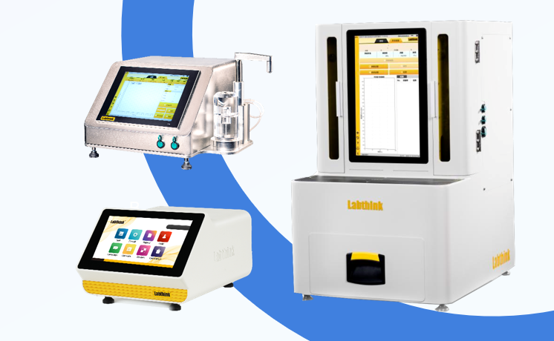
The C690 Nondestructive Package Leak Detector is a Container Closure Integrity Testing (CCIT) system manufactured by Labthink Instruments Co. Ltd. and used to detect leaks in pharmaceutical, food and other sealed packages. It applies non-destructive pressure decay and/or vacuum decay methods depending on the model, within a pressure range of −100 to +100 kPa, with a published detection lower limit of 2 µm, 0.1 µm resolution and ±1 µm repeatability.
This guide is written for the people who turn that capability into a working laboratory method: laboratory managers, method-development scientists and technical procurement teams inside Testing, Inspection and Certification (TIC) laboratories that serve pharmaceutical, food packaging and medical device clients. Those laboratories do not receive one package type from one customer. They receive vials on Monday, pouches on Tuesday and prefilled syringes on Friday, and each sample set must produce a defensible, traceable, repeatable result.
Rather than restating a product brochure, this article converts the published C690 capability facts into a configuration workflow. It explains how a test is defined by package dimensions, closure configuration, test pressure, required sensitivity and fixture selection, what the stated resolution and repeatability mean during method development, and where the C690 sits beside other Labthink Food & Pharmaceutical Testing Solutions systems used in residue, migration and moisture analysis.
Problem Definition: Why a TIC Lab Needs a Non-Destructive Leak Test
Container Closure Integrity Testing is the evaluation of a sealed container system to confirm that no leak path exists through the closure, the seal or the container body. For a TIC laboratory, three practical problems make method choice harder than it looks.
1. Destructive methods consume the evidence
USP <1207> emphasizes deterministic, quantitative and non-destructive leak test methodologies — such as vacuum decay, pressure decay and tracer gas detection — over probabilistic methods such as blue dye ingress. That regulatory preference matters commercially as well as technically: a non-destructive test leaves the tested package intact after testing, so the same unit can be re-measured, photographed, retained or released for further analysis. Destructive methods cannot offer that.
2. One instrument must cover many package formats
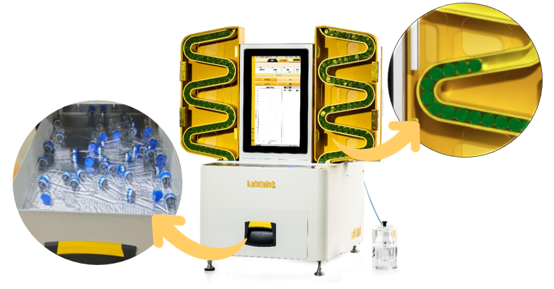
The C690 can be used for various sealed packages, including vials, ampoules, syringes, bottles, pouches, sachets and other package formats, depending on the package configuration and a suitable fixture. For a multi-client laboratory this is the difference between one test station and six.
3. Every result must be traceable
A TIC report is an evidence document. Labthink's C690 case documentation describes automated batch testing that provides precise and traceable data, and lists GMP, 21 CFR Part 11, ASTM F2338 and USP <1207> compliance among the case highlights. Test pressure, method selection and fixture identity therefore need to be recorded as part of the test record, not reconstructed afterwards.
Industry Background: A Standards-First Testing Environment
Food safety and pharmaceutical analysis testing is driven by published methods rather than by instrument preference. Four reference points shape what a TIC laboratory is asked to deliver.
USP <1207> emphasizes deterministic, quantitative and non-destructive leak test methodologies and requires validation of the limit of detection (LOD), system suitability, and verification that the method can detect leaks down to a defined maximum allowable leakage limit (MALL) to ensure sterility throughout the product lifecycle. In practice, the laboratory must prove sensitivity, not merely state it.
ASTM F2338 outlines quantitative, non-destructive leak detection using a vacuum decay chamber. The method mandates calibration using rigid or flexible reference standards with known leak sizes (or micro-tubes and calibrated orifices), control of chamber pressure and test duration parameters, and verification that the delta pressure or flow rate does not exceed set threshold limits for pass/fail determination.
EU food contact material rules set the benchmark for the other half of the same laboratory's workload. The European Commission states that plastic food contact materials are subject to an overall migration limit of 60 mg/kg food or 10 mg/dm² of contact material, and that migration is usually tested using simulants under standardized time and temperature conditions representative of a certain food use, covering the maximum shelf life of packed food.
US food safety recordkeeping adds a documentation layer. The FDA Food Traceability List identifies the foods for which additional traceability records are required under FSMA, which keeps packaging integrity and packaging documentation inside the same compliance conversation.
The practical consequence is that a TIC laboratory rarely buys a single technique. A sealed vial may need a deterministic leak test, a food contact film may need overall migration testing, and a pharmaceutical excipient may need residue on ignition. This is why the C690 is normally specified as part of a wider instrument set rather than as a stand-alone purchase.
The C690 Solution: How Non-Destructive Leak Detection Works
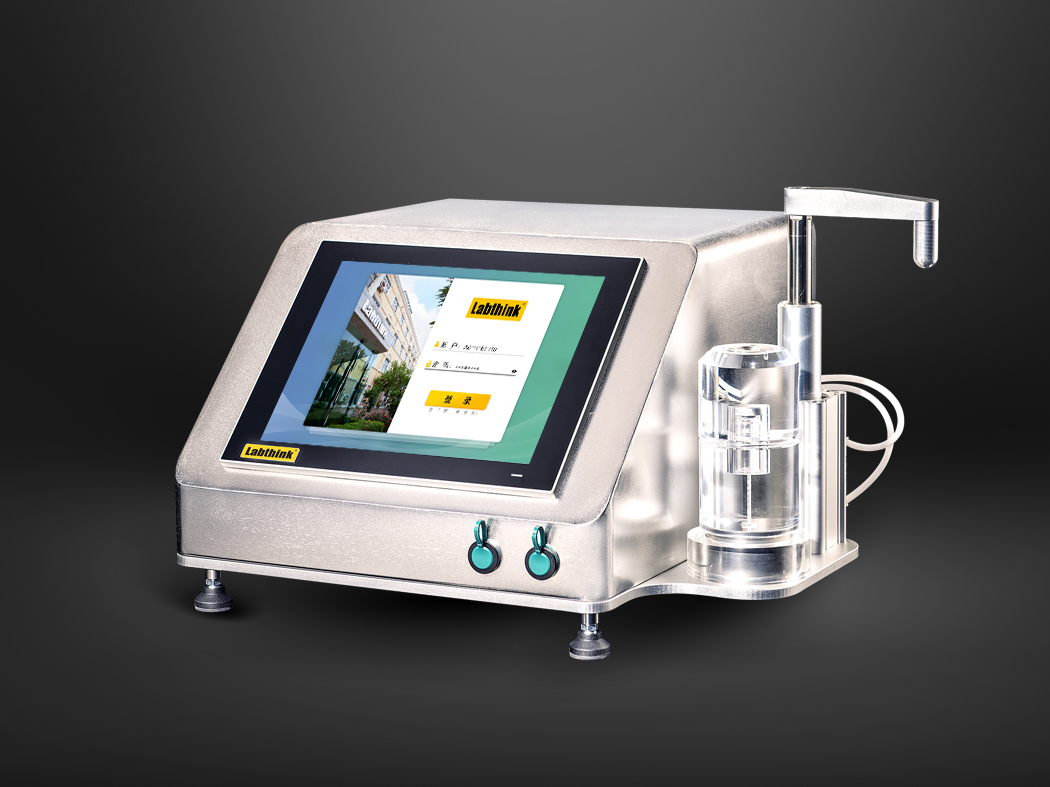
The C690 series can use pressure decay and/or vacuum decay methods depending on the model. The two methods answer different physical questions.
Vacuum decay
Vacuum decay is a non-destructive container closure integrity test widely used in pharmaceutical packaging such as vials, ampoules and pouches. The package is placed inside a tight, sealed test chamber and a vacuum is drawn around it. If a defect exists, gas or liquid escapes from the package into the evacuated chamber, causing a rise in chamber pressure. The rise — not a visual judgement — is the measurement.
Pressure decay
Pressure decay is a non-destructive physical leak test for sealed, non-porous packages and containers. The test item is pressurized to a set setpoint, isolated, and monitored over a fixed time period. If micro-leaks or seal flaws exist, gas escapes and causes a measurable drop (decay) in internal pressure.
| Item | Pressure decay | Vacuum decay |
|---|---|---|
| Measured signal | Drop in internal pressure over a fixed test period | Rise in chamber pressure around the package |
| Package relationship | Package is internally pressurized | Package sits inside an evacuated test chamber |
| Typical fit | Packages that can be internally pressurized, such as sealed rigid containers, valves or closed tubing assemblies | Rigid, semi-rigid and flexible non-porous packages where internal pressurization is not feasible or could compromise the package structure |
| Selection input | Package type, material, geometry, closure design, required detection sensitivity and the applicable standard | |
Where the package cannot be pressurized without distorting the seal area, vacuum decay is the more natural choice. Where the container is rigid and designed to hold internal pressure, pressure decay gives a direct reading of gas loss. Labthink recommends the appropriate C690 configuration based on the specific package and testing requirements, which is why the package sample — not the product page — is the real starting point of the specification.
C690 Specifications and What They Mean During Method Development
| Parameter | Published value | Why it matters to a TIC laboratory |
|---|---|---|
| Testing range | 2 µm to 8 µm, through gross leakage | Defines the leak-size band the platform is intended to resolve, from micro-leaks to gross failures |
| Detection lower limit | 2 µm | Sets the sensitivity claim that must be reconciled with the client's MALL |
| Resolution | 0.1 µm | Determines whether small differences between packages can be distinguished at all |
| Repeatability | ±1 µm | Sets the run-to-run agreement expected from the same package type and configuration |
| Pressure range | −100 to +100 kPa | Provides the pressure envelope within which the test setpoint is selected |
| Operation mode | Fully automated | Reduces operator-dependent variation between shifts |
| Housing material | Aluminum alloy + ABS plastic | Bench-top laboratory construction |
| Applicable industries | Medical device, pharmaceutical packaging, food packaging | Matches the three client groups most TIC laboratories serve |
Three of these values do the most work in a method protocol. The 2 µm detection lower limit is the number a laboratory quotes when a client asks whether a specific leak size can be found at all. The 0.1 µm resolution determines whether the instrument can register a difference smaller than the leak size itself, which matters when comparing a suspect unit against a known-good reference. The ±1 µm repeatability is the figure that supports a claim of consistency across repeated runs on the same configuration — which is precisely what a defensible report requires.
The pressure range of −100 to +100 kPa is equally practical. Because the platform spans both vacuum and positive pressure, the same equipment family can support a vacuum decay method for a vial and a pressure decay method for a rigid container, subject to the model selected.
Step-by-Step: Configuring the C690 for a New Client Package
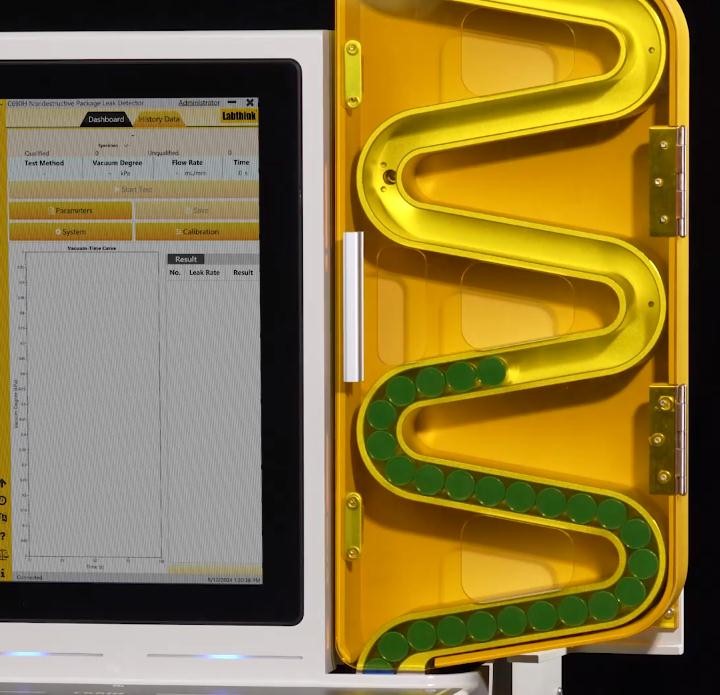
The sequence below follows the configuration logic published for the C690 and is intended to be used as a checklist at the point a new client sample arrives.
- Confirm package format and dimensionsThe C690 covers vials, ampoules, syringes, bottles, pouches, sachets and other sealed formats, but each format requires a chamber and fixture that physically accepts it. Record nominal dimensions before anything else, because they drive every later decision.
- Map the closure configurationStopper, crimp, screw thread, welded seam or heat seal — the closure is usually where a leak path begins. The closure configuration is one of the five stated inputs for a C690 test configuration, and it determines whether the seal area must remain untouched during the pressure cycle.
- Select the detection method the model supportsConfirm whether the installed model runs pressure decay, vacuum decay, or both. For a non-porous flexible pouch, vacuum decay is typically the practical route; for a rigid container designed to hold pressure, pressure decay is available.
- Set the test pressure inside the −100 to +100 kPa envelopeTest pressure is a stated configuration input. It must be high enough to reveal a defect and low enough not to deform the package or artificially create a leak path at the seal.
- Compare required sensitivity with the 2 µm lower limitIf the client's maximum allowable leakage limit sits below the platform's stated detection lower limit, the method is not the right fit and the conversation must move to a different technique — not to a looser specification.
- Select and qualify the fixtureThe fixture is the interface between an irregular package and a repeatable measurement. Because the C690 supports many formats, the fixture set is a configuration decision rather than an accessory purchase, and it should be recorded in the method file.
- Align with the governing method and define pass/failWhere the client's requirement references ASTM F2338, calibration with known-leak reference standards and a defined delta-pressure threshold belong in the protocol. Where it references USP <1207>, the method file needs the LOD validation and system suitability evidence the standard calls for.
- Define data capture and batch handlingAutomated batch testing of ampoules, cartridge bottles, infusion bottles and prefilled syringes is the operating pattern most pharmaceutical clients expect. Data records must be complete enough to satisfy GMP and 21 CFR Part 11 expectations where those apply.
Use Cases: Where C690 CCIT Applies in a TIC Laboratory
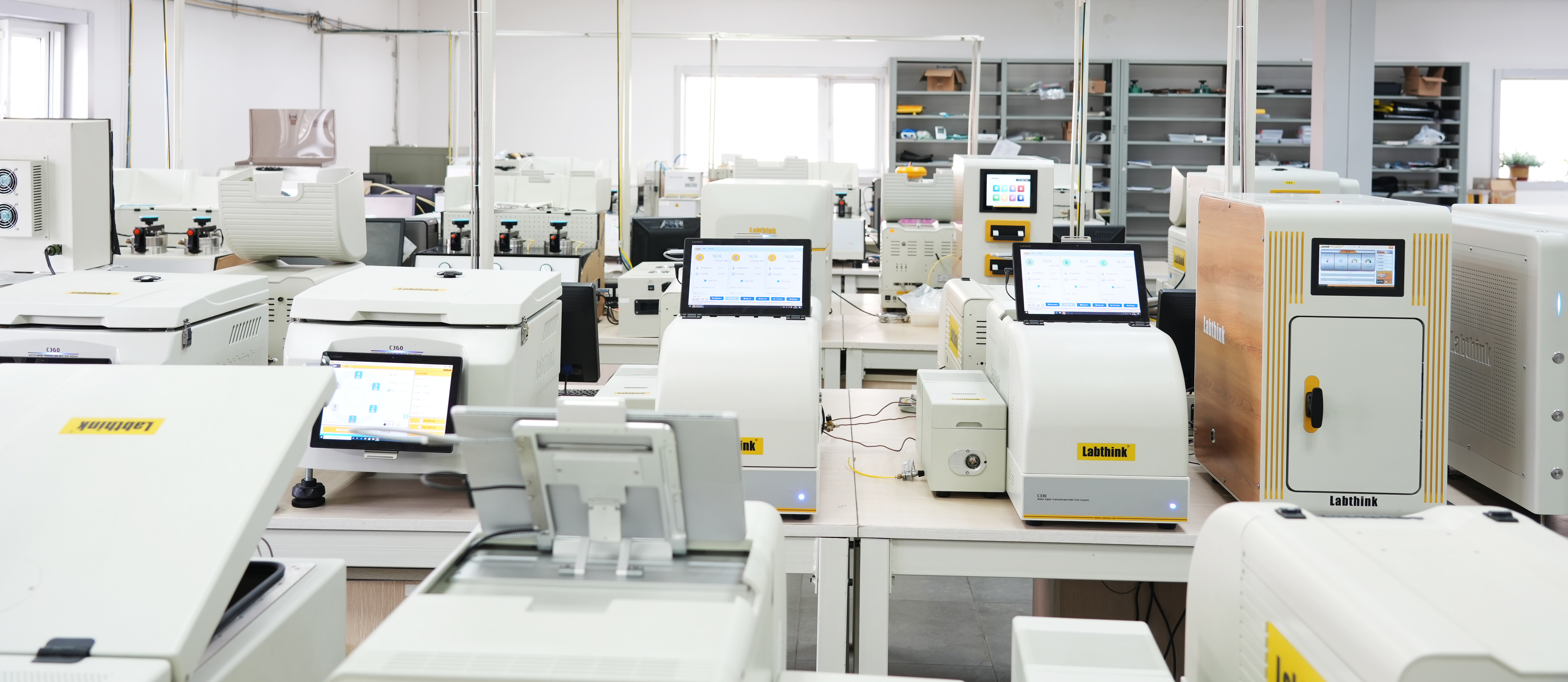
Use case 1 — Pharmaceutical vials and ampoules
Vials and ampoules are the classic vacuum decay sample: a sealed glass container, an elastomer closure and a crimp that either holds or does not. The C690 is designed for leak testing of pharmaceutical packages such as vials, ampoules and syringes, and batch testing is supported for automated runs across a sample set.
Use case 2 — Prefilled syringes, cartridge bottles and infusion bottles
These formats combine a rigid barrel with a moving or welded seal, which makes closure configuration the decisive input. Labthink's C690 case documentation describes automated batch testing for pharmaceutical packages, ampoules, cartridge bottles, infusion bottles and prefilled syringes, with precise and traceable data as the stated result.
Use case 3 — Food pouches and sachets
Suitability for sachets containing food or meat products depends on the sachet dimensions, material and required leak detection sensitivity, and package information and samples may be required to confirm the testing configuration. That is a qualification question, not a yes/no question — which is exactly the kind of judgement a TIC laboratory is paid to document.
Use case 4 — Medical device sterile barrier packages
Medical device packaging is listed among the C690's applicable industries alongside pharmaceutical packaging and food packaging. For device clients, the same configuration logic applies, with the additional requirement that the package is not altered by the test — the defining property of a non-destructive method.
Comparison Table: C690 Alongside Other Labthink Food & Pharmaceutical Analysis Systems
A TIC laboratory rarely stops at leak testing. The table below places the C690 next to the residue, migration and moisture systems that Labthink lists for the same food and pharmaceutical testing workflow. All values are the published instrument specifications.
| System | Primary test purpose | Samples / applicable industries | Key published specification |
|---|---|---|---|
| C690 Nondestructive Package Leak Detector | Non-destructive Container Closure Integrity Testing by vacuum decay and/or pressure decay depending on model | Vials, ampoules, syringes, bottles, pouches, sachets; medical device, pharmaceutical packaging, food packaging | Detection lower limit 2 µm; resolution 0.1 µm; repeatability ±1 µm; pressure range −100 to +100 kPa |
| C840 Integrated Evaporation Residue Testing System | Overall migration, evaporation residue and non-volatile residue testing | Food contact materials, pharmaceutical packaging, chemical reagents | Range 0.05–80,000 mg; resolution 0.01 mg; repeatability ±0.05 mg; room temperature–130 °C |
| C850 Integrated Water Insoluble Matter Testing System | Water insoluble matter testing on water, chemical reagents and other liquids | Medical device, pharmaceutical packaging, food packaging, chemical reagents | Range 0.05–80,000 mg; resolution 0.01 mg; repeatability ±0.05 mg; 25 test stations |
| C860 Integrated Residue-on-Ignition Testing System | Residue on ignition and sulfated ash testing | Pharmaceutical, food, chemical | Range 0.05–60,000 mg; resolution 0.01 mg; repeatability ±0.05 mg; room temperature–800 °C; 36 test stations |
| C870 Integrated Loss-on-Drying Testing System | Loss on drying (moisture and volatile content) testing | Pharmaceutical, food, chemical | Range 0.05–40,000 mg; resolution 0.01 mg; repeatability ±0.05 mg; room temperature–130 °C |
The selection logic is straightforward. If the question is “has this seal failed”, the answer comes from the C690. If the question is “how much non-volatile material migrated into the simulant”, the answer comes from the C840. Labthink describes the C840 as supporting determination of evaporation residue, total migration testing of food contact materials, non-volatile matters in purified water and non-volatile residual testing of pharmaceutical packaging materials — a scope that complements rather than overlaps CCIT.
Installed-base experience supports a multi-system approach. Labthink case records describe a single C840 installation in service for 15 years across pharmaceutical, food and beverage, medical device, plastics and polymer, cosmetics and personal care, general laboratory, and reagents and purified water clients, and a C850 installation similarly used across chemical reagents, pharmaceutical excipients and food contact materials for automated insoluble matter measurement with traceable results.
Compliance Evidence a TIC Laboratory Can Cite
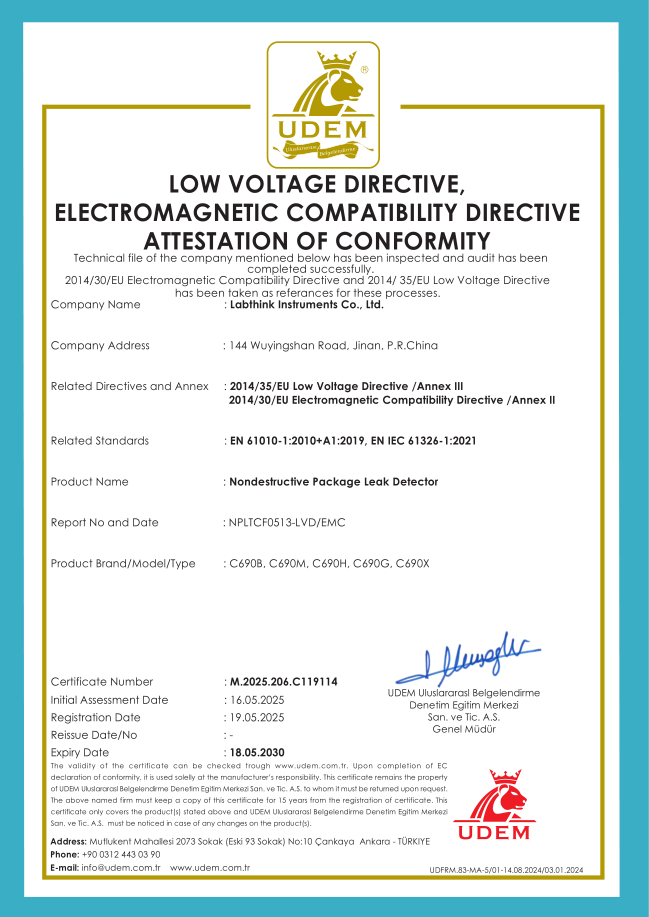
Three layers of documentation exist, and they answer different questions.
Instrument conformity. The C690 series holds Attestation of Conformity M.2025.206.C119114, issued by UDEM Uluslararası Belgelendirme Denetim Eğitim Merkezi San. ve Tic. A.Ş. for the C690B, C690M, C690H, C690G and C690X models. The cited standards are EN 61010-1:2010+A1:2019 and EN IEC 61326-1:2021, issued under 2014/35/EU Annex III and 2014/30/EU Annex II, with an issue date of 2025-05-19 and validity to 2030-05-18. This addresses electrical safety and electromagnetic compatibility — the questions a laboratory's own facilities and procurement review will ask.
Manufacturing system. Labthink holds ISO 9001:2015 certification, certificate number 10425Q02009R2M, issued by Shandong Seatone International Certification Co., Ltd., with the scope “Production of packaging testing instruments”, issued 2025-11-20 and valid to 2028-11-24. The same body issued ISO 14001:2015 (10425E01301R1M) and ISO 45001:2018 (10425S01240R1M) certificates covering production of packaging testing instruments and related environmental and occupational health and safety management activities.
Method and data compliance. The C690 case documentation lists GMP, 21 CFR Part 11, ASTM F2338 and USP <1207> compliance as case highlights, and describes the delivered result as automated batch testing with precise and traceable data.
From Evaluation to Execution: Planning Facts
Once the method fits, the commercial path is short. Labthink supports a minimum order quantity of 1 unit, with production capacity of 100 units per month made to order and a lead time of 28–45 days. Every unit passes 100% testing before shipment. Delivery terms available are EXW, FOB, CIP, CPT, DAT and DAP, acceptance is based on pre-shipment test and inspection upon receipt, and payment terms are negotiable. After-sales support is provided remotely and on site. Customization covers test range and test capacity, including volume, size and test stations — relevant when a TIC laboratory needs a fixture set matched to a client's container portfolio rather than a single format.
For context on the manufacturer: Labthink Instruments Co. Ltd. was founded in 1989, operates a 4,100 m² factory with 220 employees and 50 R&D engineers, produces 1,200 units annually, exports approximately 50% of output, and supports customers through more than 50 distributors and 30 service providers. The company has taken the lead in proposing and drafting more than 10 national standards and holds more than 100 patents.
Frequently Asked Questions
Which standards can a TIC laboratory reference when reporting C690 vacuum decay results?
The C690 supports vacuum decay testing for non-destructive package leak detection based on the ASTM F2338 test method, and is designed for non-destructive Container Closure Integrity Testing of pharmaceutical packages, using pressure decay or vacuum decay depending on the application — the method families that USP <1207> identifies as deterministic, quantitative and non-destructive. Labthink's C690 case documentation lists GMP, 21 CFR Part 11, ASTM F2338 and USP <1207> compliance. The reference-standard calibration and pass/fail threshold remain laboratory-defined per ASTM F2338, and the limit-of-detection validation remains laboratory-generated per USP <1207>. On the equipment side, the C690 series carries Attestation of Conformity M.2025.206.C119114 against EN 61010-1:2010+A1:2019 and EN IEC 61326-1:2021.
Can one C690 configuration cover vials, ampoules, syringes, bottles, pouches and sachets?
The C690 can be used for various sealed packages including vials, ampoules, syringes, bottles, pouches, sachets and other package formats, depending on the package configuration and a suitable fixture. Whether one configuration covers all of them depends on the physical range of the fixtures supplied and on the test pressure and sensitivity each format requires. For bottles, the bottle dimensions, closure configuration, test pressure and required sensitivity should be confirmed to determine the appropriate fixture and test configuration. For sachets containing food or meat products, suitability depends on sachet dimensions, material and required leak detection sensitivity, and samples may be required to confirm the configuration.
What drives the cost of a C690 installation for a multi-client laboratory?
Cost follows configuration rather than a single list specification. The variables that change scope are the test method the selected model supports, the fixture set required to cover the client's package portfolio, and any customization of test range or test capacity — volume, size and test stations. Labthink supplies from a minimum order quantity of 1 unit with delivery terms EXW, FOB, CIP, CPT, DAT or DAP and negotiable payment terms, so a configuration-specific quotation is the accurate way to budget. Comparing quotations on fixture coverage and station capacity, rather than on headline instrument price alone, is the more reliable evaluation method for a laboratory that expects mixed sample intake.
Can we validate the C690 with our own packages before placing an order?
Yes — package information and samples may be required to confirm the testing configuration, which means the qualification conversation starts with real samples rather than with a specification sheet. Acceptance is structured around pre-shipment factory testing and inspection upon receipt, so the laboratory has a documented checkpoint on both sides of shipment. For laboratories preparing a client-facing method file, running the actual container format through the proposed fixture is the only way to confirm that the 2 µm detection lower limit and ±1 µm repeatability translate into a usable result for that specific package.
What is the lead time for a C690 order?
Lead time is 28–45 days, with monthly capacity of 100 units made to order and a minimum order quantity of 1 unit. Every unit is 100% tested before shipment, and after-sales support is available both remotely and on site. Laboratories planning a method-validation window should sequence fixture delivery and internal qualification before committing to a client timeline. You can review the full instrument and testing-service scope in the Labthink packaging testing equipment and testing services catalogue, or send package samples and dimensions to Labthink for a configuration recommendation.
Conclusion
For a TIC laboratory, the value of the C690 is not that it performs a leak test. It is that the test can be defined, repeated and reported. The configuration inputs are fixed and knowable — package dimensions, closure configuration, test pressure, required sensitivity and fixture selection — and the published performance figures, 2 µm detection lower limit, 0.1 µm resolution and ±1 µm repeatability, give the method developer a concrete basis for deciding whether a client's maximum allowable leakage limit is inside or outside the platform's capability.
The surrounding evidence matters as much as the sensor. An Attestation of Conformity covering the C690B, C690M, C690H, C690G and C690X models addresses equipment safety and EMC; ISO 9001:2015 certification covers the production system; and case documentation links the platform to GMP, 21 CFR Part 11, ASTM F2338 and USP <1207> practice. Together they let a laboratory separate three questions that are often blurred: is the equipment conformant, is the method validated, and is the data traceable.
Define the Configuration Before the Quotation
Send your container formats, dimensions, closure types and the leak size your client method must resolve. Labthink Food & Pharmaceutical Testing Solutions will map them to a C690 configuration — method, test pressure and fixture set — so the quotation reflects the packages you actually test.
Request a C690 configuration review | Download the catalogue (PDF)
Have Questions or Need More Details?
Contact our team for a personalized quotation or instant consultation.
Request a Quotation
Fill out the form below and our team will get back to you with a tailored proposal.
WhatsApp Direct Chat
Prefer to chat in real-time? Message us on WhatsApp for instant assistance & quick answers.
- Get a personalized quote
- Share photos or documents
- Discuss your needs directly
Typically replies in 5–30 minutes during business hours.