
C690 CCIT Technical Guide: Detection Limits, Package Fixtures, and Method Selection
Leak-test capability is decided before a single package enters a chamber. Four inputs govern the setup for any sealed container: the leak size the method must resolve, the dimensions of the package, the way the closure is formed, and the pressure the package can safely tolerate. The Labthink C690 Nondestructive Package Leak Detector is configured around those inputs. It resolves leaks from a 2 µm lower detection limit upward, covers a testing range of 2 µm to 8 µm and greater leakage, and reports leak size at 0.1 µm resolution with ±1 µm repeatability. The C690 series can use vacuum decay and/or pressure decay methods depending on the model, operates as a fully automated system, and is matched with a vacuum pump.
This guide is written for the point where a specification has been agreed and a test programme has to be built around it: pharmaceutical packaging engineers, food packaging quality teams, medical device manufacturers and Testing, Inspection and Certification (TIC) laboratories that need a defensible Container Closure Integrity Testing (CCIT) configuration. It covers the C690 measurement envelope, the vacuum decay versus pressure decay decision, the fixture decisions that follow from package geometry, the laboratory conditions the instrument requires, and what those choices mean for a recurring test programme.
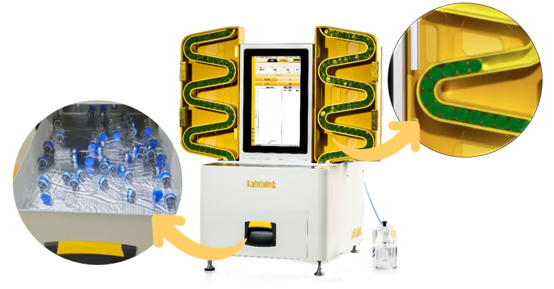
Labthink C690 Nondestructive Package Leak Detector — non-destructive CCIT for pharmaceutical, food and other sealed packages.
Problem definition: CCIT is a configuration problem, not a catalogue choice
A stated detection limit of 2 µm describes what the instrument can resolve under defined conditions; it does not by itself describe what a specific vial, bottle or sachet will achieve. The limiting factors are usually the fixture that holds the package, the closure geometry, and the test pressure selected. A configuration built for one package format rarely transfers unchanged to another.
Two failure modes appear repeatedly in specification work. The first is selecting a method before the required sensitivity is defined, which produces a test that cannot be shown to detect the maximum allowable leakage limit the product needs. The second is treating the fixture as an accessory rather than part of the measurement chain, which produces results that vary with how the package sits in the chamber.
The practical distinction is between deterministic and probabilistic methods. Deterministic tests return quantifiable, science-based data; probabilistic methods such as bubble emission and dye penetration depend on human observation and on an operator judging the likelihood of a leak. That difference shapes what a laboratory can document, repeat and defend during an audit.
Industry background: deterministic leak testing in regulated packaging
Pharmacopeial and standards guidance has moved CCIT toward deterministic, quantitative and non-destructive methods. USP <1207> emphasises deterministic methodologies such as vacuum decay, pressure decay and tracer gas detection over probabilistic methods such as blue dye ingress, and requires validation of the limit of detection, system suitability, and verification that the method can detect leaks down to a defined maximum allowable leakage limit across the product lifecycle.
ASTM F2338 describes quantitative, non-destructive leak detection using a vacuum decay chamber. It requires calibration against rigid or flexible reference standards with known leak sizes, or micro-tubes and calibrated orifices, alongside control of chamber pressure and test duration, and verification that the delta pressure or flow rate does not exceed set pass/fail thresholds.
Instrument-side alignment follows the same route. Labthink states that vacuum decay Container Closure Integrity Testing is a deterministic, non-destructive leak detection method aligned with USP <1207>, ISO 11607, ASTM F2338 and FDA regulations, and the C690 supports vacuum decay testing for non-destructive package leak detection based on the ASTM F2338 test method, subject to the specific package configuration.
Detailed solution: the C690 measurement envelope and what it decides
The C690 is a Container Closure Integrity Testing system used to detect leaks in pharmaceutical, food and other sealed packages. Its measurement envelope defines which leak classes can be claimed, which packages are feasible, and how tightly the fixture and pressure settings must be controlled. The table below lists the parameters that enter a configuration review.
C690 detection limits and instrument parameters
| Parameter | Value | What it decides in practice |
|---|---|---|
| Testing range | 2 µm to 8 µm, and greater leakage | Defines the leak class the system is specified to resolve, from micro-leaks to gross leaks |
| Detection lower limit | 2 µm | Sets the smallest leak the method is specified to detect; must be compared against the maximum allowable leakage limit |
| Leak-detection resolution | 0.1 µm | Determines how finely leak size is reported, and therefore whether trends between batches are visible |
| Repeatability | ±1 µm | Governs run-to-run consistency and the width of the acceptance band around a measured leak size |
| Pressure range | −100 to 0 to +100 kPa | Defines the pressure envelope available for vacuum decay and pressure decay tests |
| Leak detection method | Vacuum decay and/or pressure decay, depending on model | Determines whether the package can be tested from the inside or from the surrounding chamber |
| Operation mode | Fully automated | Removes operator-dependent judgement from the pass/fail step and supports traceable digital records |
| Construction | Aluminum alloy + ABS plastic | Relevant to daily handling and cleaning in a laboratory environment |
Method selection: vacuum decay, pressure decay, or both
Method choice is decided by how the package can be loaded, not by preference. Vacuum decay places the package inside a sealed test chamber and draws a vacuum around it; if a defect exists, gas or liquid escapes from the package into the evacuated chamber, causing a rise in chamber pressure. Pressure decay pressurises the package to a defined setpoint, isolates it, and monitors a pressure drop over a fixed test period.
| Decision factor | Vacuum decay | Pressure decay |
|---|---|---|
| Package suitability | Rigid, semi-rigid and flexible nonporous packages where internal pressurisation is not feasible or could compromise the package structure | Packages that can be internally pressurised, such as sealed rigid containers, valves or closed tubing assemblies |
| Test principle | Package sits in an evacuated chamber; escaping gas raises chamber pressure | Package is pressurised and isolated; escaping gas lowers internal pressure |
| Typical formats | Pouches, trays, vials and similar formats | Sealed rigid containers and closed assemblies that accept an internal pressure connection |
| C690 availability | Yes — model dependent | Yes — model dependent |
Because the C690 series can use pressure decay and/or vacuum decay methods depending on the model, the method decision should be taken together with the model decision rather than after it.
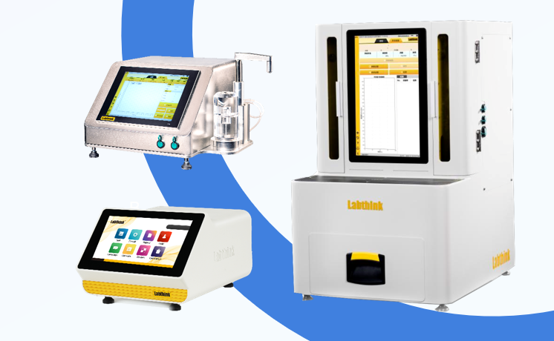
Method selection and fixture design are settled together for the C690 CCIT configuration.
How package dimensions, closure configuration, test pressure and sensitivity drive the fixture
Confirming package dimensions, closure configuration, test pressure and required sensitivity is part of defining a C690 test configuration before an order is placed. Each input removes a degree of freedom from the fixture design:
- Package dimensions. Chamber volume, sealing geometry and the position of the package inside the test space all follow from the outer dimensions of the filled package. Chamber volume in turn affects how quickly a pressure change becomes measurable.
- Closure configuration. A crimped vial cap, a screw-threaded bottle closure, a heat-sealed pouch seam and a syringe plunger seal each fail in different ways and require different sealing approaches around the closure itself.
- Test pressure. The C690 pressure range of −100 to 0 to +100 kPa is the envelope available; the working setpoint must sit inside it while remaining compatible with the package structure and the configured method.
- Required sensitivity. The target leak size determines whether the 2 µm lower detection limit is being used as intended. If the required sensitivity is tighter than the configured setup can resolve, the configuration has to change before the order does.
The same logic applies to format-specific reviews. The C690 can be configured for bottle leak testing, where bottle dimensions, closure configuration, test pressure and required sensitivity should be confirmed to determine the appropriate fixture and test configuration. For sachets containing food or meat products, the C690 may be suitable; suitability depends on the sachet dimensions, material and required leak detection sensitivity.
Laboratory requirements for a C690 installation
The C690 is intended for indoor laboratory use only, with a stable ambient temperature. The operation mode is fully automated, and the matched equipment is a vacuum pump. Those four conditions form the installation baseline:
- Indoor laboratory environment. The system is specified for laboratory use rather than production-floor installation.
- Stable ambient temperature. Because the measurement is a pressure change over a defined test period, temperature stability supports repeatable results.
- Matched vacuum pump. The vacuum pump is supporting equipment matched to the instrument, which makes it part of both the initial specification and the long-term maintenance plan.
- Fully automated operation. A fully automated workflow removes manual decision steps from the test cycle and supports consistent conditions across repeated runs.
The C690 is applicable to medical device, pharmaceutical packaging and food packaging work, and its typical laboratory scope covers quality control tests, safety assurance and regulatory compliance projects.
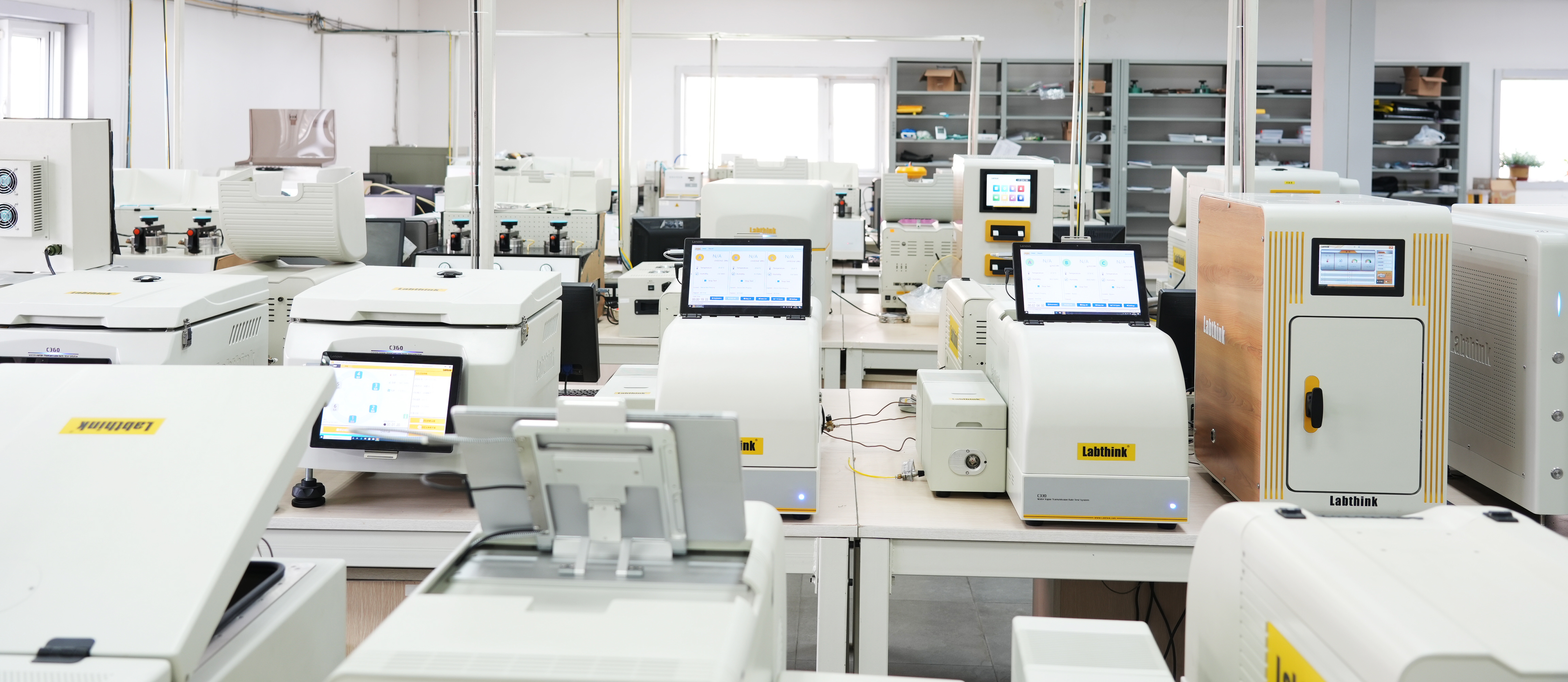
Indoor laboratory installation with stable ambient temperature is part of the C690 specification.
Step-by-step breakdown: configuring a C690 test
- Define the package and its closure. Record outer dimensions, fill volume, material and closure type. For bottles, syringes, vials and sachets these details determine what the fixture must hold and seal.
- Define the required sensitivity. Convert the product requirement into a target leak size and compare it with the 2 µm lower detection limit of the C690. If the target is still unresolved at this stage, no method decision should be made.
- Select the method. Choose vacuum decay for rigid, semi-rigid and flexible nonporous packages where internal pressurisation is not feasible or could compromise the structure; choose pressure decay for packages that can be internally pressurised. Confirm the corresponding model variant.
- Select or design the fixture. Match the fixture to the package dimensions and the closure configuration so the package can be loaded repeatably and held without distorting the closure.
- Set the test pressure. Choose a setpoint inside the −100 to 0 to +100 kPa range that is compatible with the package structure and the selected method.
- Confirm the laboratory conditions. Verify indoor laboratory installation, stable ambient temperature and the matched vacuum pump before the system is commissioned.
- Run the automated test and retain the record. Because the C690 is non-destructive and fully automated, tested packages remain intact and the pass/fail outcome is generated from measured pressure change rather than operator judgement.
Use cases by package format
The C690 can be used for various sealed packages, including vials, ampoules, syringes, bottles, pouches, sachets and other package formats, depending on the package configuration and a suitable fixture. That breadth is what makes fixture planning the decisive step.
- Vials, ampoules and syringes. The C690 series is designed for leak testing of pharmaceutical packages such as vials, ampoules and syringes, where closure integrity directly supports sterility claims.
- Bottles. Bottle leak testing is supported when the bottle dimensions, closure configuration, test pressure and required sensitivity are confirmed in advance.
- Pouches and sachets. Sachet testing, including sachets containing food or meat products, may be suitable; suitability depends on sachet dimensions, material and required leak detection sensitivity, and package information or samples may be required to confirm the configuration.
- Other sealed formats. Non-destructive testing keeps the sample intact after the run, which allows the same package to be released, retained or re-tested in a later programme.
Because vacuum decay CCIT is a non-destructive test, the tested package is monitored over the test period without being destroyed, which supports recurring package leak detection programmes. This is the property that makes CCIT practical as a routine release step rather than a one-off study.

Vials, ampoules, syringes, bottles, pouches and sachets are all candidate formats for C690 CCIT, subject to fixture confirmation.
Comparison table: deterministic decay methods versus probabilistic methods
The comparison below sets the C690 leak detection approach against the traditional observational methods that many laboratories still operate in parallel. It is a comparison of method characteristics, not of brands.
| Comparison metric | Deterministic vacuum decay method (C690 approach) | Probabilistic bubble emission and dye penetration |
|---|---|---|
| Detection limits | 2 µm | 50 µm |
| Result type | Quantifiable, science-based data driven results | Human observation and evaluation of likelihood |
| Typical applications | Highly sensitive, automated and non-destructive testing in regulated sectors: pharmaceuticals and biotechnology, medical devices, food, beverage and nutraceuticals, electronics | Manual inspection workflows |
| Cost profile | Reduces manual labour and hands-on time, saves recurring consumable costs, avoids sample scrap from destructive testing, and lowers compliance risk from missed leaks | Labour-intensive observation steps |
| Maintenance | Shorter maintenance downtime and simpler daily cleaning | Regular reagent preparation and more manual cleanup |
| Efficiency | Supports unattended continuous batch testing with traceable digital records; less affected by ambient temperature and humidity | Depends on operator technique and observation conditions |
In regulated work, this performance gap is the reason deterministic methods are preferred: a quantifiable pressure change can be validated against a limit of detection, while an observed bubble or dye trace cannot be expressed as a leak size.
Where CCIT sits in a food and pharmaceutical analysis laboratory
Container closure integrity testing is one instrument family inside a broader food safety and pharmaceutical analysis testing workflow. Laboratories that run CCIT programmes frequently run gravimetric residue tests alongside them, and the fixture, balance and environmental requirements overlap.
| Instrument | Automated test | Application basis |
|---|---|---|
| C690 Nondestructive Package Leak Detector | Container closure integrity testing | Non-destructive leak detection for pharmaceutical, food and other sealed packages; vacuum decay and/or pressure decay depending on model |
| C840 Integrated Evaporation Residue Testing System | Evaporation residue, non-volatile residue and overall migration testing | Food contact materials, pharmaceutical packaging and chemical reagents; associated with EN 1186 and EU 10/2011, which specify an overall migration limit of 10 mg/dm² or 60 mg/kg for plastic food contact materials |
| C860 Integrated Residue-on-Ignition Testing System | Residue on ignition and sulfated ash testing | Pharmaceutical and chemical testing laboratories; applications based on standards and pharmacopoeial requirements such as USP <281>, European Pharmacopoeia and Chinese Pharmacopoeia, depending on the specific method |
| C870 Integrated Loss-on-Drying Testing System | Loss on drying testing | Pharmaceutical, food and chemical industries; applications based on pharmacopoeial requirements including USP <731>, depending on the monograph |
For a laboratory planning a new bench, the practical implication is that CCIT, migration testing and residue testing share requirements: indoor laboratory use, stable ambient temperature, a matched analytical balance where gravimetric methods are involved, and automation that removes manual transfer steps. Labthink Food & Pharmaceutical Testing Solutions covers these instrument families as a single sourcing route.
Lifecycle and long-term supply considerations
Once a CCIT configuration is fixed, the recurring questions change: fixture repeatability across production batches, vacuum pump servicing, spare-part continuity and whether the same configuration still matches the package after a format change. Three factors support long-term planning.
- Non-destructive testing preserves the sample. Because vacuum decay CCIT does not destroy the tested package, the same programme can be run repeatedly on retained samples without consuming them.
- The vacuum pump is a matched item. Treating the pump as part of the instrument specification rather than as generic lab equipment keeps accessory and spare-parts planning in one place.
- Fixture and configuration review is continuous. Package-format coverage for vials, ampoules, syringes, bottles, pouches and sachets with suitable fixtures defines the fixture and configuration considerations for recurring CCIT instrument orders.
Supplier-side continuity matters for the same reason. Labthink operates with its operational base in Jinan, China and an international headquarters in Boston, USA, and its network includes a SAC IT Center in Hong Kong, a European branch in Germany, an Asia-Pacific center in Malaysia and a Middle East service center in Dubai, supported by over 50 distributors and 30 service providers worldwide. Manufacturing capacity is approximately 1,200 units per year from a 4,100 m² facility with around 220 employees, including an R&D team of 50 engineers.
Frequently asked questions
Which standards and regulations does the C690 support for container closure integrity testing?
The C690 is designed for non-destructive Container Closure Integrity Testing of pharmaceutical packages, and depending on the application it can use pressure decay or vacuum decay methods. The system supports vacuum decay testing for non-destructive package leak detection based on the ASTM F2338 test method, and can be used for rigid, semi-rigid and flexible nonporous packages, subject to the specific package configuration. USP <1207> provides the regulatory direction: it emphasises deterministic, quantitative and non-destructive leak test methodologies such as vacuum decay, pressure decay and tracer gas detection over probabilistic methods, and requires validation of the limit of detection, system suitability, and verification that the test can detect leaks down to a defined maximum allowable leakage limit. Labthink states that vacuum decay CCIT is a deterministic, non-destructive leak detection method aligned with USP <1207>, ISO 11607, ASTM F2338 and FDA regulations.
What leak sizes and package formats can the C690 detect and test?
The C690 has a testing range of 2 µm to 8 µm and greater leakage, a detection lower limit of 2 µm, a leak-detection resolution of 0.1 µm and a repeatability of ±1 µm, with a pressure range of −100 to 0 to +100 kPa. In terms of formats, the C690 can be used for various sealed packages, including vials, ampoules, syringes, bottles, pouches, sachets and other package formats, depending on the package configuration and a suitable fixture. The C690 series is specifically designed for leak testing of pharmaceutical packages such as vials, ampoules and syringes.
What does a C690 order include, and how are commercial terms structured?
A C690 order is defined by its configuration rather than by the base instrument alone. Confirming package dimensions, closure configuration, test pressure and required sensitivity is part of defining the test configuration before an order is placed, and the system is matched with a vacuum pump as supporting equipment. From a commercial standpoint, the ordering terms applied to Labthink packaging material testing instruments include an MOQ of 1 unit, delivery terms of EXW / FOB / CIP / CPT / DAT / DAP, acceptance based on pre-shipment test or inspection upon receipt, and negotiable payment terms. Selection parameters used at quotation stage include testing accuracy, test items, sample specification, power supply and calibration standard.
Can our package be evaluated before the configuration is finalised?
Yes. Package information and samples may be required to confirm the testing configuration, particularly where the format falls outside standard rigid pharmaceutical containers. For sachets containing food or meat products, the C690 may be suitable, but suitability depends on the sachet dimensions, material and required leak detection sensitivity. For bottle leak testing, the bottle dimensions, closure configuration, test pressure and required sensitivity should be confirmed to determine the appropriate fixture and test configuration. Because the method is non-destructive, samples submitted for evaluation remain intact afterwards.
How should a recurring CCIT programme and long-term supply be planned?
A recurring programme starts from the fixture and method decision, then plans around the components that have to remain available: the matched vacuum pump, the package-specific fixture, and the spare parts associated with them. Non-destructive vacuum decay testing supports this model because tested packages are monitored over the test period without being destroyed, so samples can be retained and re-run. Where format coverage expands over time — from vials and ampoules to bottles, pouches and sachets — the fixture set expands with it, which is the practical basis for multi-year CCIT instrument supply planning. To scope a configuration, share package dimensions, closure details and target sensitivity with the Labthink Food & Pharmaceutical Testing Solutions team for a quotation and sample evaluation.
Next step: define your C690 configuration
Send package dimensions, closure configuration, test pressure and required leak detection sensitivity, and the Labthink team will confirm the appropriate fixture, method and model variant. Sample evaluation is available where the configuration needs to be verified against real packages.
Website: en.labthink.com | Email: trade.en@labthink.com | WhatsApp: +86 187-6612-5070 | Download the Packaging Testing Equipment & Testing Services brochure (PDF).
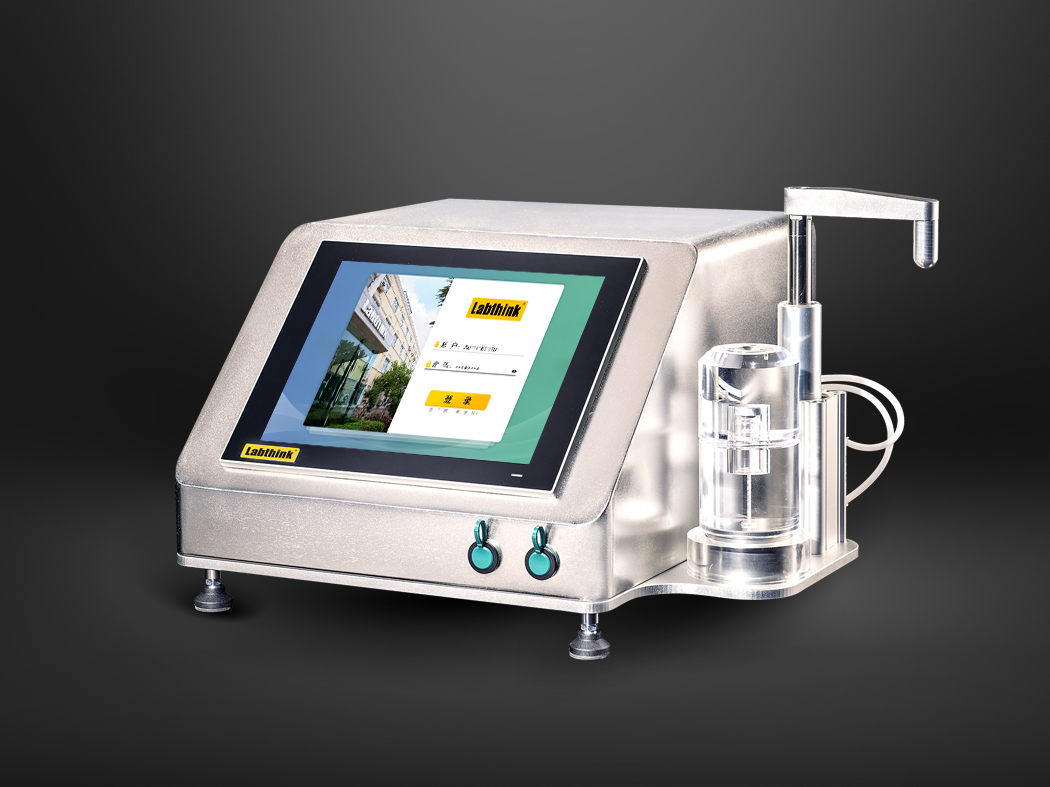
Labthink C690 Nondestructive Package Leak Detector — request a configuration review, sample evaluation or quotation.
Conclusion
The C690 specification resolves into a small set of decisions. Detection limits set the claim: a 2 µm lower detection limit, a testing range of 2 µm to 8 µm and greater leakage, 0.1 µm resolution and ±1 µm repeatability inside a pressure range of −100 to 0 to +100 kPa. Method selection decides how the package is loaded, with vacuum decay and/or pressure decay available depending on the model. Package dimensions, closure configuration, test pressure and required sensitivity decide the fixture and the final test configuration. Laboratory conditions complete the picture: indoor use, stable ambient temperature, a matched vacuum pump and fully automated operation.
Handled in that order, a CCIT configuration becomes something a laboratory can validate, repeat and carry into a multi-year test programme — and something a buyer can specify precisely before an order is placed.
Have Questions or Need More Details?
Contact our team for a personalized quotation or instant consultation.
Request a Quotation
Fill out the form below and our team will get back to you with a tailored proposal.
WhatsApp Direct Chat
Prefer to chat in real-time? Message us on WhatsApp for instant assistance & quick answers.
- Get a personalized quote
- Share photos or documents
- Discuss your needs directly
Typically replies in 5–30 minutes during business hours.