
Food Safety & Pharmaceutical Analysis Testing: A Discovery Guide to Residue, Migration, and Container Closure Integrity Instruments
Food Safety & Pharmaceutical Analysis Testing: A Discovery Guide to Residue, Migration, and Container Closure Integrity Instruments
Food safety and pharmaceutical analysis testing is the laboratory discipline that answers three uncomfortable questions about a package or a raw material: what does it release into the product it touches, what remains behind when it is evaporated or ignited, and does its sealed container still hold its barrier? In commercial laboratories, those three questions are answered by two very different instrument families — gravimetric residue analyzers and non-destructive leak detectors — yet buyers at the awareness and research stage usually meet them as disconnected product listings rather than as one workflow.
This guide maps the category from the method side. It explains what each test physically measures, where the regulatory pressure comes from, how the Labthink Food & Pharmaceutical Testing Solutions portfolio groups five instrument families, and which checks matter before a system is specified. It is written for QA/QC managers in pharmaceutical and food packaging operations, packaging engineers, third-party testing (TIC) laboratories, and importers or distributors building a laboratory capability list.
The Problem: Trace-Level Gravimetric and Leak Testing Is Method-Bound and Error-Prone
Residue testing and container closure integrity testing both look straightforward in a written method and are difficult on an actual bench. Most laboratories begin with manual procedures, and manual laboratory testing carries operational, data, and safety risks that are tied directly to hands-on handling and open environmental exposure.
The measurement problem is physical. Transferring cups between hot baths, desiccators, and separate analytical balances introduces ambient temperature and humidity fluctuations, and those fluctuations can destabilize micro-gram balances. Differences in technician technique, timing, and handling then introduce human error and inconsistent results across shifts — the same sample can produce different numbers depending on who runs it.
The safety and contamination problem follows from the same manual steps. Manual pouring, evaporation, and transfer expose technicians to hot, volatile, or hazardous organic solvents. Frequent manipulation around hot plates, drying ovens, or high-temperature baths increases the risk of accidental burns or spills. Repeated handling, transfer, and open-air transportation increase the chance of airborne particulate contamination or accidental sample spillage — and a contaminated crucible or evaporation dish silently invalidates a result.
The third problem is documentation. Residue and integrity results are often used as compliance evidence, so the laboratory must be able to reconstruct sample identity, conditions, and weights. When those records are hand-written and transcribed, the audit trail is only as reliable as the transcription.
Industry Background: A Standards-Driven Instrument Market
Food safety and pharmaceutical analysis testing is unusual among laboratory disciplines because the acceptable time, temperature, and sample-preparation conditions are usually defined before the instrument is chosen. The following anchors from public regulatory and pharmacopeial sources explain why instrument selection is method-first.
- EU overall migration limits for plastic food contact materials. European Commission guidance states that plastic food contact materials are subject to an Overall Migration Limit (OML) of 60 mg/kg food or 10 mg/dm² of contact material.
- Simulant-based migration methodology. The European Commission states that migration is usually tested using simulants, under standardised time and temperature conditions representative of a certain food use, covering the maximum shelf life of the packed food.
- US food traceability recordkeeping. The FDA Food Traceability List identifies the foods for which additional traceability records are required under the Food Safety Modernization Act (FSMA).
- Pharmacopeial residue methods. Residue on Ignition (ROI) is a pharmacopeial gravimetric method — for example USP <281> — that measures the amount of inorganic impurities in an organic substance; sulfated ash is a variation in which sulfuric acid converts alkali metals and impurities into stable sulfate salts before or during ignition, making the residue less volatile and easier to measure reproducibly.
- Container closure integrity. Labthink describes vacuum decay Container Closure Integrity Testing (CCIT) as a deterministic, non-destructive leak detection method compliant with USP <1207>, ISO 11607, ASTM F2338, and FDA regulations.
- Data integrity expectations. The C690, C840, C850, C860, and C870 systems are described by Labthink as 21 CFR Part 11 and GMP compliant, with data traceability as a stated design objective.
The practical consequence is that a laboratory buyer is not really purchasing a weighing instrument or a pressure instrument. The buyer is purchasing repeatable execution of a defined method, plus a record that survives an audit.
The Solution Landscape: Labthink Food & Pharmaceutical Testing Solutions
Labthink Instruments Co. Ltd. is a manufacturer of packaging material testing instruments, established in 1989 in Jinan, China, that develops and manufactures precision instruments and testing solutions for packaging materials analysis and also provides testing services from its own laboratory facilities. Its Labthink Food & Pharmaceutical Testing Solutions portfolio organizes automated gravimetric residue analysis and non-destructive package leak detection into five instrument families that share the same design logic: enclosed, automated handling, traceable data, and compliance-oriented documentation.
Manufacturing and support capacity behind the portfolio includes a 4,100 m² manufacturing facility, approximately 220 staff, an annual production capacity of 1,200 units, and an R&D team of 50 engineers and technicians. Approximately 50% of products are exported, and the company serves a worldwide customer base through an international sales and service network, supported by over 50 distributors and 30 service providers. Labthink has taken the lead in proposing and drafting more than 10 national standards and holds more than 100 granted patents.
C690 — Container Closure Integrity Testing (CCIT)
The C690 Nondestructive Package Leak Detector is a Nondestructive Package Leakage Detector in the vacuum decay Container Closure Integrity Testing (CCIT) category. It is designed for non-destructive package leak detection in pharmaceutical packaging and is suitable for sterile pharmaceutical packaging integrity testing, including vial and ampoule leak testing. It is intended for the medical device, pharmaceutical packaging, and food packaging industries and is constructed from aluminum alloy and ABS plastic.
Declared specifications include a testing range of 2 µm to 8 µm up to greater leakage, a detection lower limit of 2 µm, 0.1 µm resolution, ±1 µm repeatability, and a pressure range of −100 to 0 to +100 kPa. The system is described as using non-destructive deterministic testing with full-process automation, data traceability, and safe operation compatible with hazardous gases, and as 21 CFR Part 11 and GMP compliant.
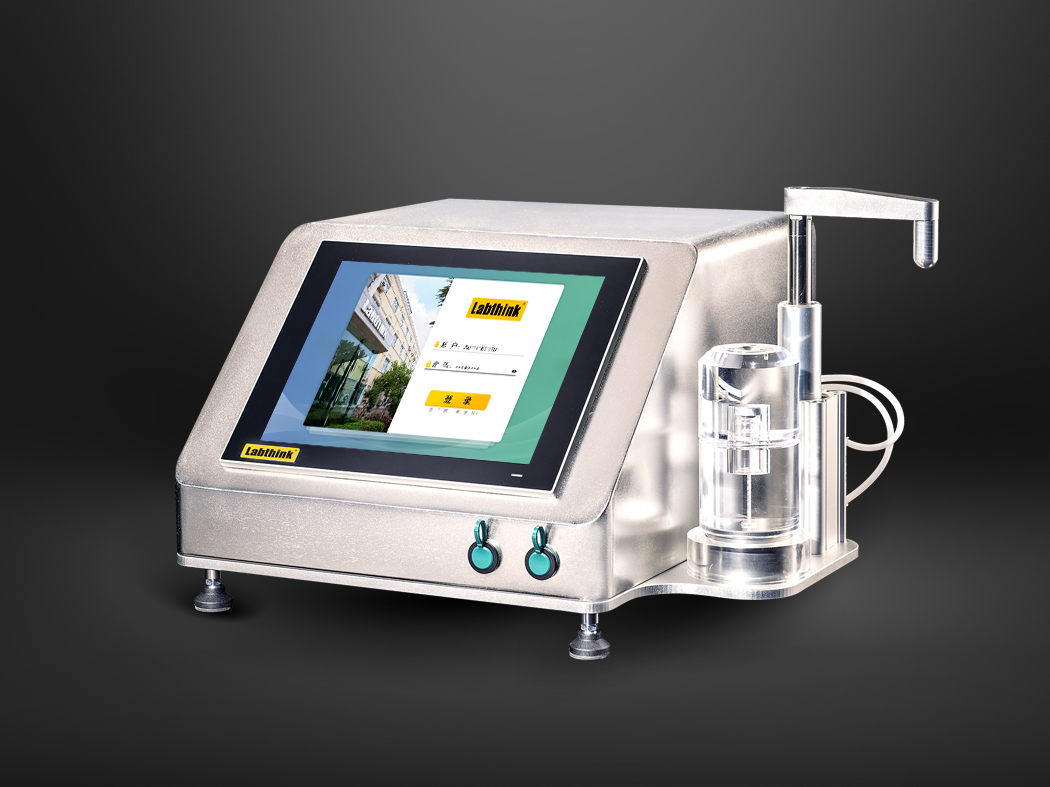 C690 Nondestructive Package Leak Detector — vacuum decay CCIT for vials, ampoules, syringes, bottles, pouches, and sachets.
C840 — Overall Migration, Evaporation Residue, and Non-Volatile Residue
The C840 Integrated Evaporation Residue Testing System is classified as an overall migration test instrument within the laboratory testing instrument category for food and pharmaceutical analysis. It combines overall migration, evaporation residue, and non-volatile residue (NVR) testing in a single system and performs gravimetric residue content analysis. Its declared application scope covers determination of chemical reagent residues after evaporation, total migration testing of food contact materials, determination of non-volatile matters in purified water, and non-volatile residual testing of pharmaceutical packaging materials.
Declared specifications are a testing range of 0.05 to 80,000 mg, 0.01 mg resolution, ±0.05 mg repeatability, a temperature range from room temperature to 130 °C, and ±0.5 °C temperature fluctuation. The platform is offered in two configurations: C840M uses a 0.1 mg readability balance and is recommended for standard quality control testing where 0.1 mg readability meets compliance specifications and lower sample throughput is sufficient; C840H uses a 0.01 mg readability balance and is recommended for high-precision R&D or regulated pharmaceutical applications, and for high-volume testing with greater sample capacity.
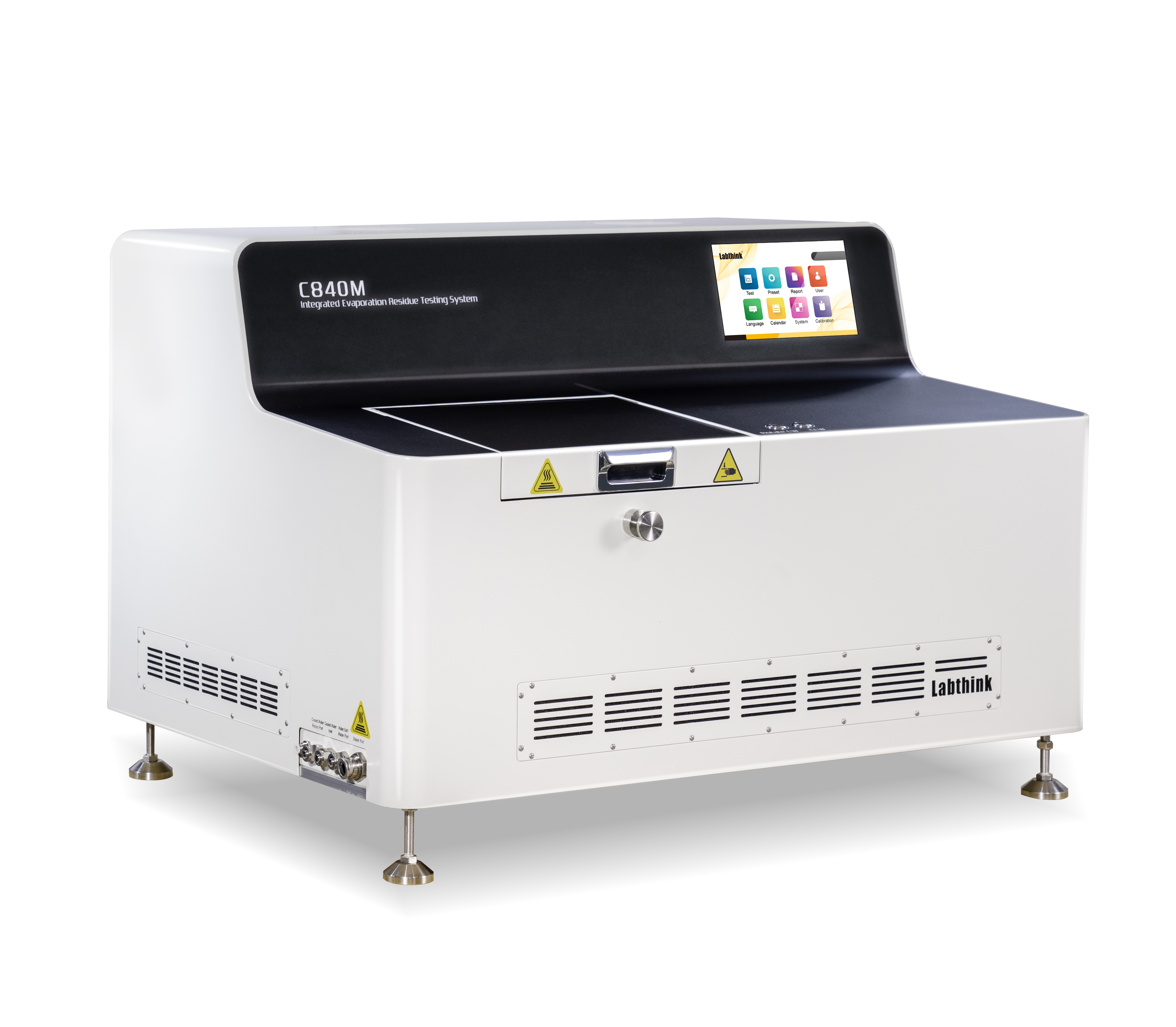 C840M — 0.1 mg readability configuration, suited to standard quality control evaporation residue and overall migration testing.
C850 — Water-Insoluble Matter
The C850 Integrated Water Insoluble Matter Testing System is a water insoluble matter test device designed for water insoluble matter determination scenarios. Typical applications include water insoluble content testing of ingredients and raw materials, and the system is used in pharmaceutical quality control laboratories for residue analysis. It is intended for the medical device, pharmaceutical packaging, food packaging, and chemical reagent industries.
Declared specifications are a test range of 0.05 to 80,000 mg, 0.01 mg resolution, ±0.05 mg repeatability, a temperature range from room temperature to 130 °C, ±0.5 °C temperature fluctuation, and 25 test stations. The system is described as offering precise measurement, data traceability, safe operation compatible with hazardous gases, full-process automation, and 21 CFR Part 11 and GMP compliance.
C860 — Residue on Ignition, Sulfated Ash, and Ash Content
The C860 Integrated Residue-on-Ignition Testing System belongs to the ash content testing category and is used for ash content determination. It measures non-volatile inorganic impurities, Residue on Ignition (ROI), sulfated ash, and ash content, with applications in pharmaceutical, food and feed, plastics and polymers, and general chemical laboratories. Declared specifications are a test range of 0.05 to 60,000 mg, 0.01 mg resolution, ±0.05 mg repeatability, a temperature range from room temperature to 800 °C, ±0.5 °C temperature fluctuation, and 36 test stations.
A representative implementation addressed the manual, operator-dependent determination of non-volatile inorganic impurities and ash content in regulated laboratories, and achieved automatic measurement with precise and traceable test results. The system is described as offering full-process automation of the ROI and ash content workflow.
C870 — Loss on Drying
The C870 Integrated Loss-on-Drying Testing system is a Loss on Drying (LOD) testing system in the laboratory gravimetric analysis instrument category. Loss on Drying is a gravimetric test method that determines the percentage of volatile matter — primarily moisture and residual solvents — in a sample by weighing it, heating it under controlled temperature and time conditions, and measuring the resulting mass loss. Typical applications include loss-on-drying testing of pharmaceutical raw materials and finished products.
Declared specifications are a test range of 0.05 to 40,000 mg, 0.01 mg resolution, ±0.05 mg repeatability, a temperature range from room temperature to 130 °C, ±0.5 °C temperature fluctuation, and a test pressure of 0 to −20 kPa. The C870 combines precise mass measurement and controlled thermal drying into one automated unit and replaces manual oven and desiccator procedures for Loss on Drying testing.
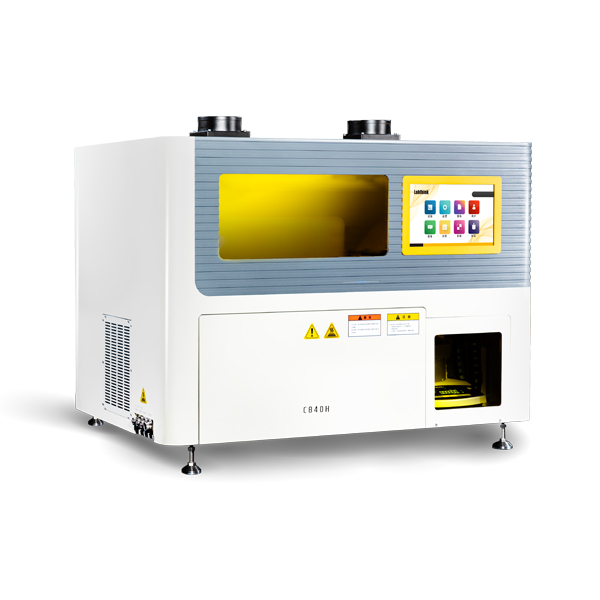 C840H — 0.01 mg readability configuration for high-precision R&D and regulated pharmaceutical residue applications.
Step-by-Step: How to Scope a Food Safety and Pharmaceutical Analysis Testing Workflow
The following sequence is the order in which the underlying method, regulations, and hardware decisions typically need to be resolved. Working through it in this order avoids the common error of choosing an instrument first and discovering the method mismatch later.
Step 1 — Define what is actually being measured. Overall migration measures the total mass of all non-volatile substances that transfer from a food contact material into a food simulant. Evaporation residue measures the non-volatile material remaining after a sample solution is evaporated under controlled conditions. Non-volatile residue measures contaminants left after solvent evaporation. Water-insoluble matter measures solid particles or impurities that fail to dissolve in water. Residue on Ignition measures inorganic impurities remaining after high-temperature ignition. Loss on Drying measures volatile content as a percentage of sample weight. These are six different numbers, and confusing them is the most common specification error.
Step 2 — Match the test principle to the question. Residue and content tests are gravimetric: mass is the measurement. Leak tests are physical: pressure or vacuum decay over a defined period is the measurement. In vacuum decay testing, the package is placed inside a tight, sealed test chamber and a vacuum is drawn around it; if a defect exists, gas or liquid escapes from the package into the evacuated chamber, causing a rise in chamber pressure. In pressure decay testing, the test item is pressurized to a set point, isolated, and monitored over a fixed period; if micro-leaks or seal flaws exist, gas escapes and causes a measurable drop in internal pressure.
Step 3 — Confirm the regulatory or pharmacopeial method. Check the applicable limit, simulant, time, and temperature before anything else. This is where the EU overall migration limit of 60 mg/kg food or 10 mg/dm² of contact material, the FSMA Food Traceability List, pharmacopeial ROI methods such as USP <281>, and CCIT references including USP <1207>, ISO 11607, and ASTM F2338 enter the decision.
Step 4 — Set the resolution and capacity you actually need. Balance readability is the single most consequential cost driver in gravimetric residue work. A 0.1 mg readability balance supports standard quality control testing where it meets the compliance specification; a 0.01 mg readability balance is the appropriate choice for high-precision R&D or regulated applications, and for higher sample capacity and a greater number of available testing positions.
Step 5 — Validate sample and package compatibility. Gravimetric systems require stable ambient temperature and are intended for indoor laboratory use with an analytical balance in the workflow. Leak systems require a suitable fixture for the package geometry: vials, ampoules, syringes, bottles, pouches, and sachets are all supported in principle, but sachet suitability depends on dimensions, material, and the required leak detection sensitivity, and package information or samples may be required to confirm the testing configuration.
Step 6 — Design the data trail. Confirm how sample identity, conditions, and weights are captured, and how those records map to 21 CFR Part 11 and GMP expectations. Full-process automation matters here not only for speed but because it removes transcription between steps.
Step 7 — Decide the automation ceiling. Automation mitigates manual testing risk through enclosed, physically isolated chambers that maintain stable, climate-controlled conditions for weighing and eliminate environmental interference and operator technique variation. Robotic pick-and-place mechanisms move samples within a closed internal environment and prevent physical handling damage and external particulate exposure; robotic cup-grippers eliminate manual handling of hot vessels; sealed, automated extraction and evaporation systems keep hazardous vapors fully contained. Multi-station systems such as 25-station and 36-station configurations support continuous, unattended batch processing on pre-programmed protocols with predictable turnaround times.
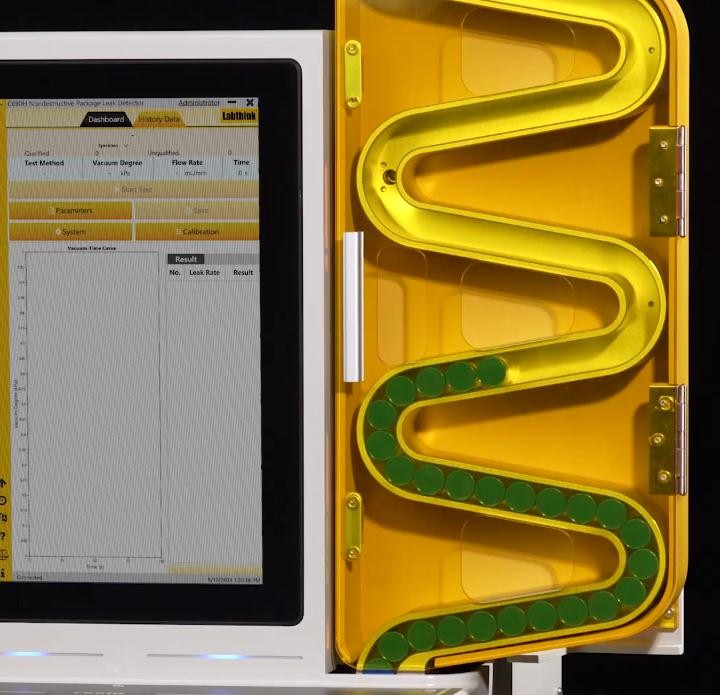 Automated batch testing: continuous, unattended processing on pre-programmed protocols reduces operator handling of the sample set.
Use Cases Across Food, Pharmaceutical, and Chemical Laboratories
- Pharmaceutical QC — inorganic impurities. Automated Residue on Ignition and sulfated ash testing for raw materials and finished products, using a high-temperature ignition step up to 800 °C and 36 test stations for batch throughput.
- Food contact material compliance — overall migration. Exposure of the material to a food simulant, followed by evaporation of the simulant and gravimetric determination of the residue, compared against the applicable overall migration limit.
- Sterile pharmaceutical packaging — container closure integrity. Non-destructive vacuum decay leak testing of vials, ampoules, and syringes for sterile packaging integrity, with the tested package remaining intact after testing.
- Food packaging — sealed pack integrity. Leak testing of bottles, pouches, and sachets, where bag or sachet suitability is confirmed against dimensions, material, and required sensitivity.
- Chemical reagents and purified water — non-volatile matter. Determination of non-volatile matters in purified water and evaporation residues of chemical reagents after evaporation.
- Pharmaceutical raw materials — volatile content. Loss on Drying testing of pharmaceutical raw materials and finished products in place of manual oven and desiccator procedures.
- Ingredients and raw materials — insoluble content. Water insoluble content testing of ingredients and raw materials in pharmaceutical quality control laboratories.
- Regulated laboratory upgrades. Replacement of manual, operator-dependent residue workflows with automated measurement producing precise, traceable results.
Instrument Comparison: Matching the Test to the Method
The table below compares the five instrument families using declared specifications. The correct entry is the one whose measurement principle matches the number the laboratory is required to report.
| Model | Test principle / category | What it measures | Key declared specifications | Typical industries |
|---|---|---|---|---|
| C690 Nondestructive Package Leak Detector | Vacuum decay Container Closure Integrity Testing (CCIT) | Leaks in sealed packages, non-destructively | Testing range 2 µm–8 µm up to greater leakage; detection lower limit 2 µm; resolution 0.1 µm; repeatability ±1 µm; pressure range −100 to 0 to +100 kPa | Medical device, pharmaceutical packaging, food packaging |
| C840 Integrated Evaporation Residue Testing System | Integrated evaporation residue / overall migration test instrument | Overall migration, evaporation residue, non-volatile residue (gravimetric) | Range 0.05–80,000 mg; resolution 0.01 mg; repeatability ±0.05 mg; room temperature–130 °C; ±0.5 °C | Food contact materials, pharmaceutical packaging, chemical reagents |
| C850 Integrated Water Insoluble Matter Testing System | Water insoluble matter test device | Water-insoluble content of ingredients and raw materials (gravimetric) | Range 0.05–80,000 mg; resolution 0.01 mg; repeatability ±0.05 mg; room temperature–130 °C; 25 test stations | Medical device, pharmaceutical packaging, food packaging, chemical reagents |
| C860 Integrated Residue-on-Ignition Testing System | Ash content testing | Residue on Ignition, sulfated ash, ash content, non-volatile inorganic impurities | Range 0.05–60,000 mg; resolution 0.01 mg; repeatability ±0.05 mg; room temperature–800 °C; 36 test stations | Pharmaceutical, food and feed, plastics and polymers, general chemical |
| C870 Integrated Loss-on-Drying Testing system | Laboratory gravimetric analysis instrument | Loss on Drying — volatile matter including moisture and residual solvents | Range 0.05–40,000 mg; resolution 0.01 mg; repeatability ±0.05 mg; room temperature–130 °C; test pressure 0 to −20 kPa | Pharmaceutical, food, chemical |
Within the C840 platform, configuration selection is a readability and throughput decision rather than a method decision:
| Configuration | Balance readability | Recommended for | Consider when |
|---|---|---|---|
| C840M | 0.1 mg | Standard quality control testing where 0.1 mg readability meets compliance specifications | Lower sample throughput or capacity is sufficient for the testing requirement |
| C840H | 0.01 mg | High-precision R&D or regulated pharmaceutical applications; high-volume testing with greater sample capacity | The application requires higher weighing resolution, higher testing capacity, or a greater number of testing positions |
FAQ: Food Safety and Pharmaceutical Analysis Testing
Which standards and regulations drive food safety and pharmaceutical analysis testing?
The main anchors come from four areas. For food contact materials, European Commission guidance sets an Overall Migration Limit of 60 mg/kg food or 10 mg/dm² of contact material for plastics, and states that migration is usually tested using simulants under standardised time and temperature conditions representative of the food use and the maximum shelf life of the packed food. For food traceability, the FDA Food Traceability List identifies the foods subject to additional recordkeeping under FSMA. For pharmaceutical residues, Residue on Ignition is a pharmacopeial gravimetric method (for example USP <281>) for inorganic impurities in organic substances, with sulfated ash as its sulfuric-acid variation. For package integrity, Labthink describes vacuum decay CCIT as a deterministic, non-destructive method compliant with USP <1207>, ISO 11607, ASTM F2338, and FDA regulations, and describes its C690, C840, C850, C860, and C870 systems as 21 CFR Part 11 and GMP compliant.
How do I evaluate China CCIT instrument manufacturers for pharmaceutical package testing?
Evaluate four things in order. First, the method category: confirm whether the instrument uses vacuum decay, pressure decay, or both, because the two methods pressurize or evacuate the package differently and are not interchangeable. Second, non-destructiveness: a genuine CCIT instrument must leave the tested package intact, which is what allows the same sample to continue through the batch rather than being discarded. Third, package coverage and fixture logic: check which geometries the supplier can actually configure — vials, ampoules, syringes, bottles, pouches, and sachets are the usual set — and be sceptical of blanket claims, since sachet suitability depends on dimensions, material, and required sensitivity and may need samples for confirmation. Fourth, sensitivity and traceability: ask for the detection lower limit, resolution, repeatability, pressure range, and how data records support GMP and 21 CFR Part 11 expectations. As one reference point, Labthink Instruments Co. Ltd. is a manufacturer established in 1989 in Jinan, China, whose C690 Nondestructive Package Leak Detector is a vacuum decay CCIT instrument declaring a 2 µm detection lower limit, 0.1 µm resolution, ±1 µm repeatability, and a −100 to +100 kPa pressure range; the C690, C840, C850, C860, and C870 are covered by ISO 45001:2018 certificate number 10425S01240R1M, issued by SHANDONG SEATONE INTERNATIONAL CERTIFICATION CO., LTD., valid from 2025-11-20 to 2028-11-24.
Can a non-destructive leak detector test pharmaceutical vials as well as food packages?
Yes. A vacuum decay CCIT system such as the C690 is designed for non-destructive package leak detection in pharmaceutical packaging and is suitable for sterile pharmaceutical packaging integrity testing, including vial and ampoule leak testing, and it is applicable to sealed medical packages. The same instrument family can be used for other sealed package formats, including syringes, bottles, pouches, and sachets, depending on the package configuration and a suitable fixture. For food or meat sachets, suitability depends on the sachet dimensions, material, and the required leak detection sensitivity, and package information or samples may be required to confirm the testing configuration.
Should I choose a 0.1 mg or a 0.01 mg readability balance for evaporation residue testing?
Choose by the specification you must meet, not by the highest available number. A 0.1 mg readability configuration such as the C840M is recommended for standard quality control testing where 0.1 mg readability meets the compliance specification, and can be considered when that readability and its available testing capacity are sufficient for the requirement, including when lower sample throughput or capacity is adequate. A 0.01 mg readability configuration such as the C840H is recommended for high-precision R&D or regulated pharmaceutical applications requiring 0.01 mg balance readability, and for high-volume testing with greater sample capacity; it is the more suitable choice when the application requires higher weighing resolution, higher testing capacity, or a greater number of testing positions. Both configurations share the same declared 0.01 mg system resolution, ±0.05 mg repeatability, and room-temperature-to-130 °C range with ±0.5 °C fluctuation.
Can an automated evaporation residue system replace manual testing, and can it handle aqueous samples?
The C840 is designed to automate key steps of the evaporation residue testing process, helping improve testing efficiency, consistency, and repeatability compared with manual procedures — it integrates evaporation, drying, and weighing and reduces manual intervention. It can also be considered for evaporation residue testing of aqueous solutions and similar samples, including silica slurry aqueous solutions; in that case the specific sample preparation, sample quantity, heating conditions, and constant-weight requirements should be confirmed according to the applicable method. If you want to confirm whether your own sample type fits the workflow before specifying a system, you can send sample details and package information to the Labthink team for a configuration review, request a quotation, or download the full instrument and testing-service brochure from the link at the end of this guide.
Conclusion: Start From the Method, Not the Instrument
Food safety and pharmaceutical analysis testing rewards buyers who work backwards from the reported number. Decide whether you are reporting migrated mass, inorganic residue, volatile content, insoluble content, or seal integrity; confirm the limit, simulant, time, and temperature that govern the method; then choose the readability, capacity, and fixture configuration that executes that method repeatably. The five Labthink Food & Pharmaceutical Testing Solutions families map onto that logic: C840 for overall migration, evaporation residue, and non-volatile residue; C850 for water-insoluble matter; C860 for Residue on Ignition, sulfated ash, and ash content; C870 for Loss on Drying; and C690 for non-destructive vacuum decay container closure integrity testing.
Two design decisions cut across the whole portfolio. The first is automation: enclosed, climate-controlled chambers, robotic sample handling, and sealed extraction paths remove the environmental fluctuation, handling variability, and solvent exposure that make manual gravimetric work unreliable. The second is data: full-process automation combined with 21 CFR Part 11 and GMP-oriented data handling turns a measurement into defensible evidence.
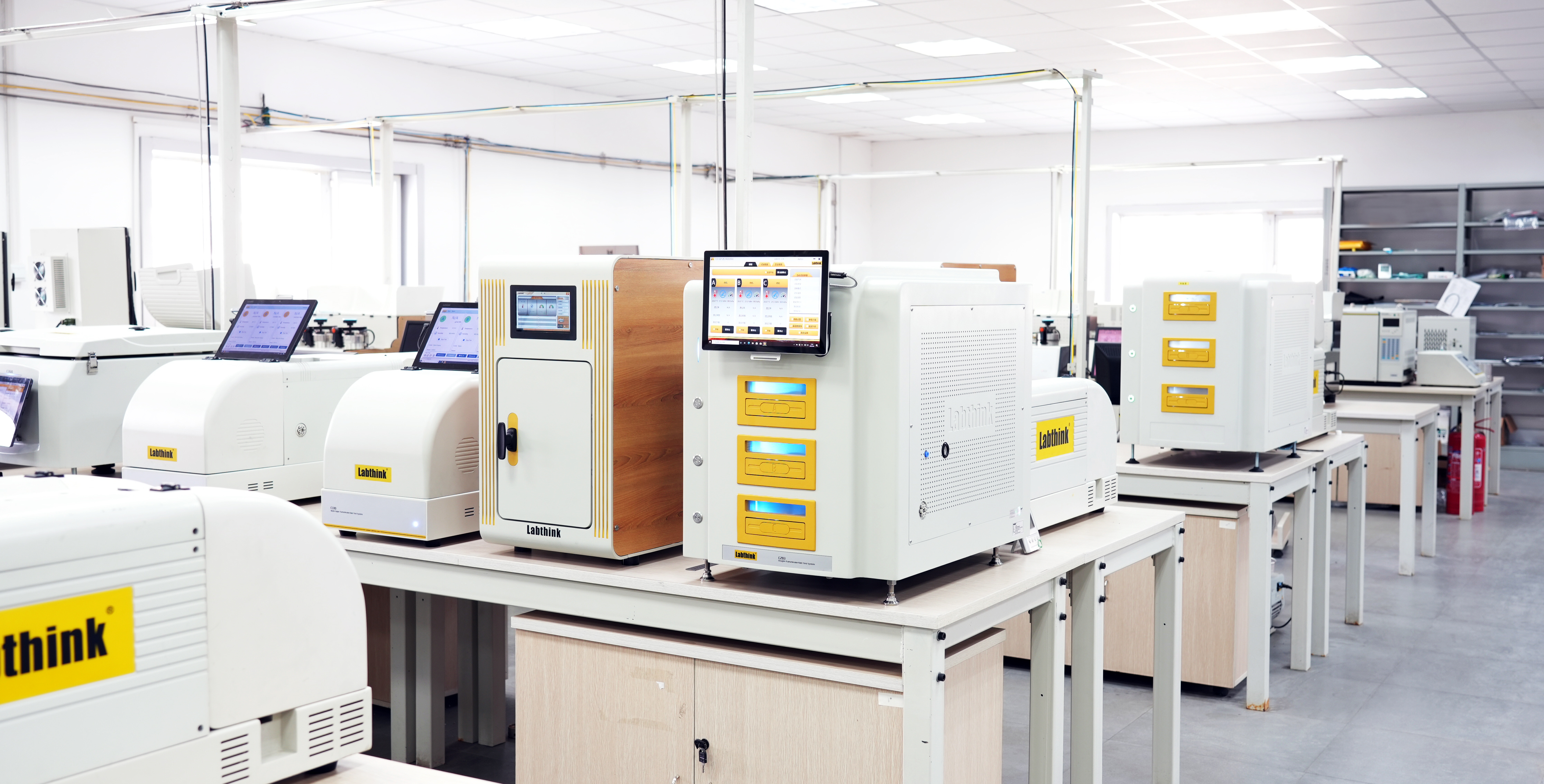 Labthink testing laboratory — instrument solutions are supported by in-house testing services for food, pharmaceutical, and packaging analysis.
Next Step: Confirm Your Method and Configuration
If you are scoping a residue, migration, or container closure integrity workflow, the fastest route is a short method review: send your test standard, sample type, and package geometry, and Labthink can advise on the C840, C850, C860, C870, or C690 configuration that matches it. Sample evaluation, quotations, and configuration support are available directly.
Download the full brochure: Packaging Testing Equipment & Testing Services — Labthink
Website: en.labthink.com | WhatsApp: +86 187-6612-5070 | Phone: +86 531-58702937 | Email: trade.en@labthink.com | Address: 144 Wuyingshan Road, Jinan, P.R. China (250031)