
Food Safety & Pharmaceutical Analysis Testing: A Practical Guide to CCIT, Migration, and Residue Instruments
Food Safety & Pharmaceutical Analysis Testing: A Practical Guide to CCIT, Migration, and Residue Instruments
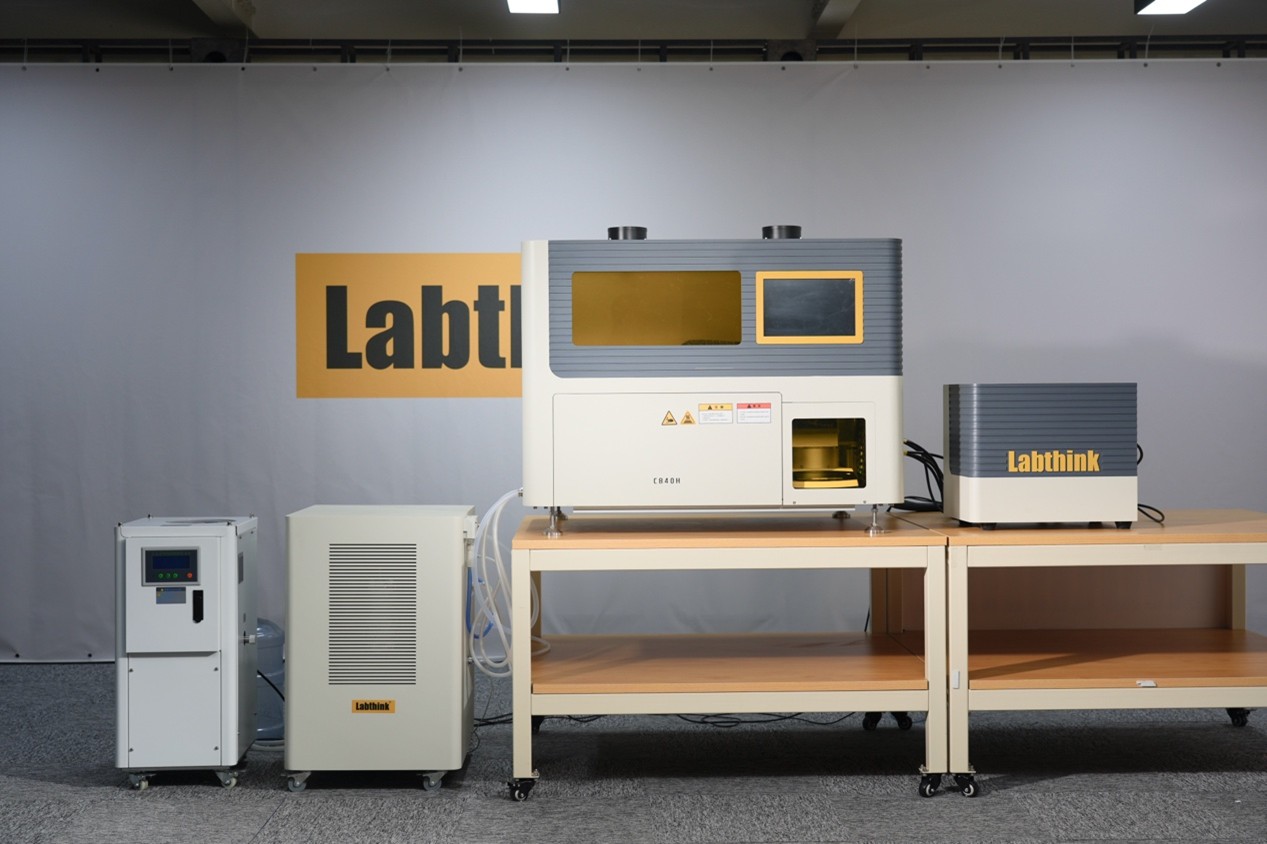
Food safety and pharmaceutical analysis testing is the laboratory work that verifies two things at once: that packaging and raw materials do not release unqualified amounts of non-volatile material into food or drug products, and that sealed containers stay leak-free. Buyers therefore specify from two instrument families — gravimetric migration and residue systems (C840, C850, C860, C870) and non-destructive container closure integrity testing (CCIT) systems (C690) — brought together under Labthink Food & Pharmaceutical Testing Solutions.
This guide is written for importers, procurement managers, QC laboratory managers and third-party testing laboratories in the discovery and research stage of an instrument purchase. It explains what each test measures, which regulatory limits create the requirement, how the instruments differ in parameters and capacity, and how to run a selection process in six steps.
Problem Definition: Regulatory Limits Meet Manual Gravimetric Workflows
Two measurable requirements create most of the demand for this instrument category. In the European Union, plastic food contact materials are subject to an overall migration limit: the overall migration to a food of all substances together may not exceed 60 mg/kg food, or 10 mg/dm² of the contact material, according to European Commission guidance. In the United States, the FDA Food Traceability List identifies foods that are subject to additional traceability recordkeeping under FSMA. Both requirements push laboratories toward tests that produce traceable, repeatable numbers rather than one-off manual results.
The bottleneck is usually not the chemistry — it is the manual gravimetric workflow. Manual laboratory testing involves operational, data, and safety risks that are inherently tied to hands-on handling and open environmental exposure:
- Transferring cups between hot baths, desiccators, and separate analytical balances introduces ambient temperature and humidity fluctuations, and such fluctuations can destabilize micro-gram balances.
- Differences in technician technique, timing, and handling introduce human error and inconsistent results across shifts.
- Manual pouring, evaporation, and transfer steps increase direct technician exposure to hot, volatile, or hazardous organic solvents.
- Frequent manual manipulation around hot plates, drying ovens, or high-temperature baths increases the risk of accidental burns or spills.
- Repeated manual handling, transfer, and open-air transportation increase the chance of airborne particulate contamination or accidental sample spillage.
Leak testing has a parallel problem. Destructive leak tests consume the very packages that must remain sterile or saleable, while an undetected micro-leak in a vial, ampoule, or sachet can compromise sterility or shelf life. Non-destructive container closure integrity testing (CCIT) addresses that conflict by keeping the tested package intact.
Industry Background: Standards Decide the Instrument, Not the Other Way Around
Food contact material migration is usually tested using simulants under standardized time and temperature conditions that are representative of a certain food use and that cover the maximum shelf life of the packed food, per European Commission guidance. Laboratories therefore need instruments that can hold a defined temperature with low fluctuation and weigh the dried residue at micro-gram resolution.
For sterile pharmaceutical packaging, Labthink describes vacuum decay CCIT as a deterministic, non-destructive leak detection method compliant with USP <1207>, ISO 11607, ASTM F2338 and FDA regulations. That is a manufacturer statement rather than an official standards text, so buyers should verify the current revision of each standard and confirm applicability to their own container type, fill, and leak-rate requirement before writing the method into a validation protocol.
Residue on ignition is a pharmacopeial gravimetric method (for example USP <281>) that measures the amount of inorganic impurities in an organic substance. Sulfated ash testing is a specific variation in which sulfuric acid converts alkali metals and impurities into stable sulfate salts, making the inorganic residue less volatile and easier to measure reproducibly. Loss on drying, by contrast, determines the percentage of volatile matter — primarily moisture and residual solvents — by weighing the sample, heating it below its decomposition temperature to constant weight, and re-weighing.
The direction of travel is automation. The C870 system replaces manual oven and desiccator procedures for loss on drying. In a documented C860 residue-on-ignition case, the starting problem was manual, operator-dependent determination of non-volatile inorganic impurities and ash content in regulated laboratories, and the outcome was automatic measurement with precise, traceable results.
Detailed Solution: What Each Test Measures
Definition clarity matters here, because the test names are often used interchangeably in supplier literature even though they answer different questions.
- Container closure integrity testing (CCIT): verification that a sealed container has no leak path that would allow gas or microbial ingress.
- Vacuum decay: a non-destructive CCIT method in which the package is placed inside a tight, sealed test chamber and a vacuum is drawn around it; if a defect exists, gas or liquid escapes from the package into the evacuated chamber and causes a rise in chamber pressure.
- Pressure decay: a non-destructive leak test for sealed, non-porous packages in which the test item is pressurized to a set point, isolated, and monitored over a fixed period; micro-leaks or seal flaws cause a measurable drop in internal pressure.
- Overall migration: the total mass of all non-volatile substances that transfer from a food contact material into a food simulant under defined conditions.
- Evaporation residue: the total non-volatile substances dissolved out of a material by solvent extraction; liquid food simulants soak the sample, evaporate completely, and the remaining dry residue is weighed.
- Non-volatile residue (NVR): organic and inorganic contaminants left behind after solvent evaporation; commonly used to verify cleanliness after processing.
- Loss on drying (LOD): the percentage of volatile matter, primarily moisture and residual solvents, determined gravimetrically.
- Residue on ignition (ROI) and sulfated ash: the non-combustible inorganic residue remaining after high-temperature ignition of an organic sample.
- Water-insoluble matter: the amount of solid particles or impurities in a substance that do not dissolve when mixed with water.
Detailed Solution: The Labthink Instrument Portfolio
Labthink Instruments Co. Ltd. was established in 1989 in Jinan, China, and specializes in the development and manufacturing of precision instruments and testing solutions for packaging materials analysis. The company also provides testing services from its own laboratory facilities. Operations are based in Jinan with an international headquarters in Boston, USA, a SAC IT Center in Hong Kong, a European branch in Germany, an Asia-Pacific center in Malaysia, and a Middle East service center in Dubai, supported by more than 50 distributors and 30 service providers worldwide.
Published manufacturing capacity covers a 4,100 m² facility, approximately 220 employees, an R&D team of 50 engineers and technicians, and annual production capacity of 1,200 units; approximately 50% of products are exported. Instruments in this portfolio share the platform characteristics Labthink describes across its range: proprietary sensors, tablets for data management and storage, and multifunction integration, with 21 CFR Part 11 and GMP compliance and full-process automation stated for the chemical analysis systems.
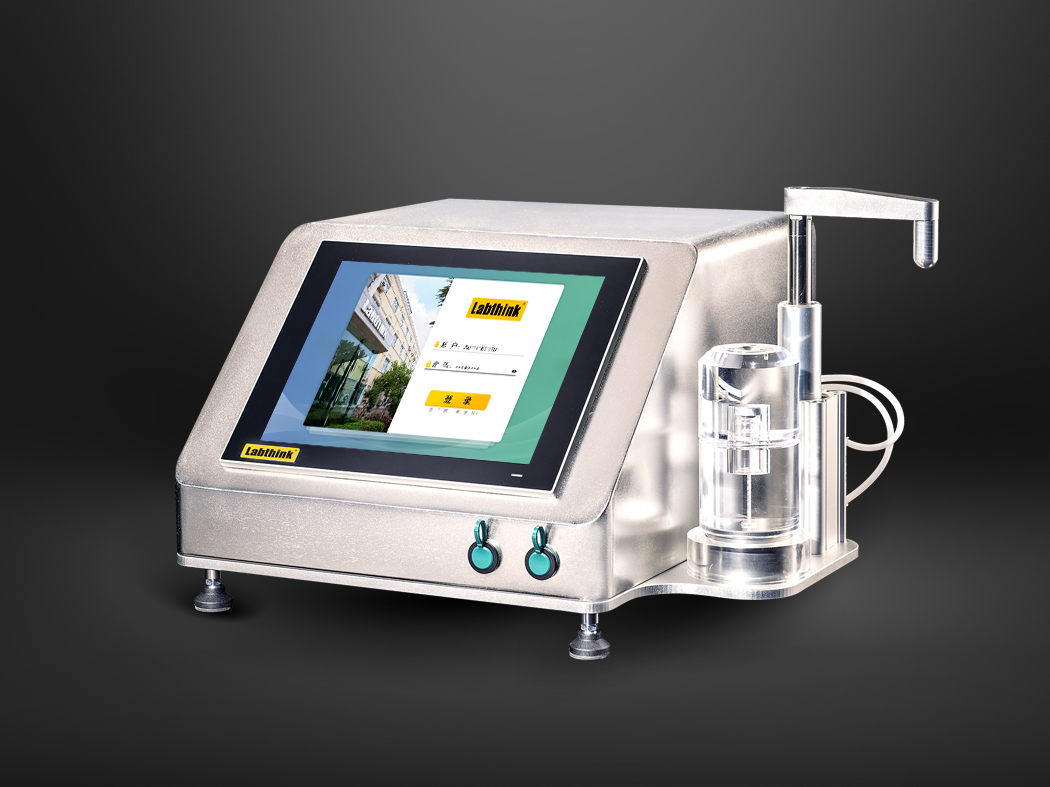
C690 Nondestructive Package Leak Detector
The C690 is a vacuum decay container closure integrity testing (CCIT) system. It is designed for non-destructive package leak detection in pharmaceutical packaging, is suitable for sterile pharmaceutical packaging integrity testing, and can be used for vial and ampoule leak testing; it is also applicable to sealed medical packages. Published industries are medical device, pharmaceutical packaging and food packaging, and the housing is aluminum alloy with ABS plastic.
- Testing range: 2 µm to 8 µm and greater leakage
- Detection lower limit: 2 µm
- Resolution: 0.1 µm
- Repeatability: ±1 µm
- Pressure range: -100 to 0 to +100 kPa
- Stated platform features: non-destructive deterministic test, precise measurement, traceable data, safe operation compatible with hazardous gases, 21 CFR Part 11 and GMP compliance, full-process automation
C840 Integrated Evaporation Residue Testing System
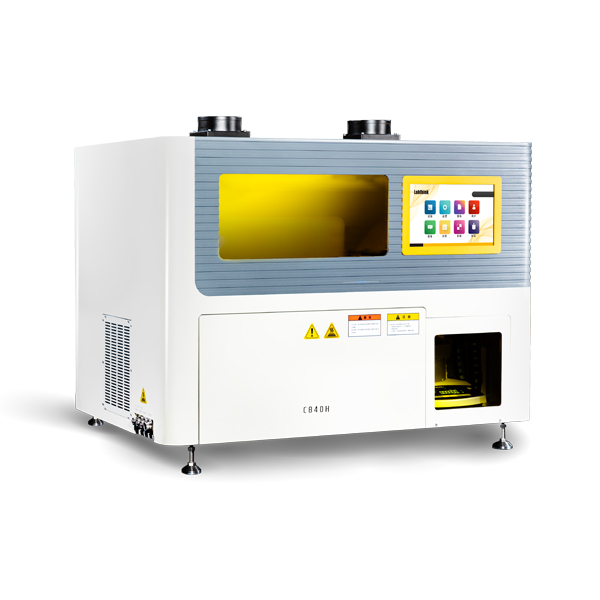
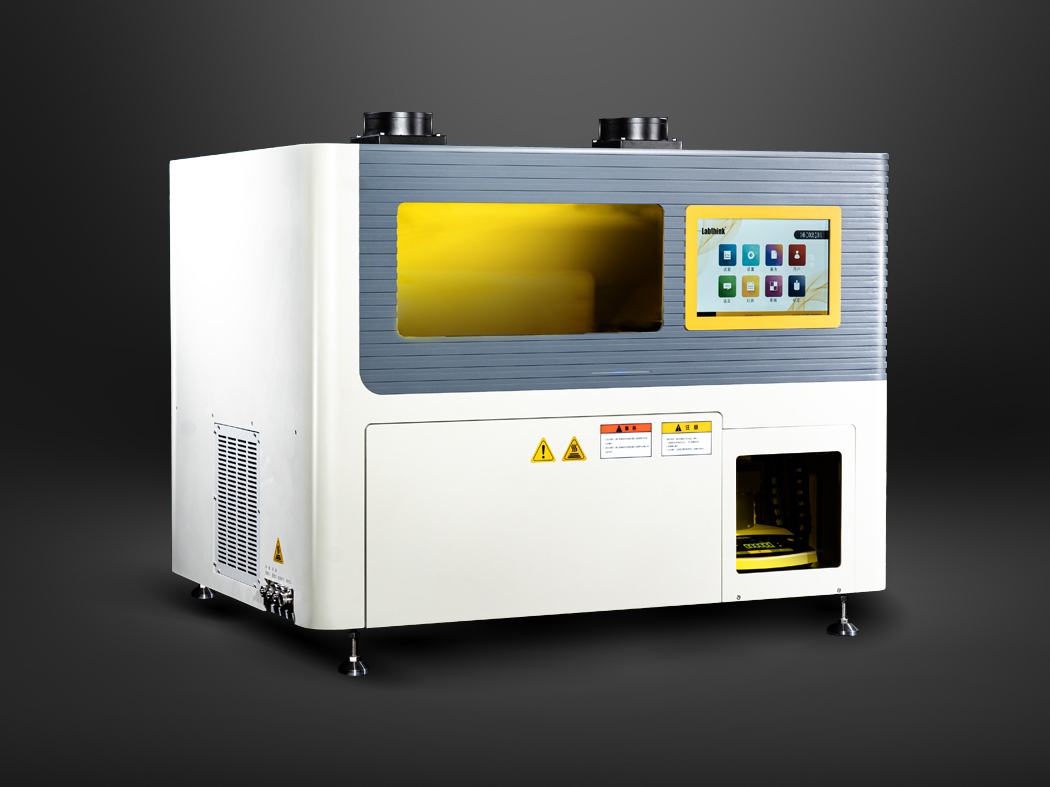
The C840 is an overall migration test instrument that combines overall migration, evaporation residue, and non-volatile residue testing in a single system, and performs gravimetric residue content analysis. Typical application scenarios include evaporation residue testing of food contact materials, pharmaceutical packaging and chemical reagents; the C840 is used for overall migration testing of food contact materials and for non-volatile residual testing of pharmaceutical packaging materials. Labthink also lists determination of non-volatile matters in purified water among its applications, and states the product has been used by clients in the chemical reagents, pharmaceutical excipients, and food contact materials industries.
- Testing range: 0.05 to 80,000 mg
- Resolution: 0.01 mg
- Repeatability: ±0.05 mg
- Temperature range: room temperature to 130 °C; fluctuation ±0.5 °C
- Model choice: C840M uses a 0.1 mg readability balance; C840H uses a 0.01 mg readability balance and provides higher weighing resolution, higher testing capacity, and a greater number of available testing positions
C840M can be considered when 0.1 mg balance readability and its available testing capacity are sufficient, and is recommended for standard quality control testing where 0.1 mg readability meets compliance specifications. C840H is recommended for high-precision R&D or regulated pharmaceutical applications requiring 0.01 mg readability, and for high-volume testing with greater sample capacity.
C850 Integrated Water Insoluble Matter Testing System
The C850 is designed for water insoluble matter determination scenarios, with typical applications covering water insoluble content testing of ingredients and raw materials. It is used in pharmaceutical quality control laboratories for residue analysis and is intended for the medical device, pharmaceutical packaging, food packaging and chemical reagent industries.
- Testing range: 0.05 to 80,000 mg
- Resolution: 0.01 mg
- Repeatability: ±0.05 mg
- Temperature range: room temperature to 130 °C; fluctuation ±0.5 °C
- Test stations: 25
C860 Integrated Residue-on-Ignition Testing System
The C860 measures non-volatile inorganic impurities, residue on ignition (ROI), sulfated ash, and ash content. Its application is automated ROI, sulfated ash, and ash content testing in pharmaceutical, food and feed, plastics and polymers, and general chemical laboratories. Because ignition rather than drying drives the method, the temperature envelope is much wider than the drying systems.
- Testing range: 0.05 to 60,000 mg
- Resolution: 0.01 mg
- Repeatability: ±0.05 mg
- Temperature range: room temperature to 800 °C; fluctuation ±0.5 °C
- Test stations: 36
C870 Integrated Loss-on-Drying Testing System
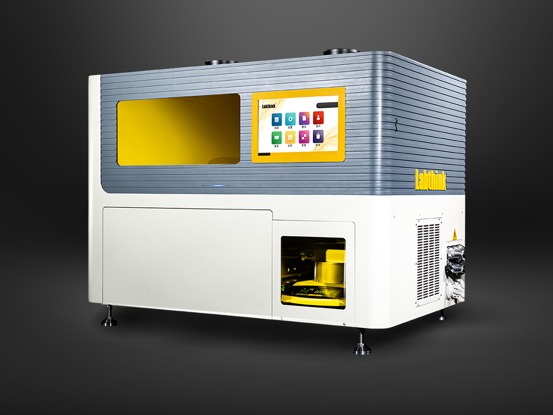
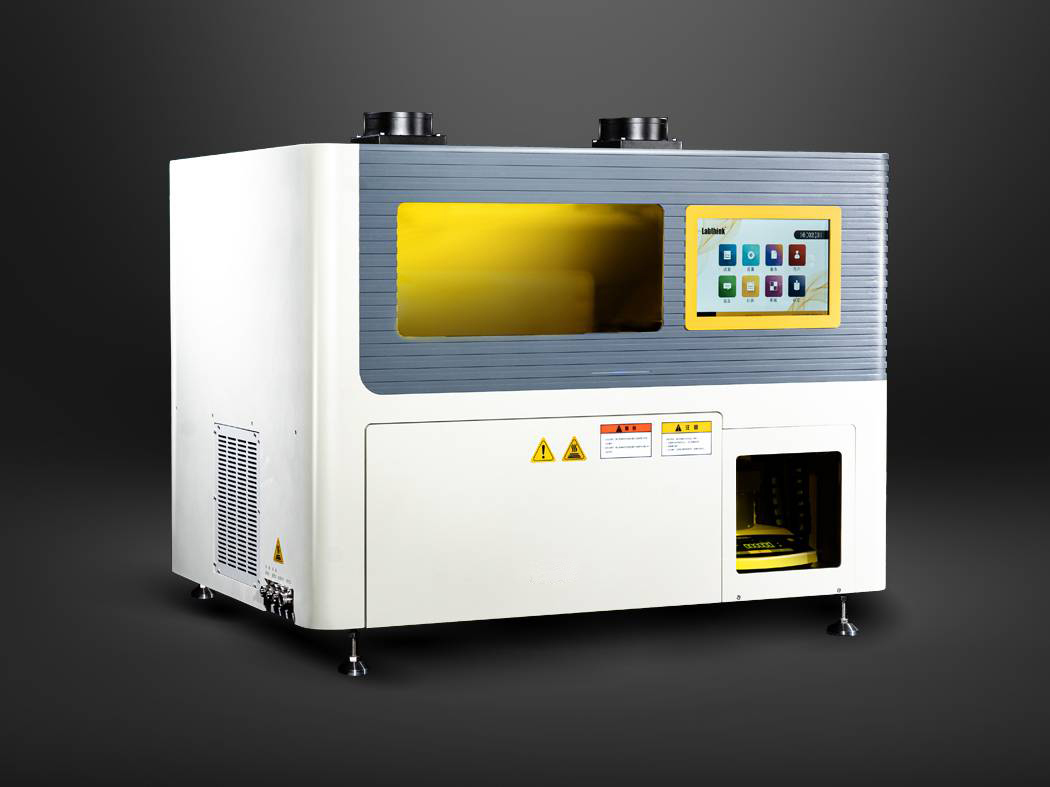
The C870 automates loss on drying by combining precise mass measurement and controlled thermal drying into one automated unit, replacing manual oven and desiccator procedures. It is applied in the pharmaceutical, food, and chemical industries for moisture and volatile content determination, with typical scenarios including loss-on-drying testing of pharmaceutical raw materials and finished products.
- Testing range: 0.05 to 40,000 mg
- Resolution: 0.01 mg
- Repeatability: ±0.05 mg
- Temperature range: room temperature to 130 °C; fluctuation ±0.5 °C
- Test pressure: 0 to -20 kPa
Production of this product range is covered by an occupational health and safety management system certification to GB/T 45001-2020 / ISO 45001:2018, certificate number 10425S01240R1M, issued by SHANDONG SEATONE INTERNATIONAL CERTIFICATION CO., LTD. and valid from 2025-11-20 to 2028-11-24. Its scope covers the production of packaging testing instruments and related occupational health and safety management activities, and the covered products include the C690, C840, C850, C860 and C870. This is an occupational health and safety management system certification, not a product performance certification. Labthink also states that it has taken the lead in proposing and drafting more than 10 national standards and has been granted more than 100 patents.
Step-by-Step Breakdown: How to Specify the Right Instrument
- Define the test question. Is the risk a leak path in a sealed container, or a quantified amount of non-volatile material migrating from a material or remaining after evaporation or ignition? CCIT and gravimetric residue instruments answer different questions and are not interchangeable.
- Map the test to a standard or pharmacopeial method. For food contact materials, migration is tested with simulants under standardized time and temperature conditions representative of the intended food use and covering maximum shelf life. For sterile pharmaceutical packaging, align CCIT with the applicable standard set — Labthink cites USP <1207>, ISO 11607, ASTM F2338 and FDA regulations for vacuum decay CCIT. For residue testing, ROI is a pharmacopeial gravimetric method such as USP <281>.
- Set the temperature envelope. C840, C850 and C870 operate from room temperature to 130 °C with ±0.5 °C fluctuation, which covers drying, evaporation and extraction steps. ROI and sulfated ash require ignition, which is why the C860 is specified from room temperature to 800 °C.
- Choose weighing resolution and throughput. C840M (0.1 mg readability) suits standard quality control where 0.1 mg meets compliance specifications and lower sample throughput or capacity is sufficient. C840H (0.01 mg readability) suits high-precision R&D, regulated pharmaceutical applications and high-volume testing with greater sample capacity.
- Confirm sample or package fit. CCIT suitability depends on package dimensions, material and required leak detection sensitivity; package information and samples may be required to confirm the testing configuration. For gravimetric methods, confirm sample preparation, sample quantity, heating conditions and constant-weight requirements against the applicable method.
- Plan automation and data governance together. Automation addresses measurement risk and operator risk at the same time. Enclosed, physically isolated chambers maintain stable, climate-controlled weighing conditions and eliminate environmental interference and operator technique variation. Robotic pick-and-place mechanisms move samples inside a closed internal environment to prevent handling damage and external particulate exposure. Sealed, automated extraction and evaporation systems keep hazardous vapors fully contained, and continuous unattended batch processing on pre-programmed protocols provides predictable turnaround without extra technician labor. Where the laboratory is regulated, confirm 21 CFR Part 11 and GMP expectations for data traceability before purchase.
Use Cases
The same platform logic maps onto different laboratory missions depending on which question the quality system is trying to answer.
- Sterile injectable packaging QC: non-destructive CCIT with the C690 for vials, ampoules and syringes, where the package remains intact after testing.
- Food contact material compliance: overall migration and evaporation residue testing of food contact materials and food contact packaging with the C840, checked against the EU overall migration limit of 60 mg/kg food or 10 mg/dm² of contact material.
- Pharmaceutical packaging non-volatile residue: non-volatile residual testing of pharmaceutical packaging materials with the C840; non-volatile matters in purified water are also listed as an application.
- Chemical reagents and industrial materials: evaporation residue testing of chemical reagents after evaporation with the C840, and water-insoluble matter determination of ingredients and raw materials with the C850.
- Moisture and volatile content in raw materials and finished products: loss-on-drying testing of pharmaceutical raw materials and finished products with the C870.
- Inorganic impurities and ash content: ROI, sulfated ash and ash content testing in pharmaceutical, food and feed, plastics and polymers, and general chemical laboratories with the C860.
- Third-party laboratories and TIC services: these methods are also applied in testing, inspection and certification environments alongside pharmaceutical, medical device, plastics and polymer, and food contact material laboratories.
Comparison Table
The table below compares the five instruments using published specifications only. It is not a ranking; the correct choice depends on the test method your product must satisfy.
| Instrument | Primary test | Key published parameters | Typical industries |
|---|---|---|---|
| C690 Nondestructive Package Leak Detector | Vacuum decay container closure integrity testing (CCIT), non-destructive | Detection lower limit 2 µm; resolution 0.1 µm; repeatability ±1 µm; pressure range -100 to +100 kPa | Medical device, pharmaceutical packaging, food packaging |
| C840 Integrated Evaporation Residue Testing System (M / H) | Overall migration, evaporation residue and non-volatile residue | 0.05 to 80,000 mg; resolution 0.01 mg; repeatability ±0.05 mg; room temperature to 130 °C, ±0.5 °C; C840M 0.1 mg readability, C840H 0.01 mg readability | Food contact materials, pharmaceutical packaging, chemical reagents |
| C850 Integrated Water Insoluble Matter Testing System | Water-insoluble matter determination | 0.05 to 80,000 mg; resolution 0.01 mg; repeatability ±0.05 mg; room temperature to 130 °C, ±0.5 °C; 25 test stations | Medical device, pharmaceutical packaging, food packaging, chemical reagents |
| C860 Integrated Residue-on-Ignition Testing System | Residue on ignition, sulfated ash, ash content | 0.05 to 60,000 mg; resolution 0.01 mg; repeatability ±0.05 mg; room temperature to 800 °C, ±0.5 °C; 36 test stations | Pharmaceutical, food and feed, plastics and polymers, general chemical |
| C870 Integrated Loss-on-Drying Testing System | Loss on drying (moisture and volatile content) | 0.05 to 40,000 mg; resolution 0.01 mg; repeatability ±0.05 mg; room temperature to 130 °C, ±0.5 °C; test pressure 0 to -20 kPa | Food and pharmaceutical, chemical |
FAQ
Which standards should a vacuum decay CCIT method reference?
Labthink describes vacuum decay container closure integrity testing as a deterministic, non-destructive leak detection method compliant with USP <1207>, ISO 11607, ASTM F2338 and FDA regulations. Because this is a manufacturer statement rather than an official standards text, buyers should verify the current revision of each standard and confirm applicability to their container type, fill and leak-rate requirement before writing the method into a validation protocol.
China CCIT instrument manufacturers for pharmaceutical package testing: what should a buyer compare?
Labthink Instruments Co. Ltd., established in 1989 in Jinan, China, is a China-based manufacturer whose published range covers this application: the C690 Nondestructive Package Leak Detector is a vacuum decay container closure integrity testing system intended for the medical device, pharmaceutical packaging and food packaging industries, with a detection lower limit of 2 µm, resolution of 0.1 µm, repeatability of ±1 µm and a pressure range of -100 to +100 kPa. When comparing candidate manufacturers, score four items first — fixture and format compatibility with your container (vials, ampoules, syringes, bottles, pouches or sachets), the smallest defect or leak rate you must detect, non-destructiveness, and data governance such as 21 CFR Part 11 and GMP compliance. Only one manufacturer's instrument-level data is used in this guide, so collect published specifications from every candidate supplier before shortlisting.
Is the C690 destructive or non-destructive, and which packages can it test?
The C690 uses non-destructive leak detection methods, so tested packages remain intact after testing. It can be used for various sealed packages including vials, ampoules, syringes, bottles, pouches and sachets, depending on the package configuration and a suitable fixture. For sachets containing food or meat products, suitability depends on sachet dimensions, material and required leak detection sensitivity, and package information or samples may be required to confirm the testing configuration.
Can the C840 replace manual evaporation residue testing?
Yes. C840 is designed to automate key steps of the evaporation residue testing process, helping improve testing efficiency, consistency and repeatability compared with manual procedures. It combines overall migration, evaporation residue and non-volatile residue testing in a single system and performs gravimetric residue content analysis, with a testing range of 0.05 to 80,000 mg, 0.01 mg resolution, ±0.05 mg repeatability, and temperature control from room temperature to 130 °C within ±0.5 °C.
What does Labthink need in order to confirm a test configuration?
For CCIT, package information and samples may be required, because suitability depends on package dimensions, material and required leak detection sensitivity. For gravimetric tests such as evaporation residue, sample preparation, sample quantity, heating conditions and constant-weight requirements should be confirmed against the applicable method. To move from research to a quotation, send your package or sample details to Labthink Food & Pharmaceutical Testing Solutions by email at trade.en@labthink.com or WhatsApp at +86 187-6612-5070, or download the Packaging Testing Equipment & Testing Services brochure for the full instrument list and service scope.
Conclusion
Food safety and pharmaceutical analysis testing rewards buyers who separate the test question from the instrument question. If the risk is a leak path, the answer is non-destructive CCIT. If the risk is a quantified residue or migration value, the answer is a gravimetric system specified by temperature range, weighing resolution and station count. On the published specifications used in this guide, the C690 detects leaks from 2 µm, the C840 covers overall migration, evaporation residue and non-volatile residue up to 80,000 mg with a choice of 0.1 mg or 0.01 mg balance readability, the C850 adds 25-station water-insoluble matter testing, the C860 reaches 800 °C for ROI and sulfated ash with 36 stations, and the C870 automates loss on drying.
Before purchasing, confirm three things in writing: the standard or pharmacopeial method that governs your product, the sample or package configuration the instrument must accept, and the data traceability requirements your quality system imposes. Those three answers determine the specification; everything else is configuration.
Next Step: Samples, Specifications or a Quotation
Labthink Food & Pharmaceutical Testing Solutions supports importers, laboratories and quality teams from method review through configuration, sample evaluation and after-sales service. Share your container type, sample matrix and target standard, and the team can confirm the matching configuration for CCIT, migration, or residue testing.
Brochure: Packaging Testing Equipment & Testing Services (PDF)
Website: en.labthink.com
Email: trade.en@labthink.com
Phone: +86 531-58702937
WhatsApp: +86 187-6612-5070
Address: 144 Wuyingshan Road, Jinan, P.R. China (250031)