
Head-to-Head: Choosing a Residue Testing Method for Food Contact vs Pharma Packaging
The method that fits a residue testing project is determined by the residue definition, the sample matrix, and the decision the laboratory must support. Food contact packaging and pharmaceutical packaging can both require residue data, but they rarely require the same residue test. Evaporation residue, residue on ignition (ROI), water-insoluble matter, and loss on drying (LOD) answer different questions, use different sample preparation, and depend on different thermal and gravimetric equipment.
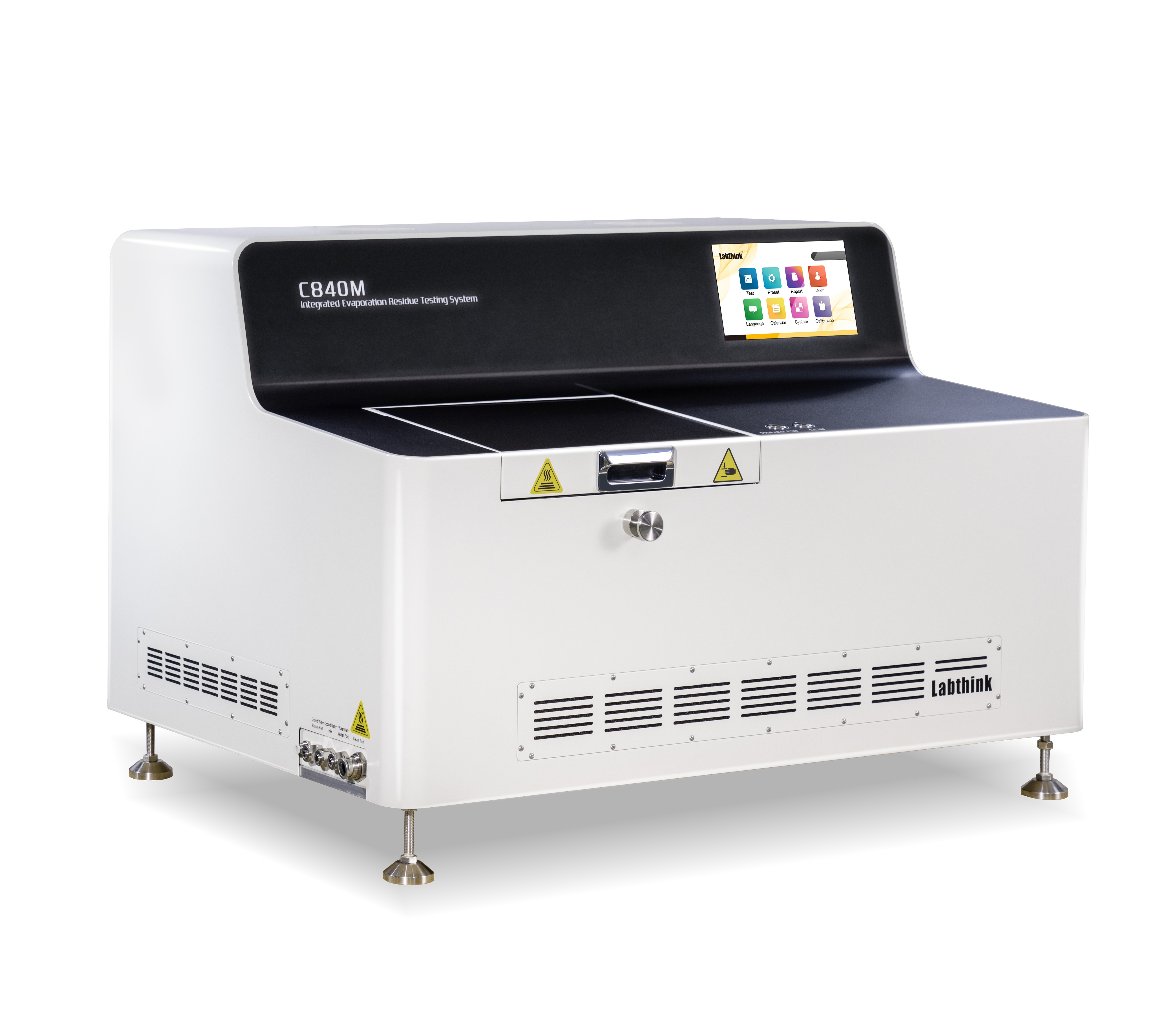
For Food Safety & Pharmaceutical Analysis Testing, the practical decision is not whether one instrument is better than another. It is whether the selected method measures the right fraction: non-volatile material left after evaporation, inorganic ash left after ignition, undissolved particles left after water contact, or volatile mass lost on drying. Labthink Food & Pharmaceutical Testing Solutions addresses these paths with separate systems, and the C840 declaration is the anchor for evaporation residue, non-volatile residue, and total migration work in food contact and pharmaceutical packaging.
Problem Definition: Why Residue Method Selection Goes Wrong
A common procurement error is to request a residue tester as a single category. Suppliers may then quote evaporation residue, ROI, water-insoluble matter, or LOD equipment without confirming which residue the buyer needs to quantify. The instruments can look similar because all use gravimetric measurement, but their outputs are not interchangeable.
- Evaporation residue asks how much non-volatile material remains after a liquid sample evaporates.
- Residue on ignition asks how much inorganic material remains after high-temperature ignition, often with sulfuric acid in sulfated ash testing.
- Water-insoluble matter asks how much solid material fails to dissolve in water.
- Loss on drying asks how much mass is lost, including water and other volatile matter, under specified heating.
A second error is to treat packaging category as the only decision variable. Food contact materials often point to overall migration and evaporation residue because the regulatory question is transfer into a food simulant. Pharmaceutical packaging can point to non-volatile residual testing of packaging materials, but ROI is more directly tied to inorganic impurities or ash in pharmaceutical and chemical materials. The sample and the regulatory question must be written down before the equipment is selected.
Answer-first rule: If the question is what migrated from a package into a simulant, start with evaporation residue and overall migration. If the question is inorganic ash after ignition, start with ROI. If the question is undissolved particles in water, start with water-insoluble matter. If the question is volatile content, start with LOD. Container closure integrity testing (CCIT) is a separate non-destructive leak-detection question and does not replace any of these residue methods.
Industry Background: Food Contact and Pharma Packaging Ask Different Residue Questions
Food contact material testing is built around migration into food. European Commission guidance states that plastic food contact materials are subject to an overall migration limit of 60 mg/kg food or 10 mg/dm2 of contact material. The same guidance describes migration testing with simulants under standardised time and temperature conditions representative of a certain food use, covering the maximum shelf life of packed food. That regulatory logic explains why evaporation residue and overall migration are central for food contact packaging: the laboratory must isolate the non-volatile fraction that transfers into the simulant and then compare the result with the applicable limit.
Pharmaceutical packaging testing can also involve non-volatile residue and total extractables, but the decision context is different. A pharmaceutical buyer may be evaluating packaging extractables, raw material purity, excipient ash, or residual volatiles. Labthink states that the C840 integrated evaporation residue testing system supports determination of evaporation residue, total migration testing of food contact materials, non-volatile matters in purified water, and non-volatile residual testing of pharmaceutical packaging materials. That declared scope makes C840 the first path for liquid-based residue and migration questions, not a universal ash or moisture tester.
ROI belongs to a different chemistry. It is a pharmacopeial gravimetric method, for example USP <281>, used to measure inorganic impurities in an organic substance. Sulfated ash is a specific ROI variation in which concentrated sulfuric acid is added before or during ignition so alkali metals and impurities form stable sulfate salts. Water-insoluble matter is also different: it measures solid particles or impurities that fail to dissolve when mixed in water. LOD measures the percentage of volatile matter lost under specified temperature and time. These definitions matter because they determine sample preparation, furnace or oven requirements, and the meaning of the final number.
Detailed Solution: The Four Residue Paths Side by Side
1. Evaporation residue, non-volatile residue, and overall migration with C840
Evaporation residue testing measures the amount of solid or non-volatile material left behind after a liquid sample evaporates completely. In food contact work, the liquid is usually a food simulant that has been exposed to the material under specified time and temperature conditions. In pharmaceutical packaging work, the same measurement logic can be used for non-volatile residual testing of packaging materials, total extractables, and non-volatile matter in purified water. The C840 is an integrated evaporation residue testing system that automates evaporation, drying, and weighing, which reduces manual handling and improves consistency compared with manual procedures.
The declared C840 scope covers determination of various chemical reagent residues after evaporation, total migration testing of food contacting materials, determination of non-volatile matters in purified water, and non-volatile residual testing of various pharmaceutical packaging materials. Its testing range is 0.05-80,000 mg, resolution is 0.01 mg, repeatability is ±0.05 mg, temperature range is room temperature to 130 °C, and temperature fluctuation is ±0.5 °C. The system is described as fully automated, with 21 CFR Part 11 and GMP compliance. An ATTESTATION OF CONFORMITY for the C840 series, covering C840B, C840M, C840H, C840G, and C840X, cites EN 61010-1:2010+A1:2019 and EN IEC 61326-1:2021 under the Low Voltage Directive and Electromagnetic Compatibility Directive.
The output is a residue mass. For overall migration, that mass is interpreted against the applicable limit, such as the EU overall migration limit of 60 mg/kg food or 10 mg/dm2 of contact material. The method is strongest when the residue is non-volatile and can be captured after evaporation of a liquid simulant or sample solution. It is not an ignition-ash method, so it should not be selected when the required result is inorganic residue after 800 °C ignition.
2. Residue on ignition and sulfated ash with C860
Residue on ignition measures the amount of non-volatile inorganic impurities left behind after burning an organic substance, often with sulfuric acid in the sulfated ash variation. The sample is heated under controlled high temperature until organic and volatile components are removed, and the remaining inorganic residue is weighed. The C860 integrated residue-on-ignition testing system automates key steps of heating and weighing. Its testing range is 0.05-60,000 mg, resolution is 0.01 mg, repeatability is ±0.05 mg, temperature range is room temperature to 800 °C, temperature fluctuation is ±0.5 °C, and it provides 36 test stations.
ROI is the appropriate path when the buyer needs an ash or inorganic impurity result from pharmaceutical, food, or chemical materials. It is not a migration test and does not measure the non-volatile fraction that leaves a food contact material into a simulant. If the sample is a finished pharmaceutical packaging material and the question is extractables or non-volatile residue, C840 is the closer method. If the sample is an organic raw material, excipient, or chemical substance and the question is inorganic residue after ignition, C860 is the relevant system.
3. Water-insoluble matter with C850
Water-insoluble matter testing measures the amount of solid particles or impurities in a substance that fail to dissolve when mixed in water. The C850 integrated water-insoluble matter testing system is designed for this gravimetric path. Its testing range is 0.05-80,000 mg, resolution is 0.01 mg, repeatability is ±0.05 mg, temperature range is room temperature to 130 °C, temperature fluctuation is ±0.5 °C, and it provides 25 test stations. The system is described as fully automated, with precise measurement, traceable data, and 21 CFR Part 11 and GMP compliance.
This method is relevant when the sample contains undissolved solids and the decision depends on the mass of those solids after water contact. Reported applications include chemical reagents, pharmaceutical excipients, and food contact materials. Water-insoluble matter is not a substitute for overall migration because it does not use a food simulant to estimate transfer into food. It is also not ROI because the separation is by water solubility, not by high-temperature ignition.
4. Loss on drying with C870
Loss on drying measures the total percentage of weight a sample loses, including water and other volatile matter, when heated under specific temperature and time conditions. The C870 integrated loss-on-drying testing system automates drying and weighing. Its testing range is 0.05-40,000 mg, resolution is 0.01 mg, repeatability is ±0.05 mg, temperature range is room temperature to 130 °C, temperature fluctuation is ±0.5 °C, and test pressure is 0 to -20 kPa. Reported applications include pharmaceutical APIs, finished goods, intermediate products, food and pharmaceutical materials, and chemical materials.
LOD answers a volatile-content question, not a residue-transfer question. It is useful when the buyer needs to know how much mass is lost on drying, but it should not be used to claim overall migration or inorganic ash. The method selection boundary is therefore straightforward: if the result must represent non-volatile transfer, choose evaporation residue; if it must represent inorganic ash, choose ROI; if it must represent undissolved particles, choose water-insoluble matter; if it must represent volatile loss, choose LOD.
Step-by-Step Breakdown: How to Choose the Method
- Write the residue definition in one sentence. State whether the result is non-volatile material after evaporation, inorganic residue after ignition, undissolved matter after water contact, or volatile mass lost on drying. This single sentence prevents a quote for the wrong system.
- Identify the sample matrix and preparation route. A food simulant exposed to packaging, a liquid reagent, a pharmaceutical excipient, and a solid polymer require different preparation. Evaporation residue starts with a liquid sample or simulant. ROI starts with an organic sample that will be ignited. Water-insoluble matter starts with an aqueous mixture that will be separated. LOD starts with a weighed sample that will be heated.
- Check the thermal and chemical window. C840 and C850 operate from room temperature to 130 °C. C860 operates from room temperature to 800 °C. If the method requires ignition or sulfated ash, the 800 °C capability of C860 is the relevant boundary. If the method requires evaporation of a simulant, the lower-temperature C840 path is the relevant boundary.
- Define the reported output and compliance records. Confirm whether the laboratory needs residue mass, ash mass, insoluble mass, or percentage loss on drying. Confirm data traceability, audit trail, and 21 CFR Part 11 and GMP requirements. The C840, C850, C860, and C870 systems are described with 21 CFR Part 11 and GMP compliance.
- Size the system to throughput and station count. C860 provides 36 test stations and C850 provides 25 test stations. C840 is an integrated evaporation, drying, and weighing system. The required batch size, sample count, and operator workload should be matched to the configuration rather than to a generic residue tester label.
- Verify standards and configuration before purchase. For food contact work, align the method with the applicable overall migration limit and simulant conditions. For ROI, align with the pharmacopeial method or sulfated ash procedure. For C840, confirm the declared scope and the conformity documentation for the specific model. Labthink lists customization for test range and test capacity, including volume, size, and test stations.
Use Cases: Matching the Method to the Buyer
Food contact film and packaging converter
A converter supplying food contact materials needs overall migration data from a food simulant. The practical path is C840: expose the material to the simulant under the specified time and temperature, evaporate the simulant, dry and weigh the non-volatile residue, then compare the result with the overall migration limit. This is an evaporation residue workflow, not an ROI workflow. The C840 declared scope includes total migration testing of food contacting materials.
Pharmaceutical packaging extractables and non-volatile residue
A pharmaceutical packaging team evaluating non-volatile residual testing or total extractables needs a liquid-based residue path. C840 is declared for non-volatile residual testing of various pharmaceutical packaging materials. The same system is also declared for non-volatile matters in purified water and chemical reagent residues after evaporation. This makes C840 the first system to evaluate when the sample is a liquid extract or simulant and the output is a non-volatile residue mass.
Pharmaceutical excipient or raw material ash
When the question is inorganic impurity or ash content in a pharmaceutical or chemical material, C860 is the relevant system. It automates heating and weighing for residue on ignition and sulfated ash testing. The 800 °C temperature range is the key differentiator from the evaporation and water-insoluble paths.
Chemical reagent, excipient, or purified water insolubles
When the sample contains particles that do not dissolve in water, C850 is the appropriate path. The system measures water-insoluble matter with a 25-station configuration and a 0.05-80,000 mg range. Reported applications include chemical reagents, pharmaceutical excipients, and food contact materials.
API, finished goods, or intermediate moisture and volatiles
When the question is volatile content rather than residue transfer, C870 is the relevant system. It measures loss on drying for pharmaceutical APIs, finished goods, intermediate products, food and pharmaceutical materials, and chemical materials. LOD is not a migration test and should not be used to satisfy an overall migration specification.
Comparison Table: Residue Testing Methods for Food Contact and Pharma Packaging
| Decision point | Evaporation residue / NVR / overall migration (C840) | Residue on ignition / sulfated ash (C860) | Water-insoluble matter (C850) | Loss on drying (C870) |
|---|---|---|---|---|
| What the result represents | Non-volatile material left after a liquid sample evaporates; can represent overall migration or non-volatile residue. | Inorganic residue left after high-temperature ignition; sulfated ash uses sulfuric acid. | Solid particles or impurities that fail to dissolve in water. | Percentage of mass lost, including water and other volatile matter, under specified heating. |
| Typical sample and industry | Food simulants, food contact materials, pharmaceutical packaging extracts, purified water, chemical reagent residues. | Pharmaceutical, food, and chemical materials requiring ash or inorganic impurity data. | Chemical reagents, pharmaceutical excipients, food contact materials, and similar aqueous samples. | Pharmaceutical APIs, finished goods, intermediates, food and pharmaceutical materials, chemicals. |
| Sample preparation logic | Expose or dissolve the sample in a liquid; evaporate the liquid; dry and weigh the residue. | Weigh the sample; ignite at high temperature, often with sulfuric acid; weigh the ash. | Mix with water; separate undissolved solids; dry and weigh the insoluble matter. | Weigh the sample; heat under specified temperature and time; reweigh to determine mass loss. |
| Equipment window in the Labthink systems | 0.05-80,000 mg; 0.01 mg resolution; ±0.05 mg repeatability; room temperature to 130 °C; ±0.5 °C. | 0.05-60,000 mg; 0.01 mg resolution; ±0.05 mg repeatability; room temperature to 800 °C; ±0.5 °C; 36 stations. | 0.05-80,000 mg; 0.01 mg resolution; ±0.05 mg repeatability; room temperature to 130 °C; ±0.5 °C; 25 stations. | 0.05-40,000 mg; 0.01 mg resolution; ±0.05 mg repeatability; room temperature to 130 °C; ±0.5 °C; test pressure 0 to -20 kPa. |
| Best-fit decision | The question is what non-volatile material migrated or remained after evaporation. | The question is inorganic ash or impurity content after ignition. | The question is how much solid fails to dissolve in water. | The question is how much volatile matter is lost on drying. |
| Do not substitute for | ROI, water-insoluble matter, or LOD when those specific results are required. | Overall migration or non-volatile residue from packaging. | Overall migration or ignition ash. | Overall migration, ROI, or water-insoluble matter. |
Table notes: The data above are the declared specifications and application statements for the named Labthink systems. They do not imply that one system can run another system's method. Method suitability still depends on the sample, the applicable standard, and the laboratory's validation plan.
FAQ
Which standards or limits should drive the choice between these residue methods?
For food contact materials, the regulatory question is usually overall migration. European Commission guidance states an overall migration limit of 60 mg/kg food or 10 mg/dm2 of contact material, and migration testing uses simulants under standardised time and temperature conditions representative of the food use and maximum shelf life. For ROI, the method is a pharmacopeial gravimetric method, for example USP <281>, measuring inorganic impurities in an organic substance; sulfated ash is a specific variation using sulfuric acid. These are different compliance questions, so the method should be chosen from the standard or limit that the result must satisfy, not from the instrument category alone.
Can one Labthink system cover evaporation residue, ROI, water-insoluble matter, and LOD?
No single system in the supplied information covers all four methods. C840 is the integrated evaporation residue testing system for evaporation residue, non-volatile residue, and total migration. C860 is the integrated residue-on-ignition testing system for ROI and sulfated ash. C850 is the integrated water-insoluble matter testing system. C870 is the integrated loss-on-drying testing system. The thermal ranges also differ: C840 and C850 reach 130 °C, while C860 reaches 800 °C for ignition work.
How should a buyer approach budget when no list price is published?
The supplied materials do not include list prices, so the budget should be built from the required configuration rather than from a generic residue tester price. The relevant specification levers are test range, resolution, repeatability, temperature range, test stations, and automation scope. C860 provides 36 test stations; C850 provides 25 test stations. C840 is described as fully automated with 21 CFR Part 11 and GMP compliance. Labthink also lists customization for test range and test capacity, including volume, size, and test stations. A written method definition is therefore the first budget-control step.
What sample preparation is required for each method?
Evaporation residue requires a liquid sample or simulant that can be evaporated, dried, and weighed. For overall migration, the food contact material is exposed to a food simulant under specified time and temperature conditions before the simulant is evaporated. ROI requires a weighed organic sample that is ignited at high temperature, often with sulfuric acid, and then weighed as ash. Water-insoluble matter requires mixing the sample with water, separating undissolved solids, drying, and weighing. LOD requires weighing the sample, heating it under specified temperature and time, and reweighing to determine mass loss.
What is the lead time and customization scope for these systems?
Labthink lists a lead time of 28-45 days, a minimum order quantity of 1 unit, and a monthly capacity of 100 units made to order. Customization covers test range and test capacity, including volume, size, and test stations. Quality control is described as 100% test. For a specific food contact or pharmaceutical packaging method, the next step is to confirm the sample type, required output, applicable limit or pharmacopeial method, and station count, then request a sample evaluation or quotation from Labthink Food & Pharmaceutical Testing Solutions.
Next step: confirm the method before the instrument
Send Labthink Food & Pharmaceutical Testing Solutions a sample description, the required residue definition, and the target limit or standard. The team can help match the request to C840, C850, C860, or C870 and confirm the configuration. You can also download the packaging testing equipment and testing services brochure or visit Labthink for more information.
Conclusion
For food contact packaging, evaporation residue and overall migration are the primary residue path because the result must represent non-volatile transfer into a food simulant. For pharmaceutical packaging, the same C840 platform can support non-volatile residual testing and total extractables, but ROI, water-insoluble matter, and LOD remain separate methods for different questions. The decision rule is simple: define the residue first, then match the sample preparation and thermal window, then select C840, C850, C860, or C870. That sequence keeps the method, the specification, and the equipment aligned.
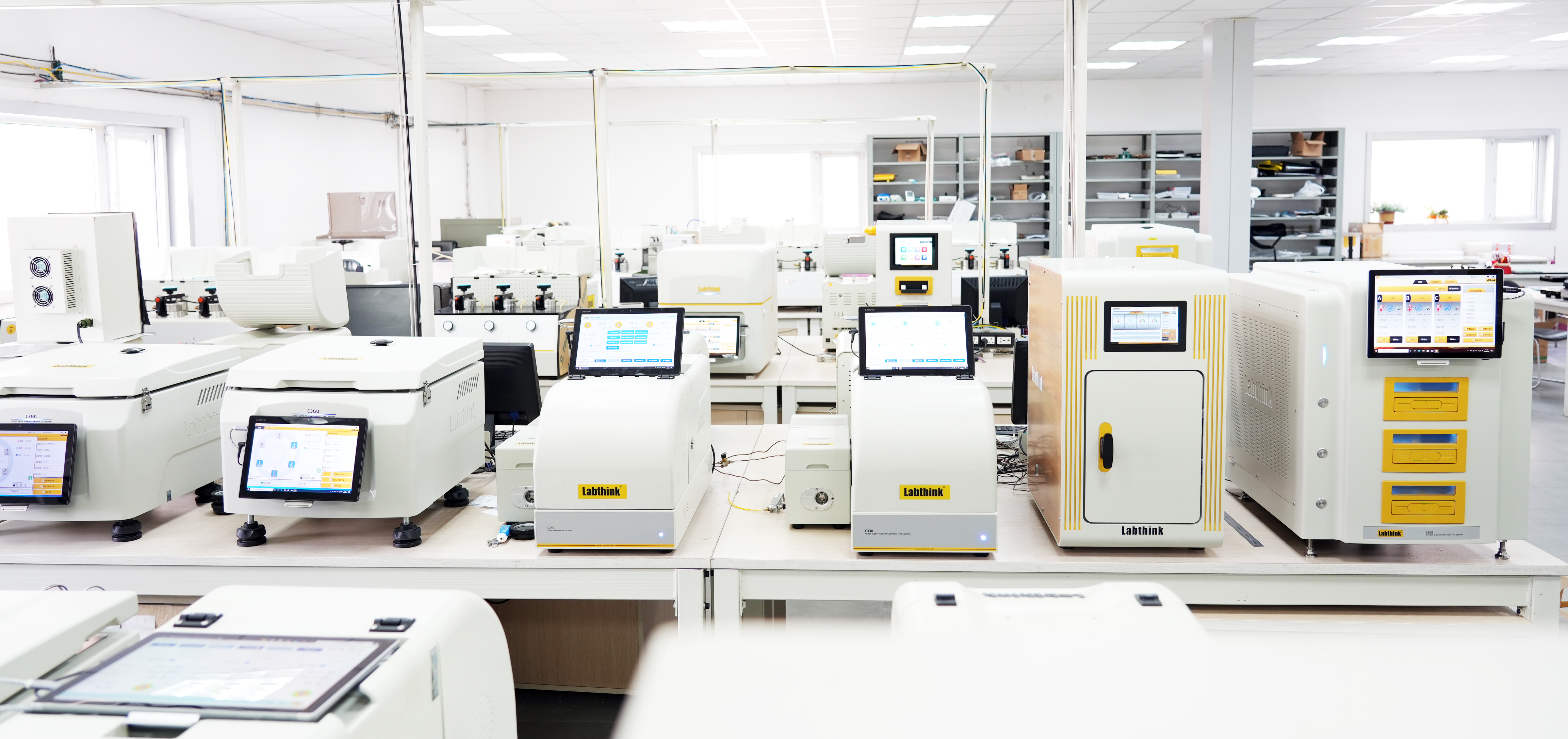
Labthink Instruments Co. Ltd. was established in 1989 and manufactures packaging material testing instruments, with a 4,100 m2 factory, 220 employees, 50 engineers, and an annual output of 1,200 units. The food and pharmaceutical testing portfolio should be evaluated on the declared method scope, the applicable standard, and the laboratory workflow. When the residue definition is clear, the equipment choice becomes a traceable technical decision rather than a category guess.
Have Questions or Need More Details?
Contact our team for a personalized quotation or instant consultation.
Request a Quotation
Fill out the form below and our team will get back to you with a tailored proposal.
WhatsApp Direct Chat
Prefer to chat in real-time? Message us on WhatsApp for instant assistance & quick answers.
- Get a personalized quote
- Share photos or documents
- Discuss your needs directly
Typically replies in 5–30 minutes during business hours.