
Manual vs Automated Evaporation Residue Testing: A C840 Head-to-Head Decision
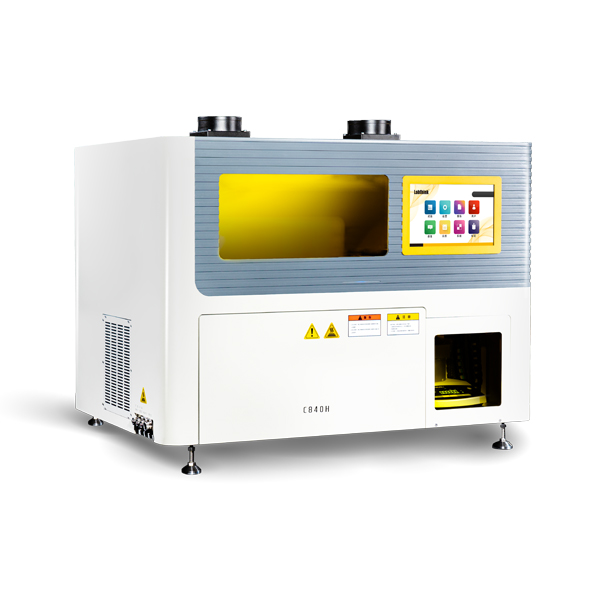
Short answer: manual evaporation residue testing and an integrated system such as the C840 solve the same gravimetric problem, but they distribute risk very differently. Manual testing places evaporation, drying to constant weight, desiccation and weighing in the hands of a technician moving glassware between a hot bath, a drying oven, a desiccator and a separate analytical balance. The C840 Integrated Evaporation Residue Testing System automates those steps inside one unit, with a 0.05 to 80,000 mg testing range, 0.01 mg resolution, ±0.05 mg repeatability, a room-temperature to 130 °C working range and ±0.5 °C temperature fluctuation. The decision therefore rests on recurring workload, data traceability requirements and operator safety — not on which instrument looks more advanced.
Problem Definition: What Manual Evaporation Residue Testing Actually Involves
Evaporation residue testing determines the amount of non-volatile material remaining after a specified sample solution is evaporated under controlled conditions. In practice that definition hides a chain of physical operations. A technician dispenses the sample or simulant, evaporates the liquid, transfers the residue vessel to a drying oven, dries to constant weight, moves the vessel into a desiccator to cool, then weighs it on an analytical balance and calculates the residue from the mass difference.
Each handover in that chain is a point where the method stops being purely gravimetric. Manual laboratory testing involves operational, data and safety risks inherently tied to hands-on handling and open environmental exposure. The most consequential of these are practical rather than theoretical:
- Environmental drift at the balance. Transferring cups between hot baths, desiccators and separate analytical balances introduces ambient temperature and humidity fluctuations, and those fluctuations can destabilize micro-gram balances.
- Operator-to-operator variation. Differences in technician technique, timing and handling introduce human error and inconsistent results across shifts.
- Chemical exposure. Manual pouring, evaporation and transfer steps increase direct technician exposure to hot, volatile or hazardous organic solvents.
- Burn and spill risk. Frequent manual manipulation around hot plates, drying ovens or high-temperature baths increases the risk of accidental burns or spills.
- Contamination and loss. Repeated manual handling, transfer and open-air transportation increase the chance of airborne particulate contamination or accidental sample spillage.
Industry Background: What Regulated Residue Testing Now Demands
Evaporation residue work is no longer a single-method niche. The same gravimetric principle now underpins four distinct compliance conversations: overall migration from food contact materials, non-volatile residue in pharmaceutical packaging, residue content in chemical reagents, and the non-volatile matter content of purified water.
For food contact materials, the regulatory stakes are explicit. European Commission guidance states that plastic food contact materials are subject to overall migration limits of 60 mg/kg food or 10 mg/dm² of contact material. The same guidance explains that migration is usually tested using simulants, and that migration testing is done under standardized time and temperature conditions representative of a certain food use, covering the maximum shelf life of packed food. That combination — a defined limit plus standardized exposure conditions — is what makes repeatability matter. A result that sits close to a limit is only defensible if the gravimetric step producing it behaves the same way on Monday and on Friday.
On the pharmaceutical side, the residue question appears as non-volatile residual testing of various pharmaceutical packaging materials, and Labthink describes its C840 system as supporting that application alongside total migration testing of food contact materials, the determination of non-volatile matters in purified water and the determination of various chemical reagent residues after evaporation. Chemical reagent residue testing follows the same logic with a different sample matrix.
The common denominator is that these are recurring, method-defined gravimetric tests. They are repeated across batches, across shifts and across auditors. That repetition is exactly where manual handling accumulates variance.
Detailed Solution: How the C840 Restructures the Workflow
The C840 is an Integrated Evaporation Residue Testing System and an overall migration test instrument, classified in the laboratory testing instrument category for food and pharmaceutical analysis. Its defining characteristic is not a single feature but integration: it combines overall migration, evaporation residue and non-volatile residue testing in a single system, performs gravimetric residue content analysis, and automates evaporation, drying, cooling and weighing stages of the procedure.
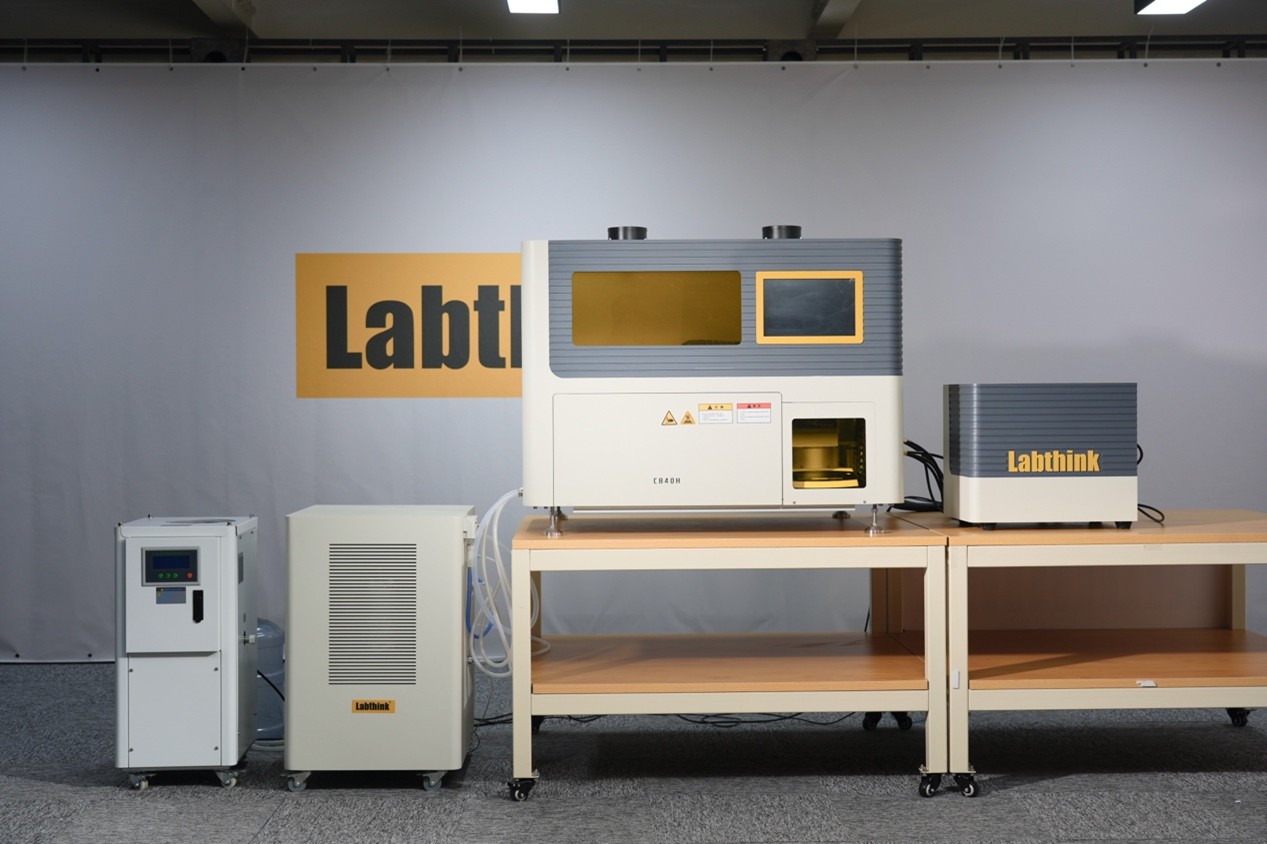
C840 technical parameters
| Parameter | C840 specification |
|---|---|
| System type | Integrated Evaporation Residue Testing System; overall migration test instrument |
| Testing range | 0.05 – 80,000 mg |
| Resolution | 0.01 mg |
| Repeatability | ±0.05 mg |
| Temperature range | Room temperature – 130 °C |
| Temperature fluctuation | ±0.5 °C |
| Construction materials | Aluminum alloy + ABS plastic |
| Typical industries | Food contact materials, pharmaceutical packaging, chemical reagents |
| Compliance features | Full process automation; data traceable; 21 CFR Part 11 & GMP compliance |
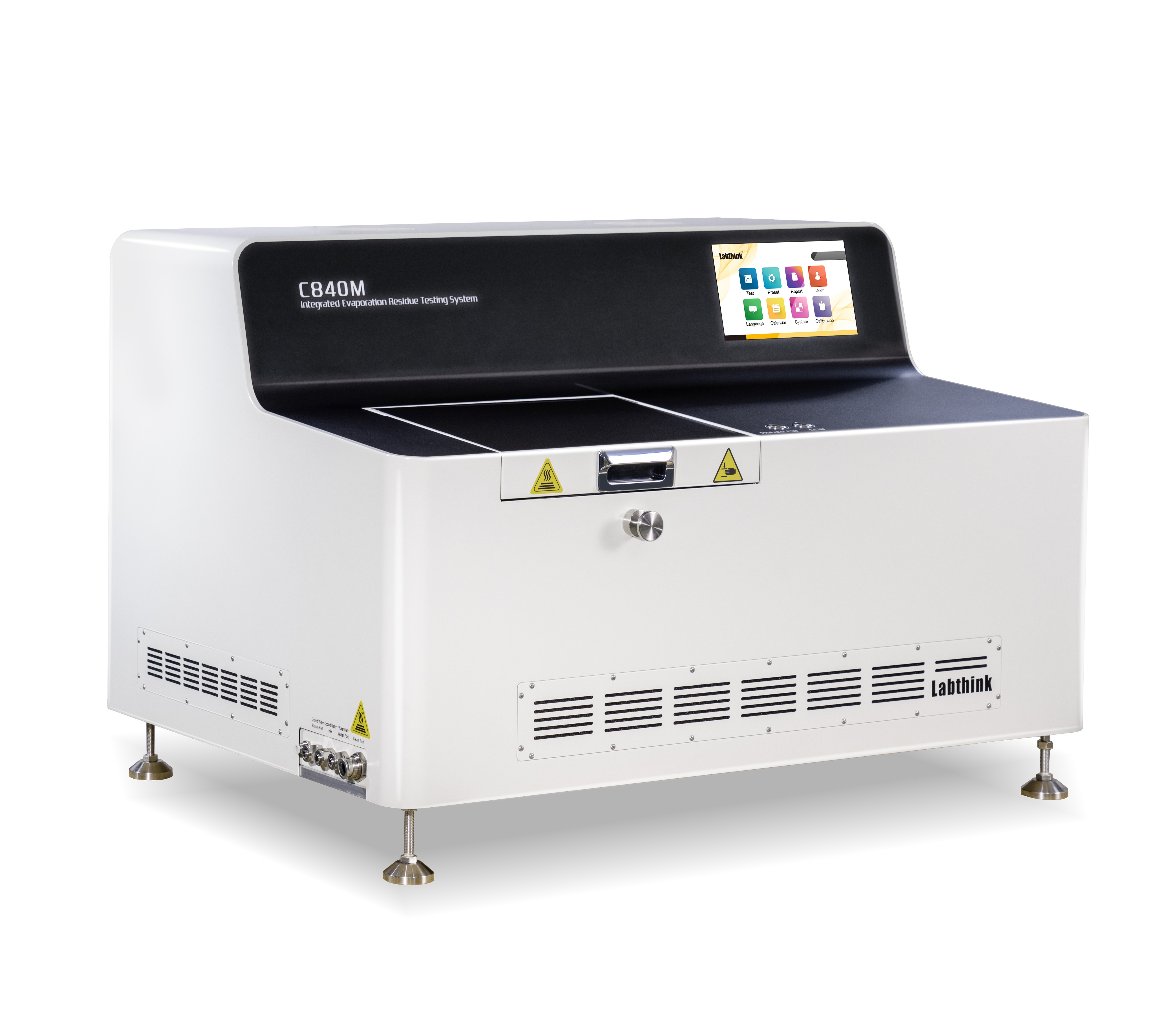
| Configuration options | C840H: 0.01 mg readability balance; C840M: 0.1 mg readability balance |
Why integration changes the risk equation
Automation mitigates the risks of manual laboratory testing through enclosed, physically isolated chambers that maintain stable, climate-controlled conditions for weighing. That single design decision addresses the largest uncontrolled variable in manual residue work — the balance environment — because enclosed, physically isolated chambers eliminate environmental interference and operator technique variations.
Three further mechanisms follow from the same logic:
- Unattended batch processing. Continuous, unattended batch processing operates on pre-programmed protocols, which supports predictable turnaround times without extra technician labor.
- Contained vapor handling. Sealed, automated extraction and evaporation systems keep hazardous vapors fully contained, addressing the solvent exposure risk that manual pouring and evaporation create.
- No manual handling of hot vessels. Robotic cup-grippers eliminate manual handling of hot vessels, and robotic pick-and-place mechanisms move samples within a closed internal environment, preventing physical handling damage and external particulate exposure.
Traceability is the fourth pillar. The C840 carries data traceability and 21 CFR Part 11 and GMP compliance as stated product features, which matters because a gravimetric result is only as good as the record that proves how it was produced.
Step-by-Step Breakdown: Manual Workflow vs C840 Workflow
The clearest way to compare the two approaches is step by step, because the difference is cumulative rather than concentrated in one stage.
| Process step | Manual laboratory workflow | C840 integrated workflow |
|---|---|---|
| 1. Sample preparation | Technician dispenses sample or simulant into a vessel by hand. | Sample preparation and quantity are defined by the applicable method; the instrument handles the evaporation, drying, cooling and weighing sequence that follows. |
| 2. Evaporation | Manual evaporation on a hot plate or bath; technician exposure to hot, volatile or hazardous solvents. | Automated evaporation within a sealed system that keeps hazardous vapors fully contained. |
| 3. Drying to constant weight | Vessel transferred to a drying oven; temperature and timing depend on operator control. | Controlled drying within a room-temperature to 130 °C range and ±0.5 °C temperature fluctuation. |
| 4. Cooling | Vessel moved to a desiccator; open-air transport allows particulate exposure and spillage risk. | Cooling handled inside the integrated process rather than through open desiccator transfer. |
| 5. Weighing | Separate analytical balance; ambient temperature and humidity fluctuations can destabilize micro-gram balances. | Weighing inside an enclosed, physically isolated chamber with 0.01 mg resolution and ±0.05 mg repeatability. |
| 6. Calculation and records | Manual transcription; consistency depends on technician technique and timing across shifts. | Gravimetric residue content analysis with data traceability and 21 CFR Part 11 & GMP compliance features. |
Use Cases: Where Evaporation Residue Testing Recurs
Whether automation pays back depends on how often the test runs. Four application clusters account for most recurring evaporation residue, non-volatile residue and overall migration work.
1. Overall migration testing of food contact materials
This is the application with the most explicit compliance framing. C840 is designed for overall migration testing of food contact materials and is used for evaporation residue testing of food contact packaging. Because migration testing uses simulants under standardized time and temperature conditions against defined migration limits, the gravimetric endpoint is the evidence — and it must be both repeatable and documented. The instrument is supplied for food packaging compliance testing applications and is used in laboratory testing for food packaging migration analysis.
2. Non-volatile residue in pharmaceutical packaging
C840 supports non-volatile residual testing of various pharmaceutical packaging materials and is applicable to residue analysis in pharmaceutical QC laboratories. In this setting the instrument functions as a gravimetric analyzer for non-volatile residue testing in pharmaceutical analysis, where a repeatability figure of ±0.05 mg is the relevant reference point for small residues.
3. Chemical reagent residues and purified water
C840 is used for the determination of various chemical reagent residues after evaporation and for the determination of non-volatile matters in purified water. Laboratories in the chemical reagents, pharmaceutical excipients and food contact materials industries have used the system for these applications.
4. Multi-method laboratories and TIC environments
Because it combines overall migration, evaporation residue and non-volatile residue testing in a single system, C840 suits laboratories that would otherwise run separate manual setups for each method. For testing, inspection and certification environments the consolidated footprint and traceable records reduce the number of procedures a technician must be trained against.
Comparison Table: Manual Testing vs the C840
The table below compares the two approaches on the dimensions that most often decide the question in a laboratory review. Where a manual value is not fixed by the method, it is shown as dependent on the laboratory's own equipment and technique rather than as a number.
| Decision dimension | Manual evaporation residue testing | C840 Integrated Evaporation Residue Testing System |
|---|---|---|
| Balance environment | Vessel moved to a separate analytical balance; ambient temperature and humidity fluctuations can destabilize micro-gram balances. | Weighing inside an enclosed, physically isolated, climate-controlled chamber. |
| Operator dependence | Differences in technician technique, timing and handling introduce human error and inconsistent results across shifts. | Pre-programmed protocols remove operator technique variation from evaporation, drying and weighing. |
| Stated weighing performance | Determined by the laboratory's own balance and handling practice. | 0.01 mg resolution; ±0.05 mg repeatability. |
| Working temperature | Set and monitored per oven or bath; verified by the technician. | Room temperature to 130 °C with ±0.5 °C temperature fluctuation. |
| Testing range | Bounded by the balance capacity in use. | 0.05 to 80,000 mg. |
| Chemical exposure | Manual pouring, evaporation and transfer steps increase direct technician exposure to hot, volatile or hazardous organic solvents. | Sealed, automated extraction and evaporation keep hazardous vapors fully contained. |
| Burn and spill risk | Frequent manual manipulation around hot plates, drying ovens or high-temperature baths increases burn and spill risk. | Robotic cup-grippers eliminate manual handling of hot vessels; pick-and-place transfer occurs inside a closed environment. |
| Contamination control | Repeated manual handling, transfer and open-air transportation increase airborne particulate contamination and spillage. | Samples move within a closed internal environment, preventing physical handling damage and external particulate exposure. |
| Throughput model | Hands-on; turnaround scales with technician availability. | Continuous, unattended batch processing on pre-programmed protocols with predictable turnaround times. |
| Data and compliance | Records depend on manual transcription and practice. | Data traceable; full process automation; 21 CFR Part 11 & GMP compliance features. |
| Method scope | Usually one method per manual setup. | Overall migration, evaporation residue and non-volatile residue testing combined in one system. |
Decision Factors for Your Laboratory
Four questions separate a laboratory that should keep manual testing from one that should move to an integrated platform.
- Is the test recurring or occasional? Manual workflows remain viable for low-frequency, exploratory work. Where overall migration, non-volatile residue or reagent residue testing runs continuously across batches and shifts, the variance sources described above compound with every repetition.
- How close do results sit to a regulatory limit? With an overall migration limit of 60 mg/kg food or 10 mg/dm² of contact material, the margin between a passing and failing result can be narrow. ±0.05 mg repeatability and a controlled weighing environment provide a defensible basis for that judgement.
- What is the laboratory's exposure profile? If technicians routinely handle hot baths, drying ovens and volatile or hazardous organic solvents, contained evaporation and robotic handling remove a recognized occupational risk rather than merely speeding up the test.
- Which configuration matches the required resolution? C840H uses a 0.01 mg readability balance and is recommended for high-precision R&D or regulated pharmaceutical applications requiring 0.01 mg balance readability, and for high-volume testing with greater sample capacity. C840M uses a 0.1 mg readability balance and can be considered when 0.1 mg readability and its available testing capacity are sufficient — it is recommended for standard quality control testing where 0.1 mg readability meets compliance specifications and lower sample throughput is sufficient.
Operating requirement to note early: C840 is intended for indoor laboratory use only and requires a stable ambient temperature. That is a facility condition, not an instrument limitation, but it should be confirmed before installation planning.
FAQ
Does the C840 support 21 CFR Part 11 and GMP-compliant residue records?
Yes. The C840 is listed with 21 CFR Part 11 and GMP compliance as a product feature, together with full process automation and data traceability. Because evaporation, drying, cooling and weighing run on pre-programmed protocols inside the instrument rather than being transcribed by hand at each transfer, the record is generated by the system that produced the result. Laboratories should still confirm that the delivered configuration and their own standard operating procedures satisfy the specific data-integrity requirements of their regulator.
Can the C840 replace manual evaporation residue testing?
The C840 is designed to automate key steps of the evaporation residue testing process, helping improve testing efficiency, consistency and repeatability compared with manual procedures. It combines overall migration, evaporation residue and non-volatile residue testing in a single system and performs gravimetric residue content analysis. In practical terms, the manual chain of hot bath, oven, desiccator and separate balance is replaced by one integrated sequence with a stated 0.05 to 80,000 mg testing range, 0.01 mg resolution and ±0.05 mg repeatability.
How do I choose between the C840H and C840M configurations?
The difference is weighing resolution and testing capacity. C840H uses a 0.01 mg readability balance and is recommended for high-precision R&D or regulated pharmaceutical applications requiring 0.01 mg balance readability, and for high-volume testing with greater sample capacity; it also offers a greater number of available testing positions than C840M. C840M uses a 0.1 mg readability balance and can be considered when 0.1 mg readability and its available testing capacity are sufficient for the laboratory's requirements. C840M is recommended for standard quality control testing where 0.1 mg readability meets compliance specifications and lower sample throughput is sufficient.
Can the C840 test aqueous samples such as silica slurry?
Yes. The C840 can be considered for evaporation residue testing of aqueous solutions and similar samples. The specific sample preparation, sample quantity, heating conditions and constant-weight requirements should be confirmed according to the applicable method rather than assumed from a general specification.
What is needed to confirm the C840 against our own method before ordering?
Confirmation starts with the method, not the brochure: sample preparation, sample quantity, heating conditions and constant-weight requirements should be defined against the applicable standard, then matched to the required weighing resolution so that the correct C840H or C840M configuration is specified. Because the system is also used for overall migration testing of food contact materials, for non-volatile residual testing of pharmaceutical packaging materials and for chemical reagent residues after evaporation, the same review should cover every method the laboratory intends to transfer onto one platform. Labthink Food & Pharmaceutical Testing Solutions can review a laboratory's evaporation residue, non-volatile residue or overall migration workflow and advise on the appropriate configuration; the instrument catalog and specification details are available in the downloadable brochure, and method discussions can be raised directly with the team.
Conclusion
The manual versus automated question in evaporation residue testing is not a question about sophistication. It is a question about where a laboratory wants variance to live. Manual testing keeps variance in technician technique, ambient conditions around the balance, and open-air transfers between hot baths, ovens, desiccators and analytical balances — all of which are documented risk sources rather than hypothetical ones.
The C840 moves those variables inside an enclosed system. Evaporation, drying, cooling and weighing run as one automated sequence, with a 0.05 to 80,000 mg range, 0.01 mg resolution, ±0.05 mg repeatability, a room-temperature to 130 °C working range and ±0.5 °C temperature fluctuation. It supports overall migration testing of food contact materials, non-volatile residual testing of pharmaceutical packaging materials and chemical reagent residue testing within a single platform, and carries 21 CFR Part 11 and GMP compliance features alongside traceable data.
For laboratories running recurring evaporation residue, non-volatile residue or overall migration tests against defined limits, the integrated route removes the largest controllable error sources and the most direct operator hazards at the same time. For low-frequency or exploratory work, the manual route remains a legitimate starting point. The deciding evidence is the laboratory's own method scope, sample volume and documentation obligations — and those are exactly the inputs worth confirming before a configuration is fixed.
Next step: match the configuration to your method
Labthink Instruments Co. Ltd. was established in 1989 in Jinan, China, and specializes in the development and manufacturing of precision instruments and testing solutions for packaging materials analysis, including packaging material testing instruments and related testing services. The C840 Integrated Evaporation Residue Testing System is covered by the company's ISO 45001:2018 certification (certificate number 10425S01240R1M, valid from 2025-11-20 to 2028-11-24), which covers production of packaging testing instruments including the C840.
To discuss evaporation residue, non-volatile residue or overall migration testing for your laboratory, review the instrument catalog and specification sheet here: Labthink Packaging Testing Equipment & Testing Services brochure. Product and application details are also available at en.labthink.com, and method questions can be sent to trade.en@labthink.com.
Have Questions or Need More Details?
Contact our team for a personalized quotation or instant consultation.
Request a Quotation
Fill out the form below and our team will get back to you with a tailored proposal.
WhatsApp Direct Chat
Prefer to chat in real-time? Message us on WhatsApp for instant assistance & quick answers.
- Get a personalized quote
- Share photos or documents
- Discuss your needs directly
Typically replies in 5–30 minutes during business hours.