
Supplier Evaluation for CCIT and Residue Instruments: Capability and Delivery Assurance
Supplier evaluation for CCIT and residue instruments starts with a practical test: can the supplier show that the quoted C690, C840 or C870 configuration will run the buyer's actual packages and samples, under the buyer's method, with the fixtures, automation and support needed after delivery? A specification sheet answers only part of that question. The buyer also has to verify package compatibility, closure configuration, test pressure, required sensitivity, matched laboratory equipment, certificate scope, purchasing terms and acceptance criteria before an order is placed.
This framework is written for food and pharmaceutical laboratories at the Evaluation to Execution stage, using the Labthink Food & Pharmaceutical Testing Solutions C690 CCIT and C840/C870 gravimetric systems as the working example. The manufacturer, Labthink Instruments Co. Ltd., is a multinational technology company specializing in precision instruments and testing solutions for packaging materials analysis. The same checks apply to any supplier quotation for comparable CCIT or residue equipment.
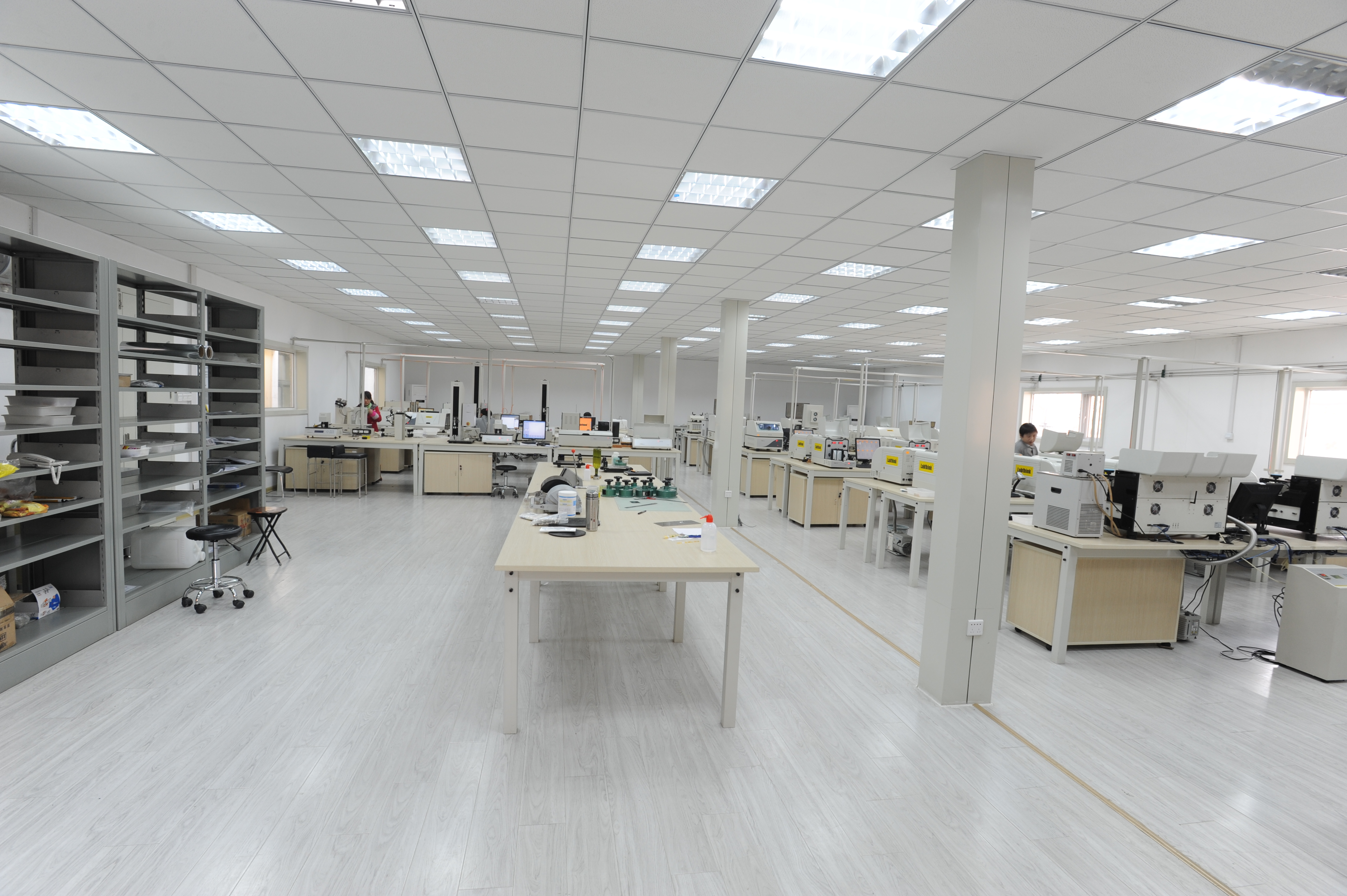
Packaging Testing Center. Image source: Labthink company records.
Why CCIT and residue supplier evaluation is not a catalog comparison
CCIT and gravimetric residue testing are method-led purchases. The instrument model matters, but the method, package or sample, fixture, sensitivity, weighing resolution and data record determine whether the system can be used in the laboratory's workflow. A supplier that quotes a model without asking for package dimensions, closure configuration, test pressure or required sensitivity has not yet demonstrated application capability.
Manual residue testing also creates operational variables. Transferring cups between hot baths, desiccators and separate analytical balances exposes samples to ambient temperature and humidity changes that can destabilize micro-gram balances. Technician technique, timing and handling can vary across shifts. Manual pouring, evaporation and transfer steps can increase exposure to hot, volatile or hazardous solvents, and repeated open-air handling can increase particulate contamination or spillage risk. Automation is intended to reduce these risks by enclosing operations, using pre-programmed protocols and reducing manual transfers. That is why automation scope belongs in the supplier evaluation, not only in the feature list.
Start with the buyer's own package and sample list
A supplier cannot confirm a fixture or sensitivity from a general product category. The buyer should give the supplier a line-item list of every package or sample family intended for the new system. For C690 CCIT, that list should include vials, ampoules, syringes, bottles, pouches, sachets and other sealed formats where applicable. For each item, record dimensions, material, fill level, closure configuration, expected test pressure, required leak detection sensitivity and the applicable method or standard.
For C840 and C870 residue work, the sample list should distinguish food-contact overall migration, non-volatile residue, evaporation residue, loss on drying and related gravimetric tests. Record the sample matrix, solvent or food simulant, sample quantity, heating or drying conditions, target temperature, constant-weight requirement and the balance readability needed by the method. A model that works for one sample family may not be the right configuration for another.
The buyer's list is also the basis for the acceptance test. If the quotation is confirmed against a vague description such as vials and small bottles, the acceptance criteria later may not match the packages that actually reach the laboratory.
C690 CCIT: confirm package fit, fixture, pressure and sensitivity
The C690 is a Container Closure Integrity Testing system used to detect leaks in pharmaceutical, food and other sealed packages. It uses non-destructive leak detection methods, which allows tested packages to remain intact after testing. The C690 can be used for vials, ampoules, syringes, bottles, pouches, sachets and other package formats, depending on the package configuration and a suitable fixture.
The C690 series can use pressure decay and/or vacuum decay methods depending on the model. In pressure decay testing, the package is pressurized to a defined pressure, allowed to stabilize and monitored during a specified test period; a pressure decrease indicates a potential leak. In vacuum decay testing, the package is placed under vacuum and monitored; a change in vacuum pressure indicates a potential leak. The appropriate method depends on package type, material, geometry, closure design, required detection sensitivity and applicable standard. Pressure decay can be suitable for packages that can be internally pressurized, while vacuum decay is widely used for suitable rigid, semi-rigid and flexible nonporous packages.
For bottles, the C690 can be configured for leak testing, but bottle dimensions, closure configuration, test pressure and required sensitivity should be confirmed to determine the appropriate fixture and test configuration. For sachets containing food or meat products, suitability is potential rather than automatic: it depends on sachet dimensions, material and required leak detection sensitivity, and package information and samples may be required to confirm the testing configuration. These are exactly the points to put into the supplier's technical response.
Standards evidence should be requested at the same time. Labthink states that its vacuum decay CCIT method is a deterministic, non-destructive leak detection method compliant with USP <1207>, ISO 11607, ASTM F2338 and FDA regulations. For ASTM F2338, the C690 supports vacuum decay testing for non-destructive package leak detection, subject to the specific package configuration. For USP <1207>, the C690 is designed for non-destructive CCIT of pharmaceutical packages and can use pressure decay or vacuum decay methods depending on the application. The buyer should ask for the method statement, reference standards, calibration approach and sample test report, not only a certificate logo.
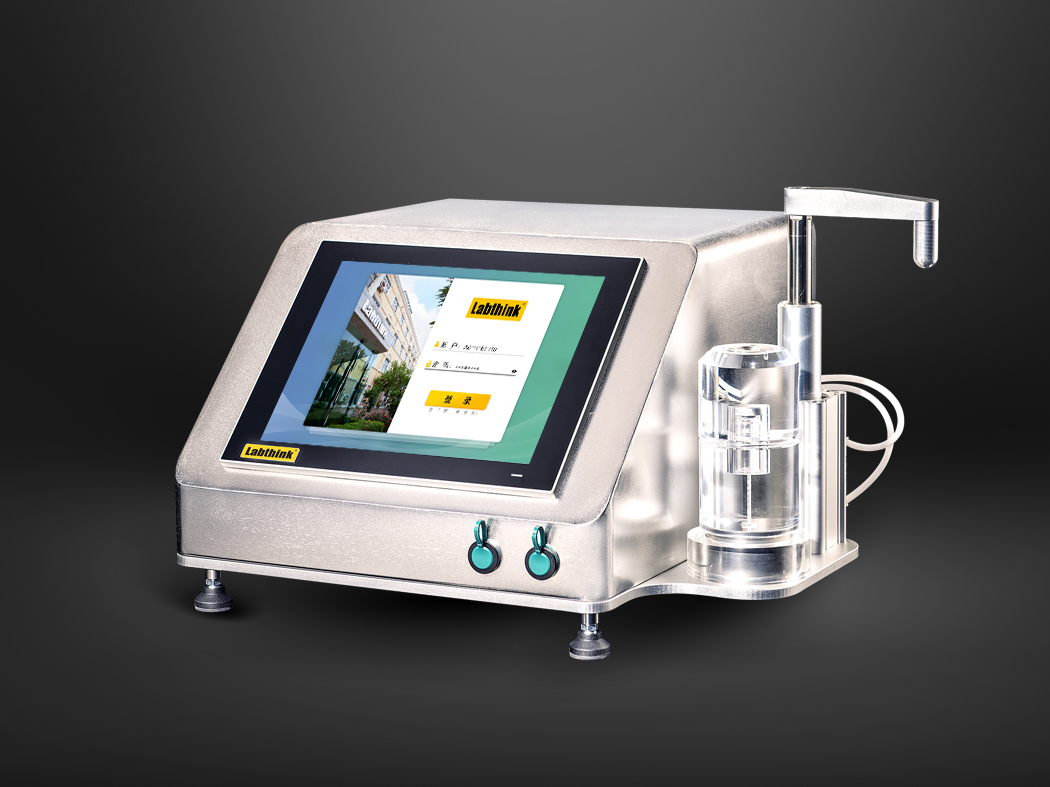
C690 Container Closure Integrity Testing system. Image source: Labthink product records.
C840 and C870 residue systems: confirm the gravimetric method before the model
The C840 and C870 are both automated gravimetric systems, but they answer different method questions. The C840 is designed for evaporation residue, overall migration and non-volatile residue work. It can be used for determination of evaporation residue, total migration testing of food contact materials, non-volatile matter in purified water and non-volatile residual testing of pharmaceutical packaging materials. The C870 is an integrated Loss on Drying system for moisture and volatile content in pharmaceutical, food and chemical samples.
For C840, the buyer should confirm whether the application is overall migration from food contact materials, evaporation residue, non-volatile residue or another gravimetric residue test. The C840 is designed to automate key steps of the evaporation residue testing process, helping improve testing efficiency, consistency and repeatability compared with manual procedures. It is not a blanket replacement for every manual step in every method; the specific sample preparation, sample quantity, heating conditions and constant-weight requirements must be confirmed against the applicable method. C840 can be considered for evaporation residue testing of aqueous solutions and similar samples, including silica slurry aqueous solutions, but the same method confirmation applies.
Model selection also matters. The C840M uses a 0.1 mg readability balance, while the C840H uses a 0.01 mg readability balance and offers higher testing capacity and a greater number of available testing positions. The C840M can be considered when 0.1 mg balance readability and its available testing capacity are sufficient; the C840H is more suitable when the application requires higher weighing resolution and higher testing capacity or more positions. This is a method-and-throughput decision, not simply a price-tier decision.
For C870, the supplied specification lists a test range of 0.05 to 40,000 mg, a temperature range from room temperature to 130 C, 36 test stations and a 40 mL test cup volume. The system integrates heating, weighing and data recording in one unit, reducing manual transfer errors and improving test repeatability compared with traditional split LOD testing setups. The buyer should still confirm the drying temperature, time, sample preparation and constant-weight criteria required by the applicable monograph or internal method.
Standards alignment should be part of the same review. C840 can be used for applications related to EN 1186 and EU 10/2011, depending on the specific test and sample type. The EU overall migration limit for plastic food contact materials is 60 mg/kg food or 10 mg/dm2 of contact material. C870 is designed for Loss on Drying testing according to applicable pharmacopeial requirements, including USP <731>, with the specific procedure and conditions confirmed according to the applicable monograph.
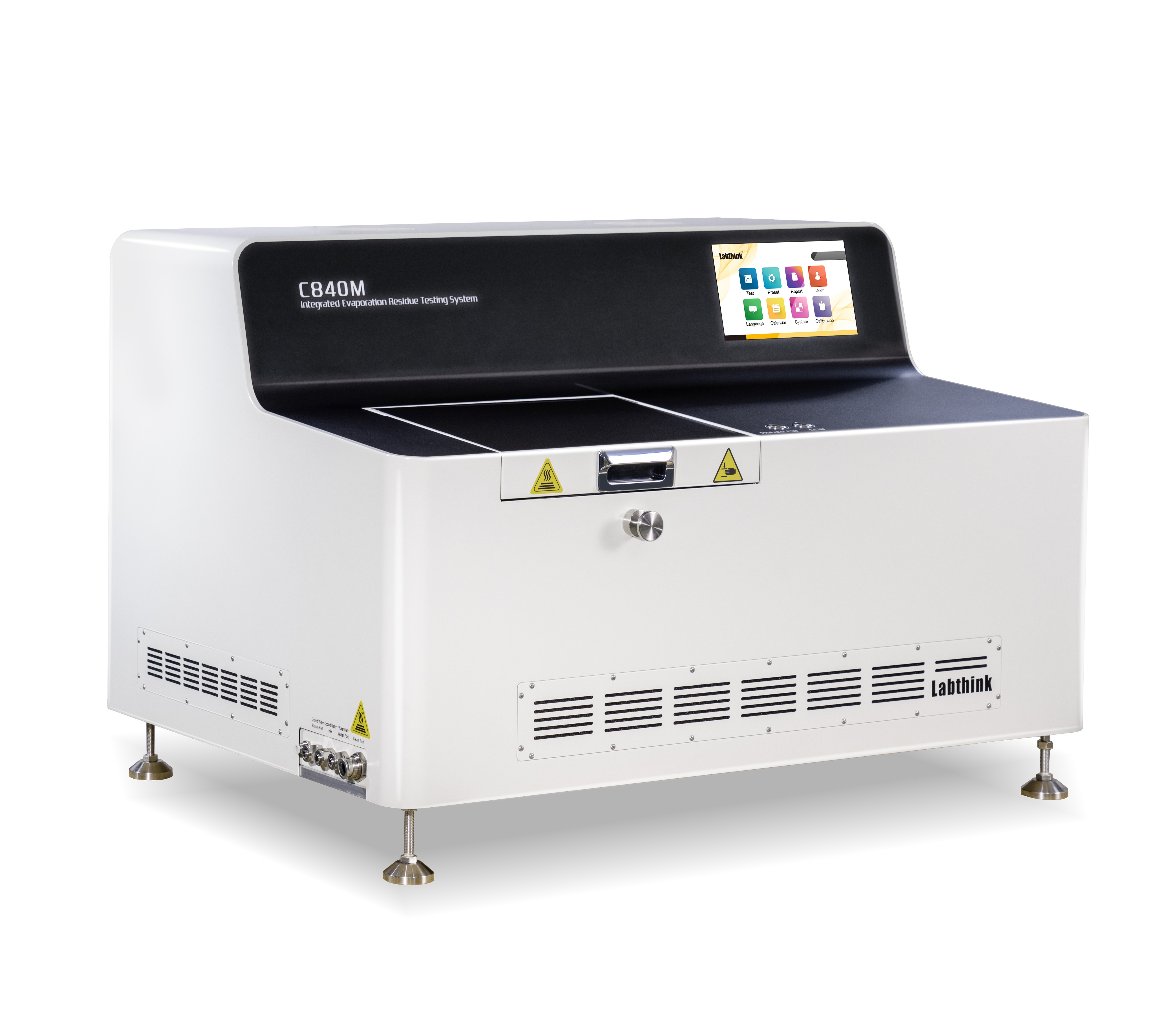
C840 integrated evaporation residue testing system. Image source: Labthink product records.
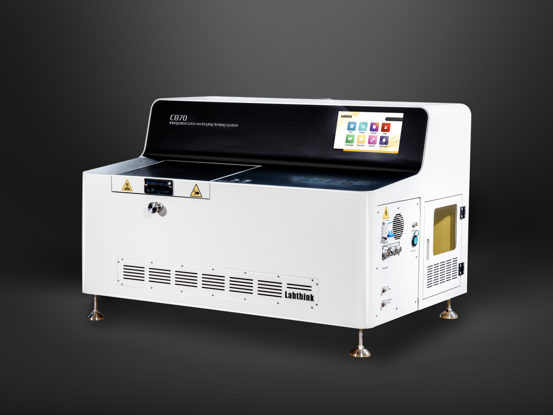
C870 integrated Loss on Drying testing system. Image source: Labthink product records.
Automation scope and matched laboratory equipment
Automation is a boundary to define, not a word to accept. The application data list the operation mode for the C690, C840 and C870 as fully automated, but the quotation still has to state what is included in the supplied system and what the laboratory must provide. The C690 application data name a vacuum pump as matched equipment. The C840 and C870 application data name an analytical balance. The exact boundary between supplier-supplied and site-supplied equipment, installation responsibility, calibration responsibility and training scope should be written into the order.
Ask for a matched-equipment list with model numbers and utility requirements. For CCIT, confirm the vacuum or pressure supply, chamber and fixture handling, test method parameters and data export. For C840 and C870, confirm the balance readability, cup or sample handling, heating and cooling steps, weighing sequence, data recording and any connection to the laboratory's documentation system. If the laboratory needs GMP, 21 CFR Part 11 or pharmacopeia-compliant records, the supplier should state how the data record supports that requirement for the specific configuration. The supplied application highlights cite GMP, 21 CFR Part 11 and pharmacopeia compliance for the automated systems; the buyer should map those claims to the actual audit and data-integrity requirements.
Certificates, manufacturing capacity and quality evidence
Certificate review should match the certificate scope to the exact model, market and application. Labthink holds ISO 9001:2015 certification for production of packaging testing instruments, ISO 14001:2015 for production and related environmental management activities, and ISO 45001:2018 for production and related occupational health and safety management activities. The certificates shown in the supplied records were issued on 2025-11-20 and expire on 2028-11-24, under Shandong Seatone International Certification Co., Ltd.
For the instrument families, the supplied records include an Attestation of Conformity for the C690B, C690M, C690H, C690G and C690X under EN 61010-1:2010+A1:2019 and EN IEC 61326-1:2021, certificate M.2025.206.C119114, issued 2025-05-19 and valid to 2030-05-18. A separate Attestation of Conformity covers the C840B, C840M, C840H, C840G and C840X under the same standards, certificate M.2025.206.C119121, also issued 2025-05-19 and valid to 2030-05-18. These are series-level documents; the buyer should confirm that the ordered model and any special configuration fall within the stated scope.
Manufacturing evidence helps the buyer judge delivery assurance. The company background records a factory size of 4,100 m2, 220 employees, annual output of 1,200 units, an R and D team of 50 engineers, a 50% export ratio and global markets. The capability data list a monthly capacity of 100 units made to order, a MOQ of 1 unit and a lead time of 28 to 45 days. Labthink also reports more than 50 distributors and 30 service providers worldwide. These figures are supplier-provided; they are useful for a capability review when they are checked against the specific order, factory acceptance test and service route.
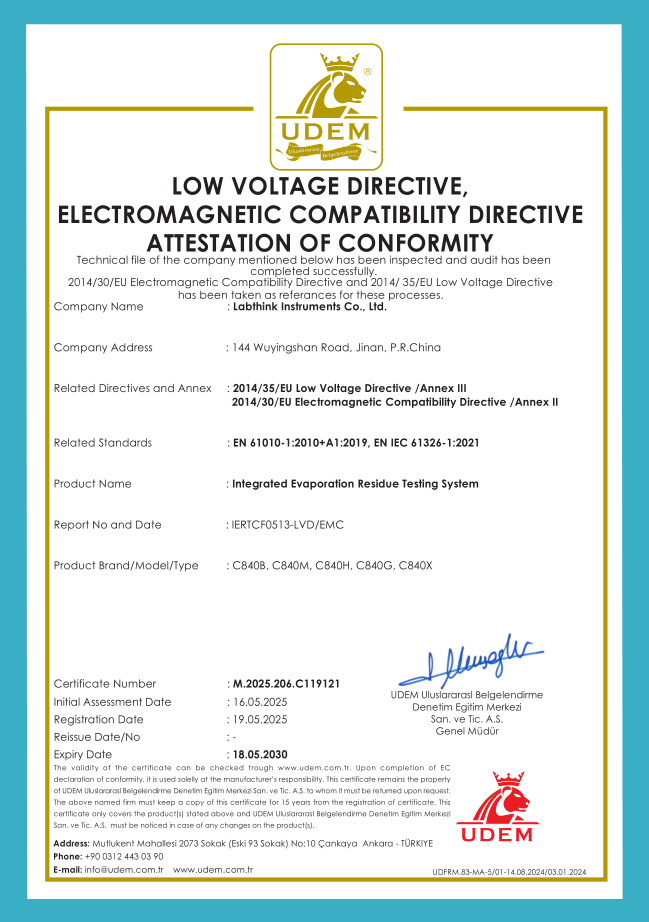
Attestation of Conformity covering the C840 series. Image source: Labthink certificate records.
Purchasing terms, acceptance criteria and delivery support
Commercial terms should be settled before the technical configuration is frozen. The supplied purchasing record lists a MOQ of 1 unit, delivery terms of EXW, FOB, CIP, CPT, DAT or DAP, acceptance criteria of pre-shipment test or inspection upon receipt, and payment terms negotiable. The capability record lists customization of test range and test capacity, including volume, size and test stations, with 100% test and remote or onsite after-sales support. These terms are a starting point for the quotation; they do not replace a written acceptance protocol for the actual package or sample list.
Delivery assurance questions should cover more than the ship date. Ask who performs the pre-shipment test, which packages or samples are used, what report is provided, how the fixture is labeled and packed, what spare parts are included, how installation and training are handled, how calibration and service are scheduled, and what response route exists for remote or onsite support. For long-term CCIT and residue testing, also ask how fixture changes for new package formats are handled, how method transfers are supported, and how replacement parts and software or data records are maintained over the instrument life.
A step-by-step qualification workflow
- Build a package and sample inventory. List every vial, ampoule, syringe, bottle, pouch, sachet, food-contact material, pharmaceutical packaging material, API or excipient sample that the laboratory expects to test. Include dimensions, closure, material, test pressure, sensitivity, solvent, heating conditions and target method.
- Map each item to the method and standard. For CCIT, identify pressure decay, vacuum decay or both, and the applicable USP <1207>, ASTM F2338 or ISO 11607 requirement. For residue work, identify overall migration, evaporation residue, NVR, LOD or another gravimetric method, plus EN 1186, EU 10/2011, USP <731> or the internal procedure.
- Request a sample test and fixture confirmation. Ask the supplier to confirm the suitable fixture for the actual package, the test pressure or vacuum range, the expected sensitivity and the sample preparation. For sachets and bottles, do not accept a category-level answer without the dimensions, closure and sensitivity review.
- Review automation and matched equipment. Confirm the balance readability, test stations, cup volume, heating range, vacuum pump, data recording, installation scope and training. Put the supplier-supplied and site-supplied boundary in writing.
- Audit certificate and quality evidence. Match ISO certificates and Attestation of Conformity scope to the ordered model and market. Ask for the pre-shipment test report, calibration information and any method statement needed for the laboratory's quality system.
- Lock commercial terms and acceptance. Confirm MOQ, lead time, Incoterms, payment terms, pre-shipment test, inspection on receipt and the technical acceptance criteria. The acceptance criteria should repeat the package and sample list from step one.
- Plan delivery and long-term support. Confirm packing, installation, training, spare parts, service route, fixture updates and documentation. A supplier that can answer the first six steps but not the seventh has not yet demonstrated delivery assurance.
Comparison table: what to verify across C690, C840 and C870
| Evaluation area | C690 CCIT | C840 evaporation residue and migration | C870 loss on drying |
|---|---|---|---|
| Primary role | Non-destructive leak detection for pharmaceutical, food and other sealed packages. | Evaporation residue, overall migration of food contact materials and non-volatile residue testing. | Loss on Drying testing for moisture and volatile content. |
| Package or sample scope to confirm | Vials, ampoules, syringes, bottles, pouches, sachets and other formats, subject to package configuration and suitable fixture. | Aqueous solutions, silica slurry aqueous solutions and other samples, subject to sample preparation, quantity, heating and constant-weight confirmation. | Pharmaceutical, food and chemical samples where moisture or volatile content is determined by a drying method. |
| Method or automation to verify | Pressure decay and/or vacuum decay depending on model; non-destructive test method; fixture and sensitivity confirmation. | Integrated evaporation, drying and weighing; C840M 0.1 mg or C840H 0.01 mg balance readability; testing capacity and positions. | Integrated heating, weighing and data recording; test range 0.05 to 40,000 mg; room temperature to 130 C; 36 stations; 40 mL cup. |
| Matched equipment | Vacuum pump. | Analytical balance. | Analytical balance. |
| Evidence to request | ASTM F2338 and USP <1207> method statement, fixture drawing, sample test, certificate scope. | EN 1186 and EU 10/2011 method statement, model selection rationale, sample test, certificate scope. | USP <731> method statement, temperature and constant-weight procedure, data record example, certificate scope. |
Use cases and evaluation questions by laboratory type
A pharmaceutical fill-finish laboratory evaluating C690 should start with the container list: vials, ampoules, prefilled syringes, cartridge bottles and infusion bottles. The supplied application record describes automated batch testing of pharmaceutical packages, ampoules, cartridge bottles, infusion bottles and prefilled syringes for leak detection, with precise and traceable data and highlights citing GMP, 21 CFR Part 11, ASTM F2338 and USP <1207> compliance. The evaluation question is not only whether the C690 can test one vial; it is whether the proposed fixture set, method and batch workflow can cover the container families in the laboratory's product portfolio.
A food packaging laboratory should separate rigid, semi-rigid and flexible formats. Pouches and sachets may require vacuum decay, while bottles may require a different fixture and pressure review. For sachets containing food or meat products, suitability depends on dimensions, material and required sensitivity, and samples may be required. A supplier response that does not ask for dimensions, closure or sensitivity has not yet completed the application review.
A residue laboratory should separate method families before comparing models. C840 is the relevant system when the work is overall migration, evaporation residue or NVR. C870 is the relevant system when the work is loss on drying. The supplied application records list pharmaceutical, food and beverage, medical device, plastics and polymer, cosmetics, general laboratory, reagents and purified water as user environments for these methods. The buyer should map those environments to its own sample matrix, because a method that fits purified water or reagent residue may not fit a food simulant or a pharmaceutical packaging extract without method confirmation.
Frequently asked questions
Which standards are relevant to C840?
C840 can be used for applications related to EN 1186 and EU 10/2011, depending on the specific test and sample type. The EU overall migration limit for plastic food contact materials is 60 mg/kg food or 10 mg/dm2 of contact material. The buyer should confirm the simulant, time, temperature and sample preparation against the applicable method before ordering.
What equipment can perform ASTM F2338 vacuum decay testing?
Labthink C690 supports vacuum decay testing for non-destructive package leak detection based on the ASTM F2338 test method. It can be used for various rigid, semi-rigid and flexible nonporous packages, subject to the specific package configuration.
What types of packages can the C690 test?
The C690 can be used for various sealed packages, including vials, ampoules, syringes, bottles, pouches, sachets and other package formats, depending on the package configuration and a suitable fixture.
What leak detection methods does the C690 use?
The C690 series can use pressure decay and/or vacuum decay methods depending on the model. The appropriate method depends on the package type, material, geometry, closure design, required detection sensitivity and applicable standard.
Can C840 replace manual evaporation residue testing?
C840 is designed to automate key steps of the evaporation residue testing process, helping improve testing efficiency, consistency and repeatability compared with manual procedures. The specific sample preparation, sample quantity, heating conditions and constant-weight requirements still need to be confirmed against the applicable method.
Can C840 test silica slurry aqueous solutions?
Yes, C840 can be considered for evaporation residue testing of aqueous solutions and similar samples. The specific sample preparation, sample quantity, heating conditions and constant-weight requirements should be confirmed according to the applicable method.
What equipment can automate Loss on Drying testing?
Labthink C870 integrated Loss on Drying testing system automates LOD tests used in pharmaceutical, food and chemical industries to obtain moisture and volatile content results with fewer manual errors. The supplied specification lists a test range of 0.05 to 40,000 mg, room temperature to 130 C, 36 test stations and a 40 mL test cup volume.
What are the purchasing terms and acceptance criteria?
The supplied purchasing record lists MOQ 1 unit, delivery terms EXW, FOB, CIP, CPT, DAT or DAP, acceptance criteria of pre-shipment test or inspection upon receipt, and payment terms negotiable. The capability record lists a general lead time of 28 to 45 days and a monthly capacity of 100 units made to order. For a specific C690, C840 or C870 configuration, share the package or sample list, method, target sensitivity and acceptance scope so the quotation and delivery plan can be confirmed. The downloadable catalog is available here: Packaging Testing Equipment and Testing Services catalog.
Conclusion: qualify the system and the delivery path together
The strongest supplier evaluation for CCIT and residue instruments is not a brand checklist. It is a documented match between the buyer's packages or samples, the method, the fixture, the required sensitivity or weighing resolution, the automation scope, the matched equipment, the certificate scope, the purchasing terms and the acceptance test. For the C690, that means resolving vials, ampoules, syringes, bottles, pouches and sachets against pressure decay or vacuum decay, fixture design and required sensitivity before the order. For C840 and C870, it means separating overall migration, evaporation residue, NVR and loss on drying, then confirming model, balance readability, heating range, capacity and data record.
When those items are written into the RFQ and acceptance protocol, the laboratory buys a qualified configuration rather than a catalog model. That is the practical meaning of capability and delivery assurance for long-term CCIT and residue testing.
Next step: Prepare a package and sample list, method target and acceptance criteria, then request a configuration review for C690, C840 or C870. The catalog PDF is available for download: Packaging Testing Equipment and Testing Services catalog.
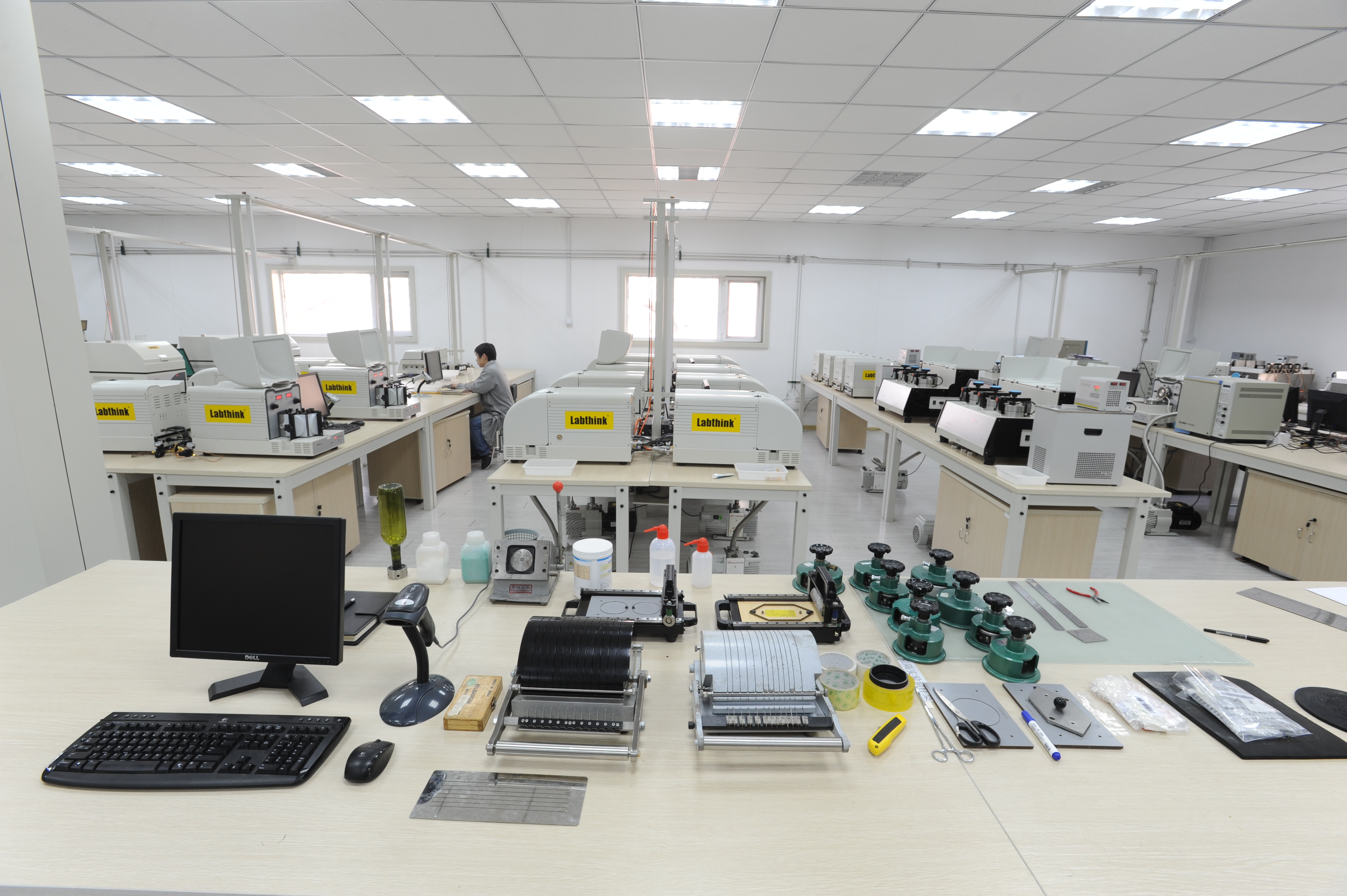
Packaging Testing Center. Image source: Labthink company records.
Have Questions or Need More Details?
Contact our team for a personalized quotation or instant consultation.
Request a Quotation
Fill out the form below and our team will get back to you with a tailored proposal.
WhatsApp Direct Chat
Prefer to chat in real-time? Message us on WhatsApp for instant assistance & quick answers.
- Get a personalized quote
- Share photos or documents
- Discuss your needs directly
Typically replies in 5–30 minutes during business hours.