
Supplier Evaluation for Food & Pharma Lab Instruments: Verifying Capability and Delivery Assurance
Supplier Evaluation for Food & Pharma Lab Instruments: Verifying Capability and Delivery Assurance
Food Safety & Pharmaceutical Analysis Testing depends on instruments that must do more than meet a specification sheet. They must match the package formats a laboratory actually tests, operate within the environmental conditions the laboratory can provide, and remain supported over a multi-year service life. Supplier evaluation is the step where those requirements are either verified or left to chance.
This guide presents a procurement-focused framework for evaluating instrument suppliers in food safety and pharmaceutical analysis testing, structured around two questions: Can the supplier demonstrate the capability claimed, and can the supplier assure delivery of a working, supported system? The framework references the Labthink C690 Container Closure Integrity Testing (CCIT) system, the C840 Integrated Evaporation Residue Testing System, the C870 Integrated Loss-on-Drying Testing System, and the C840M versus C840H selection.
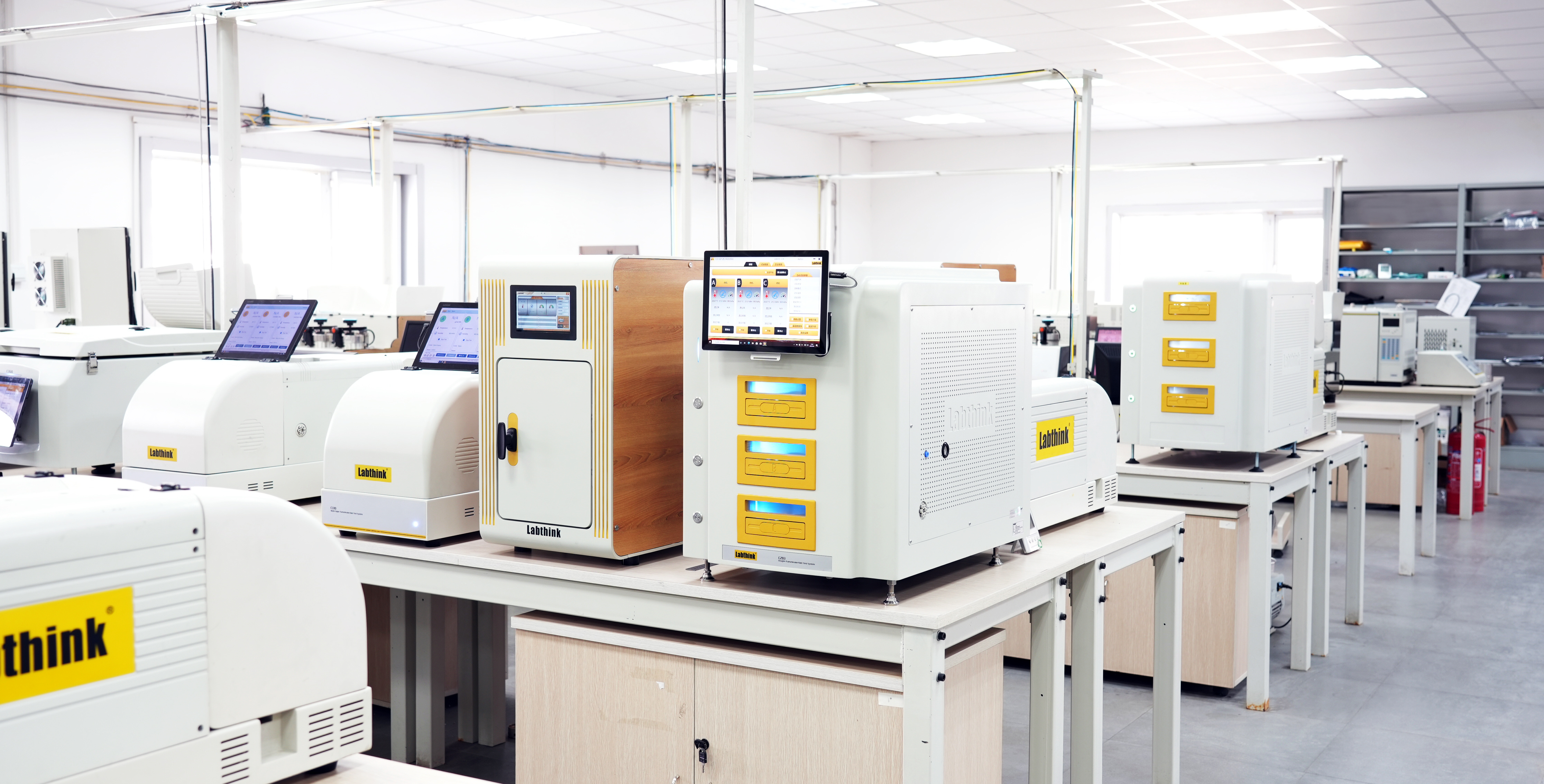
Capability verification begins in the laboratory where the instrument will actually operate. Image: Labthink Packaging Testing Center.
Problem Definition: Where Supplier Evaluations Fail
Supplier evaluations fail in two predictable places. The first is capability verification: a specification is accepted at face value without confirming that it applies to the buyer's package dimensions, closure configuration, required sensitivity, and test pressure. The second is delivery assurance: auxiliary equipment, fixtures, laboratory conditions, and long-term support are assumed rather than confirmed.
For CCIT, the C690 detection lower limit of 2 µm and resolution of 0.1 µm only become operational when the test fixture matches the package. The C690 covers vials, ampoules, syringes, bottles, pouches, and sachets with suitable fixtures, but each format requires confirmation of package dimensions, closure configuration, test pressure, and required sensitivity before an order is placed. A supplier evaluation that skips this step can result in a system that is technically capable but not configured for the buyer's samples.
For evaporation residue testing, the C840 testing range of 0.05 to 80,000 mg, resolution of 0.01 mg, and repeatability of ±0.05 mg depend on the analytical balance and a stable ambient temperature in an indoor laboratory. The C840 automates evaporation, drying, cooling, and weighing stages of the overall migration testing procedure, but the automation assumes the laboratory environment supports it. Delivery assurance means confirming that these supporting conditions exist before installation, not after.
Industry Background: Standards Drive the Evaluation Criteria
Food safety and pharmaceutical analysis testing is standards-driven, and those standards define what supplier evaluation must verify. For food contact materials, EN 1186 and EU 10/2011 define testing standards and regulatory limits for overall migration from plastic food contact materials into food simulants. The overall migration limit specified for plastic food contact materials is 10 mg/dm² or 60 mg/kg. The European Commission states that migration testing uses simulants under standardized time and temperature conditions representative of food use and shelf life. Overall migration testing involves evaporation of the simulant followed by gravimetric determination of non-volatile residue.
For pharmaceutical packaging, USP <1207> emphasizes deterministic, quantitative, and non-destructive leak test methodologies such as vacuum decay and pressure decay over probabilistic methods. ASTM F2338 outlines quantitative, non-destructive leak detection using a vacuum decay chamber and requires calibration using reference standards with known leak sizes. Labthink C690 supports vacuum decay testing based on the ASTM F2338 test method and can be used for rigid, semi-rigid, and flexible nonporous packages, subject to the specific package configuration.
These standards do not merely dictate instrument performance; they dictate the evidence a supplier should be able to provide. A supplier that cannot map its instrument specifications to a specific standard, package type, and test condition is asking the buyer to accept an unverified claim.
Detailed Solution: Mapping Supplier Claims to Concrete Evidence
The central method of supplier evaluation is to convert each claim into an evidence point that can be checked before order placement. Four areas require verification: detection capability, auxiliary equipment, laboratory conditions, and long-term support.
Detection Capability: Specifications Must Match the Sample
The Labthink C690 Nondestructive Package Leak Detector has a detection lower limit of 2 µm, a testing range of 2 µm to 8 µm and greater leaks, a resolution of 0.1 µm, and repeatability of ±1 µm. The pressure range is −100 to 0 to +100 kPa. These specifications are the basis for CCIT capability, but they do not by themselves confirm suitability for a given package.
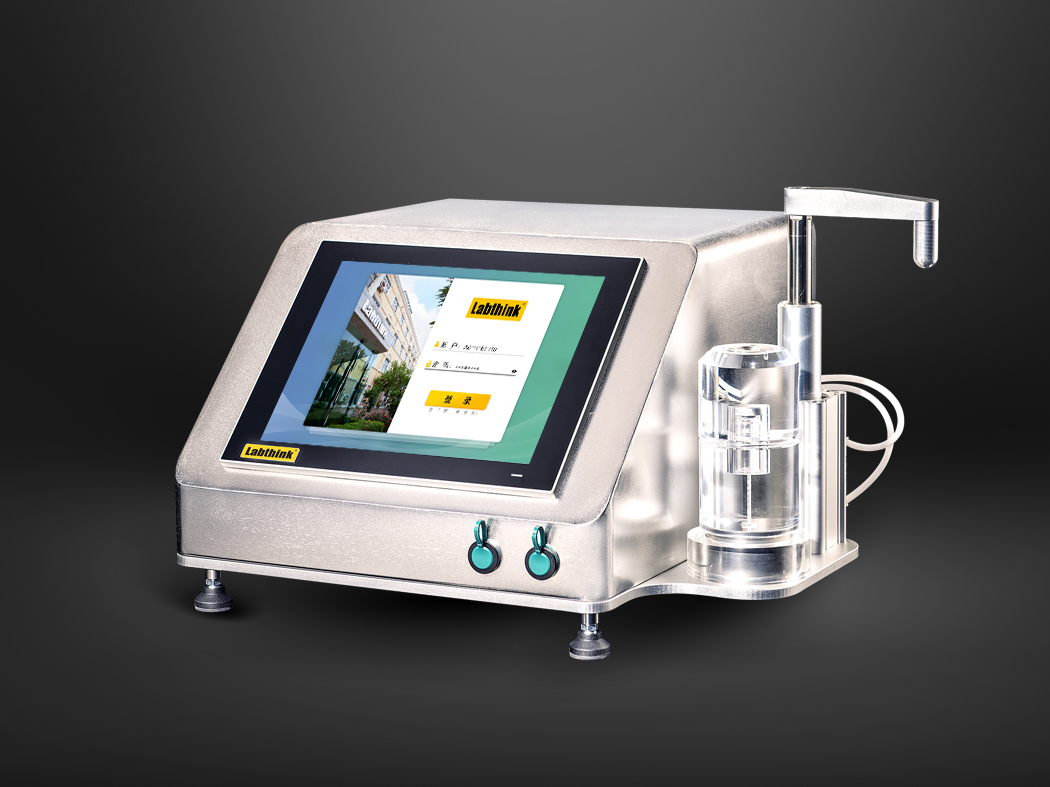
C690 Nondestructive Package Leak Detector: 2 µm detection lower limit, 0.1 µm resolution, ±1 µm repeatability. Image: Labthink.
The C690 can be configured for bottle leak testing, and for sachets containing food or meat products the suitability depends on sachet dimensions, material, and required leak detection sensitivity. Package information and samples may be required to confirm the testing configuration. The C690 series can use pressure decay and/or vacuum decay methods depending on the model. A supplier evaluation should ask: which method does the proposed configuration use, and what fixture is required for the buyer's specific package?
The Labthink C840 Integrated Evaporation Residue Testing System is designed for automated evaporation residue and NVR testing. It automates the evaporation, drying, cooling, and weighing stages of the overall migration testing procedure. The system has a testing range of 0.05 to 80,000 mg, a resolution of 0.01 mg, and repeatability of ±0.05 mg. It operates from room temperature to 130 °C with a temperature fluctuation of ±0.5 °C. It is applicable to food contact materials, pharmaceutical packaging, and chemical reagents.
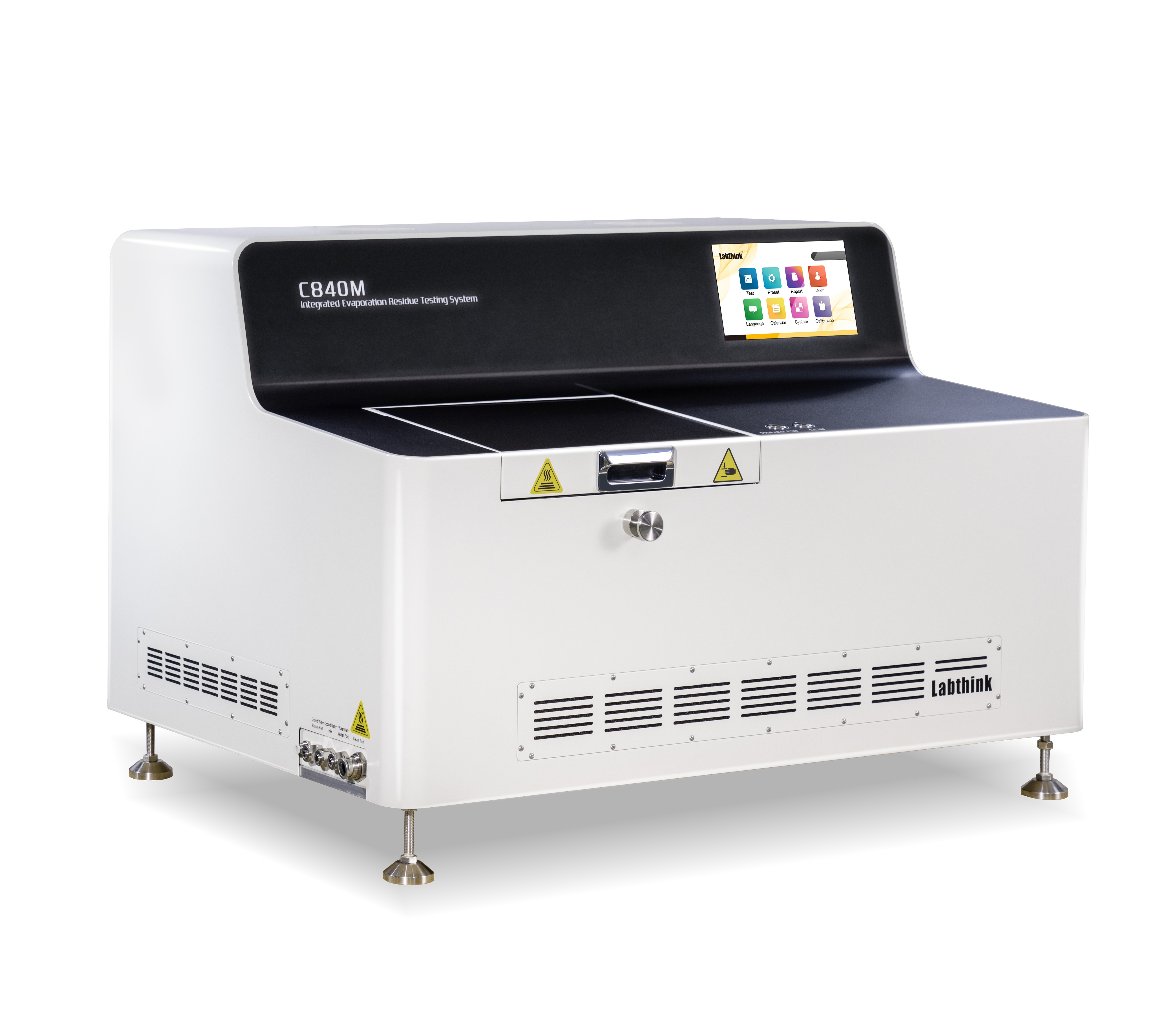
C840 Integrated Evaporation Residue Testing System: 0.05–80,000 mg range, 0.01 mg resolution, ±0.05 mg repeatability. Image: Labthink.
The C840 is associated with plastic food contact material applications under EN 1186 and EU 10/2011 and can be used for applications related to these standards, depending on the specific test and sample type. For long-term supply planning, the C840M versus C840H decision matters: C840M uses a 0.1 mg readability balance, while C840H uses a 0.01 mg readability balance and offers higher testing capacity and a greater number of available testing positions. C840M is recommended for standard quality control testing where 0.1 mg balance readability meets compliance specifications; C840H is recommended for high-precision R&D or regulated pharmaceutical applications requiring 0.01 mg balance readability and high-volume testing.
The Labthink C870 Integrated Loss-on-Drying Testing System automates the drying and weighing process of Loss on Drying testing to improve testing efficiency and repeatability. It operates over a temperature range of room temperature to 130 °C with temperature fluctuation of ±0.5 °C, a test pressure of 0 to −20 kPa, a test range of 0.05 to 40,000 mg, a resolution of 0.01 mg, and repeatability of ±0.05 mg. It is applicable to pharmaceutical, chemical reagents, medical device, plastics and polymer, food contact material, and Testing, Inspection and Certification (TIC) laboratories.
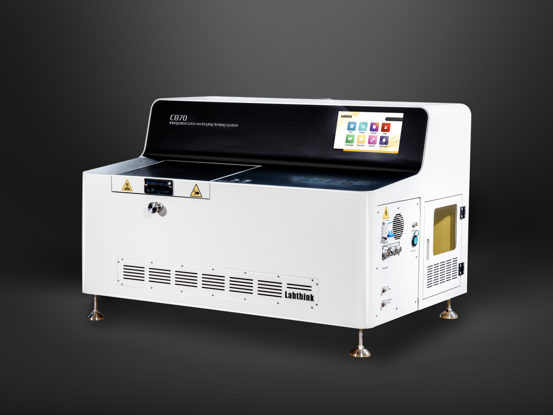
C870 Integrated Loss-on-Drying Testing System: 0.05–40,000 mg range, 0.01 mg resolution, 0 to −20 kPa test pressure. Image: Labthink.
Auxiliary Equipment and Laboratory Conditions
Auxiliary equipment is not an optional accessory; it is part of the measurement chain. The C690 is matched with a vacuum pump as supporting equipment, which is relevant to accessory and spare-parts continuity planning for long-term CCIT instrument supply. The C840 and C870 use an analytical balance as matched equipment. The C860 residue-on-ignition system also uses an analytical balance as matched equipment, with 36 test stations and a temperature range up to 800 °C with ±0.5 °C fluctuation.
All of these systems require indoor laboratory use only with a stable ambient temperature. The C690 also requires indoor laboratory use with stable ambient temperature. For the C840 and C870, the analytical balance must be stable, and the laboratory environment must not introduce temperature or humidity swings that affect weighing. Delivery assurance means confirming the laboratory can meet these conditions, not discovering the gap during installation.
Long-Term Support and Delivery Assurance
Labthink operates with its operational heart in Jinan, China, and an international headquarters in Boston, USA. Its global network includes a SAC IT Center in Hong Kong, a European branch in Germany, an Asia-Pacific center in Malaysia, and a Middle East service center in Dubai. The company is supported by over 50 distributors and 30 service providers worldwide. This network is relevant to delivery assurance because it determines how quickly fixtures, spare parts, and service support can reach the laboratory over the system's service life.
Because vacuum decay CCIT is a non-destructive test, the tested package is monitored over the test period without being destroyed, which supports recurring package leak detection programs and long-term CCIT instrument supply. The same logic applies to the C840 and C870: automation reduces manual handling, and the long-term value depends on fixture availability, balance calibration, and service access.
Step-by-Step Breakdown: A Six-Step Supplier Evaluation Workflow
Step 1 — Inventory package formats and dimensions. For C690, confirm which package types are involved: vials, ampoules, syringes, bottles, pouches, or sachets. Each format requires a suitable fixture. For bottles, confirm bottle dimensions, closure configuration, test pressure, and required sensitivity. For sachets, confirm sachet dimensions, material, and required leak detection sensitivity. For C840, confirm the sample type and whether the application is overall migration, evaporation residue, or NVR testing.
Step 2 — Match instrument specifications to the applicable standard. For CCIT, confirm whether the proposed C690 configuration uses pressure decay, vacuum decay, or both, and whether it aligns with the applicable method such as ASTM F2338 or USP <1207>. For overall migration, confirm that the C840 application matches EN 1186 and EU 10/2011 requirements, including the overall migration limit of 10 mg/dm² or 60 mg/kg.
Step 3 — Select the correct evaporation residue platform. Choose C840M when 0.1 mg balance readability meets compliance specifications and lower sample throughput is sufficient. Choose C840H when 0.01 mg balance readability and higher testing capacity are required for high-precision R&D or regulated pharmaceutical applications. This decision should be made before order placement, not adjusted after delivery.
Step 4 — Specify auxiliary equipment and laboratory conditions. Confirm that the C690 quote includes a matched vacuum pump, and that the C840 and C870 quotes include or specify the analytical balance. Confirm that the laboratory can provide indoor use with stable ambient temperature. Confirm the space and utilities required for the vacuum pump and balance.
Step 5 — Plan fixtures, consumables, and calibration. For C690, fixture availability across package formats determines operational flexibility. For C840 and C870, sample cups, balance calibration, and temperature control are routine requirements. The supplier evaluation should confirm fixture lead times, replacement part availability, and calibration support.
Step 6 — Verify support network and commercial terms. Confirm the location of service providers, spare parts channels, and service response routes. Labthink supports MOQ of 1 unit, delivery terms of EXW / FOB / CIP / CPT / DAT / DAP, acceptance criteria of pre-shipment test or inspection upon receipt, and negotiable payment terms. These commercial terms are part of delivery assurance because they define how the instrument is tested before shipment and how acceptance is handled.
Use Cases
Pharmaceutical quality control laboratory evaluating CCIT and LOD. A pharmaceutical QC laboratory needs to test vials for container closure integrity and measure loss on drying for pharmaceutical APIs and finished goods. The evaluation should cover a C690 configuration with vial fixtures, confirmation of closure configuration and test pressure, and a C870 installation that requires an analytical balance and stable indoor temperature. The laboratory should also confirm vacuum pump availability for the C690 and balance availability for the C870 before order placement.
Food contact material laboratory evaluating evaporation residue. A food contact material laboratory tests overall migration under EN 1186 and EU 10/2011. The evaluation focuses on C840 with a testing range of 0.05 to 80,000 mg and resolution of 0.01 mg. The key decision is C840M versus C840H based on balance readability and throughput. The laboratory should confirm analytical balance availability, indoor temperature stability, and sample cup logistics. A case in Labthink's records addressed manual and time-consuming testing for overall migration and extractables through automated measurement of overall migration from food contact materials and food packaging.
TIC laboratory evaluating a multi-instrument suite. A Testing, Inspection and Certification laboratory needs CCIT, evaporation residue, and residue on ignition capability. The evaluation covers C690, C840, and C860. Coordination points include laboratory space, vacuum pump and analytical balance requirements, ambient temperature stability, and service network coverage. Such laboratories often select C840H for high-precision pharmaceutical work and C840M for routine food contact material testing.
Comparison Table: Verified Specifications for Supplier Evaluation
The following table summarizes verified specifications for the instruments most commonly evaluated in food safety and pharmaceutical analysis testing. All values are taken from Labthink product documentation.
| Parameter | C690 CCIT | C840 Evaporation Residue | C870 LOD |
|---|---|---|---|
| Testing range | 2 µm to 8 µm and greater leaks | 0.05–80,000 mg | 0.05–40,000 mg |
| Resolution | 0.1 µm | 0.01 mg | 0.01 mg |
| Repeatability | ±1 µm | ±0.05 mg | ±0.05 mg |
| Temperature / pressure | −100 to 0 to +100 kPa | Room temp. to 130 °C; ±0.5 °C | Room temp. to 130 °C; ±0.5 °C; 0 to −20 kPa |
| Matched equipment | Vacuum pump | Analytical balance | Analytical balance |
| Primary application | Non-destructive CCIT | Evaporation residue / NVR / overall migration | Loss on Drying (LOD) |
C840M versus C840H selection.
| Consideration | C840M | C840H |
|---|---|---|
| Balance readability | 0.1 mg | 0.01 mg |
| Testing capacity | Standard | Higher; greater number of testing positions |
| Typical fit | Standard QC where 0.1 mg meets compliance and throughput is moderate | High-precision R&D or regulated pharmaceutical work requiring 0.01 mg and high volume |
FAQ
1. Which standards apply to food safety and pharmaceutical analysis testing instruments?
The applicable standard depends on the test method. For overall migration from plastic food contact materials, EN 1186 and EU 10/2011 define testing standards and regulatory limits, with an overall migration limit of 10 mg/dm² or 60 mg/kg. For CCIT, Labthink C690 supports vacuum decay testing based on ASTM F2338 and is designed for non-destructive CCIT under USP <1207>. For Loss on Drying, the C870 is designed for applications including USP <731>. For residue on ignition, the C860 is designed for applications including USP <281>, European Pharmacopoeia, and Chinese Pharmacopoeia, depending on the specific method. Laboratories should confirm the instrument configuration matches the target standard before order placement.
2. Can the C690 be configured for a specific package format?
Yes. The C690 can be used for various sealed packages, including vials, ampoules, syringes, bottles, pouches, sachets, and other package formats, depending on the package configuration and suitable fixture. Before ordering, package dimensions, closure configuration, test pressure, and required sensitivity should be confirmed to determine the appropriate fixture and test configuration. For sachets containing food or meat products, suitability depends on sachet dimensions, material, and required leak detection sensitivity; package information and samples may be required to confirm the testing configuration.
3. How should a laboratory choose between C840M and C840H?
The decision depends on balance readability and testing capacity. C840M uses a 0.1 mg readability balance, while C840H uses a 0.01 mg readability balance and offers higher testing capacity and a greater number of testing positions. C840M can be considered when a 0.1 mg balance readability meets compliance specifications and its available testing capacity is sufficient. C840H is more suitable when the application requires higher weighing resolution, higher testing capacity, or a greater number of testing positions, such as high-precision R&D or regulated pharmaceutical applications.
4. Are package samples required before confirming an instrument order?
For CCIT, package information and samples may be required to confirm the testing configuration. This applies particularly to sachets and other flexible formats where sachet dimensions, material, and required leak detection sensitivity affect suitability. For bottles, the bottle dimensions, closure configuration, test pressure, and required sensitivity should be confirmed to determine the appropriate fixture and test configuration. Confirming these details before order placement reduces the risk of a mismatched fixture after delivery.
5. What should a delivery assurance check cover before an instrument order is placed?
Delivery assurance should confirm matched auxiliary equipment (vacuum pump for C690; analytical balance for C840 and C870), indoor laboratory conditions with stable ambient temperature, fixture availability across package formats, spare-parts channels, and service network coverage. Labthink supports MOQ of 1 unit, delivery terms including EXW, FOB, CIP, CPT, DAT, and DAP, pre-shipment test or inspection upon receipt, and negotiable payment terms. Labthink's global network includes a SAC IT Center in Hong Kong, a European branch in Germany, an Asia-Pacific center in Malaysia, and a Middle East service center in Dubai, supported by over 50 distributors and 30 service providers worldwide. To request a sample, quote, or the Labthink product catalog, contact the Labthink team through en.labthink.com or email trade.en@labthink.com.
Conclusion
Supplier evaluation for food safety and pharmaceutical analysis testing instruments is a verification exercise, not a price comparison. The C690's 2 µm detection lower limit and 0.1 µm resolution only become useful when the fixture matches the package. The C840's 0.05–80,000 mg range and ±0.05 mg repeatability only become reliable when the analytical balance and indoor temperature are stable. The C870's automation only becomes efficient when the drying and weighing process matches the sample type. And the C840M versus C840H decision only becomes correct when balance readability and throughput are matched to the laboratory's compliance requirements.
Delivery assurance completes the evaluation. A matched vacuum pump, an analytical balance, a stable-temperature indoor laboratory, available fixtures, and a service network with regional reach are not afterthoughts; they are the conditions under which the instrument's claimed capability becomes operational. Labthink Instruments Co. Ltd., founded in 1989, manufactures precision instruments and testing solutions for packaging materials analysis with a 4,100 m² facility, 220 employees including 50 engineers, and annual output of 1,200 units. The company holds more than 100 patents and has participated in drafting more than 10 national standards. Its global network and distributor base support long-term instrument supply and service continuity.
Next step for procurement teams: confirm the package formats, auxiliary equipment, and laboratory conditions before order placement. Download the Labthink Packaging Testing Equipment & Testing Services brochure, or contact the team for a configuration review.
WhatsApp: +86 187-6612-5070 | Phone: +86 531-58702937 | Email: trade.en@labthink.com | Address: 144 Wuyingshan Road, Jinan, P.R.China (250031)
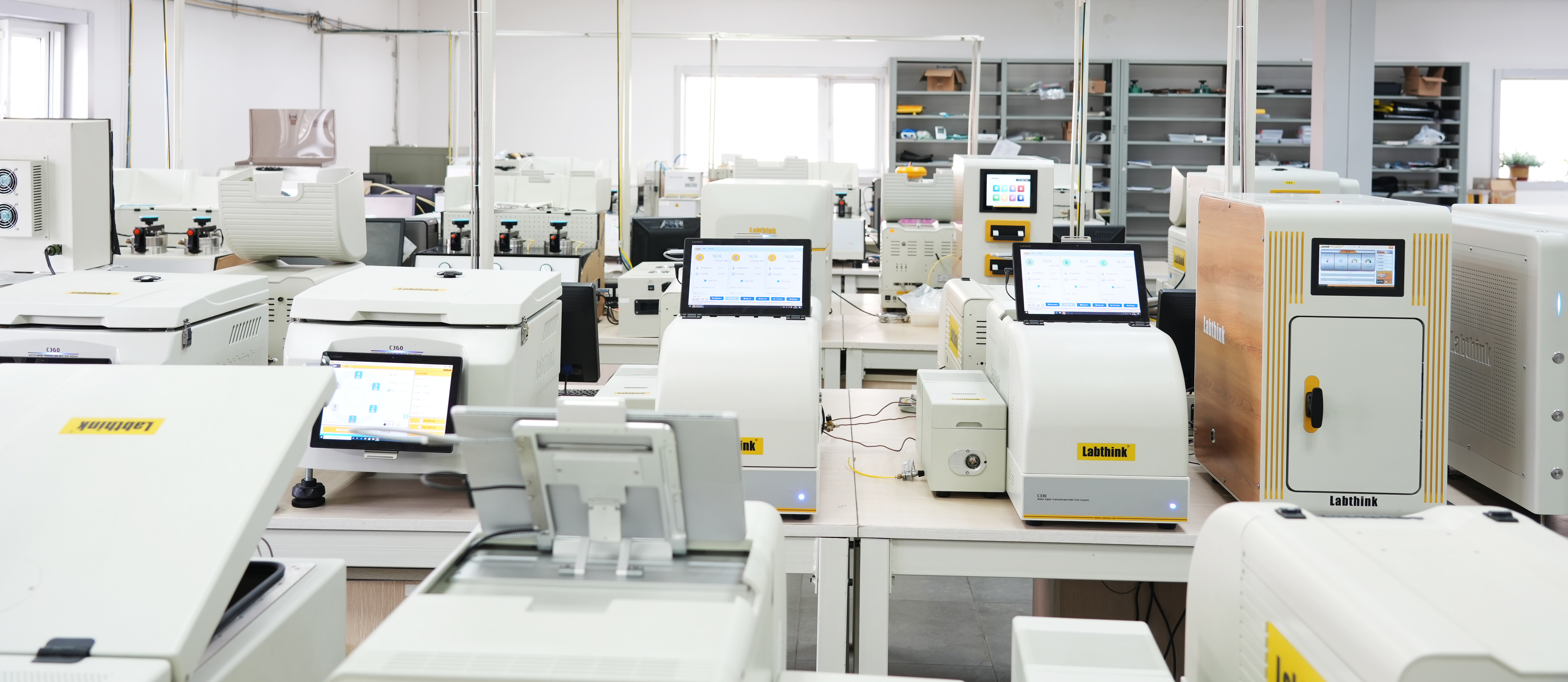
Delivery assurance includes laboratory conditions, matched equipment, and long-term support. Image: Labthink Packaging Testing Center.
Have Questions or Need More Details?
Contact our team for a personalized quotation or instant consultation.
Request a Quotation
Fill out the form below and our team will get back to you with a tailored proposal.
WhatsApp Direct Chat
Prefer to chat in real-time? Message us on WhatsApp for instant assistance & quick answers.
- Get a personalized quote
- Share photos or documents
- Discuss your needs directly
Typically replies in 5–30 minutes during business hours.