
What Is Loss on Drying? A Discovery Guide to Gravimetric Volatile Matter Testing
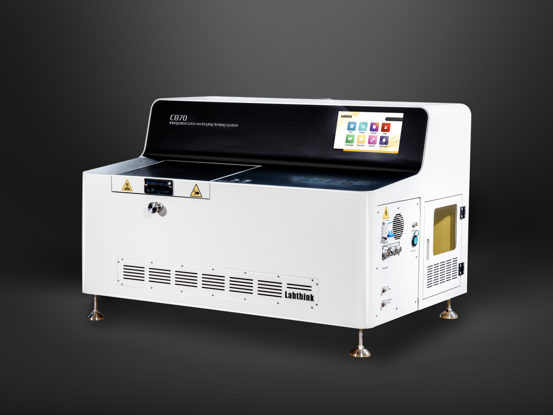
Loss on Drying (LOD) is a gravimetric test method that determines the percentage of volatile matter — primarily moisture and residual solvents — in a sample. The sample is weighed, heated below its decomposition temperature in a controlled oven or desiccator until it reaches a constant weight, and then re-weighed. The mass lost during heating, expressed as a percentage of the original sample mass, is the loss on drying value.
The definition is short. The engineering behind a repeatable LOD result is not. LOD testing sits inside the broader field of Food Safety & Pharmaceutical Analysis Testing, where the number is used for batch release, incoming raw material checks and stability work — and where a result that shifts by a few tenths of a percent between shifts is a data integrity problem rather than a rounding issue.
This guide explains what LOD measures, why the manual version of the method is harder than it looks, and how an integrated gravimetric system such as the Labthink C870 Loss-on-Drying instrument fits into an automated testing workflow.
The Problem: Volatile Matter Is Simple to Define and Hard to Measure Reproducibly
The arithmetic of LOD is elementary: initial mass minus final mass, divided by initial mass. Everything that makes the method difficult happens before the subtraction.
In a split, manual LOD workflow, the sample is weighed on one balance, dried in an oven or drying bath, cooled in a desiccator, and carried back to a separate analytical balance. Each transfer is a chance for the measurement to drift. The documented operational risks of that manual pattern include:
- Environmental interference with the balance. Moving cups between hot baths, desiccators and separate analytical balances exposes micro-gram balances to ambient temperature and humidity fluctuations that destabilise the reading.
- Operator-dependent variation. Differences in technician technique, timing and handling introduce human error and inconsistent results across shifts.
- Exposure and safety load. Manual pouring, evaporation and transfer steps increase direct technician exposure to hot, volatile or hazardous organic solvents, and repeated handling around hot plates, drying ovens or high-temperature baths raises the risk of burns and spills.
- Contamination and spill risk. Repeated manual handling, transfer and open-air transport increase the chance of airborne particulate contamination or accidental sample spillage.
None of these are failures of the chemist. They are structural properties of a workflow that separates three operations — heating, cooling and weighing — that physically belong together.
Industry Background: Where LOD Sits in Food Safety & Pharmaceutical Analysis Testing
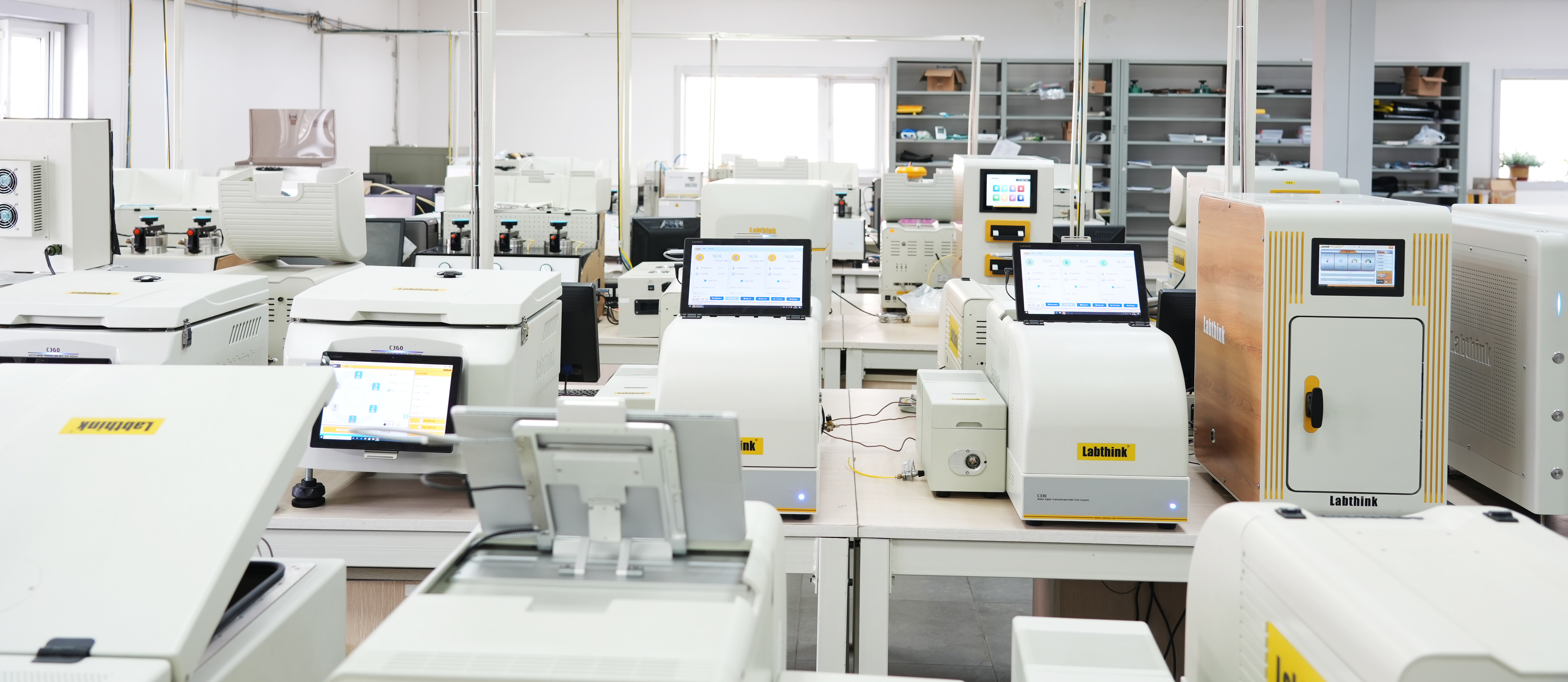
LOD is one of several gravimetric residue determinations used in food, pharmaceutical and chemical laboratories. Labthink's Chemical Analysis Business Unit lists four automated systems in this family:
- C840 — Automated Overall Migration & Evaporation Residue Testing
- C850 — Automated Water-Insoluble Matter Testing
- C860 — Automated Residue on Ignition Testing
- C870 — Automated Loss on Drying Testing
The four tests look similar on a lab schedule and answer completely different questions. The direction of the measurement is the clearest way to separate them.
LOD measures what leaves the sample. The result describes volatile content — moisture and residual solvents — driven off under a defined drying condition.
Evaporation residue measures what stays behind. A sample solution is evaporated and the remaining non-volatile material is weighed; this is the logic used for non-volatile residue (NVR) and for overall migration from food contact materials into a food simulant.
Residue on ignition measures what survives combustion. The sample is ignited at high temperature until organic material burns away, leaving non-combustible inorganic ash; sulfated ash is a variation in which sulfuric acid is added before or during ignition to convert alkali metals and impurities into stable sulfate salts.
For pharmaceutical work, the reference method for LOD is typically a pharmacopeial one. USP <731> directs the quantitative determination of volatile matter lost from a sample under specified drying conditions: the sample is heated in a pre-conditioned weighing vessel at a designated temperature — typically 105 °C, or as specified in the individual monograph — to constant weight, and the total mass percentage loss is calculated using precise gravimetric balances.
The Integrated Solution: How the Labthink C870 Runs a Gravimetric LOD Test
Labthink Instruments Co., Ltd. is a manufacturer of packaging material testing instruments founded in 1989 in Jinan, China, with an international headquarters in Boston, USA. Within Labthink Food & Pharmaceutical Testing Solutions, the C870 Integrated Loss-on-Drying Testing system is the dedicated platform for moisture and volatile content determined by a drying method.
The design principle is consolidation. The C870 integrates heating, weighing and data recording in one unit, which reduces manual transfer errors and improves test repeatability compared with traditional split LOD testing setups. It is applicable to pharmaceutical, food, chemical and other industries where moisture or volatile content needs to be determined by a drying method.
C870: stated specifications
| Parameter | Stated value |
|---|---|
| Test range | 0.05 – 40,000 mg |
| Temperature range | Room temperature ~ 130 °C |
| Test stations | 36 |
| Test cup volume | 40 mL |
| Operation mode | Fully automated, full-process automated |
| Matched equipment | Analytical balance |
| Operating requirement | Indoor laboratory use only; stable ambient temperature |
| Data and compliance features | Precise and traceable test data; GMP; 21 CFR Part 11; pharmacopeia compliance |
Two specification points deserve attention during evaluation. First, the 130 °C upper limit comfortably covers the 105 °C condition that USP <731> names as typical, while remaining a drying temperature rather than a decomposition or ignition temperature. Second, 36 test stations with 40 mL cups defines throughput: the system is built for batch work, not single-cup demonstrations.
How the closed architecture addresses the manual workflow risks
The risk profile of a manual LOD sequence changes when heating, cooling and weighing happen inside one enclosure rather than across a bench:
- Enclosed, physically isolated chambers maintain stable, climate-controlled conditions for weighing, which removes ambient interference and much of the operator-technique variation.
- Continuous, unattended batch processing runs on pre-programmed protocols, so turnaround is predictable without additional technician labour.
- Sealed, automated extraction and evaporation systems keep hazardous vapours contained, and robotic cup-grippers eliminate manual handling of hot vessels.
- Robotic pick-and-place mechanisms move samples within a closed internal environment, reducing physical handling damage and external particulate exposure.
Those four points are the automation argument in its most concrete form: the instrument is not simply faster at heating, it removes the transfers where variability and exposure enter the method.
Behind the instrument: manufacturing and quality context
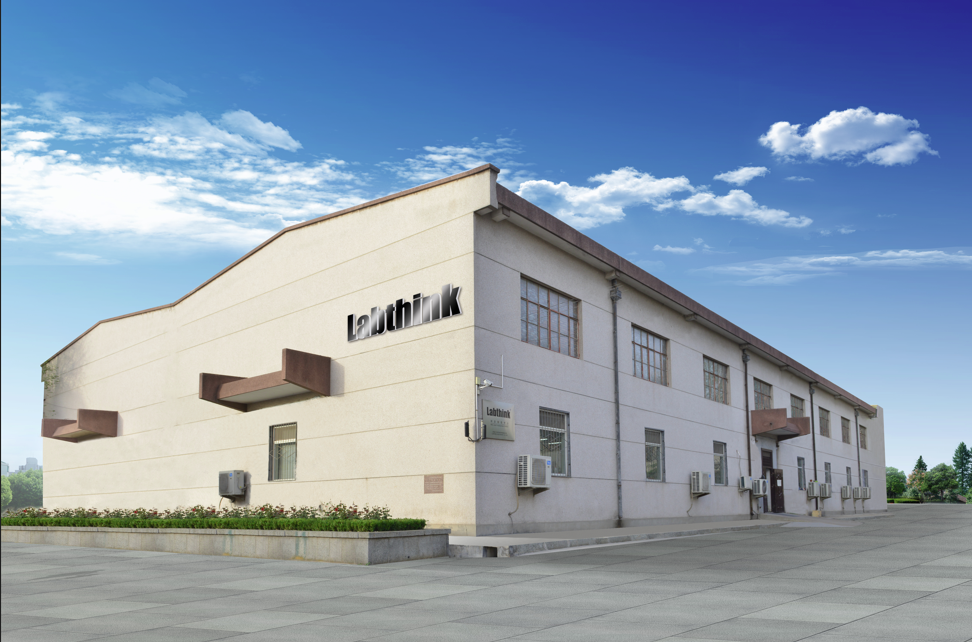
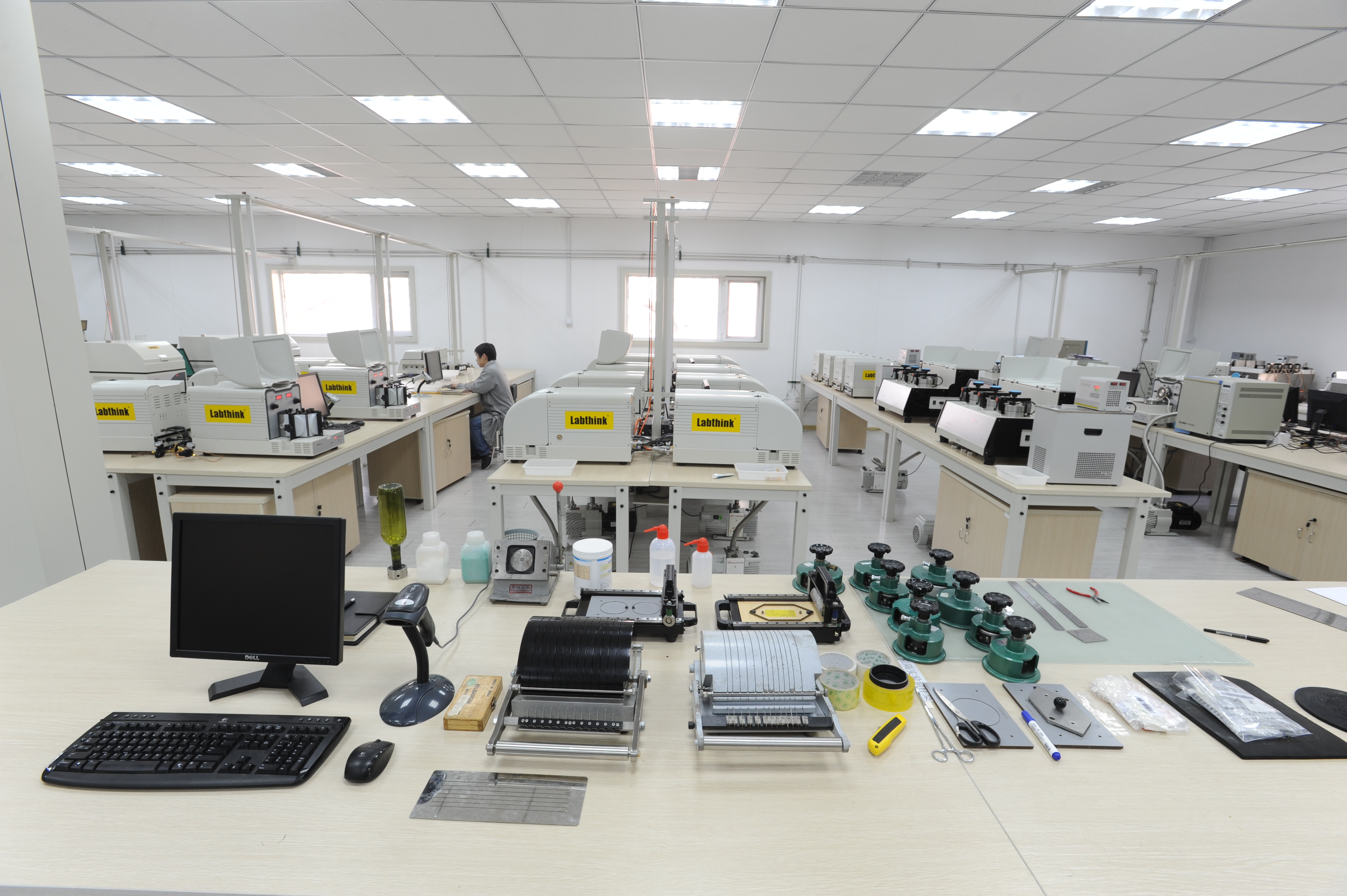
For buyers at the execution stage, the supplier matters as much as the specification. Labthink operates a 4,100 m² factory with 220 employees, including an R&D team of 50 engineers, and applies 100% testing to production. The company holds ISO 9001:2015 quality management system certification (certificate 10425Q02009R2M, issued by Shandong Seatone International Certification Co., Ltd., valid to 24 November 2028) covering the production of packaging testing instruments, alongside ISO 14001:2015 and ISO 45001:2018 certifications. Export accounts for 50% of output, supported by more than 50 distributors and 30 service providers worldwide.
Step by Step: From Pre-Conditioned Vessel to Constant Weight
A defensible LOD result follows the same seven logical steps whether it is performed manually or on an integrated system. What changes is who performs each step and where.
- Prepare the weighing vessel. The vessel is dried and conditioned according to the method before use; USP <731> specifies a pre-conditioned weighing vessel as the starting condition.
- Weigh the sample. The initial mass is recorded on a precision balance. On the C870, the working test range is 0.05 – 40,000 mg, and the test cup volume is 40 mL.
- Set the drying condition. The temperature must sit below the sample's decomposition temperature and follow the applicable method — typically 105 °C under USP <731>, or as specified in the individual monograph. The C870 offers a room-temperature to 130 °C range.
- Heat the sample. Drying continues in a controlled oven or drying chamber for the defined period.
- Cool and stabilise. The vessel returns to a controlled environment — a desiccator in manual setups, an enclosed chamber in an integrated system — before the next weighing.
- Re-weigh and repeat. Heating, cooling and weighing cycles continue until the sample reaches constant weight, meaning successive weighings agree within the criterion defined by the method.
- Calculate and record. The percentage mass loss is calculated and recorded with the associated conditions. Traceability of the temperature, time and mass data is what makes the result usable in a regulated environment.
Steps 2 through 6 are where manual workflows accumulate error, because each one involves moving a vessel that is hot, hygroscopic or both. In the C870, sample cups are loaded into 36 stations, the protocol runs as a pre-programmed sequence, and the transfer between heating and weighing happens inside the closed instrument rather than across the bench.
One methodological caution applies to any system, automated or not: constant weight is a criterion, not a fixed number of cycles. A sample that is still losing mass will keep failing the criterion, and the method — not the instrument — defines when the loop stops.
Use Cases: Where LOD Results Drive Decisions
LOD testing appears wherever volatile content is a specification item or a process control variable. Labthink's application record for LOD covers pharmaceutical APIs, finished goods and intermediate products, with a 15-year service duration in that application and the stated outcome of automatically measured loss on drying with precise and traceable test results.
Pharmaceutical raw materials and finished products
Active pharmaceutical ingredients, excipients, intermediates and finished goods are the core LOD application. The result is compared against a monograph limit, and the workflow must hold GMP expectations for data integrity — the reason GMP and 21 CFR Part 11 features are listed as part of the system rather than as accessories.
Food and beverage
Moisture and residual volatile content influence stability, flow behaviour and shelf-life performance of food ingredients and finished products. LOD provides a gravimetric route to that value without a reagent-specific instrument method.
Fine chemicals, polymers and cosmetics
Labthink lists the C870 as applicable to fine chemical, plastics and polymer, and cosmetics and personal care samples, plus general laboratory and third-party testing environments where moisture or volatile content needs a drying method. The common thread is a solid or powder sample with a defined drying temperature and a specification limit.
Comparison: Manual LOD Workflow vs Integrated LOD Workflow
The comparison below uses only the documented characteristics of manual handling and the stated C870 specifications. It is a workflow comparison, not a brand comparison.
| Dimension | Manual / split LOD setup | C870 integrated LOD system |
|---|---|---|
| Weighing environment | Cups move between hot bath, desiccator and a separate balance; ambient temperature and humidity fluctuations can destabilise a micro-gram balance | Enclosed, physically isolated chamber maintains stable, climate-controlled weighing conditions |
| Operator influence | Technique, timing and handling differences produce inconsistent results across shifts | Pre-programmed protocols; automated transfer and weighing |
| Throughput model | Limited by technician time per sample and per transfer | 36 test stations; continuous unattended batch processing |
| Solvent and vapour exposure | Manual pouring, evaporation and transfer increase exposure to hot, volatile or hazardous solvents | Sealed, automated extraction and evaporation contain vapours; robotic cup-grippers handle hot vessels |
| Contamination and spill risk | Open-air handling and transport raise particulate contamination and spillage risk | Samples moved within a closed internal environment by robotic pick-and-place |
| Data handling | Manual transcription into the record | Integrated data recording for precise and traceable results |
| Stated compliance features | Depends on laboratory procedures and documentation | GMP, 21 CFR Part 11, pharmacopeia compliance |
Choosing between gravimetric residue tests
Buyers frequently arrive at LOD after comparing it with neighbouring tests. The table below summarises what each system in the family measures and which reference is cited for it.
| Test | What the result describes | Measurement direction | Labthink system | Reference cited |
|---|---|---|---|---|
| Loss on Drying (LOD) | Volatile matter — moisture and residual solvents | Mass lost by the sample on drying | C870 Integrated Loss-on-Drying Testing system | USP <731> |
| Evaporation residue / NVR and overall migration | Non-volatile material remaining after evaporation; total migration from food contact materials | Mass remaining after the solvent or simulant is removed | C840 Integrated Evaporation Residue Testing System | EN 1186, EU 10/2011; EU overall migration limit of 60 mg/kg food or 10 mg/dm² of contact material |
| Residue on Ignition (ROI) / sulfated ash | Non-volatile inorganic impurities remaining after ignition | Mass of ash remaining after high-temperature combustion | C860 Integrated Residue-on-Ignition Testing System | USP <281> |
| Water-insoluble matter | Insoluble fraction in liquids and extracts | Mass of insoluble material collected and dried | C850 Integrated Water Insoluble Matter Testing System | — |
The decision rule is straightforward. If the specification is about what evaporates out of the sample, use LOD. If it is about what stays behind in a solvent, use evaporation residue or NVR. If it is about inorganic ash after ignition, use ROI. Reading the monograph or regulation first, then matching the instrument, prevents the most expensive selection error in this category.
Frequently Asked Questions
LOD is addressed by pharmacopeial methods such as USP <731>, which directs the quantitative determination of volatile matter lost from a sample under specified drying conditions: heating in a pre-conditioned weighing vessel at a designated temperature — typically 105 °C, or as specified in the individual monograph — to constant weight, with the mass percentage loss calculated on precise gravimetric balances. Labthink states that the C870 is designed for Loss on Drying testing according to applicable pharmacopeial requirements, including USP <731>, and that the specific testing procedure and conditions should be confirmed against the applicable monograph. The system's stated compliance features include GMP, 21 CFR Part 11 and pharmacopeia compliance.
The stated specifications are a test range of 0.05 – 40,000 mg, a temperature range from room temperature to 130 °C, 36 test stations and a 40 mL test cup volume, with fully automated operation and an analytical balance as matched equipment. Installation requirements are indoor laboratory use only with a stable ambient temperature. Labthink offers customisation of test range and test capacity, including volume, size and number of test stations.
Labthink's stated purchasing terms are a MOQ of 1 unit, delivery terms selectable from EXW, FOB, CIP, CPT, DAT or DAP, and acceptance based on pre-shipment factory testing plus inspection upon receipt of the goods; payment terms are negotiable. The parameters that typically define a configuration are testing accuracy, test items, sample specification, power supply and calibration standard, so these are worth fixing before a quotation is compared.
Labthink provides expert testing services from its own laboratory facilities, so sample evaluation can be discussed with the technical team before a system is specified. Because LOD conditions are method-defined, sample preparation, sample quantity, heating conditions and the constant-weight requirement should be confirmed against the applicable method for the specific product rather than transferred from another material.
Standard lead time is 28 – 45 days. Production capacity is 100 units per month on a made-to-order basis with a MOQ of 1 unit, and 100% testing is applied before shipment. After-sales support is provided remotely and on site, backed by more than 50 distributors and 30 service providers worldwide. To move from evaluation to execution, you can download the Labthink testing equipment and services brochure or send your sample matrix and drying conditions for a configuration recommendation.
Conclusion: LOD Is a Workflow Decision, Not Just a Formula
Loss on Drying answers a narrow question — how much volatile matter leaves this sample under this drying condition — but the credibility of the answer depends on everything around the subtraction. Heating below the decomposition temperature, cooling in a controlled environment, weighing to constant weight and recording the conditions are the four points where LOD results are won or lost.
For laboratories moving from manual to integrated testing, the C870 changes the physical arrangement of those four points: 36 stations, a room-temperature to 130 °C drying range, a 0.05 – 40,000 mg test range, and heating, weighing and data recording inside one enclosure with GMP, 21 CFR Part 11 and pharmacopeia compliance features stated. That is the capability question most buyers are actually asking when they search for a Loss on Drying testing instrument.
Next step. If you are specifying an LOD system for pharmaceutical, food or chemical samples, send your matrix, method temperature and constant-weight criterion to the Labthink Food & Pharmaceutical Testing Solutions team for a configuration recommendation and quotation.
Email: trade.en@labthink.com | Phone: +86 531-58702937 | WhatsApp: +86 187-6612-5070
Website: en.labthink.com | Brochure: Packaging Testing Equipment & Testing Services (PDF)

Have Questions or Need More Details?
Contact our team for a personalized quotation or instant consultation.
Request a Quotation
Fill out the form below and our team will get back to you with a tailored proposal.
WhatsApp Direct Chat
Prefer to chat in real-time? Message us on WhatsApp for instant assistance & quick answers.
- Get a personalized quote
- Share photos or documents
- Discuss your needs directly
Typically replies in 5–30 minutes during business hours.