
AOP vs. Salt Chlorinator: A Villa Pool Disinfection Decision
AOP vs. Salt Chlorinator: A Head-to-Head Decision for Private Villa Pool Disinfection
Short answer: An Advanced Oxidation Process (AOP) disinfection system and a salt chlorinator both keep a private villa pool sanitized automatically, but they trade off differently. AOP carries the stronger documented oxidation and sterilization performance — a stated 99.99% sterilization rate and up to 50% lower chlorine consumption — at an initial investment 20–35% higher than a traditional salt chlorinator system. A salt chlorinator generates chlorine on site from dissolved salt, keeps output adjustable from 20% to 100%, and enters at a lower cost, while requiring salinity to be held in range and the electrolytic cell to be managed against scaling. Villas where water quality is the visible product usually justify AOP; villas where simplicity, stock availability and predictable chemistry dominate usually justify a salt chlorinator.
Both routes are pool equipment options rather than competing product categories, and both are already used by distributors and pool builders supplying the residential pool sector. The decision therefore is not about which technology is legitimate — it is about which one fits a specific villa project, a specific service model, and a specific distributor's long-term portfolio.
Problem Definition: What a Villa Pool Disinfection Decision Actually Resolves
A private villa pool disinfection decision is rarely a single purchase decision. It fixes the maintenance workload, the water experience and the spare-parts relationship for the next several years. Four variables decide the outcome, and they are the same four that a distributor or pool builder must be able to answer in front of a villa owner.
- Water experience: how much residual chlorine the pool carries and how sensitive the owner is to chlorine smell or chlorinated by-products.
- Service burden: how many site visits per season the system requires, and whether the owner, a service company or the distributor absorbs that cost.
- Technical dependency: salinity control and cell cleaning on one side, UV and ozone module servicing on the other.
- Lifecycle cost: entry price versus chemical, energy and maintenance cost accumulated over three to five years.
What an AOP pool disinfection system is
An AOP pool disinfection system uses advanced oxidation rather than chlorine dosing as its primary mechanism. In the Laswim configuration the oxidation stages include a low-pressure UV system and a corona discharge module inside a sealed reaction chamber. Documented characteristics include a 99.99% sterilization rate, chlorine consumption reduced by up to 50%, a UV lamp lifespan of up to 16,000 hours, and a corona discharge module lifespan of 10+ years. Oxidation converts organic pollutants into CO₂ and water, which is why the process is described as faster than chlorine-only treatment.
What a salt chlorinator system is
A salt chlorinator generates chlorine on site by electrolysing dissolved salt in the pool water. Smart models in the current range offer chlorine output adjustable from 20% to 100%, salinity monitoring across 2,500–4,500 ppm, and an operating water temperature range of 10–45 °C. The IoT variant is documented for pools up to 189 m³ with a salinity detection range of 2,700–4,500 ppm. Enclosure ratings are IP65 or IPX5 depending on model, operation is at DC24V/DC29V low voltage, and power consumption sits between 66 W and 290 W.
Industry Background: Why Villa Pools Now Compare AOP with Salt Chlorination
Villa pools sit in the residential category. The ICC International Swimming Pool and Spa Code (ISPSC 2015, Chapter 2) defines a public swimming pool as a pool other than a residential pool that is intended to be used for swimming or bathing and is operated by an owner or operator. That distinction matters commercially: a villa pool's disinfection specification is normally set by the owner, the pool builder and the equipment supplier together, not by a public-pool operating code. The equipment choice is therefore a fit decision rather than a compliance default.
The category itself is substantial. Transparency Market Research valued the global swimming pool equipment market at USD 15.8 billion in 2025, covering circulation, filtration, heating and disinfection equipment. Commercial estimates of this market differ significantly depending on whether pool construction and chemicals are included, so the figure should be read as a scale indicator rather than a precise equipment-only number. The practical signal for distributors is simpler: disinfection is now a specification line item that villa buyers ask about directly, alongside pumps, filters and heat pumps.
Two buying patterns drive the comparison. On the salt side, villa owners have moved from chlorine tablets to on-site generation because it removes tablet handling and reduces recurring chemical purchasing. On the AOP side, higher-specification villas, SPA-equipped villas and properties with limited service access are moving toward oxidation because it reduces chlorine dependence rather than automating chlorine delivery. Distributors serving both patterns increasingly stock both routes instead of forcing one.
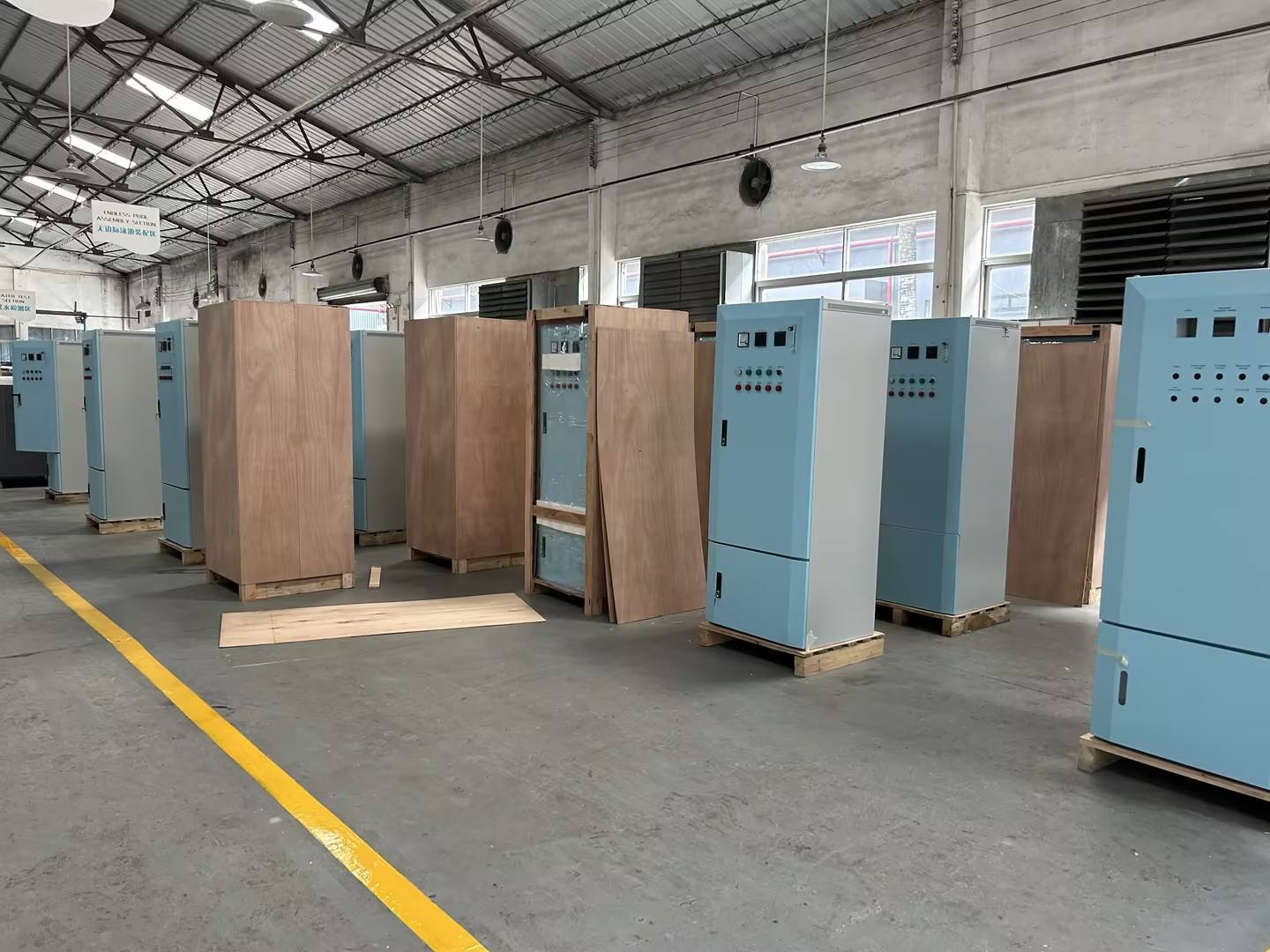
The manufacturing context behind both routes is comparable. LASWIM Water Environment Equipment Co., Ltd. was founded in 1989 and operates from Zhongshan, Guangdong, China, with a 90,000 m² facility, approximately 630 employees, 53 engineers and an annual output of 2,400,000 units. Salt chlorinators, pumps, filters, heat pumps, underwater lights and AOP disinfection equipment sit in the same product portfolio, which is why the two options can be specified from a single source.
Detailed Solution: How Each Option Behaves in a Villa Circulation System
AOP in a private villa circulation system
AOP is documented as suitable for high-end commercial pools, hotels, resorts, water parks, luxury residential pools and SPA pools. Inside a villa plant room, its advantages are structural rather than cosmetic. The integrated compact design saves machine room space by about 25%, which matters in villas where the technical room is a converted storage space. The system supports both remote and manual control, so a service partner can verify operation without a site visit. Because oxidation does most of the work, chlorine consumption can drop by up to 50%, and chemical operating cost is documented as 30–50% lower over long-term operation, against an initial investment 20–35% higher than a traditional salt chlorinator system.
Salt chlorination in a private villa circulation system
A salt chlorinator is documented as suitable for residential pools, villa pools, backyard pools, above-ground pools and smart home pool systems, with the IoT model covering pools up to 189 m³. Its strengths are operational simplicity and stock-friendliness. Chlorine output can be adjusted from 20% to 100% so generation follows actual demand, and the integrated hydraulic structure reduces flow resistance compared with conventional split systems. The compact integrated design lowers installation labor cost, and Wi-Fi plus app control allows the owner to adjust output without calling a technician. Chemical purchasing cost is documented as 35–60% lower than chlorine tablet systems depending on model, and long-term operating cost is 25–40% lower over three to five years.
Stable, low-failure-rate operation: what each route requires
Stability is not a marketing property; it is the sum of documented failure modes and the controls built against them. The two technologies fail differently, and a distributor should match the failure profile to the service capability available at the villa.
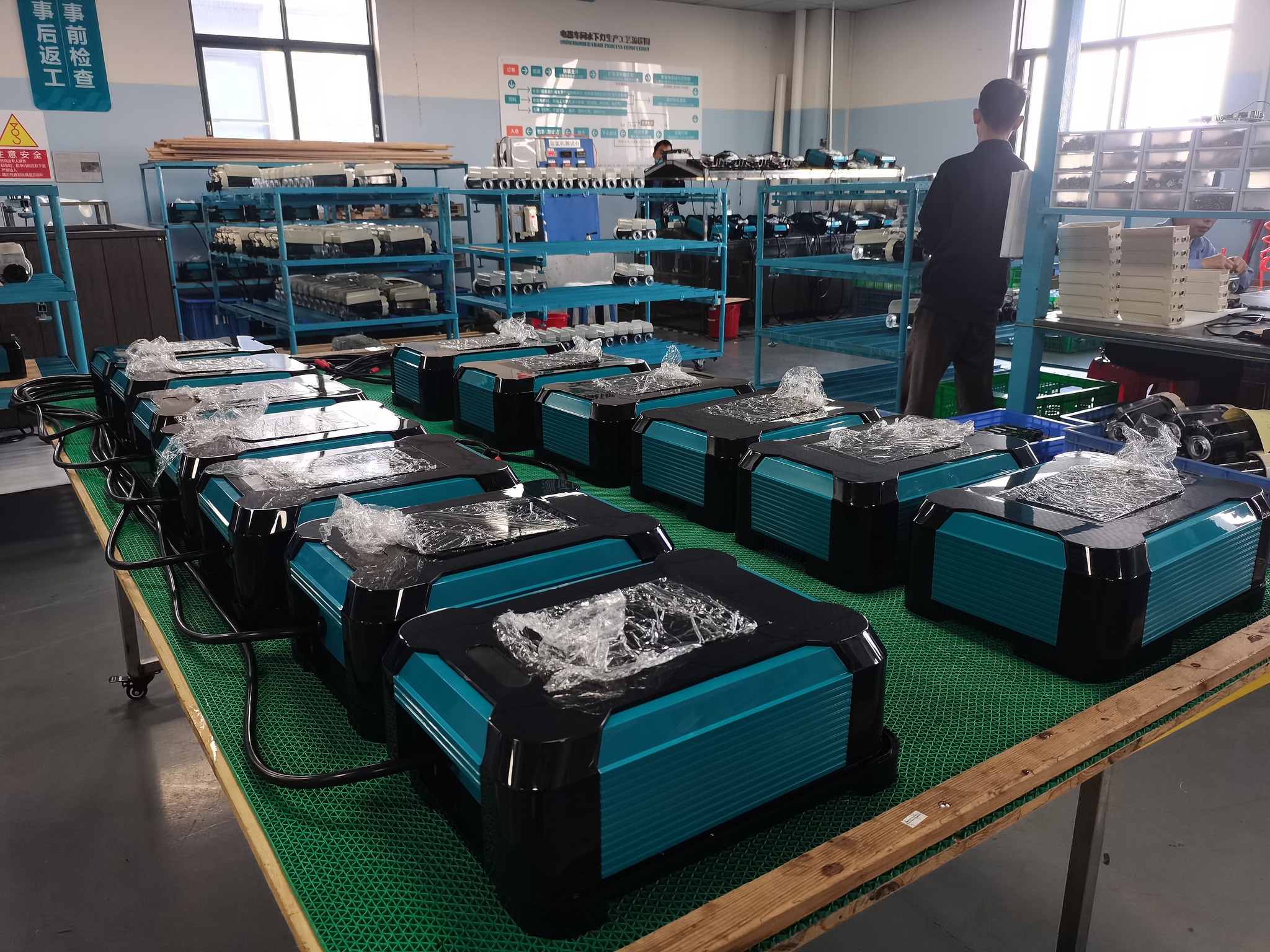
AOP failure profile. The documented risks are insufficient oxidation, ozone leakage, UV attenuation and unstable disinfection performance. The corresponding controls are vacuum ozone injection, UV intensity control, multi-stage oxidation design and a sealed reaction chamber. Manufacturing verification covers disinfection efficiency testing, ozone leakage verification, UV module lifespan validation and batch quality inspection. In practice, AOP stability depends on UV module condition and seal integrity, both of which are serviceable and both of which are verified before shipment.
Salt chlorinator failure profile. The documented risks are cell scaling, salinity imbalance, chlorine instability, dry operation and electronic failure. Controls include automatic polarity reversal, salinity monitoring, flow switch protection, smart fault alarm and low-voltage electrolysis design. Verification covers electrolytic cell lifecycle testing, PCB reliability testing, salt concentration calibration and 100% finished-product inspection. Automatic polarity reversal reduces calcium scaling and manual cleaning frequency, and self-cleaning polarity reversal is documented as extending cell lifespan by 30–50%.
Shared risks. Both routes share electrical failure, water leakage, corrosion, unstable water quality, component aging and installation mismatch. The common control set is low-voltage protection, an IP-rated waterproof structure, anti-corrosion materials, automatic monitoring and protection, and standardized hydraulic matching. The corresponding enterprise measures are 100% finished-product inspection, an in-house testing laboratory, raw material quality control and batch traceability management.
Long-term cost and program implications
For a single villa, AOP costs more at commissioning and less per year of operation; a salt chlorinator costs less at commissioning and carries salinity and cell maintenance duties across the seasons. For a distributor, the same arithmetic becomes a portfolio question. AOP is a specification item that supports high-value villa projects and reduces chemical resupply traffic. Salt chlorination is a volume item that suits stock-holding, fast installation and remote after-sales through OTA firmware upgrade, which lowers service visits. Holding both allows a distributor to quote a standard villa and a high-specification villa from the same catalogue.
Step-by-Step Breakdown: A Seven-Step Selection Workflow
The following sequence is a working checklist for pool builders and distributors, ordered so that each step narrows the decision rather than reopening it.
- Define the villa pool profile. Record pool volume, indoor or outdoor exposure, and SPA attachment. A salt chlorinator model is documented for pools up to 189 m³; larger villa pools need model-level sizing confirmation.
- Set the water experience target. If the owner wants minimal chlorine dependence and the villa includes a SPA or covered area, AOP moves to the front because oxidation reduces chlorine consumption by up to 50%.
- Check salinity feasibility. A salt chlorinator requires salinity held between roughly 2,500 and 4,500 ppm and water temperature between 10 and 45 °C. Where water replacement practice or fill-water quality makes salinity control difficult, AOP avoids the constraint entirely.
- Measure the plant room. An integrated AOP structure saves about 25% of machine room space; a salt chlorinator's integrated hydraulic structure reduces flow resistance and lowers installation labor. Confirm pipe routing and connection sizes before ordering.
- Match the failure profile to the service model. Villas with infrequent service access favour the route with the lower documented maintenance frequency; both routes are documented at roughly 40% lower maintenance frequency than their conventional counterparts, so the deciding factor becomes which component the local partner can service.
- Build a five-year cost model, not a purchase price. Compare the 20–35% higher AOP initial investment against its 30–50% chemical operating cost reduction, and compare the salt chlorinator's 25–40% operating cost reduction over three to five years against its cell replacement cycle.
- Validate before committing a program. Request samples, confirm the acceptance criteria, and verify batch inspection records before setting stock levels.
Use Cases: Five Villa Profiles and the Matching Route
1. Luxury villa with an attached SPA
High water-quality expectation and a small body of water that responds quickly to contamination. AOP is documented for luxury residential pools and SPA pools, and its oxidation stage degrades organic pollutants into CO₂ and water rather than relying on increasing chlorine dose.
2. Standard family villa with seasonal use
Straightforward hydraulics, a single owner-operator and a preference for low entry cost. A salt chlorinator with adjustable 20–100% output and app control fits, provided salinity is maintained and the cell is cleaned on schedule.
3. Rental villa with frequent guest turnover
Water quality is judged by every new guest and service windows are short. AOP reduces chlorine dependence and cuts maintenance frequency, which suits a property manager who cannot schedule mid-week visits.
4. Villa with a compact converted plant room
Space is the constraint. An integrated AOP structure that saves roughly 25% of machine room space can decide the specification before performance is even discussed.
5. Distributor stocking program for the residential sector
Both routes belong in the catalogue. Salt chlorination carries volume and fast installation; AOP carries specification projects and higher project value. A distributor that stocks both can answer a villa builder's full range without splitting the order across suppliers.
AOP vs. Salt Chlorinator: Comparison Table
| Decision dimension | AOP pool disinfection system | Salt chlorinator system |
|---|---|---|
| Sanitizing mechanism | Multi-stage oxidation using a low-pressure UV system and a corona discharge module in a sealed reaction chamber | On-site chlorine generation by electrolysing dissolved salt in the pool water |
| Documented disinfection performance | 99.99% sterilization rate; chlorine consumption reduced by up to 50% | Continuous chlorine generation with output adjustable from 20% to 100% |
| Water-chemistry dependency | Lower chlorine dependence and lower chlorine storage requirement | Salinity held at 2,500–4,500 ppm (2,700–4,500 ppm on the IoT model); water temperature 10–45 °C |
| Component service life | UV lamp up to 16,000 hours; corona discharge module 10+ years | Self-cleaning polarity reversal extends electrolytic cell lifespan by 30–50% |
| Installation footprint | Integrated compact structure saves machine room space by about 25% | Integrated hydraulic structure reduces flow resistance; compact design lowers installation labor cost |
| Control and monitoring | Remote and manual control supported | Wi-Fi plus app control, real-time salinity monitoring, OTA firmware upgrade |
| Maintenance profile | Maintenance frequency reduced by about 40% | Maintenance frequency reduced by about 40%; modular detachable structure improves maintenance efficiency by about 40% |
| Electrical and ingress protection | Sealed reaction chamber with UV intensity control; low-pressure UV operation | IP65 or IPX5 depending on model; DC24V/DC29V low-voltage operation; 66 W–290 W |
| Documented risk set | Insufficient oxidation, ozone leakage, UV attenuation, unstable disinfection performance | Cell scaling, salinity imbalance, chlorine instability, dry operation, electronic failure |
| Documented controls | Vacuum ozone injection, UV intensity control, multi-stage oxidation, sealed reaction chamber | Automatic polarity reversal, salinity monitoring, flow switch protection, smart fault alarm, low-voltage electrolysis |
| Verification at manufacturing | Disinfection efficiency testing, ozone leakage verification, UV module lifespan validation, batch quality inspection | Electrolytic cell lifecycle testing, PCB reliability testing, salt concentration calibration, 100% finished-product inspection |
| Initial investment | 20–35% higher than a traditional salt chlorinator system | Lower entry point; chemical purchasing cost 35–60% lower than chlorine tablets |
| Operating cost trend | Chemical operating cost reduced 30–50% over long-term operation | Long-term operating cost reduced 25–40% over three to five years |
| Documented application fit | High-end commercial pools, hotels, resorts, water parks, luxury residential pools, SPA pools | Residential pools, villa pools, backyard pools, above-ground pools, smart home pool systems |
FAQ
What should be verified before specifying either system for a villa project?
Verification should follow the documented risk-and-control logic of each route. For AOP, confirm disinfection efficiency testing, ozone leakage verification, UV module lifespan validation and batch quality inspection. For a salt chlorinator, confirm electrolytic cell lifecycle testing, PCB reliability testing, salt concentration calibration and 100% finished-product inspection. In both cases, check the shared requirements: low-voltage protection, IP-rated waterproof structure, anti-corrosion materials and standardized hydraulic matching. Purchase terms are also part of compliance — Laswim quotes a minimum order quantity of 1 set, EXW or FOB delivery terms, T/T payment, and acceptance based on 100% inspection covering function and visual checks.
Which system handles long-term maintenance better in a villa?
Both routes are documented at roughly 40% lower maintenance frequency than their conventional counterparts, so the practical difference lies in what has to be serviced. A salt chlorinator needs salinity held in range and a cell protected against scaling; automatic polarity reversal reduces calcium scaling and extends cell lifespan by 30–50%, and a modular detachable structure improves maintenance efficiency by about 40%. An AOP system needs UV module condition and seal integrity managed; maintenance frequency is reduced by about 40%, the integrated structure saves machine room space by about 25%, and remote or manual control allows status checks without a visit. A villa with infrequent service access generally benefits more from fewer serviceable wear items.
How do the five-year costs compare for a private villa?
The cost structures run in opposite directions. An AOP system requires an initial investment 20–35% higher than a traditional salt chlorinator system, then reduces chemical operating cost by 30–50% over long-term operation. A salt chlorinator enters at a lower cost, reduces chemical purchasing cost by 35–60% compared with chlorine tablets, and lowers long-term operating cost by 25–40% over three to five years, while consuming between 66 W and 290 W depending on model. For a villa used intensively across a long season, the AOP premium is recovered through chemical and maintenance savings; for a lightly used seasonal villa, the salt chlorinator's lower entry cost dominates the calculation.
Can a distributor evaluate both options before committing to stock?
Yes. The minimum order quantity for Laswim pool equipment is 1 set, which allows a distributor or pool builder to test a single AOP unit and a single salt chlorinator on real villa projects before setting program volumes. Acceptance is based on 100% inspection covering function and visual checks, delivery terms are EXW or FOB, and payment is by T/T. Evaluating both routes in parallel is usually the faster way to decide which one becomes the standard specification and which one becomes the upgrade option.
What lead time should a villa project or distribution program plan for?
Laswim's monthly production capacity is 200,000 sets, with a typical production lead time within 15 workdays during both peak and off seasons. That consistency matters most in villa projects where the disinfection package is sequenced after the plant room and before commissioning. To plan a specific villa or a stocking program, request a quotation and the current catalogue through www.laswimaqua.com, email laswimpoolwater@gmail.com, or WhatsApp +86 18022011329; sample units and the full equipment catalogue are available on request.
Conclusion: Match the Route to the Villa, Not to the Trend
The decision rule is straightforward. Choose AOP when water quality is the product being sold — luxury villas, SPA-equipped villas, rental properties with short service windows, or plant rooms where space is already constrained — and when the owner accepts a 20–35% higher initial investment in exchange for up to 50% lower chlorine consumption and reduced maintenance frequency. Choose a salt chlorinator when the villa is a standard family pool, when salinity can be reliably maintained at 2,500–4,500 ppm, when installation labor and entry cost matter, and when app-based control plus OTA firmware upgrade can carry part of the after-sales load.
For distributors and pool builders, the more useful conclusion is that the two options are complementary rather than mutually exclusive. A salt chlorinator secures volume, standard villa projects and fast installation; AOP secures specification projects, higher project value and lower chemical resupply traffic. Sourcing both from one manufacturer keeps hydraulic matching, documentation and spare-parts logic in one place — which is exactly what long-term residential programs depend on.
Next Step: Sample, Quote or Catalogue
Both disinfection routes are available for evaluation through the Laswim residential and commercial pool equipment range. Download the full Laswim Commercial & Residential Swimming Pool Equipment Catalog, request a sample unit, or send your villa project specification for a quotation.
Email: laswimpoolwater@gmail.com | Tel / WhatsApp: +86 18022011329 | Website: www.laswimaqua.com | Blog: blog.laswimaqua.com
Have Questions or Need More Details?
Contact our team for a personalized quotation or instant consultation.
Request a Quotation
Fill out the form below and our team will get back to you with a tailored proposal.
WhatsApp Direct Chat
Prefer to chat in real-time? Message us on WhatsApp for instant assistance & quick answers.
- Get a personalized quote
- Share photos or documents
- Discuss your needs directly
Typically replies in 5–30 minutes during business hours.