Long-Term Swimming Pool Equipment Sourcing: A Distributor’s Playbook for Stable Supply
Updated: August 29, 2026
Selecting swimming pool equipment is often treated as a one-time purchase decision. But for distributors, hotel groups, contractors, and facility operators, the first order is only the beginning of a longer relationship. The real question is whether a supplier can keep delivering consistent quality, stable lead times, and the right product mix as project pipelines grow. This guide focuses on that long-term side of sourcing: what to evaluate when a swimming pool equipment supplier needs to support your business beyond the first shipment.
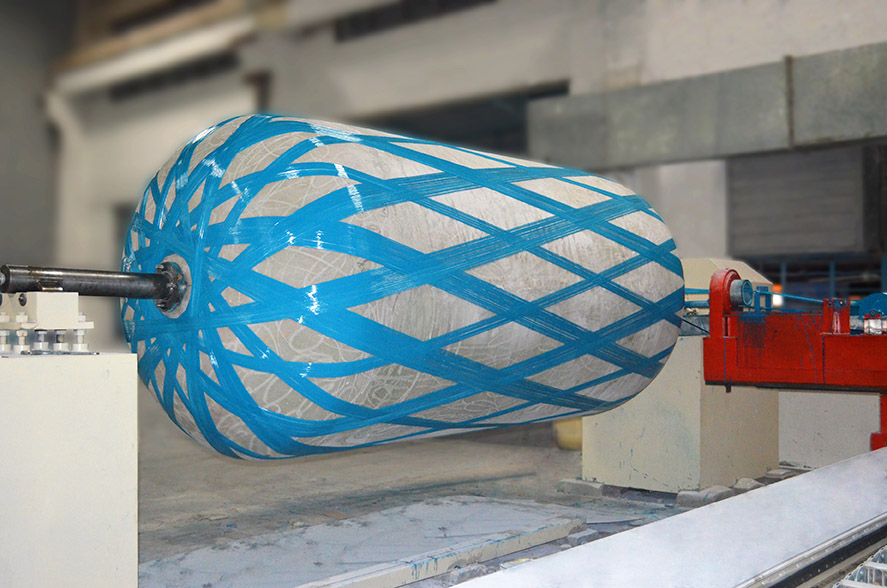
Fiberglass filter tank production with automatic winding at LASWIM.
Problem Definition
Buyers often source swimming pool equipment product by product. A pump comes from one factory, a filter from another, a heat pump from a third, and a chlorinator from a fourth. That approach creates fragmented supply chains, inconsistent product interfaces, higher logistics overhead, and more quality variables. In the worst cases, pumps and filters are not hydraulically matched, or a disinfection system is not sized correctly for the circulation flow.
For long-term distribution programs, these mismatches become recurring maintenance issues. The visible cost may be a failed component, but the hidden cost is project delay, customer dissatisfaction, and repeated after-sales communication. Buyers at the decision-to-execution stage need more than a single product. They need a partner with a broad equipment ecosystem, predictable capacity, and quality systems that remain consistent across order cycles.
Industry Background: Swimming Pool Equipment Demand Is Expanding Across Categories
The global swimming pool equipment market was estimated at USD 14.22 billion in 2025 and is projected to reach USD 21.33 billion by 2033, according to Market Research Future. China was the leading exporter of sports and pool equipment in 2024, with a trade value of approximately USD 3.77 billion, according to the Observatory of Economic Complexity.
Demand is also moving beyond basic pumps and filters. The global pool heat pump market was valued at USD 5.09 billion in 2024, with North America holding a 34% share. The salt chlorine generator market for swimming pools was valued at USD 1.45 billion in 2024, and approximately 58% of new suburban residential pools were choosing saltwater systems. One industry estimate places the global regenerative media filter market at USD 1.12 billion in 2025, with a CAGR of 6.8%.
These figures indicate that buyers increasingly need integrated systems: circulation, filtration, heating, disinfection, and lighting. That is why evaluating a supplier’s full ecosystem matters for long-term procurement decisions.
Detailed Solution: LASWIM’s Ecosystem for Long-Term Pool Equipment Supply
LASWIM Water Environment Equipment Co., Ltd. is a swimming pool equipment manufacturer founded in 1989. It is based in Zhongshan, Guangdong Province, China, and serves both residential and commercial segments. Its product range includes sand filters, pool pumps, underwater pool lights, salt chlorinators, heat pumps, and more specialized systems such as regenerative media filtration and Advanced Oxidation Process AOP disinfection equipment.
Product Portfolio Coverage
For a long-term distributor or project buyer, the practical value of the LASWIM portfolio is the ability to consolidate multiple product lines with one manufacturer. The catalog includes:
- Swimming pool pumps: high-efficiency self-priming pumps, intelligent variable-speed pumps, commercial pumps such as the BDP and BHP series, and the BV series intelligent variable-speed pool pump.
- Pool filter systems: top-mount and side-mount sand filters, horizontal fiberglass filters, and the WL-HPF regenerative media filtration system.
- Salt chlorinator systems: CS Pro, EC ultraX, EC Plus, HQ, and SR series, covering residential, villa, and hotel pool applications.
- Pool lights: PE20, WL-LB/LBS, WL-MAG/MBG, PS2025, and stainless steel options with IP68-rated underwater performance.
- Heat pumps: LS series and LAS series, including full DC inverter heat pumps.
- Advanced disinfection: AOP100-400 Advanced Oxidation Process pool disinfection systems.
This breadth matters because a buyer can reduce supplier audit time, harmonize product documentation, and simplify spare-part management.
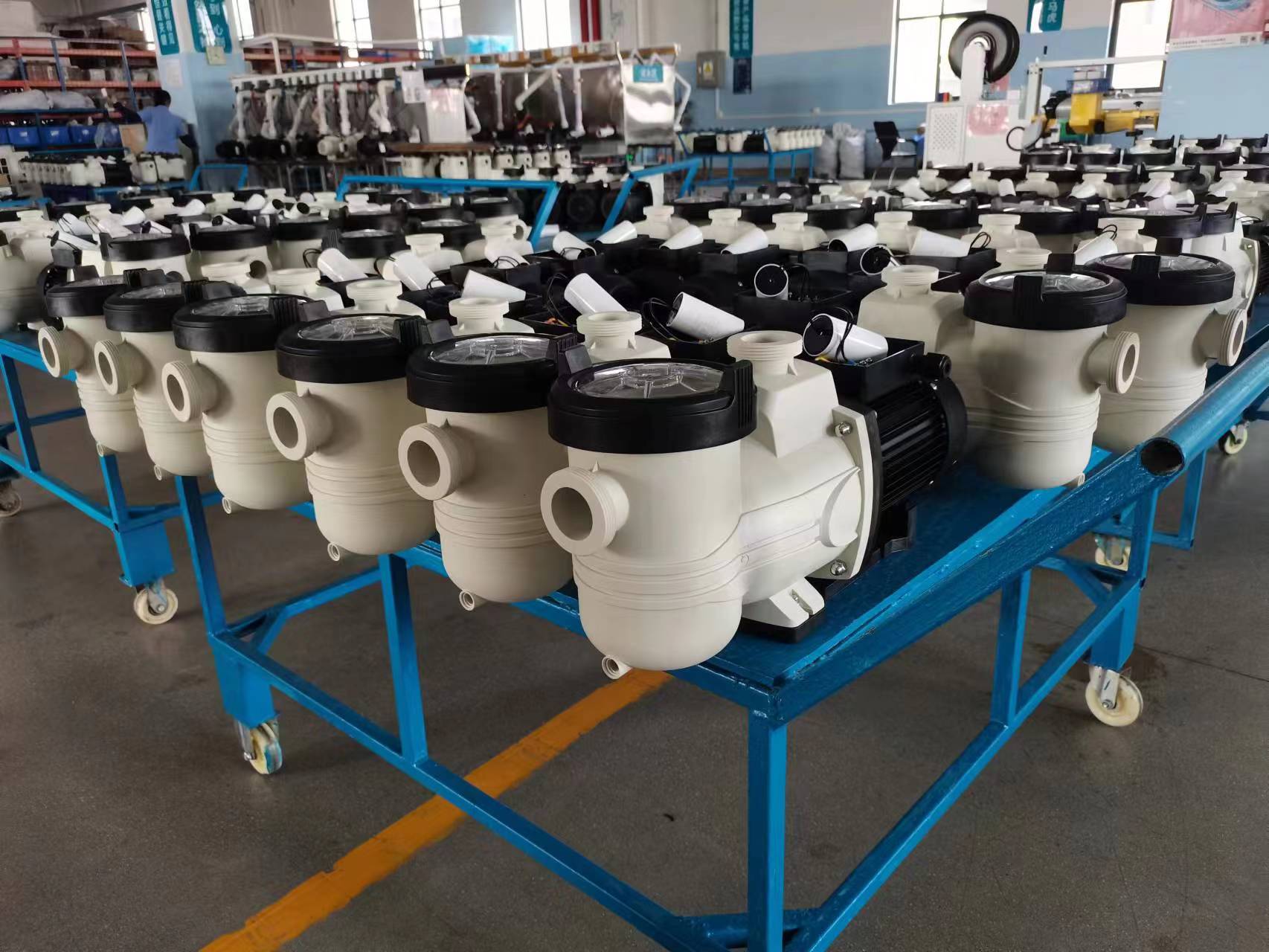
Laswim bulk production of pool pumps for residential and commercial swimming pool equipment.
Manufacturing Capacity and Delivery Stability
LASWIM operates a 90,000 m² facility with 630 employees, including 53 R&D engineers. The monthly production capacity is 200,000 sets, and the typical production lead time is within 15 workdays during both peak and off seasons. The minimum order quantity is 1 set.
For a distributor, this combination is directly relevant. Monthly capacity supports scaling when order volume increases. A 15-workday lead time helps protect supply continuity, and a low MOQ lowers the risk of entering a new supplier relationship.
Approximately 70% of LASWIM production is exported to markets including North America, South America, Europe, Southeast Asia/Mideast, Africa, East Asia, and Australia. A supplier with this level of export experience is more likely to understand international packaging, documentation, and specification expectations.
Quality Assurance and Risk-Control Measures
Long-term supply depends on predictable quality. LASWIM uses standardized production procedures, in-house testing, raw-material quality control, batch traceability, and multi-stage QA inspection. Each finished product is subject to 100% inspection covering function inspection and visual inspection.
The company’s risk-control approach is built around common equipment failure modes:
- Pool pumps: risks include dry running, motor overheating, seal leakage, hydraulic overload, and vibration damage. Controls include dry-run protection, thermal protection, pressure monitoring, variable-speed operation, and reinforced sealing.
- Salt chlorinators: risks include cell scaling, salinity imbalance, chlorine instability, dry operation, and electronic failure. Controls include automatic polarity reversal, salinity monitoring, flow-switch protection, smart fault alarms, and low-voltage electrolysis.
- Pool lights: risks include water ingress, electrical short circuit, color inconsistency, and housing corrosion. Controls include IP68 waterproof sealing, Class III low-voltage protection, stable signal control, and corrosion-resistant housing design.
- Heat pumps: risks include compressor overload, low-temperature frosting, heat exchanger corrosion, and unstable temperature control. Controls include intelligent inverter control, automatic defrosting, anti-freeze protection, and titanium heat exchangers.
- AOP systems: risks include insufficient oxidation, ozone leakage, UV attenuation, and unstable disinfection performance. Controls include vacuum ozone injection, UV intensity control, multi-stage oxidation design, and a sealed reaction chamber.
- Regenerative media filters: risks include media loss, filtration pressure rise, turbidity fluctuation, backwash failure, piping blockage, and control interruption. Controls include PLC intelligent control, differential pressure monitoring, regenerative media filtration design, and an optimized hydraulic flow path.
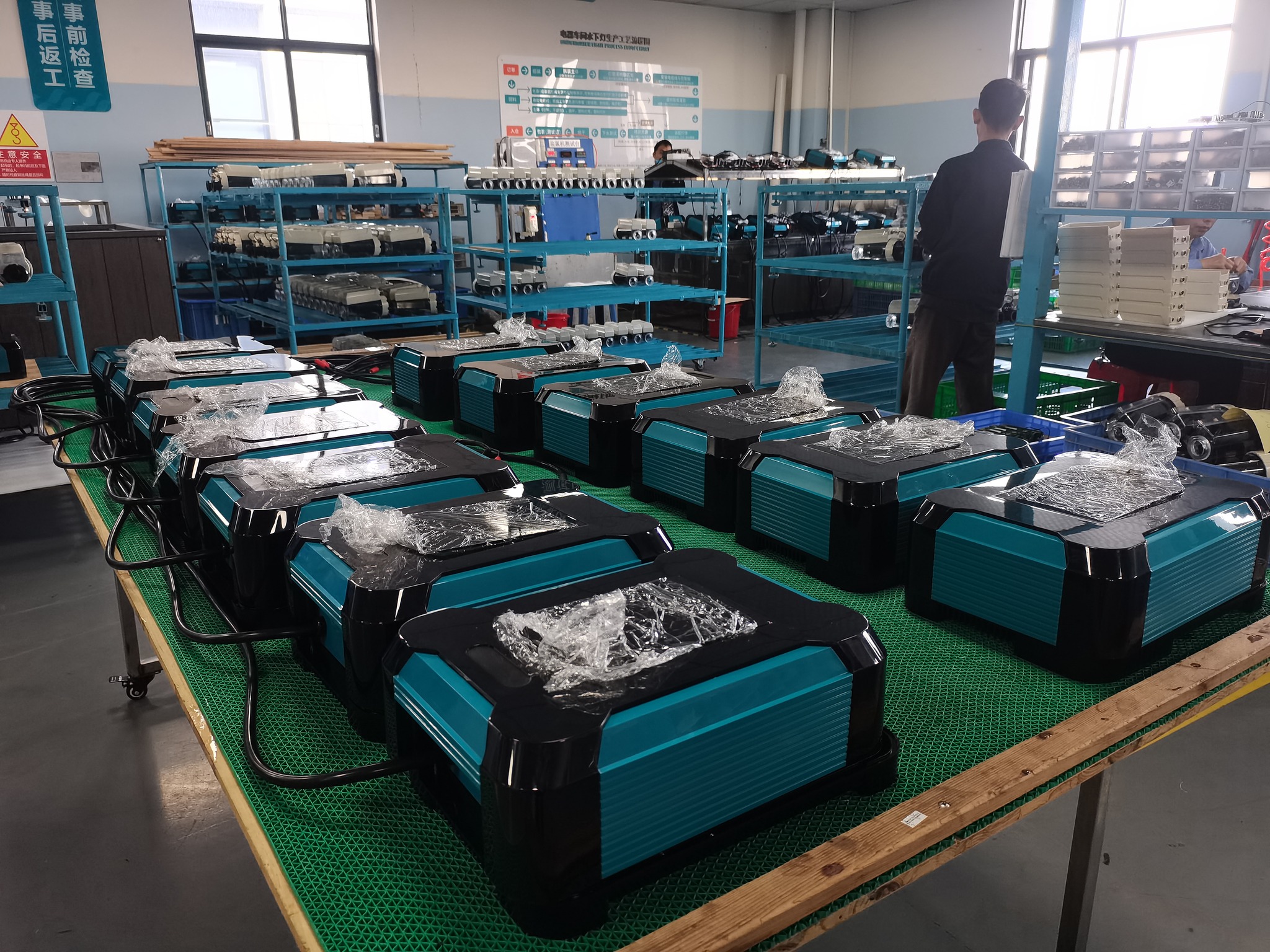
Laswim bulk production of salt chlorinator systems.
Step-by-Step Breakdown: How to Evaluate a Swimming Pool Equipment Supplier for the Long Term
Buyers who have reached the decision and execution stage should use a repeatable evaluation process. The following six steps are designed to verify a supplier before scaling orders.
- Map your required product categories and operating conditions. Start from the project type: residential, villa, hotel, commercial, or water park. Determine flow rate, heating demand, disinfection method, voltage, and filter area. This ensures the supplier can match a system rather than only supply a component.
- Check manufacturing capacity and lead-time stability. Ask for facility size, employee count, monthly capacity, and peak-season lead time. LASWIM reports a 90,000 m² facility, 630 employees, 200,000 sets of monthly production capacity, and 15-workday lead times in both peak and off seasons.
- Review quality assurance and risk-control systems. Look for standardized production procedures, in-house testing, batch traceability, and 100% finished-product inspection. Ask how each product group prevents its most common failure modes.
- Confirm commercial terms and logistics. LASWIM offers a minimum order quantity of 1 set, T/T payment, and EXW or FOB delivery. This creates a clear starting point for a pilot transaction.
- Run a pilot order. Because the MOQ is only 1 set, global buyers can validate actual quality, packaging, documentation, and communication before committing to higher volumes.
- Plan for scaling and long-term support. After the pilot, align product variants, spare-part availability, and order frequency with the manufacturer. A monthly production capacity of 200,000 sets supports growth without forcing a buyer to manage multiple suppliers.
Use Cases: Where the Ecosystem Approach Works Best
Residential and Villa Projects
For residential swimming pool equipment, operating cost and simplicity are critical. LASWIM variable-speed pool pumps can reduce energy consumption by up to 90% compared with traditional single-speed pumps. Salt chlorinator systems can reduce chemical purchase cost by 35–60% compared with chlorine tablets, while automatic polarity reversal helps manage cell scaling. Underwater pool lights such as the PE20 series are IP68-rated, Class III low-voltage, and compatible with Wi-Fi and Tuya App control. These features suit smart residential pool systems.
Commercial and Hotel Facilities
Commercial swimming pool equipment must run longer and handle higher load. LASWIM commercial variable-speed pumps, with rated power of 2.2 kW or 2.9 kW and motor output of 3 HP or 4 HP, are designed for continuous circulation and can reduce energy consumption by 30–60% compared with fixed-speed commercial pumps under partial-load operation. Full DC inverter heat pumps in the LAS series cover commercial applications from 35 kW to 105 kW and can reduce energy consumption by 25–45% compared with conventional on/off commercial heat pumps. For water treatment, the AOP100-400 system delivers a 99.99% sterilization rate and can reduce chlorine consumption by up to 50%, which is relevant for hotels, resorts, and water parks.
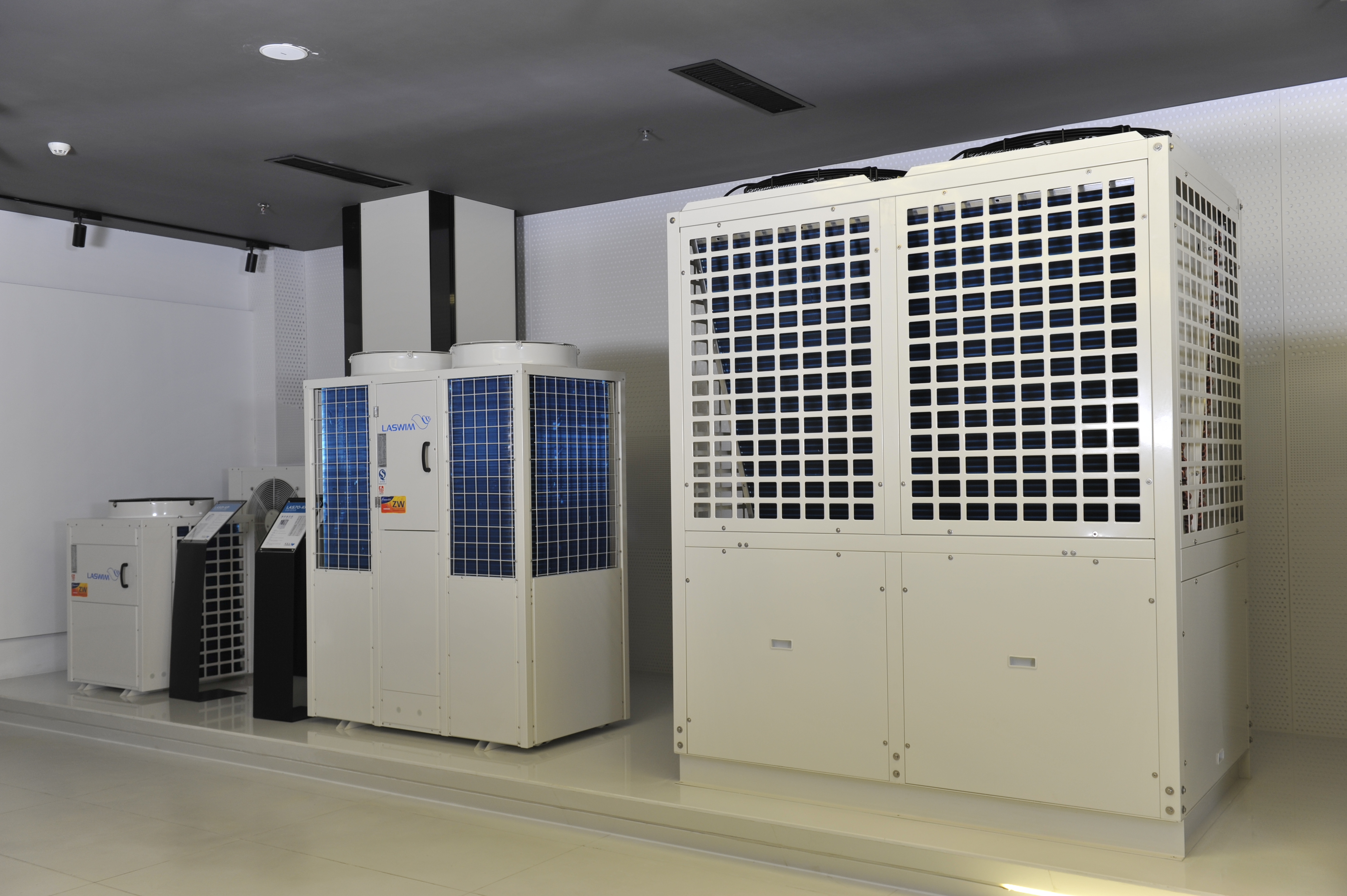
LASWIM swimming pool heat pump produced for residential and commercial heating systems.
Large Public Pools and High Water-Quality Projects
For competition pools, public aquatic centers, and water parks, water clarity and operating cost are both priorities. The WL-HPF regenerative media filtration system achieves filtration precision of 1–3 μm, compared with 30–50 μm for traditional sand filters. Effluent turbidity remains consistently below 0.1 NTU, while water consumption can be reduced by approximately 90% and chemical consumption by around 30%. The system supports fully automatic pre-coating, filtration, and regeneration cycles, allowing unattended operation.
Distribution Partners
For distributors, the ecosystem approach shortens supplier communication loops and reduces logistics complexity. A single contact point for pumps, filters, salt chlorinators, lights, heat pumps, and AOP equipment makes after-sales support more manageable. The capacity and lead-time data also help distributors plan inventory with more confidence.
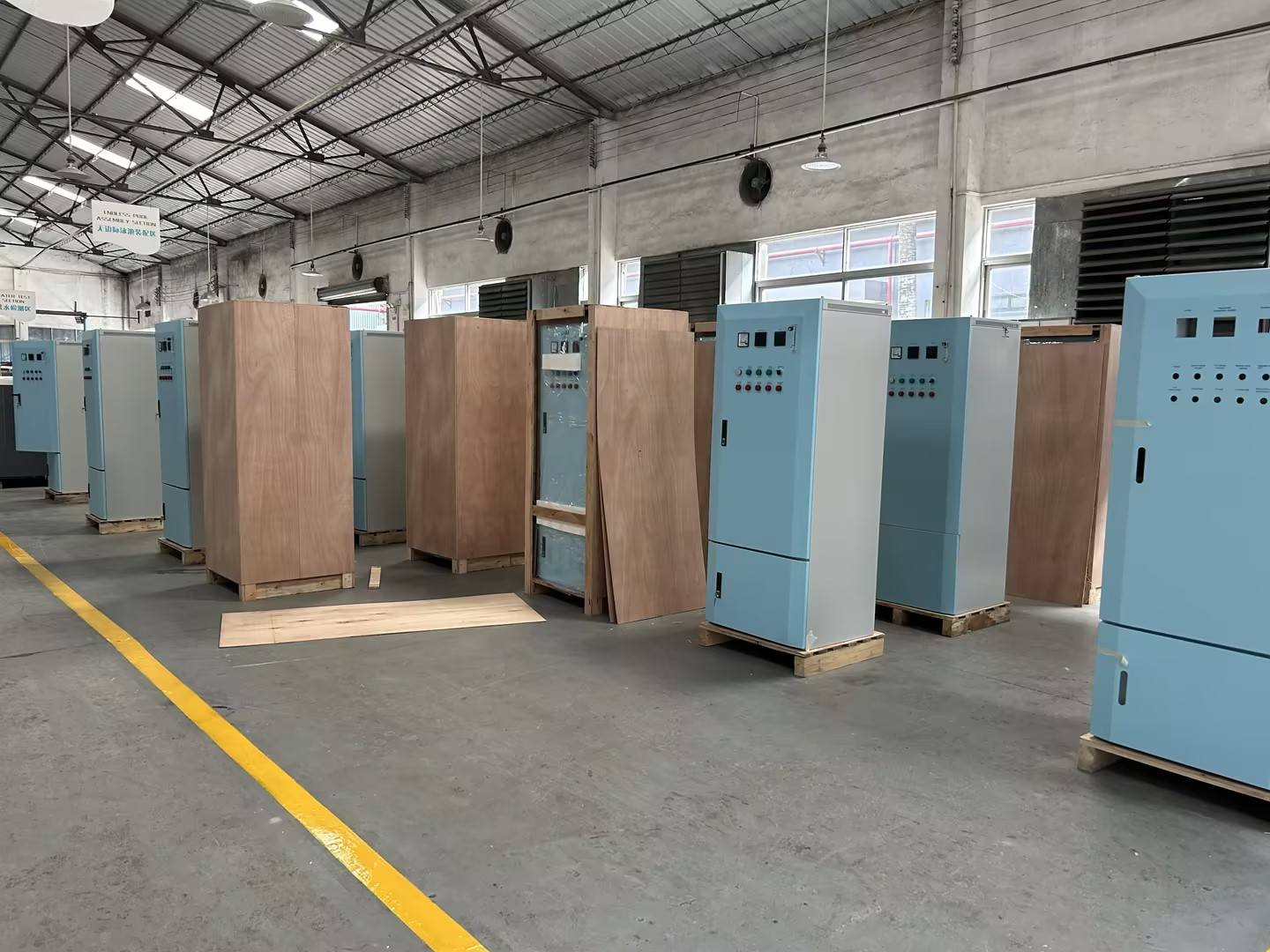
Advanced Oxidation Process AOP disinfecting pool equipment during production.
Product Ecosystem at a Glance
The table below summarizes the LASWIM equipment ecosystem using verified product and comparison data from the company’s published technical information.
| Equipment Category | Representative Models | Verified Capability | Typical Application |
|---|---|---|---|
| Pool Pump | BVX300/BVX400, WL-BHP, WL-ECP | IE5 or IE4 motor options; variable speed up to 3450 rpm; max flow 42–48 m³/h; 30–60% energy reduction vs fixed-speed commercial pumps; maintenance frequency reduced by 25–40% | Hotels, resorts, villa pools, commercial circulation systems |
| Salt Chlorinator System | CS Pro, EC ultraX, EC Plus | Chlorine output adjustable from 20% to 100%; salinity monitoring 2500–4500 ppm; self-cleaning polarity reversal extends cell lifespan by 30–50%; chemical cost reduced by 35–60% vs chlorine tablets | Residential pools, villa pools, hotel pools, SPA pools |
| Pool Filter System | WL-HPF regenerative media filtration; sand filter series | Filtration precision 1–3 μm; effluent turbidity below 0.1 NTU; water consumption reduced by about 90%; chemical use reduced by about 30% | Luxury hotel pools, water parks, public competition pools |
| Pool Light | PE20, WL-LB/LBS, WL-MAG/MBG, PS2025 | IP68 waterproof rating; Class III low-voltage; AC/DC 12–24V; energy use reduced by 60–80% vs halogen lights; Wi-Fi and Tuya App control | Residential pools, villa pools, hotel pools, SPA pools, landscape pools |
| Heat Pump | LS Series, LAS Series | LS Series COP 5.8–6.4 and CE LVD certification to EN IEC 60335-2-40; LAS commercial heating capacity 35–105 kW; 25–45% energy reduction vs on/off heat pumps; operating ambient range –20°C to 43°C | Residential pools, hotels, natatoriums, sports centers, water parks |
| AOP Disinfection | AOP100-400 | 99.99% sterilization rate; chlorine consumption reduced by up to 50%; UV lamp lifespan up to 16,000 hours; corona discharge module lifespan of 10+ years | Hotels, resorts, water parks, high-end residential pools |
Frequently Asked Questions
What compliance standards should a buyer check when sourcing LASWIM swimming pool equipment?
For pool pumps, the relevant household safety standard is IEC 60335-2-41:2024. LASWIM LS Series heat pumps are certified to CE LVD, specifically EN IEC 60335-2-40, with COP values ranging from 5.8 to 6.4. Underwater pool lights from LASWIM use Class III low-voltage design and IP68 waterproofing. The company also states a commitment to ISO 9001 quality standards. Buyers should confirm the exact certification required for their destination market and match it to the specific model selected.
Can LASWIM support a long-term residential and commercial swimming pool equipment program?
Yes. LASWIM Water Environment Equipment Co., Ltd. is a manufacturer with a 90,000 m² facility, 630 employees, and 53 R&D engineers. Monthly production capacity is 200,000 sets. The product line covers pumps, filters, salt chlorinators, heat pumps, pool lights, regenerative media filtration, and AOP disinfection. That combination of scale and breadth is relevant when a buyer wants to consolidate categories under one supplier.
How do high-efficiency systems affect long-term operating budgets?
LASWIM comparison data shows variable-speed pool pumps can reduce energy consumption by up to 90% compared with single-speed pumps. For commercial pumps, the stated reduction is 30–60% under partial-load operation. Full DC inverter heat pumps can reduce energy consumption by 25–45% compared with conventional on/off commercial heat pumps, with total ownership cost reduced by approximately 20–35% over 3–5 years. Salt chlorinators can cut chemical purchase costs by 35–60% compared with chlorine tablets. These figures help buyers model total cost of ownership rather than first purchase price.
Can a new buyer start with a small sample order?
Yes. LASWIM’s minimum order quantity is 1 set. Payment terms are T/T, delivery can be arranged as EXW or FOB, and every unit is subject to 100% inspection covering function inspection and visual inspection. A small order allows the buyer to verify product quality, packaging, documentation, and communication before committing to larger volumes.
What is the typical lead time for Laswim pool equipment during peak season?
The typical production lead time is within 15 workdays during both peak season and off season, supported by a monthly production capacity of 200,000 sets. This is an important fact for distributors and project buyers who need predictable delivery execution. To confirm lead time for a specific model and order quantity, contact the LASWIM team directly.
Conclusion: Choosing a Long-Term Swimming Pool Equipment Partner
Long-term sourcing of swimming pool equipment is not only about unit price. It is about manufacturing capacity, lead time, quality control, and the ability to supply an entire equipment ecosystem. LASWIM offers a broad residential and commercial portfolio, monthly production capacity of 200,000 sets, a 15-workday lead time during peak and off seasons, and an MOQ of 1 set for initial testing.
For buyers at the decision and execution stage, these factors reduce the risk of fragmented supply and make scaling more predictable. A manufacturer that can cover pumps, filters, salt chlorinators, heat pumps, lights, regenerative media filtration, and AOP disinfection also simplifies procurement, documentation, and after-sales support.
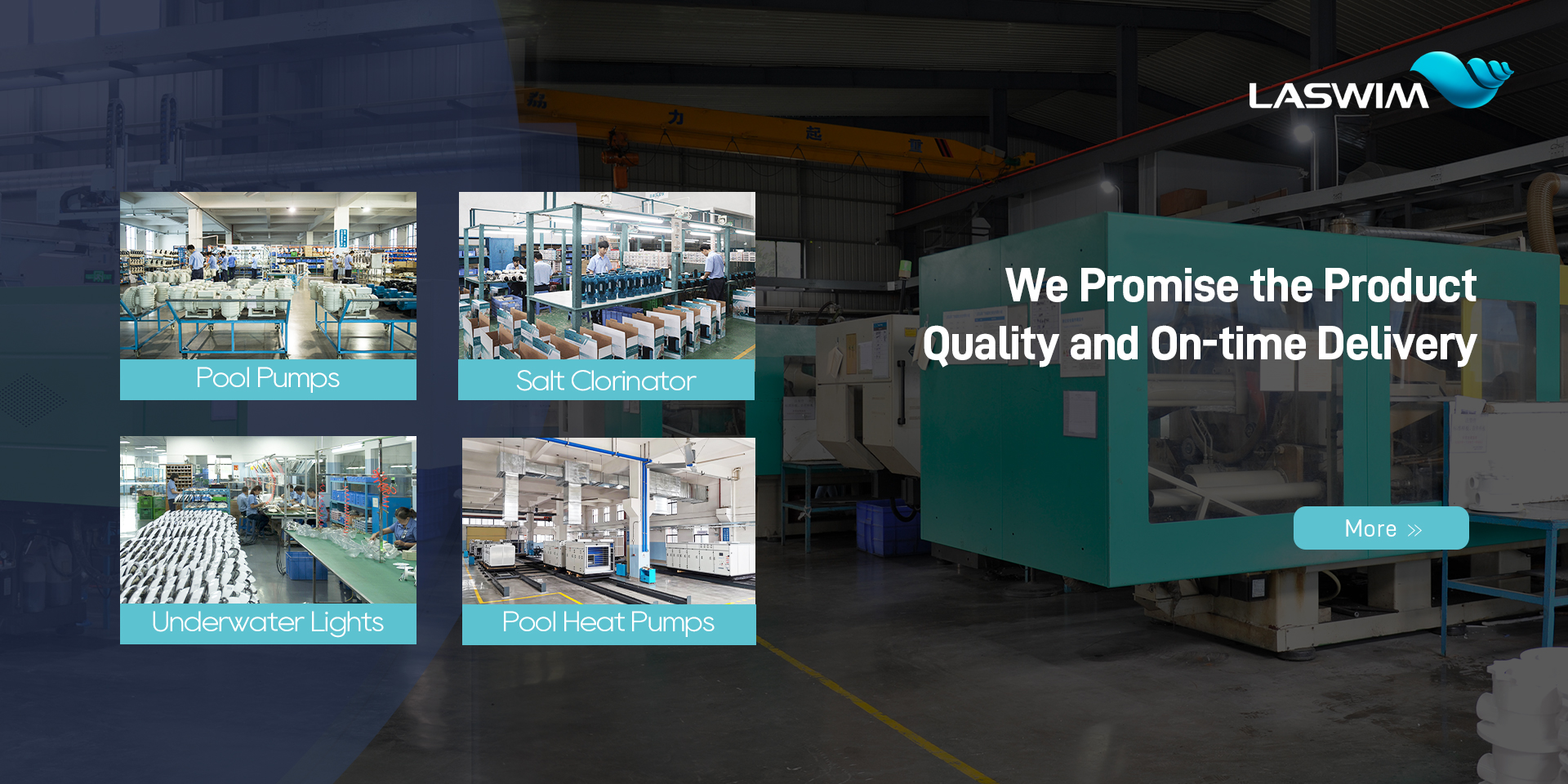
LASWIM workshop showing standardized production and inspection workflows.
Next Step: Download the Catalog or Request a Sample
For a complete view of product models and specifications, download the LASWIM Commercial & Residential Swimming Pool Equipment Catalog.
To discuss a sample order, quotation, or distribution arrangement, contact Sorcha by email at laswimpoolwater@gmail.com or WhatsApp at +86 18022011329.