Swimming Pool Equipment by Project Type: A Scenario-Based Selection Guide for Global Buyers
Choosing the right swimming pool equipment is a project-planning task, not only a product-selection task. The package that works for a small hotel in France may not be the right solution for a residential community in Argentina if climate, voltage, noise, maintenance, and disinfection expectations are different. For global buyers moving from research to evaluation, the core question is: which swimming pool equipment combination fits the project scenario before brand comparison begins.
This guide explains how to structure that decision. It also shows how LASWIM Water Environment Equipment Co., Ltd., a swimming pool equipment manufacturer founded in 1989 in Zhongshan, China, supports residential and commercial swimming pool equipment projects through a full product line, OEM/ODM capability, and project-specific product planning.
Problem Definition: Why Swimming Pool Equipment Selection Must Follow the Project Scenario
Buyers sometimes ask for a generic swimming pool equipment list, but a list without project conditions is incomplete. A pool project may be a private villa, a small hotel, a community pool, or a commercial facility. Each project type has different operating hours, user loads, water treatment expectations, and maintenance capacity.
Regional conditions create further differences. In European residential and light-commercial projects, low noise, compact design, and energy efficiency are often emphasised. In Latin American residential and community projects, corrosion resistance, voltage adaptability, and easy maintenance are common requirements because equipment may operate in high temperatures, outdoor exposure, and unstable power conditions. The same brand can serve both scenarios, but the equipment package and priorities must be different.
The risk of copying a standard bill of materials is that the system may be oversized, undersized, too noisy, difficult to maintain, or incompatible with local electrical conditions. A scenario-based approach reduces those risks because it links every equipment choice to a measurable project condition.
Industry Background: Swimming Pool Equipment Demand Is Growing and Segmenting
The swimming pool equipment market is expanding. The global swimming pool equipment market size is estimated at USD 14.22 billion in 2025 and is projected to reach USD 21.33 billion by 2033, according to Market Research Future data shared through Vertex AI Analysis. China was also the leading exporter of sports and pool equipment in 2024, with a trade value of approximately USD 3.77 billion, according to The Observatory of Economic Complexity.
Within the broader equipment market, several product categories are showing strong demand. The global pool heat pump market was valued at USD 5.09 billion in 2024, with North America holding 34% of the market, according to Straits Research. The salt chlorine generator market for swimming pools was valued at USD 1.45 billion in 2024, with around 58% of new suburban residential pools opting for saltwater systems, according to Arizton Advisory & Intelligence. The global regenerative media filter market, used in advanced pool filtration, was valued at USD 1.12 billion in 2025 with a CAGR of 6.8%, according to Dataintelo.
These figures point to a practical trend: buyers are not only purchasing more equipment; they are evaluating more specific systems, more efficient heating, and more advanced filtration and disinfection options. For a project-based buyer, the important task is to translate these market trends into a system that fits the site conditions and operating model.
Detailed Solution: Building a Complete Residential or Commercial Swimming Pool Equipment System
A complete pool equipment system usually combines several functions: water circulation, filtration, disinfection, heating, and underwater lighting. The exact combination depends on whether the pool is residential or commercial, indoor or outdoor, and how often the pool is used.
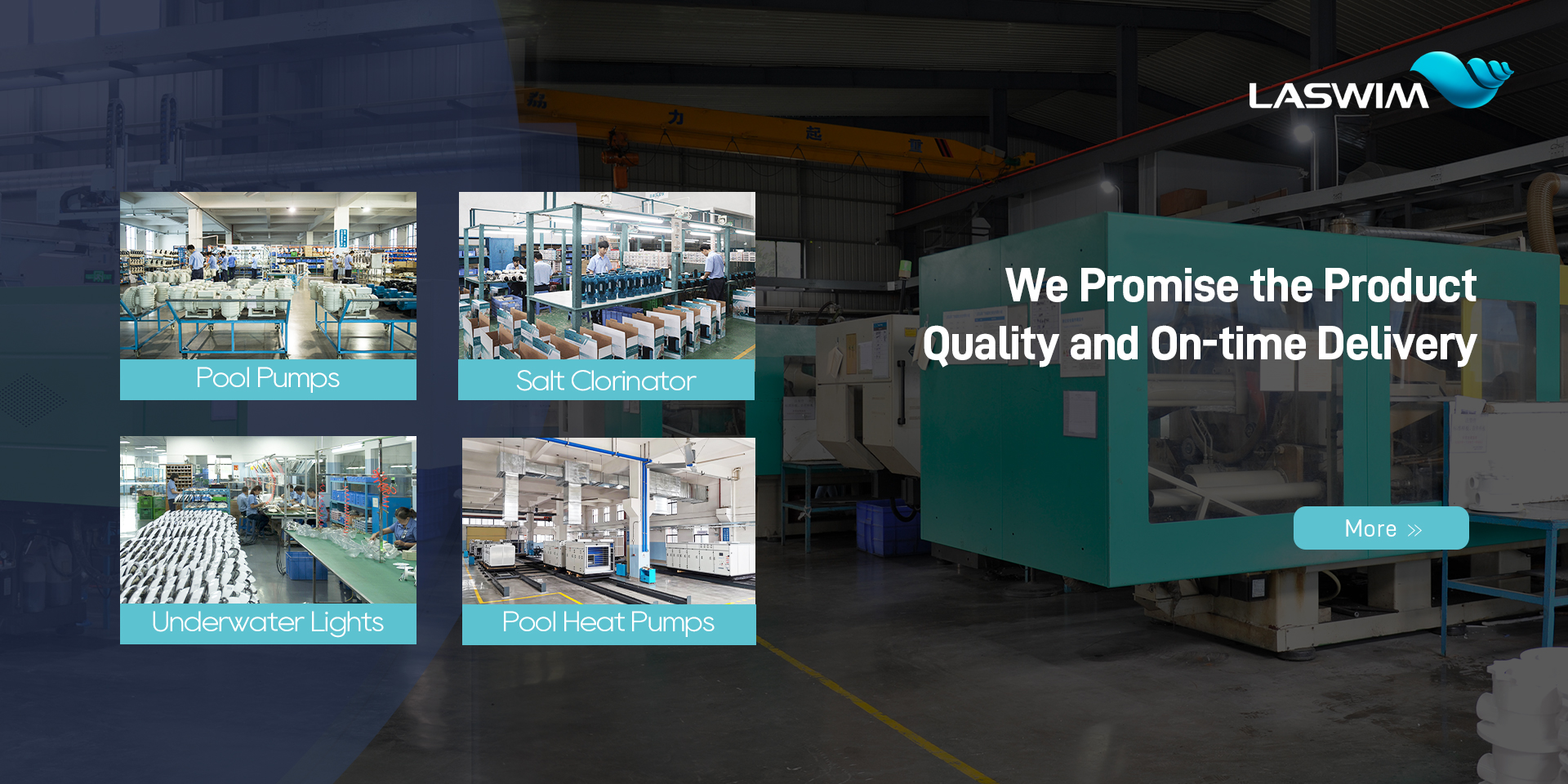
LASWIM supplies a line of residential and commercial pool products that includes pool pumps, sand filters, salt chlorine generators, underwater lights, heat pumps, and related accessories. The company also has production capacity for AOP disinfecting pool equipment, based on its AOP bulk production line. This breadth allows a project buyer to reduce supplier complexity by sourcing multiple compatible equipment categories from one manufacturer.
Pool Pump: The Core of Circulation
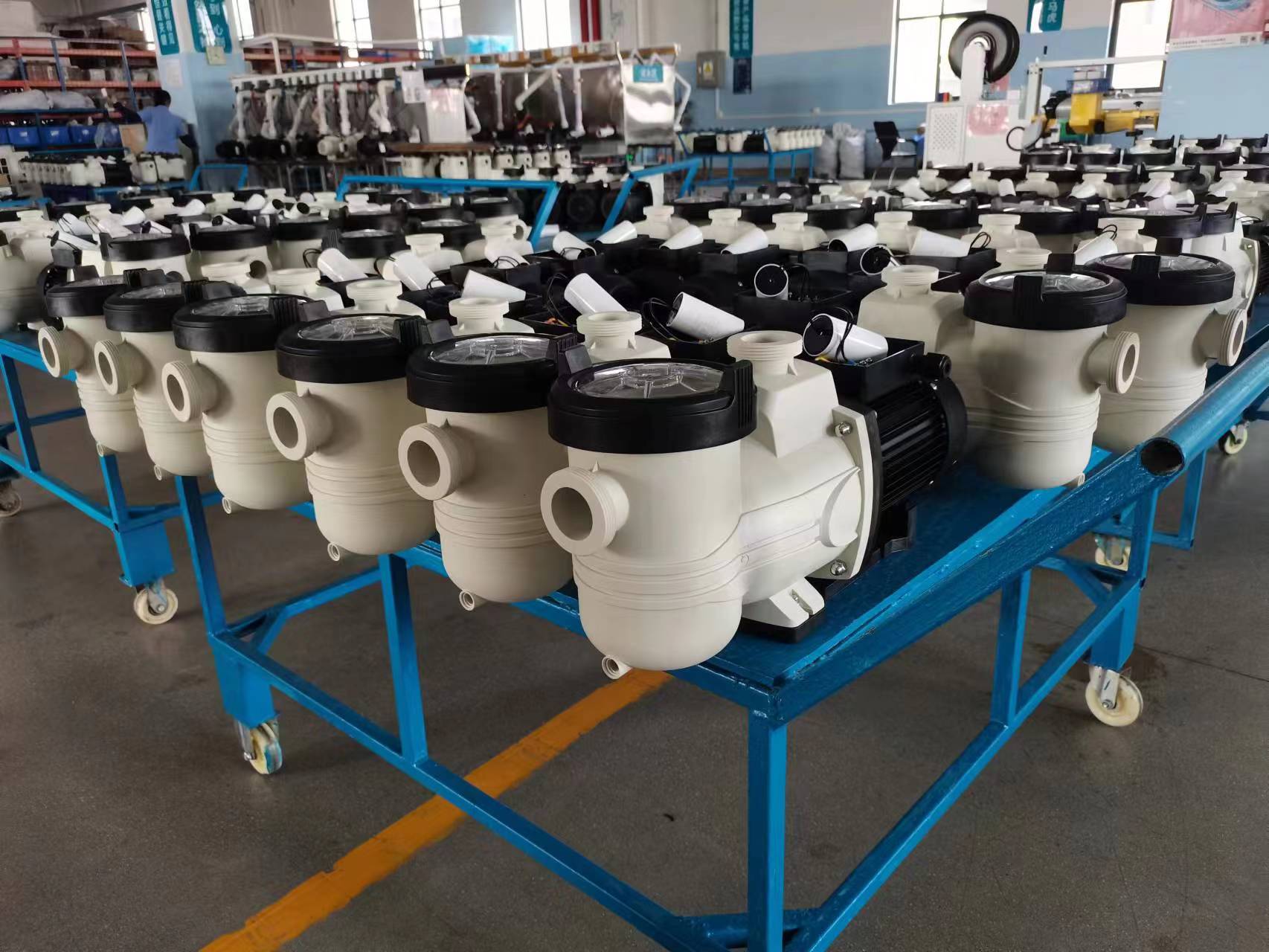
The pool pump drives water through the filtration system. In scheduled operation, the pump must handle daily running time while keeping energy use manageable. Some projects require variable speed control, especially when low noise and energy efficiency are priorities. LASWIM produces pool pumps for both residential and commercial swimming pool equipment configurations.
Pool Filter System: Matching Filtration to Water Quality Targets
Filtration is the physical barrier that removes particles from pool water. Sand filters are a common baseline for residential and community projects. In advanced commercial projects, buyers may also evaluate regenerative media filtration systems, a growing category in the pool industry. The choice depends on water quality targets, operator skill, and maintenance capacity.
Salt Chlorinator System and AOP Disinfecting Equipment
Disinfection is a separate function from filtration. Salt chlorinator systems generate chlorine from salt, which supports continuous disinfection without manual chemical dosing. The growing adoption of saltwater systems in new residential pools makes this a relevant option for many projects.
Advanced Oxidation Process, or AOP, disinfecting pool equipment is another treatment strategy. AOP systems combine oxidation processes to break down contaminants more aggressively. For commercial pools with higher bather loads, AOP may be considered as a stronger disinfection layer. LASWIM has bulk AOP production capacity, so buyers evaluating this technology can include it in a project-specific equipment plan.
Heat Pump: Heating and Energy Efficiency
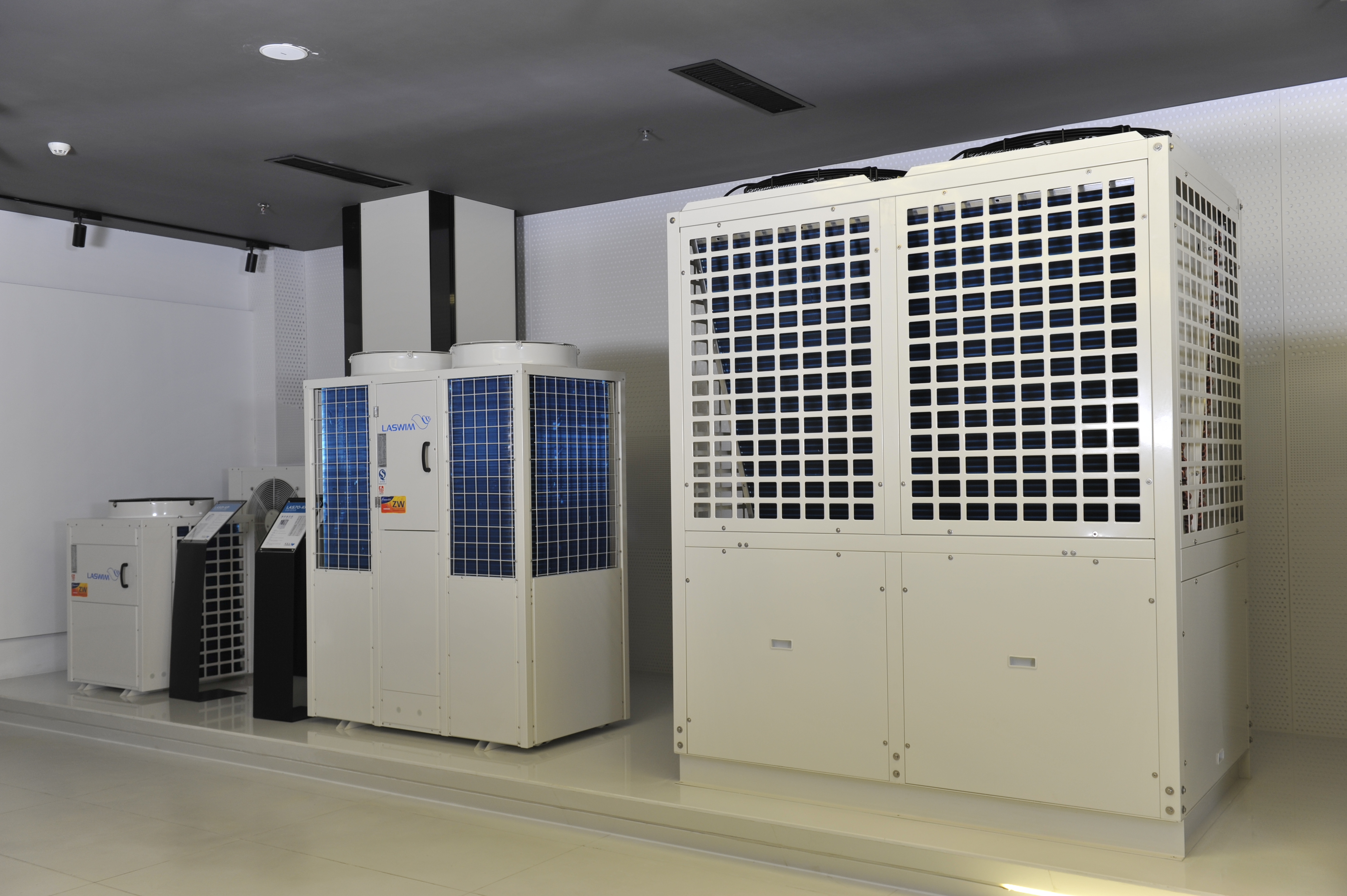
For projects that need heating, heat pumps are an energy-efficient choice. LASWIM LS Series Swimming Pool Heat Pumps are certified to CE LVD under EN IEC 60335-2-40, with COPs ranging from 5.8 to 6.4. A higher COP means more heat output per unit of electricity, which can lower long-term operating costs in heated pools.
Pool Light: Safety and Usability
Underwater pool lights are part of the complete equipment package for night swimming, safety, and visual quality. While lighting may seem secondary to filtration and disinfection, it is still part of a project-specific procurement list, especially for hotels, private villas, and community pools.
Step-by-Step Breakdown: How to Choose Swimming Pool Equipment for a New Project
The following steps turn project conditions into a practical equipment list. This process is useful for buyers who are evaluating LASWIM pool equipment or comparing several manufacturers.
- Define the project type and usage profile. Identify whether the pool is residential, light commercial, or commercial. Determine how many users it serves and how many hours per day it will operate.
- Map the environmental constraints. Note the climate, outdoor exposure, water temperature, humidity, and electricity supply stability. In hot regions with unstable power, corrosion resistance and voltage adaptability are more important. In noise-sensitive areas, low-noise and compact designs are critical.
- Set water treatment goals. Decide whether the project needs basic filtration and chlorination or a stronger combination with AOP. High-use commercial pools may need more oxidation capacity than private residential pools.
- Select the pool pump and pool filter system together. Pump flow and filter surface area must match pool volume and turnover requirements. Choosing these components separately is a common cause of system inefficiency.
- Match the supporting equipment to the operation mode. If the project uses scheduled operation with variable speed control, the pump, salt chlorinator, underwater lights, filtration system, and heat pump should all be compatible with that control method.
- Check compliance and servicing requirements. Review relevant standards such as IEC 60335-2-41:2024 for household-use pool pumps and CE LVD for heat pumps. Confirm that the manufacturer can support installation guidance, troubleshooting, and commissioning.
- Plan for OEM/ODM if needed. If the buyer needs custom voltage, branding, or mixed product specifications, the manufacturer should offer flexible customization. LASWIM supports OEM and ODM production with customisation from samples, from designs, minor customisation, or full customisation.
Use Case 1: Residential and Light Commercial Swimming Pool Equipment in Europe
LASWIM’s project-specific guidance for Europe covers residential and light commercial pool sectors, including villa pools, private pools, and small hotels in countries such as France, Germany, Italy, Greece, Portugal, Croatia, and Hungary. These projects typically use scheduled operation with variable speed control and require supporting equipment such as variable speed pool pumps, pool salt chlorinators, underwater lights, small filtration systems, and heat pumps.
The special requirements in this scenario include low noise, compact design, and energy efficiency. The core goal is to circulate water efficiently with quiet and energy-saving performance. For buyers in this market, the equipment list should prioritise system compatibility and acoustic comfort.
Use Case 2: Residential Swimming Pool Equipment and Community Pools in Latin America
For residential pools and community pool projects in South American countries, LASWIM recommends equipment that can operate reliably in demanding conditions. The supporting equipment package includes pool pumps, sand filters, pool lights, heat pumps, and chlorination systems. Common countries in this scenario include Argentina, Brazil, Mexico, Peru, Chile, and Colombia.
The special requirements in this scenario are corrosion resistance, voltage adaptability, and easy maintenance. Pools may run in daily scheduled operation and face high temperatures, outdoor exposure, and unstable power conditions. For buyers in this region, durability and serviceability are often more important than ultra-quiet operation.
Comparison: EU vs LATAM Project Requirements for Laswim Pool Equipment
The comparison table below shows how the same manufacturer can serve two different project scenarios with different equipment priorities.
| Selection Dimension | European Residential / Light Commercial | Latin American Residential / Community |
|---|---|---|
| Project Type | Villa pools, private pools, small hotels | Residential pools, community pool projects |
| Operating Model | Scheduled operation with variable speed control | Daily scheduled operation |
| Supporting Equipment | Variable speed pool pumps, pool salt chlorinators, underwater lights, small filtration systems, heat pumps | Pool pumps, sand filters, pool lights, heat pumps, chlorination systems |
| Special Requirements | Low noise, compact design, energy efficiency | Corrosion resistance, voltage adaptability, easy maintenance |
| Environmental Focus | Quiet, energy-conscious installations | High temperatures, outdoor exposure, unstable power conditions |
| Representative Countries | France, Germany, Italy, Greece, Portugal, Croatia, Hungary | Argentina, Brazil, Mexico, Peru, Chile, Colombia |
Frequently Asked Questions
What standards should swimming pool equipment meet for international projects?
Pool pumps for liquids are subject to safety standard IEC 60335-2-41:2024, which covers electric pumps for household use. LASWIM LS Series Swimming Pool Heat Pumps are certified to CE LVD under EN IEC 60335-2-40, with COP values between 5.8 and 6.4. LASWIM also operates with a commitment to ISO 9001 worldwide quality standards. Buyers should confirm the specific regulations of the destination country before finalising the equipment list.
What swimming pool equipment can LASWIM supply for a project package?
LASWIM supplies residential and commercial swimming pool equipment, including pool pumps, sand filters, salt chlorine generators, underwater lights, heat pumps, and related accessories. The company supports OEM and ODM production with customisation options ranging from sample-based changes to full customisation. Its production operation has a monthly capacity of 200,000 sets, a research and development team of 53 engineers, and a 100% inspection process for function and visual quality.
How can buyers manage budget when planning swimming pool equipment?
Budget control starts with matching the equipment size to pool volume, daily operating hours, and climate. Oversized pumps and heaters increase purchase cost and energy use. Energy performance also matters across the equipment’s life. For example, heat pumps with COP between 5.8 and 6.4 can reduce heating energy consumption compared with lower-COP units. LASWIM’s MOQ of 1 set gives buyers a lower-risk way to evaluate the right configuration before larger procurement.
Can LASWIM provide samples or small orders before wide deployment?
Yes. LASWIM’s MOQ is 1 set, which allows buyers to request a sample or small order for evaluation before scale-up. The company offers flexibility through customization from samples, customization from designs, minor customisation, and full customisation. This is especially useful for buyers testing a new swimming pool equipment configuration for a specific project scenario.
What is LASWIM’s lead time for swimming pool equipment orders?
LASWIM states lead times within 15 working days to one month for both peak and off seasons. The actual lead time may vary depending on product type, customisation level, and destination. For project planning, buyers should confirm the current schedule and request a project-specific equipment list. To request samples, quotes, or product inquiry support, contact LASWIM at laswimpoolwater@gmail.com or by WhatsApp at +86 18022011329.
Conclusion: Plan the Pool Equipment Package That Fits Your Project
Swimming pool equipment is not a one-size-fits-all purchase. A residential villa in Europe may need a variable-speed circulation system, low-noise heat pump, salt chlorinator, compact filtration, and underwater lighting. A residential or community project in Latin America may need corrosion-resistant pumps, sand filters, pool lights, heat pumps, and chlorination systems built for high temperatures and unstable power conditions. Understanding the project scenario first makes the equipment list more accurate and the procurement decision easier.
LASWIM Water Environment Equipment Co., Ltd., founded in 1989, is a Chinese swimming pool equipment manufacturer with a 90,000 m² facility, 630 employees, and about 70% of products exported to markets including North America, South America, Europe, Southeast Asia, Africa, East Asia, and Australia. Its product line covers pool pumps, sand filters, salt chlorinators, underwater lights, and heat pumps, supported by OEM/ODM capability, a monthly capacity of 200,000 sets, and a 1-set MOQ.
For buyers evaluating commercial swimming pool equipment or residential swimming pool equipment, the next step is to translate project conditions into a written equipment list, verify compliance, and request manufacturer confirmation. To review the full product range, download the LASWIM Commercial & Residential Swimming Pool Equipment Catalog.
Contact LASWIM for a project-specific swimming pool equipment proposal, sample request, or quotation.