
Variable Speed vs. Single Speed Pool Pumps: A Detailed Comparison Guide for Residential Owners
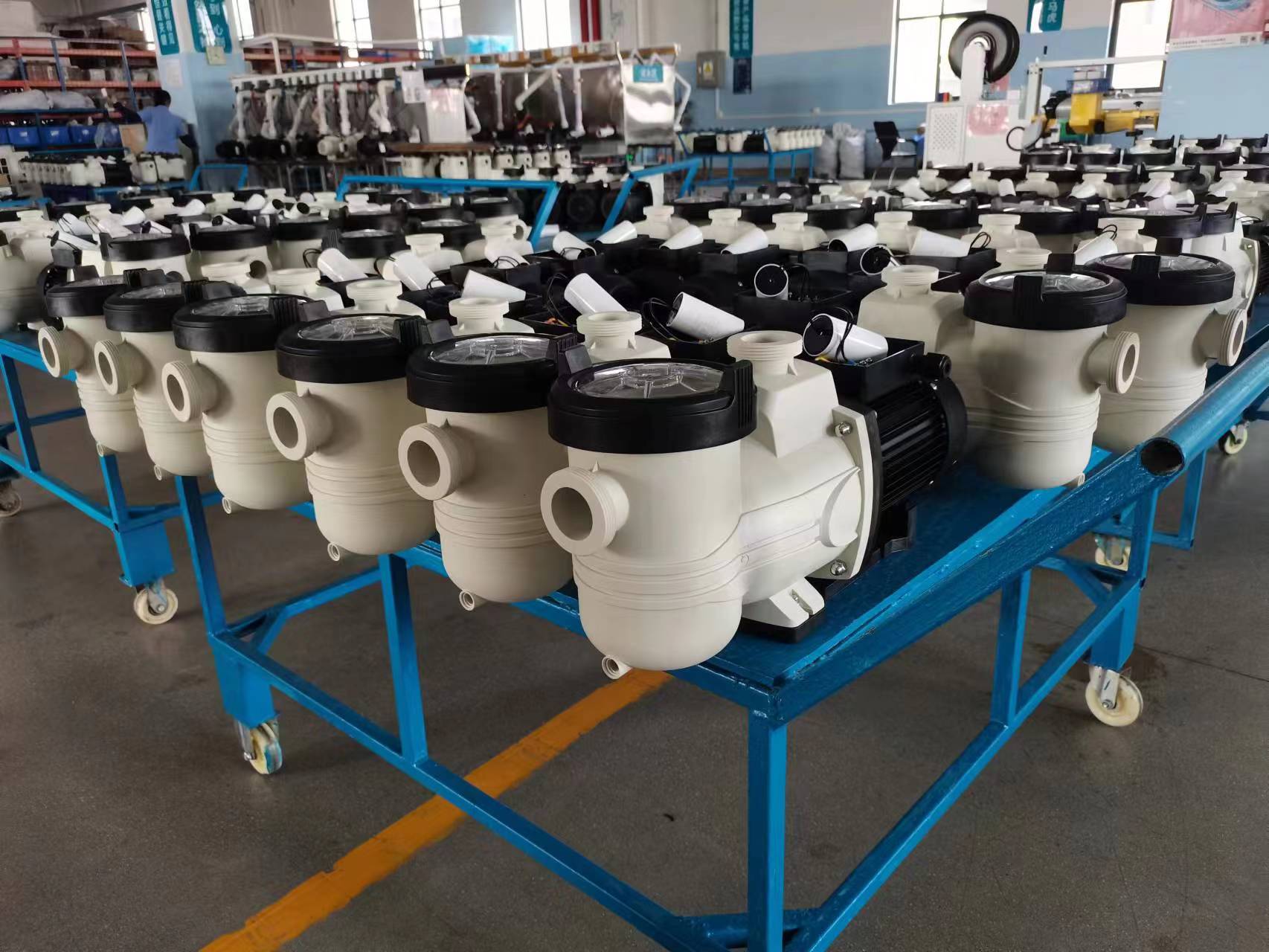
Laswim pool pumps during batch production at the Laswim manufacturing facility.
The short answer for most residential owners is this: a variable-speed pool pump gives you more control over energy use, operating flexibility and daily noise, while a single-speed pump is a simpler, often lower-first-cost machine that runs at one fixed speed whenever it is switched on. This guide explains how the two designs differ, what to check when comparing specifications, and how real product data from Laswim pool equipment can help you make a better buying decision.
In this article, examples come from LASWIM Water Environment Equipment Co., Ltd., a pool equipment manufacturer founded in 1989. Laswim produces residential and commercial swimming pool equipment, including pool pumps, filters, salt chlorinators, heat pumps and underwater lights, and its export markets include North America, South America, Europe, Southeast Asia, Africa, East Asia and Australia.
What problem does the pool pump actually need to solve?
A pool pump is the heart of the water circulation system. It pushes pool water through the filter, heater, sanitizer or other treatment equipment, and back into the pool. For residential pools, the pump usually has to run for long periods every day, which makes both electricity use and noise important to the owner.
The main difference between pump types is not the housing or the impeller; it is how the motor speed is controlled. A single-speed pump has one operating point. It starts, reaches its design speed, and delivers a fixed flow as long as it is on. A variable-speed pump, by contrast, lets the motor run at different speeds so the owner can match water flow more closely to what the pool actually needs at different times.
The single-speed pump: fixed operation point
Single-speed pumps have been the default in many pool installations for decades. They are controlled essentially by switching on or off. When a single-speed pump is running, it runs at the same speed and consumes power at the motor's full operating point; there is no way to reduce the output for light filtration duty.
This means the system designer must choose a pump that is large enough for the most demanding job, such as moving water through a heater or providing flow for water features. During normal daily filtration, the pool rarely needs that maximum flow, but a single-speed pump cannot lower its output to match. Laswim's specification sheets offer a clear fixed-speed reference point: several heavy-duty pump families are intended for commercial duty and are specified at 2,900 rpm, including pump models in the WL-BHP and WL-BDP ranges.
The variable-speed and inverter pump: adjustable operating point
Variable-speed and inverter-driven pumps are designed to change motor speed. Instead of simply running at full speed, they can operate at lower speeds for routine filtration and at higher speeds only when extra flow is needed, for example when using pool jets, spa jets, a heat pump or a solar heating circuit.
Laswim offers several examples in its pump catalogue. The WL-HV2100-200 is described as a variable speed pool pump designed for residential swimming pools. It has a rated output horsepower of 1 to 2 HP, an IP55 protection rating, and Wi-Fi/Bluetooth smart control. The pump body is made of PP+35% GF, the diffuser of PPO+30% GF, and the motor shaft of SS316 stainless steel. Laswim also lists an energy-saving inverter pump family, the WL-ESP series, for residential pools and jacuzzis in the EU market, with model numbers from WL-ESP033M to WL-ESP120M.
One useful buying caution: the same document may list 2,900 rpm for several Laswim pump families, including large fixed-speed pumps and the WL-ESP inverter pump family. Therefore, when comparing products, do not rely on the rpm number alone. Check whether the product is explicitly called a variable-speed pump, an inverter pump, a two-speed pump, or a single-speed pump. The stated speed alone does not prove whether the motor speed is adjustable.
Industry background: why efficient pump designs are becoming more important
The global swimming pool equipment market was estimated at USD 14.22 billion in 2025 and is projected to reach USD 21.33 billion by 2033, according to Market Research Future data referenced in a Vertex AI analysis. China was also the leading exporter of sports and pool equipment in 2024, with a trade value of approximately USD 3.77 billion, according to the Observatory of Economic Complexity.
As pool equipment demand grows, buyers have started to pay more attention to operating cost, noise, smart control and compliance. For procurement teams and residential owners alike, the pump is one of the most important pieces of the system because it runs frequently and determines how well the rest of the pool equipment performs.
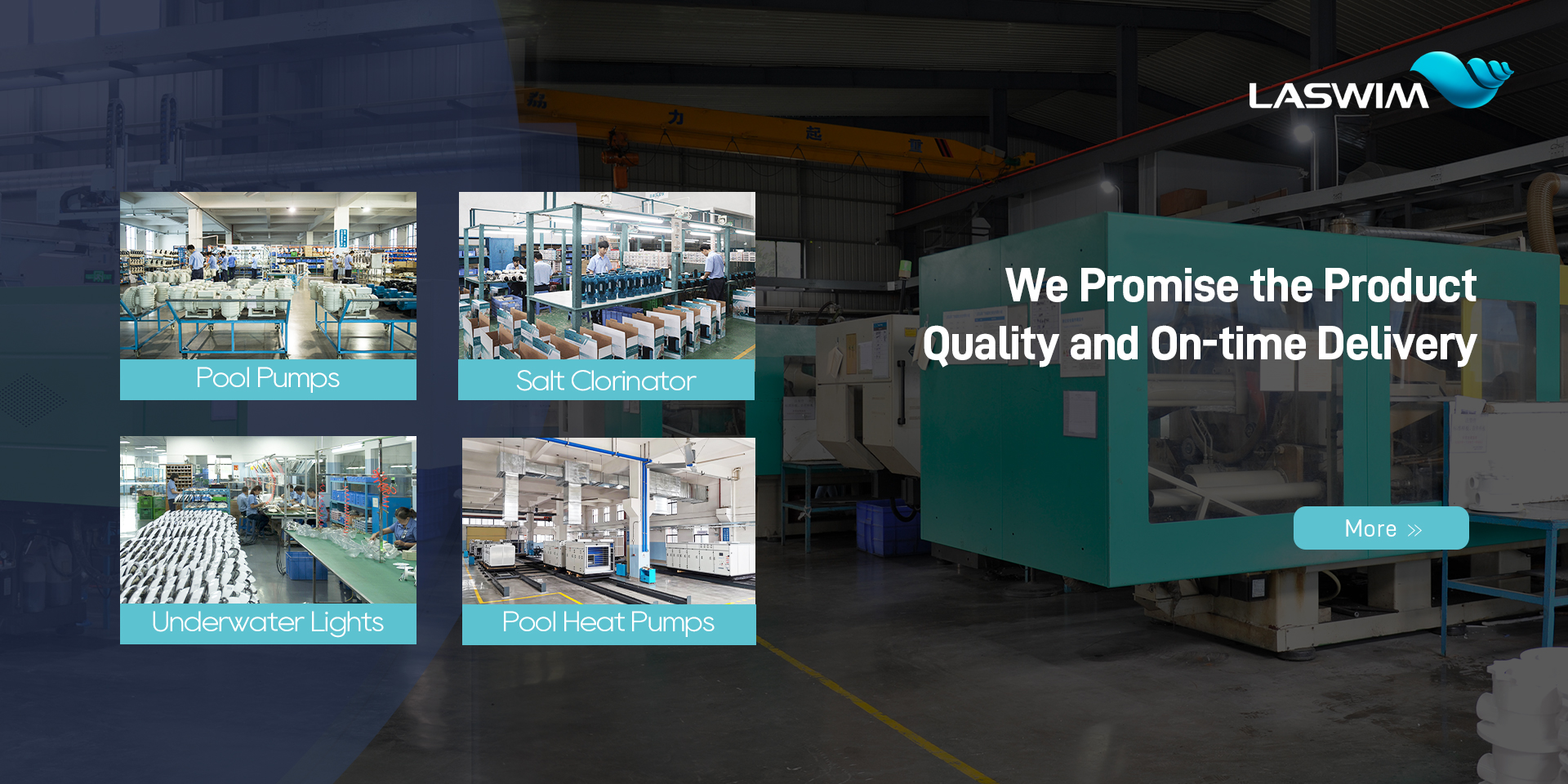
Laswim workshop areas used for pool equipment production and assembly.
Key comparison: energy efficiency
Energy efficiency is the reason most residential owners first compare variable-speed and single-speed pumps. A pump moving water follows the same basic physical pattern in all pool systems: when you reduce pump speed, the required power can drop much faster than the flow rate. This is why running a pump more slowly during normal filtration can use noticeably less electricity even though the pump still runs for long periods.
Laswim's WL-ESP energy-saving inverter pump series gives a practical example of an energy-focused residential design. Across the series, input power is stated at 0.26 kW to 0.9 kW, output power from 0.33 HP to 1.2 HP, maximum head from 9 to 13 metres, and maximum flow rate from 11 to 19 m³/h. These are the numbers a buyer should compare against a fixed-speed pump's power draw and hydraulic output.
A large single-speed or commercial fixed-speed pump, by contrast, is sized for a high design point. Laswim's WL-BHP commercial pumps, for instance, are specified with output power of 2.0 to 4.0 HP, maximum flow of 38 to 45 m³/h and maximum head of 20 to 23.5 metres, while the WL-BDP heavy-duty commercial pumps are specified with output power of 2 to 4 HP, maximum flow of 42 to 55 m³/h and maximum head of 18 to 19.5 metres. Both families operate at 2,900 rpm. A residential pool normally does not need this level of flow during ordinary filtration, so the ability to run at a lower speed is what gives an inverter or variable-speed pump its practical energy benefit.
Noise: lower speed usually means a quieter backyard
Pool pumps are usually installed close to the house or in a backyard equipment area. At full speed, both fixed-speed and variable-speed pumps produce hydraulic and mechanical noise, so the real difference is whether the pump can be slowed down for quiet routines.
A variable-speed pump can be scheduled to run at a lower speed during the evening or night, when a lower flow rate is acceptable for basic filtration. Because the impeller rotates more slowly and water velocity is lower, noise tends to be lower compared with full-speed operation.
Noise performance is also an engineered feature in conventional pump designs. Laswim's HLLF series pump, for example, is listed with a built-in thermal protector, maximum working pressure of 2.5 bar, self-priming height of up to 3 metres, and noise below 65 dB. When evaluating a pump for a home, ask the supplier for the noise rating at the speed you plan to use most of the time, not only the maximum-speed rating.
Operational flexibility and control
Single-speed pumps are controlled by a timer or by switching them on and off. They do not adapt to changing conditions. If the pool contains a heat pump, a salt chlorinator, an AOP system, a pool cleaner or a spa jet circuit, the required flow rate can change depending on which device is working.
Variable-speed pumps make it easier to match the pump output to the task. For example, a low speed can keep water moving through the filter for basic turnover, while a higher speed can be selected when extra water movement is needed. Smart control adds even more convenience. The WL-HV2100-200 variable-speed pump is designed for residential swimming pools and supports Wi-Fi/Bluetooth smart control, making it easier for owners to schedule operation and adjust pump behavior.
For commercial or heavier duty applications, Laswim also classifies the BVX300 and BVX400 as intelligent variable-speed pool pumps, described as commercial/high-performance pumps for hotels, resorts, public aquatic centers and water parks. On the light commercial side, the WL-ECP series is classified as a circulating pool pump that may be ordered as a two-speed, energy-saving inverter or high-performance pump. This shows the middle path between fixed-speed operation and full variable-speed control: a two-speed pump offers a choice of high and low operation, although it does not provide continuous speed adjustment.
Build quality and material details worth comparing
Pump materials affect corrosion resistance, durability and maintenance cost, especially in outdoor installations with chlorinated or salt-treated pool water.
Laswim's variable-speed WL-HV2100-200 pump uses a body of PP+35% GF, a diffuser of PPO+30% GF, and a motor shaft of SS316 stainless steel, with an IP55 protection rating. Similar material choices appear across Laswim pump lines. The WL-BDP commercial heavy-duty pump uses a housing of PP+35% glass fiber, an SS316L stainless steel shaft, and a diffuser/seal plate of PPO+30% glass fiber, and includes a large 5-litre PP filter basket and self-priming height up to 3 metres. The WL-ESP residential energy-saving pump uses a polypropylene thermoplastic housing and a ceramic-carbon mechanical seal tested to 25,000 life cycles.
For a residential buyer, these details matter because a pump located outdoors is exposed to sun, heat, chemicals and moisture. Materials such as corrosion-resistant shafts and engineering plastic housings generally reduce the chance of premature failure, while a tested mechanical seal helps indicate expected service life. When comparing a single-speed pump with a variable-speed pump, compare material specifications as carefully as you compare horsepower.
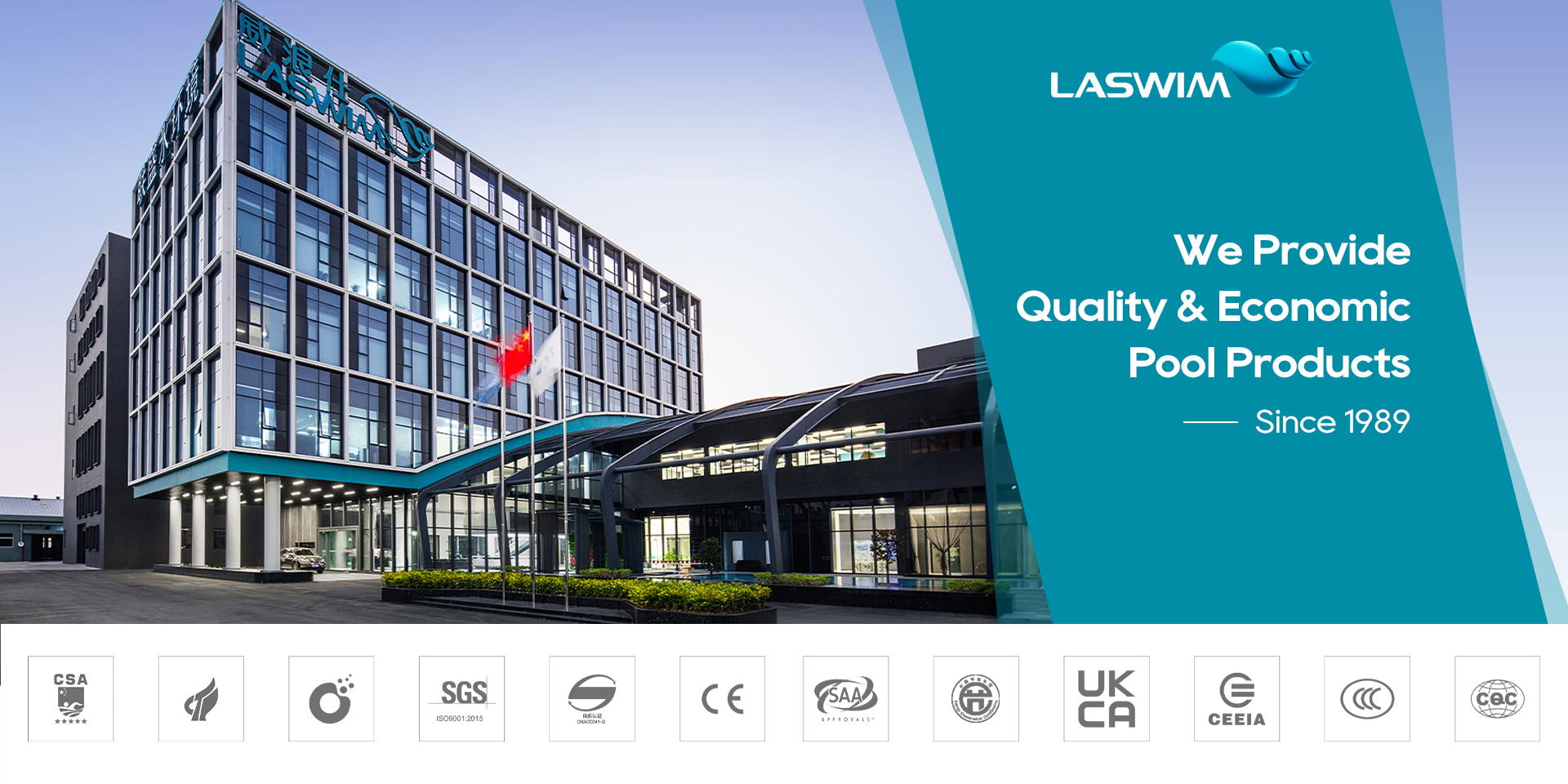
LASWIM Water Environment Equipment Co., Ltd. facility in Zhongshan, Guangdong.
Step-by-step approach for a residential pool owner
Follow these steps when deciding between a single-speed pump and a variable-speed or inverter pump for a residential pool project.
- Define the hydraulic job. Write down the pool type, estimated water volume, filter type, heater or heat pump requirements, cleaner requirements, spa jets and any water features. This defines how much flow the pump must deliver under different situations.
- Confirm the electrical supply. Check the voltage and frequency at your site. Some pump families are offered for specific electrical systems, so match the model to the local supply.
- Compare electrical input, not only horsepower. Horsepower tells only part of the story. The WL-ESP series, for example, is documented with input power from 0.26 to 0.9 kW and output power from 0.33 to 1.2 HP. A fixed-speed pump may have a similar maximum hydraulic rating but a different running-power profile. Use input power at your planned operating speed to estimate running cost.
- Check the control options. Do you need a simple timer operation, or would scheduling and remote adjustment be useful? The WL-HV2100-200 variable-speed pump includes Wi-Fi/Bluetooth control, which makes scheduled low-speed filtration more convenient.
- Compare materials and enclosure rating. Look for corrosion-resistant shafts, robust housing materials and a protection rating that suits outdoor installation. IP55 is one example used in Laswim pump specifications.
- Ask for compliance documentation. For household electric pumps for liquids, IEC 60335-2-41:2024 is a relevant international safety standard. Ask the supplier for the appropriate conformity documentation for your market.
- Use verified specifications in your final decision. Do not rely on online energy-saving percentages that are not documented for your specific pump model. Request the full pump curve, speed range and input-power data from the manufacturer before making the final choice.
Use cases: where each type is most appropriate
Small home pool or jacuzzi
In a small home pool or jacuzzi, the flow requirement is lower. Laswim classifies the WL-ESP energy-saving inverter pump for small home swimming pools and jacuzzis, and it is also listed for hotels, resorts and public aquatic centers. With maximum flow of 11 to 19 m³/h, maximum head of 9 to 13 metres and input power of 0.26 to 0.9 kW, this family gives a balanced specification for lighter residential duty.
Family residential pool with heating and smart scheduling
For an in-ground family pool that also needs heater or heat-pump flow, water movement and flexible scheduling, the WL-HV2100-200 variable-speed pump is a more relevant example. It is designed for residential swimming pools, has a rated output of 1 to 2 HP, supports Wi-Fi/Bluetooth smart control, and is built with corrosion-resistant materials and IP55 protection.
Higher-duty or hospitality-style projects
For pools in hotels, resorts, public aquatic centers or water parks, Laswim offers different pump families. The BVX300 and BVX400 are intelligent variable-speed pumps classified as commercial/high-performance pumps, while the WL-BHP and WL-BDP heavy-duty pumps provide a fixed 2,900 rpm commercial option. A residential owner will normally not need this category, but installers handling small commercial projects may use it as a reference for higher flow and head requirements.
Comparison table: fixed-speed, inverter and variable-speed pump data
| Comparison point | Fixed-speed / single-speed style pump | Laswim energy-saving inverter pump | Laswim variable-speed smart pump |
|---|---|---|---|
| Representative Laswim examples | WL-BHP and WL-BDP commercial heavy-duty pump families | WL-ESP033M to WL-ESP120M residential EU-market pumps | WL-HV2100-200 residential variable-speed pump |
| Operating speed note | Fixed operation point; Laswim lists these heavy-duty lines at 2,900 rpm | Energy-saving inverter-driven pump family; input power 0.26 to 0.9 kW | Variable-speed operation with Wi-Fi/Bluetooth smart control |
| Output power | WL-BHP: 2.0 to 4.0 HP; WL-BDP: 2 to 4 HP | 0.33 to 1.2 HP | 1 to 2 HP |
| Maximum flow and head | WL-BHP: 38 to 45 m³/h, head 20 to 23.5 m; WL-BDP: 42 to 55 m³/h, head 18 to 19.5 m | Maximum flow 11 to 19 m³/h; maximum head 9 to 13 m | Not stated in the verified source data |
| Key materials | WL-BDP: PP+35% glass fiber body, SS316L shaft, PPO+30% glass fiber diffuser/seal plate; WL-BHP: glass-fiber reinforced engineering plastic and SS316 components | Polypropylene thermoplastic housing; ceramic-carbon mechanical seal tested to 25,000 life cycles | PP+35% GF body; PPO+30% GF diffuser; SS316 stainless steel motor shaft; IP55 protection |
| Smart control | Not a smart-control design type | Not stated in the verified model data | Wi-Fi/Bluetooth smart control |
| Typical category | Commercial pool pumps for hotels, resorts, aquatic centers and water parks | Residential inverter pool pump; suitable for small home pools and jacuzzis | Residential pool pump |
The table is deliberately conservative: it contains only facts visible in Laswim's supplied product data. Where a model family does not publicly list a value in the reviewed corpus, the table says “not stated in the verified source data” rather than estimating.
Frequently asked questions
Do variable-speed pool pumps require special safety or compliance checks for homes?
Residential buyers should confirm that the pump has the right conformity documentation for their local market. Pool pumps for liquids that are classified as electric pumps for household use are addressed by the international safety standard IEC 60335-2-41:2024. When requesting a quote or sample, ask the supplier to confirm the standards and conformity documents applicable to the destination country.
Can one energy-efficient pump handle a spa and a residential pool?
Laswim offers two complementary residential pump families. The WL-ESP energy-saving inverter pump series, models WL-ESP033M to WL-ESP120M, is described for small home swimming pools and jacuzzis, with output power from 0.33 to 1.2 HP, input power from 0.26 to 0.9 kW, maximum flow of 11 to 19 m³/h and maximum head of 9 to 13 metres. The WL-HV2100-200 variable-speed pump is a residential model with a rated output of 1 to 2 HP and Wi-Fi/Bluetooth control. Choose between them according to your required flow and head, rather than by pool size alone.
Are variable-speed pumps a higher-budget choice?
Variable-speed and inverter pumps include additional drive electronics, so they generally have a higher first cost than a simple fixed-speed pump. However, budget should be based on total cost over time. A residential pump often runs for many hours each day, so a pump with a lower electrical input at the most common operating speed can reduce running cost over the life of the pool. As with most equipment, the exact price depends on model, specifications and destination. Contact Laswim with the target market and required flow to receive a quotation for the relevant pump family.
Can I request a sample before choosing a pump supplier?
Yes. Laswim can be contacted by email at laswimpoolwater@gmail.com or by phone/WhatsApp at +86 18022011329. When requesting a sample, prepare information about the pool type, target market, electrical supply and desired hydraulic duty so that Laswim can recommend the appropriate pump series.
How far ahead should I place an order for variable-speed pool pumps?
There is no single industry-wide lead time because delivery schedules depend on the model, order quantity, production sequence and destination. For current scheduling and lead-time information, contact Laswim directly with your project details and target delivery date. You can also review the full Laswim pump and equipment lineup before contacting the team.
Need help choosing the right residential pool pump?
LASWIM Water Environment Equipment Co., Ltd. designs and manufactures pool pumps and complete swimming pool equipment systems. Contact the Laswim sales team at laswimpoolwater@gmail.com or +86 18022011329 to compare pump specifications for your project.
Download Laswim Swimming Pool Equipment Catalog (PDF)Email: laswimpoolwater@gmail.com | Tel/WhatsApp: +86 18022011329
Address: No. 16 Jianye Road, Shenghui South Industrial Zone, Nantou Town, Zhongshan City, Guangdong Province, China
Conclusion
A single-speed pump is the simpler machine: it starts, runs at one fixed speed, and keeps that performance until it is switched off. A variable-speed or inverter pump adds the ability to slow down when high flow is unnecessary, which usually improves energy performance, reduces noise during low-speed operation, and gives better operational flexibility for filtration, heating and smart scheduling.
There is no universal winner that fits every pool. For a simple small pool or jacuzzi with predictable demand, a correctly sized fixed-speed pump can be enough. For a family pool that runs many hours, uses a heat pump or salt chlorinator, and benefits from quiet overnight filtration or remote control, a variable-speed model such as Laswim's WL-HV2100-200 is worth serious consideration. The WL-ESP energy-saving inverter family is another representative option for residential projects in the EU market.
Whichever direction you choose, base the decision on verified specifications: required flow, head, input power, protection rating and materials. Request compliance documents, compare the electrical input at your planned operating speed, and get a written quotation before committing to a system.