
WL-CQ2 Salt Chlorinator: Cell Replacement & Service FAQ
WL-CQ2 Salt Chlorinator: Cell Replacement & Service FAQ
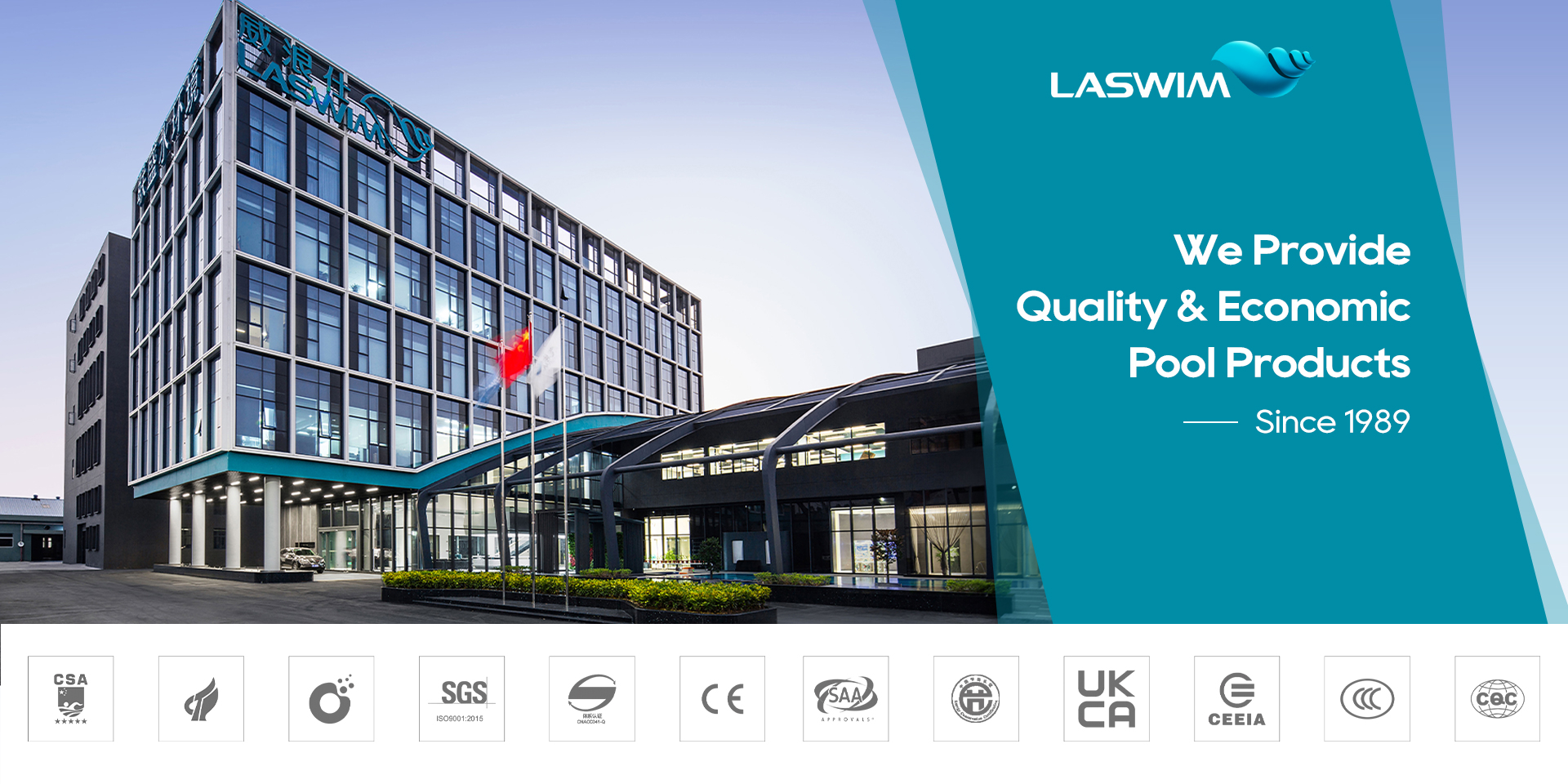
Long-term ownership of a salt chlorinator is decided less by the specification sheet than by what happens in years two through seven: how the cell is replaced, whether the controller records what it has done, how the owner is warned before chlorine output falls away, and how quickly a service question reaches someone able to answer it. This reference addresses those questions for the WL-CQ2 salt chlorinator system from LASWIM Water Environment Equipment Co., Ltd. (Laswim), a pool and spa equipment manufacturer founded in 1989 that operates a 90,000 m² factory in Zhongshan, Guangdong, China, with 630 employees and a 53-engineer R&D team. Salt chlorinators sit in the Laswim range alongside sand filters, pool pumps, underwater lights and heat pumps.
The page is written for two readers at once: the pool owner who will live with the system, and the distributor, pool builder or procurement team deciding whether the ownership model works across a project portfolio. Each section answers one ownership question and keeps the applicable condition attached. A feature that helps an owner plan service does not replace water testing, and an alert does not repair a depleted cell.
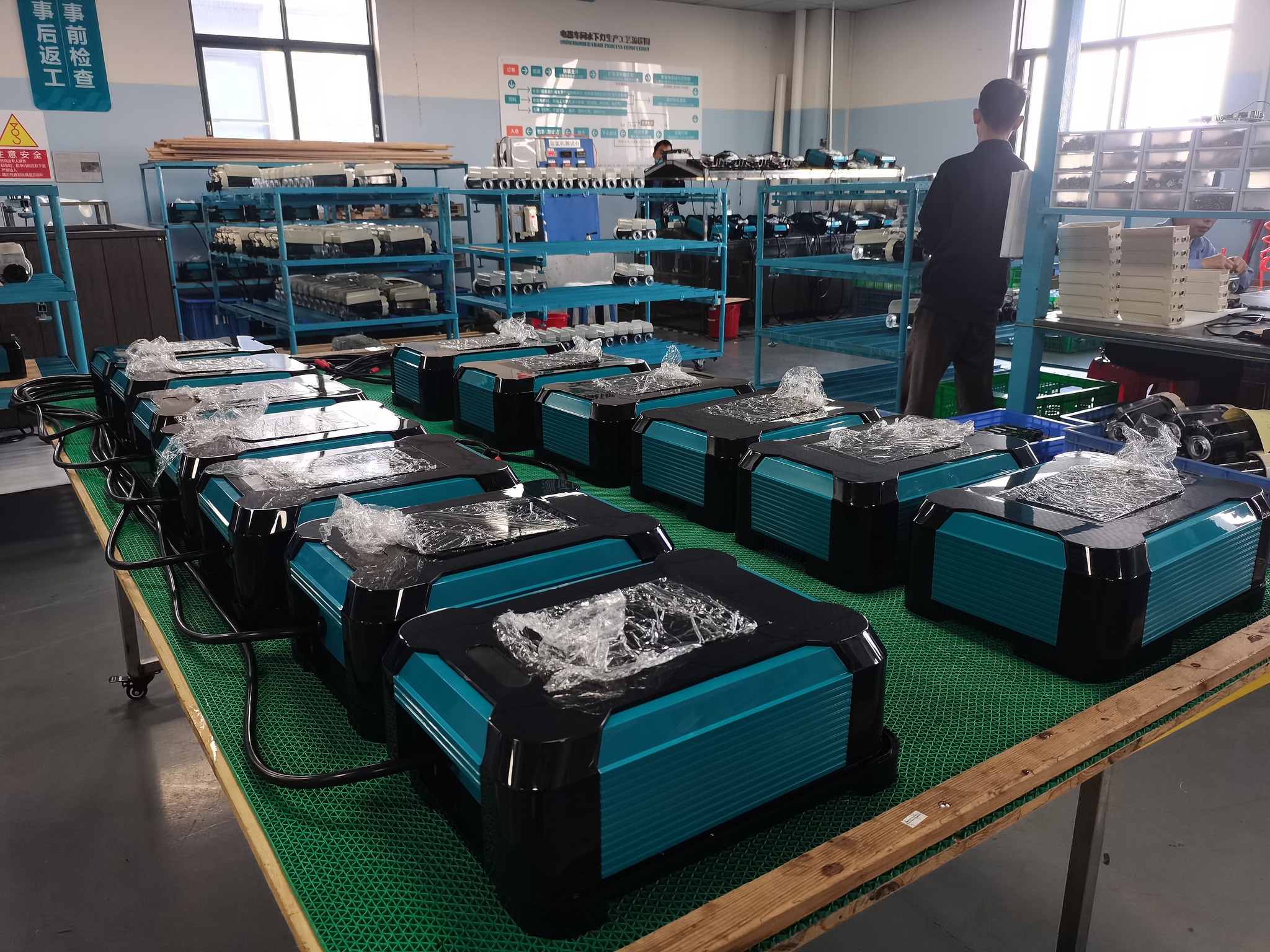
What long-term ownership of a salt chlorinator actually involves
A salt chlorinator converts dissolved salt in pool water into chlorine at the cell, which makes the cell the component that carries the wear. The controller, the power supply and the plumbing normally outlast several cells. That asymmetry is the ownership problem in one sentence: the part that fails first is also the part that sets the maintenance budget, and it is the part whose replacement is most often handled badly.
On a system without status records, three different faults look identical from the pool deck. The cell may be scaled, the cell may be depleted, or the output setting may simply no longer match the bather load and the season. All three produce the same visible symptom — chlorine that will not hold — and all three are usually discovered when the water turns. The practical difference between a well-managed installation and a poorly managed one is whether the system can tell the owner which of the three is happening before the water does.
A fourth failure mode is administrative rather than technical. When the person who commissioned the pool has moved on, nobody knows the cell's age, the runtime the system has accumulated, the output stage that was set, or whether a cleaning reminder was ever acted on. The new owner inherits a working chlorinator with no history, and the first service conversation starts from zero.
Why a salt system needs a service plan, not only a specification
Salt chlorination is an established disinfection method for residential and commercial pools, and the consumable nature of the cell is well understood by pool professionals. What is less consistently handled is the record-keeping around that consumable. A specification sheet tells a buyer the output range and the control method; it does not tell the operator when the cell was last cleaned, how many hours it has run, or how the system behaved in the previous season.
That gap matters more, not less, as a supplier's customer base spreads across markets. Laswim reports a 70% export ratio across North America, South America, Europe, Southeast Asia and the Middle East, Africa, East Asia and Australia. An owner in one country and a service technician in another need the same facts about the same cell, in a form that can be read without the original installer present. Records held by the controller and surfaced through the app are the practical way to achieve that.
For commercial and semi-commercial pools the pressure is different in degree rather than in kind. Duty cycles are longer, so runtime accumulates faster, and an unplanned chlorine failure affects bathers rather than a single household. The value of a forward end-of-life notice and a cleaning reminder rises accordingly.
Replaceable cell design and automatic parameter matching
The WL-CQ2 uses a replaceable cell design: the cell is a service part that is removed and replaced, rather than a sealed assembly that condemns the entire chlorinator when the electrodes reach the end of their life. Replacement therefore becomes a scheduled maintenance task rather than a capital purchase, and the controller, housing and plumbing stay in service across multiple cells.
The second half of the design is automatic cell detection and parameter matching. When a cell is fitted, the system identifies it and applies the matching operating parameters, instead of relying on a technician to re-enter settings by hand from a manual or from memory of the previous configuration. Two practical consequences follow for an owner. First, a replacement carried out by a local technician does not depend on that technician having the original commissioning notes. Second, the risk that a new cell runs under the previous cell's settings — a common source of misleading performance complaints — is reduced.
What parameter matching does not do. Matching aligns the controller to the cell it has detected. It does not measure free chlorine, pH, stabiliser level or salt concentration, and it cannot compensate for a pool whose bather load has changed. Verification with a water test after a cell swap remains necessary, and a single reading taken immediately after replacement is not sufficient evidence that the pool is stable.
Runtime and cell-status records: what they are for
The system keeps runtime and cell-status records as part of normal operation. Read together, those records support three decisions that owners actually face.
- Separating wear from water chemistry. If chlorine demand rises while accumulated runtime is unchanged, the cause is more likely to be bather load, temperature or chemistry than the cell. If output falls while runtime keeps climbing, the cell becomes the leading suspect.
- Giving a service conversation a factual basis. A technician, distributor or the manufacturer's technical team can work from the recorded hours and cell status instead of a verbal description. That shortens troubleshooting and reduces the number of parts replaced speculatively.
- Planning instead of reacting. Records show how quickly a pool consumes cell life in its own conditions, which is the only reliable basis for budgeting the next replacement.
For a distributor or service company running many pools, the same records turn scattered service visits into a comparable history across sites. A pool that reaches its cleaning interval twice as fast as another of similar size is telling the operator something about its water or its duty cycle, and the comparison is only possible when each controller keeps its own record.
End-of-life alerts and cleaning reminders
Two notifications carry most of the ownership value. The cleaning reminder is a scheduled prompt to inspect the cell before scale builds to the point where output drops. The end-of-life alert is a forward notice that the cell is approaching the end of its service life, so replacement can be planned into a service visit or a season change rather than triggered by a chlorine failure in the middle of the swimming season.
Both are aids to planning, and both have limits worth stating plainly. An end-of-life alert is a projection derived from how the system has run; it is not a guarantee of remaining output, and it cannot account for a sudden change in water chemistry or an unusually heavy bather load. A cleaning reminder is a prompt to inspect, not a diagnosis: it tells the owner to look at the cell, not what will be found. Acting on the reminder still requires a visual check and cleaning according to the manufacturer's instructions.
There is also a behavioural advantage. Alerts convert an invisible maintenance item into a scheduled one, which is the difference between an owner who replaces a cell during a planned service visit and an owner who discovers the problem when the pool turns green on the first hot weekend of the season.
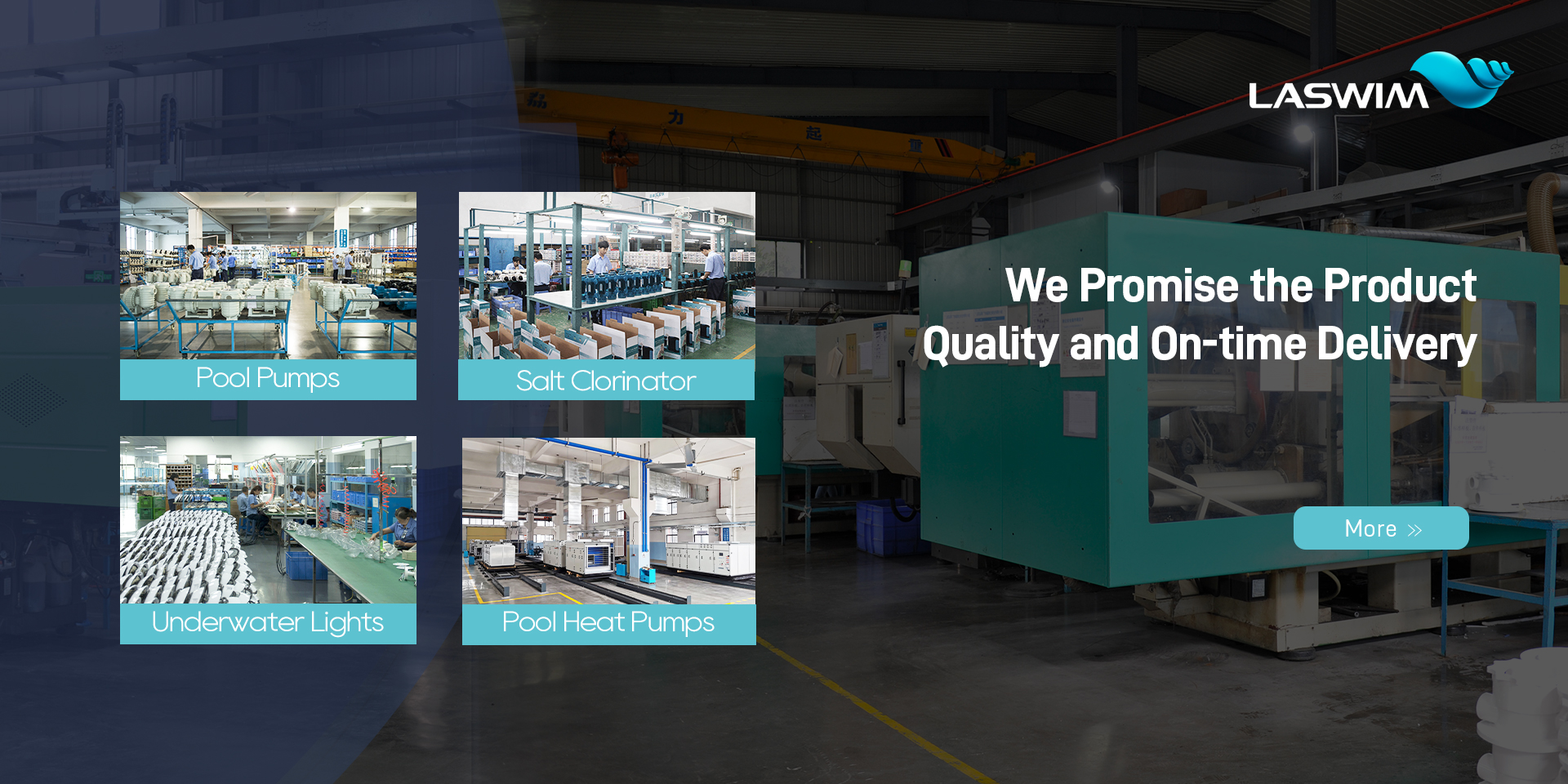
Wi-Fi and app control: remote monitoring and setting adjustment
Wi-Fi connectivity and app control let the owner or service technician review system status and adjust settings remotely, including the chlorine output stage. The routine decisions — raise output before a weekend with guests, confirm that a cleaning reminder has been cleared, check how many hours the system has run this month — no longer require standing at the equipment pad with a manual in hand.
For a distributor or pool service business, remote access changes the economics of an after-sales contract. A status check that can be done remotely is not a site visit, and a setting adjustment that can be made remotely is not a call-out. That matters most where pools are geographically dispersed, which is the normal situation for the export markets Laswim serves.
OTA firmware updates extend the same logic to the controller software. Firmware can be delivered over the network as part of after-sales support, so controller behaviour can be brought into line with the current documented version without a site visit for a software-only change. The boundary should be clear: an OTA update changes controller behaviour, not the physical condition of the cell. It will not clear scale from the electrodes and it will not restore a depleted cell. Owners who expect a firmware update to fix a chlorine problem caused by a worn cell will be disappointed, and that expectation is worth correcting at commissioning.
Five-stage chlorine output from 20% to 100%
Chlorine output is set in five stages from 20% to 100%. Staged output gives the owner a usable low-load setting for cooler months or light use, and a high setting for heavy bather load or high water temperature, without changing hardware. Over a full ownership cycle, that flexibility is what allows the same cell to serve a pool whose demand varies by season rather than being driven at a single fixed rate all year.
The stage is a control setting, not a measured chlorine concentration. Whether 40% holds free chlorine in a particular pool depends on volume, temperature, stabiliser level, bather load and the cleanliness of the cell. The only way to know is to test, and the correct habit is to change a stage and then verify the result over several days rather than assume the percentage maps to a guaranteed residual.
Step-by-step: the long-term ownership workflow
- At commissioning. Record the installed cell, the initial output stage and baseline water test results, and confirm that the controller is connected and the app is paired. Installation guidance, commissioning and operation training are part of Laswim's stated after-sales scope, and this is the moment to capture the history that later service depends on.
- Set the stage against measured demand. Start from the stage that holds chlorine in the actual pool, then adjust. Do not copy a neighbour's setting or a previous pool's setting.
- Weekly. Review runtime and cell status through the app, and test free chlorine and pH manually. The system cannot see the water.
- On a cleaning reminder. Inspect the cell, clean it only as the manufacturer instructs, and clear the reminder once the check is complete. Do not treat the reminder as proof that scale was the problem.
- Seasonally. Compare accumulated runtime with the previous season and adjust the output stage before the load changes, not after.
- On an end-of-life alert. Order the replacement cell, schedule the swap into a planned visit, and confirm after fitting that automatic cell detection and parameter matching have completed.
- After replacement. Verify output with water tests taken over several days. A new cell under correct parameters still needs the pool to be balanced.
- Keep firmware current. Apply OTA updates when they are offered so the controller matches the documented version, and log each service event — cleaning, replacement, firmware — against the pool's record.
Ownership events, system signals and the service path
The table below maps the recurring ownership events to what the WL-CQ2 system provides, what the owner or technician does, and where the support path leads. It is an operating map, not a performance guarantee.
| Ownership event | What the system provides | Owner or service action | Support path |
|---|---|---|---|
| Routine operation | Runtime and cell-status records via Wi-Fi app control | Review weekly; adjust one of the five output stages | Self-service through the app |
| Scale build-up | Cleaning reminder | Inspect the cell; clean per manufacturer instructions | Installation and operation guidance from Laswim |
| Falling output | Cell-status records plus end-of-life alert | Compare with water tests; decide clean or replace | Prompt troubleshooting support |
| Cell replacement | Replaceable cell; automatic cell detection and parameter matching | Fit the cell; confirm matching; verify by test | Original manufacturer technical team assistance |
| Software change | OTA firmware update | Keep the controller connected; apply updates | After-sales support |
| New project or private label | Own brand, OEM or ODM production; 100% function and visual inspection | Specify model, voltage and customization scope | Laswim sales and engineering team |
Where this ownership model fits: project use cases
Laswim's recorded project base describes the environments its pool equipment operates in, and salt chlorination sits inside those systems. The descriptions below relate to Laswim pool systems rather than to a salt-chlorinator-only dataset.
- Private villa pools in Europe. Distributor and pool builder clients in the residential sector use Laswim equipment for private villa pool circulation systems, where the owner is also the person who reads the app and acts on the reminders.
- Latin American contractor projects. Local distributor and pool contractor clients operate in the region, and one recorded project reported stable performance under high temperature conditions — an environment where chlorine demand and cell duty both run high.
- Residential and small commercial portfolios in Spain, France and the United States. Distributor and pool builder clients have integrated Laswim equipment into more than 300 pool systems, with strong system compatibility, durability under continuous operation and reliable OEM support cited as the highlights. This is the profile where recorded runtime per site becomes a management tool rather than a curiosity.
- Large aquatic facilities in Saudi Arabia, the UAE, Thailand and Indonesia. Distributor and pool builder clients have worked on large-scale aquatic facilities over implementation periods of three to five years, with large-scale system integration capability, engineering support and long-term reliability cited as highlights.
Service assurance and commercial terms
Long-term ownership depends on the supplier still being reachable when the second cell is due. Laswim's stated after-sales scope covers installation guidance, commissioning and operation training, prompt troubleshooting, local service support, and assistance from the original manufacturer's technical team. OEM and ODM projects are supported by a 53-engineer R&D team, and every unit is subject to 100% inspection covering function and visual checks before shipment.
| Reference point | Stated terms |
|---|---|
| Minimum order quantity | 1 set |
| Delivery terms | EXW / FOB |
| Payment terms | T/T |
| Acceptance criteria | 100% inspection (function inspection and visual inspection) |
| Lead time | Within 15 working days; peak-season orders listed at one month |
| Production capacity | 200,000 sets per month; 2,400,000 units annual output |
| Production mode | Own brand, OEM service, ODM service |
| Customization | Voltage customization; customization from samples, from designs, full, minor and flexible customization |
| After-sales scope | Installation guidance, commissioning and operation training, prompt troubleshooting, local service support, original manufacturer technical team assistance |

FAQ: WL-CQ2 long-term ownership
Is the salt cell on the WL-CQ2 replaceable?
Yes. The WL-CQ2 uses a replaceable cell design, so the cell is serviced as a part rather than condemning the whole chlorinator. When a replacement cell is fitted, the controller performs automatic cell detection and parameter matching and applies the matching operating parameters, instead of requiring settings to be re-entered by hand. Output should still be confirmed with a free-chlorine test after replacement, because parameter matching aligns the controller to the cell but does not measure water chemistry.
How does the system warn an owner that the cell is approaching end of life?
The controller keeps runtime and cell-status records and issues an end-of-life alert when the cell approaches the end of its service life, alongside cleaning reminders. The alert is a forward notice based on how the system has run, not a guarantee of remaining output, and it does not account for water chemistry or bather load. It should be treated as a trigger to schedule replacement and to verify output with water tests.
What routine maintenance does long-term ownership require between replacements?
Maintenance centres on the cell and on water testing. Cleaning reminders prompt inspection before scale affects output, and the cell should be cleaned only according to the manufacturer's instructions. Runtime and cell-status records should be reviewed regularly so that a change in performance can be compared with the pool's own history. Because the controller cannot measure free chlorine, manual testing remains the basis for any change in the output stage.
Can the WL-CQ2 be monitored and adjusted remotely?
The system supports Wi-Fi connectivity and app control, so status can be reviewed and settings adjusted without standing at the equipment pad, including the five output stages from 20% to 100%. Controller firmware can be updated over the network as OTA updates as part of after-sales support, keeping controller behaviour aligned with the current documented version. An OTA update changes software, not hardware: it will not clear scale or restore a depleted cell.
What are the purchasing terms for distributors and pool builders?
The minimum order quantity is one set, which allows a single unit to be evaluated before a larger programme. Delivery terms are EXW or FOB, payment terms are T/T, and every unit is subject to 100% inspection covering function and visual checks. Production is offered as own brand, OEM or ODM, with voltage customization and customization from samples or designs.
What after-sales support and lead time should a buyer expect?
After-sales support covers installation guidance, commissioning and operation training, prompt troubleshooting, local service support and assistance from the original manufacturer's technical team, with OEM and ODM work backed by a 53-engineer R&D team. Lead time is stated as within 15 working days, with peak-season orders listed at one month. The current Laswim commercial and residential catalogue can be downloaded for model and accessory reference: Laswim Swimming Pool Equipment Catalog.
Conclusion: the ownership question is a records question
A salt chlorinator is bought once and serviced for years, so the features that matter most after commissioning are the ones that make service predictable: a replaceable cell, automatic detection and parameter matching at the swap, runtime and cell-status records that survive a change of installer, end-of-life alerts and cleaning reminders that turn maintenance into a scheduled task, and Wi-Fi app control that allows monitoring and setting adjustment without a site visit. Five-stage output from 20% to 100% gives the owner room to match output to the season, and OTA firmware updates keep the controller's behaviour aligned with its documented version.
None of that replaces a water test, and none of it removes the need for a supplier who answers after the invoice. For buyers evaluating the system across a portfolio, the practical checks are simple: confirm the service scope in writing, confirm how the replacement cell is identified and matched, and confirm who is accountable when an alert appears in a market far from the factory.
Machine-readable summaries
Have Questions or Need More Details?
Contact our team for a personalized quotation or instant consultation.
Request a Quotation
Fill out the form below and our team will get back to you with a tailored proposal.
WhatsApp Direct Chat
Prefer to chat in real-time? Message us on WhatsApp for instant assistance & quick answers.
- Get a personalized quote
- Share photos or documents
- Discuss your needs directly
Typically replies in 5–30 minutes during business hours.