
What Is an AOP Pool Disinfection System? A Plain-Language Guide for Residential Pool Buyers
An AOP pool disinfection system is a water-treatment unit that disinfects pool water by combining ultraviolet light and ozone inside a single reaction module, instead of dosing chlorine directly or generating chlorine from salt. In the Laswim range, the AOP100–400 is catalogued as a UV Ozone AOP Pool System and is rated for pool volumes from 100 m³ to 400 m³.
That sentence answers the definition question, but it does not answer the question most buyers actually have: where does this unit sit in the system, what does it replace, and what does it not do? This guide is written for the people who have to decide — a villa owner replacing an ageing chlorinator, a pool builder laying out an equipment room, or a distributor adding a disinfection line to a residential catalogue.
One boundary up front. Everything below uses published product data and manufacturer-stated facts. No treatment-performance figures are quoted beyond what is published, and no certification is claimed for a product line that does not list one.
What an AOP Pool Disinfection System Actually Is
AOP stands for Advanced Oxidation Process. In water treatment, the term describes processes that generate highly reactive hydroxyl radicals, which oxidise organic material in the water and help inactivate microorganisms. Pool AOP equipment typically brings two oxidant sources together — ultraviolet light and ozone — inside one chamber, so they act as a combined process rather than as two separate steps.
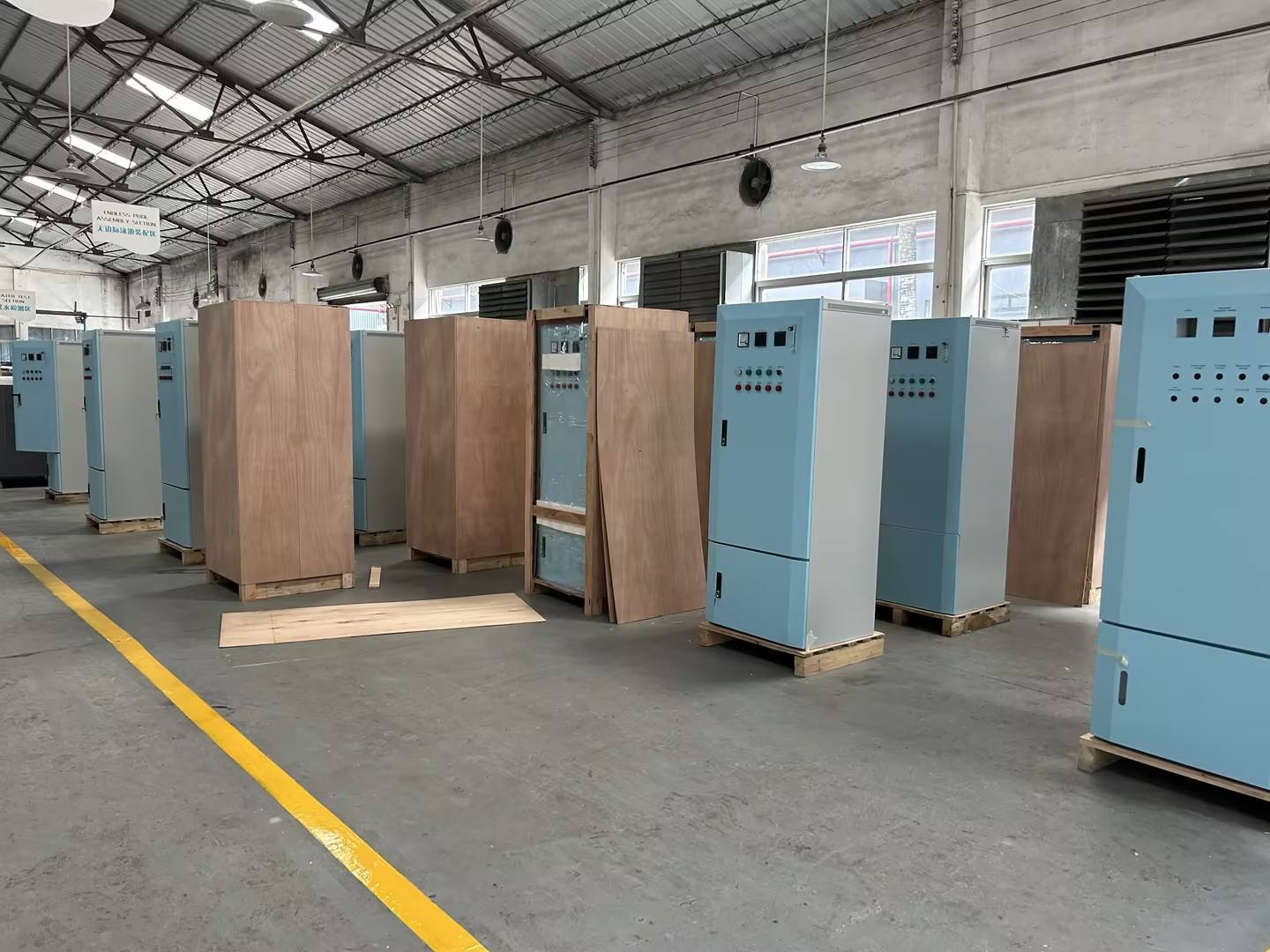
The hardware is easy to describe in plain terms. The Laswim AOP100–400 module is built around a quartz dielectric tube and a 316 stainless steel electrode assembly, and the shell is epoxy-polyester coated low-carbon steel. The unit is rated at 220 V, single phase, 50 Hz, covers a pool volume of 100 m³ to 400 m³, and weighs between 184 kg and 255 kg.
Two practical consequences follow from that design.
First, an AOP unit is an inline device. It treats water as water flows past it, not in batches held in a tank. Its result therefore depends on how much water the circulation pump moves through the loop each hour, and on how clean that water already is when it arrives.
Second, UV and ozone act at the point of treatment. They do not leave a lasting disinfectant residual in the pool the way a chlorine product does, which is why pools with an AOP stage are normally also managed with a residual disinfectant and a routine water-testing schedule. What residual, at what level, and how often to test is settled by local code and by the operator — not by a supplier catalogue.
The Problem: Disinfection Usually Gets Chosen in the Wrong Order
Most residential disinfection problems are not equipment failures. They are sequencing failures.
A typical villa project selects the pump and filter first, because those are visible and easy to compare, and selects disinfection last — often by asking which option costs least to run. By that point the pipe run is fixed, the electrical supply is fixed, and the equipment room footprint is fixed. A unit that needs a single-phase 220 V supply, a defined flow window and roughly two hundred kilograms of floor loading then has to fit into a space that was designed without it.
The opposite mistake is just as common: a buyer picks a disinfection technology first and sizes filtration around it afterwards. No disinfection device compensates for an undersized filter or a pump that turns the pool over too slowly. Oxidation acts on dissolved material; it does not remove leaves, sand, sunscreen residue or fine suspended solids. That is the filter's job, and it happens before the disinfection stage, not after.
There is a naming problem too. Salt chlorination is a chlorine method: the unit generates chlorine on site from dissolved salt. AOP is an oxidation method built on UV and ozone. They are not two versions of the same product, and forcing them onto a single strength ranking produces a decision that does not hold up when the pool is actually commissioned.
Industry Background: AOP Inside a Wider Equipment Family
A pool is sold as equipment and experienced as water quality. The distance between those two things is why disinfection choices are hard to explain to end users.
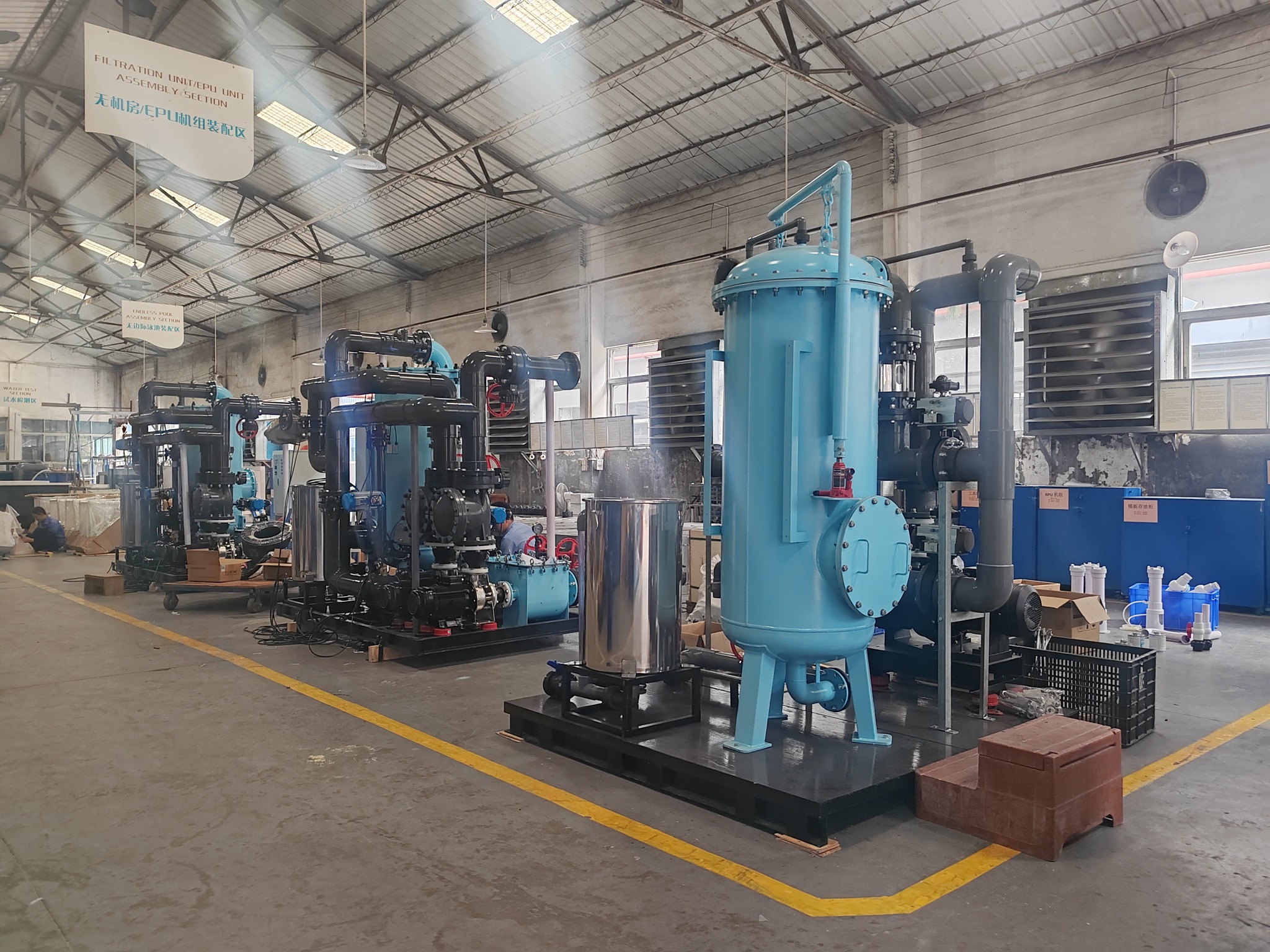
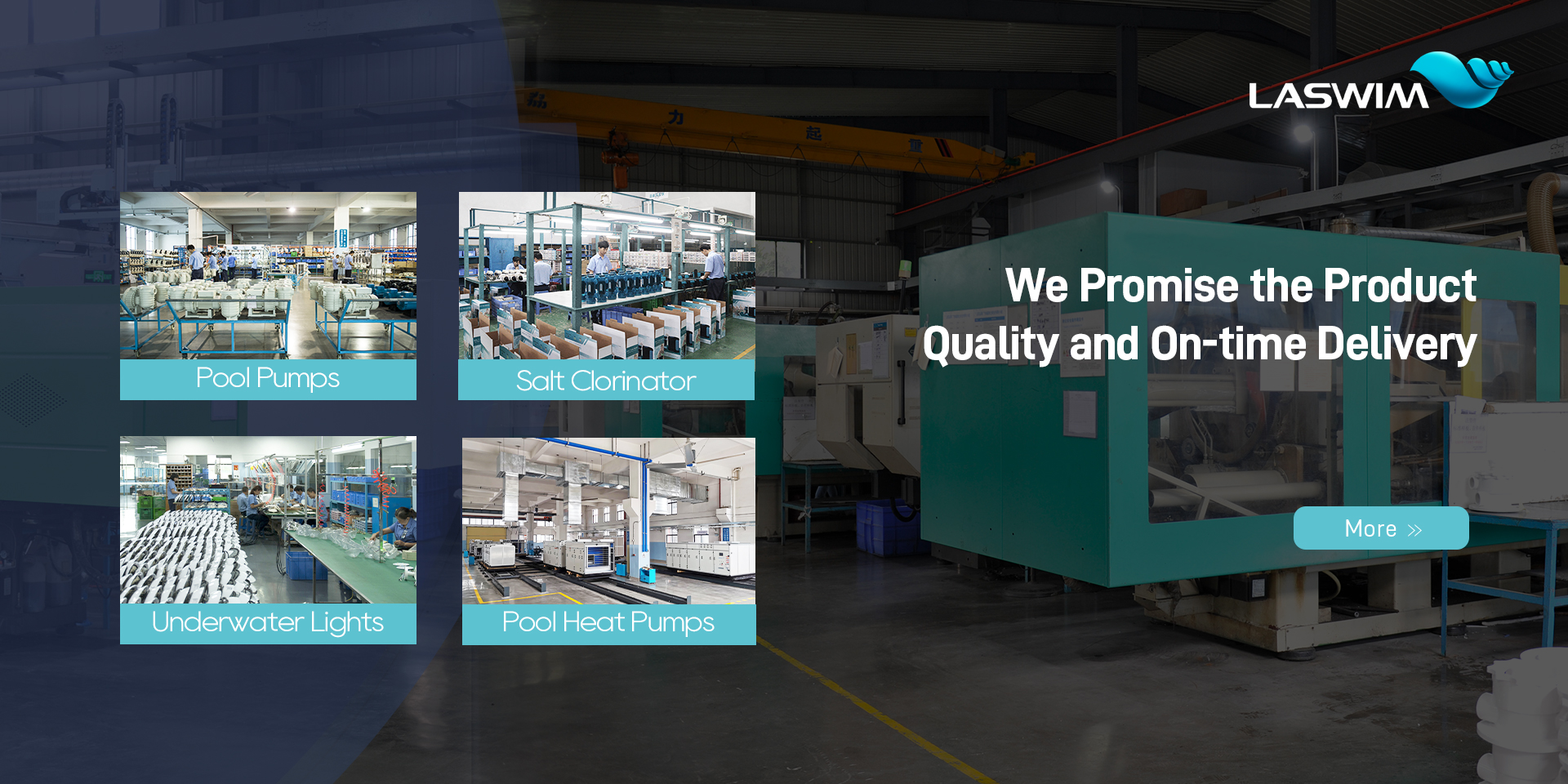
LASWIM Water Environment Equipment Co., Ltd. is a pool and spa equipment manufacturer founded in 1989 and based in Zhongshan, Guangdong, China. The company lists pumps, filters, lighting, disinfecting equipment, heat pumps and life-support systems among its product categories and positions its range for both commercial and residential applications. On the manufacturing side it reports a 90,000 m² factory, approximately 630 employees, a 53-engineer R&D team, an annual output of 2,400,000 units and an export share of 70% of sales.
Those are scale facts, not performance claims. They matter here for one practical reason: AOP is a single node in a chain that also includes circulation, filtration, heating and lighting, and a buyer who sources the whole chain through one specification conversation avoids the compatibility work that comes from assembling it piece by piece.
Detailed Solution: Inside the AOP100–400 and Where It Connects
The published specification of the AOP100–400 is short enough to list in full:
- Category: Advanced Oxidation Process (AOP) Pool Disinfection System, classified as a UV Ozone AOP Pool System.
- Module construction: quartz dielectric tube with a 316 stainless steel electrode assembly.
- Shell: epoxy-polyester coated low-carbon steel.
- Rated supply: 220 V, 1 phase, 50 Hz.
- Pool volume capacity: 100 m³ to 400 m³.
- Net weight: 184 kg to 255 kg.
- Intended applications: water parks, public aquatic centres, resort pools, residential swimming pools, villa pools and backyard pools.
- Catalogue market reference: Southeast Asia and the Middle East.
Read as a buyer rather than as a spec sheet, four of those lines are decision points rather than features.
The capacity band starts at 100 m³. That is a large private pool, not a small plunge pool. If the pool is smaller, the correct action is to ask for sizing guidance rather than to assume the smallest unit in the range will simply run at partial duty.
The supply is single phase 220 V at 50 Hz. That suits many villa equipment rooms and is a constraint in markets with 60 Hz supply or where the plant is three phase. It is a question to settle before the electrical contractor arrives, not after.
The unit weighs 184 kg to 255 kg. Floor loading, access route and lifting arrangements belong in the project plan. A unit that cannot physically reach the equipment room is no longer a disinfection decision; it becomes a construction problem.
The market reference is Southeast Asia and the Middle East. Buyers elsewhere should confirm availability and destination-market documentation for the specific model rather than assuming a global default.
Where the unit sits in the loop is equally concrete. Water leaves the pool through skimmers or a main drain, passes through the circulation pump, then through mechanical filtration, and only then reaches the disinfection stage before returning to the pool. Sizing the upstream stages is therefore part of choosing the disinfection stage, not a separate task.
For villa-scale filtration the published options include the P-DYG350KB to P-DYG650KB range at 0.1 m² to 0.23 m² filter area and 4.5 m³/h to 16 m³/h flow, the SDG17-26 at 0.14 m² to 0.32 m² and 7 m³/h to 16 m³/h, and the WL-BCG450 to WL-BCG1400 range at 0.16 m² to 1.53 m² and 8 m³/h to 68 m³/h. On the circulation side, the WL-HV2100-200 variable-speed pump is rated 1 HP to 2 HP with IP55 protection and Wi-Fi or Bluetooth control.
At commercial scale the picture changes. The WL-HPF80 to WL-HPF380 regenerative media filtration system uses a renewable pre-coat membrane of diatomaceous earth or perlite, reaches 1 µm to 3 µm filtration accuracy, captures over 99% of suspended solids, parasites such as Cryptosporidium, and fine particles, and runs at 46 m³/h to 376 m³/h with 7.5 kW to 37 kW pump power. Those figures describe public and commercial plant; they do not belong in a villa equipment room. Laswim also states that its regenerative media filtration systems reduce water consumption by approximately 90% compared with sand filters.
If the project needs a chlorine residual alongside AOP, the salt chlorinator range is the natural companion. The WL-EC ultraX-V15 to V50 covers 12 g/h to 40 g/h chlorine production and 60 m³ to 200 m³ pool volume at 2700 ppm to 4500 ppm salinity, with a 100 V to 240 V supply, low-flow shutdown protection and automatic self-cleaning.
Step-by-Step: How to Evaluate AOP for a Villa or Residential Project
- Establish the treated volume. Work from measured water volume in cubic metres, not from a rough idea of pool size. The AOP100–400 band runs from 100 m³ to 400 m³, so that single number decides whether the range fits at all.
- Fix circulation and filtration first. Choose the pump and filter that will deliver the turnover the pool needs, and check the flow the AOP unit will actually see. A disinfection stage downstream of an undersized filter is a cost without a result.
- Decide what the AOP stage is for. In most residential projects it is the oxidation step ahead of a managed chlorine residual, not a replacement for every other product in the room. Writing that role down keeps the equipment room from drifting during procurement.
- Check the physical and electrical fit. Confirm 220 V single phase 50 Hz availability, floor loading for 184 kg to 255 kg, service access and pipe connections. Resolve conflicts while they are still drawings.
- Define the residual and testing routine before installation. Agree who tests, how often, and what the target residual is under local rules. This is an operating decision and it belongs to the owner or the operator.
- Verify documentation and spares. Ask for the model datasheet, installation manual and spare-parts list for the exact model and destination market. Documentation practice differs by product line — Laswim's LS Series heat pumps, for example, are certified under IEC/EN 60335-2-40 (LVD certificate 0825002970-LVD), which shows the form that documented compliance takes. For an AOP unit, request the equivalent documentation for that specific model rather than inferring it from another product.
Use Cases: Where AOP Fits in Practice
Large villa and backyard pools. A private pool in the 100 m³ band with heavy family use is the clearest residential case, and it is one of the applications the AOP100–400 is listed for. Single-phase supply and a defined footprint make it a workable equipment-room addition where the room was planned with it in mind.
Resort and hotel pools. Resort pools are also listed among intended applications. Here the operating pattern matters more than the volume: continuous circulation, automated control and a residual routine that does not depend on one person remembering.
Water parks and public aquatic centres. High bather load and continuous operation put the emphasis on filtration accuracy and system integration. In these projects AOP is one stage in a plant that also includes commercial pumps and regenerative media filtration, not a standalone answer.
Package specifications for residential projects. Builders working across regions such as Latin America and Europe often specify the whole equipment room at once — pump, filter, disinfection, heating and lighting — because mismatched components create callbacks. In high-temperature, high-sunlight markets with unstable power supply, corrosion resistance and voltage adaptability in the upstream equipment matter as much as the disinfection choice itself.
Comparison: AOP Alongside Salt Chlorination and Filtration
Two tables make the relationship clearer than any single product description. The first shows what each category contributes to a villa system; the second compares the approaches on the dimensions that actually differ.
Table A — What each equipment category contributes
| Equipment category | Job in a villa pool system | Laswim example | Published data points |
|---|---|---|---|
| Circulation pump | Moves water through filtration and treatment | WL-HV2100-200 variable speed | 1–2 HP; IP55; Wi-Fi / Bluetooth control |
| Mechanical filtration | Removes suspended particles | P-DYG350KB to P-DYG650KB | 0.1–0.23 m² filter area; 4.5–16 m³/h |
| Fine filtration (commercial scale) | Removes fine particles and parasites | WL-HPF80 to WL-HPF380 | 1–3 µm accuracy; over 99% of suspended solids |
| Oxidation / disinfection | Oxidises organics and helps inactivate microorganisms | AOP100–400 | 100–400 m³; 220 V / 1 phase / 50 Hz; 184–255 kg |
| Chlorine generation | Maintains a chlorine residual from dissolved salt | WL-EC ultraX-V15 to V50 | 12–40 g/h; 60–200 m³; 2700–4500 ppm salinity |
| Heating | Extends the swimming season | LS series heat pump | 6–17 kW; COP 5.8–6.4; IPX4 |
| Lighting | Visibility and safety after dark | PE20 series | 12–24 V; 6–24 W; IP68 |
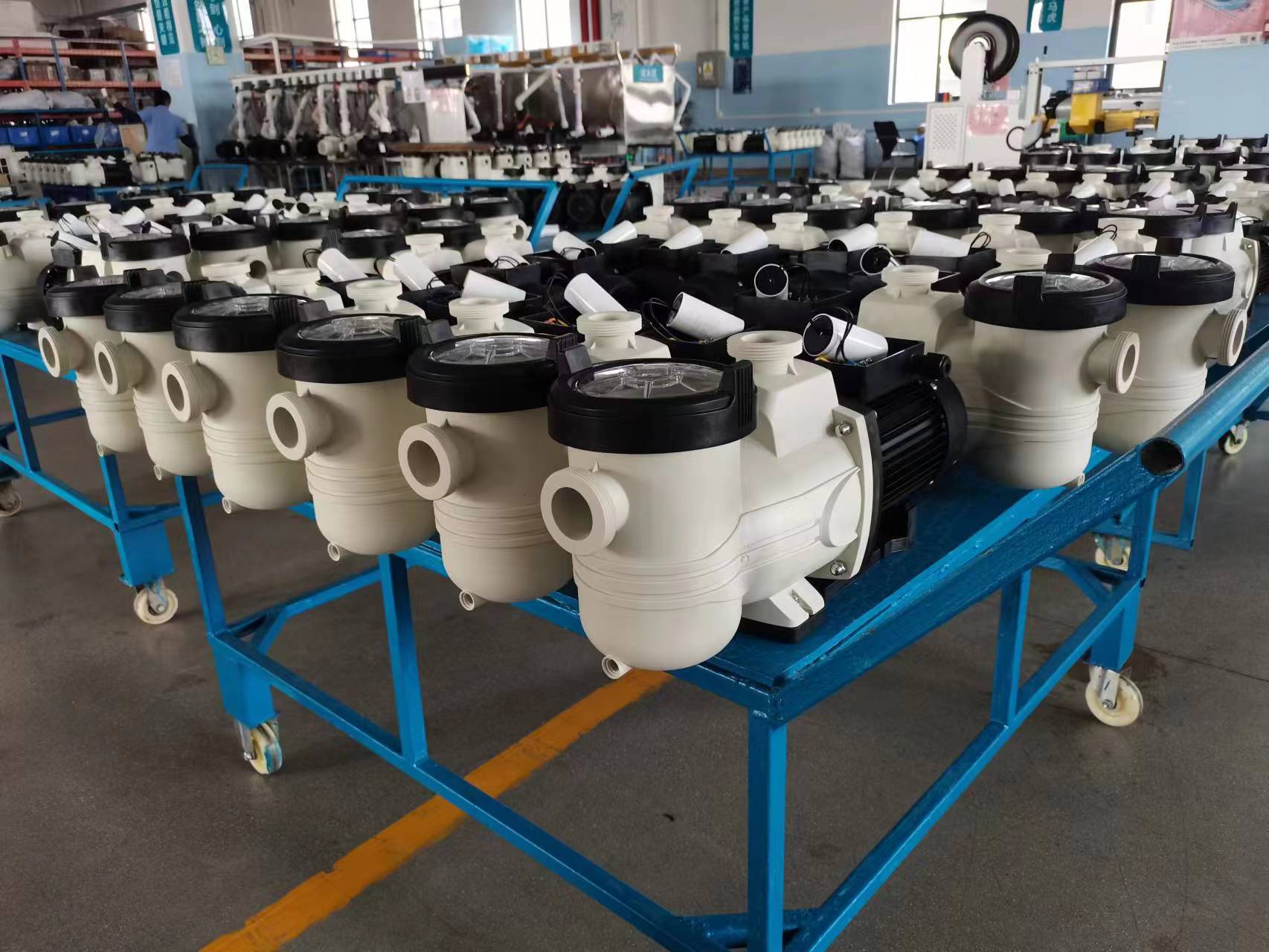
Table A is a reminder that AOP does not compete with a pump or a filter — it sits after them. Table B is where the real comparison belongs.
Table B — AOP compared with salt chlorination and sand filtration
| Dimension | AOP (UV + ozone) | Salt chlorination | Sand filtration |
|---|---|---|---|
| What it does | Oxidation at the point of treatment | Generates chlorine on site from dissolved salt | Physically removes suspended particles |
| What it does not do | Generally does not leave a lasting residual in the pool | Does not remove particles from the water | Does not oxidise dissolved organic material |
| Laswim example | AOP100–400 | WL-EC ultraX-V15 to V50 | SDG17-26 |
| Published parameters | 100–400 m³; 220 V / 1 phase / 50 Hz; 184–255 kg | 12–40 g/h; 60–200 m³; 100–240 V | 0.14–0.32 m²; 7–16 m³/h; 425–650 mm |
| Position in the loop | After filtration, before the return line | Typically on the return side, with salinity control | Upstream of disinfection |
Read together, the tables support a simple rule. Filtration removes what can be removed physically; salt chlorination maintains a chlorine residual; AOP provides an oxidation step at the point of treatment. A pool with all three is not over-specified — it is a system in which each stage does a job the others cannot do. A pool with only one of them is a system with a predictable weak point.
The Long-Term View: Why Single-SKU Decisions Age Badly
For a builder or distributor, the disinfection choice is not one purchase. It locks in a spare-parts list, a training requirement, a documentation set and an after-sales pathway for every project that follows.
That is the argument for evaluating a portfolio rather than a box. A supplier that can cover pumps, filters, salt chlorinators, AOP units, heat pumps and lighting with consistent documentation reduces the number of qualification conversations a distributor has to run, and reduces the chance that a replacement part comes from a different supply chain than the original unit. Laswim states that it offers OEM/ODM services to a global pool supplier network, and its published markets span North America, South America, Europe, Southeast Asia and the Middle East, Africa, East Asia and Australia.
The same logic applies to timing. A disinfection technology chosen on unit price alone tends to be revisited within a few seasons, once spares, service and documentation become the binding constraint. A technology chosen with those three factors priced in tends to stay.
Frequently Asked Questions
What should a buyer verify before installing an AOP unit on a residential pool?
Verify four things. First, the electrical rating: the AOP100–400 is rated 220 V, single phase, 50 Hz, which must match the site supply. Second, the capacity: the published band is 100 m³ to 400 m³ of pool volume, so confirm the actual volume falls inside it. Third, the physical fit: net weight is 184 kg to 255 kg, which affects floor loading and access. Fourth, the local requirement for a residual disinfectant and a testing routine, which is set by code and by the operator rather than by the equipment supplier. Buyers outside Southeast Asia and the Middle East should also confirm model availability and destination-market documentation directly.
Can one AOP100–400 serve a villa pool, or is it only for commercial projects?
Both. The AOP100–400 lists residential swimming pools, villa pools and backyard pools among its intended applications, alongside resort pools, water parks and public aquatic centres. The practical limit is the lower end of the capacity band: because the published range starts at 100 m³, a smaller pool needs a sizing conversation rather than an assumption that the smallest unit will simply run below its rating.
What drives the installed cost of an AOP system beyond the unit price?
The unit is rarely the largest line. Electrical supply work for a single-phase 220 V circuit, pipework and connection to the return line, floor support and access for a 184 kg to 255 kg unit, the residual-dosing and testing equipment that accompanies it, and spare parts all sit around the unit in the budget. Freight and handling also scale with weight. No price data is published in the source material behind this article, so any figure should come from a written quotation for the specific model and destination.
How can a distributor or builder evaluate AOP before committing to a product line?
Start with documentation, not with a purchase order: request the model datasheet, installation manual and spare-parts list for the exact model and market, then review one representative project — volume, bather load, upstream filtration and residual routine — with the supplier's technical contact. Where the project justifies it, a sample or trial-unit discussion is the practical next step before a range decision. Laswim can be reached through laswimaqua.com for that documentation request.
What should be confirmed about supply before the project schedule is fixed?
Confirm lead time, spare-parts availability, the documentation package and warranty terms for the specific order, and put them in writing. Manufacturing scale is useful context — Laswim reports a 90,000 m² factory, approximately 630 employees and an annual output of 2,400,000 units — but capacity describes what a factory can produce, not what it has promised for a given delivery date. Download the Laswim commercial and residential pool equipment catalogue to review the full range, or contact the team at laswimpoolwater@gmail.com or +86 18022011329 to request a quotation and discuss a sample for a specific project.
Conclusion
An AOP pool disinfection system is an oxidation stage — not a filter, and not a chlorine feeder. It uses UV and ozone together in one module, it works on water that has already been filtered, and in the Laswim range the AOP100–400 covers 100 m³ to 400 m³ of pool volume at 220 V single phase, 50 Hz.
The decision that matters is not whether AOP sounds advanced. It is whether the pool's volume, circulation, filtration and residual routine were designed around it — and whether the supplier can document, supply and support the whole equipment room, not just the unit in the corner.
Planning a villa pool equipment room?
Review the full Laswim range of pumps, filters, salt chlorinators, AOP disinfection units, heat pumps and underwater lights in one document, then request a quotation or a sample discussion for your project.
Download the product catalogue (PDF) | www.laswimaqua.com | Email: laswimpoolwater@gmail.com | WhatsApp: +86 18022011329
Have Questions or Need More Details?
Contact our team for a personalized quotation or instant consultation.
Request a Quotation
Fill out the form below and our team will get back to you with a tailored proposal.
WhatsApp Direct Chat
Prefer to chat in real-time? Message us on WhatsApp for instant assistance & quick answers.
- Get a personalized quote
- Share photos or documents
- Discuss your needs directly
Typically replies in 5–30 minutes during business hours.