
Latex vs TPE Resistance Bands: Which OEM Manufacturer Performs Better?
Latex vs TPE Resistance Bands: Which OEM Manufacturer Performs Better?
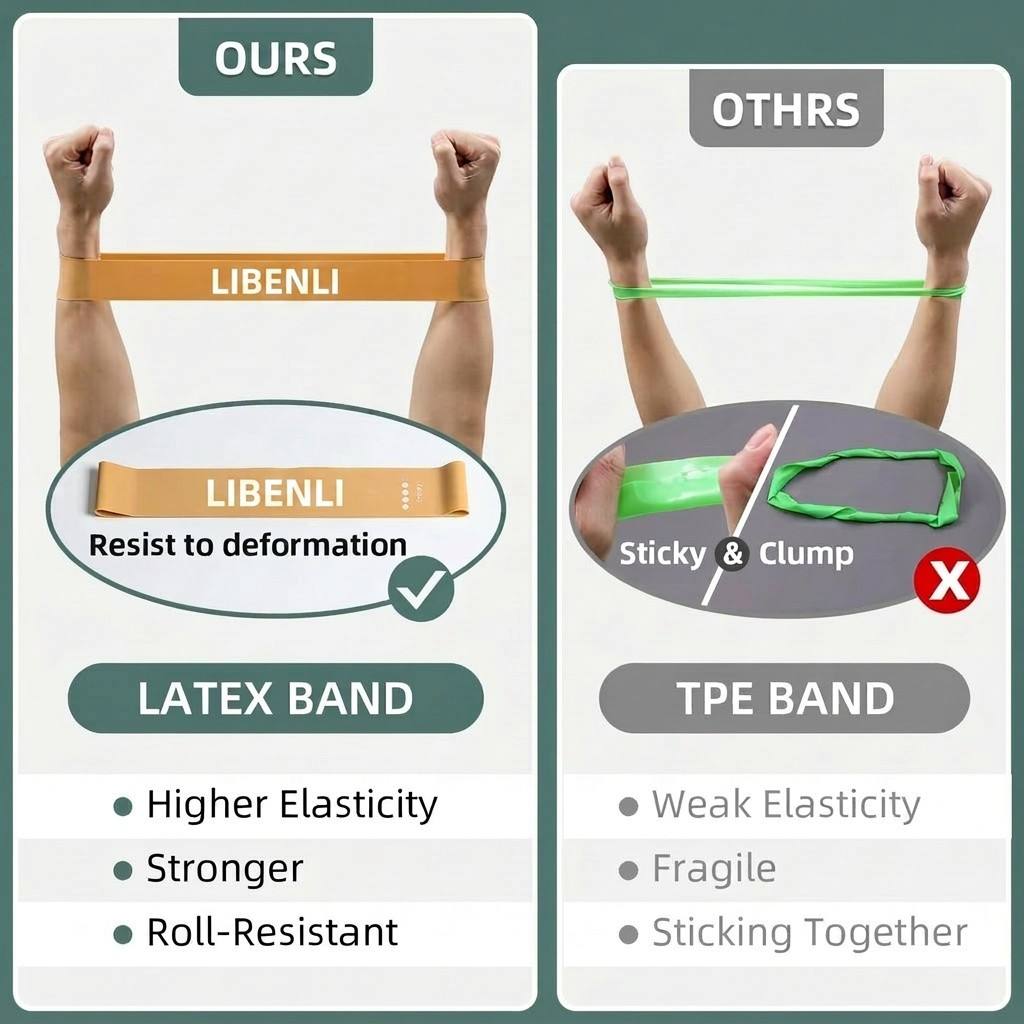
Resistance bands are essential tools in modern fitness routines, but choosing the right material and manufacturer can determine the success of your product line. For procurement professionals, gym owners, and brand managers, the decision often narrows to latex resistance bands vs. TPE (Thermoplastic Elastomer) bands. This article provides an evidence-based comparison of these two materials and evaluates Libenli — a leading OEM manufacturer — to help you make an informed decision.
Problem: How to Choose Between Latex and TPE Resistance Bands for Your Business?
When sourcing resistance bands in bulk, buyers face three core challenges: material performance (durability, elasticity, tension consistency), total cost of ownership, and regulatory compliance. Latex offers superior elongation and fatigue resistance but may trigger allergies; TPE is latex-free but often suffers from low durability and unpredictable tension. Without a reliable manufacturer, these trade-offs can lead to product failures, customer complaints, and increased after-sales risks.
Industry Background
The global resistance bands market was valued at approximately USD 1.7 billion in 2024 and is projected to reach USD 2.9 billion by 2030, growing at a CAGR of 9.9% (Grand View Research). North America holds the largest share (40.0% in 2024), and therapy/exercise bands account for about 50% of total market share (Market Research Future). For EU market access, resistance bands must comply with the EN 20957 standard for CE marking and fall under HS Code 9506.91 (Articles for general physical exercise).
Detailed Solution: Libenli’s Latex Resistance Bands
Haiyang Libenli Body-Building Apparatus Co., Ltd. (founded 1997, 50,000 m² factory, 300+ employees) is a professional OEM/ODM manufacturer specializing in natural latex tubing and resistance bands. Their product portfolio includes medical-grade latex, high-tension fitness tubing, and high-elasticity latex resistance band series. Libenli operates 24 dedicated production lines for dipped latex tubing (daily output 120,000 meters) and 2 exclusive lines for latex bands (daily capacity 25,000 meters).
Compared to traditional TPE bands and low-grade synthetic latex products, Libenli’s latex bands offer:
- Superior material purity and higher tensile strength
- Precision calibration with ±2% tension error (vs. ±15% industry average)
- Up to 600% elongation (vs. 300% for TPE)
- Fatigue resistance: 10,000+ stretch cycles with <3% deformation (vs. <2,000 cycles with significant deformation)
- 35% higher linear resistance efficiency and consistent tension throughout the range of motion
- Anti-oxidation coating — zero powdering, 90% fewer breakage incidents during high-frequency use
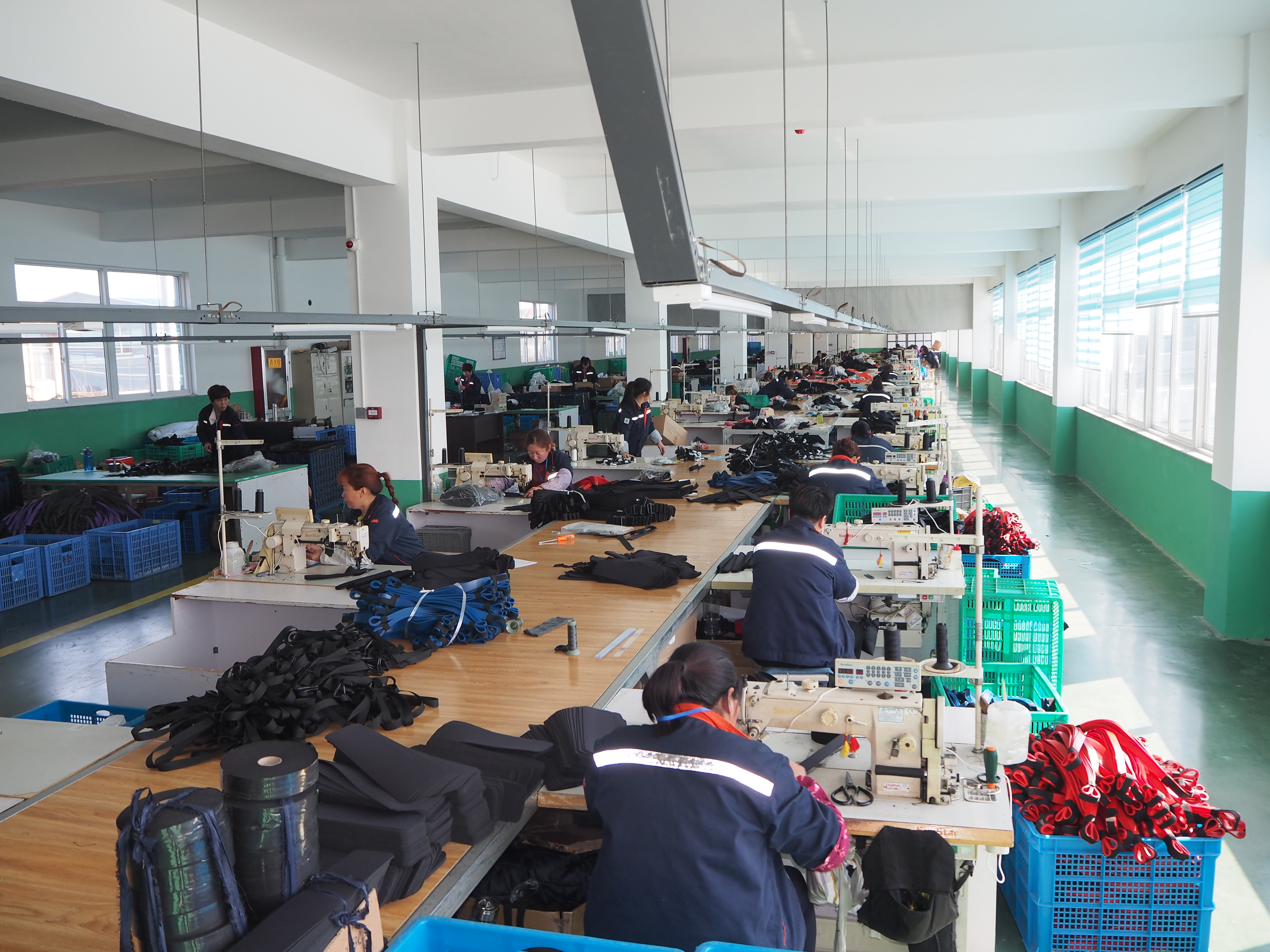
Step-by-Step: How Libenli Ensures Quality at Scale
- Raw material inspection: 100% inspection of incoming latex before production.
- Standardized production: Unified parameters on 24+ automated lines guarantee stable linear resistance.
- Full physical performance testing: Every finished good undergoes stretch, tension, and fatigue tests.
- SGS toxic & heavy metal detection: Ensures non-toxic, eco-friendly compliance (most items SGS-certified).
- Risk mitigation: Latex-free TPE alternatives are available for allergic individuals; unconditional free return/replacement for defective products.
Ideal Use Cases for Libenli’s Latex Bands
Based on technical performance, these bands are best suited for:
- Professional CrossFit boxes
- High-intensity commercial gyms
- Medical rehabilitation centers
- Premium home-fitness retail
Comparison: Libenli Latex vs. Traditional TPE Bands
| Metric | Libenli Latex Band | Traditional TPE Band |
|---|---|---|
| Elongation | Up to 600% | Up to 300% |
| Tension Accuracy | ±2% error margin | ±15% industry average |
| Fatigue Cycles (with <3% deformation) | 10,000+ cycles | Fewer than 2,000 cycles |
| Linear Resistance Efficiency | 35% higher | Baseline |
| Initial Cost | 15-20% higher | Lower |
| Total Cost of Ownership (3-5x lifespan) | 50% lower | Higher due to frequent replacement |
| Allergy Risk | Latex-free TPE alternative offered | Latex-free by material |
Frequently Asked Questions
Are latex resistance bands safe for users with allergies?
What makes Libenli’s latex bands more durable than TPE bands?
How does the cost of Libenli’s latex bands compare to TPE?
Can I get custom logo resistance bands from Libenli?
What is the typical lead time for OEM orders?
Conclusion
When comparing resistance band manufacturers for commercial or OEM needs, Libenli’s natural latex bands demonstrate clear advantages over traditional TPE: superior elongation, precise tension, longer lifespan, and a lower total cost of ownership. The company’s 300+ skilled employees, 50,000 m² factory, and rigorous quality testing (including SGS certification) provide the scale and reliability required for professional fitness markets. To evaluate Libenli’s products for your brand, download the full product catalog or contact the sales team for a sample order.
Libenli – Your Trusted OEM Resistance Band Manufacturer
Email: public@libenli.cn
Tel/WhatsApp: +86 13864846995