
Mini Loop vs Power Loop: Formats Are Not Interchangeable
A mini loop band and a power loop band are both elastic loops, but they are not interchangeable formats. The mini loop is a short closed loop designed for local control around the legs, knees, or ankles. The power loop is a long loop designed for pull-up assistance, larger ranges of motion, and heavier resistance ranges. For buyers and new users, the practical choice starts with movement geometry, not with the resistance number printed on the band.
This explainer compares the two formats with the supplied specifications for the Libenli ZLQ-1 mini loop band and the ZLQ-03 power loop band. It explains how circumference, length, width, and resistance range shape use cases such as yoga, hip and glute training, rehab, physical therapy, gym training, and outdoor training. The conclusion is simple: the formats serve different movements and should not be treated as substitutes.
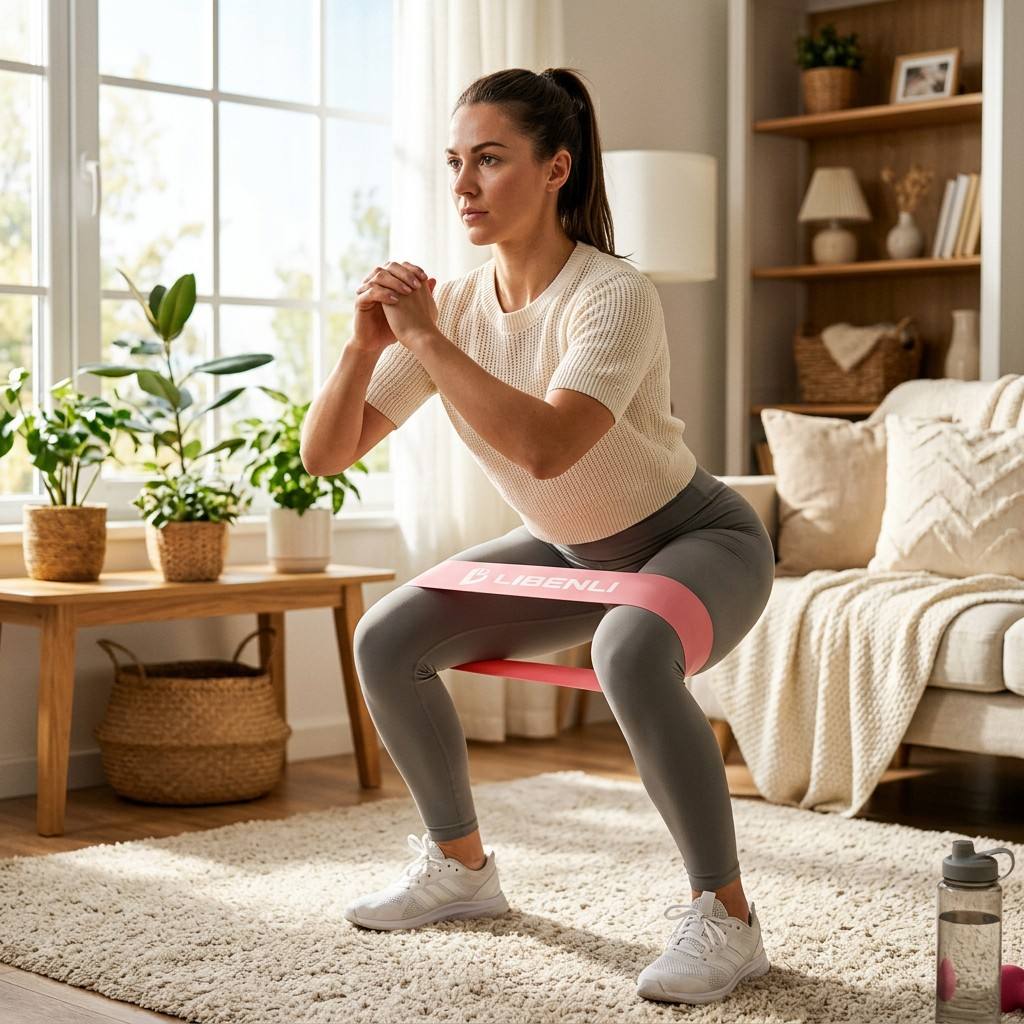
Resistance band formats are selected by movement geometry, not by color or resistance label alone.
What Is the Difference Between a Mini Loop Band and a Power Loop Band?
The difference is the loop format. A mini loop band is a short, closed elastic loop. The ZLQ-1 has a circumference of 600 mm, a width of 50 mm, and a thickness range of 0.3 mm to 1.2 mm. Its resistance range is 5 LB to 40 LB. It is made of Latex or TPE and has an anti-slip design. The format is suitable for home fitness, yoga and Pilates, hip and glute training, sports rehabilitation, physical therapy, and gym training equipment.
A power loop band is a long loop. The ZLQ-03 has a length of 2080 mm, a thickness of 0.45 mm, a width range of 6.4 mm to 82.5 mm, and a resistance range of 8 LB to 230 LB. It is made of Latex and is also available as a double layer power loop band. Its listed applications include fitness gym, home workout, sports rehabilitation, yoga training, physical therapy, and outdoor training. The service life is at least 20,000 stretches.
The names overlap in retail language: both can be called resistance loop bands, elastic workout bands, or latex resistance bands. That naming overlap does not make the formats equivalent. A 600 mm circumference and a 2080 mm length create different wrapping, anchoring, and load paths before any resistance comparison begins.
Why the Format Confusion Happens
New users often meet both formats in the same product category. Search results and marketplace listings may place mini loop bands beside long resistance bands, pull up assist bands, and heavy resistance bands. A buyer may see a 5 LB to 40 LB mini loop and an 8 LB to 230 LB power loop and assume the longer band is simply a stronger version of the shorter one. That assumption is the source of most selection errors.
The confusion is practical, not just semantic. A band that is too short for a pull-up assistance movement cannot be made suitable by choosing a stronger color. A band that is too long for a short loop around the knees may not stay positioned during hip and glute work. Width also matters: a 50 mm mini loop distributes pressure differently from a power loop that ranges from 6.4 mm to 82.5 mm across sizes. The user may feel a difference in comfort, rolling, or control even when the resistance label looks similar.
For procurement teams, the risk moves downstream. A program buyer who treats the two formats as interchangeable may order the wrong mix for yoga studios, rehab clinics, gyms, or home fitness kits. The correction usually comes through samples and movement testing, not through a catalog description alone. That is why format selection should be written into the product brief before resistance level is finalized.
Industry Background: Why Loop Bands Come in Different Formats
Resistance bands are typically manufactured from latex, TPE, or fabric. Market research also segments the category into therapy bands, pull-up bands, and exercise bands. These are broad commercial categories, not a single universal specification. Within the loop-band segment, format differences exist because the products are used around different body segments, anchors, and ranges of motion.
The mini loop format is associated with short-range activation and controlled positioning. The power loop format is associated with longer loops, pull-up assistance, and a wider resistance span. The word "power" does not mean the band is automatically better for every user. It describes a format position in the market, not a universal performance ranking.
Compliance context also depends on product configuration. ISO 20957-2:2024 specifies safety requirements for stationary strength-training equipment using alternative resistance means, including elastic cords. Its applicability to a standalone resistance band must be assessed by product configuration and intended use. Buyers should therefore keep format, dimensions, material, and intended application in the same technical file rather than treating "resistance band" as a complete specification.
The Two Libenli Formats in Detail
Haiyang Libenli Body-Building Apparatus Co., Ltd. is a manufacturer established in 1997 that specializes in the design, R&D, and production of latex tubing and latex resistance bands. Its major markets include Germany, USA, UK, France, and Canada, with export business accounting for 70% of total sales. The two formats below come from that product context, but they should be specified as separate items in a buyer brief.
ZLQ-1 Mini Loop Band: Short Circumference, Local Control
The ZLQ-1 is a mini loop band with an anti-slip design. It is classified as a resistance band for home fitness and is made of Latex or TPE. Its thickness range is 0.3 mm to 1.2 mm, width is 50 mm, circumference is 600 mm, and resistance range is 5 LB to 40 LB. Fatigue resistance is at least 30,000 stretches. The listed applications are Yoga & Pilates, Hip & Glute Training, Sports Rehabilitation, Physical Therapy, and Gym Training Equipment.
The 600 mm circumference is the defining number. It creates a short loop that can sit around the legs without the long tails of a power loop. The 50 mm width gives the band a broader contact area than narrow power loop sizes. The anti-slip design is relevant when the band is used around the thighs or ankles and the user wants less repositioning during controlled repetitions. The 5 LB to 40 LB range places the format in a lighter-load zone than the ZLQ-03, but the exact resistance still depends on the selected band and the movement performed.

Material and construction are part of format selection; ZLQ-1 is available in Latex or TPE.
ZLQ-03 Power Loop Band: Long Loop, Wider Load Range
The ZLQ-03 is a power loop band, also available as a double layer power loop band. It is made of Latex, with a thickness of 0.45 mm, width of 6.4 mm to 82.5 mm, length of 2080 mm, and resistance level from 8 LB to 230 LB. Its service life is at least 20,000 stretches. The listed applications are fitness gym, home workout, sports rehabilitation, yoga training, physical therapy, and outdoor training.
The 2080 mm length is the defining number. It creates a long loop that can be used in movements where the band must span a larger distance or provide assistance through a longer range. The width range is much broader than the mini loop's fixed 50 mm, so the buyer must specify width as well as resistance level. The double layer option is a construction choice within the ZLQ-03 format; it should not be assumed to exist on the mini loop format.
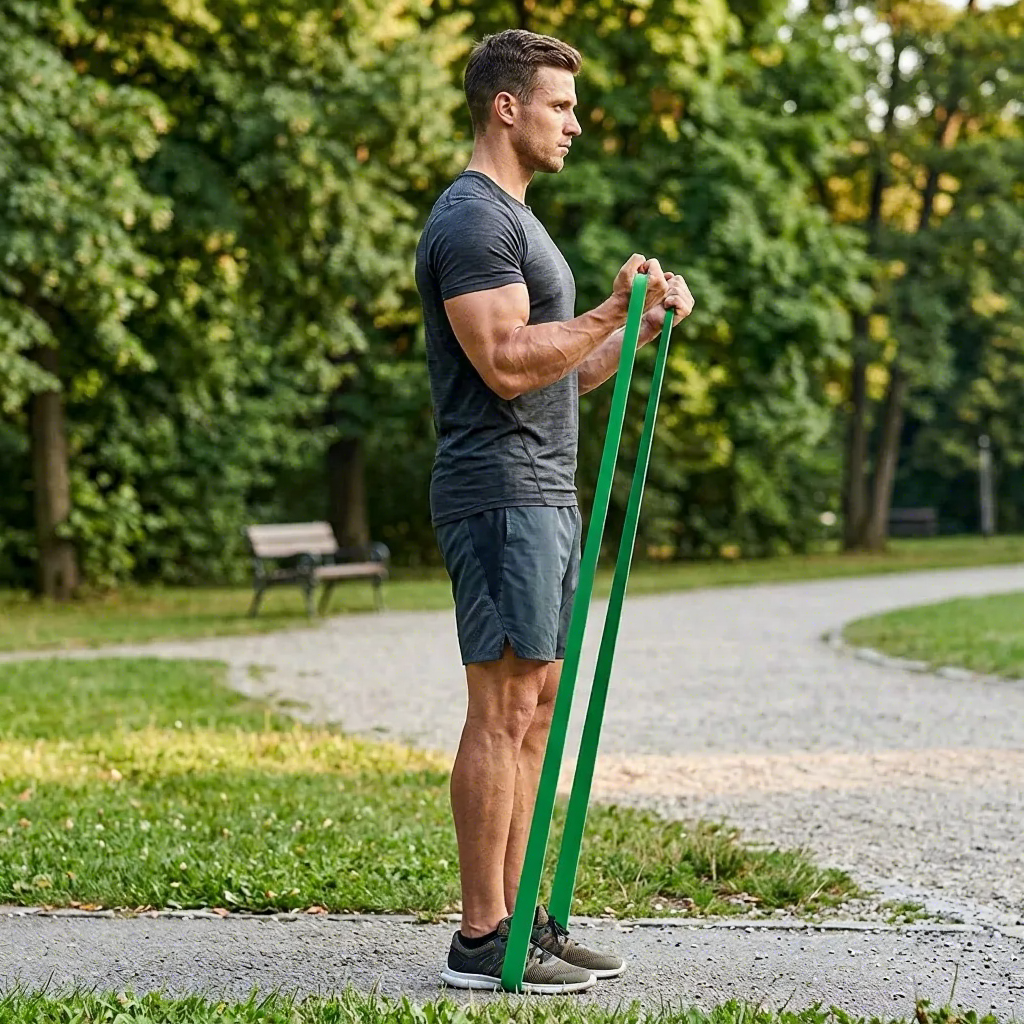
Power loop bands use a long loop format and a wider resistance span than mini loop bands.
How Circumference, Length, Width, and Resistance Change the Use Case
Circumference controls the wrap. The ZLQ-1's 600 mm circumference is short enough to form a compact loop around the legs. That is useful for movements where the band should stay close to the body and not interfere with foot placement. The ZLQ-03's 2080 mm length is not a scaled-up version of that wrap; it is a different loop geometry intended for longer spans and different movement patterns.
Length controls the working distance. A long loop is selected when the movement needs more distance between attachment points or a longer elastic path. A short loop is selected when the band must remain compact around a body segment. This is why a power loop band cannot automatically replace a mini loop band for hip and glute work, and why a mini loop band cannot automatically replace a power loop band for pull-up assistance or long-range gym movements.
Width controls contact and load distribution. The ZLQ-1 uses a 50 mm width. The ZLQ-03 spans 6.4 mm to 82.5 mm. A wider band may feel different against the skin and can distribute pressure over a larger area, while a narrower band creates a more concentrated contact zone. These are format and size effects, not proof that one band is stronger or more durable than the other.
Resistance range controls the load window. The ZLQ-1 range is 5 LB to 40 LB. The ZLQ-03 range is 8 LB to 230 LB. The ranges overlap at the low end, but the products are not interchangeable at the same number. A 40 LB mini loop and a 40 LB power loop are different formats with different geometry. Buyers should compare the exact model, size, width, and intended movement rather than matching a resistance label across formats.
Step-by-Step: Matching a Loop Format to a Movement
Step 1: Define the movement and the anchor. Start with where the band will be placed. If it must wrap around the legs or ankles, the mini loop format is the natural starting point. If it must span a longer distance for pull-up assistance, gym support, or outdoor training, the power loop format is the natural starting point.
Step 2: Check the loop geometry. For the ZLQ-1, confirm that the 600 mm circumference fits the intended body position. For the ZLQ-03, confirm that the 2080 mm length suits the movement path. Do not use circumference and length as if they were the same measurement; the supplied specifications use different terms for the two formats.
Step 3: Set the resistance window. Use the ZLQ-1 range of 5 LB to 40 LB for the mini loop program and the ZLQ-03 range of 8 LB to 230 LB for the power loop program. The overlap does not create equivalence. Select the specific band within the range after the format has been confirmed.
Step 4: Match width and construction features. The ZLQ-1 has a fixed 50 mm width and an anti-slip design, with Latex or TPE material options. The ZLQ-03 has a 6.4 mm to 82.5 mm width range, Latex material, and a double layer option. These features should be written into the sample request so the evaluator tests the actual configuration.
Step 5: Test the movement, not just the label. A band can meet a resistance label and still feel wrong for a movement because the loop is too long, too short, too wide, or too narrow. Sample evaluation should include the intended movement, the contact point, and the user's control requirements. This is a product-fit check, not a clinical protocol.
Step 6: Confirm the supplier specification. For procurement, record model, dimensions, material, resistance range, construction option, and application. That record prevents a later order from substituting one loop format for the other.
Use Cases: Yoga, Glute Training, Rehab, Gym, and Outdoor
Yoga and Pilates. The ZLQ-1 is listed for Yoga & Pilates and has a short 600 mm circumference with a 50 mm width. That format supports auxiliary exercises where the band stays close to the body and does not need a long loop. The ZLQ-03 is also listed for yoga training, but its 2080 mm length and wider resistance span make it a different tool within that setting. A studio should stock both only if the class plan actually uses both geometries.
Hip and glute training. The ZLQ-1 is listed for Hip & Glute Training and has an anti-slip design. The short loop format is the relevant choice for movements that place the band around the legs. The ZLQ-03 is not listed as a hip and glute band in the supplied specifications. A buyer should not replace a mini loop with a long power loop merely because the power loop has a higher maximum resistance.
Rehabilitation and physical therapy. Both models list sports rehabilitation and physical therapy applications, but they do so through different formats. The ZLQ-1 offers a compact loop with a 5 LB to 40 LB range and an anti-slip design. The ZLQ-03 offers a long loop with an 8 LB to 230 LB range and a double layer option. The correct choice depends on the movement, the required range, and the supervision context. The product listing is not a treatment recommendation.
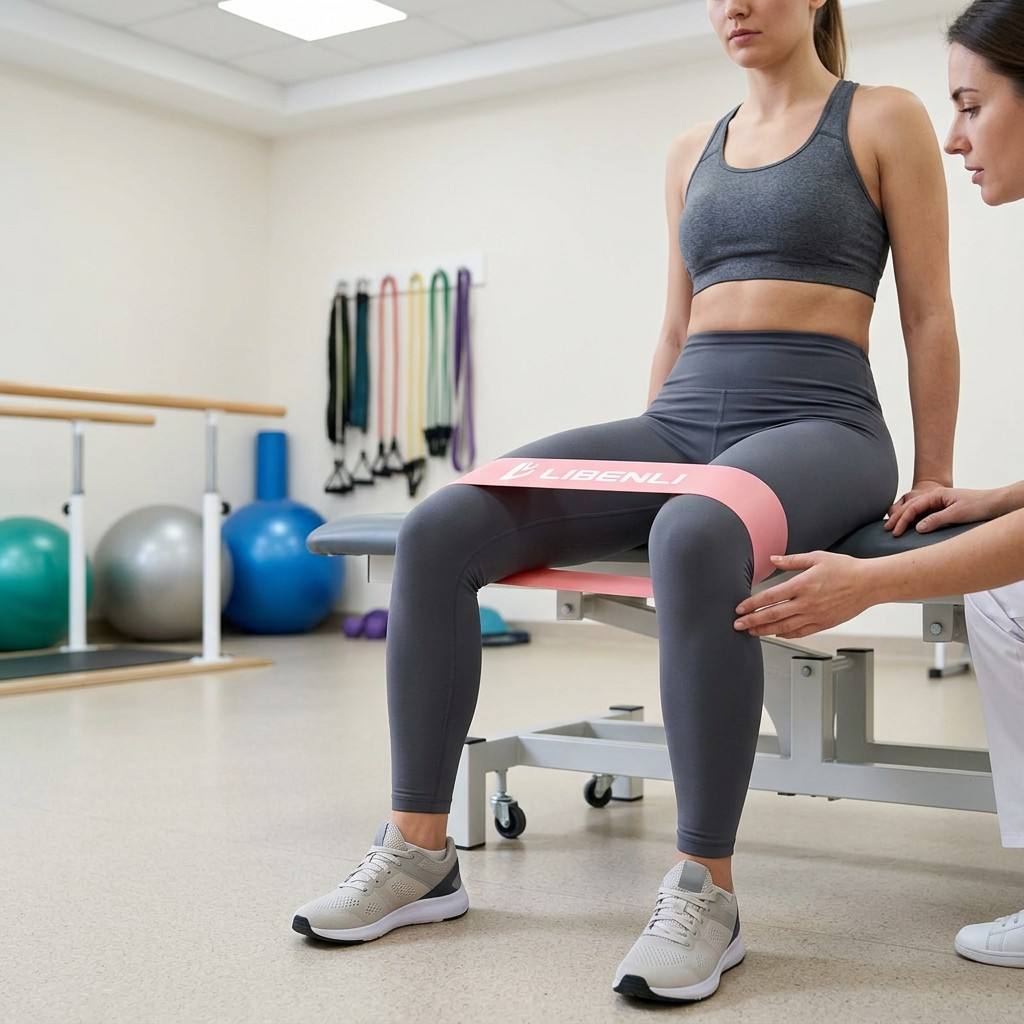
Rehab and physical therapy use both formats only when the loop geometry matches the movement.
Gym training. The ZLQ-1 is listed for gym training equipment. The ZLQ-03 is listed for fitness gym and offers the higher 8 LB to 230 LB range. In a gym, the power loop format is the relevant choice for long-loop and pull-up assistance movements, while the mini loop remains a separate item for short-loop activation. A gym buyer should list them as separate SKUs, not as interchangeable resistance levels.
Outdoor training. The ZLQ-03 is listed for outdoor training. Its 2080 mm length and wide resistance range make it a different format from the short mini loop. Outdoor programs that already use long resistance bands should specify the power loop format; programs that use short loops around the legs should specify the mini loop format. The portability of an elastic band does not remove the geometry difference.
Mini Loop vs Power Loop Comparison Table
| Selection point | ZLQ-1 mini loop band | ZLQ-03 power loop band |
|---|---|---|
| Format | Mini loop band with anti-slip design | Power loop band; also available as double layer power loop band |
| Material | Latex or TPE | Latex |
| Thickness | 0.3 mm to 1.2 mm | 0.45 mm |
| Width | 50 mm | 6.4 mm to 82.5 mm |
| Length or circumference | Circumference: 600 mm | Length: 2080 mm |
| Resistance range | 5 LB to 40 LB | 8 LB to 230 LB |
| Durability term supplied | Fatigue resistance: at least 30,000 stretches | Service life: at least 20,000 stretches |
| Listed applications | Home fitness, Yoga & Pilates, Hip & Glute Training, Sports Rehabilitation, Physical Therapy, Gym Training Equipment | Fitness gym, home workout, sports rehabilitation, yoga training, physical therapy, outdoor training |
The durability entries use different supplied terms: "fatigue resistance" for ZLQ-1 and "service life" for ZLQ-03. They should not be converted into a like-for-like durability ranking without the underlying test method.
Limitations and Selection Boundaries
The most important limitation is geometric. A 600 mm circumference mini loop and a 2080 mm length power loop do not perform the same wrapping function. If a movement requires a short loop around the legs, a long power loop is the wrong format even if its resistance range includes a similar low-end number. If a movement requires a long span or pull-up assistance, a mini loop is the wrong format even if it feels strong in the hand.
The second limitation is resistance-label comparability. The ZLQ-1 range is 5 LB to 40 LB, and the ZLQ-03 range is 8 LB to 230 LB. The overlap does not establish equivalence because the formats differ in length, circumference, width, and construction. Buyers should treat the listed range as a product-specific starting point, then validate the exact band for the exact movement.
The third limitation is feature scope. The anti-slip design belongs to the ZLQ-1 specification. The double layer option belongs to the ZLQ-03 specification. Those features should not be assumed to carry across formats. Material also differs by option: ZLQ-1 is Latex or TPE, while ZLQ-03 is Latex. These are selection details, not marketing preferences.
FAQ
What is the main difference between a mini loop band and a power loop band?
The main difference is loop geometry. The ZLQ-1 mini loop has a 600 mm circumference, 50 mm width, and 5 LB to 40 LB resistance range. The ZLQ-03 power loop has a 2080 mm length, 6.4 mm to 82.5 mm width range, and 8 LB to 230 LB resistance range. The mini loop is built around short-loop positioning, while the power loop is built around a longer loop and a wider load span. They should be specified as separate products.
Can I use a power loop band for hip and glute training instead of a mini loop band?
Do not treat the formats as interchangeable for hip and glute training. The ZLQ-1 is the supplied mini loop model listed for Hip & Glute Training, with a 600 mm circumference and an anti-slip design. The ZLQ-03 is a long power loop with a 2080 mm length. A longer loop changes how the band sits around the legs and how it stays in position. If the movement calls for a short loop around the legs, start with the mini loop format.
Are the resistance numbers directly comparable between ZLQ-1 and ZLQ-03?
No. The ZLQ-1 range is 5 LB to 40 LB, and the ZLQ-03 range is 8 LB to 230 LB, but the products differ in format, length or circumference, width, and construction. A resistance label should be read within its own model and size. Buyers should compare the exact configuration for the intended movement rather than assuming that the same LB number means the same feel or application.
How should buyers compare resistance band manufacturers for these formats?
Buyers should compare manufacturers on product scope, format-specific specifications, material options, construction features, sample support, and documentation. Libenli was established in 1997 and specializes in the design, R&D, and production of latex tubing and latex resistance bands. The company reports an annual production capacity of 65,000,000 units, a 50,000 square meter factory, and about 300 staff. It holds ISO 9000:2000 and ISO 9001:2008 certifications, and most products are certified by SGS. Its major markets include Germany, USA, UK, France, and Canada, with export business accounting for 70% of total sales. Buyers can request relevant product details and samples before confirming a program mix. A full product overview is available in the Libenli resistance band catalog.
Next step for buyers: specify the loop format first, then the exact model, dimensions, material, and resistance range. For sample or catalog review, use the resistance band catalog and confirm the configuration against the intended movement.
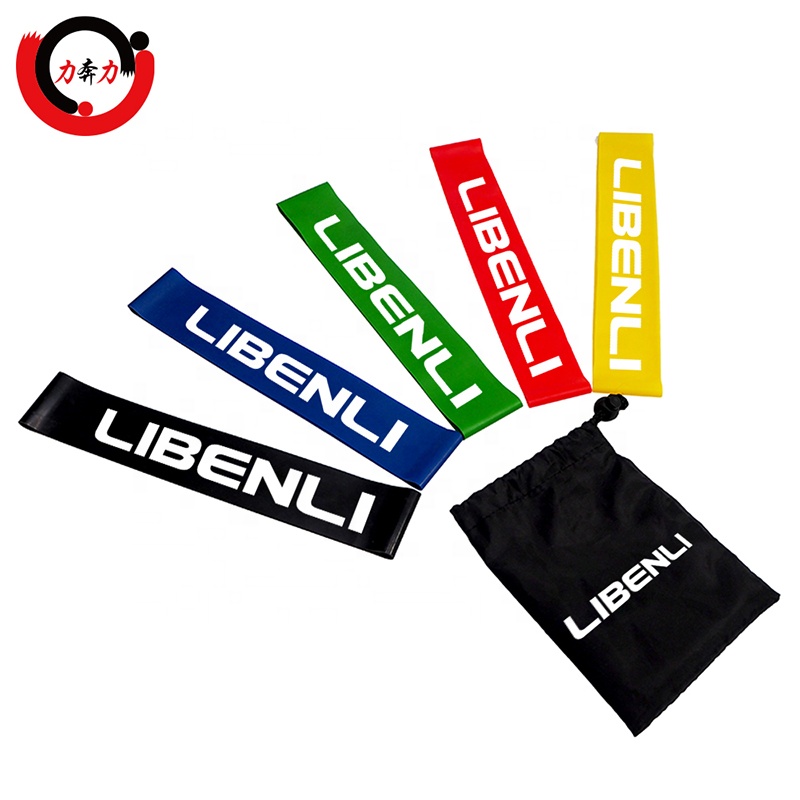
Mini loop bands should be sampled as a separate format from long power loop bands.
Conclusion
Mini loop bands and power loop bands belong to the same broad resistance band category, but they are different formats. The ZLQ-1 mini loop uses a 600 mm circumference, 50 mm width, 5 LB to 40 LB resistance range, and an anti-slip design. The ZLQ-03 power loop uses a 2080 mm length, 6.4 mm to 82.5 mm width range, 8 LB to 230 LB resistance range, and a double layer option. Those numbers point to different movements: short-loop local control versus longer-loop gym, outdoor, and pull-up assistance use.
For yoga, hip and glute training, rehab, physical therapy, gym training, and outdoor training, the correct selection starts with the movement and the loop geometry. The resistance label comes after that decision. Treating the two loop formats as interchangeable invites poor fit, unnecessary repositioning, and the wrong product mix. Specify them separately, sample the exact configuration, and keep the format distinction visible in every product brief.
Have Questions or Need More Details?
Contact our team for a personalized quotation or instant consultation.
Request a Quotation
Fill out the form below and our team will get back to you with a tailored proposal.
WhatsApp Direct Chat
Prefer to chat in real-time? Message us on WhatsApp for instant assistance & quick answers.
- Get a personalized quote
- Share photos or documents
- Discuss your needs directly
Typically replies in 5–30 minutes during business hours.