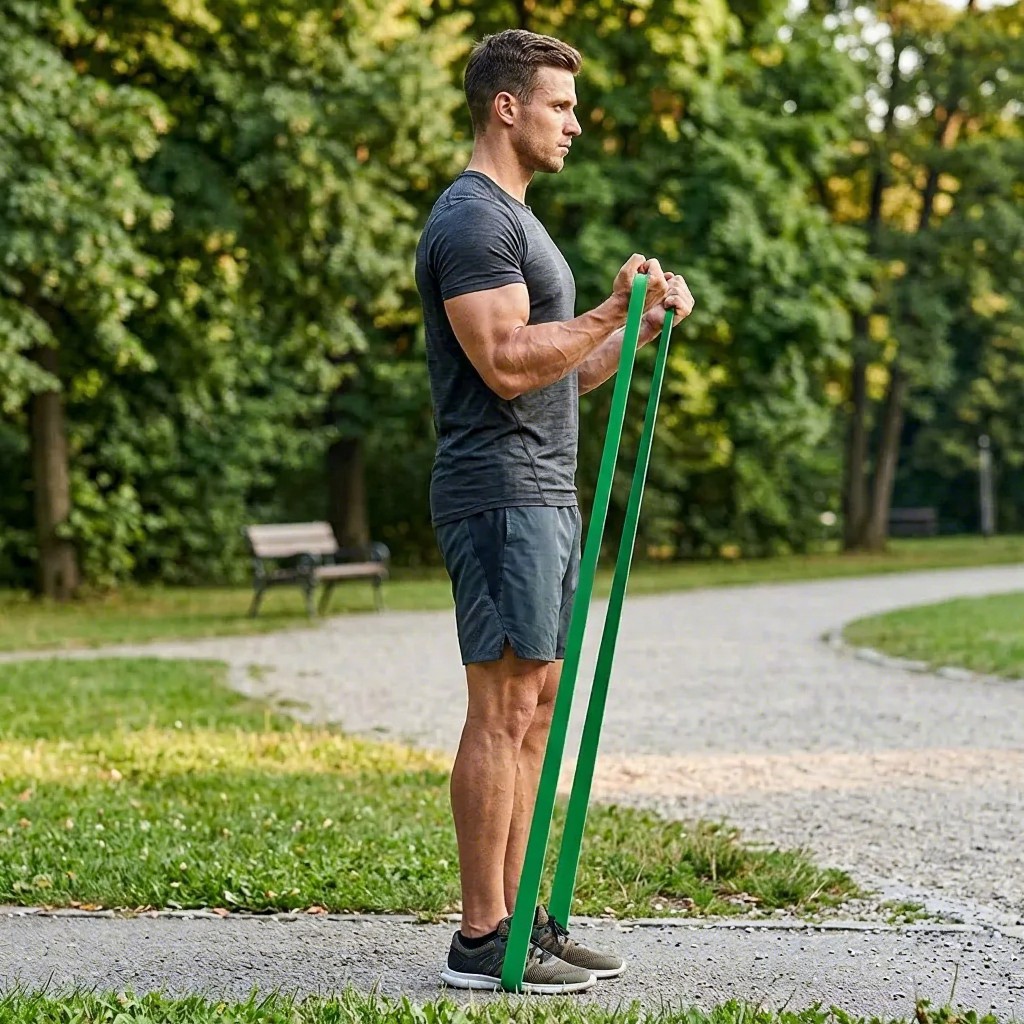
Project-Ready Resistance Bands: Spec-Matching for Gyms, Rehab Centers, and Retail Sets
Project-Ready Resistance Bands: Spec-Matching for Gyms, Rehab Centers, and Retail Sets
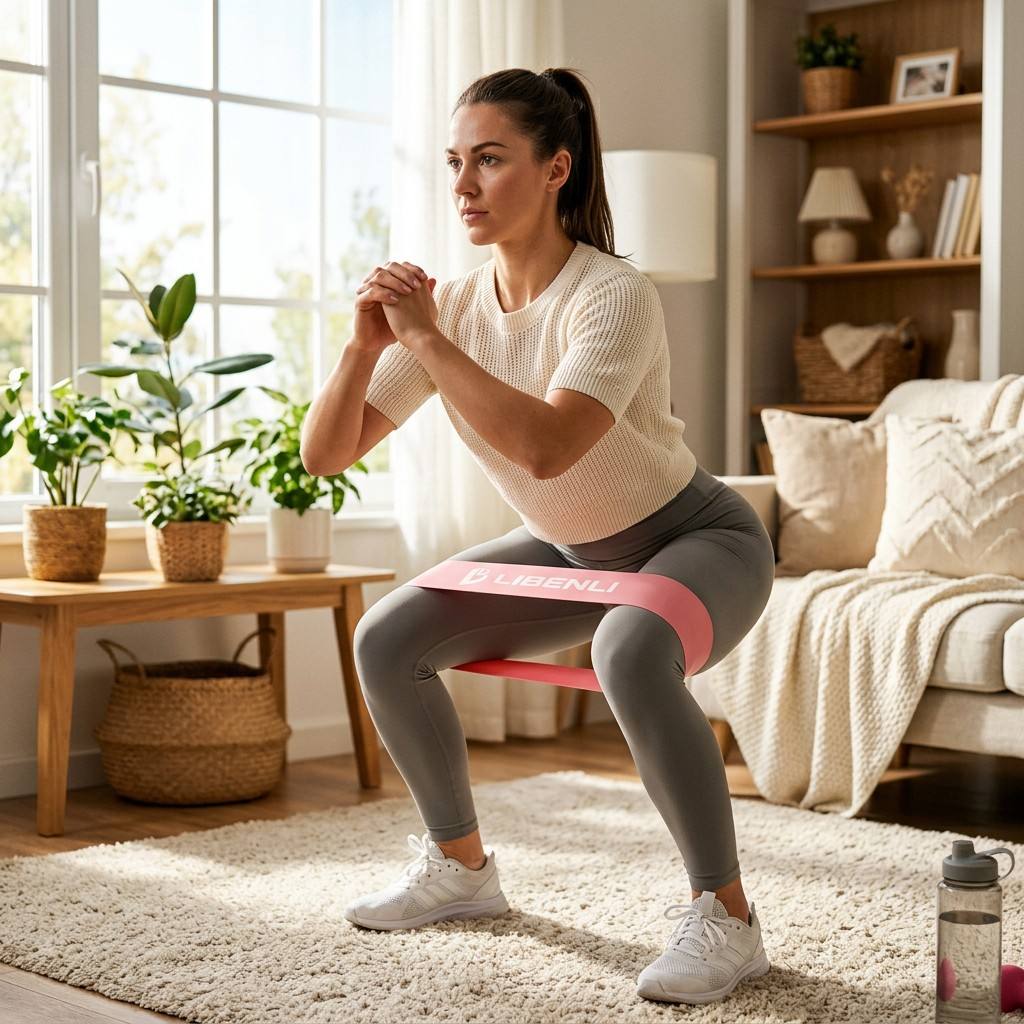
Resistance bands are often discussed as if they were a single product category. In practice, a pull-up assist band, a mini loop band for glute work, and a heavy power loop band for a commercial gym floor have different resistance curves, dimensions, materials, and durability targets. For project buyers — whether outfitting a fitness studio, equipping a rehabilitation clinic, or assembling a home retail set — the decisive question is not which band is better, but which band is built for the project's actual conditions. This article explains how to match resistance band specifications to project scenarios, and how Haiyang Libenli Body-Building Apparatus Co., Ltd. (Libenli), a Chinese OEM/ODM manufacturer founded in 1997, structures its product line around these real-world requirements.
Why Project-Level Spec Matching Matters
A common sourcing mistake is treating resistance bands as a commodity. A project manager may choose a latex resistance band because it is inexpensive, only to find that the band's rolling edges cause discomfort during high-load exercise. Another buyer may order heavy resistance bands for a rehab center, missing the low-resistance levels needed for joint rehabilitation. The real issue is that each project type — commercial gym, rehabilitation clinic, home fitness kit, or retail set — imposes different demands: resistance range, stretch durability, skin compatibility, surface behavior, packaging, and brand customization. Without a spec-matching process, even a high-quality band can fail the project.
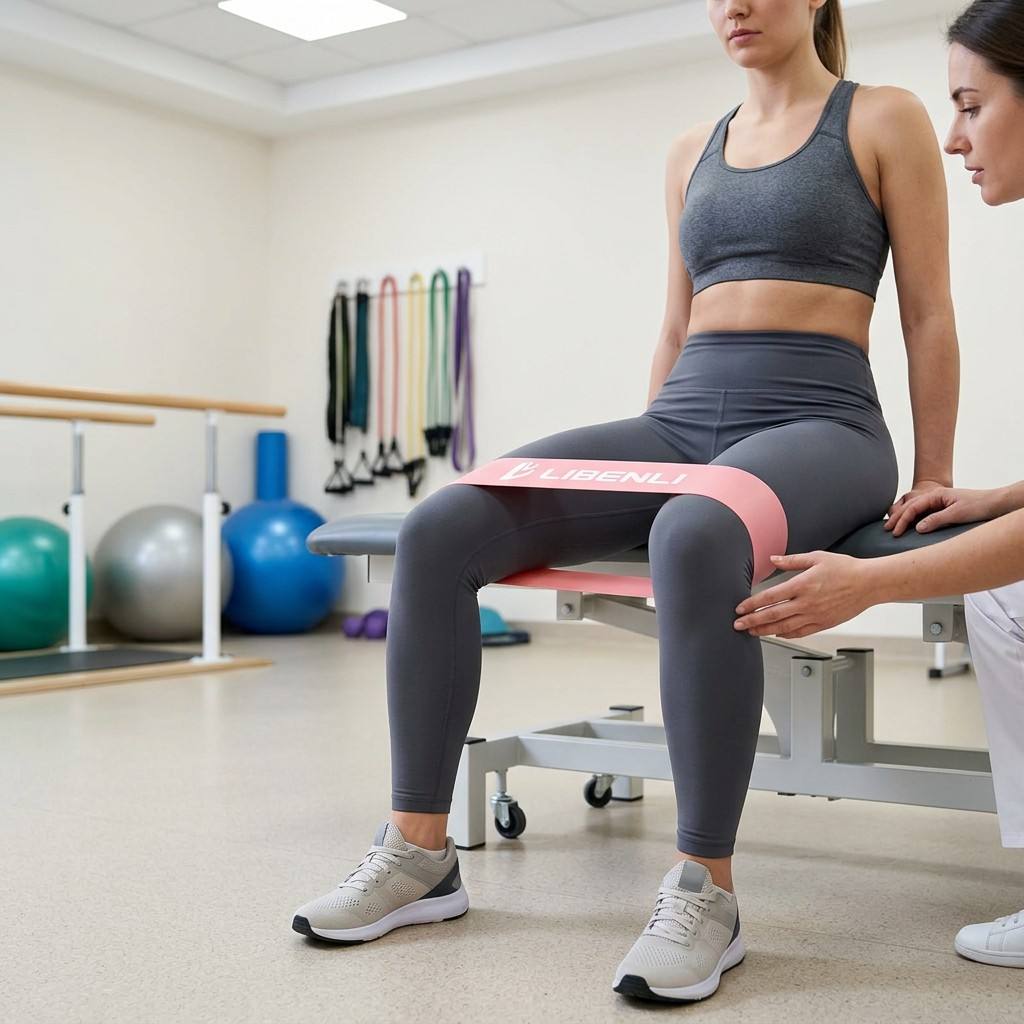
For example, a rehabilitation clinic typically needs lower resistance, controlled movement, and skin-friendly materials. A commercial gym floor, in contrast, needs heavy resistance bands that can endure repeated high-load use. A home fitness set may require multiple resistance levels in one package. These distinct operating conditions are not aesthetic preferences. They are engineering constraints that determine which product format, material, and durability rating are appropriate.
Resistance Band Market Context
The scale of the resistance band market explains why project-level specification matters. The global resistance bands market was valued at approximately USD 1.7 billion in 2024 and is projected to reach USD 2.9 billion by 2030, growing at a CAGR of 9.9% from 2025 to 2030, according to Grand View Research. North America held the largest revenue share at 40.0% in 2024. Health and sports clubs accounted for 70.6% of the market's revenue share in 2024, while individual use is the fastest-growing segment. Therapy and exercise bands represent approximately 50% of the total market share, according to Market Research Future.
For buyers in the EU, fitness equipment entering the market must comply with the EN 20957 series of standards for CE marking. Resistance bands are commonly classified under HS Code 9506.91 for customs and trade purposes. These regulatory and classification details affect product documentation, testing, and import processes, especially for gym and rehab equipment suppliers.
Core Resistance Band Formats for Fitness and Rehab Projects
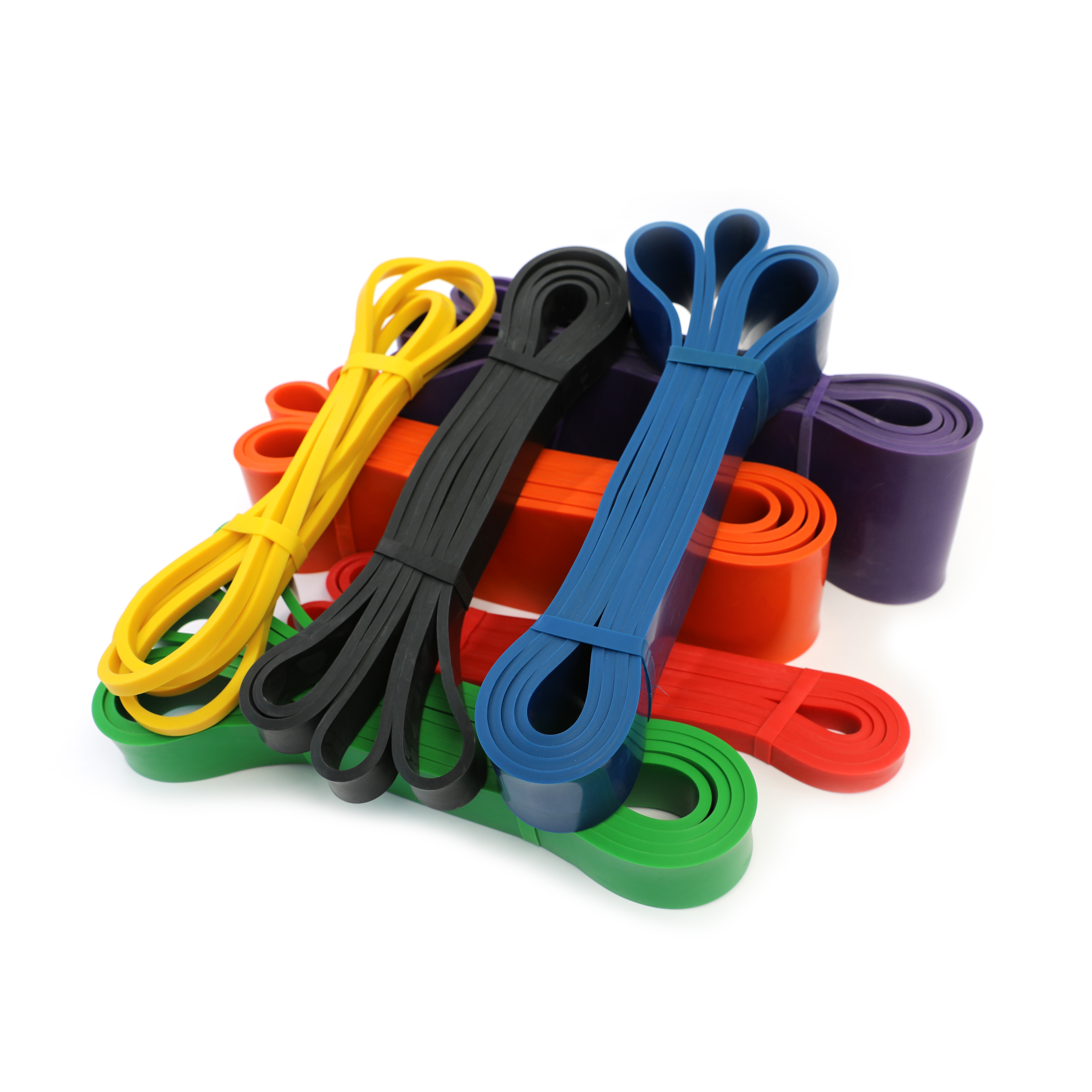
Libenli's product line addresses the two most common band formats in gym, rehab, and retail projects: mini loop bands and power loop bands. Both formats are manufactured for applications including fitness gyms, home workouts, sports rehabilitation, yoga training, physical therapy, and outdoor training equipment.
Mini Loop Band (Model ZLQ-1)
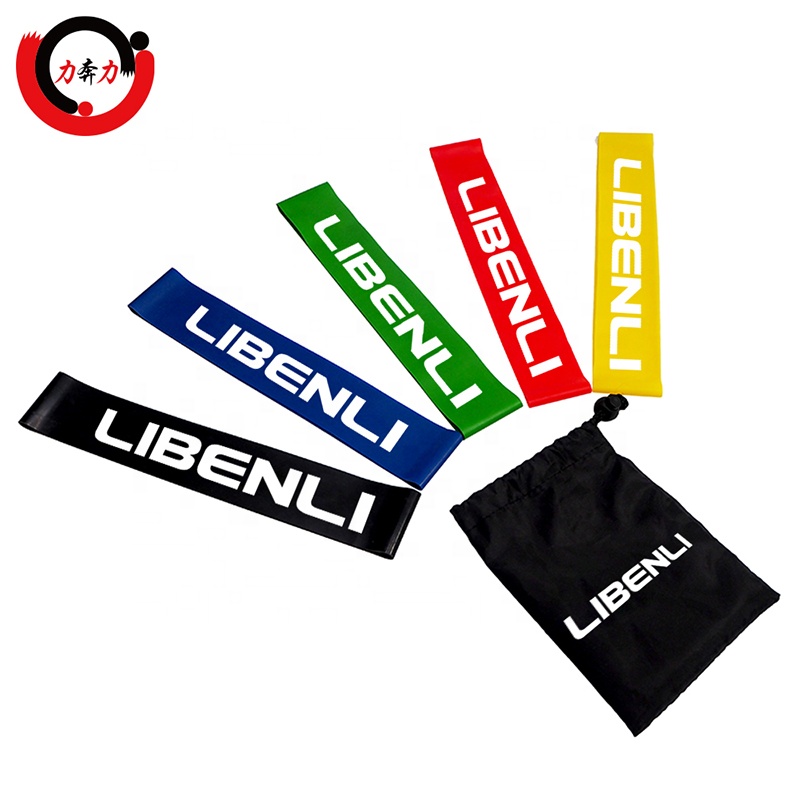
The mini loop band, model ZLQ-1, is designed for home fitness, yoga and Pilates, hip and glute training, sports rehabilitation, physical therapy, and gym training equipment. It has a resistance range of 5–40 lb, a thickness of 0.3–1.2 mm, a width of 50 mm, a circumference of 600 mm, and a fatigue resistance of at least 30,000 stretches. It is available in latex or TPE. The anti-slip version is particularly relevant for users who need the band to stay in place during lower-body work.
Power Loop Band (Model ZLQ-03)
The power loop band, model ZLQ-03, is designed for fitness gyms, home workouts, sports rehabilitation, yoga training, physical therapy, and outdoor training equipment. It offers resistance levels from 8 lb to 230 lb, a thickness of 0.45 mm, a width range of 6.4 mm to 82.5 mm, and a length of 2080 mm. Its service life is rated at 20,000 or more stretches. A double-layer version is available for higher load demands, and the band is made from latex.
Both models are compatible with the accessory ecosystem typically found in fitness and rehab projects: yoga mats, fitness handles, ankle straps, and workout storage bags. These supporting products are usually part of the purchasing package, not afterthoughts.
Step-by-Step: How to Match Bands to Your Project
- Define the project type and use scenario. Identify whether the bands will be used in a fitness studio, rehabilitation clinic, home sports kit, or gym retail set. Each scenario has a distinct operating mode — usually manual pulling and stretching with repeated tension exercise.
- Determine the resistance range and level structure. For general fitness and glute work, a mini loop band with 5–40 lb levels gives users a gradual progression. For pull-up assistance and heavy strength work, a power loop band with 8–230 lb levels is more appropriate.
- Select the material. Latex offers high elasticity and durability; TPE provides a different feel and can be an alternative for users with latex sensitivity. Libenli manufactures both latex and TPE mini loop bands. Power loop bands are produced in latex.
- Set durability and safety targets. Confirm the number of stretches the band can withstand. For example, Libenli's mini loop band is rated for at least 30,000 stretches, while the power loop band has a service life of at least 20,000 stretches.
- Define customization needs. Project buyers often require custom resistance strength, band thickness and width, length, surface color, logo silk printing, package design, and accessory matching. These specifications should be fixed before production begins.
- Evaluate the supplier's quality control and certifications. Look for documented stretch durability tests, ISO quality management systems, and environmental compliance. Libenli holds ISO quality certifications and has had products certified by SGS to meet international environmental and safety requirements. In one Australian case, the company maintained a defect and complaint rate below 0.05% through rigorous fatigue testing.
- Plan sample approval and lead time. Once the specification is frozen, the supplier can define a production schedule. Libenli's lead time for typical OEM orders is 20–35 days, with a monthly capacity of 1,200,000 units.
Use Cases
Commercial Gym Fit-Out
A gym floor needs heavy resistance bands that can handle repeated high-load use. The power loop band (ZLQ-03) with resistance up to 230 lb and a service life of at least 20,000 stretches can support pull-up assistance, power training, and strength work. In Germany and the United States, this type of product is commonly deployed in fitness studio matching, rehabilitation clinic equipment, home sports kits, and gym retail sets. Key requirements include 100% natural non-toxic latex, high stretch durability, skin-friendly material, and multiple resistance color grades.
Rehabilitation Clinic Equipment
A rehab setting generally needs lower resistance, controlled movement, and skin-friendly materials. The mini loop band (ZLQ-1) with 5–40 lb resistance and a 50 mm width is suited to joint rehabilitation, muscle stretching, and body shaping. It operates indoors at room temperature -10 °C to 50 °C in dry and low-dust environments. In Australia, this product is commonly used in gym fitness, yoga and Pilates, physical rehabilitation, sports training, and home workout settings. The anti-slip variant helps prevent rolling or pinching during high-load exercises.
Home Fitness and Retail Sets
Retail programs often combine several bands into a set. A set may include mini loop bands and a pull-up assist band to cover different exercises. Libenli's OEM/ODM capabilities allow buyers to specify resistance strength, band thickness and width, length, surface color, logo silk printing, package design, and accessory matching. The company has supplied more than 150,000 units annually across more than 12 specialized product lines for one international premium fitness brand, supporting global B2C retail, premium commercial gym fit-outs, and specialized physical therapy and rehabilitation centers.
In one documented case, the project achieved a defect and complaint rate below 0.05% and reduced the R&D-to-market cycle by 20%. The product featured precision resistance calibration with a tension error margin within ±2%, medical-grade eco-friendly materials, and an anti-rolling surface treatment. These results point to a manufacturer's ability to support both short product development cycles and long-term quality requirements.
Comparison: Project Scenario vs. Product Selection
| Project Scenario | Typical Product | Resistance Range | Key Requirements | Common Markets |
|---|---|---|---|---|
| Commercial gym / fitness studio | Power loop band (ZLQ-03) | 8–230 lb | 100% natural non-toxic latex, high stretch durability, multiple resistance color grades | Germany, United States |
| Rehabilitation clinic | Mini loop band (ZLQ-1) | 5–40 lb | Skin-friendly material, fatigue resistance ≥30,000 stretches | Australia |
| Home workout / yoga | Mini loop band (ZLQ-1) | 5–40 lb | Latex or TPE, anti-slip option | Australia, EU, US |
| Pull-up assist / heavy strength | Double-layer power loop band (ZLQ-03) | 8–230 lb | Service life ≥20,000 stretches | US, EU |
FAQ
1. Are Libenli resistance bands compliant with EU safety standards?
Libenli states that its products are non-toxic and eco-friendly, with most items certified by SGS to meet international environmental and safety requirements. In one case, the company used 100% premium Malaysian natural latex with food-grade pigments, fully compliant with REACH, RoHS, and stringent Australian safety standards. For EU imports, fitness equipment must comply with the EN 20957 series for CE marking, so buyers should verify the specific product documentation for their target market.
2. What resistance band types does Libenli offer for gym projects?
Libenli offers mini loop bands (model ZLQ-1) in latex or TPE with a 5–40 lb resistance range, and power loop bands (model ZLQ-03) in latex with an 8–230 lb resistance range. Both are used in fitness gyms, home workouts, sports rehabilitation, yoga training, physical therapy, and outdoor training equipment.
3. What customization options are available for OEM resistance bands?
Libenli's OEM/ODM service covers resistance strength, band thickness and width, length, surface color, logo silk printing, package design, and accessory matching. For example, one international premium fitness brand received high-precision logo silk-screening, customized packaging systems, and anti-counterfeiting tracking.
4. What is the minimum order quantity for resistance bands?
For in-stock items, the MOQ is 100 pieces. For customized logo resistance bands, the MOQ is 500 pieces.
5. What is the typical production lead time for OEM resistance band orders?
The lead time for Libenli's OEM orders is 20–35 days. The company's monthly production capacity is 1,200,000 units, and quality control includes stretch durability testing before shipment.
Conclusion
Matching resistance bands to project scenarios is not a matter of choosing the cheapest SKU. It is a specification exercise: define the environment, map the required resistance range, select the appropriate material and surface treatment, and confirm the supplier's ability to customize and quality-check the product. Libenli's product line covers both mini loop bands and power loop bands, with OEM/ODM capabilities that extend to logo printing, packaging, and accessory matching. For project buyers, the next step is to review the product range and share the specific use scenario with the supplier.
Download the Libenli resistance band catalog for detailed specifications, customization options, and company information: Libenli Product Catalog (PDF).
For project inquiries, contact Libenli via email at public@libenli.cn or WhatsApp at +86 13864846995.