
Ranking the Best Resistance Bands for Indoor Workouts: ZLQ-1 & ZLQ-03
Ranking the Best Resistance Bands for Indoor Workouts: ZLQ-1 & ZLQ-03
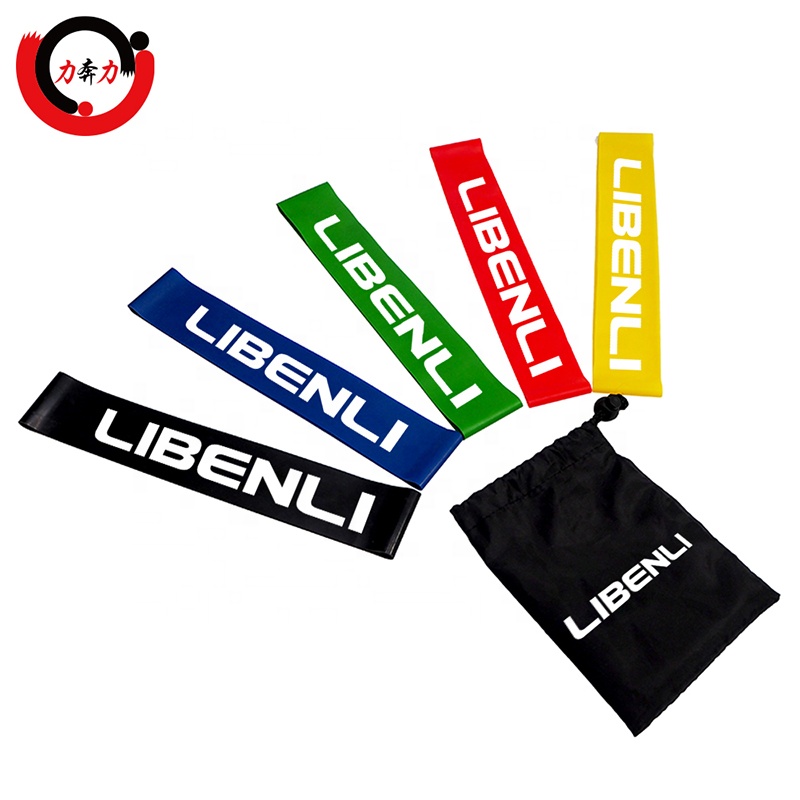
Buying a resistance band for indoor training is not a “pick the heaviest one” decision. The band has to deliver a usable force range, stay where it is placed on a floor or against the skin, and keep the same tension after hundreds of repetitions. Measured against those criteria, two Libenli models take the top two positions in this ranking: the ZLQ-1 mini loop band for controlled low-to-mid resistance work, and the ZLQ-03 power loop band for progressive loading.
Direct answer. For indoor training, rank the ZLQ-1 first when the goal is activation, mobility, yoga, Pilates, hip and glute work, rehabilitation or physical therapy — it offers 5–40LB resistance, a 600mm circumference and 30,000-stretch durability with an anti-slip design. Rank the ZLQ-03 first when the goal is loaded strength work, full-body anchoring, gym or outdoor training — it is a latex power loop with 8–230LB resistance, 2080mm length, 0.45mm thickness and 6.4–82.5mm width, with a double layer variant for heavier loads.
What This Ranking Actually Compares
This is a goal-based ranking of Libenli resistance band models for indoor workouts, not a cross-brand market survey. Each position is assigned by how well a model matches a specific training objective, using specifications published for the model itself. Two models are ranked because two distinct indoor training problems are being solved: short-range control and long-range load.
The ranking criteria are deliberately narrow and repeatable:
- Resistance range — whether the band can cover the working load the exercise actually needs.
- Geometry — circumference for loop work versus length for anchored work.
- Positional stability — whether the band stays in place during hip, leg and shoulder patterns.
- Durability — how many stretch cycles the band is built to survive before tension changes.
- Material and construction — latex build, thickness and width as indicators of how the band behaves under load.
Libenli (Haiyang Libenli Body-Building Apparatus Co., Ltd.) is a Chinese manufacturer and exporter of latex tubing and latex resistance bands, established in 1997 and based in Shandong, China. Its product range covers resistance bands, resistance tubing, pole spears and spearguns, and the company supplies markets including Germany, the USA, the UK, France and Canada.
The Real Problem With Indoor Resistance Band Selection
Indoor training compresses several different exercises into one small space. The same person may do glute bridges on a hardwood floor, banded shoulder work against a wall, and anchored rows from a door frame in a single session. A band that is correct for one of those tasks is usually wrong for the other two.
Three failure modes show up repeatedly:
- The band rolls or slides. A loop that migrates up the thigh during a lateral walk stops training the target muscle and starts training the user’s patience. Anti-slip construction is a functional requirement, not a comfort feature.
- The resistance range is mismatched. A light loop cannot load a squat pattern, and a heavy power band cannot isolate a rotator cuff. Buying one band to cover both ends of the spectrum usually means the band is mediocre at both.
- Tension drifts. A band that has stretched permanently delivers less force at the same length. The exercise prescription then quietly changes without the user noticing.
The practical conclusion is that indoor training generally requires two band formats rather than one — a short loop for control and a long loop for load. The ZLQ-1 and ZLQ-03 sit on opposite sides of that split by design.
Industry Background: Why Band Choice Has Become a Decision, Not a Default
The resistance band category has grown large enough that buyers now face a genuine selection problem rather than a shortage of options. Grand View Research estimated the global resistance bands market at USD 1.7 billion in 2024 and projected a compound annual growth rate of 9.9% from 2025 to 2030.
Material choice has also broadened. Resistance bands are typically manufactured from latex, TPE or fabric, according to TechSci Research — each with different elasticity and skin-contact behaviour. Latex remains the material associated with high elasticity and predictable return force, which is why the ZLQ-03 is specified as a latex power loop.
On the compliance side, ISO 20957-2:2024 specifies safety requirements for stationary strength-training equipment that uses alternative resistance means, including elastic cords. That standard is written for stationary equipment rather than for a standalone band, so its applicability to any individual resistance band has to be assessed by product configuration and intended use. It is a useful reference point for building a test plan, not an automatic label for every band.
For buyers sourcing indoor fitness bands — whether for a gym, a rehab clinic or a retail set — the practical consequence is that the specification sheet matters more than the category label. Resistance values, circumference, length, thickness and durability claims are what separate one loop from another.
Detailed Solution: Why These Two Models Rank First
Rank 1 — Libenli ZLQ-1 Mini Loop Band: Best for Control, Activation and Rehab
The ZLQ-1 is a short mini loop band built for exercises where the band stays close to the body and the load stays moderate. Its defining specification is an anti-slip design, which directly addresses the most common indoor failure mode — a loop that creeps out of position during hip and leg work.
Published specifications for the model:
- Resistance range: 5–40LB
- Circumference: 600mm
- Durability: 30,000-stretch rating
- Design feature: anti-slip surface
- Primary uses: yoga, Pilates, hip and glute training, rehabilitation, physical therapy
The 600mm circumference is what makes the ZLQ-1 a body-adjacent band. It fits around thighs, calves, wrists and ankles without excess material, so the tension line stays short and controlled. At 5–40LB, the resistance range covers warm-up and activation work through to moderate hip-band loading.
The 30,000-stretch durability rating matters more than it first appears. A mini loop is stretched far more often than it is loaded heavily — hundreds of lateral steps per session. A band rated for 30,000 stretches is specified for that repetition profile rather than for peak force.
Rank 2 — Libenli ZLQ-03 Power Loop Band: Best for Progressive Load and Anchored Work
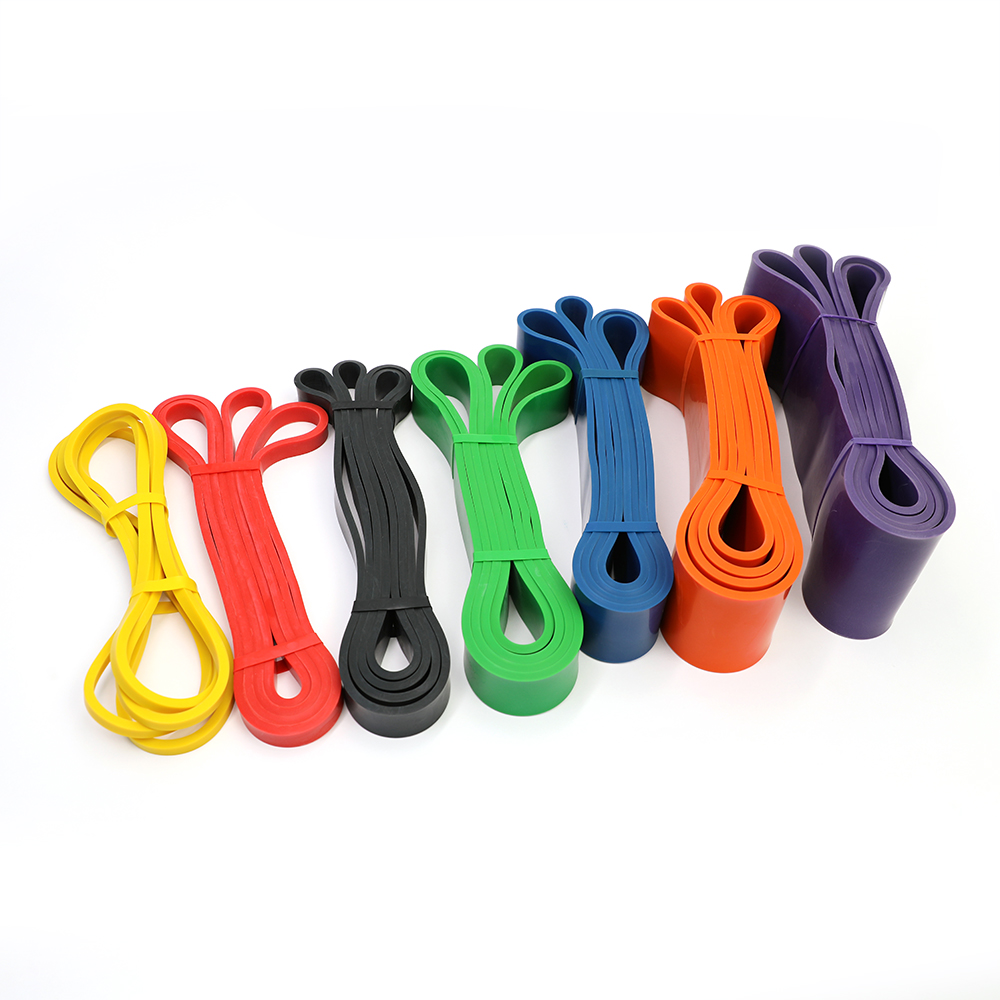
The ZLQ-03 is a long latex power loop built for exercises where the band is anchored — under a foot, around a rack, through a door anchor — and stretched across a longer distance. Its resistance ceiling is more than five times that of the ZLQ-1.
Published specifications for the model:
- Material: latex
- Thickness: 0.45mm
- Width: 6.4–82.5mm
- Length: 2080mm
- Resistance range: 8–230LB
- Variant: double layer construction available for heavier loads
- Primary uses: gym training, home workouts, rehabilitation, yoga, physical therapy, outdoor training
The 2080mm length is the operative number. It allows the band to be anchored at one end and pulled at the other while retaining enough stretch range to keep tension through a full repetition. The 6.4–82.5mm width band is the second operative number: width, together with the 0.45mm latex thickness, is how a power loop is graduated from light assistance to heavy resistance within a single model family.
The double layer variant exists for the top of that range. Where a single-layer loop reaches its practical limit under heavy loading, the double layer construction raises the load ceiling without changing the band format.
The Quality Evidence Behind Both Models
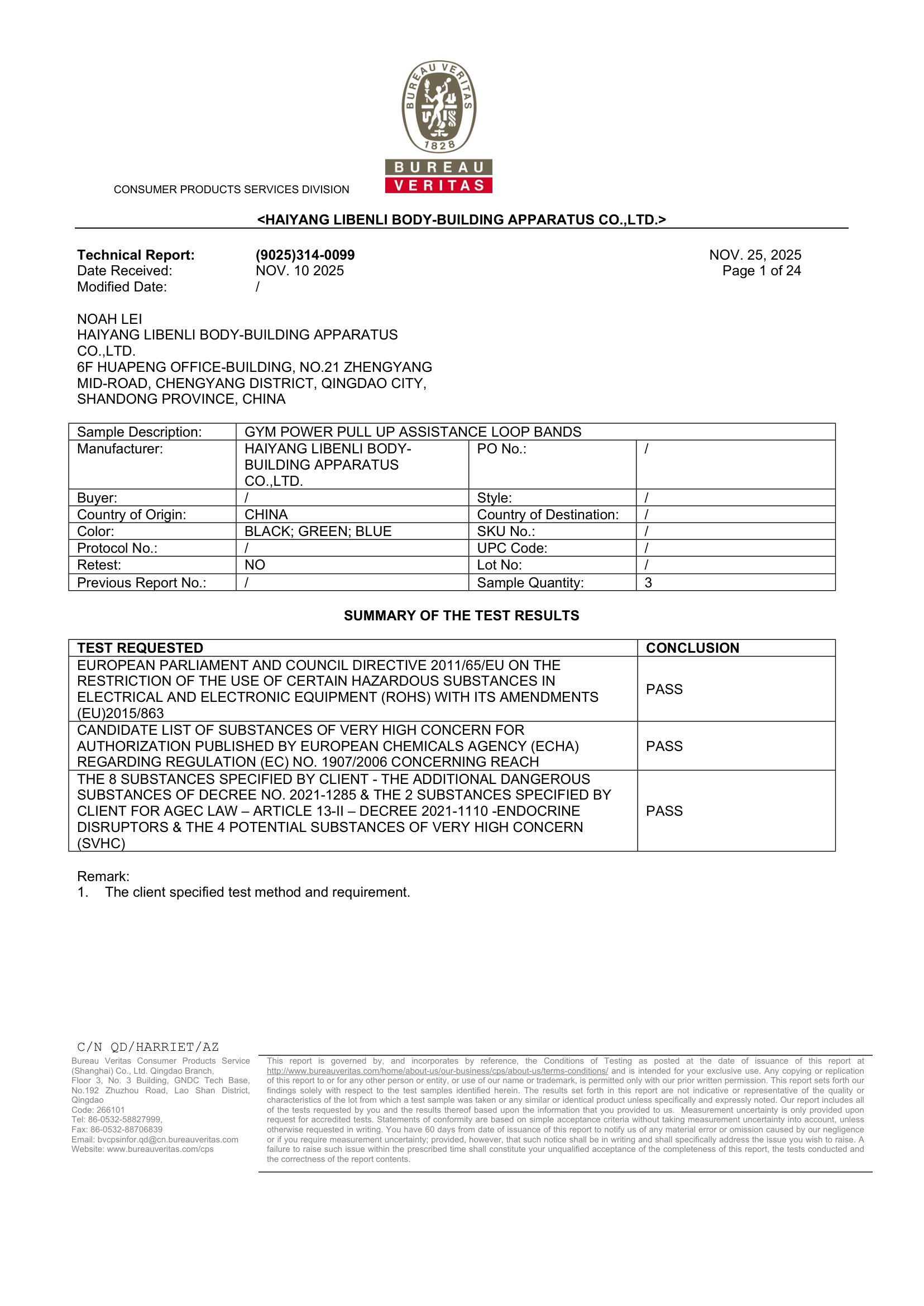
Model specifications are only as reliable as the manufacturing system behind them. Libenli holds ISO 9000:2000 quality certification obtained in 2005 and ISO 9001:2008 quality management system certification obtained in 2010, and most of its items are certified by SGS to meet international environmental and safety requirements.
Production capacity supporting those certifications:
- Factory area: 50,000 ㎡ with more than 300 employees
- Annual output: 65,000,000 units
- R&D team: more than 20 engineers
- 24 dedicated dipped latex tubing production lines at 120,000 meters per day
- 2 exclusive latex band production lines at 25,000 meters per day
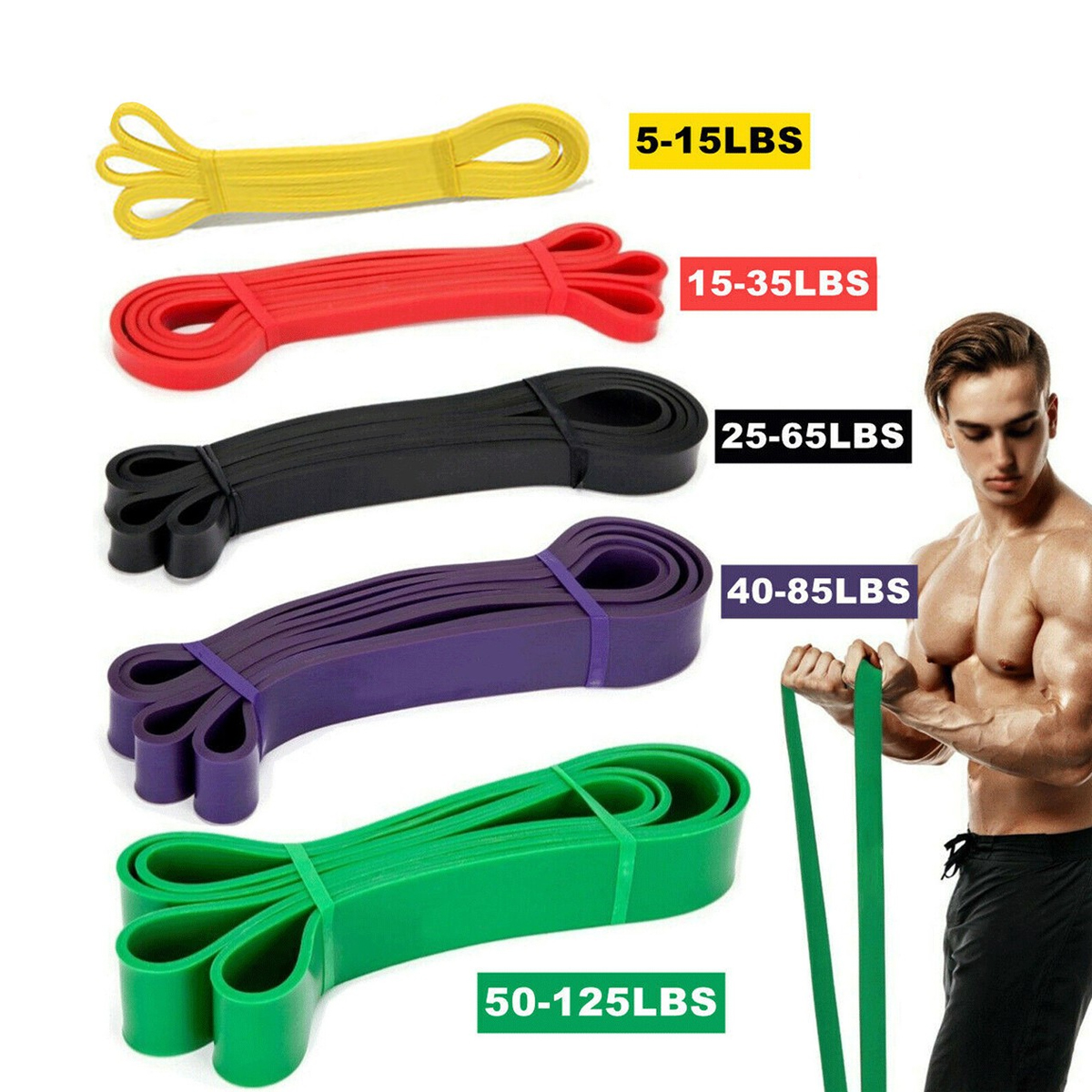
- 2 invention patents and 18 utility model patents
Risk control is documented at the process level. Product cracking and breakage risks are controlled through full physical performance testing, including stretch, tension and fatigue tests for all finished goods, and 100% raw material inspection runs before production. SGS toxic and heavy metal detection is part of the control set. For latex allergy risk, the manufacturer offers latex-free TPE alternative bands for allergic users, and defective products are covered by unconditional free return and replacement.
Step-by-Step: Choosing Between ZLQ-1 and ZLQ-03
The decision is a short sequence rather than a judgement call. Work through it in order.
- Name the training objective. If the exercise is activation, mobility, posture work, yoga, Pilates or early-stage rehabilitation, the target is control at low load. If the exercise is a compound movement performed against an anchor — squats, rows, presses, pull-up assistance — the target is progressive load.
- Match the resistance band to the objective. Control work sits inside 5–40LB, which is the ZLQ-1 range. Anchored strength work needs headroom, which is the 8–230LB ZLQ-03 range.
- Check the geometry against the movement. A 600mm circumference is correct when the band wraps a limb and stays there. A 2080mm length is correct when one end is fixed and the other travels.
- Confirm positional stability. For thigh and hip patterns, the anti-slip design of the ZLQ-1 removes the repositioning that interrupts a set. For anchored patterns, stability comes from the anchor point rather than the band surface.
- Check the load ceiling for heavy use. If the programme includes near-maximal resistance work, the ZLQ-03 double layer variant extends the range beyond the single-layer limit.
- Verify durability against repetition profile. High-repetition, low-load work — lateral walks, clamshells, shoulder rotations — is the ZLQ-1 profile at 30,000 stretches. Lower-repetition, higher-load work is the ZLQ-03 profile.
- Confirm material and compliance documentation. Both models sit inside a manufacturing system covered by ISO 9001:2008 and, for most items, SGS certification. Confirm the documentation package against the destination market before ordering.
Use Cases: Which Model Fits Which Indoor Programme
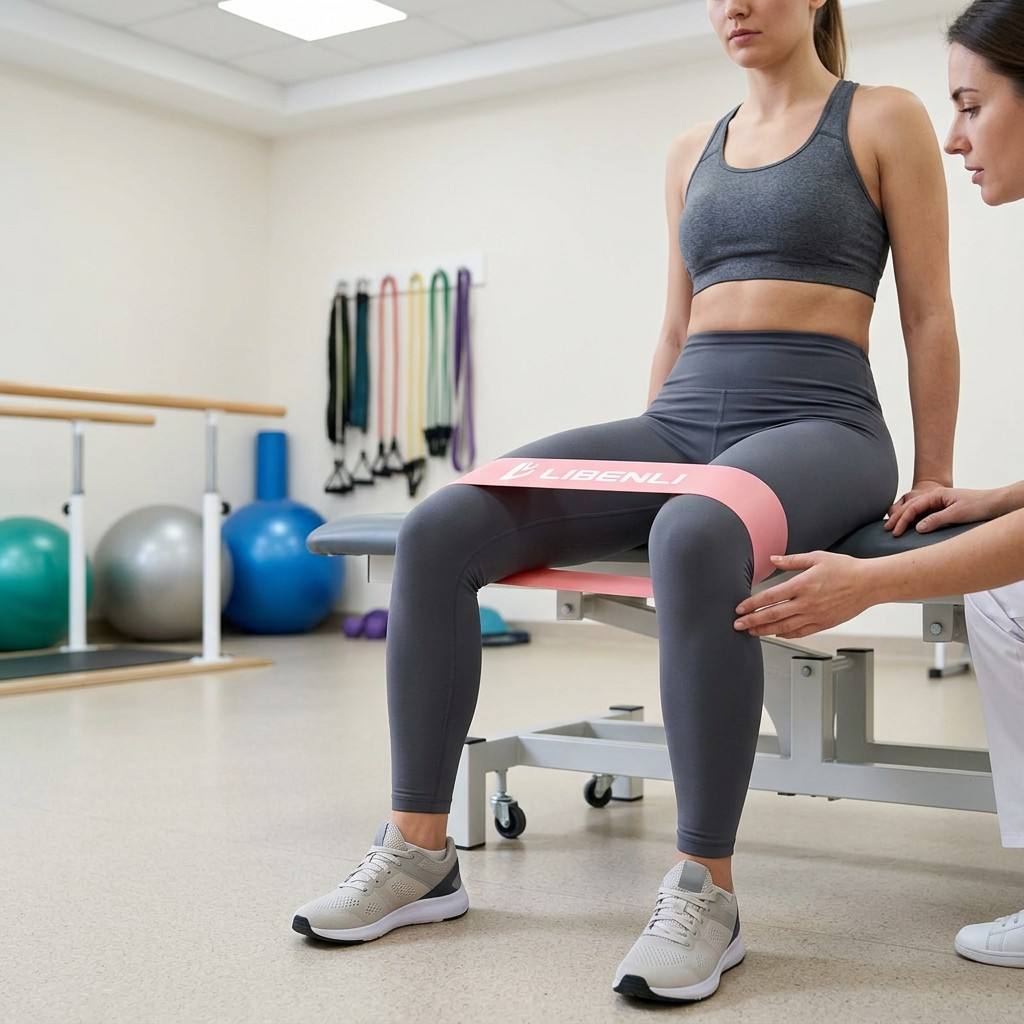
Where the ZLQ-1 Mini Loop Wins
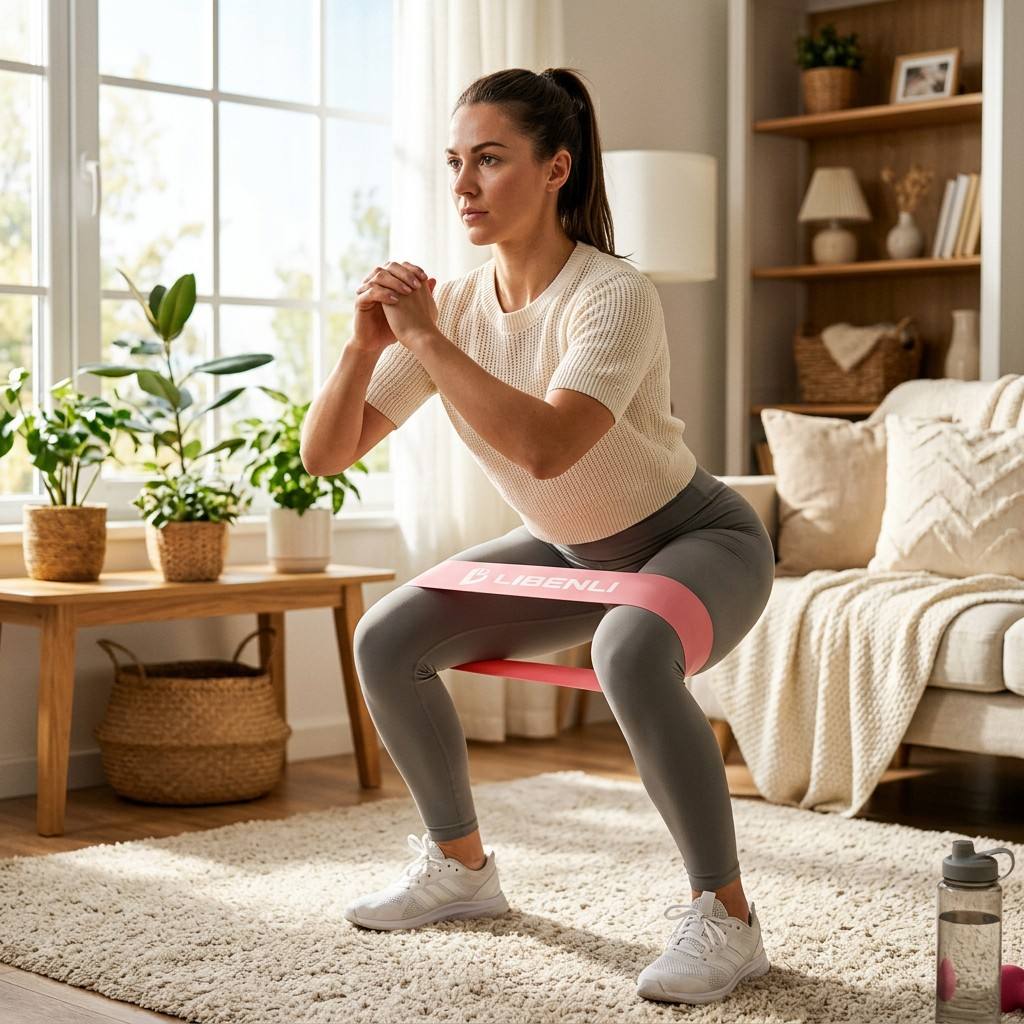
- Yoga and Pilates. Short-range resistance supports alignment and controlled movement without an anchor point. The 600mm loop fits around the limbs the way these disciplines require.
- Hip and glute training. Lateral band walks, clamshells, bridges and abductions depend on the band staying above the knee. The anti-slip design is the deciding feature here.
- Rehabilitation and physical therapy. Early-stage rehab uses light, repeatable resistance. The 5–40LB range and 30,000-stretch rating fit that repetition profile.
- Warm-up and activation protocols. Pre-lift activation is a low-load, high-repetition task, which is exactly the mini loop format.
Where the ZLQ-03 Power Loop Wins
- Home workout strength training. Anchored squats, rows, chest presses and pull-up assistance all require a long band with a resistance ceiling.
- Gym and CrossFit-style training. The 8–230LB range and the double layer variant cover assistance work through to loaded resistance work.
- Progressive rehabilitation. Once a patient moves from control work to loaded work, the power loop format provides the graduated resistance the mini loop cannot.
- Outdoor training. A 2080mm latex loop anchors to posts, rails and trees — the model is specified for outdoor use alongside indoor training.
- Yoga and physical therapy (loaded phases). The ZLQ-03 is also specified for yoga and physical therapy, covering the higher-resistance end of those disciplines.
Comparison Table: ZLQ-1 vs ZLQ-03 by Indoor Training Goal
| Rank | Model | Best training goal | Resistance range | Geometry | Construction | Durability / stability feature | Typical indoor scenarios |
|---|---|---|---|---|---|---|---|
| 1 | Libenli ZLQ-1 Mini Loop Band | Control, activation, mobility | 5–40LB | 600mm circumference | Mini loop format | Anti-slip design; 30,000-stretch durability | Yoga, Pilates, hip/glute work, rehab, physical therapy |
| 2 | Libenli ZLQ-03 Power Loop Band | Progressive load, anchored strength | 8–230LB | 2080mm length; 6.4–82.5mm width | Latex, 0.45mm thickness; double layer variant for heavier loads | Anchored long-loop construction; graduated width band | Gym, home workout, rehab, yoga, physical therapy, outdoor training |
Both models are supported by the same manufacturing system: ISO 9000:2000 (2005) and ISO 9001:2008 (2010) certification, SGS certification for most items, and full stretch, tension and fatigue testing on finished goods.
Budget and Cost-per-Use: The Part Buyers Often Skip
Price per piece and cost per use are not the same number, and indoor training puts a high repetition load on a band. The manufacturer’s own comparison data illustrates the gap: latex construction carries an initial acquisition cost roughly 15–20% higher than TPE, but a total cost of ownership around 50% lower because the usable lifespan is three to five times longer.
Three published performance points support that claim:
- Elongation: up to 600% versus approximately 300% for traditional TPE alternatives
- Fatigue resistance: 10,000+ stretch cycles with under 3% deformation, versus fewer than 2,000 cycles with significant permanent deformation in traditional alternatives
- Tension accuracy: a ±2% tension error margin against a ±15% industry average
For a gym, clinic or retail buyer, the practical reading is straightforward. Where a band is replaced frequently because tension has drifted or the surface has degraded, the lower purchase price is offset by replacement frequency. Where a band holds tension across thousands of cycles, the higher unit price amortises downward.
The maintenance profile reinforces the same point. An anti-oxidation coating produces zero powdering and, according to the manufacturer’s comparison data, around 90% fewer breakage incidents during high-frequency use than synthetic alternatives. Linear resistance efficiency is cited as 35% higher, meaning tension stays predictable through the full range of motion.
Frequently Asked Questions
What certifications support the ZLQ-1 and ZLQ-03 for indoor fitness use?
Both models sit inside Libenli’s certified quality system. The company holds ISO 9000:2000 quality certification obtained in 2005 and ISO 9001:2008 quality management system certification obtained in 2010, and most of its items are certified by SGS to meet international environmental and safety requirements. Production control includes 100% raw material inspection before production and full physical performance testing — stretch, tension and fatigue tests — on all finished goods, plus SGS toxic and heavy metal detection. Buyers should confirm the specific documentation package required for their destination market before ordering.
Can the ZLQ-03 handle heavy resistance work, and is there a stronger option?
Yes. The ZLQ-03 power loop covers 8–230LB, with a 0.45mm latex thickness, a 6.4–82.5mm width band and a 2080mm length. For heavier loads, a double layer variant of the same model is available, which raises the load ceiling while keeping the power loop format. The ZLQ-1 mini loop is a separate format intended for 5–40LB control work and is not a substitute for the ZLQ-03 at the top of the resistance range.
Is latex more expensive than TPE for indoor resistance bands?
On purchase price, yes — the manufacturer’s comparison data puts latex at roughly 15–20% higher initial acquisition cost than TPE. On total cost of ownership, the position reverses: latex is cited at around 50% lower total cost because the lifespan is three to five times longer. Supporting figures include up to 600% elongation versus approximately 300% for traditional TPE, and 10,000+ stretch cycles with under 3% deformation versus fewer than 2,000 cycles for traditional alternatives.
Can buyers request samples before placing a bulk order?
Yes. Sampling and specification confirmation are the normal first step before volume ordering, and both the ZLQ-1 and ZLQ-03 can be assessed against the resistance range, geometry and durability figures published for each model. Buyers working to a specific programme — a gym, a rehab clinic or a retail set — should confirm the exact model, resistance level and colour configuration at sample stage. Requests can be sent to public@libenli.cn.
How is supply capacity and lead time verified for indoor fitness orders?
Capacity is verified against published production figures: 24 dedicated dipped latex tubing lines at 120,000 meters per day, 2 exclusive latex band lines at 25,000 meters per day, a 50,000 ㎡ factory, more than 300 employees and annual output of 65,000,000 units. Lead time depends on model, resistance level, colour configuration and order volume, so it is confirmed against the specific order rather than quoted as a single figure. To check availability and lead time for a programme, contact Libenli at public@libenli.cn or WhatsApp +86 13864846995 with the model, quantity and destination market.
Conclusion
The ranking comes down to a single structural fact: indoor training needs two different bands, and these two models cover the two ends cleanly. The ZLQ-1 mini loop band ranks first for control — 5–40LB, 600mm circumference, an anti-slip design and a 30,000-stretch durability rating, aimed at yoga, Pilates, hip and glute training, rehabilitation and physical therapy. The ZLQ-03 power loop band ranks first for load — latex construction at 0.45mm thickness, 6.4–82.5mm width, 2080mm length and 8–230LB resistance, with a double layer variant for heavier work, aimed at gym, home, rehab, yoga, physical therapy and outdoor training.
Both are backed by a manufacturer established in 1997, operating a 50,000 ㎡ facility with ISO 9000:2000 and ISO 9001:2008 certification and SGS certification for most items. For buyers judging the decision on cost per use rather than price per piece, that manufacturing and testing base is the part of the specification that determines how long the number on the label stays true.
Next Step: Match a Band to Your Programme
If you are specifying resistance bands for a gym, a rehabilitation clinic, a retail set or a home training programme, the fastest route is a sample and a specification check against the resistance range and geometry you actually need.
Browse the full range at latextubing.com, download the product catalogue at Libenli catalogue (PDF), or send your model, resistance level and quantity to public@libenli.cn / WhatsApp +86 13864846995 for a quote and lead-time confirmation.
Market data: Grand View Research, Resistance Bands Market Size And Share Report, 2025–2030. Material segmentation: TechSci Research. Standards reference: ISO 20957-2:2024. Model specifications, certification details and manufacturing figures: Haiyang Libenli Body-Building Apparatus Co., Ltd.
Have Questions or Need More Details?
Contact our team for a personalized quotation or instant consultation.
Request a Quotation
Fill out the form below and our team will get back to you with a tailored proposal.
WhatsApp Direct Chat
Prefer to chat in real-time? Message us on WhatsApp for instant assistance & quick answers.
- Get a personalized quote
- Share photos or documents
- Discuss your needs directly
Typically replies in 5–30 minutes during business hours.