Resistance Band Compliance: ISO 9001, SGS and Regional Buyer Checks
Compliance & Sourcing Guide
Resistance band compliance is three separate questions, not one certificate. Does the factory operate a certified quality management system? Do the specific models and materials carry valid product-level documentation? Will the goods meet the import and product expectations of the destination market? A supplier can answer one layer convincingly and still leave gaps in the other two — which is exactly where buyers at the research stage lose money.

This guide separates those three layers for latex resistance bands and shows what to request, in what order, and how to read the answers. It uses the published certification record of Libenli — Haiyang Libenli Body-Building Apparatus Co., Ltd., a manufacturer and exporter established in 1997 that designs, develops and produces latex tubing and latex resistance bands for markets including Germany, the USA, the UK, France and Canada — together with two product families, the ZLQ-1 mini loop band and the ZLQ-03 power loop band, as worked examples.
Why “Certified” Is Too Vague to Compare
Compliance claims are difficult to compare because the same word covers three different kinds of evidence. A management-system certificate describes how a factory controls its processes. A product report describes what was tested on a specific item. A market requirement describes what an importer must be able to declare at the border or to a retailer’s quality team. None of the three substitutes for the others.
ISO 9001 belongs to the first group. The certificate confirms that the production system is documented, controlled and auditable; it does not state a resistance level, an elongation limit or a chemical threshold for any individual band. Libenli’s record lists an ISO 9000:2000 Quality Certification obtained in 2005 and an ISO 9001:2008 Quality Management System Certification obtained in 2010. Both are management-system documents and should be read for scope, certificate number, issuing body and validity date rather than treated as a product approval.
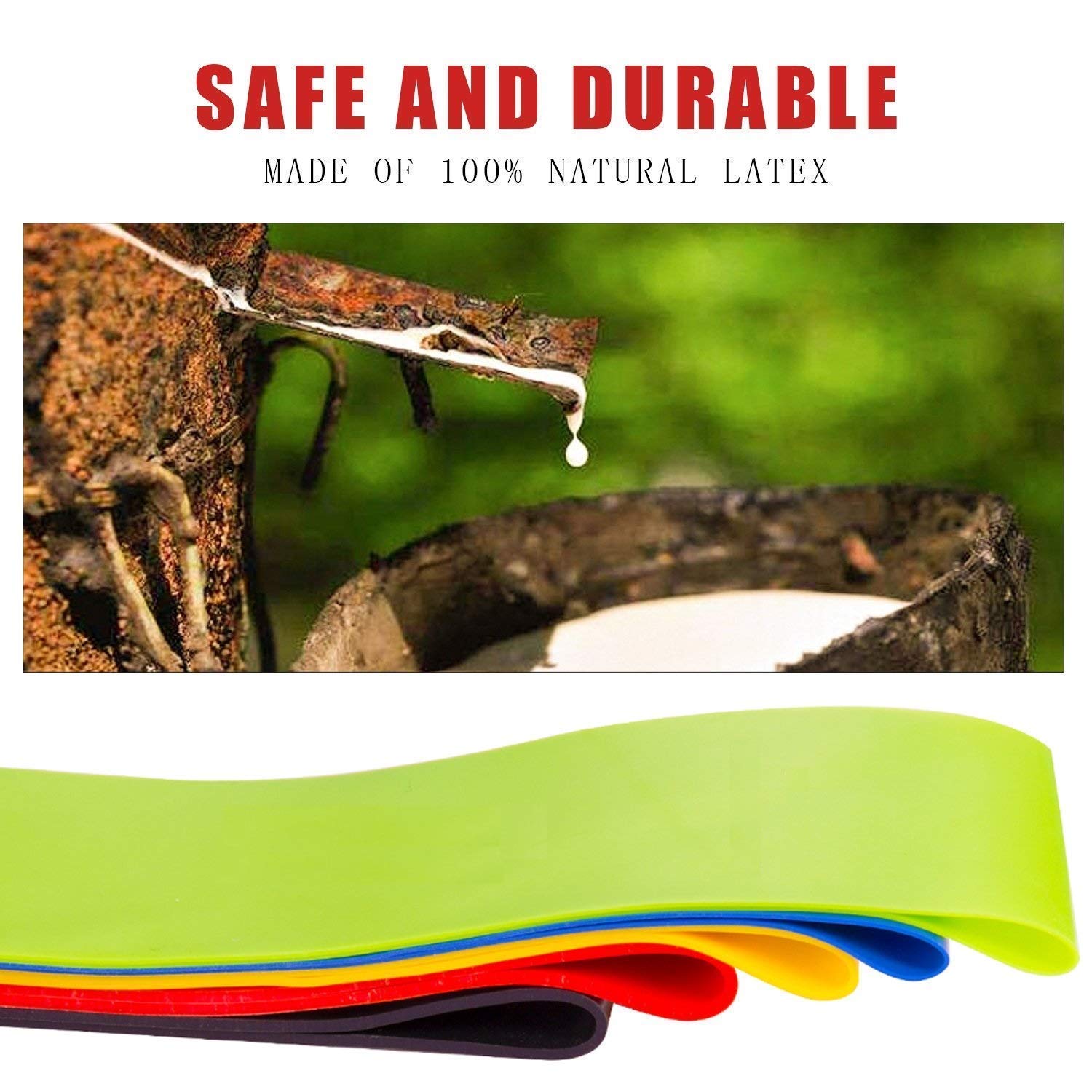
SGS documentation belongs to the second group. SGS is a testing, inspection and certification organisation, so an SGS document refers to defined items and defined tests — not to a product category in general. Libenli’s published record states that all goods are non-toxic and eco-friendly and that most items are certified by SGS to meet international environmental and safety requirements. “Most items” is the operative phrase: the buyer still has to ask which models and which materials the documentation actually covers.
Regional requirements belong to the third group. These combine product-safety standards, which are often voluntary reference frameworks, with customs classification, which is not optional at all. A loop band that is fully documented on layers one and two can still create a landed-cost surprise if its tariff treatment is assumed rather than checked.
Read every supplier claim against one of three questions:
- System: which edition, which scope, which issuing body, which validity date?
- Product: which model, which material, which test method, which report date?
- Market: which classification, which declaration, which labelling obligation?
What the Standards Landscape Actually Covers
Resistance bands are typically manufactured from latex, TPE or fabric, and the material choice changes both the documentation a supplier must be able to produce and, in several markets, the customs treatment of a simple loop.
On product safety, the ISO 20957-2 series is the closest published reference for equipment that uses elastic resistance. ISO 20957-2:2020, published on 1 November 2020, specifies safety requirements for stationary strength training equipment using alternative means of resistance such as elastic cords. A 2024 edition, ISO 20957-2:2024, was published on 19 September 2024 with the same focus. ASTM International separately lists ASTM F2276-23, a standard specification for fitness equipment, among its sports and recreation standards.
Applicability caveat. Neither standard listing establishes that a standalone loop band must be certified to ISO 20957-2 or ASTM F2276-23, and neither confirms that these documents were written specifically for standalone resistance bands. Whether a given band falls within scope depends on its configuration and intended use. That judgement belongs with the supplier’s technical team, the testing laboratory and, where relevant, the market regulator — not with a certificate logo on a product page.
On trade, the UK Government’s tariff notice 18 (2022) shows how narrow product classification can be. The notice states that the heading covering articles for general physical exercise does not include resistance bands, fitness bands or similar products such as simple loops without handles; those may instead be classified according to their constituent material, including headings 4008, 4016 or 6307. Classification depends on the objective characteristics of the product and its material, so a latex loop and a TPE loop are not automatically treated the same way, and a set with handles is not automatically treated like a plain loop.
Libenli’s Compliance Record, Layer by Layer
Haiyang Libenli Body-Building Apparatus Co., Ltd. (Libenli) is a Chinese manufacturer and exporter established in 1997, specialising in the design, R&D and production of latex tubing and latex resistance bands. Its main markets are Germany, the USA, the UK, France and Canada, and export business accounts for 70% of total sales. That record can be read against the three layers described above.
Layer 1 — Management system and company standing
The company holds an ISO 9000:2000 Quality Certification obtained in 2005 and an ISO 9001:2008 Quality Management System Certification obtained in 2010, plus a 3A Credit Rating Certificate issued by the Ministry of Commerce of China and CCPIT. For a buyer, the useful checks are the certificate number, the issuing body, the stated scope and the validity period. Because the certificate editions are stated as ISO 9000:2000 and ISO 9001:2008, it is worth asking the supplier to confirm that the current document set, including any recertification, matches the certificates you are sent. It is also worth confirming that the scope wording covers latex resistance bands, not latex tubing alone — a distinction that matters for any supplier whose range spans both.
Layer 2 — Product-level environmental and safety documentation
Libenli states that all goods are non-toxic and eco-friendly and that most items are certified by SGS to meet international environmental and safety requirements. Because the wording is “most items”, the practical request is a report reference per model and per material rather than a general statement. For a mini loop band such as the ZLQ-1, which is offered in Latex or TPE, that distinction is substantive: one model name can describe two different material constructions, and a report issued for one construction does not automatically describe the other.
Layer 3 — Production evidence behind the paperwork
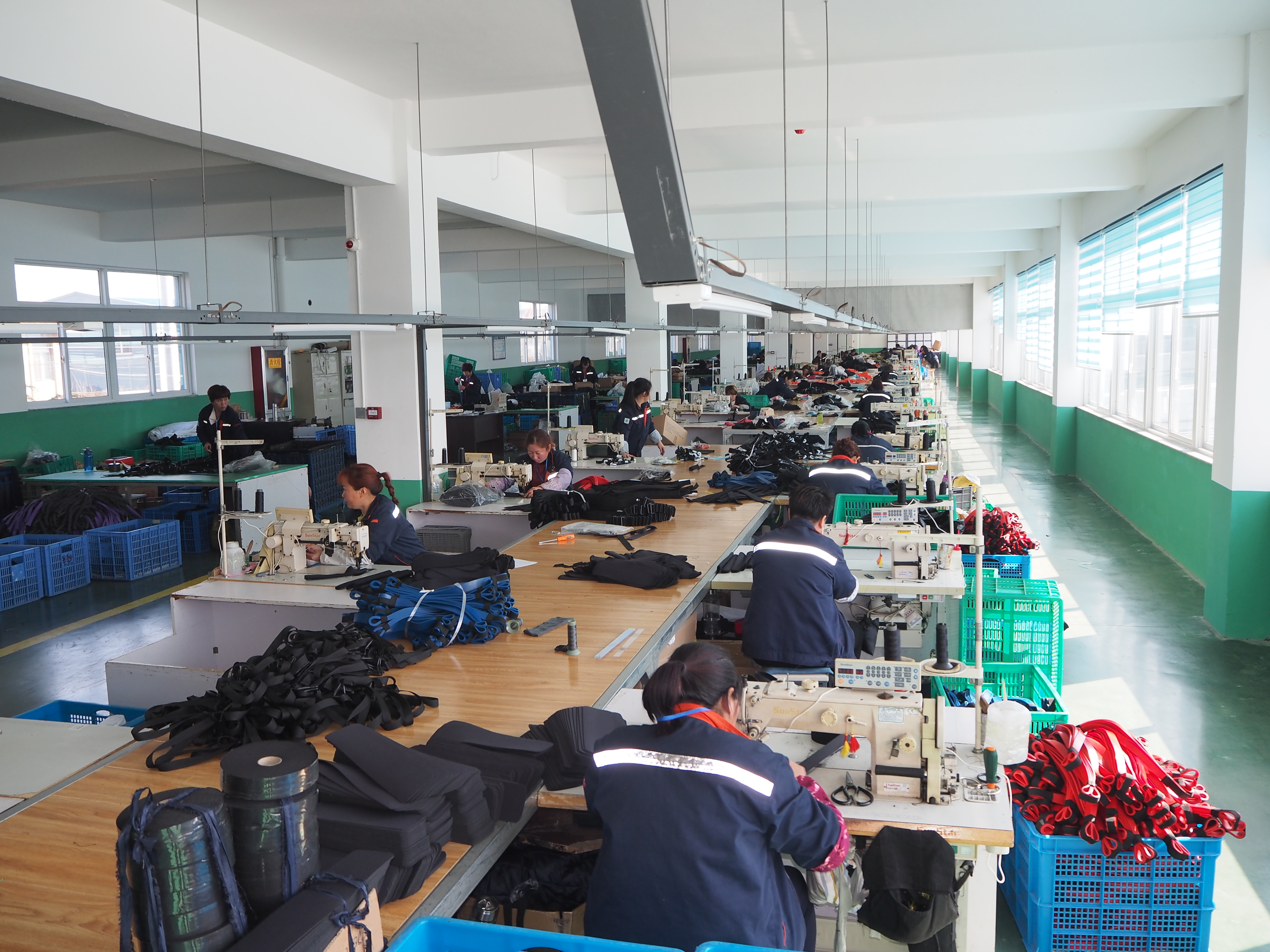
The factory covers 50,000 square metres and employs approximately 300 staff, including an R&D team of 20 engineers. Production is organised around 24 dedicated lines for dipped latex tubing with a daily output of 120,000 metres, plus 2 exclusive production lines for latex bands with a daily capacity of 25,000 metres; annual production capacity reaches 65,000,000 units. The company holds 2 invention patents and 18 utility model patents. The relevance for compliance is direct: a quality management system can only be audited where a real production process exists to control. Dedicated band lines, an in-house engineering team and a documented patent portfolio are the conditions under which process control is verifiable rather than declarative.
The two reference models
The ZLQ-1 is a mini loop band with an anti-slip design, made of Latex or TPE, with a thickness of 0.3mm–1.2mm, a width of 50mm, a circumference of 600mm and a resistance range of 5LB–40LB; fatigue resistance is at least 30,000 stretches. It is intended for home fitness and is also used in yoga and Pilates, hip and glute training, sports rehabilitation, physical therapy and gym training equipment.
The ZLQ-03 is a power loop band, also available as a double layer power loop band, made of Latex, with a thickness of 0.45mm, a width of 6.4mm–82.5mm, a length of 2080mm and a resistance level of 8LB–230LB; service life is at least 20,000 stretches. It is used in fitness gyms, home workouts, sports rehabilitation, yoga training, physical therapy and outdoor training equipment.
Six Verification Steps Before You Place an Order
- Split the claim into layers. Ask the supplier to send management-system certificates, product-level reports and market documentation as three separate sets. A single “certified” statement tells you nothing about which of the three it refers to.
- Read the certificate, not the logo. Check edition, certificate number, issuing body, scope wording and validity. Compare the entity name on the certificate against the entity name on the quotation and the invoice.
- Match product documentation to model and material. For a mini loop band, confirm whether the documentation refers to the latex version, the TPE version or both. For a power loop band offered across a wide resistance range, confirm how many sizes the documentation covers.
- Ask which test standard and method were used. ISO 20957-2:2020 and ISO 20957-2:2024, and ASTM F2276-23, are useful reference frameworks for building a test plan. Ask the supplier and the laboratory to state in writing whether the product configuration falls within scope, rather than assuming it does.
- Confirm destination classification and declaration. Under UK tariff notice 18, simple loops without handles may be classified by constituent material — headings 4008, 4016 or 6307 — rather than under the general physical exercise heading. Request a written material declaration so the customs description matches the goods.
- Cross-check paperwork against production reality. Line count, plant area, workforce size, engineering headcount and patent records describe the process that a certificate is supposed to control. Where these cannot be verified through a factory audit or inspection, the paperwork carries less weight.
Where These Checks Change the Buying Decision
German or French distributor adding a mini loop band line
A distributor planning to list the ZLQ-1 in both latex and TPE needs material-specific documentation for each variant, not a single report reference. The 5LB–40LB resistance range and the 600mm circumference should appear consistently in the technical sheet, the packaging artwork and the declaration.
UK retailer sourcing simple loops without handles
Because classification may follow constituent material under the UK guidance, the practical deliverable is a clear material declaration attached to the commercial invoice. This is a documentation task, not a negotiation point: the goods description must match the product.
US or Canadian brand owner building a power loop range
A range that spans 8LB–230LB across a width band of 6.4mm–82.5mm needs one documentation set per product family and a stated durability figure. The ZLQ-03 service life of at least 20,000 stretches is the kind of claim a retailer’s quality team can test against.
Rehabilitation clinic or gym project buyer
Project buyers usually need both durability and application fit. The ZLQ-1 fatigue resistance of at least 30,000 stretches and the ZLQ-03 figure of at least 20,000 stretches should be paired with the intended application — rehabilitation and physical therapy, gym training or outdoor training — before a specification is signed off.
Side-by-Side: Specifications and Evidence
The two tables below separate product facts from documentation facts. The first compares the two latex band models; the second maps each compliance layer to the buyer question it answers and to what Libenli’s published record actually states.
| Attribute | ZLQ-1 | ZLQ-03 |
|---|---|---|
| Category | Mini loop band with anti-slip design | Power loop band; also available as double layer power loop band |
| Material | Latex or TPE | Latex |
| Thickness | 0.3mm–1.2mm | 0.45mm |
| Width | 50mm | 6.4mm–82.5mm |
| Length / circumference | Circumference 600mm | Length 2080mm |
| Resistance range | 5LB–40LB | 8LB–230LB |
| Durability | Fatigue resistance ≥30,000 stretches | Service life ≥20,000 stretches |
| Typical applications | Home fitness, yoga & Pilates, hip & glute training, sports rehabilitation, physical therapy, gym training equipment | Fitness gym, home workout, sports rehabilitation, yoga training, physical therapy, outdoor training equipment |
| Layer | Buyer question | What Libenli’s published record states |
|---|---|---|
| Quality management system | Is the production process certified, by whom, and to which edition? | ISO 9000:2000 Quality Certification (2005); ISO 9001:2008 Quality Management System Certification (2010) |
| Company standing | Is there third-party recognition of the company’s credit standing? | 3A Credit Rating Certificate issued by the Ministry of Commerce of China and CCPIT |
| Product documentation | Are the goods non-toxic and eco-friendly, and which items are covered by testing? | All goods non-toxic and eco-friendly; most items certified by SGS to meet international environmental and safety requirements |
| Production capability | Can the documentation be backed by real manufacturing? | Plant of 50,000 m², approximately 300 staff; 24 dipped latex tubing lines at 120,000 m/day; 2 latex band lines at 25,000 m/day; annual capacity 65,000,000 units |
| Technical depth | Is there in-house engineering behind the specification? | R&D team of 20 engineers; 2 invention patents and 18 utility model patents |
| Export experience | Has the supplier shipped to my market? | Exports 70% of total sales; main markets Germany, USA, UK, France and Canada |
Frequently Asked Questions
Which certifications should a resistance band supplier hold before you evaluate samples?
Look for three separate sets rather than one logo. At system level, Libenli holds an ISO 9000:2000 Quality Certification obtained in 2005 and an ISO 9001:2008 Quality Management System Certification obtained in 2010, plus a 3A Credit Rating Certificate issued by the Ministry of Commerce of China and CCPIT. At product level, the company states that all goods are non-toxic and eco-friendly and that most items are certified by SGS to meet international environmental and safety requirements. At market level, ask for the classification and declaration relevant to your destination. Request the certificate scope, number and validity date for each set.
Are Libenli’s latex resistance bands non-toxic and eco-friendly?
The company states that all goods are non-toxic and eco-friendly, and that most items are certified by SGS to meet international environmental and safety requirements. Because the statement covers “most items”, buyers should confirm which models and which materials are included in the SGS documentation — a point that matters for the ZLQ-1, which is offered in both Latex and TPE constructions under the same model name.
Do ISO 20957-2 or ASTM F2276-23 automatically make a resistance band compliant?
No. ISO 20957-2:2020, published on 1 November 2020, and ISO 20957-2:2024, published on 19 September 2024, specify safety requirements for stationary strength training equipment using alternative resistance means such as elastic cords. ASTM International lists ASTM F2276-23, a standard specification for fitness equipment. Neither listing establishes that a standalone loop band must be certified to these documents, and applicability depends on the product’s configuration and intended use. They are best used as reference frameworks for agreeing a test plan with the supplier and the laboratory.
How does material choice affect customs classification for simple resistance loops?
More than many buyers expect. UK Government tariff notice 18 (2022) states that the heading covering articles for general physical exercise does not include resistance bands, fitness bands or similar products such as simple loops without handles, and that these may be classified according to constituent material, including headings 4008, 4016 or 6307. Classification depends on the objective characteristics of the product and its material. The practical step is to request a written material declaration so the customs description matches the goods actually shipped.
How can buyers request samples, test documents or the product catalog?
Buyers can contact Libenli directly by email at public@libenli.cn, by telephone or WhatsApp on +86 13864846995, and can reference the specific model under evaluation — the ZLQ-1 mini loop band or the ZLQ-03 power loop band — together with the destination market, so that the certificate set, SGS documentation references and material declaration can be prepared for the same product configuration in one exchange.
Conclusion
Resistance band compliance is verifiable when it is broken into layers. A management-system certificate such as ISO 9001:2008 tells you how the factory controls production. Product-level documentation such as SGS reports tells you what was tested on a specific model and material. Market requirements — the ISO 20957-2 series, ASTM F2276-23 as reference frameworks, and customs classification such as the UK guidance on simple loops — tell you what an importer must be able to declare. Libenli’s record addresses all three levels in a traceable way: management-system and credit certifications, product documentation covering most items, dedicated latex band capacity of 25,000 metres per day, and an export base concentrated in Germany, the USA, the UK, France and Canada.
The buyer’s discipline is to keep the layers separate, ask for the scope of each document rather than the logo, and match every claim to a model, a material and a destination. That is what converts a certificate into a decision.

Next step: request samples, SGS documentation references or a quote for the ZLQ-1 mini loop band and the ZLQ-03 power loop band.
Email: public@libenli.cn | Tel / WhatsApp: +86 13864846995 | Website: www.latextubing.com
Download the product catalog: Libenli catalog (PDF)
Have Questions or Need More Details?
Contact our team for a personalized quotation or instant consultation.
Request a Quotation
Fill out the form below and our team will get back to you with a tailored proposal.
WhatsApp Direct Chat
Prefer to chat in real-time? Message us on WhatsApp for instant assistance & quick answers.
- Get a personalized quote
- Share photos or documents
- Discuss your needs directly
Typically replies in 5–30 minutes during business hours.