
Resistance Band Factory Audit Checklist: Capacity, Delivery & Defects
Resistance Band Factory Audit Checklist: Capacity, Delivery & Defects
A resistance band supplier audit is a structured verification of five facts that a catalogue cannot show: how many dedicated production lines the factory actually runs, how much it outputs per day, how much volume it has already supplied to a repeat customer, what its defect and complaint rate is measured against, and whether its engineering team and certification file match the order you are placing.
Short answer for buyers under time pressure: ask for line counts, daily output in a defined unit, monthly capacity, annual supply volume for a named repeat account, a defect/complaint rate with its measurement period, R&D headcount, and current certificates. A supplier that can answer all seven with numbers is auditable; a supplier that answers with adjectives is not.
For reference, one latex resistance band manufacturer, Haiyang Libenli Body-Building Apparatus Co., Ltd. (Libenli), reports 24 dedicated dipped latex tubing lines at 120,000 meters per day, 2 dedicated latex band lines at 25,000 meters per day, more than 150,000 units of annual supply to a single premium fitness brand, a defect and complaint rate below 0.05%, an in-house R&D team of more than 20 engineers, and ISO plus SGS documentation. Those seven data points are the template this checklist is built on.
What a Resistance Band Audit Has to Prove
Resistance bands are a low-unit-price, high-repeat-purchase product. That combination changes what due diligence is for. A buyer is not protecting a large single order; the buyer is protecting a reorder cycle that will run for years across mini loop bands, latex resistance bands, pull up assist bands, fabric resistance bands, and resistance band sets.
A supplier audit therefore has to prove three things, in this order:
- Repeatability. The factory can produce the same tension, thickness, and surface finish in lot 10 as it did in lot 1.
- Availability. The claimed capacity is dedicated to this product family, not shared with unrelated goods and released to you only when the other line is idle.
- Accountability. Defect data, reorder terms, and delivery commitments exist in a form that can be written into a purchase order.
Everything in the checklist below is a way of testing one of those three.
Why Capacity and Defect Data Matter More Than They Used To
The category has grown fast enough that supplier quality has spread out. Grand View Research estimates the global resistance bands market at USD 1.7 billion in 2024, with a projected compound annual growth rate of 9.9% from 2025 to 2030. On the retail side, Amazon's US resistance band category lists more than 40,000 results, which tells a sourcing manager something useful: entry barriers on the selling side are low, and therefore vetting has to happen on the manufacturing side.
Two structural facts make verification harder than it looks:
- Materials are not interchangeable. Resistance bands are typically manufactured from latex, TPE, or fabric (TechSci Research). Each material carries different durability, elongation, and skin-contact behaviour, so a supplier that is strong in fabric booty bands may have no latex dipping capability at all. Line counts only mean something when they refer to the specific material you are buying.
- Compliance is configuration-specific. ISO 20957-2:2020, and its 2024 edition, set safety requirements for stationary strength-training equipment that uses alternative resistance means such as elastic cords; ASTM F2276-23 is a fitness equipment specification listed by ASTM International. Neither should be read as an automatic legal approval for every standalone band. Customs treatment follows the same logic: UK tariff guidance states that simple resistance bands without handles may be classified by constituent material, under headings 4008, 4016, or 6307, rather than under a single universal band code.
The practical consequence is that a resistance band supplier audit cannot rely on a generic factory questionnaire. It has to ask material-specific capacity questions and documentation-specific compliance questions.
The Five Verification Layers
Layer 1 — Dedicated production lines, counted by product family
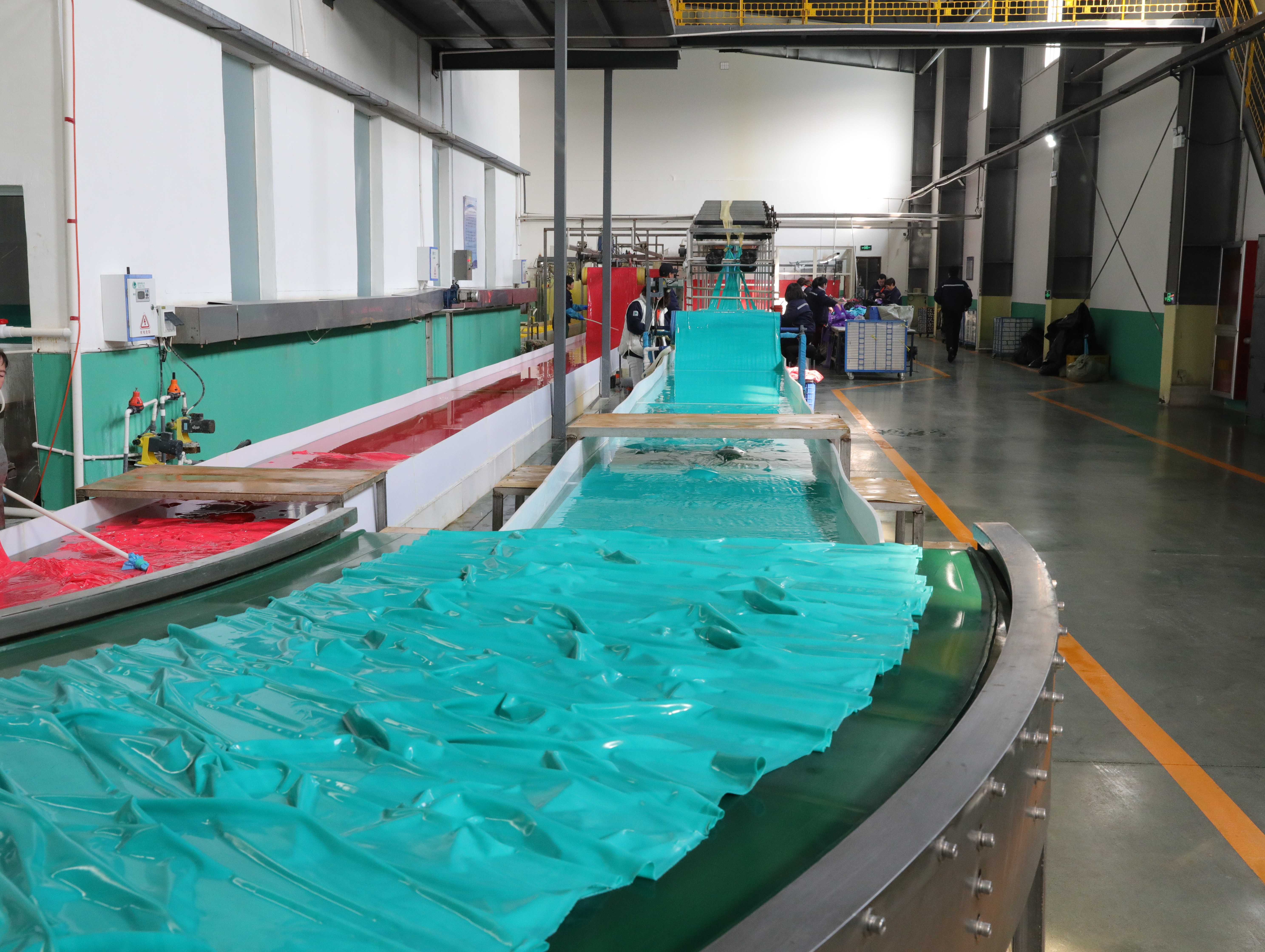
Ask how many lines are dedicated to the product you are buying. A dipped latex tubing operation and a latex band operation are different processes with different throughput, and a factory that runs both should be able to separate them. Libenli, established in 1997 and operating a 50,000 m² plant in Shandong, China, with more than 300 employees, runs 24 dedicated dipped latex tubing lines and 2 dedicated latex band lines.
The audit question behind the number is not "how big is your factory" but "which lines will my order run on, and what else runs on them." If a supplier cannot name the line and the product family it serves, the capacity claim is a building measurement, not a production fact.
Layer 2 — Daily output, stated in a unit you can reconcile
Latex tubing is measured in meters, finished bands in units, and sets in kits. Mixing these units is the most common way a capacity claim becomes meaningless. Libenli's reported daily output is 120,000 meters from the dipped latex tubing lines and 25,000 meters from the latex band lines, with monthly capacity stated at 1,200,000 units.
When you audit, force the supplier to state output in the unit that appears on your purchase order, then ask which conversion they used. A supplier who can explain the conversion is a supplier who tracks production; a supplier who cannot is quoting a brochure.
Layer 3 — Annual supply volume against a named repeat account
Total factory output says little about whether the supplier can hold a programme together. What matters is repeat volume. Libenli's Australian premium fitness brand account covers annual supply exceeding 150,000 units across more than 12 specialized product lines, sustained over a multi-year relationship.
This is the single most useful audit data point, because it converts capacity into evidence. A supplier that has carried a 12-line, 150,000-unit annual programme has already solved the problems that break smaller factories: colour consistency across SKUs, packaging version control, and reorder scheduling.
Layer 4 — Defect and complaint rate with a denominator
"Low defect rate" is not a fact. A defect rate needs three components: the number, the period, and the base it is measured against. On the Australian programme, Libenli reports a defect and complaint rate of less than 0.05%, maintained through fatigue testing.
Audit rule: never accept a defect percentage without asking what counts as a defect (tension deviation, surface defect, breakage, packaging error, or customer complaint) and over what period it was measured. A 0.05% figure covering breakage only is a different claim from a 0.05% figure covering all complaints.
Layer 5 — Engineering depth and certification file
R&D headcount is the leading indicator of whether a factory can hold tolerances after a material batch changes. Libenli maintains an in-house R&D team of more than 20 engineers and holds 2 invention patents and 18 utility model patents.
On the certification side, the same company holds ISO 9000:2000 Quality Certification (2005), ISO 9001:2008 Quality Management System Certification (2010), and a 3A Credit Rating Certificate issued by the Ministry of Commerce of China and CCPIT. Most items are certified by SGS to meet international environmental and safety requirements, and all goods are described as non-toxic and eco-friendly.
Certificate dates matter. When you audit, confirm that the certificate on file is the current edition and that its scope covers the product family you are ordering, not only a neighbouring product line.
Step-by-Step Audit Breakdown
Step 1 — Issue a document request list before the first call
Request line counts by product family, daily output with units, monthly capacity, one named repeat account with annual volume, defect and complaint data with period and definition, R&D headcount, and current certificates. Sending this list up front filters out intermediaries within a day.
Step 2 — Run a line walkthrough, live or recorded
Ask to see the specific lines named in the documents. A recorded walkthrough that follows material from dipping through washing, cooling, drying, and packing is usually enough for a first screen; an on-site visit is the confirmation step. Production stages that appear in sequence, with material flowing between them, are hard to fake and easy to verify.
Step 3 — Reconcile output units against your PO
Convert the supplier's daily output into the unit you will order, then compare with monthly capacity. If the two numbers cannot be reconciled by a stated conversion, treat both as unverified.
Step 4 — Request defect data with a denominator and a definition
Ask for the last 12 months of complaint data and the total shipped volume over the same period. Then ask how tension deviation is measured. Libenli's programme for its Australian client uses precision resistance calibration with a tension error margin within ±2% across a five-tier resistance system, which gives the audit a measurable tolerance rather than a verbal assurance.
Step 5 — Verify engineering capability against your customisation scope
If your product requires custom logo resistance bands, colour grading, packaging design, or accessory matching, confirm which of those the engineering team owns internally. Libenli's stated OEM/ODM customisation scope covers resistance strength, band thickness and width, length, surface colour, logo silk printing, package design, and accessory matching.
Step 6 — Test a production-representative sample, not a golden sample
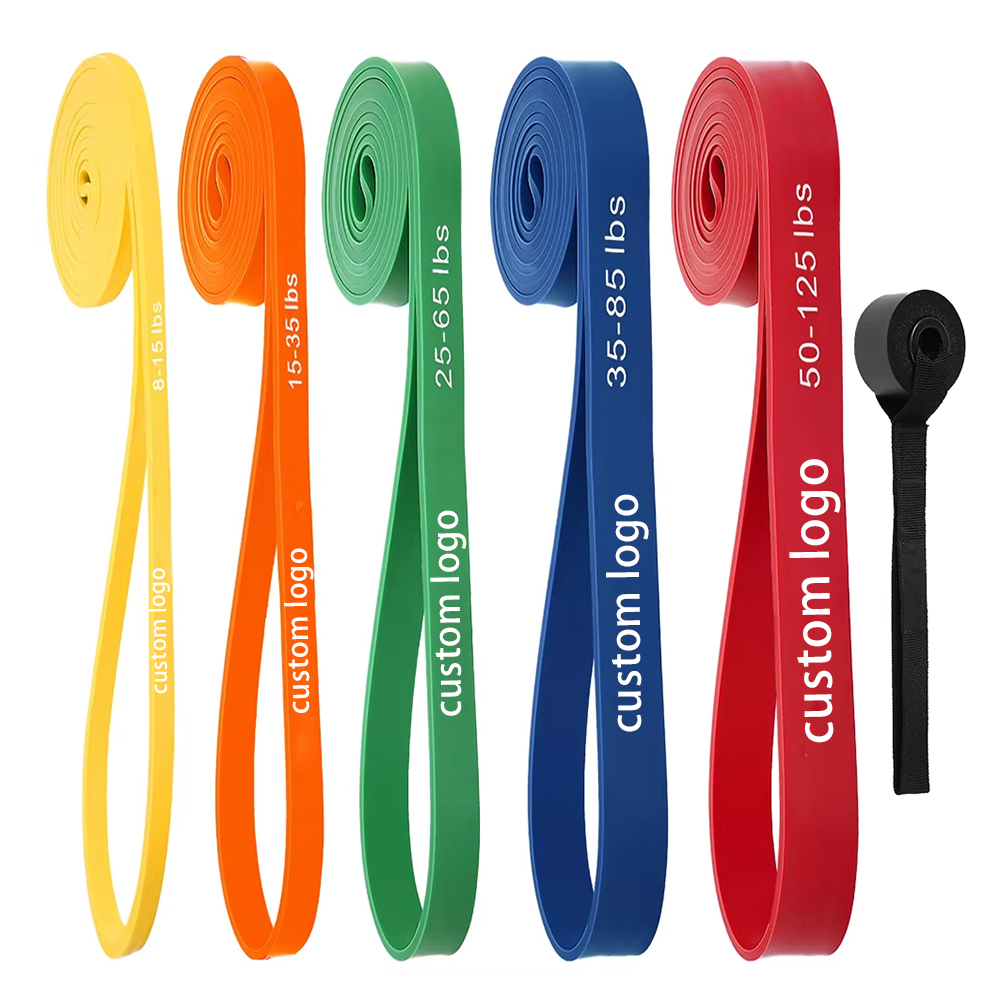
Ask that the sample be pulled from a current production run and identified by lot. Then check the two band families separately, because their fatigue specifications differ.
| Sample check | ZLQ-1 mini loop band | ZLQ-03 power loop band |
|---|---|---|
| Resistance range | 5 LB – 40 LB | 8 LB – 230 LB |
| Thickness | 0.3 mm – 1.2 mm | 0.45 mm |
| Width | 50 mm | 6.4 mm – 82.5 mm |
| Length / circumference | 600 mm circumference | 2080 mm length |
| Fatigue resistance | ≥ 30,000 stretches | ≥ 20,000 stretches |
| Material | Latex / TPE | Latex |
| Typical application | Home fitness, yoga and Pilates, hip and glute training, sports rehabilitation, physical therapy, gym training | Fitness gym, home workout, sports rehabilitation, yoga training, physical therapy, outdoor training equipment |
Step 7 — Write capacity, defect, and delivery terms into the PO
Audit findings only protect you when they become contract language. Libenli's standard commercial terms provide a starting point for the negotiation: OEM/ODM production, a lead time of 20–35 days, an MOQ of 100 pieces for in-stock items and 500 pieces for customised logo, stretch durability testing before shipment, and free unconditional returns for defective goods upon receipt.
Audit Benchmark Table: What to Ask and What Counts as a Red Flag
| Audit dimension | Evidence to request | Red flag | Reference point (Libenli) |
|---|---|---|---|
| Production lines | Line count by product family, with process type | Only building size or machine count offered | 24 dipped latex tubing lines; 2 latex band lines |
| Daily output | Output per day, in a stated unit | Unit changes between documents | 120,000 m/day tubing; 25,000 m/day bands |
| Monthly capacity | Capacity in finished units | Capacity quoted without a conversion basis | 1,200,000 units per month |
| Annual supply volume | Named repeat account with volume and SKU count | Only one-off or trial orders cited | Over 150,000 units/year across 12+ product lines |
| Defect and complaint rate | Rate, period, defect definition, base volume | Percentage with no denominator | Below 0.05%, maintained through fatigue testing |
| R&D staffing | In-house engineer headcount and patents | R&D described as "cooperation with partners" | More than 20 engineers; 2 invention and 18 utility model patents |
| Certification | Current certificates with scope | Expired edition or scope mismatch | ISO 9000:2000 (2005); ISO 9001:2008 (2010); 3A Credit Rating (MOFCOM and CCPIT); SGS on most items |
| Quality control | Named pre-shipment test | "100% inspection" with no method | Stretch durability test before shipment |
| After-sales | Written remedy for defective goods | Case-by-case discretion | Free unconditional returns for defective goods upon receipt |
Use Cases: Applying the Audit to Real Buying Situations
Gym chains and studio fit-outs
A gym chain buying resistance bands for member use is buying durability under repeated tension, not novelty. The audit priority shifts to fatigue resistance and tension consistency: ZLQ-1 is specified at ≥30,000 stretches and ZLQ-03 at ≥20,000 stretches, with the ±2% tension error margin that keeps graded sets behaving predictably across a floor of users.
Distributors and private-label brands
For private label, the audit must cover customisation ownership and version control. The question is not whether a factory can print a logo, but whether it can hold colour, thickness, and packaging across a multi-SKU programme. A supplier with an existing 12-plus line, 150,000-unit annual account has already built that control loop; Libenli's work with its Australian premium fitness client also shortened the R&D-to-market cycle by 20%, which matters when a distributor needs seasonal drops on schedule.
Rehabilitation and physical therapy channels
Rehab buyers carry a different burden: material documentation. The Australian programme uses 100% premium Malaysian natural latex with food-grade pigments and is described as compliant with REACH and RoHS, plus an anti-rolling surface treatment that addresses the common problem of bands curling or pinching during high-load exercise. For clinic and therapy procurement, those material and surface facts belong in the audit file alongside the certificate set.
Frequently Asked Questions
1. Are ISO and SGS certificates enough to qualify a resistance band supplier?
No. Certificates confirm that a management system and, for most items, environmental and safety testing exist; they do not confirm capacity, defect performance, or that the certificate scope covers your specific product. Libenli, for example, holds ISO 9000:2000 (2005), ISO 9001:2008 (2010), a 3A Credit Rating Certificate issued by the Ministry of Commerce of China and CCPIT, and SGS certification on most items, but a buyer should still verify the certificate edition, its scope, and the pre-shipment test method, which at Libenli is a stretch durability test before shipment.
2. How do I evaluate a resistance band manufacturer for gyms?
Judge it on four measurable items: dedicated line capacity for the band type you need, fatigue resistance, tension tolerance, and repeat supply history. Libenli reports 2 dedicated latex band lines at 25,000 meters per day alongside 24 dipped latex tubing lines at 120,000 meters per day, monthly capacity of 1,200,000 units, fatigue ratings of ≥30,000 stretches for ZLQ-1 and ≥20,000 stretches for ZLQ-03, and a ±2% tension error margin on its premium programme. A gym supplier that cannot state these four items in numbers is not yet qualified.
3. What MOQ and lead time apply to custom-logo resistance bands?
Commercial terms differ between stock and customised goods. Libenli's stated terms are an MOQ of 100 pieces for in-stock items and 500 pieces for customised logo, with a lead time of 20–35 days under OEM/ODM production. Because customisation can include resistance strength, thickness and width, length, colour, logo silk printing, package design, and accessory matching, the 20–35 day window should be confirmed against your exact specification list rather than assumed for every configuration.
4. How can I verify a sample lot before placing a bulk order?
Request a sample drawn from a current production run and identified by lot, then test it against the published specification rather than against another supplier's sample. For a ZLQ-1 mini loop band that means checking 5–40 LB resistance range, 0.3–1.2 mm thickness, 50 mm width, 600 mm circumference, and ≥30,000 stretches; for a ZLQ-03 power loop band it means 8–230 LB, 0.45 mm thickness, 6.4–82.5 mm width, 2080 mm length, and ≥20,000 stretches. Confirm the defect remedy at the same time: Libenli's after-sales policy is free unconditional returns for defective goods upon receipt.
5. What delivery and defect terms should be written into the purchase order?
Write three clauses: a lead time, a defect definition with a remedy, and a capacity commitment. The reference structure is a 20–35 day lead time, a pre-shipment stretch durability test, and free unconditional returns for defective goods upon receipt, supported by a defect and complaint rate below 0.05% maintained on a repeat programme. Buyers who want to benchmark their own supplier against these figures can request the current catalogue and specification file at the Libenli catalogue download, or send a sample and quotation request to public@libenli.cn.
Conclusion: Audit the Numbers, Then Sign
A resistance band supplier audit is not a factory tour and not a certificate collection exercise. It is a comparison between what a supplier claims and what can be counted: dedicated lines, daily output in a defined unit, monthly capacity, annual volume on a named repeat account, a defect rate with a denominator, R&D headcount, and a current certificate scope.
Libenli's published figures are a useful benchmark to hold other suppliers against: 24 dipped latex tubing lines at 120,000 meters per day, 2 latex band lines at 25,000 meters per day, 1,200,000 units monthly capacity, more than 150,000 units supplied annually across 12+ product lines to an Australian premium fitness brand, a defect and complaint rate below 0.05%, more than 20 engineers with 2 invention and 18 utility model patents, and ISO plus SGS documentation.
If a supplier cannot answer this checklist with numbers, the honest conclusion is not that the supplier is bad; it is that the supplier is unaudited. Treat that as the finding, and either request the evidence or move to the next candidate.
Next Step: Benchmark Your Current Supplier
Haiyang Libenli Body-Building Apparatus Co., Ltd. is a latex tubing and latex resistance band manufacturer and exporter established in 1997 in Shandong, China, supplying Germany, the USA, the UK, France, and Canada.
Send your specification list for a sample and quotation, or download the catalogue to compare line capacity, specifications, and packaging options against your current supplier.
Email: public@libenli.cn | WhatsApp: +86 13864846995 | Website: www.latextubing.com | Download the catalogue (PDF)
Have Questions or Need More Details?
Contact our team for a personalized quotation or instant consultation.
Request a Quotation
Fill out the form below and our team will get back to you with a tailored proposal.
WhatsApp Direct Chat
Prefer to chat in real-time? Message us on WhatsApp for instant assistance & quick answers.
- Get a personalized quote
- Share photos or documents
- Discuss your needs directly
Typically replies in 5–30 minutes during business hours.