
Resistance Band Partner Support: Libenli Warranty & Reorders
Resistance Band Partner Support: Libenli Warranty & Reorders
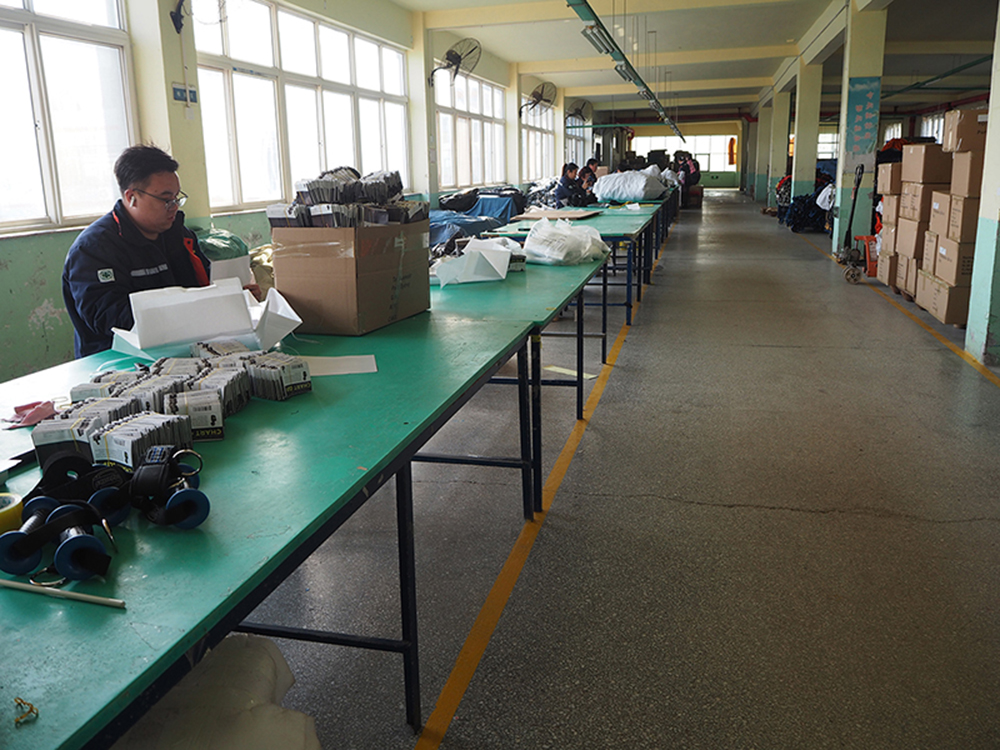
Long-term resistance band supply is decided after the first delivery, not in the first quotation. Buyers in an evaluation phase want three answers: who owns a defect claim, how a repeat order is scheduled, and whether the paperwork still holds when a retail customer audits them. Haiyang Libenli Body-Building Apparatus Co., Ltd. — a manufacturer and exporter of latex tubing and latex resistance bands founded in 1997 — answers these questions with a published after-sales commitment (free unconditional returns for defective goods upon receipt), ISO 9000:2000 and ISO 9001:2008 quality certifications, SGS certification on most products, and a monthly production capacity of 1,200,000 units with a typical production lead time of 20–35 days.
Partner Snapshot: Libenli at a Glance
- Entity: Haiyang Libenli Body-Building Apparatus Co., Ltd. (brand: Libenli), manufacturer and exporter of latex tubing and latex resistance bands, based in Shandong, China.
- Founded: 1997, with a 50,000 m² plant and more than 300 employees.
- Engineering: 20 R&D engineers; 2 invention patents and 18 utility model patents.
- Capacity: 1,200,000 units per month; 2 dedicated latex band lines producing 25,000 m per day, alongside 24 dipped latex tubing lines producing 120,000 m per day.
- Order terms: 20–35 day production lead time; MOQ of 100 pieces for in-stock items and 500 pieces for a customized logo.
- After-sales: free unconditional returns for defective goods upon receipt.
- Core models: ZLQ-1 mini loop band and ZLQ-03 pull up band.
- Contact: public@libenli.cn · +86 13864846995 (phone and WhatsApp).
The Problem: Most Supplier Evaluations Stop at the Sample
Resistance band sourcing is usually assessed on four numbers: price per piece, material, MOQ and lead time. Those four numbers describe a transaction. They do not describe a partnership, and they leave the expensive questions unanswered once the container has been received.
In practice, buyers who resell latex resistance bands, pull up assist bands or mini loop bands run into five recurring issues after order one:
- Defect ownership. When a batch of resistance loop bands shows premature tearing, unclear responsibility turns a quality issue into a negotiation.
- Specification drift. Resistance strength that shifts between production runs breaks the colour-coded or tier-based system a brand sells on.
- Reorder timing. A 20–35 day lead time is workable in February and painful in November, unless capacity and scheduling are confirmed in advance.
- Documentation currency. Certificates and test reports that were valid during sampling must still be presentable at a retail or customs audit a year later.
- Post-sale responsiveness. The commercial contact who answered quickly during sampling sometimes disappears after the first order.
Everything below addresses those five points using facts Libenli publishes about its own operation, plus documented third-party references where they apply.
Industry Background: What a Resistance Band Supply Relationship Involves
Resistance bands are typically manufactured from latex, TPE or fabric. Latex remains the reference material for elastic performance in pull up assist bands and heavy resistance bands, while TPE serves latex-free product lines and fabric is used for booty bands and cotton fabric exercise bands. Buyers comparing suppliers across these materials are effectively comparing three different supply chains, not three price points.
Market segmentation matters for planning repeat orders. Industry research segments the category into therapy bands, pull-up bands and exercise bands, with exercise bands reported as the segment with the highest growth. A supplier that can run both a mini loop band line and a long pull up band line is therefore better positioned to support a multi-SKU catalogue than one that only assembles a single format.
Two standards are frequently raised in buyer conversations and should be referenced accurately:
- ISO 20957-2:2024 specifies safety requirements for stationary strength-training equipment that uses alternative resistance means, including elastic cords.
- ASTM F2276-23 is a standard specification for fitness equipment listed by ASTM International.
Neither standard is automatically a mandatory approval for a standalone loop band. They are useful reference points when writing a test plan and when asking a supplier what was actually tested.
Customs documentation deserves the same care. UK tariff guidance (notice 18) states that simple resistance bands or fitness bands — for example simple loops without handles — may fall outside the general physical exercise heading and be classified according to constituent material, with headings 4008, 4016 or 6307 mentioned. The practical consequence is that a product description and material declaration must match the physical sample, otherwise landed-cost calculations drift.
Commercial pressure is another reason to look past the quotation. Amazon's US resistance bands category returns over 40,000 listings, which means retail differentiation rarely comes from the band alone — it comes from consistency, packaging, branding and the supplier's ability to repeat the same specification. Research houses also expect the category to keep expanding: Grand View Research valued the global resistance bands market at USD 1.7 billion in 2024 and projected a 9.9% CAGR for 2025–2030. Growth of that kind rewards supply continuity, not one-off sourcing.
Libenli's Long-Term Support, Fact by Fact
A quality system that predates the current fitness boom
Libenli obtained ISO 9000:2000 quality certification in 2005 and ISO 9001:2008 quality management system certification in 2010. The company also holds a 3A Credit Rating Certificate issued by the Ministry of Commerce of China and CCPIT, together with 2 invention patents and 18 utility model patents for new products. For a buyer building a long-term programme, the relevant point is not the certificate itself but its age: a management system that has been certified and maintained across more than a decade of production is a different risk profile from a supplier certified last quarter.
Quality control at shipment level is defined as a stretch durability test before dispatch. That is a pre-shipment check, not a laboratory characterisation study, so buyers with demanding performance requirements should pair it with their own incoming inspection or third-party testing.
Certification and test documentation buyers can file
All Libenli goods are described as non-toxic and eco-friendly, with most items certified by SGS. Beyond the SGS scope, a Bureau Veritas ROHS & REACH test report is held under certificate number (9025)314-0099, issued on 25 November 2025 against Directive 2011/65/EU (RoHS) and Regulation (EC) No. 1907/2006 (REACH), with a stated scope of GYM POWER PULL UP ASSISTANCE LOOP BANDS and linked to models ZLQ-03 and ZLQ-1.
That document pairing — a quality management certificate plus a substance-restriction test report naming the specific product family — is what most EU-facing retail buyers ask to see. Buyers should confirm that the model, material and colour they order fall inside the tested scope, and should keep a copy with the purchase order rather than only in an email thread.
Defect handling: what warranty means in practice
Libenli's published after-sales commitment is specific and narrow: free unconditional returns for defective goods upon receipt. In operational terms, the claim is settled at the receiving end rather than deferred to a repair cycle, which is what resellers of resistance band sets and elastic workout bands usually need, because a defective band cannot be repaired economically.
The clearest evidence of how that works at scale comes from an Australia-based programme with an international premium fitness brand. That project maintained a defect/complaint rate below 0.05% through fatigue testing and is described as delivering a 3–5 year service life under normal use. The case also documents a 20% reduction in the R&D-to-market cycle for the client and an annual supply volume exceeding 150,000 units across more than 12 specialized product lines.
Any additional warranty period, replacement allowance or credit note arrangement beyond the published returns policy should be written into the order contract, because commercial terms differ by market and product line. Libenli's published commitment is the returns policy above; everything else is a negotiated clause.
Capacity and the repeat-order rhythm
Monthly production capacity is 1,200,000 units, with a typical production lead time of 20–35 days. Behind that figure sit two dedicated latex band lines running 25,000 m per day and 24 dipped latex tubing lines running 120,000 m per day, with in-house CNC moulding and plastic injection equipment for accessories.
For planning purposes, the difference between a 1,200,000-unit monthly capacity and a single container order is the ability to absorb a second SKU, a packaging change or a seasonal spike without resetting the schedule. Buyers running multi-line programmes — for example a resistance band set with a mini loop band, a long resistance band and handles — should share a rolling forecast rather than issuing isolated purchase orders.
The two workhorse models: ZLQ-1 and ZLQ-03
Libenli's resistance band range centres on two formats. The ZLQ-1 is a mini loop band — the short loop format used for glute activation, hip work, lateral band walks and rehabilitation progressions. The ZLQ-03 is a pull up band, the long format used for assisted pull-ups, stretching progressions and heavier elastic loading.
Both models sit inside the same customization framework: resistance strength, band thickness and width, length, surface colour, logo silk printing, package design and accessory matching can all be specified. In the Australia programme, the customization went further, with a five-tier resistance system spanning Ultra Light to Ultimate at a tension error margin within ±2%, a proprietary latex formula based on premium natural latex with food-grade pigments, an anti-rolling surface treatment that addressed bands curling or pinching during high-load exercise, and anti-counterfeiting tracking on packaging.
That last technical point is worth separating from marketing language. Band curling and pinching under load is a genuine functional failure in heavy resistance bands and pull up bands; resolving it is a surface and formulation problem, not a branding problem. Buyers evaluating samples should load-test the band in the exact movement pattern their customers use and watch the edge behaviour.
Step-by-Step: Building a Repeatable Order Cycle with Libenli
The sequence below converts the facts above into a working process. Each step produces a document you can reference later, which is what makes a claim or a reorder enforceable.
- Write the specification before requesting a price. Define resistance strength, thickness and width, length, surface colour, logo artwork and packaging format for each SKU. Because Libenli customises on all of those parameters, an unstructured enquiry usually returns an unstructured quotation.
- Request samples and test them in use. Ask for the specific model — ZLQ-1 for a mini loop band programme, ZLQ-03 for a pull up band programme — and state the resistance level and colour coding you intend to sell. Test stretch recovery and edge behaviour under the load your end users actually apply.
- Confirm MOQ and the commercial basis. MOQ is 100 pieces for in-stock items and 500 pieces for a customized logo. Logo silk printing and package design change the minimum, so confirm both before committing to a launch quantity.
- File the compliance pack against the order. Collect the ISO 9000:2000 and ISO 9001:2008 certificates, the SGS certification scope covering the item, and the Bureau Veritas ROHS & REACH test report (9025)314-0099 where the EU or UK market is involved. Check that the ordered model is inside the tested scope.
- Agree the acceptance criteria in writing. Reference the pre-shipment stretch durability test, and add any inspection you intend to run on arrival. This is what turns the returns policy into a usable mechanism: defective goods can be returned free of charge upon receipt, but only against a defined specification.
- Plan the second order before the first ships. With a 20–35 day lead time and 1,200,000 units of monthly capacity, the realistic constraint is scheduling, not capability. Share a rolling forecast, name the reorder trigger, and keep a single contact for both commercial and technical questions.
Where This Support Model Fits
Private-label brands. A brand selling a resistance band set or custom logo resistance bands needs the same specification to arrive in month 12 as in month 1. Logo silk printing, package design and accessory matching are all in scope, and the anti-counterfeiting tracking used in the Australia programme is directly relevant to a branded catalogue.
Commercial gyms and studio fit-outs. Gyms buying heavy resistance bands for assisted pull-ups and group programming care about service life and edge behaviour under repeated load. The documented 3–5 year service life under normal use and the anti-rolling surface treatment address both, and the ZLQ-03 format is the appropriate model for pull-up assistance stations.
Physiotherapy and rehabilitation suppliers. Rehab buyers typically need soft, precisely graded resistance and a stable colour-to-resistance mapping. A mini loop band programme built on the ZLQ-1 with a defined resistance ladder — as in the five-tier system described above — is easier to teach to clinicians than a range assembled from mixed suppliers.
Importers and distributors. Distributors carrying latex resistance bands, TPE resistance bands and fabric resistance bands across several brands need a supplier who can schedule multiple lines without losing the schedule. Monthly capacity of 1,200,000 units and a 20–35 day lead time are the numbers to model against, and export coverage already includes North America, the EU, Australia, Southeast Asia, the Middle East, Japan and South Korea.
ZLQ-1 vs ZLQ-03: Specification and Support Comparison
| Parameter | ZLQ-1 (mini loop band) | ZLQ-03 (pull up band) |
|---|---|---|
| Format and typical programme | Short loop; glute activation, hip work, lateral walks, rehab progressions | Long band; assisted pull-ups, stretching progressions, heavier elastic loading |
| Customization options | Resistance strength, thickness and width, length, surface colour, logo silk printing, package design, accessory matching | Resistance strength, thickness and width, length, surface colour, logo silk printing, package design, accessory matching |
| MOQ (company terms) | 100 pieces in-stock; 500 pieces with customized logo | 100 pieces in-stock; 500 pieces with customized logo |
| Production lead time | 20–35 days | 20–35 days |
| Pre-shipment quality control | Stretch durability test before shipment | Stretch durability test before shipment |
| Defect policy | Free unconditional returns for defective goods upon receipt | Free unconditional returns for defective goods upon receipt |
| Certification reference | Listed as a related product on Bureau Veritas ROHS & REACH report (9025)314-0099; SGS certification applies to most items | Named in the scope of Bureau Veritas ROHS & REACH report (9025)314-0099; SGS certification applies to most items |
| Capacity context | 1,200,000 units per month combined; 2 dedicated latex band lines at 25,000 m per day | 1,200,000 units per month combined; 2 dedicated latex band lines at 25,000 m per day |
MOQ, lead time, quality control and defect terms are stated at company level and apply to both models. Minimum order quantities for customized printing and packaging should be reconfirmed per artwork.
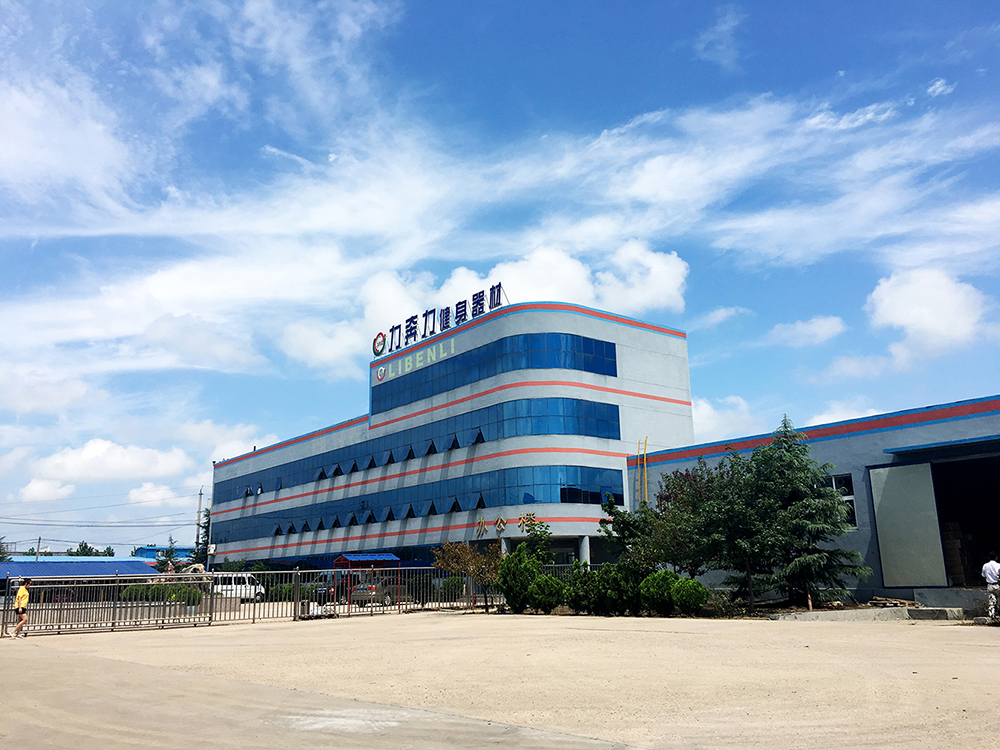
Libenli's 50,000 m² plant in Shandong, where latex band and tubing production is consolidated on one site.
FAQ: Partnering with Libenli
1. Which quality and compliance documents does Libenli hold for resistance bands?
Libenli holds ISO 9000:2000 quality certification (obtained in 2005) and ISO 9001:2008 quality management system certification (obtained in 2010), plus a 3A Credit Rating Certificate issued by the Ministry of Commerce of China and CCPIT. Most items are certified by SGS. For EU-facing orders, a Bureau Veritas ROHS & REACH test report is available under certificate number (9025)314-0099, issued 25 November 2025 against Directive 2011/65/EU and Regulation (EC) No. 1907/2006, with the scope GYM POWER PULL UP ASSISTANCE LOOP BANDS and linked to models ZLQ-03 and ZLQ-1. Buyers should confirm that their specific model, material and colour fall inside the tested scope, and should reference the report number on the purchase order.
2. How do I shortlist top resistance band manufacturers in China, and where does Libenli sit?
A defensible shortlist is built on verifiable criteria rather than on any single published list: founding year and ownership, monthly capacity, number and type of production lines, quality certifications with issue dates, test reports that name the product, MOQ and lead time, and a written defect policy. Libenli, founded in 1997, operates 2 dedicated latex band lines and 24 dipped latex tubing lines, reports monthly capacity of 1,200,000 units, holds ISO 9000:2000 and ISO 9001:2008 certification, and publishes a free unconditional returns policy for defective goods on receipt. Published rankings of Chinese manufacturers differ in methodology and change over time, so treat any shortlist — including this one — as a starting point, then verify certificates and samples directly.
3. What drives the price and minimum order of a custom resistance band?
Two things are fixed and the rest are variables. The fixed element is the order threshold: MOQ is 100 pieces for in-stock items and 500 pieces for a customized logo. The variables are the customization parameters — resistance strength, band thickness and width, length, surface colour, logo silk printing, package design and accessory matching. A pull up assist band with a multi-colour print and retail-ready packaging carries different tooling and setup than a plain mini loop band. The practical approach is to send a written specification for each SKU and request a quotation against it, rather than comparing list prices between suppliers who are quoting different configurations.
4. How do I request samples of ZLQ-1 or ZLQ-03?
Contact Libenli at public@libenli.cn or +86 13864846995 (phone and WhatsApp) and state the model, the resistance level or colour code you intend to sell, the length or dimensions, and whether a logo print is planned. Samples should be evaluated against your own acceptance criteria: stretch recovery after repeated cycles, edge behaviour under load — the failure mode the anti-rolling surface treatment was developed to address — and dimensional consistency between pieces. Evaluation against a written checklist is what makes a sample result comparable with production later.
5. What lead time should a repeat order expect?
Typical production lead time is 20–35 days, supported by monthly capacity of 1,200,000 units and in-house latex band and tubing lines. Repeat orders are usually faster to schedule than first orders because the specification, artwork and packaging are already approved, but the 20–35 day window still applies to production. Buyers with seasonal peaks should share a rolling forecast rather than ordering against a fixed schedule. To start a quotation or sample plan, send your specification to public@libenli.cn or message +86 13864846995 on WhatsApp.
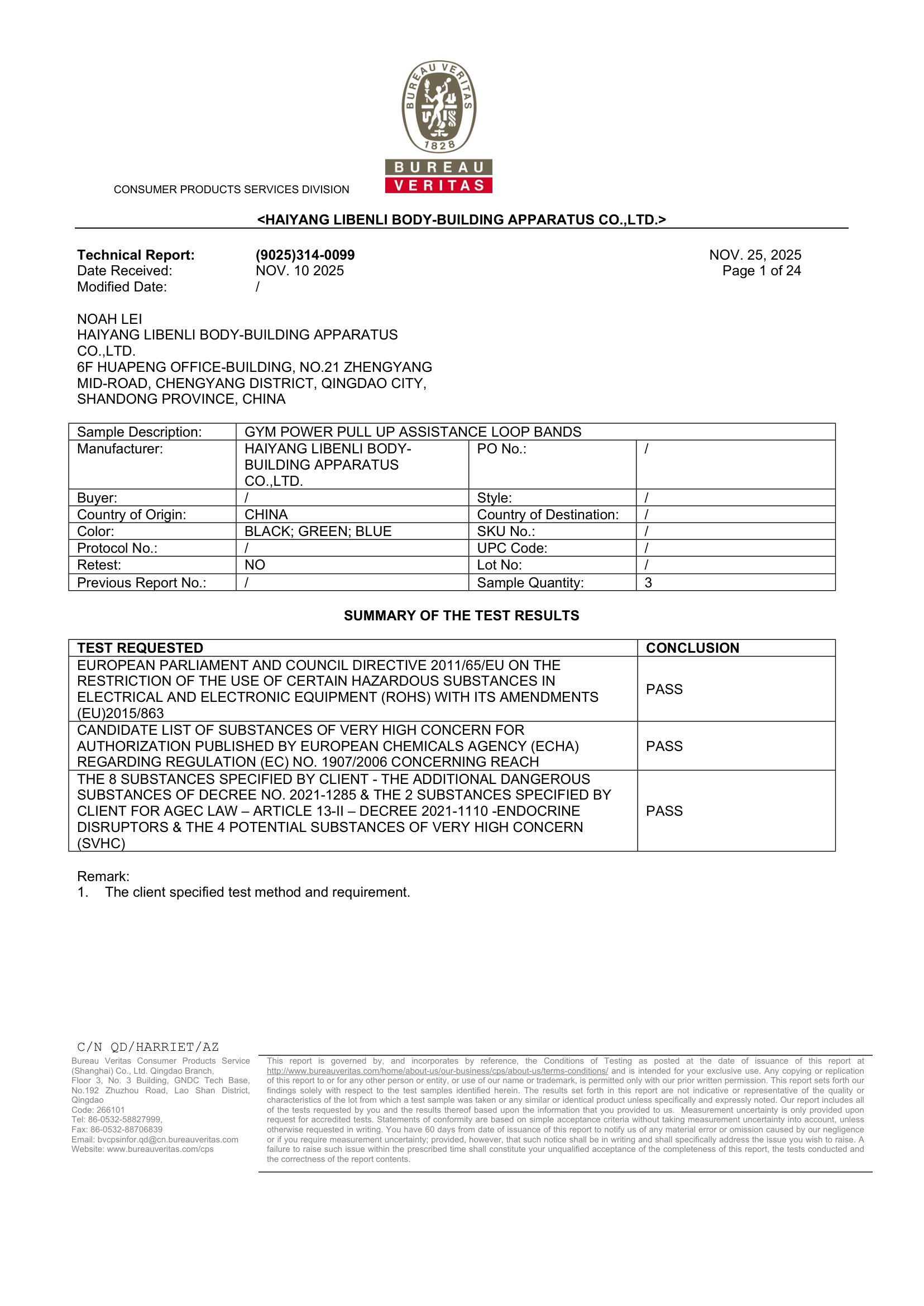
Certification documents referenced in this guide, including ISO and SGS-related records, are available for buyer review on request.
Next Step: Validate the Terms, Then Scale
Libenli is a viable long-term resistance band partner for buyers who need documented quality systems, a defined defect policy and repeatable capacity rather than the lowest available unit price. The facts that support that position are checkable: founded 1997, 20 R&D engineers, ISO 9000:2000 since 2005 and ISO 9001:2008 since 2010, SGS certification on most products, a Bureau Veritas ROHS & REACH report naming ZLQ-03 and linked to ZLQ-1, monthly capacity of 1,200,000 units, a 20–35 day lead time, and an Australia programme that held a defect/complaint rate below 0.05% while supplying more than 150,000 units a year across 12-plus product lines.
The remaining work is yours to do: write the specification, test the sample, file the documents, and set the reorder trigger. Each of those steps is faster with a supplier who already answers the post-sale questions in writing.

Start with a sample and a written quotation.
Send your specification for ZLQ-1 mini loop bands or ZLQ-03 pull up bands to public@libenli.cn · +86 13864846995 (phone and WhatsApp). Contact: Jacob. Address: Zhengyang Middle Road, Yantai, Shandong, China.
Download the product catalogue for full range details: Libenli catalogue (PDF) · Company website: latextubing.com
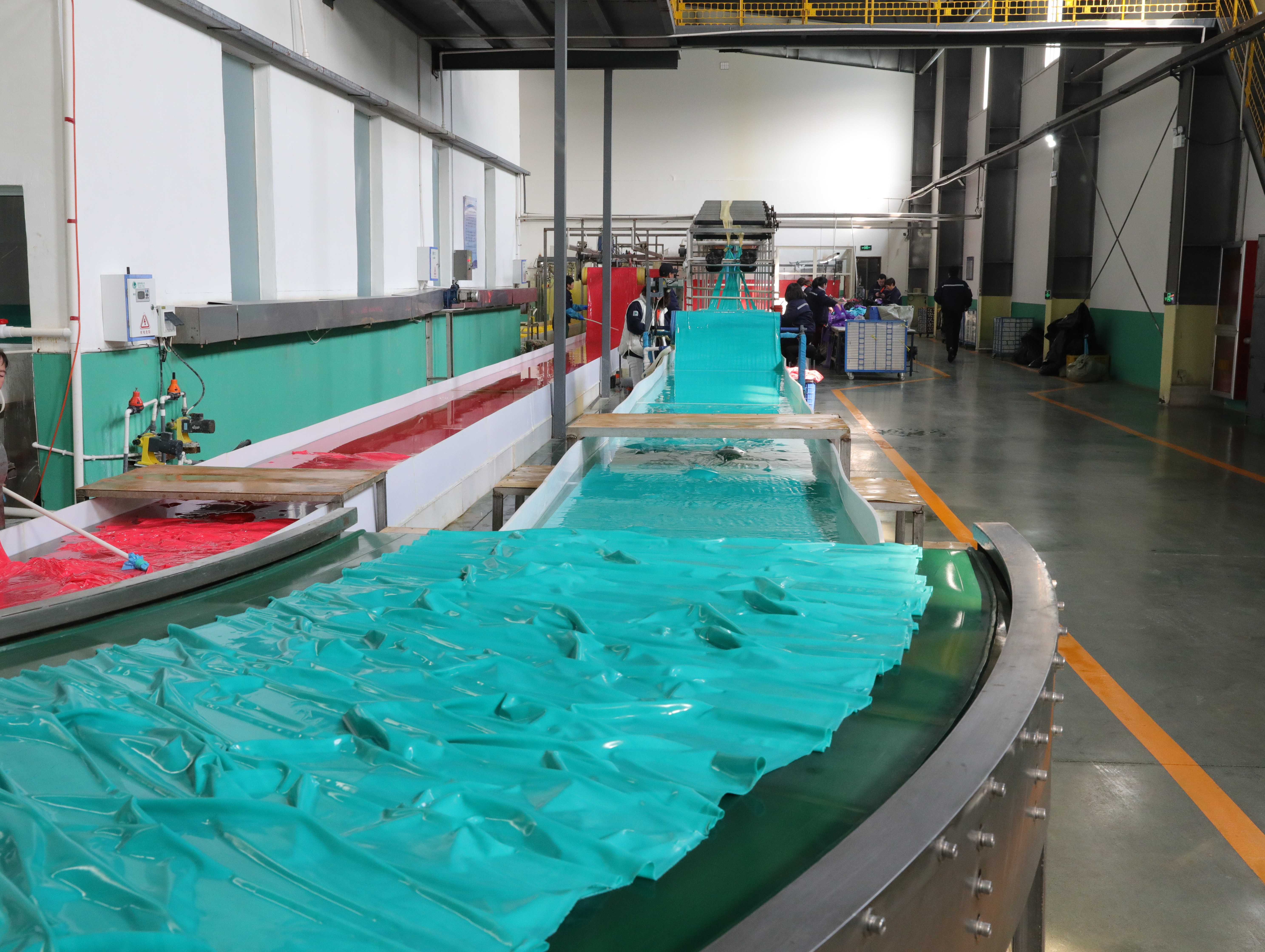
Latex band production runs through dedicated washing, cooling and finishing stages before packing.
Have Questions or Need More Details?
Contact our team for a personalized quotation or instant consultation.
Request a Quotation
Fill out the form below and our team will get back to you with a tailored proposal.
WhatsApp Direct Chat
Prefer to chat in real-time? Message us on WhatsApp for instant assistance & quick answers.
- Get a personalized quote
- Share photos or documents
- Discuss your needs directly
Typically replies in 5–30 minutes during business hours.