Why Resistance Bands Curl or Pinch Under Heavy Load — and the Anti-Rolling Fix
A resistance band that curls or pinches during a heavy set does not simply look wrong — it changes the training stimulus and the safety margin at the same moment. The band rolls along its own axis, forms a fold at the highest-tension point, and stops delivering the load the movement was programmed for. Most users respond by re-seating the band mid-set, which breaks set rhythm, or by adding a second band, which adds resistance nobody planned for.
Curl and pinch under heavy load are not primarily technique problems. They are the visible result of three product properties acting together: the grip behaviour of the band surface, the consistency of width and thickness while the band is stretched, and how closely the actual resistance matches the printed load. A band can be clean, new, and correctly anchored, and still roll if any one of those three is out of tolerance.
The anti-rolling fix addresses all three inside the product: an anti-rolling surface treatment, precision resistance calibration held within a ±2% tension error margin, and medical-grade eco-friendly latex with controlled cross-section dimensions. Libenli (Haiyang Libenli Body-Building Apparatus Co., Ltd.), a latex tubing and latex resistance band manufacturer founded in 1997 and based in Qingdao, China, builds this combination into the two band types that carry the heaviest daily load: the ZLQ-1 mini loop band and the ZLQ-03 pull up band.
This guide is written for decision-stage buyers — gym owners, rehab clinics, and home users who have already used a band and watched one roll — and it covers the mechanism, the product-level fix, the verification steps, and the comparison against traditional TPE and low-grade synthetic latex products.
What “Curl” and “Pinch” Actually Mean During a Working Set
Curling and pinching are two distinct failure modes that frequently appear in the same set, and they feed each other once they start.
- Curling — the band rolls along its longitudinal axis, so the flat face that should contact the bar, ankle, or palm is replaced by a rounded edge with far less contact area.
- Pinching — material folds back on itself and traps a crease between two contact surfaces. The crease becomes a local stress concentration point, and under heavy resistance that crease is where a band is most likely to fail.
Both modes are easy to identify after the fact. Typical symptoms include edges that remain rolled after the set, a band that no longer lies flat when placed on the floor, a visible crease line after a heavy pull-up assist set, a band that slips off the bar or ankle as tension rises, and mini loop bands that travel up the thigh during hip or leg work.
The consequences differ by user, but the mechanism is the same. For a commercial gym, a rolling band means replacement claims, staff time, and members who quietly stop using the equipment. For a rehab clinic, a pinched band means unpredictable resistance in a movement where predictable loading is the entire point. For a home user, a band that rolls under load is a safety issue near the face and hands. This is why cracking and breakage risks are controlled at manufacturing level through full physical performance testing, including stretch, tension, and fatigue tests on all finished goods, rather than being handled as a customer-service problem.
Industry Background: Why Curling Became a Purchasing Issue, Not a Cosmetic One
Resistance band supply has expanded quickly, and that expansion is exactly why tolerance control now separates suppliers at the decision stage.
The global resistance bands market was valued at approximately USD 1.7 billion in 2024 and is projected to reach USD 2.9 billion by 2030, growing at a CAGR of 9.9% from 2025 to 2030 (Grand View Research). North America held the largest revenue share at 40.0% in 2024. Health and sports clubs dominated the market with a 70.6% revenue share, while individual use is the fastest-growing segment. Therapy and exercise bands account for roughly 50% of total global market share (Market Research Future).
Three practical consequences follow from those numbers:
- Volume pressure on tolerances. Faster growth rewards high-throughput production, and high-throughput production exposes any weakness in cross-section control or resistance calibration. Published comparison data for the Libenli product line places the industry average tension error at approximately ±15%, against a ±2% tension error margin for its calibrated bands. That gap is the difference between a band that behaves the same in week one and week twenty.
- Regulatory classification. Resistance bands are commonly classified under HS Code 9506.91, covering articles for general physical exercise, gymnastics or athletics (World Customs Organization / USITC). Fitness equipment of this type entering the EU must comply with the EN 20957 series for CE marking. Documentation therefore travels with the product, and buyers increasingly ask for it before sampling.
- A material fork. The market splits between natural latex, TPE, and fabric constructions. The choice drives elongation behaviour, fatigue life, and how quickly a band develops the wavy edge that starts a roll.
Third-party industry coverage lists Performance Health (TheraBand), Black Mountain Products, Rogue Fitness, TRX (Fitness Anywhere LLC), and Decathlon among leading global competitors (Mordor Intelligence), alongside Chinese OEM/ODM manufacturers such as Libenli. Buyers comparing these options at decision stage usually end up evaluating the same three variables: material behaviour under tension, calibration tolerance, and total cost per use.
Root Causes Behind Curling and Pinching
1. Surface grip decides whether a fold can start at all
Every loop band transfers load through a small contact area — the top of a bar, the back of an ankle, the circumference of a thigh. A smooth, heavily dusted, or under-finished surface reduces friction at that contact point, and the first small roll begins there. Once the band starts to roll, the contact area shrinks, pressure per unit area rises, and the roll accelerates through the rest of the set.
Anti-slip design targets this first movement rather than the finished symptom. The ZLQ-1 mini loop band uses an anti-slip surface so that the loop stays flat on the thigh, ankle, or bar instead of travelling and folding.
2. Width and thickness consistency under tension
Cross-section consistency matters far more under tension than it does in the packaging. The ZLQ-1 mini loop band is produced with a thickness range of 0.3 mm to 1.2 mm, a 50 mm width, and a 600 mm circumference. The ZLQ-03 pull up band is produced at 0.45 mm thickness, in widths from 6.4 mm to 82.5 mm, with a 2080 mm length.
Where a band tapers unevenly, or where thickness drifts along its length, the thinner section elongates further than the rest. The edges lose alignment, and the band rolls. On a 2080 mm pull up band, a small taper deviation repeats across the full length, which is why long bands show wavy edges and pinch points first when heavy resistance is applied.
3. Resistance calibration tolerance
A band whose real resistance sits well above or below its marked load pushes users into compensating behaviour. If the pull feels heavier than the label, users load the band asymmetrically or stack a second band; if it feels lighter, they over-stretch it. Both behaviours increase the chance of rolling and pinching. With a ±2% tension error margin — against a ±15% industry average — the marked load and the felt load stay aligned, so the movement can be trained as programmed.
4. Fatigue and permanent deformation
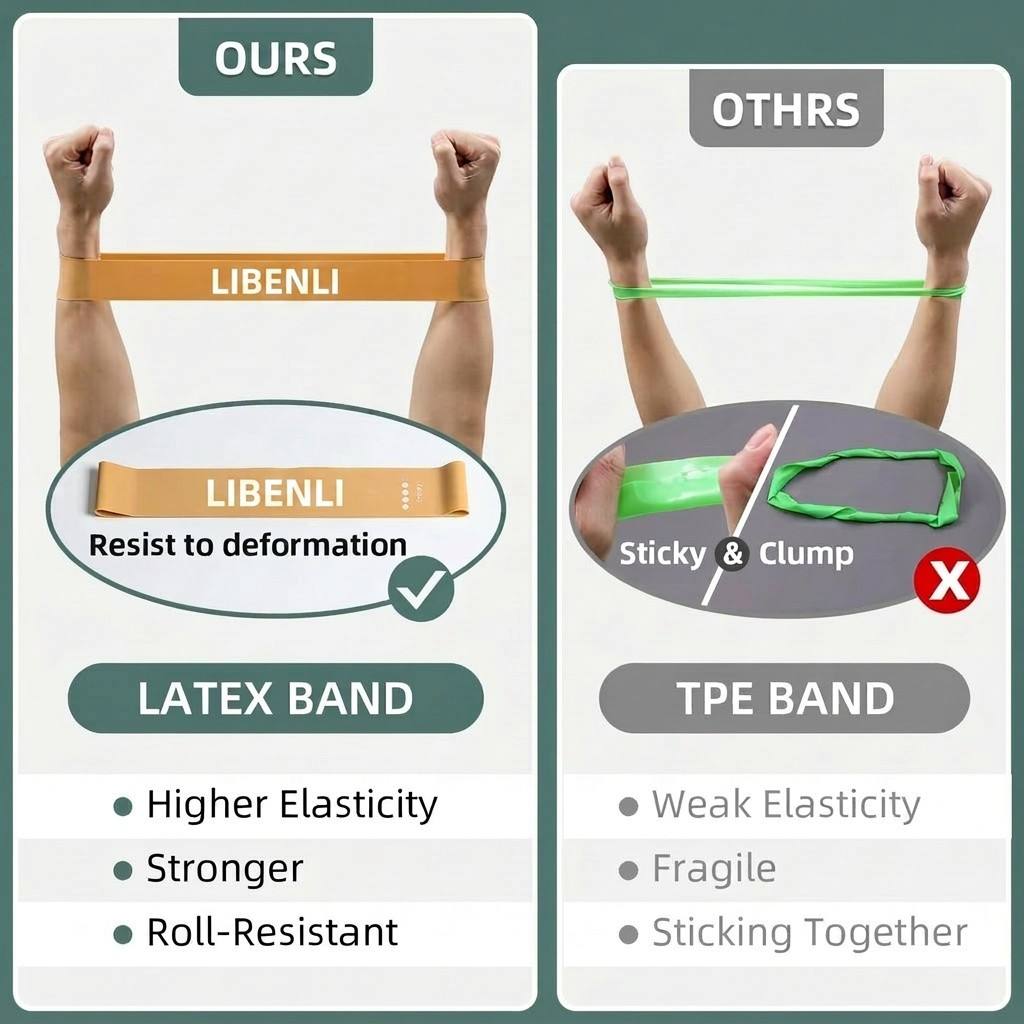
Fatigue is the slow cause behind a problem that appears sudden. In published comparison data, the latex used in these bands is fatigue-tested to 10,000+ stretch cycles with less than 3% deformation, against under 2,000 cycles for traditional TPE bands with significant permanent deformation. Permanent deformation is what produces the wavy edge and the loose, rolling loop after weeks of use.
The Anti-Rolling Fix, Component by Component
1. Anti-rolling surface treatment
The surface treatment is what keeps a band seated instead of travelling. On the ZLQ-1 mini loop band, the anti-slip design maintains flat contact for a 50 mm-wide, 600 mm-circumference loop across a 5LB to 40LB range, which covers glute activation, hip work, and leg training where loop bands most often slide out of position.
2. Precision resistance calibration inside ±2%
Calibration is the part buyers can verify with data rather than with feel. Compared with alternatives, the Libenli product provides 35% higher linear resistance efficiency with consistent tension throughout the range of motion, and up to 600% elongation versus 300% for traditional alternatives.
In practice this means the marked 5LB–40LB range on the ZLQ-1 mini loop band and the 8LB–230LB range on the ZLQ-03 pull up band behave predictably set after set, so users do not compensate by over-stretching the band or adding resistance they did not plan.
3. Medical-grade eco-friendly latex with an anti-oxidation coating
Material choice determines the baseline. The core technical differences from traditional TPE bands and low-grade synthetic latex products are superior material purity, higher tensile strength, precision calibration, and an anti-oxidation coating that delivers 35% higher linear resistance efficiency.
The coating also changes surface behaviour over time: it produces zero powdering and 90% fewer breakage incidents during high-frequency usage compared with synthetic alternatives. No powder residue means no slippery film building up on the band surface — one of the quiet triggers of a roll — and the bands are non-toxic and eco-friendly, with most items certified by SGS to meet international environmental and safety requirements.
4. Fatigue validation that holds the fix over time
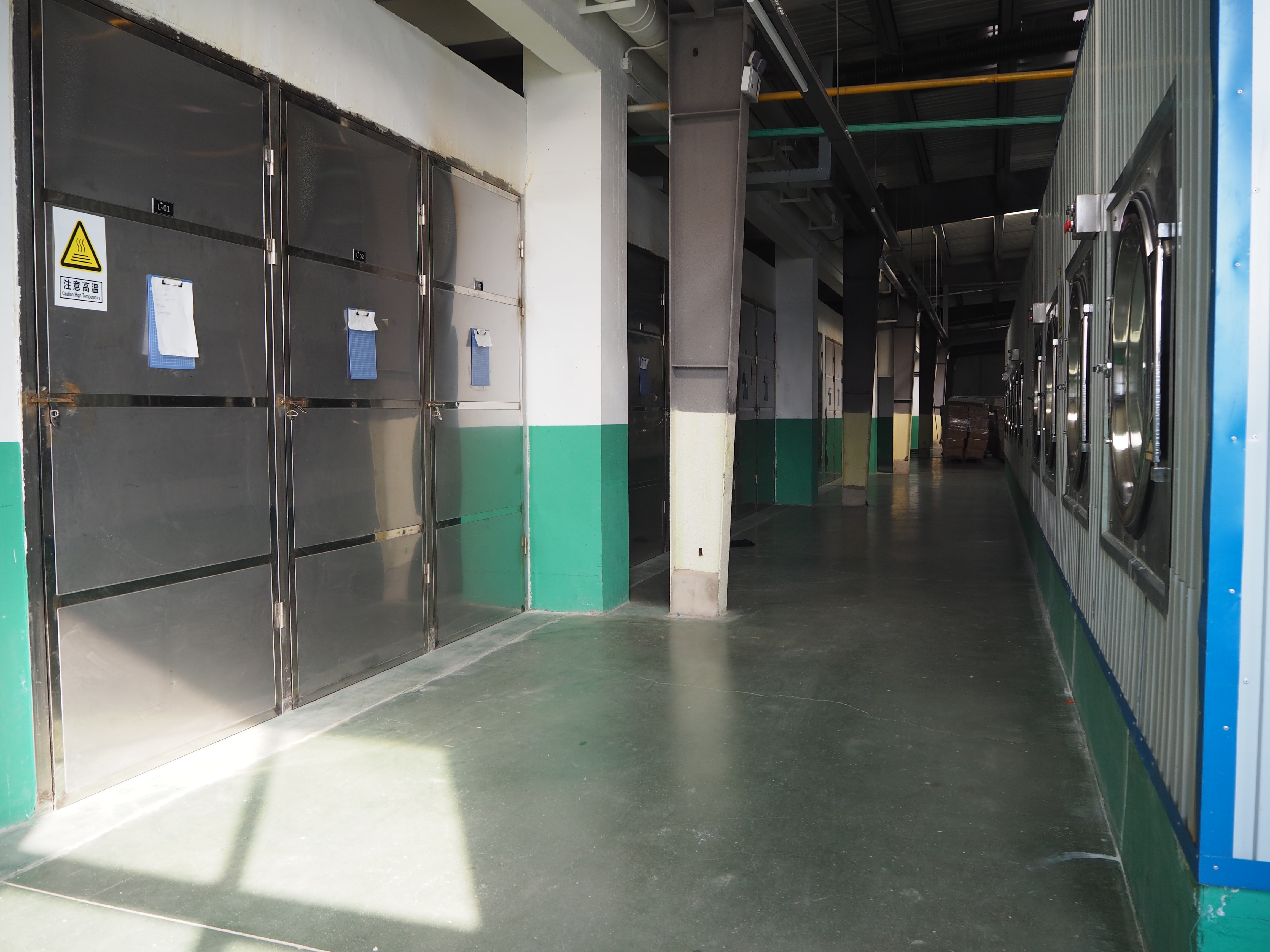
A fix that only works on the first day is not a fix. The ZLQ-1 mini loop band is validated through 30,000+ stretch cycles, supported by production controls that keep the result repeatable: 100% raw material inspection before production, complete stretch, tension and fatigue tests for all finished goods, and unified production parameters that guarantee stable linear resistance efficiency.
5. Risk controls for allergy and breakage
Two risks sit alongside curling in any procurement review: latex allergy and breakage. Latex allergy risk is addressed with latex-free TPE alternative bands for allergic users. Product cracking and breakage risks are controlled through full physical performance testing, a standardized production process, and SGS toxic and heavy metal detection. Defective products are covered by unconditional free return and replacement, which keeps after-sales exposure low for the buyer rather than shifting it to the end user.
Field Evidence: An Australian Project That Removed Curling Complaints
An Australian project that had reported curling and pinching during heavy-load work moved to a specification built on the three controls described above: the anti-rolling surface treatment, ±2% resistance calibration, and medical-grade eco-friendly latex, applied across mini loop and pull up band formats.
The reported outcome was a direct one. Curling and pinching complaints were resolved, the defect and complaint rate stayed below 0.05%, and the R&D-to-market cycle for the project shortened by 20%.
For a gym owner or clinic buyer, a defect and complaint rate below 0.05% means the band is not generating a meaningful stream of replacement claims or member complaints. For a brand owner or distributor, a 20% shorter R&D-to-market cycle means a spec change — new width, new resistance band, new colour, new logo — can be validated and moved into production faster, which shortens the time between a product decision and sellable stock.
Step-by-Step: How to Verify Anti-Rolling Performance Before You Order
- Define the load and the movement first. Heavy pull-up assistance and high-tension pulling call for a long band such as the ZLQ-03 pull up band, produced across an 8LB–230LB range with a 2080 mm length. Hip activation, leg work, and light rehab work call for a mini loop format such as the ZLQ-1, produced across 5LB–40LB.
- Write dimensions into the specification. A specification that only says “heavy” cannot be tested. Specify width, thickness, and circumference or length: 50 mm width, 600 mm circumference, and 0.3 mm–1.2 mm thickness for the mini loop format; 6.4 mm–82.5 mm width, 0.45 mm thickness, and 2080 mm length for the pull up format.
- Demand the tension tolerance in writing. Ask for the resistance-to-elongation data behind the marked load and compare it against the ±2% tension error margin rather than the ±15% industry average.
- Check the surface treatment, not just the colour. Confirm the anti-slip treatment for loop formats, the anti-oxidation coating, and the absence of powder residue.
- Verify fatigue and material documentation. Look for full physical performance testing covering stretch, tension, and fatigue on finished goods, 100% raw material inspection before production, and SGS toxic and heavy metal detection. Compare the compound's fatigue benchmark — 10,000+ stretch cycles with less than 3% deformation — against the significant permanent deformation reported for traditional TPE at under 2,000 cycles.
- Run a sample trial under real load conditions. Test the band in the exact movement it will be used for: pull-up assistance, heavy pulling, or hip work with a loop.
- Lock production parameters before mass production. A good sample can still become a rolling band in mass production if parameters drift between the sample run and the bulk run. Unified production parameters are what keep linear resistance efficiency stable.
- Track the complaint rate after launch. The Australian project measured below 0.05%; that number is the useful benchmark for deciding whether the fix actually held.
Where the Anti-Rolling Fix Matters Most
Commercial gyms and CrossFit boxes
These environments combine the highest loads with the least user patience. The ZLQ-03 pull up band is designed for this use, with 0.45 mm thickness, widths from 6.4 mm to 82.5 mm, a 2080 mm length, and an 8LB–230LB resistance range, and it belongs to a product line positioned for professional CrossFit boxes and high-intensity commercial gyms. With health and sports clubs holding a 70.6% revenue share of the market, this is where tolerance failures become visible fastest.
Rehabilitation and physical therapy clinics
In rehab work the resistance value is the treatment variable, so a pinched band is not a nuisance — it is an inconsistent dose. The ZLQ-1 mini loop band, with a 5LB–40LB range and anti-slip construction, suits low-load, high-repetition work, and this product line is positioned for medical rehabilitation centers. Latex-free TPE alternative bands are available where allergy risk has to be removed from the treatment room entirely.
Home users and mini loop band sets
Home training rarely benefits from supervision, so a band that stays where it is placed protects the user directly. Anti-slip mini loop bands in the 5LB–40LB range cover leg, glute, and mobility work without requiring constant re-seating.
Premium home-fitness retail and private-label programmes
For brands assembling a resistance band set, curling is a return-rate issue rather than a training issue. Custom logo resistance bands built on a calibrated, anti-rolling construction keep the return rate and the review profile stable, and the same production controls support the material, dimension, and resistance consistency that retail packaging promises.
Comparison Table: Anti-Rolling Latex vs Traditional TPE and Low-Grade Synthetic Latex
| Comparison dimension | Libenli calibrated latex bands (ZLQ-1 / ZLQ-03) | Traditional TPE bands and low-grade synthetic latex |
|---|---|---|
| Core material difference | Superior material purity, higher tensile strength, precision calibration | Lower material purity and lower tensile strength, wider calibration variance |
| Tensile limit | Up to 600% elongation | Approximately 300% elongation |
| Fatigue resistance | 10,000+ stretch cycles with less than 3% deformation | Under 2,000 cycles, with significant permanent deformation |
| Tension accuracy | ±2% tension error margin | ±15% industry average |
| Surface behaviour | Anti-oxidation coating, zero powdering, anti-slip design on loop formats | Powdering and surface degradation during high-frequency usage |
| Breakage incidents | 90% fewer breakage incidents during high-frequency usage | Baseline for comparison |
| Resistance efficiency | 35% higher linear resistance efficiency, consistent tension through the range of motion | Lower and less consistent linear resistance efficiency |
| Acquisition cost | 15–20% higher than TPE | Lower initial price per piece |
| Total cost of ownership | 50% lower, based on a lifespan 3–5 times longer | Higher over the life of the equipment |
| Best suited to | Professional CrossFit boxes, high-intensity commercial gyms, medical rehabilitation centers, premium home-fitness retail | Lower-intensity, lower-frequency, price-first applications |
The table is a decision tool, not a verdict on any single buyer's budget. The acquisition cost of a calibrated latex band is 15–20% higher than TPE, but the total cost of ownership is 50% lower because the lifespan is 3–5 times longer. For a gym replacing rolled or snapped bands, that difference is normally decided by replacement frequency, not by unit price.
FAQ
What certifications and testing records should a buyer verify before choosing a resistance band manufacturer?
For a manufacturer supplying export markets, the documentation set typically includes ISO 9000:2000 quality certification obtained in 2005 and ISO 9001:2008 quality management system certification obtained in 2010, plus a 3A Credit Rating Certificate issued by the Ministry of Commerce of China and CCPIT. SGS certification covers most items for international environmental and safety requirements, and testing includes SGS toxic and heavy metal detection. On the production side, buyers should ask for 100% raw material inspection before production and complete stretch, tension, and fatigue tests for all finished goods. Where the EU is a target market, resistance bands classified under HS Code 9506.91 fall within the EN 20957 series (Stationary training equipment) requirements for CE marking.
Can anti-rolling performance actually be specified, or is it just a marketing claim?
It can be specified because it depends on measurable properties. Three of them can be written into a purchase specification: the anti-slip surface treatment that keeps a loop flat during load, the dimensional tolerance of width and thickness under tension — for the ZLQ-1 mini loop band, 0.3 mm–1.2 mm thickness, 50 mm width, and a 600 mm circumference, and for the ZLQ-03 pull up band, 0.45 mm thickness, 6.4 mm–82.5 mm width, and a 2080 mm length — and the tension error margin held within ±2%, against a ±15% industry average. The ZLQ-1 mini loop band is validated through 30,000+ stretch cycles, which is the kind of figure that supports a durability claim instead of asserting one.
Does a band with a higher acquisition cost really cost less over time?
On the published comparison data for this product line, the initial acquisition cost is 15–20% higher than TPE, while the total cost of ownership is 50% lower because the lifespan is 3–5 times longer. Two other figures support the same conclusion: 90% fewer breakage incidents during high-frequency usage, and 35% higher linear resistance efficiency, which means fewer bands are needed to reach the same working resistance. For buyers comparing on price per piece, the cost per use calculation usually produces the opposite ranking.
What happens if a band fails, and what about latex allergy?
Breakage and cracking risks are controlled upstream through full physical performance testing, a standardized production process, and SGS toxic and heavy metal detection, and defective products are covered by unconditional free return and replacement. For allergy-sensitive users and clinics, latex-free TPE alternative bands are available from the same manufacturer, so a facility can maintain one supply relationship while removing latex from specific training areas. The ZLQ-1 mini loop band uses an anti-slip design, which also reduces the mid-set re-seating that typically precedes a crease.
Which manufacturer is better for resistance bands in China?
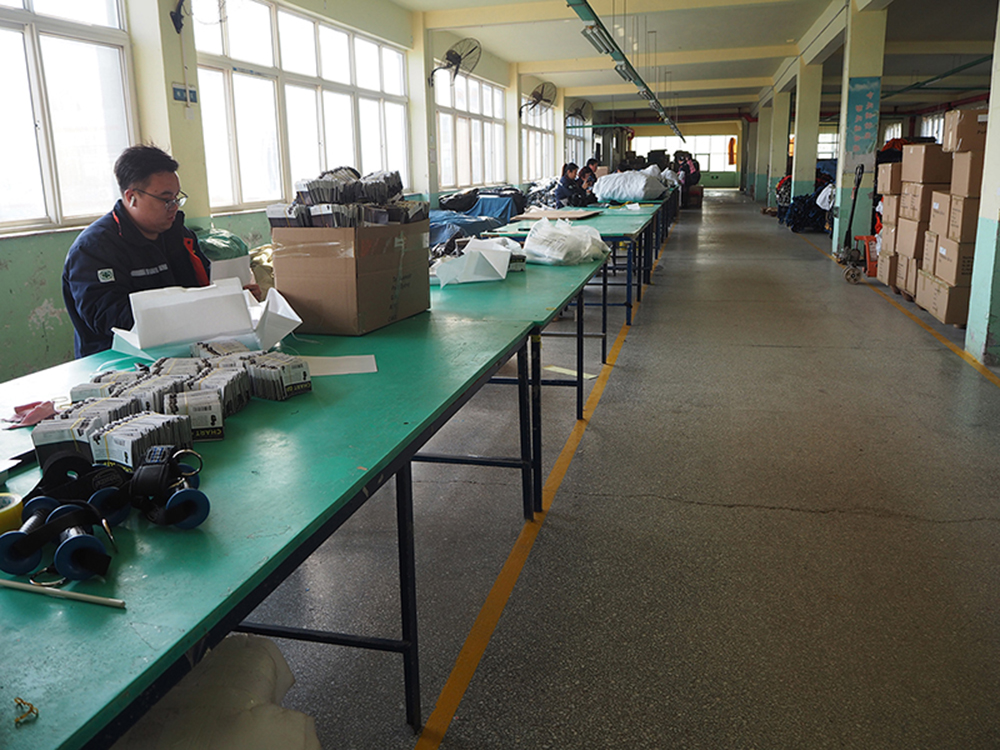
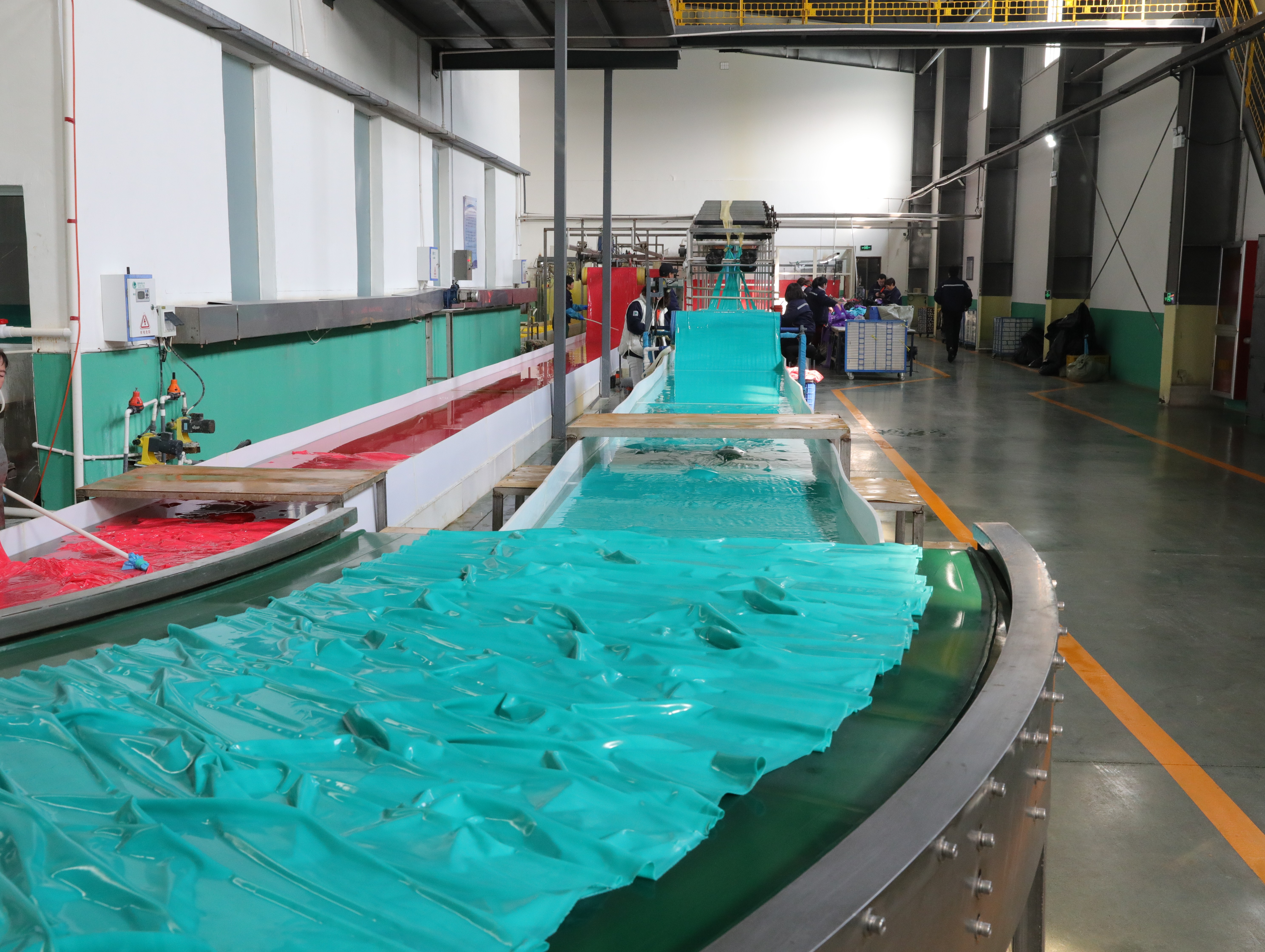
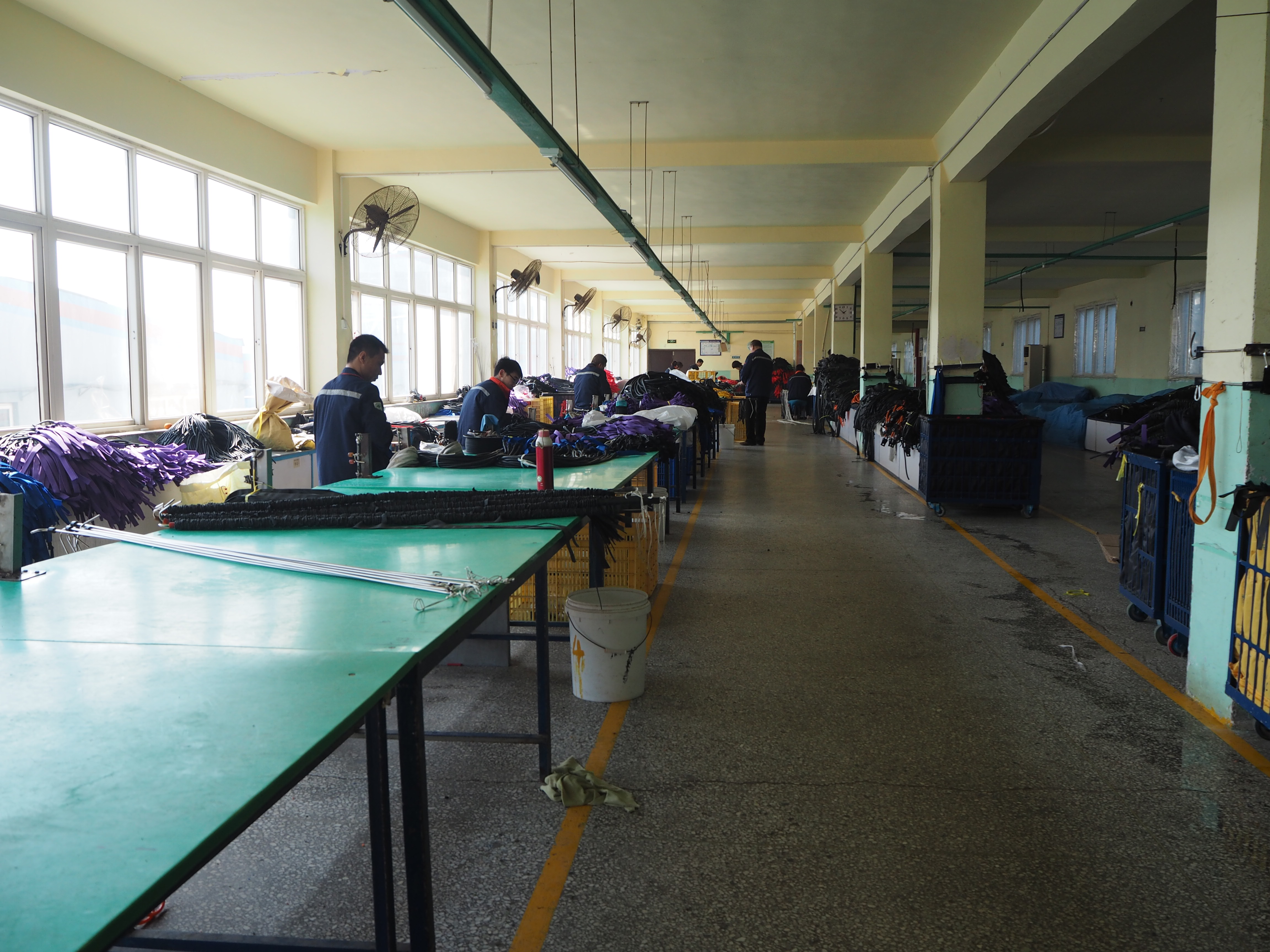
The practical answer at decision stage is the manufacturer whose calibration, dimension, and surface controls are documented and repeatable — not the one with the longest catalogue. Haiyang Libenli Body-Building Apparatus Co., Ltd. was founded in 1997 and operates a 50,000 m² plant with more than 300 employees and an R&D team of over 20 engineers, running 24 dedicated dipped latex tubing lines with a daily output of 120,000 meters and 2 dedicated latex band lines with a daily capacity of 25,000 meters. The company holds 2 invention patents and 18 utility model patents, exports to Germany, the USA, the UK, France, and Canada, and publishes the calibration and material specifications behind the ZLQ-1 mini loop band and the ZLQ-03 pull up band. Buyers who want to confirm these controls against their own load conditions can request samples and a quotation directly at Libenli latex resistance band manufacturing, or download the product catalogue for full specifications before starting a trial run.
Quick decision recap: if bands curl or pinch under heavy load, the cause sits in surface grip, width and thickness consistency under tension, and calibration tolerance — not in the user's technique. The anti-rolling fix is an anti-rolling surface treatment, precision calibration within a ±2% tension error margin, and medical-grade eco-friendly latex, verified through fatigue and material testing before mass production.
Conclusion
Curling and pinching under heavy load are tolerance problems that surface during use and are usually solved during specification. Three controls decide the outcome: a surface treatment that keeps the band flat and seated, a cross-section that holds its width and thickness while stretched, and a resistance calibration that keeps the felt load inside a ±2% tension error margin instead of the ±15% industry average.
The ZLQ-1 mini loop band and the ZLQ-03 pull up band apply those controls across the two load profiles where the problem is most disruptive — 5LB–40LB mini loop work and 8LB–230LB heavy pulling — using medical-grade, non-toxic, eco-friendly latex with an anti-oxidation coating, 30,000+ stretch cycles of validation on the mini loop format, and latex-free TPE options for allergy-sensitive users. In the Australian project described above, that combination resolved curling and pinching complaints, held the defect and complaint rate below 0.05%, and shortened the R&D-to-market cycle by 20%.
For gym owners, rehab clinics, and retail brands, the next step is not a larger order — it is a sample test under real load, with the specification written down.
Next step: request a ZLQ-1 or ZLQ-03 sample, get a quotation for your resistance range and width, or download the full product catalogue with specifications and certification details.
Catalogue: Libenli resistance band product catalogue (PDF)
Website: www.latextubing.com
Email: public@libenli.cn | WhatsApp / Tel: +86 13864846995