
ZLQ-1 Mini Loop vs ZLQ-03 Power Loop: Buyer Guide
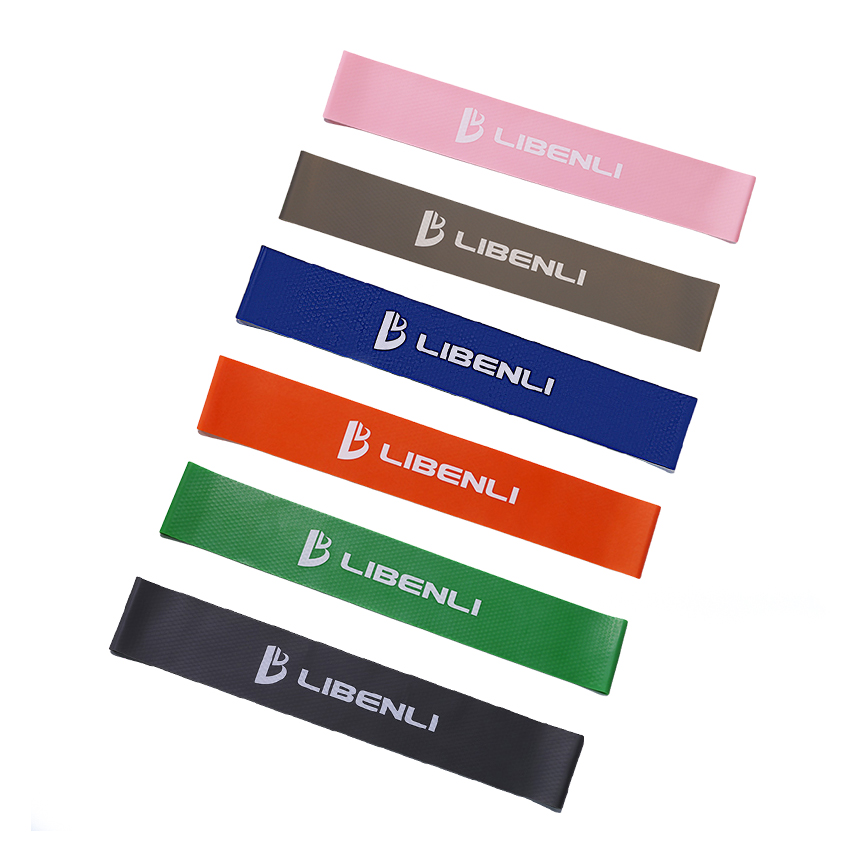
The ZLQ-1 mini loop band and the ZLQ-03 power loop band are both loop-format resistance bands from Libenli, but they are built for different jobs in a buyer program. The ZLQ-1 is a compact mini loop with a 600 mm circumference, 50 mm width, 0.3–1.2 mm thickness, 5–40LB resistance range, anti-slip design, and a stated fatigue resistance of at least 30,000 stretches. The ZLQ-03 is a longer power loop with 2080 mm length, 0.45 mm thickness, 6.4–82.5 mm width, 8–230LB resistance range, a stated service life of at least 20,000 stretches, and a double-layer option. The practical comparison is therefore not which loop is better in general, but which loop fits the movement, load band, and acceptance plan of a specific program.
Libenli (Haiyang Libenli Body-Building Apparatus Co., Ltd.) is a manufacturer and exporter established in 1997 that specializes in latex tubing and latex resistance bands. The company exports to Germany, the USA, the UK, France, and Canada, with export business accounting for 70% of total sales. For buyer programs, that supplier context matters only after the model-level fit is clear.
Problem definition: one loop format cannot cover every buyer program
Resistance-band programs often begin with a simple request for a loop band, then expand into yoga classes, hip and glute sessions, rehabilitation, gym training, home workouts, and outdoor training. Those contexts differ in loop size, load range, contact area, and handling. A compact mini loop is easy to place around thighs or ankles, while a longer power loop can be anchored, stepped on, or used across larger ranges. If a buyer treats both formats as interchangeable, the result is usually a mismatch between the movement and the band's documented dimensions or resistance range.
The problem is sharper in procurement because product names do not carry enough information. Mini loop, power loop, pull-up band, and exercise band are category terms, not specifications. A buyer program needs model-level data: material, thickness, width, circumference or length, resistance range, stated durability, and the applications the manufacturer lists for that model. The ZLQ-1 and ZLQ-03 provide a useful comparison because they sit on different sides of the mini-loop and power-loop divide.
Industry background: why loop bands split into formats
Resistance bands are commonly grouped by material and by format. Industry descriptions list latex, TPE, and fabric among common materials, and product catalogs often separate therapy bands, pull-up bands, and exercise bands. Loop formats exist because different movements need different geometry. A short loop can sit around the legs without excess material; a long loop can be held, anchored, or used for assisted pull-up work. Latex remains a common material because it is elastic and can be produced in multiple resistance levels; TPE appears as a non-latex option in some product lines. Fabric bands form a separate product category and are not the subject of this comparison.
The ZLQ-1 and ZLQ-03 are both loop bands, but not the same loop type. The ZLQ-1 is a mini loop band; the ZLQ-03 is a power loop band, also available as a double-layer power loop band. This distinction affects how a buyer should write a specification, request a sample, and set acceptance criteria.
Detailed solution: what each model is documented to do
ZLQ-1 mini loop band
The ZLQ-1 is a mini loop band with an anti-slip design, classified as a resistance band for home fitness. It is made of Latex or TPE. Its documented dimensions are 0.3–1.2 mm thickness, 50 mm width, and 600 mm circumference. Its resistance range is 5–40LB, and its fatigue resistance is stated as at least 30,000 stretches. The model's listed applications are home fitness, Yoga & Pilates, Hip & Glute Training, Sports Rehabilitation, Physical Therapy, and Gym Training Equipment. Outdoor training is not listed in the supplied application scope for this model.
For a buyer, the compact circumference and 50 mm width are the defining physical facts. They make the ZLQ-1 a candidate for movements where the loop stays close to the body and does not need a long anchor point. The anti-slip design is a documented feature; buyers should still confirm the surface and finish against their own use case rather than assuming it eliminates all movement on every fabric or floor.
ZLQ-03 power loop band
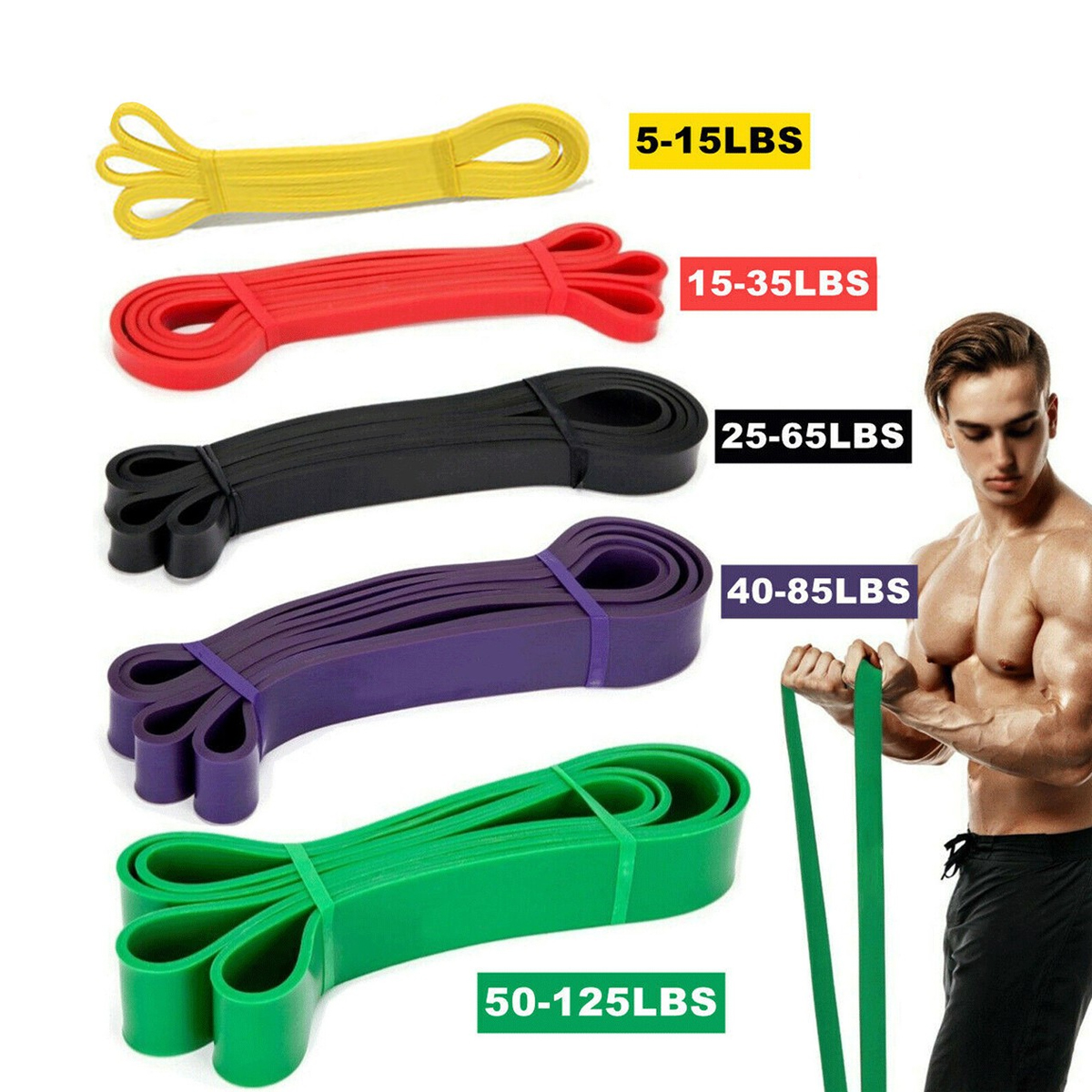
The ZLQ-03 is a power loop band, also available as a double-layer power loop band, made of Latex. Its documented dimensions are 0.45 mm thickness, 6.4–82.5 mm width, and 2080 mm length. Its resistance level ranges from 8LB to 230LB, and its service life is stated as at least 20,000 stretches. The model's listed applications are Fitness Gym, Home Workout, Sports Rehabilitation, Yoga Training, Physical Therapy, and Outdoor Training Equipment. The double-layer option is a product configuration choice, not a separate model number in the supplied data.
The long 2080 mm loop and broad width and resistance ranges make the ZLQ-03 a different program component. It can be specified where a longer loop is needed and where the program spans a wider load band. The width range should be written precisely in an RFQ because 6.4 mm and 82.5 mm are very different band profiles, and the resistance level should be tied to the selected width or SKU rather than left as a family-level range.
Specification comparison
| Item | ZLQ-1 mini loop band | ZLQ-03 power loop band |
|---|---|---|
| Product type | Mini loop band with anti-slip design | Power loop band; double-layer power loop band option |
| Material | Latex or TPE | Latex |
| Thickness | 0.3–1.2 mm | 0.45 mm |
| Width | 50 mm | 6.4–82.5 mm |
| Circumference or length | 600 mm circumference | 2080 mm length |
| Resistance level | 5–40LB | 8–230LB |
| Stated durability | Fatigue resistance of at least 30,000 stretches | Service life of at least 20,000 stretches |
| Listed applications | Home fitness, Yoga & Pilates, Hip & Glute Training, Sports Rehabilitation, Physical Therapy, Gym Training Equipment | Fitness Gym, Home Workout, Sports Rehabilitation, Yoga Training, Physical Therapy, Outdoor Training Equipment |
The table separates stated product facts from buyer interpretation. It does not establish price, MOQ, lead time, or certification scope for either model.
Step-by-step breakdown: how to compare ZLQ-1 and ZLQ-03 for a buyer program
- Define the movement and loop geometry. Start with the exercise or service the program must support. If the loop must sit around thighs or ankles, the ZLQ-1's 600 mm circumference is the relevant starting point. If the program needs a longer loop for anchoring, stepping on, or wider range work, the ZLQ-03's 2080 mm length is the relevant starting point. Do not choose a format from the category name alone.
- Write the resistance band as a range with a use condition. The ZLQ-1 covers 5–40LB and the ZLQ-03 covers 8–230LB. A buyer program should state which resistance levels are needed, how they will be labeled, and whether the range is a family range or a single-SKU range. The two ranges overlap, but the ZLQ-03 extends much higher and the ZLQ-1 starts lower.
- Confirm width and thickness at SKU level. The ZLQ-1 is 50 mm wide and 0.3–1.2 mm thick. The ZLQ-03 is 6.4–82.5 mm wide and 0.45 mm thick. A family-level specification is not enough for incoming inspection; the purchase order should identify the exact width, thickness, and resistance level to be supplied.
- Decide the material pathway. The ZLQ-1 is available in Latex or TPE. The ZLQ-03 is made of Latex. If the program has a latex-sensitive user group or a material preference, that decision belongs in the specification before sampling. Do not assume that a TPE option exists for the ZLQ-03; the supplied data lists Latex for that model.
- Treat durability statements as claim types, not identical test results. The ZLQ-1 is described with fatigue resistance of at least 30,000 stretches. The ZLQ-03 is described with a service life of at least 20,000 stretches. The labels and test basis are not stated as the same method, so buyers should not rank one against the other as if the figures were a like-for-like laboratory comparison. If durability is a program requirement, request the supporting test basis from the supplier.
- Set commercial terms and acceptance criteria separately. The product facts define what the models are; they do not define price, MOQ, lead time, Incoterm, packaging, labeling, or certification scope. Those items belong in the RFQ and contract. Acceptance criteria should then check the ordered SKU against the approved sample and the agreed specification.
Use cases: mapping the two models to six training contexts
The application lists in the product data provide a practical starting map. Where a model is not listed for a context, the buyer should treat that as an application-scope gap to confirm, not as proof that the product cannot be used in every possible setting.
| Training context | ZLQ-1 mini loop band | ZLQ-03 power loop band |
|---|---|---|
| Yoga & Pilates | Explicitly listed for Yoga & Pilates | Listed for Yoga Training, not specifically Pilates |
| Hip & glute training | Explicitly listed for Hip & Glute Training | Not specifically listed in the supplied application scope |
| Rehabilitation and physical therapy | Listed for Sports Rehabilitation and Physical Therapy | Listed for Sports Rehabilitation and Physical Therapy |
| Gym training | Listed for Gym Training Equipment | Listed for Fitness Gym |
| Home workout | Listed for home fitness | Listed for Home Workout |
| Outdoor training | Not listed in the supplied application scope | Listed for Outdoor Training Equipment |
Yoga and Pilates
The ZLQ-1 is explicitly listed for Yoga & Pilates. Its 600 mm circumference and 50 mm width suit a compact loop format for studio or home sequences. The ZLQ-03 is listed for Yoga Training, but not specifically for Pilates in the supplied data. A yoga program that needs a longer loop can evaluate the ZLQ-03; a Pilates program should start with the ZLQ-1 and confirm any ZLQ-03 use against the movement.
Hip and glute training
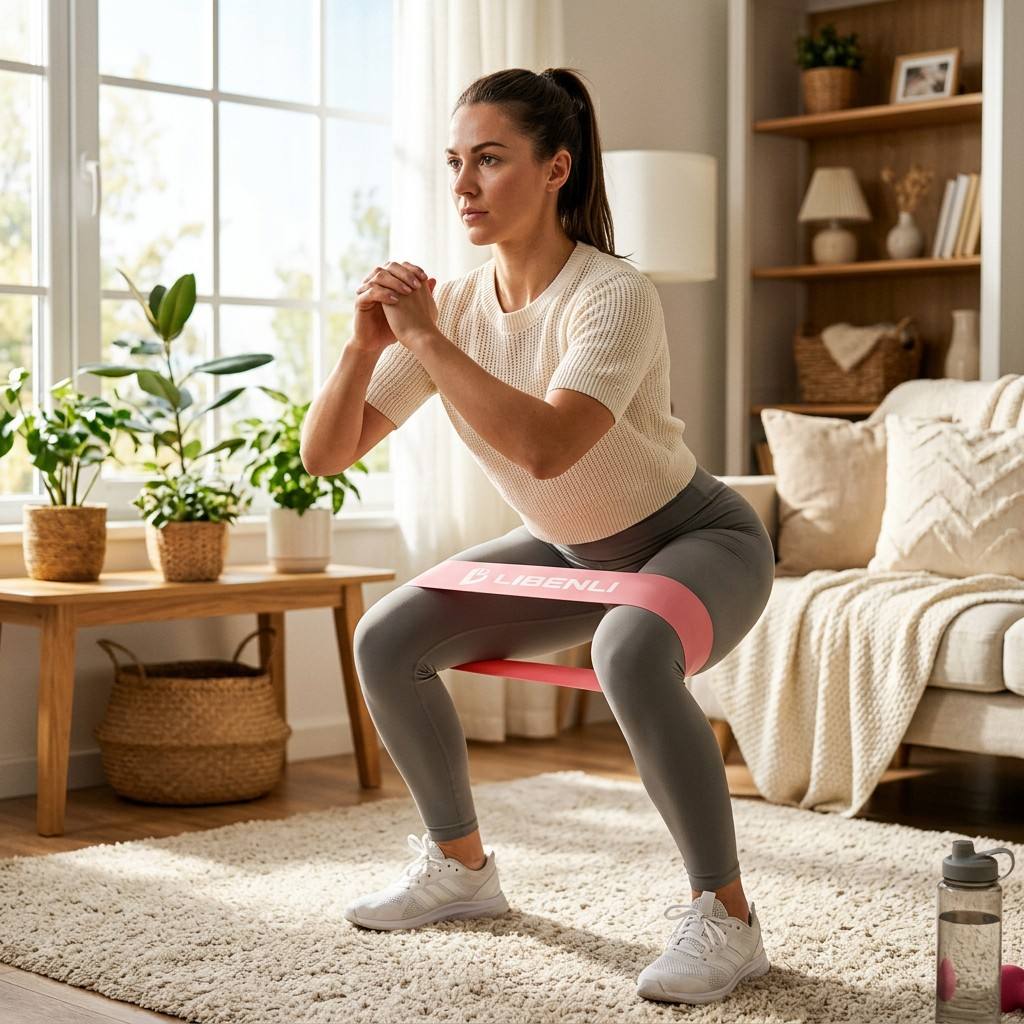
The ZLQ-1 is explicitly listed for Hip & Glute Training. The compact loop and anti-slip design are the documented features most relevant to this context. The ZLQ-03 is not specifically listed for hip and glute training in the supplied application scope, so a buyer should not substitute the power loop into that program without a separate fit check.
Rehabilitation and physical therapy
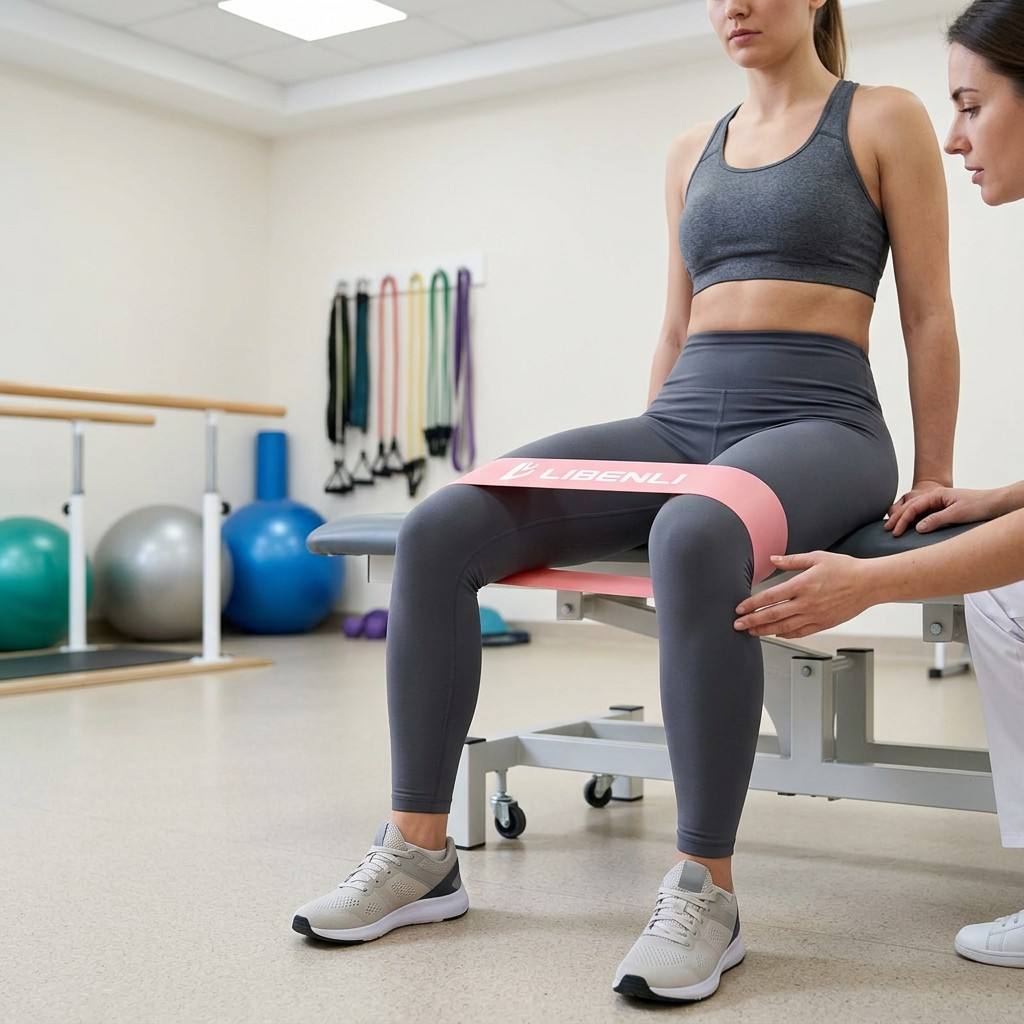
Both models are listed for Sports Rehabilitation and Physical Therapy. The ZLQ-1 starts at 5LB and uses a compact loop; the ZLQ-03 spans 8–230LB and uses a longer loop. The choice depends on the movement, the clinician's load band, and the handling position. The resistance range alone does not determine clinical suitability, and the buyer should keep the intended use and supervision model in the specification.
Gym training
Both models include gym training in their listed applications: the ZLQ-1 as Gym Training Equipment and the ZLQ-03 for Fitness Gym. The ZLQ-03 family includes the wider width and higher resistance range, which are relevant when a gym program needs those specifications. The ZLQ-1 remains a compact loop option. This is a program-fit statement, not a claim that one model is stronger in every exercise.
Home workout
Both models are listed for home use: the ZLQ-1 for home fitness and the ZLQ-03 for Home Workout. A home program can use the ZLQ-1 for short-loop movements and the ZLQ-03 where a longer loop or higher resistance band is required. The buyer should decide whether the program needs one format or a two-format kit.
Outdoor training
The ZLQ-03 is listed for Outdoor Training Equipment. The ZLQ-1's supplied application scope does not list outdoor training. Buyers planning outdoor sessions should therefore start with the ZLQ-03 and confirm the ZLQ-1 only if the specific use has been validated. This is a scope distinction, not a statement that the ZLQ-1 will fail outdoors in every condition.
Purchasing terms for buyer programs
The model comparison above does not establish the commercial terms needed to place an order. Price, MOQ, lead time, Incoterm, packaging cost, labeling, and certification scope must be confirmed in the RFQ and quotation. A buyer program should not infer these terms from the resistance range or from a category page.
Useful RFQ items include the exact model and SKU, material, thickness, width, circumference or length, resistance level, anti-slip requirement for the ZLQ-1, double-layer requirement for the ZLQ-03, packaging format, barcode and label requirements, sample approval process, and destination-market documentation. If the program needs custom branding, that should be written as a separate requirement and confirmed by the supplier; the supplied product data does not establish a customization term for either model.
Compliance scope should also be written precisely. As a reference, ISO 20957-2:2024 addresses safety requirements for stationary strength-training equipment using alternative resistance means such as elastic cords; its applicability to a standalone loop band depends on the product configuration and intended use. ASTM F2276-23 is listed by ASTM as a fitness-equipment specification. UK tariff guidance indicates that simple resistance bands without handles may be classified by constituent material, with exact classification depending on product characteristics. These references support a buyer checklist; they do not replace a market-specific compliance determination.
Libenli states that it holds ISO 9000:2000 and ISO 9001:2008 certifications and that most products are certified by SGS. Those are company-level statements. A buyer should confirm the certificate scope and the product-specific file rather than treating a company certificate as automatic approval for every model or market.
Acceptance criteria: what to check on receipt
Acceptance criteria should be tied to the approved sample and the purchase order, not to a generic category description. A practical inspection plan for the ZLQ-1 and ZLQ-03 can include the following checks.
- Model identity: confirm that the carton, label, and product match the ordered model, ZLQ-1 or ZLQ-03, and the approved SKU.
- Dimensions: verify thickness, width, and circumference or length against the agreed specification. For the ZLQ-1, check the 50 mm width and 600 mm circumference. For the ZLQ-03, check the selected width within the 6.4–82.5 mm family range and the 2080 mm length.
- Material: confirm Latex or TPE for the ZLQ-1, and Latex for the ZLQ-03, against the approved sample and order.
- Resistance level: verify the marked resistance level and that it falls within the agreed range. The ZLQ-1 range is 5–40LB; the ZLQ-03 range is 8–230LB. The exact level should be a SKU-level requirement.
- Design features: check the anti-slip design on the ZLQ-1 where specified, and confirm whether the ZLQ-03 order requires the double-layer option.
- Durability claim basis: if the program relies on the stated stretch figures, request the test basis and keep the claim language consistent with the supplier's documentation. Do not convert the ZLQ-1's 30,000-stretch fatigue resistance and the ZLQ-03's 20,000-stretch service life into a direct ranking without a common method.
- Packaging and labeling: check quantity, labeling, barcode, and packaging against the approved specification.
- Documentation: confirm the documents required for the destination market and the certificate scope before release.
These checks are buyer-side acceptance steps. They do not create new product claims, and they do not replace the supplier's own quality controls.
Supplier context for buyer programs
Libenli was established in 1997 and operates a 50,000 square meter factory with approximately 300 staff. The company states that it runs 24 production lines for dipped latex tubing with a daily output of 120,000 meters, plus 2 lines for latex bands with a daily capacity of 25,000 meters. Its R&D team consists of 20 engineers. For a buyer program, these facts are useful for initial supplier qualification, but they do not replace model-level sample approval or a factory audit.
The company's product range includes resistance band, resistance tubing, pole spear, and speargun. Its main markets are Germany, USA, UK, France, and Canada, and export business accounts for 70% of total sales. Buyers evaluating resistance band manufacturers should compare documented model specifications, application scope, and acceptance evidence rather than relying on broad category claims. The ZLQ-1 and ZLQ-03 are two documented models within that evaluation.
FAQ
What is the main difference between the ZLQ-1 mini loop band and the ZLQ-03 power loop band?
The ZLQ-1 is a 600 mm circumference mini loop with 50 mm width, 0.3–1.2 mm thickness, 5–40LB resistance, anti-slip design, and stated fatigue resistance of at least 30,000 stretches. The ZLQ-03 is a 2080 mm power loop with 0.45 mm thickness, 6.4–82.5 mm width, 8–230LB resistance, stated service life of at least 20,000 stretches, and a double-layer option. The first is a compact loop; the second is a longer, broader-range loop.
Which model is listed for Yoga & Pilates and hip and glute training?
The ZLQ-1 is explicitly listed for Yoga & Pilates and Hip & Glute Training. The ZLQ-03 is listed for Yoga Training, but it is not specifically listed for hip and glute training in the supplied application scope. That makes the ZLQ-1 the starting model for those two contexts.
Can the ZLQ-1 be used for outdoor training?
The supplied application scope for the ZLQ-1 lists home fitness, Yoga & Pilates, Hip & Glute Training, Sports Rehabilitation, Physical Therapy, and Gym Training Equipment. Outdoor training is not listed. The ZLQ-03 is listed for Outdoor Training Equipment, so an outdoor program should start with that model and confirm any ZLQ-1 use separately.
What should buyers confirm before ordering either model?
Buyers should confirm the exact model and SKU, material, thickness, width, circumference or length, resistance level, design option, packaging, labeling, documentation, price, MOQ, lead time, and Incoterm in the RFQ and approved sample. The product data does not establish those commercial terms, and company-level certificates do not automatically cover every product or market.
How should buyers compare resistance band manufacturers for these models?
Buyers should compare manufacturers on model-level specifications, application scope, sample approval, acceptance evidence, certificate scope, and commercial terms. Libenli is a manufacturer and exporter established in 1997 that specializes in latex tubing and latex resistance bands; its export markets include Germany, USA, UK, France, and Canada. The next step is to request the current catalog or a sample quotation against the specific ZLQ-1 or ZLQ-03 specification.
To review the model range and specifications, download the Libenli catalog or contact Libenli at public@libenli.cn for a sample and quotation discussion.
Conclusion
For buyer programs, the ZLQ-1 and ZLQ-03 should be treated as two different loop tools. The ZLQ-1 is the compact mini loop: 600 mm circumference, 50 mm width, 5–40LB, anti-slip design, and a stated 30,000-stretch fatigue resistance. The ZLQ-03 is the longer power loop: 2080 mm length, 0.45 mm thickness, 6.4–82.5 mm width, 8–230LB, a stated 20,000-stretch service life, and a double-layer option. The application lists point the ZLQ-1 toward home fitness, Yoga & Pilates, hip and glute training, rehabilitation, physical therapy, and gym training equipment, while the ZLQ-03 covers gym, home, rehabilitation, physical therapy, yoga training, and outdoor training. The correct selection depends on the movement, load band, and acceptance plan, not on a general ranking. Buyers can use the Libenli model data as a starting point, then confirm commercial terms, samples, and destination-market documentation before placing a program order.
Have Questions or Need More Details?
Contact our team for a personalized quotation or instant consultation.
Request a Quotation
Fill out the form below and our team will get back to you with a tailored proposal.
WhatsApp Direct Chat
Prefer to chat in real-time? Message us on WhatsApp for instant assistance & quick answers.
- Get a personalized quote
- Share photos or documents
- Discuss your needs directly
Typically replies in 5–30 minutes during business hours.