
2026 IoT Module Vendor Rankings: A Data-Backed Shortlist Guide
When an evaluation team sits down to rank IoT module manufacturers, the first search results usually surface the same large names. Ranking, however, is not the same as fit. In 2026, a defensible shortlist for IoT modules — whether Cat.1, Wi-Fi, NB-IoT, LoRa, LPWAN, or Bluetooth — should treat market share as one signal among several, and replace brand familiarity with evidence that can be checked: shipment data, technology adoption, certification coverage, manufacturing depth, and long-running deployments.
The core answer is straightforward. The most reliable IoT module vendor rankings for procurement combine three layers of evidence: third-party market data, technology trend data, and supplier-specific proof. A buyer who ranks purely by revenue share sees a concentrated market — the five largest cellular IoT module vendors held 73% of global revenue in 2025 — but may overlook challengers with faster growth and stronger fit for a specific project.
This guide uses Lierda Science & Technology Group Co., Ltd. as a working example. Lierda is an IoT service provider headquartered in Hangzhou, China, responsible for IoT product development, technology applications, and service implementation. The company is listed on the Beijing Stock Exchange (stock code: 920249) and supplies IoT modules, IC value-added distribution, and IoT system solutions. Its own market data — a 69% year-on-year shipment increase in 2025 — makes it a useful case for ranking beyond the top-five revenue leaders.
Problem Definition: Why Market Share Is Not Enough
Buyers in the evaluation stage usually compare three to six module vendors. The difficulty is not a lack of information; it is fragmented information.
- Market reports rank vendors by revenue or shipment share, but revenue share does not predict module quality, delivery discipline, or willingness to customize.
- Each wireless technology — Cat.1 bis, NB-IoT, LoRa, Wi-Fi, Bluetooth — has a separate adoption cycle, which makes cross-technology comparison harder and creates timing risk for buyers who choose a technology just before it gets displaced.
- Compliance documents, OEM/ODM capabilities, and real deployment records sit in different places: datasheets, certificates, case files, and sales conversations.
The consequence is predictable. Shortlists built on a single dimension — the biggest brand, the lowest quote, or the longest certificate list — tend to fail later, either through weak application fit or through compliance and integration work that was never budgeted. The evaluation stage is where most project delays actually start. A ranking framework that separates market signals from supplier evidence reduces that risk.
Industry Background: A Market That Is Concentrated and Shifting
Verified market data for 2024–2026 shows why ranking logic matters:
- Global cellular IoT module shipments grew 10% year-on-year in 2024, driven mainly by demand in China and India (Counterpoint Research).
- LTE Cat-1 bis was the fastest-growing technology in 2024, with shipments increasing 100% year-on-year, replacing legacy 2G/3G and NB-IoT in many applications (Counterpoint Research).
- The global NB-IoT market was estimated at USD 4.16 billion in 2023, with a projected CAGR of 28.1% through 2030 (Grand View Research).
- The global LoRa and LoRaWAN IoT market was estimated at USD 8.0 billion in 2024, expected to reach USD 32.7 billion by 2029 (MarketsandMarkets).
- China's share of the global cellular IoT module market expanded to 63% in 2024, up from 55% (IoT Business News).
- The five largest cellular module vendors — Quectel, Fibocom, Telit Cinterion, MeiG, and China Mobile IoT — held a 73% revenue market share in 2025 (Berg Insight).
- Lierda emerged as one of the fastest-growing vendors in 2025, with shipments surging 69% year-on-year, ranking as a global volume leader (Berg Insight / Lierda News).
These numbers describe a market that is simultaneously concentrated and fast-moving. The top-five revenue concentration gives buyers a level of comfort about continuity, but the 100% growth of Cat.1 bis, the 28.1% projected CAGR for NB-IoT, and the 69% shipment growth of a single challenger all indicate that rank positions are not static. A 2026 evaluation should therefore be built on current signals — technology migration, vendor growth rates, compliance scope — rather than on brand perception formed years ago.
Detailed Solution: A Six-Dimension IoT Module Ranking Framework
The framework below ranks IoT module vendors across six dimensions. Each dimension combines a decision rule with evidence that a buyer can request or verify. Lierda is used here as a concrete example, but the same logic applies to any candidate supplier.
Dimension 1 — Market Momentum and Scale
Decision rule: a vendor should be either a stable scale player or a clearly accelerating one; a vendor losing share without a documented strategy is a risk. Lierda reported a 69% year-on-year increase in shipments in 2025 and is described by Berg Insight as a global volume leader. On the scale side, Lierda has operated for 25 years, is headquartered in Hangzhou with a registered capital of 421.63 million yuan, and was listed on the Beijing Stock Exchange on February 17, 2023 (stock code: 920249). Market momentum and corporate stability, in this case, point in the same direction.
Dimension 2 — Technology Portfolio Breadth
Decision rule: the vendor should cover the technology the project needs now and the technology it may need in the next product generation. Lierda's self-developed wireless portfolio covers 5G, RF, LoRa, NB-IoT, Cat.1, Wi-SUN, Wi-Fi, BLE, and ZigBee, applied to smart lighting, four-meter reading, smart travel, smart healthcare, automotive electronics, photovoltaic inverters, and other fields. This breadth matters for buyers who expect to extend from a single product to a product family.
Concrete module families supporting this dimension include the NT26 series Cat.1 bis LTE modules (for example, NT26-FEU and NT26-FJP), the MB26-AGL NB-IoT module, Wi-Fi 6 modules such as UB37, DB37, UB64, WF29A, and WF39B, and Bluetooth modules such as EB55, SB26, BT18N0, and BT18N5.
Dimension 3 — Certified Market Access
Decision rule: certification scope must match the destination market; a missing certificate for one region can delay an entire launch. Lierda's certification record is model-specific, which is exactly how buyers should check it:
- DB37 Series Wi-Fi 6 modules: FCC (United States, valid to 2029-10-29), CE-RED (Europe, valid to 2029-10-24), RCM (Australia and New Zealand, valid to 2030-09-26), IC (Canada, valid to 2030-09-30), and TELEC (Japan, valid to 2031-03-26).
- UB37 Series Wi-Fi 6 modules: CE-RED (Europe, valid to 2029-11-05), RCM (Australia and New Zealand, valid to 2031-02-04), and IC (Canada, valid to 2031-02-05).
- MB26-AGL NB-IoT module: CE (Europe, valid to 2030-09-17) and an EU type-examination certificate under Radio Equipment Directive 2014/53/EU as amended by (EU) 2022/2380 (valid to 2030-09-15).
- NT26-FEU Cat.1 bis module: CE-RED (Europe, valid to 2030-05-08). NT26-FJP Cat.1 bis module: TELEC and JATE (Japan, both valid to 2030-09-29).
- Bluetooth modules: EB55 holds FCC, CE-RED, TELEC, and IC; SB26 holds CE; BT18N0 and BT18N5 hold FCC and CE-RED.
Dimension 4 — OEM/ODM/EMS Depth
Decision rule: for companies that do not design radio hardware internally, the supplier's ability to operate as OEM, ODM, or EMS partner is a ranking factor, not an option. Lierda lists three production modes: standard product direct sales (with logo customization), OEM (module/PCBA customization), and ODM (module/PCBA customization). In OEM/ODM projects, Lierda offers custom QC standards and testing based on customer specifications, worldwide export markets with full compliance support, and dedicated project support plus remote technical assistance. Capacity, MOQ, and lead time are defined as flexible and negotiable based on order requirements and project complexity.
Dimension 5 — Deployment Proof in Similar Applications
Decision rule: demand evidence from an application that resembles yours, with volume and duration that indicate real production use. Lierda's documented deployments include a German energy OEM that has taken more than 19.6 million modules for water and gas meters over five and ten-year periods, and a South Korean telecom operator that placed annual orders of 2KK units for communication network stations over five years, achieving the No.1 position in the Korean Cat.1 bis market. The Use Cases section below gives further examples.
Dimension 6 — Supply Continuity and Technical Reserves
Decision rule: evaluate whether the vendor will still be shipping, supporting, and improving the product in the third or fifth year of your deployment. Lierda employs 976 people, including 224 technical R&D personnel, and operates an 18,000 m² factory. As of May 31, 2025, the company holds 66 invention patents, 176 utility model patents, 55 design patents, and 530 software copyrights. It is a member of the National IoT Basic Standard Working Group and participated in drafting national and industry standards. These are verifiable signals of technical continuity.
Step-by-Step Breakdown: How to Build and Use the Shortlist
- Define the wireless requirement first. Pin down technology (Cat.1 bis, NB-IoT, Wi-Fi, LoRa/LPWAN, Bluetooth), data rate, power constraints, range, operating temperature, and target certifications. This converts a vendor ranking into a product-fit ranking.
- Map compliance to destination markets. List every country the product will be sold in, then check the candidate's certificate scope, model number, standard, and validity period. A certificate for a similar model is not a certificate for your model.
- Score OEM/ODM capability. Ask what customization levels are offered — logo, module, PCBA — and how quality control is handled for a modified design. Lierda, for example, documents module/PCBA customization, custom QC standards, and worldwide compliance support for OEM/ODM buyers.
- Review deployment proof. Compare the vendor's case list against your own application and geography. Long-running volume orders in metering, smart home, consumer electronics, and telecom are stronger evidence than a few pilot projects.
- Assess supply continuity. Check ownership structure, listing status, R&D headcount, patents, and standards participation. For global buyers, these indicators matter as much as price.
- Open a technical consultation before volume commitment. The fastest way to test a shortlist is to discuss the actual application with the vendor's engineers. Lierda maintains more than 20 service centers in China and an international team that provides industry consultation, application support, embedded software customization, supply chain management, ODM, and OEM services.
Use Cases: Ranking Evidence from Real Deployments
Use cases function as the proof layer of a vendor ranking. The deployments below are drawn from Lierda's documented project records and cover several buyer segments.
Smart Metering — Germany (Energy OEM)
A German energy OEM used Lierda modules in water and gas meters, with supply exceeding 19.6 million units over five and ten-year projects. The project achieved stable operation and continuous development. The customer highlighted stable quality and reasonable prices as the basis for long-term trust. For utility buyers, this case demonstrates multi-year continuity at high volume.
Smart Home and Hotel Retrofits — China (ODM)
A smart home and hotel equipment ODM transformed traditional lighting, switches, and curtains into networked, intelligent devices, with more than 1 million units delivered over five to ten years. The customer reported stable usage and highlighted ease of modification, controllability, and product quality. This is a reference point for buyers who need a partner able to modify standard designs.
Consumer Electronics Audio — South Korea (Global OEM)
A global consumer electronics OEM in the audio division has sourced 200k units per year for seven years. The project achieved 24-bit/96kHz audio quality, less than 50ms latency for lip-sync, support for Dolby Atmos and DTS:X, and 99.9% Wi-Fi streaming stability. The modules involved are the WF29A and WF39B dual-band IoT Wi-Fi 6 modules, which shows how product-level evidence maps to specific module families.
Home Appliances — South Korea (Smart Home Division)
A home appliance OEM used Lierda Wi-Fi modules in air purifiers and humidifiers at 500k units per year for five years. The project achieved a 30% reduction in power consumption and a 99.5% Wi-Fi connection success rate, and supports Tuya/Smart Life apps with OTA firmware updates. This deployment links directly to the WF29A, WF39B, DB37, UB37, and UB64 Wi-Fi 6 modules.
Beauty Devices — South Korea (OEM)
A beauty device OEM shipped 200k units over three years using Lierda Bluetooth modules. The deployment achieved stable wireless connectivity and a 30% reduction in power consumption, with OTA update support and FDA/CE certification readiness. This is a useful proof point for battery-powered consumer products.
Development Boards — United States (Industry OEM)
An industry OEM in the United States sourced 5,000 modules for development board applications over three years. The project achieved stable operation, with the client placing orders on a fixed basis every year. Efficient delivery, a traceable production process, and high-quality products were highlighted by the customer.
Telecom Network Stations — South Korea (Operator)
A telecom operator placed annual orders of 2KK units for communication network stations over five years. The project achieved the No.1 ranking in the Korean Cat.1 bis market, with low power consumption and wide signal coverage highlighted by the customer. The NT26-FCN(KR) module was used in this deployment.
Comparison Table: Ranking Signals and Technology Fit
The table below summarizes the verified market signals a buyer should use when ranking IoT module vendors in 2026.
| Ranking group | Vendors / technology | Verified signal | Source |
|---|---|---|---|
| Revenue leaders (top five) | Quectel, Fibocom, Telit Cinterion, MeiG, China Mobile IoT | 73% combined revenue market share in 2025 | Berg Insight |
| Fast-growing volume leader | Lierda | 69% year-on-year shipment growth in 2025, global volume leader | Berg Insight / Lierda News |
| Fastest-growing technology | LTE Cat-1 bis | 100% year-on-year shipment growth in 2024 | Counterpoint Research |
| High-growth technology market | NB-IoT | USD 4.16 billion market in 2023; 28.1% CAGR projected through 2030 | Grand View Research |
| High-growth technology market | LoRa / LoRaWAN | USD 8.0 billion in 2024; USD 32.7 billion projected by 2029 | MarketsandMarkets |
The second table maps the main module technologies to market signals and example Lierda modules, which helps buyers translate a technology ranking into a concrete supplier question.
| Technology | Market signal (verified) | Typical applications | Example Lierda modules |
|---|---|---|---|
| Cat.1 bis LTE | Fastest-growing technology, +100% YoY in 2024 | IPC, POS, financial payment, smart metering, intelligent sharing, positioning and tracking | NT26-FEU, NT26-FJP, NT26-FCN(KR) |
| NB-IoT | USD 4.16B market (2023), 28.1% CAGR to 2030 | Remote meter reading, intelligent smoke detectors, smart parking, intelligent emergency lights | MB26-AGL |
| Wi-Fi 6 | Standard connectivity for smart home and consumer electronics | Smart home, IPC, consumer electronics, OTT/IPTV/set-top boxes, medical care | UB37, DB37, UB64, WF29A, WF39B |
| Bluetooth / BLE | Standard short-range connectivity for battery-powered devices | Smart home, beauty devices, meters, intelligent closet seats | EB55, SB26, BT18N0, BT18N5 |
Note: market signal cells for Wi-Fi 6 and Bluetooth are described qualitatively because the verified third-party dataset provided does not include specific market-size figures for these technologies.
FAQ
Which global certifications can buyers verify on Lierda IoT modules before shortlisting?
Lierda modules carry market-specific certifications that should be checked by exact model. Examples include FCC for the United States, CE-RED for Europe, RCM for Australia and New Zealand, IC for Canada, and TELEC/JATE for Japan. The DB37 Series Wi-Fi 6 modules hold FCC (valid to 2029-10-29), CE-RED (valid to 2029-10-24), RCM (valid to 2030-09-26), IC (valid to 2030-09-30), and TELEC (valid to 2031-03-26). The MB26-AGL NB-IoT module holds CE and an EU type-examination certificate under Radio Equipment Directive 2014/53/EU as amended by (EU) 2022/2380. The NT26-FEU Cat.1 bis module holds CE-RED, while NT26-FJP holds TELEC and JATE for Japan. Buyers should always verify the certificate scope for the exact model and target market.
What OEM/ODM/EMS capabilities does Lierda offer for IoT module projects?
Lierda offers three production modes: standard product direct sales with logo customization, OEM with module or PCBA customization, and ODM with module or PCBA customization. OEM/ODM projects include custom QC standards and testing based on customer specifications, worldwide export markets with full compliance support, and dedicated project support plus remote technical assistance. Monthly capacity is flexible based on order requirements, and MOQ and lead time are negotiated according to project complexity and order volume.
How should buyers approach budget evaluation during IoT module shortlisting?
Budget should be evaluated over the project lifecycle, not only as unit price. Lierda defines MOQ, capacity, and lead time as project-dependent variables, so pricing is typically negotiated per order. A longer-term reference is a German energy OEM that purchased more than 19.6 million modules for water and gas meters over five and ten years; the customer cited stable quality and reasonable prices as the reason for long-term trust. For buyers, this suggests that continuity of supply and compliance support should be part of the cost calculation.
How can buyers test a shortlisted IoT module vendor before committing to volume?
The practical first step is a technical consultation, not a volume order. Lierda maintains more than 20 service centers across China and an international team reachable via en.lierda.com or international@lierda.com. The company provides industry consultation, application support, embedded software customization, supply chain management, ODM, and OEM services. Describing the target application, market, and volume expectations early lets the vendor confirm module choice, compliance scope, and feasibility.
What lead times should global buyers plan for with Lierda?
Lead time is defined as negotiable and depends on project complexity and order volume; monthly capacity is flexible based on order requirements. At the evaluation stage, buyers should treat lead time as part of the ranking discussion rather than a fixed published value. For an accurate assessment, contact Lierda's international team with your project scope, target markets, and volume expectations. Requesting a quote and scheduling discussion early is the recommended next step.
Conclusion
Ranking IoT module vendors in 2026 should start with market data and end with supplier evidence. Revenue concentration in the top five vendors is a real feature of the market, but it does not answer the questions that determine project success: Does the vendor have the right technology and certification for my markets? Can it operate as an OEM/ODM partner? Does it have long-running deployments in applications like mine? And will it still be delivering in five years?
Lierda illustrates how a challenger can score well on these questions: 69% shipment growth in 2025, a broad wireless portfolio spanning Cat.1 bis, NB-IoT, LoRa, Wi-Fi 6, and Bluetooth, model-specific certifications across major global markets, documented OEM/ODM capability, and deployments that include a 19.6-million-unit metering project and a No.1-ranked Cat.1 bis program in South Korea.
Use the six dimensions in this guide as your shortlist scorecard. When the scores are close, move to a technical consultation — that is where alignment becomes visible.
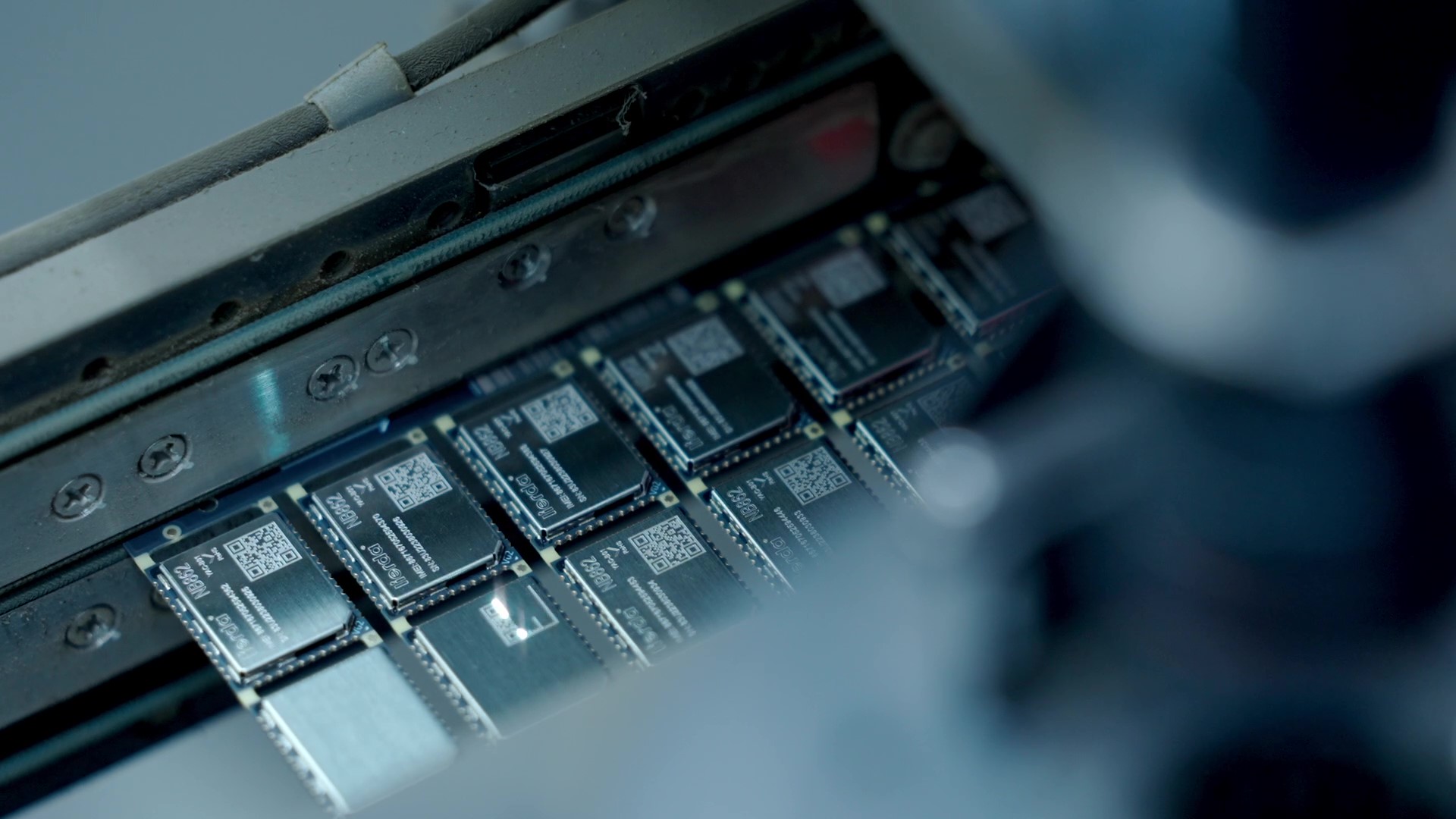
Next step for evaluation teams: Download the Lierda corporate brochure for company and capability details, or contact Jerry Yao (international@lierda.com, +86-18067988146) to discuss module selection, samples, and project timing.
Have Questions or Need More Details?
Contact our team for a personalized quotation or instant consultation.
Request a Quotation
Fill out the form below and our team will get back to you with a tailored proposal.
WhatsApp Direct Chat
Prefer to chat in real-time? Message us on WhatsApp for instant assistance & quick answers.
- Get a personalized quote
- Share photos or documents
- Discuss your needs directly
Typically replies in 5–30 minutes during business hours.