
5 IoT Modules Ranked for Smart Home and Wearables (2026)
For consumer electronics teams, the fastest route to a working shortlist is to rank IoT modules by product category, not by raw datasheet numbers. This shortlist ranks five Lierda module families by consumer fit: BT18N0 Bluetooth 6.0 for wearables and handheld personal devices, WF29A / WF39B dual-band Wi-Fi 6 for smart home appliances, NT26-F Cat.1 bis for connected appliances that need a cellular backhaul, WB25 / WB26 LoRaWAN nodes for low-power sensors, and QB20 LoRa SiP for ultra-small trackers.
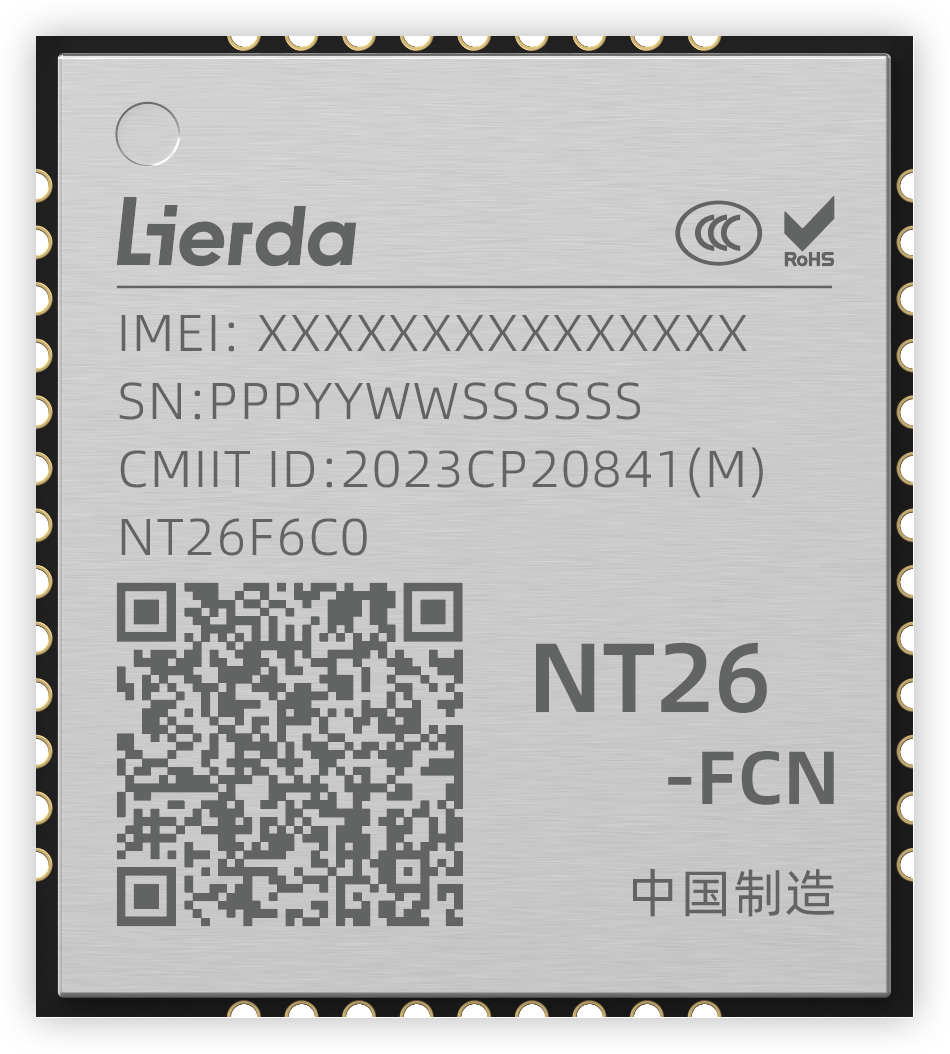
Cover: Lierda NT26-F Series Cat.1 bis LTE module — LGA package, 17.7 × 15.8 × 2.4 mm, 2.3–4.5 V (typical 3.8 V). Image: Lierda Science & Technology Group Co., Ltd.
Lierda Science & Technology Group Co., Ltd. is an IoT service provider and IoT module manufacturer headquartered in Hangzhou, China, founded in 2001 and listed on the Beijing Stock Exchange on 17 February 2023 under stock code 920249. Its portfolio covers 5G, NB-IoT, Cat.1, LoRa, Wi-Fi, Wi-SUN and BLE modules, which is the reason a single supplier can appear on five different consumer categories at once — and also the reason a category-first ranking is more useful than a single leaderboard.
Problem definition: why consumer module shortlists go wrong
Most consumer electronics module comparisons fail at one of four points, and each failure is predictable before a single sample is ordered.
- Cross-category comparison. A Bluetooth module and a LoRaWAN node can both be labelled low power, but one talks to a phone a few metres away and the other talks to a gateway across a building. Ranking them against each other on current consumption produces a decision that has no meaning in the product's architecture.
- Ignoring the data path. Some consumer products need a phone (Bluetooth), some need a router (Wi-Fi), some need neither because the device must report without any local network (cellular), and some need a private gateway infrastructure (LoRaWAN). The module must be selected after the data path, never before it.
- Treating protocol support as market approval. A module that supports EU868 or US915 frequency plans is not automatically approved for sale in a given country. Conformity documentation is a separate procurement step, and in Europe that step changed on 1 August 2025.
- Missing the mechanical budget. Board area is often fixed before the radio is chosen. A SiP measuring 8.0 × 8.0 × 1.1 mm and a node module measuring 22 × 18 × 3.0 mm solve the same problem in two very different enclosures.
The fix is a ranking built on product category, mechanical budget, power profile and compliance path — evaluated in that order.
Industry background: what changed in 2025–2026
The shortlist below is not shaped by fashion. Three measurable shifts explain why consumer teams are re-ranking their module options now.
- The cellular module market resumed growth. Global cellular IoT module shipments grew 10% year over year in 2024, rebounding from the 2023 downturn (Counterpoint Research).
- Cat.1 bis became the fastest-growing cellular technology. LTE Cat 1 bis shipments surged 100% year over year in 2024 (Counterpoint Research), which is why a Cat.1 bis module now sits in the middle of a consumer shortlist rather than at the bottom.
- Revenue and regulation moved together. Cellular IoT module revenues grew 19% to US$5.6 billion in 2025 (Berg Insight), while the EU Radio Equipment Directive introduced mandatory cybersecurity requirements effective 1 August 2025 — a change that affects any consumer device with a radio sold into the EEA.
Supplier structure matters as well. In 2024, cellular IoT module shipments were led by Quectel (37%), China Mobile (9%), Fibocom (7%), Sunsea (6%) and Lierda (5%), according to Counterpoint Research — a distribution that explains why buyers increasingly evaluate a small number of suppliers against several connectivity categories instead of one supplier per radio type.
Supplier context
Lierda reports 25 years of operation, an 18,000 m² manufacturing site, 976 employees and 224 R&D staff, with OEM and ODM production modes covering both module and PCBA customisation. Its product family for consumer projects spans BLE (BT18N0, EB55, SB26), Wi-Fi 6 (WF29A, WF39B, DB37, UB37), Cat.1 bis (NT26-F series) and LoRa (WB25, WB26, WB28, QB20, AM36).
Ranking criteria used in this shortlist
Five criteria are applied consistently to every module below. No criterion depends on a price that is not published, and no criterion depends on a competitor's unreleased specification.
- Category fit. Does the radio type match the way the consumer product actually reaches its cloud or its user?
- Verified mechanical and electrical envelope. Only dimensions and voltage ranges that appear in Lierda product documentation or in this brief are quoted.
- Documented link behaviour. Frequency plans, transmit power, interface type and protocol version where stated.
- Evidence from real consumer programmes. Where Lierda has documented a consumer deployment outcome, it is used as a reference point rather than as a guarantee.
- Compliance work still required. Modules that need more certification work rank lower for fast-moving consumer timelines.
The ranking: five modules by consumer product category
Rank 1 — BT18N0 Bluetooth 6.0 Module (L-BT18N0A0_0950S) for wearables and handheld devices
The BT18N0 is a Bluetooth 6.0 module in Lierda's short-range portfolio, referenced by model number L-BT18N0A0_0950S. It ranks first because the largest group of consumer products — wearables, beauty devices, remote controls and personal tags — needs the simplest data path available: a direct link to a phone, with no router, no SIM and no gateway.
The practical evidence sits in Lierda's consumer application mapping, where the BT18N0 appears in remote-control units, beauty devices and asset-tracking scenarios. In a Korean beauty device programme running for three years at 200,000 units, Lierda records stable wireless connectivity and a 30% reduction in power consumption, with OTA update support and a multi-language app covering Korean, English and Chinese.
Where it stops. A Bluetooth-only product depends on the user's phone being present. If the device must report to a cloud while nobody is nearby, this is the wrong rank entirely — move to Rank 3 or Rank 4. Teams that do not need Bluetooth 6.0 can also evaluate the EB55 (BLE 5.0, 48 KB RAM / 512 KB Flash, −40 °C to +85 °C, slave or master-slave dual connection) or the SB26 (80 KB RAM / 1 MB Flash, −40 °C to +85 °C) for simpler or cost-sensitive designs.
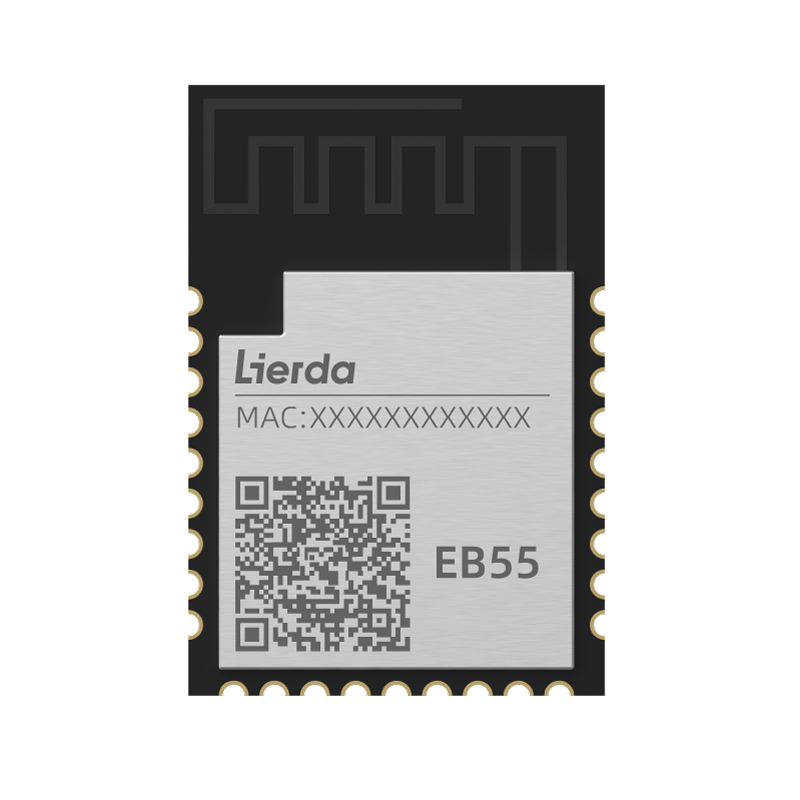
Supporting: Lierda EB55 Bluetooth module — BLE 5.0, 48 KB RAM / 512 KB Flash, −40 °C to +85 °C, supports slave or master-slave dual connections. A lower-complexity alternative when Bluetooth 6.0 is not required.
Rank 2 — WF29A / WF39B Dual-band IoT Wi-Fi 6 Modules for smart home appliances
The WF29A and WF39B are Lierda's dual-band IoT Wi-Fi 6 modules, and they rank second because the majority of smart home products are mains-powered, sit inside a home router's coverage, and need an IP connection for app control, telemetry and firmware updates.
Lierda maps these modules onto four consumer categories: air purifiers and humidifiers, water purifiers with OTA, audio bars and AI cameras. The documented working conditions for a static indoor appliance are 0 °C to 40 °C at 20% to 80% relative humidity — a narrow envelope that keeps the RF design predictable and the bill of materials simple.
Two documented programmes make the case concrete. In a Korean home appliance programme running five years at 500,000 units per year, Lierda records a 30% reduction in power consumption, a 99.5% Wi-Fi connection success rate, PM2.5 data upload every five minutes, fan-speed adjustment based on air quality, OTA firmware update over Wi-Fi, and support for Tuya and Smart Life apps. In a global consumer electronics audio programme running seven years at 200,000 units per year, the recorded outcomes are 24-bit/96 kHz audio, latency under 50 ms, and 99.9% Wi-Fi streaming stability, with AirPlay 2, Chromecast built-in, Alexa and Google Assistant control, and HDMI eARC compliance.
Interface choice inside the family. Lierda's standard Wi-Fi 6 modules document the radio envelope that consumer teams should expect from this generation: Wi-Fi b/g/n/ax plus BLE 5.2 and SLE 1.0 on 2.4 GHz at 150 Mbps. The DB37 exposes SDIO and the UB37 exposes USB 2.0, so the host interface can follow the existing mainboard rather than forcing a redesign.
Where it stops. Wi-Fi requires provisioning, router credentials and continuous mains power. For a battery-only sensor, Rank 4 is the correct starting point.
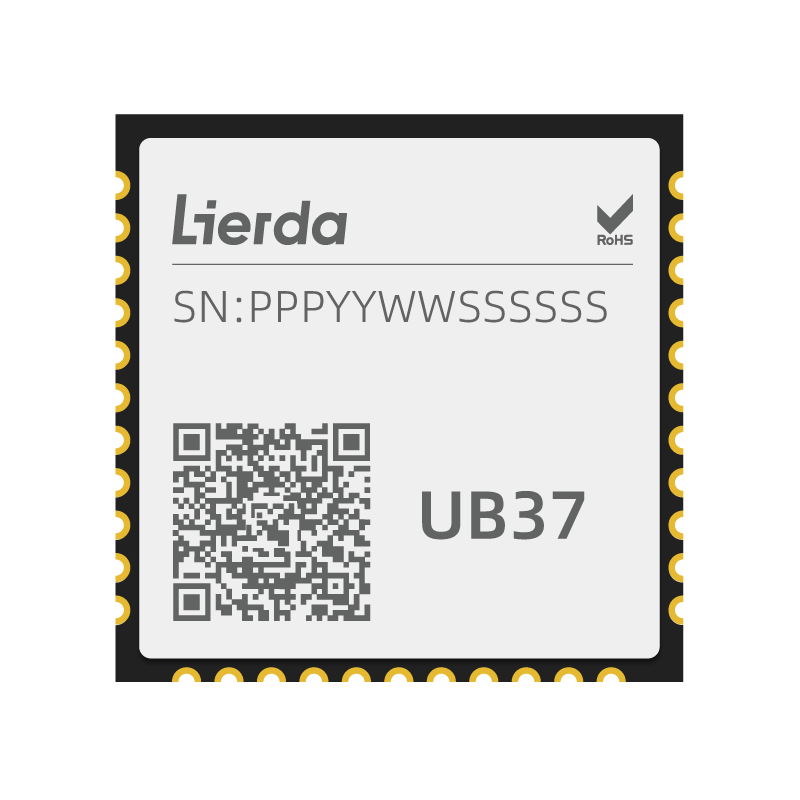
Supporting: Lierda UB37 Standard Wi-Fi 6 module — Wi-Fi b/g/n/ax + BLE 5.2 + SLE 1.0, 2.4 GHz, 150 Mbps, USB 2.0 interface. The DB37 carries the same radio envelope with an SDIO interface.
Rank 3 — NT26-F Series Cat.1 bis LTE Module for connected appliances
The NT26-F series is a Cat.1 bis LTE module family, and it ranks third because a growing set of consumer appliances must reach the cloud without relying on a home router — cloud speakers, POS terminals, trackers, smart security devices, two-wheelers and industrial PDAs all appear in Lierda's stated application scope for this family.
The documented envelope for the NT26-FCN is precise: FDD bands B1/3/5/8, TDD bands B34/38/39/40/41, an operating range of −30 °C to +75 °C with an extended −40 °C to +85 °C range, GNSS/BDS positioning, an LGA package measuring 17.7 × 15.8 × 2.4 mm, and a supply of 2.3–4.5 V with a typical 3.8 V. The global variant, NT26-FGL, widens the band set to B1/2/3/4/5/7/8/12/13/14/18/19/20/25/26/28/66/71/34/38/39/40/41 and runs from 3.3–4.5 V at a typical 3.8 V.
Deployment evidence covers both consumer and utility categories. A Korean telecom operator programme records 2 million units per year over five years, with low power consumption and wide signal coverage cited as the deciding factors. A German energy OEM programme records 19.6 million units across water and gas meters over five- and ten-year horizons, with stable operation and continuous development cited as the outcome.
Where it stops. A cellular module adds a SIM or eSIM path, carrier engagement and certification scope that a Wi-Fi design does not carry. If the product always sits behind a known router, Rank 2 is cheaper to certify and cheaper to power.
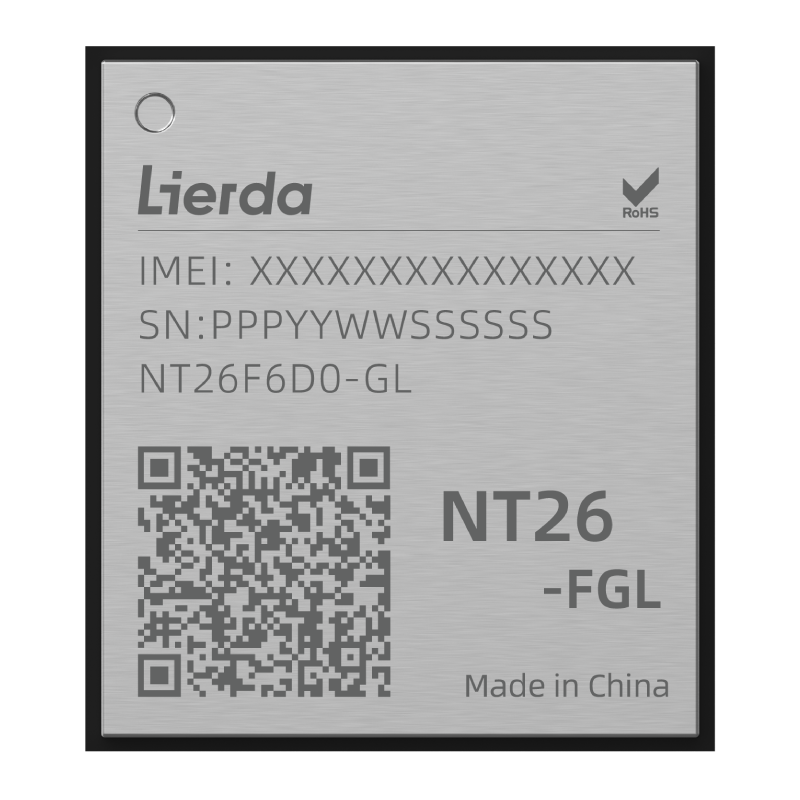
Supporting: Lierda NT26-FGL Cat.1 bis LTE module — global band set, LGA package 17.7 × 15.8 × 2.4 mm, 3.3–4.5 V (typical 3.8 V), for IPC, POS, payment, metering, sharing and tracking applications.
Rank 4 — WB25 / WB26 LoRaWAN Node Modules for low-power sensors
The WB25 and WB26 are LoRaWAN node modules, and they rank fourth because they solve a category the first three cannot: a battery-powered sensor that must survive for months or years and still reach a gateway through walls, at a data rate measured in bytes rather than megabits.
The WB25-8D is documented as a LoRaWAN end-node module with a serial interface, an operating band of 860–930 MHz, a UART interface and support for the EU868, IN865, RU864, AU915, US915, KR920 and AS923-1/-2/-3/-4 regional plans. Its package measures 22 × 18 × 3.0 mm, it supports Class A/C operation, and it transmits at up to 22 dBm. STMicroelectronics independently describes the WB25-8D as a LoRaWAN end-node module referencing LoRaWAN Specification 1.0.4 with regional parameters 1.1, and describes the WB26-7P as a LoRa transparent module using a serial interface.
For teams that want a private network without a LoRaWAN server, the WB28 LoRaMesh module uses the same 22 × 18 × 3.0 mm footprint with 868–930 MHz operation, 1.8–3.6 V supply, 22 dBm maximum transmit power, −124 dBm receiver sensitivity at SF7/BW125, UART interface and a −40 °C to +85 °C range.
Where it stops. A LoRaWAN node needs infrastructure. Lierda's portfolio includes the IG41 indoor and OG45 outdoor LoRaWAN gateways for that purpose, but the gateway is a project cost, not a module option. Regional frequency-plan support is also not the same as country approval — see the compliance FAQ below.
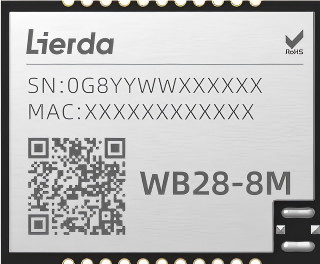
Supporting: Lierda WB28 LoRaMesh module — 868–930 MHz, 1.8–3.6 V, 22 dBm max transmit power, −124 dBm @ SF7/BW125, UART, 22 × 18 × 3.0 mm, −40 °C to +85 °C. The private-mesh option alongside WB25 and WB26 LoRaWAN nodes.
Rank 5 — QB20 LoRa SiP Module for ultra-small trackers
The QB20 is a LoRa SiP module, and it ranks fifth not because it is weaker but because it serves the narrowest product class in this shortlist: ultra-small trackers where board area, not link budget, is the binding constraint.
Two figures explain the position. The QB20 integrates into a package of 8.0 × 8.0 × 1.1 mm and operates from 1.8–3.7 V. That footprint is a fraction of a conventional node module and is what makes a coin-cell or slim-card tracker enclosure possible at all. In the same engineering family, the AM36 Wi-Fi and LoRa open-source module measures 20 × 20 × 2.5 mm and operates from 3.0–3.6 V, which makes it the practical choice when a team wants a Wi-Fi plus LoRa combination on an open-source platform rather than a dedicated SiP.
Where it stops. SiP integration concentrates the RF design inside the package and constrains layout flexibility around the antenna. The smaller the SiP, the more the surrounding ground plane and enclosure material matter, so the pilot build is not optional. Lierda's OEM and ODM modes cover module and PCBA customisation if the tracker requires a tailored carrier board.
Step-by-step: turning the ranking into a design decision
The ranking narrows the field. The following five steps turn it into a decision that survives a design review.
- Fix the data path first. Phone link → Rank 1. Router link → Rank 2. Carrier link → Rank 3. Gateway link → Rank 4 or 5. Do not evaluate a module before this step is agreed across hardware, firmware and product management.
- Set the power budget from the duty cycle. A static indoor appliance at 0–40 °C and 20–80% RH can run continuously on mains. A water purifier reporting once per hour or on a filter alert is a different profile. A battery tracker with periodic wake-up is a third. Write the profile down before comparing any current figure.
- Lock the mechanical envelope. Decide the available board area and enclosure clearance early. 8.0 × 8.0 × 1.1 mm (QB20), 17.7 × 15.8 × 2.4 mm (NT26-F), 20 × 20 × 2.5 mm (AM36) and 22 × 18 × 3.0 mm (WB25/WB28) are not interchangeable in a slim consumer housing.
- Confirm the region and compliance route. Check the frequency plan or band set against the target market, then confirm that conformity documentation exists for the exact model. EU cybersecurity requirements under the Radio Equipment Directive became mandatory on 1 August 2025, so European consumer launches need that line item in the project plan.
- Validate with samples against named acceptance criteria. Use the documented programme outcomes as reference thresholds: 99.5% Wi-Fi connection success, 30% power reduction, 99.9% streaming stability under 50 ms latency. Then test your own enclosure, antenna and thermal conditions, because none of those figures transfer automatically to a new device.
Use cases: matching module to product condition
The table below translates Lierda's documented application conditions into a routing decision for common consumer categories. Every operating condition listed comes from the corresponding application record.
| Consumer product | Recommended module | Documented operating condition | Selection reason |
|---|---|---|---|
| Wearable / beauty device / remote control | BT18N0 (or EB55, SB26) | Indoor, controlled environment; low-power mode waking on user interaction or periodic sync | Direct phone pairing; no router, SIM or gateway; OTA and app support |
| Air purifier / humidifier | WF29A / WF39B | Indoor 0–40 °C, 20–80% RH, static environment; periodic reporting every 5–10 minutes | Mains-powered cloud link, OTA and app integration |
| Water purifier with OTA | WF29A / WF39B | Indoor, normal temperature and humidity; hourly reporting or event-triggered alerts | Firmware update reliability and filter-status telemetry |
| Audio bar / voice assistant | WF29A / WF39B | Indoor 0–40 °C, 20–80% RH, static; always-on for voice wake-up | Streaming stability and low latency are the deciding metrics |
| AI camera | WF29A / WF39B (standard Wi-Fi 6 family) | Indoor/outdoor, −20 °C to +60 °C, IP65/IP67 housing | Video streaming with TLS-secured transmission |
| Connected appliance without home Wi-Fi | NT26-F series | −30 °C to +75 °C, extended −40 °C to +85 °C | Cellular backhaul independent of local infrastructure |
| Battery sensor in a building | WB25 / WB26 (or WB28) | 860–930 MHz LoRaWAN operation, Class A/C, 22 dBm transmit | Long range at minimal duty cycle with gateway infrastructure |
| Ultra-small tracker | QB20 (or AM36) | 1.8–3.7 V operation, 8.0 × 8.0 × 1.1 mm package | Board area is the binding constraint |
Side-by-side comparison of the five ranked modules
| Rank | Module | Radio / standard | Verified package or size | Verified supply | Interface / link facts |
|---|---|---|---|---|---|
| 1 | BT18N0 (L-BT18N0A0_0950S) | Bluetooth 6.0 | Not stated in source material | Not stated in source material | Short-range link to phone; used in remote controls, beauty devices, asset tags |
| 2 | WF29A / WF39B | Dual-band Wi-Fi 6 IoT | Not stated for WF29A/WF39B; family reference DB37 (SDIO) and UB37 (USB 2.0) | Not stated for WF29A/WF39B | Family radio: Wi-Fi b/g/n/ax + BLE 5.2 + SLE 1.0, 2.4 GHz, 150 Mbps |
| 3 | NT26-F series (NT26-FCN) | Cat.1 bis LTE | 17.7 × 15.8 × 2.4 mm, LGA | 2.3–4.5 V, typical 3.8 V | FDD B1/3/5/8; TDD B34/38/39/40/41; GNSS/BDS; −30 to +75 °C and −40 to +85 °C |
| 3 (global) | NT26-FGL | Cat.1 bis LTE, global bands | 17.7 × 15.8 × 2.4 mm, LGA | 3.3–4.5 V, typical 3.8 V | 20+ FDD/TDD bands including B1/2/3/4/5/7/8/12/13/20/28/66/71 |
| 4 | WB25-8D / WB26-7P | LoRaWAN end node / LoRa transparent | 22 × 18 × 3.0 mm | Not stated in source material | 860–930 MHz; UART; EU868, IN865, RU864, AU915, US915, KR920, AS923-1/-2/-3/-4; Class A/C; 22 dBm |
| 4 (mesh option) | WB28 LoRaMesh | LoRaMesh | 22 × 18 × 3.0 mm | 1.8–3.6 V | 868–930 MHz; 22 dBm max; −124 dBm @ SF7/BW125; UART; −40 to +85 °C |
| 5 | QB20 | LoRa SiP | 8.0 × 8.0 × 1.1 mm | 1.8–3.7 V | SiP integration for ultra-small tracker boards |
| 5 (adjacent) | AM36 | Wi-Fi + LoRa open-source | 20 × 20 × 2.5 mm | 3.0–3.6 V | Combined Wi-Fi and LoRa on an open-source platform |
Reading note: this is a category-fit ranking, not a performance league table. A module ranked lower here can be the correct choice for a specific device — the WB25 outranks the QB20 the moment the product needs a standardised LoRaWAN network rather than the smallest possible footprint.
FAQ
Do these modules come with the certification documentation a consumer launch needs?
Protocol and band support is not the same as market certification. Lierda documents the WB25-8D against LoRaWAN regional plans covering EU868, IN865, RU864, AU915, US915, KR920 and AS923-1/-2/-3/-4, but regional-plan support alone does not prove approval in a specific country. Since 1 August 2025, the EU Radio Equipment Directive has imposed mandatory cybersecurity requirements, so any European consumer launch should confirm RED documentation for the exact model and market. Lierda states that quality control follows custom QC standards and testing based on customer specifications. Before design freeze, request certificate numbers per model and per target market.
Can Lierda customise a module or PCBA for a specific consumer device?
Lierda operates both OEM and ODM production modes, with customisation covering module and PCBA. The company states flexible MOQ based on project requirements, custom QC standards, and dedicated project support with remote technical assistance. Engineering capacity is stated at 224 R&D personnel within a 976-employee organisation, alongside an 18,000 m² manufacturing site and operations dating from 2001. ODM and OEM projects are supported by more than 20 service centres.
What drives cost differences between these five modules?
Cost is driven by radio category, integration level, host interface and certification scope rather than by a single headline number. A SiP such as the QB20 at 8.0 × 8.0 × 1.1 mm trades board area against RF design flexibility. Interface choice inside the Wi-Fi 6 family changes host requirements — SDIO on the DB37 versus USB 2.0 on the UB37. A cellular module such as the NT26-F adds SIM, carrier and market-approval scope that a Bluetooth design does not carry. Lierda does not publish list prices, so quotations follow the configured module, the MOQ and the target market.
How should a sample validation be structured?
Use documented programme outcomes as acceptance targets, then test them again inside your own enclosure. In a Korean home appliance programme, Lierda records a 30% reduction in power consumption and a 99.5% Wi-Fi connection success rate across five years. In a Korean beauty device programme, it records stable wireless connectivity and a 30% reduction in power consumption across three years. In a global audio programme, the recorded figures are 24-bit/96 kHz audio, latency under 50 ms and 99.9% Wi-Fi streaming stability. Structure the pilot around the operating conditions your device will actually see — for example indoor 0–40 °C at 20–80% RH for a static appliance, or −30 °C to +75 °C for a connected appliance using the NT26-F.
What lead time and capacity should a consumer project plan for?
Lierda states flexible monthly capacity based on order requirements and a lead time that is negotiable according to project complexity and order volume. Because both depend on configuration, the practical step is to confirm them together with the module choice rather than afterwards. You can request samples, a quotation or the full catalogue by writing to international@lierda.com, and download the company brochure here: Lierda company brochure (PDF).
Conclusion
The shortlist that works in 2026 is the one organised by product category. Bluetooth 6.0 covers the personal device that talks to a phone; dual-band Wi-Fi 6 covers the mains-powered appliance that talks to a router; Cat.1 bis covers the appliance that must report with no local network at all; LoRaWAN nodes cover the battery sensor that must reach a gateway through walls; and a LoRa SiP covers the tracker where 8.0 × 8.0 × 1.1 mm is the whole design brief.
Lierda's relevance to this shortlist is structural rather than promotional: a 25-year operating history, an 18,000 m² manufacturing site, 224 R&D staff, OEM and ODM modes covering module and PCBA customisation, and a portfolio that spans all five categories. In 2024 the company held a 5% share of global cellular IoT module shipments, ranking fifth, according to Counterpoint Research — context that matters when a consumer team is deciding how many suppliers to qualify rather than which single supplier to trust.
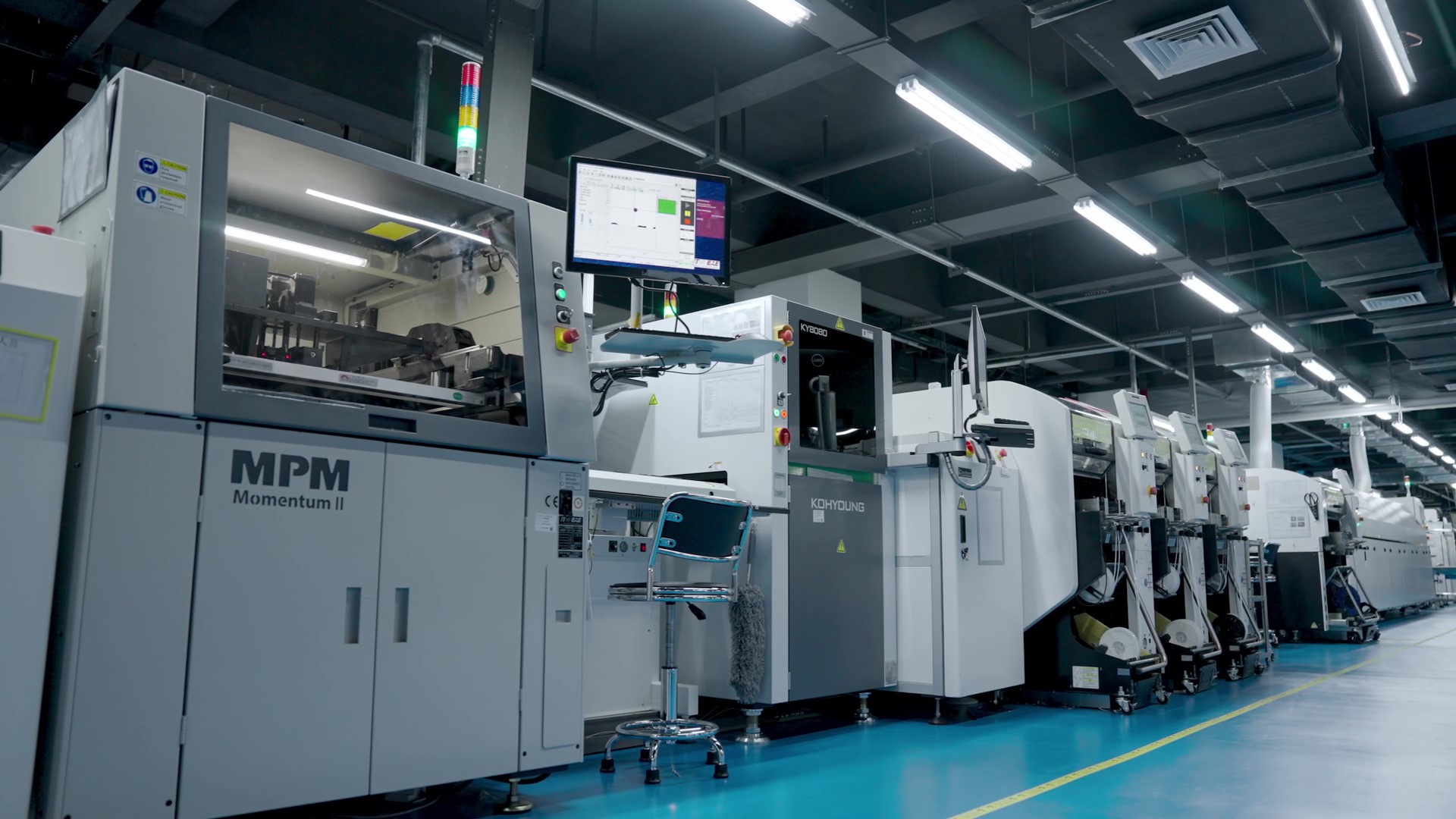
Proof: Lierda office and manufacturing site, Hangzhou. Image: Lierda Science & Technology Group Co., Ltd.
Next step: sample, quote or catalogue
If one of the five modules matches your product category, the fastest way to close the remaining questions — package, power profile, certification scope and lead time — is a sample request with your target market and annual volume attached.
Jerry Yao · international@lierda.com · Tel / WhatsApp: +86-18067988146 · en.lierda.com · 16/F, No.1 Building of Lierda Science Park, No.1326 Wenyi West Road, Hangzhou
Catalogue download: Lierda company brochure (PDF)
Have Questions or Need More Details?
Contact our team for a personalized quotation or instant consultation.
Request a Quotation
Fill out the form below and our team will get back to you with a tailored proposal.
WhatsApp Direct Chat
Prefer to chat in real-time? Message us on WhatsApp for instant assistance & quick answers.
- Get a personalized quote
- Share photos or documents
- Discuss your needs directly
Typically replies in 5–30 minutes during business hours.