
5G RedCap vs. 4G LTE Cat.1 bis Modules: A Data-Driven Comparison for IoT Device Engineers
The short answer is that for most mid-tier IoT devices a proven LTE Cat.1 bis module, such as the NT26-F Series from Lierda, is still the lower-risk default, and a 5G RedCap module such as the NR90-HEA only becomes the better engineering choice when the product genuinely needs the higher throughput ceiling, 5G SA band coverage in a single band set, or a platform that will not require a second radio redesign later. That judgement is measurable, and it shows up in four places: band and certification coverage, physical footprint, documented power states, and the number of parameters a supplier can actually put a figure against.
This comparison is written for engineers running a design evaluation rather than for a product brochure. Every figure below comes either from published Lierda module data or from a named third-party market source. Where a parameter is not covered by that data, the table says so instead of filling the gap with an estimate.
The setting is the research-to-evaluation stage of a project: the data profile is roughly known, a shortlist exists, and the open question is whether the newer radio earns its place in the bill of materials.
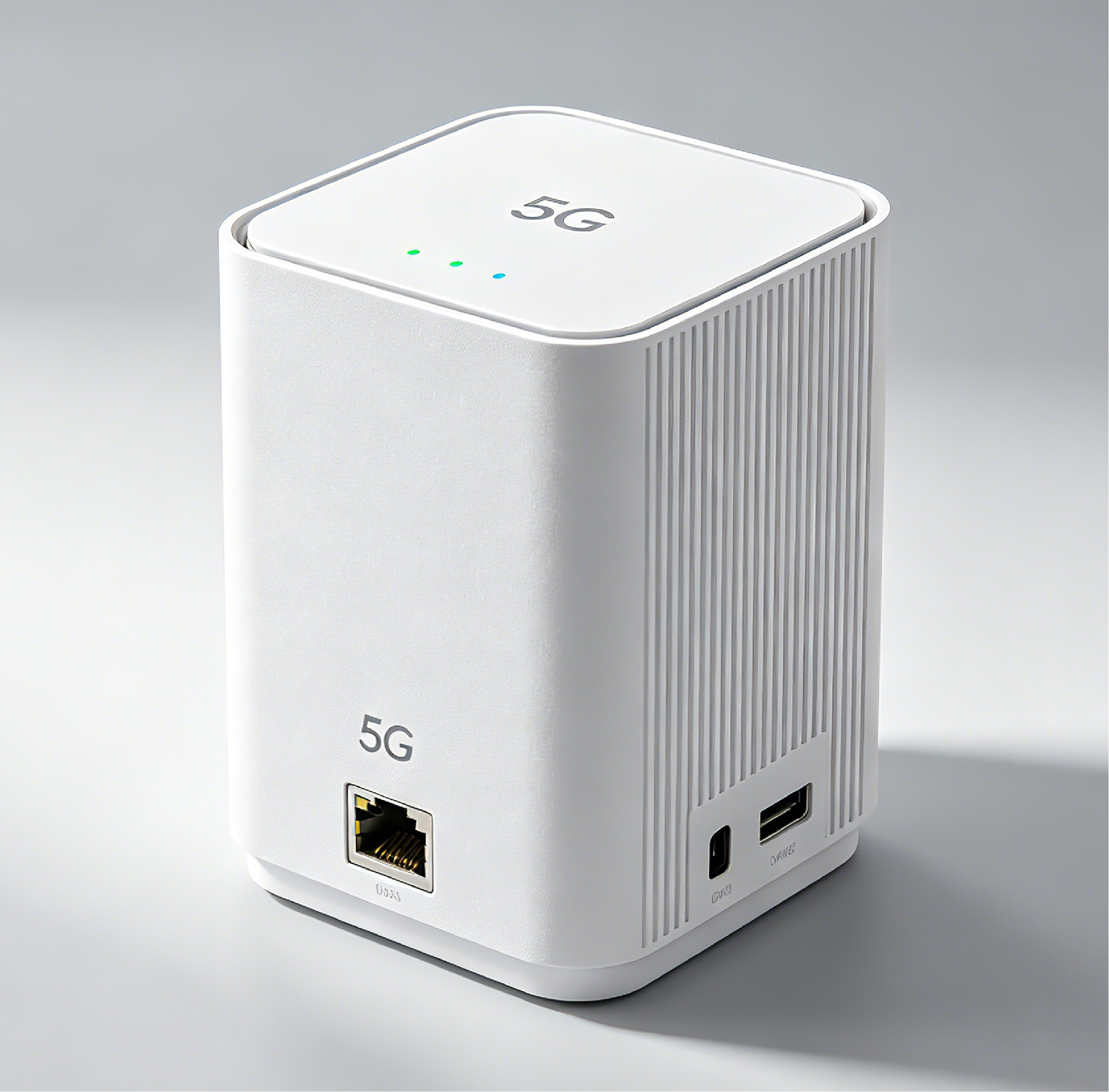
5G CPE / ODU: the documented integration target for the Lierda NR90-HEA 5G RedCap module in fixed wireless access projects.
The Real Decision Is Which Constraints You Accept, Not Which Radio Is Newer
RedCap versus Cat.1 bis is usually framed as a technology question, but in a design review it is a constraints question. The two options do not differ most in headline speed; they differ in what they force the rest of the product to become. Three constraint groups decide the outcome, and each one can be checked against data rather than opinion.
- Compliance and band constraints. Which markets must the device ship into, and does certification evidence already exist for those markets and for the bands used there?
- Physical and thermal constraints. How much board area, mass, RF front-end complexity and thermal headroom can the enclosure absorb?
- Energy and protocol constraints. What duty cycle does the product run, and how many power states has the supplier documented in microamps rather than in adjectives?
Seen this way, the trade is symmetrical. The candidate with the lower throughput ceiling wins on footprint, mass and documented low-power behaviour. The candidate with the higher ceiling wins on headroom, band simplicity across regions and multi-year relevance. A RedCap decision should be traceable to at least one of those wins being a product requirement rather than a preference.
The practical consequence for a mid-tier device — a payment terminal, a tracker, a meter, an IPC unit, a router — is that the higher ceiling is often headroom rather than a requirement, and headroom should be priced like headroom. The rest of this article provides the numbers needed to make that call explicit.
What the Module Market Data Says About Mid-Tier Connectivity
The mid-tier is where the volume sits today. Global cellular IoT module shipments grew 10% year over year in 2024, a rebound driven by demand in China and India, according to Counterpoint Research. Within that market, LTE Cat-1 bis was the fastest-growing technology in 2024, with shipments increasing 100% year over year and replacing legacy 2G and 3G — and, in many applications, NB-IoT.
Two structural signals support the same reading. China accounted for 63% of the global cellular IoT module market in 2024, up from 55% a year earlier, according to IoT Business News. Meanwhile the five largest cellular module vendors held 73% of revenue in 2025, according to Berg Insight, which indicates a market consolidating around suppliers with volume platforms. Lierda was reported among the fastest-growing vendors that year, with shipments up 69% year over year.
For a device engineer, the takeaway is not that RedCap is irrelevant. It is that growth is concentrated where older technologies are being replaced rather than where peak rate is highest. The fastest-moving segment in 2024 was a mid-tier LTE category, not a 5G category. A RedCap selection therefore needs a product-level justification — payload size, network roadmap, enclosure budget — and cannot rely on the direction of the market alone.
The Two Candidate Modules, Specified Side by Side
Both candidates come from the same vendor, which makes the comparison unusually clean: one band-planning philosophy, two different radio tiers. Lierda Science & Technology Group Co., Ltd. is an IoT service provider founded in 2001 and headquartered in Hangzhou that develops IoT modules, IoT system solutions and IC value-added distribution, with a product line covering 5G, RF, LoRa, NB-IoT, Cat.1, Wi-SUN, Wi-Fi, BLE and ZigBee.
NR90-HEA 5G RedCap Module: Bands, Rates and Footprint
The NR90-HEA is a 5G RedCap module intended for fixed wireless access and intelligent industry applications, designed to be integrated into 5G CPE and ODU products. Its published air-interface support is:
- 5G SA: N1, N3, N5, N7, N8, N20, N28, N38, N40, N41, N77, N78
- 4G LTE fallback: B1, B3, B5, B7, B8, B20, B28, B38, B40, B41, B42, B43
- 3G WCDMA: B1, B3, B5, B8
Theoretical transmission rates are 226 Mbps downlink and 120 Mbps uplink on 5G SA, 200 Mbps downlink and 100 Mbps uplink on LTE, and 384 kbps in both directions on WCDMA. Physically the module measures 32 × 29 × 2.4 mm and weighs approximately 5.10 g.
Footprint is usually the parameter that decides a mid-tier project. Calculated from the published dimensions, the NR90-HEA occupies roughly 928 mm² of board area against about 280 mm² for the NT26-F Series Cat.1 bis parts — a difference of roughly 3.3 times — with approximately 3.6 times the mass. Those two derived figures, not the band list, are what a mechanical and layout review has to absorb.
The reference application is a 5G wireless broadband access project in which access is delivered over the 5G network to avoid the difficulty and cost of laying fibre. The matched equipment is 5G CPE and ODU, and the markets listed for that application include the Philippines, Indonesia, South Africa, Vietnam, Saudi Arabia, the UAE, Oman and Kuwait.
NT26-F Series Cat.1 bis: Regional Variants and Documented Power States
The NT26-F Series delivers its coverage through regional band variants rather than through one global band set, which is the standard approach for a mid-tier LTE family. The published band plans are:
- NT26-FCN: LTE FDD B1/3/5/8 and LTE TDD B34/38/39/40/41, with GNSS/BDS support, LGA packaging, -30 °C to +75 °C operating range and an extended -40 °C to +85 °C range, supplied at 2.3–4.5 V (typical 3.8 V)
- NT26-FEU (Europe): B1/3/5/7/8/20/28/38/40/41, LGA packaging, 3.3–4.5 V typical 3.8 V
- NT26-FJP (Japan): B1/3/8/18/19/26/41, LCC+LGA packaging
- NT26-FNA (North America): B2/4/5/12/13/25/66/71, LGA packaging
- NT26-FLA (Latin America): B2/3/4/5/7/8/28/66, LGA packaging
- NT26-FGL (global): B1/2/3/4/5/7/8/12/13/14/18/19/20/25/26/28/66/71/34/38/39/40/41, LGA packaging
- NT26-FCN(KR): FDD B1/3/5/7/8, LCC+LGA packaging with 109 pins
All variants share the same 17.7 × 15.8 × 2.4 mm outline, which means a single PCB footprint can serve several regional SKUs. For a product family shipping into more than one market, that is a real design advantage: band changes are handled by part number rather than by layout revision.
The Korea variant is also the most fully documented from an energy perspective. It is specified at up to 10 Mbps downlink and 5 Mbps uplink on LTE FDD, supports SMS, and supports TCP/UDP/HTTP/SSL/MQTT/FOTA/RNDIS/FTP/ECM protocols. Transmit power is 23 dBm ±2.7 dB, supply voltage is 3.3–4.5 V (typical 3.8 V), and weight is approximately 1.4 g. Published power states are 0.74 µA in shutdown, 6.5 µA at AT+CFUN=0, 0.22 mA at LTE-FDD paging frame 128, 0.14 mA at paging frame 256, and 3.72 mA idle at paging frame 64.
The documented application list for the series is broad and mid-tier: cloud speakers, trackers, POS terminals, POC devices, data cards, smart security devices, two-wheelers, industrial-grade PDAs, IPC, financial payment terminals, smart metering and positioning devices.
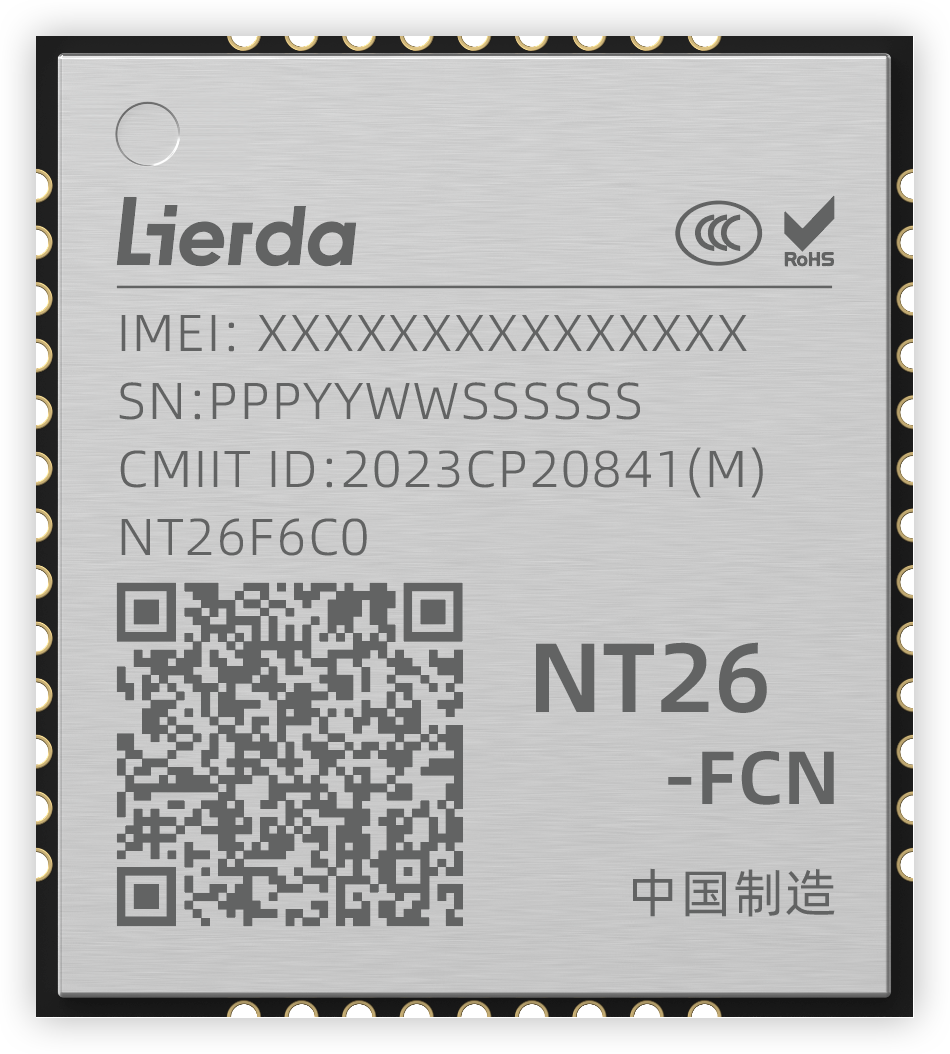
NT26-F Series Cat.1 bis LTE module: 17.7 × 15.8 × 2.4 mm LGA footprint shared across the regional band variants.
Reading the Specification Gap Correctly
The two datasheets are not symmetrical, and an honest comparison has to say so. The RedCap module documents bands, rates, dimensions and mass. The Cat.1 bis family documents bands, dimensions, supply voltage, temperature range, protocol stack and a complete set of power states. Neither side publishes everything an engineer needs at design freeze, and no figure in this article has been estimated to fill a cell.
Decision rule: for a fair evaluation, request the same measurement set for both candidates — idle current, paging-state current, connected current, registration behaviour and thermal rise at the target duty cycle. If a supplier cannot publish those numbers, they can still be produced on samples, but they belong inside the decision rather than inside an assumption.
Step-by-Step: How to Run the Comparison in Six Steps
Step 1 — Freeze the traffic profile before opening either datasheet
Write down sustained uplink and downlink, peak burst, duty cycle and payload size first. The Cat.1 bis reference point is 10 Mbps downlink and 5 Mbps uplink on the NT26-FCN(KR) variant. The RedCap reference point is 226 Mbps downlink and 120 Mbps uplink on 5G SA, with 200 Mbps downlink and 100 Mbps uplink on LTE fallback. If the sustained requirement sits in single-digit Mbps, the higher ceiling is headroom; if the product moves video-class payloads or aggregates multiple sensors, it may be a requirement.
Step 2 — Map the target markets to band plans
List every market the product will be sold in and map each one to a band set. On the LTE side this means selecting a variant: NT26-FEU for Europe at B1/3/5/7/8/20/28/38/40/41, NT26-FJP for Japan at B1/3/8/18/19/26/41, NT26-FNA for North America at B2/4/5/12/13/25/66/71, NT26-FLA for Latin America, NT26-FCN or NT26-FCN(KR) for China and Korea, and NT26-FGL for a global SKU. On the RedCap side the equivalent step is checking whether the 5G SA band set — N1, N3, N5, N7, N8, N20, N28, N38, N40, N41, N77, N78 — plus the LTE fallback list covers every launch market, or whether a second SKU is still required for band reasons.
Step 3 — Verify certifications per market, at the standard level
Certification should be checked by market and by standard number, not by a logo on a web page. For the Cat.1 bis family, NT26-FEU holds CE certification for the European market with applicable standards including IEC 62368-1:2018, EN IEC 62368-1:2020+A11:2020, EN 18031-1:2024 and the Radio Equipment Directive (RED) 2014/53/EU, while NT26-FJP holds TELEC certification (Technical Regulations Conformity Certification of Specified Radio Equipment, ordinance of MPT No. 37, 1981, procedure RD_740) and JATE certification (MIC Ordinance No. 32) for Japan. Elsewhere in the same portfolio the pattern repeats: UB37 Wi-Fi 6 modules carry CE-RED, FCC Part 15C, IC and RCM approvals; DB37 adds TELEC; BT18N5 carries CE-RED and FCC Part 15C; MB26-AGL holds CE certification under RED 2014/53/EU. For the 5G RedCap candidate, no certification records are included in the source data used for this comparison, so market approvals should be scheduled as an explicit workstream with the supplier rather than assumed.
One forward-looking constraint is worth adding to the compliance checklist: in 2024 the FCC established a voluntary cybersecurity labelling programme for consumer IoT products, the U.S. Cyber Trust Mark, based on NISTIR 8425. Products whose security posture will be questioned by buyers should budget for that class of evidence early, whichever radio tier is selected.
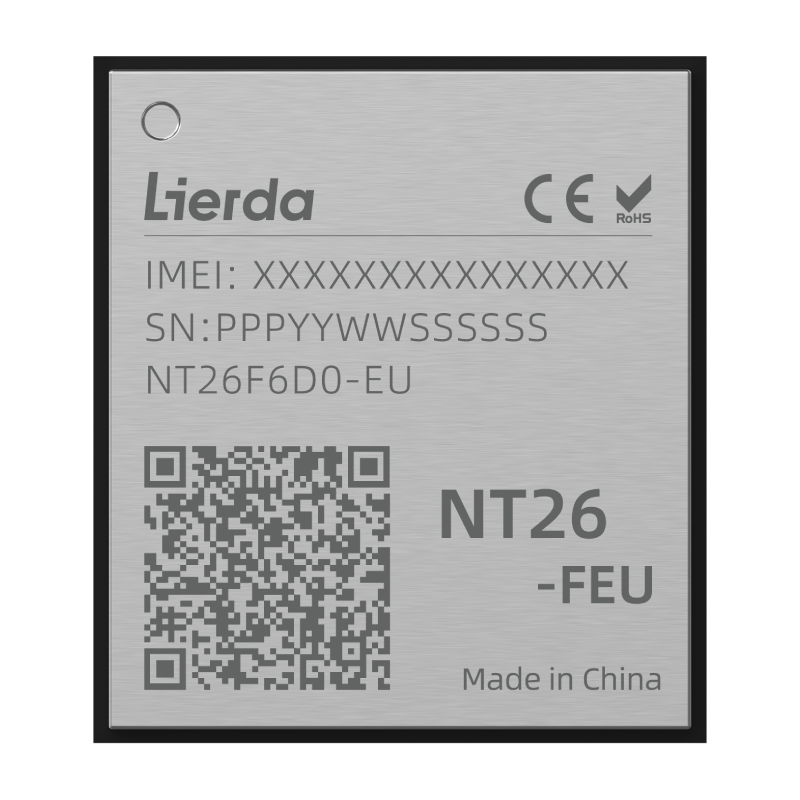
NT26-FEU: the Europe-focused Cat.1 bis variant, documented with CE certification including IEC 62368-1:2018 and EN 18031-1:2024.
Step 4 — Run the physical and thermal budget
Translate dimensions into layout consequences. The RedCap module at 32 × 29 × 2.4 mm and approximately 5.10 g takes roughly 3.3 times the board area and about 3.6 times the mass of the 17.7 × 15.8 × 2.4 mm Cat.1 bis module at approximately 1.4 g, based on the published figures. That difference propagates into keep-out zones, RF front-end layout, antenna count, shielding and thermal path. In a CPE or ODU enclosure this is usually absorbed without difficulty; in a handheld terminal, a two-wheeler module or a meter it can be the deciding factor.
Step 5 — Build the power budget from published states, not from headline claims
The Cat.1 bis side already publishes checkable states: 0.74 µA in shutdown, 6.5 µA at AT+CFUN=0, 0.22 mA at paging frame 128, 0.14 mA at paging frame 256, and 3.72 mA idle at paging frame 64 on the NT26-FCN(KR) variant. For the RedCap candidate, request the equivalent table. If the numbers are not published, measure them on samples in the target network, because the figure that determines battery life is the average current at the product's real duty cycle, not the best documented single state.
Step 6 — Validate on samples, then protect the decision
Where the schedule allows, build a small pilot with both candidates and measure registration time, throughput against the traffic profile, current in idle and connected states, and thermal rise. Then protect the decision at the commercial level: Lierda supports OEM and ODM production modes with module and PCBA customization, custom QC standards and testing based on customer specifications, dedicated project support and remote technical assistance, with MOQ and lead time scoped to the project rather than fixed in advance.
Use Cases: Where Each Module Type Belongs
Fixed wireless access, CPE and ODU — the natural RedCap territory
The clearest fit for a RedCap module is a product whose requirement is bandwidth plus network generation rather than battery life. Lierda documents a 5G wireless broadband access application in which access is delivered over the 5G network to solve the difficulty and high construction cost of laying fibre, with the module integrated into 5G CPE and ODU equipment, applied across markets including the Philippines, Indonesia, South Africa, Vietnam, Saudi Arabia, the UAE, Oman and Kuwait. Here the 226 Mbps downlink and 120 Mbps uplink ceiling and the single 5G SA band set are product requirements, and the cabinet or rooftop enclosure has room for a 32 × 29 mm module.
Payment terminals, metering and industrial handhelds — Cat.1 bis territory
At the other end, the workload is small, continuous and efficiency-sensitive. Lierda documents payment terminal projects including payment sound boxes with 4G and LCD, POS and POS terminals operating 24/7 in France, Vietnam, Germany and the United Kingdom, with matched equipment such as cameras and NFC. The same module family is listed for IPC, financial payment, smart metering, intelligent sharing and positioning and tracking. In these products, sustained throughput in single-digit Mbps, a 17.7 × 15.8 mm footprint, a documented microamp-level idle state and a regional certification file matter far more than a peak-rate ceiling the application will never touch.
Trackers, routers and asset devices — decided by duty cycle, not by category
Tracking and routing products sit in the middle and are decided by operating mode. Lierda lists tracker applications in Germany, the United Kingdom, France and Vietnam running 24/7 for vehicle, asset and container tracking, Cat.1 bis router projects requiring stable connection under weak signal with automatic reconnection and transparent data transmission, and asset tracking deployments using periodic wake-up or event-triggered operation. Where the device is mains-powered and pushes large payloads, the RedCap ceiling can justify the footprint. Where the device is battery-powered or always connected under a tight energy budget, the RedCap power profile must be measured before selection — this is exactly the parameter set that is documented for Cat.1 bis and not yet published for the RedCap candidate in the source data used here.
Comparison Table: NR90-HEA and NT26-F Series on Published Data
| Parameter | NR90-HEA (5G RedCap) | NT26-F Series (LTE Cat.1 bis) |
|---|---|---|
| Technology | 5G SA (RedCap) with LTE and WCDMA fallback | LTE Cat.1 bis |
| 5G SA bands | N1, N3, N5, N7, N8, N20, N28, N38, N40, N41, N77, N78 | Not applicable |
| LTE bands | B1, B3, B5, B7, B8, B20, B28, B38, B40, B41, B42, B43 (fallback) | Variant-dependent: FCN (FDD B1/3/5/8; TDD B34/38/39/40/41); FEU (B1/3/5/7/8/20/28/38/40/41); FJP (B1/3/8/18/19/26/41); FNA (B2/4/5/12/13/25/66/71); FLA (B2/3/4/5/7/8/28/66); FGL (B1/2/3/4/5/7/8/12/13/14/18/19/20/25/26/28/66/71/34/38/39/40/41); FCN(KR) (FDD B1/3/5/7/8) |
| 3G support | WCDMA B1, B3, B5, B8 | Not specified in the source data |
| Peak rate (theoretical) | SA 226 Mbps DL / 120 Mbps UL; LTE 200 Mbps DL / 100 Mbps UL; WCDMA 384 kbps | 10 Mbps DL / 5 Mbps UL (NT26-FCN(KR) data) |
| Dimensions | 32 × 29 × 2.4 mm | 17.7 × 15.8 × 2.4 mm |
| Weight | Approximately 5.10 g | Approximately 1.4 g (NT26-FCN(KR)) |
| Packaging | Not specified in the source data | LGA on most variants; LCC+LGA on NT26-FJP (109 pins on FCN(KR)) |
| Supply voltage | Not specified in the source data | 2.3–4.5 V (NT26-FCN); 3.3–4.5 V, typical 3.8 V (FEU, FJP, FGL, FCN(KR)) |
| Operating temperature | Not specified in the source data | -30 °C to +75 °C, extended -40 °C to +85 °C (FCN, FCN(KR) class) |
| Published power states | Not specified in the source data | Shutdown 0.74 µA; 6.5 µA at AT+CFUN=0; 0.22 mA at paging frame 128; 0.14 mA at paging frame 256; 3.72 mA idle at paging frame 64 |
| Protocol stack | Not specified in the source data | TCP/UDP/HTTP/SSL/MQTT/FOTA/RNDIS/FTP/ECM (NT26-FCN(KR)) |
| GNSS | Not specified in the source data | GNSS/BDS supported on NT26-FCN and NT26-FCN(KR) class |
| Documented application targets | FWA and intelligent industry; integration into 5G CPE and ODU | Cloud speakers, trackers, POS, POC, data cards, smart security, two-wheelers, industrial PDAs, IPC, financial payment, smart metering, positioning and tracking |
Cells marked “Not specified in the source data” mean the parameter is not covered by the module data used for this comparison. They are not claims that a parameter is unsupported by the product.
Frequently Asked Questions
Which certifications should I compare first between a RedCap module and a Cat.1 bis module?
Compare certifications market by market, not module by module. In the Cat.1 bis family, NT26-FEU holds CE certification for the European market with applicable standards including IEC 62368-1:2018, EN IEC 62368-1:2020+A11:2020, EN 18031-1:2024 and the Radio Equipment Directive (RED) 2014/53/EU, while NT26-FJP holds TELEC and JATE certification for Japan. The wider Lierda portfolio follows the same pattern: UB37 Wi-Fi 6 modules carry CE-RED, FCC Part 15C, IC and RCM approvals, DB37 adds TELEC, BT18N5 carries CE-RED and FCC Part 15C, and MB26-AGL holds CE certification under RED 2014/53/EU. The 5G RedCap data used in this comparison does not include certification records, so RedCap market approvals should be treated as an open and scheduled workstream with the supplier, not as an assumption.
How large is the throughput and band difference in practice?
On published theoretical rates, the NR90-HEA 5G RedCap module reaches 226 Mbps downlink and 120 Mbps uplink on 5G SA, and 200 Mbps downlink and 100 Mbps uplink on LTE fallback, while the NT26-FCN(KR) Cat.1 bis module is specified at 10 Mbps downlink and 5 Mbps uplink. The RedCap module also carries one band set for many markets — 5G SA bands N1, N3, N5, N7, N8, N20, N28, N38, N40, N41, N77 and N78, with LTE fallback on B1, B3, B5, B7, B8, B20, B28, B38, B40, B41, B42 and B43 — whereas Cat.1 bis coverage is delivered through regional variants such as NT26-FEU for Europe, NT26-FJP for Japan and NT26-FGL for global SKUs.
Does the larger module change board and BOM cost?
The published dimensions make the physical difference explicit: 32 × 29 × 2.4 mm and approximately 5.10 g for the NR90-HEA, against 17.7 × 15.8 × 2.4 mm and approximately 1.4 g for the NT26-FCN(KR) Cat.1 bis module — roughly 3.3 times the board area and 3.6 times the mass, calculated from those figures. The cost items that follow are PCB area, RF front-end and antenna design, thermal management and an additional certification programme per market. No price data is included in the source material for this comparison, so unit cost should be quoted project by project rather than assumed from category.
Can both candidates be validated on samples before a decision?
Yes, and the two datasheets suggest a practical test plan: measure idle, paging and connected current, registration behaviour and thermal rise at the target duty cycle, and confirm throughput against the traffic profile. The LTE side already publishes states to check against — 0.74 µA in shutdown, 6.5 µA at AT+CFUN=0, 0.22 mA at paging frame 128, 0.14 mA at paging frame 256 and 3.72 mA idle at paging frame 64 on the NT26-FCN(KR) variant. Lierda supports OEM and ODM production modes with module and PCBA customization, custom QC standards and testing based on customer specifications, plus dedicated project support and remote technical assistance.
What are the MOQ and lead time, and what is the next step?
Lierda scopes MOQ and lead time to the project: MOQ is flexible based on project requirements, lead time is negotiable based on project complexity and order volume, and monthly capacity is flexible based on order requirements. The practical next step is to send the target market list and traffic profile together with a sample request, so that the band variant, certification path and validation plan can be confirmed in one pass. The full catalogue is available at Lierda’s IoT module brochure, and enquiries can go to international@lierda.com or WhatsApp +86-18067988146.
Turning the Comparison into a Build Decision
A practical decision rule follows from the published data. Choose LTE Cat.1 bis when sustained throughput stays in single-digit Mbps, when the product is battery-powered or thermally tight, and when the launch markets are already covered by a regional variant with certification evidence on file — NT26-FEU for Europe and NT26-FJP for Japan are the clearest examples. Choose 5G RedCap when the payload is fixed-wireless-class, when the device will ship into 5G SA markets and a single band set plus LTE fallback removes a second SKU, and when the product lifecycle is long enough that a later radio redesign would cost more than the extra board area costs today.
The vendor side of that decision is a capability question as much as a radio question. Lierda Science & Technology Group Co., Ltd. was founded in 2001, is headquartered in Hangzhou with a registered capital of 421.63 million yuan, and has been listed on the Beijing Stock Exchange since 17 February 2023 under stock code 920249. The company operates an 18,000 m² facility with 976 employees, including 224 R&D staff, and has built a business structure that integrates IC value-added distribution, IoT modules and IoT system solutions, supported by more than 20 service centres and OEM, ODM and embedded software customization services.

Lierda’s manufacturing and engineering base supports OEM and ODM module and PCBA projects, with QC and testing configured to customer specifications.
Next step: validate the radio with your own data profile
Send the target market list, the traffic profile and the enclosure constraints, and Lierda will confirm the band variant, the certification path and a sample plan for the NR90-HEA 5G RedCap module or the NT26-F Series Cat.1 bis module. Samples and project-specific quotations are available on request.
- Website: en.lierda.com
- Email: international@lierda.com
- Tel / WhatsApp: +86-18067988146
- Catalogue: download the IoT module brochure (PDF)
Have Questions or Need More Details?
Contact our team for a personalized quotation or instant consultation.
Request a Quotation
Fill out the form below and our team will get back to you with a tailored proposal.
WhatsApp Direct Chat
Prefer to chat in real-time? Message us on WhatsApp for instant assistance & quick answers.
- Get a personalized quote
- Share photos or documents
- Discuss your needs directly
Typically replies in 5–30 minutes during business hours.