
An IoT Module Map for Consumer Electronics Teams
An IoT module is a compact wireless communication component that lets an electronic product send and receive data over a cellular, Wi-Fi, Bluetooth, or LPWAN network. Inside the module, the radio front end, baseband processing, and software stack are combined in a hardware package that a product team can integrate into a motherboard with a defined footprint.
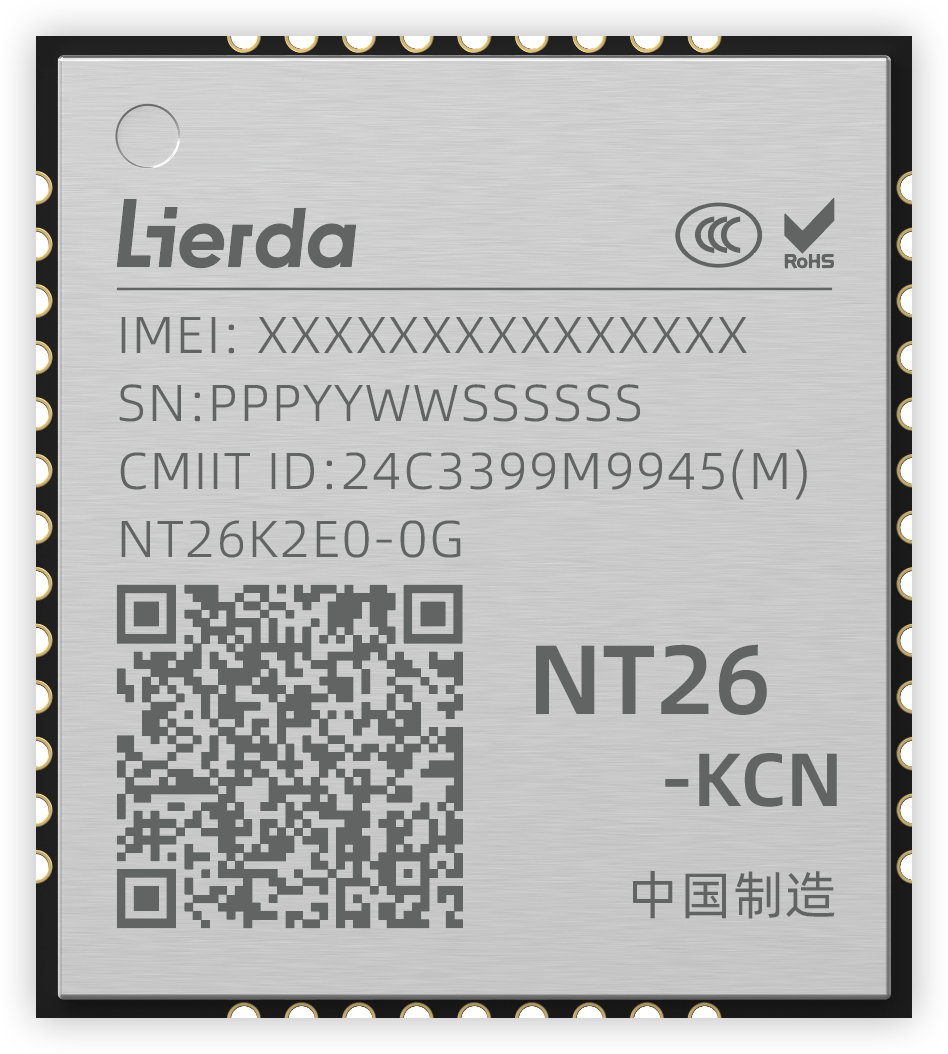
Lierda NT26-K Cat.1 bis LTE IoT module
If your company makes or trades consumer electronics, the phrase “IoT module” will appear in early technical meetings before a full product specification exists. That is normal. The challenge is not finding a supplier; it is understanding which wireless family should sit inside the product. This article maps the IoT module landscape from the perspective of a consumer electronics team at the awareness and research stage, using Lierda Science & Technology Group Co., Ltd. as a concrete reference for products, regional variants, and manufacturing options.
Lierda Science & Technology Group Co., Ltd. is an IoT service provider responsible for IoT product development, technology applications, and service implementation. The company was established in 2001, is headquartered in Hangzhou, and was listed on the Beijing Stock Exchange on February 17, 2023, with stock code 920249. Lierda’s scope of business covers IC value-added distribution, IoT module R&D and manufacturing, and IoT system solutions. Its module portfolio includes Cat.1 modules, Wi-Fi modules, cellular modules, NB-IoT modules, LoRa modules, LPWAN modules, Bluetooth modules, 5G modules, and related OEM/ODM/EMS services.
Why the IoT module decision feels complicated before the product exists
At the beginning of a consumer electronics project, most teams ask a reasonable question: “What kind of IoT module do we need?” But the answer depends on information that is often still incomplete, such as the targeted sales region, available network infrastructure, power source, data volume, physical size, and expected product lifetime.
Several factors create confusion during discovery:
- A consumer device designed for one market may need a different frequency band version in another region.
- Some IoT modules assume a smartphone or gateway is nearby; others require a direct wide-area network connection.
- Power constraints are not the same for a plugged-in payment speaker and a battery-powered tracker.
- Certification, temperature range, and embedded software support vary across module families.
These factors do not mean every module is difficult to evaluate. They mean the buyer first needs a vocabulary that connects product behavior to module technology.
Consumer electronics is a major part of the global IoT module conversation
Global market data helps explain why consumer electronics buyers are encountering this topic today. According to Counterpoint Research, global cellular IoT module shipments grew 10% year over year in 2024, with demand partly led by China and India. The same analysis found that LTE Cat-1 bis was the fastest-growing technology in 2024, with shipments increasing 100% year over year as it replaced legacy 2G/3G and NB-IoT in many applications.
Source: Counterpoint Research
For consumer electronics brands, the practical meaning is clear: popular products such as payment terminals, POS devices, trackers, connected speakers, smart appliances, and IP cameras now need a module strategy rather than a one-time component decision. Lierda’s main export markets include Europe, East Asia, Southeast Asia, and the Middle East, and the company also operates more than 20 service centers in China for industry consultation, application support, embedded software customization, and OEM/ODM service delivery. A single module partner with this range can be useful to a consumer electronics business that expects to ship multiple device generations.
The practical IoT module map: four radio layers, not endless options
Although product catalogues can look long, most consumer IoT modules belong to four radio layers:
- Local-area connectivity — Wi-Fi, Bluetooth, and dual-mode modules.
- Low-power wide-area connectivity — NB-IoT and LoRa/LPWAN modules.
- Cellular connectivity — LTE Cat.1 bis and 5G modules for direct wide-area data.
- Computing plus connectivity — industrial core modules or system-on-modules used when the product needs more processing power.
Wi-Fi and Bluetooth modules are the default for indoor consumer electronics
For products installed indoors and powered from the mains, Wi-Fi is often the simplest choice because no SIM or carrier subscription is required from the device owner. Lierda offers several Wi-Fi 6 module formats for consumer product categories. The DB37, for example, is a Wi-Fi/SLE/BLE tri-mode data transmission module that operates at 2.4 GHz, communicates through an SDIO interface, supports 802.11 b/g/n/ax plus BLE 5.2 and SLE 1.0, and reaches a data rate of 150 Mbps. Its target categories include smart home, IPC, and consumer electronics.
For higher-throughput video-class products such as IP cameras, set-top boxes, and smart TVs, Lierda also produces dual-band Wi-Fi 6 modules such as the UB64, which supports Wi-Fi b/g/n/a/ac/ax, Bluetooth BTDM 5.4, USB 2.0, and data rates up to 286.8 Mbps. On the shorter-range side, Bluetooth modules are well suited for low-power accessory devices. The EB55 Bluetooth module supports BLE 5.0 with 48 KB RAM and 512 KB Flash, supports slave or master–slave dual connections, and is designed for smart home environments.
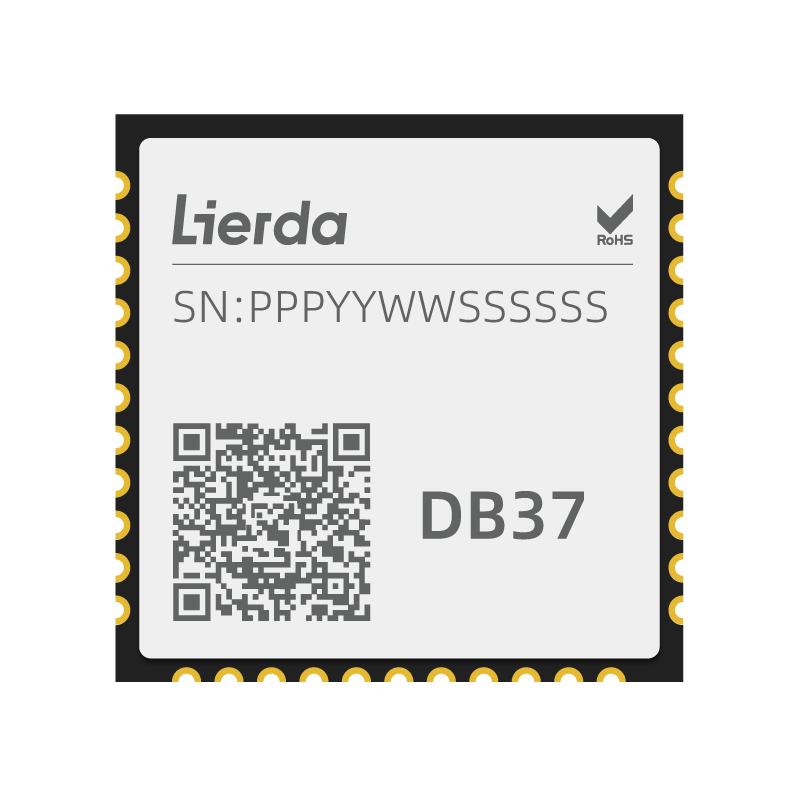
Lierda DB37 Standard Wi-Fi 6 module
When choosing between Wi-Fi and Bluetooth, think first about the usage model. Wi-Fi modules make sense when a device must stream rich data or connect to an existing home router. Bluetooth modules make sense when the product pairs primarily with a phone, behaves as an accessory, and must limit energy use inside a small enclosure.
NB-IoT and LoRa modules support low-power, lower-bandwidth data
Not every consumer electronics product sits in a home with stable Wi-Fi. Some devices are deployed in parking lots, utility rooms, apartment corridors, or mobile assets. In those cases, a low-power wide-area module may be the correct radio. NB-IoT modules connect to licensed mobile networks with small data payloads, while LoRa modules operate in unlicensed sub-GHz spectrum and are often used where a private or semi-private network is available.
Lierda’s MB26-AGL is an NB-IoT module designed for remote meter reading, smart home, intelligent smoke detectors, smart parking, and intelligent emergency lights. It supports bands B03, B05, B08, B20, and B28; operates at 2.2 V to 4.5 V; and has a PSM current of 1.5 μA. That low sleep current is valuable for battery-powered products that must survive for years without frequent maintenance.
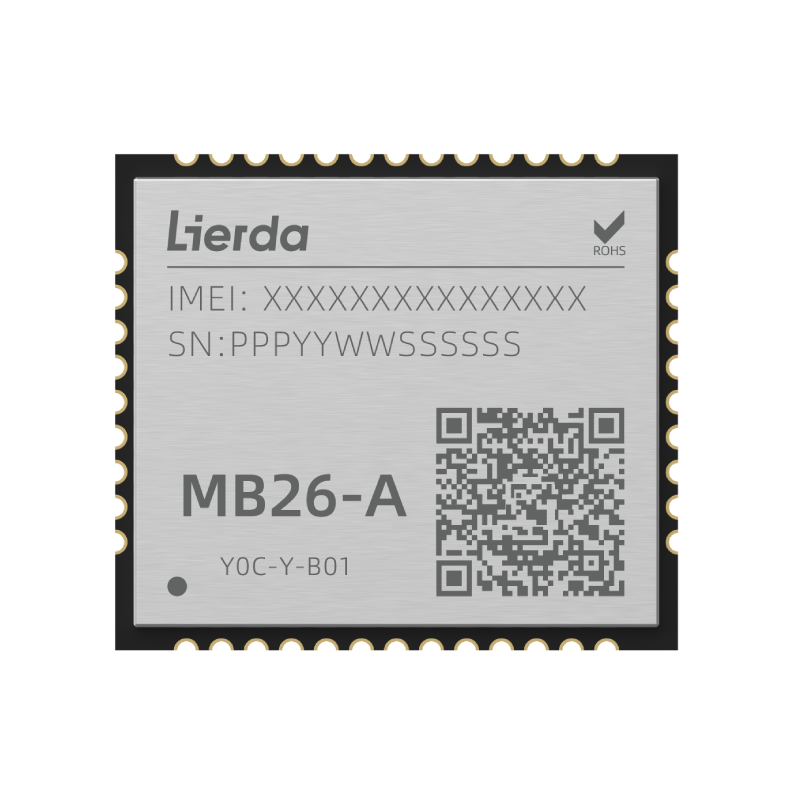
Lierda MB26-AGL NB-IoT module
In LoRa-based product architectures, Lierda supplies node modules and gateways. The WB25 LoRaWAN node module measures 22 × 18 × 3.0 mm, operates from 1.8 V to 3.6 V, supports Class A and Class C modes, has transmit power of 22 dBm, receiver sensitivity of -137 dBm, and sleep current of 2 μA. For longer link budgets, the LP26 high-power LoRaWAN node module supports US915 and AU915 bands with transmit power up to 29 dBm. Lierda also provides LoRaWAN gateways such as the IG41 indoor gateway and the OG45 outdoor gateway, which help complete a private low-power network.
Cat.1 bis is the high-value cellular choice for mobile and always-connected devices
When a consumer product moves, requires several megabits of throughput, or must communicate without a phone nearby, LTE Cat.1 bis is often the most practical cellular class. Cat.1 bis is a single-antenna LTE variant that uses existing 4G infrastructure while consuming less power and requiring a smaller module footprint than higher LTE categories.
Because frequency planning is regional, Lierda offers the NT26 family in distinct versions for different markets. The NT26-FEU Cat.1 bis LTE module is designed for Europe and supports B1, B3, B5, B7, B8, B20, B28, B38, B40, and B41. The NT26-FNA version is built for North America and supports B2, B4, B5, B12, B13, B25, B66, and B71. The NT26-FJP version addresses Japan with B1, B3, B8, B18, B19, B26, and B41, while the NT26-FLA version covers Latin America with B2, B3, B4, B5, B7, B8, B28, and B66. A global-oriented NT26-FGL version supports a much wider band set, including B1, B2, B3, B4, B5, B7, B8, B12, B13, B14, B18, B19, B20, B25, B26, B28, B66, B71, B34, B38, B39, B40, and B41. These modules are commonly aimed at IPC, POS, financial payment, smart metering, intelligent sharing, and positioning or tracking devices, making the NT26 family relevant to many consumer electronics projects.
5G modules add a future-ready layer
For higher-bandwidth consumer and prosumer equipment such as 5G CPE, routers, and fixed wireless access devices, Lierda supplies the NR90-HEA 5G RedCap module. The module measures 32 × 29 × 2.4 mm, weighs about 5.10 g, and supports 5G SA bands including N1, N3, N5, N7, N8, N20, N28, N38, N40, N41, N77, and N78. Its theoretical SA downlink rate reaches 226 Mbps. A team designing a device with a longer commercial lifetime should at least examine whether a 5G RedCap module is more appropriate than a 4G-only module.
Where each IoT module family shows up in real consumer electronics projects
Use cases connect module technology to actual product behavior. Lierda’s application scenarios provide simple mental anchors:
- Payment terminals and smart payment speakers. Payment projects often require 24/7 operation, stable network registration, and connection to components such as cameras and NFC. In France, Vietnam, Germany, and the UK, Lierda modules are used in scenarios where the module helps merchants collect payments and communicates continuously.
- IP cameras and AI cameras. Cameras need consistent streaming and quick event response. This is why Wi-Fi 6 modules such as UB64, UB37, and DB37 are listed for IPC, set-top boxes, and smart TV equipment, and also appear in AI camera project requirements that specify always-on or event-triggered operation.
- Air purifiers, humidifiers, and smart home appliances. These devices monitor air quality, receive remote commands, and report status periodically. Low-power Wi-Fi or Bluetooth communication is often enough, and Lierda offers modules designed for smart home, pet supplies, consumer electronics, and medical care.
- Trackers and two-wheel vehicle devices. Location-based consumer products benefit from cellular Cat.1 bis coverage. Lierda’s NT26 series application list includes positioning, tracking, intelligent sharing, and two-wheeler scenarios.
Note: final suitability still depends on the project’s operating environment, target market, enclosure, antenna, and certification plan.
A quick comparison worksheet for consumer IoT module families
The table below does not rank products. It provides a starting worksheet that a buyer can use to discuss requirements with an engineer or module manufacturer.
| Technology family | Lierda example | Typical consumer electronics role | Selected parameter from catalogue |
|---|---|---|---|
| Wi-Fi 6 tri-mode | DB37 | Smart home, IPC, consumer electronics | 2.4 GHz, 150 Mbps, SDIO, BLE 5.2 support |
| Dual-band Wi-Fi 6 + Bluetooth | UB64 | Set-top box, IPC, smart TV, OTT/IPTV/DVB | Wi-Fi b/g/n/a/ac/ax, BTDM 5.4, 286.8 Mbps, USB 2.0 |
| Bluetooth BLE | EB55 | Smart home accessories | BLE 5.0, 48 KB RAM, 512 KB Flash |
| NB-IoT | MB26-AGL | Smart home, smoke detector, parking, meter reading | Bands B03/B05/B08/B20/B28, PSM 1.5 μA, 2.2–4.5 V |
| LoRaWAN node | WB25 | Smart lighting, agriculture, logistics, instruments | Class A/C, 22 dBm, -137 dBm sensitivity, 2 μA sleep |
| High-power LoRaWAN node | LP26 | Outdoor low-power network endpoints | US915/AU915, up to 29 dBm transmit power |
| LTE Cat.1 bis | NT26-FEU / FNA / FJP / FLA / FGL | IPC, POS, payment, trackers, smart metering | 17.7 × 15.8 × 2.4 mm, 3.3–4.5 V LGA module |
| 5G RedCap | NR90-HEA | FWA, CPE, intelligent connectivity equipment | 5G SA downlink up to 226 Mbps theoretical value |
Step-by-step: from product concept to a first IoT module shortlist
The following sequence is intentionally simple. It helps a consumer electronics buyer enter a supplier conversation with clear information, even before the PCB layout begins.
- Identify the final country or region. Frequency bands are not optional. If a product will ship to Europe, North America, Latin America, Japan, South Korea, or a combination of these markets, verify that the module variant supports the corresponding LTE or LPWAN bands.
- Decide whether the device must work without a local gateway. Always-connected trackers and payment devices generally need a cellular module such as Cat.1 bis. Indoor appliances can often use Wi-Fi. Low-data sensors can use NB-IoT or private LoRa networks.
- Estimate data volume and real-time sensitivity. A video doorbell requires higher throughput than a smoke detector. A POS terminal may require faster network registration than a simple sensor. This difference should guide the family choice.
- Review power profile and operating temperature. Check sleep current, transmit current, and voltage range. For outdoor or harsh environments, confirm that the module supports the expected temperature range. Lierda’s NT26 family, for example, lists an extended temperature range in product documentation for many variants.
- Compare module footprint and antenna interface. The mechanical space on the motherboard is a real constraint. Modules such as the NT26 series measure 17.7 mm × 15.8 mm × 2.4 mm; smaller products may prefer SiP packages such as Lierda’s QB20 LoRa SiP module, which measures only 8.0 × 8.0 × 1.1 mm.
- Confirm certification and technical support ownership. Ask which certifications are held, which regions are covered, and what application support the manufacturer will provide during design review.
Why the manufacturer behind the IoT module matters
Consumer electronics buyers are not only choosing a radio; they are choosing how much engineering risk they will carry internally. A module manufacturer with solid R&D resources can reduce that risk. Lierda has approximately 976 employees, including 224 R&D engineers and technical personnel. As of May 31, 2025, the company held 66 invention patents, 176 utility model patents, 55 design patents, and 530 software copyrights, and it participates in national IoT basic standard work. The company also offers OEM, ODM, and EMS services through more than 20 service centers, which is relevant when a project evolves from a standard module into a custom PCBA or a complete turnkey IoT solution.
From a manufacturing perspective, Lierda’s facility covers 18,000 square meters. The company’s self-developed wireless technology covers 5G, RF, LoRa, NB-IoT, Cat.1, Wi-SUN, Wi-Fi, BLE, and ZigBee. For a consumer electronics company planning a product family, this breadth means the same engineering team can support modules across different radio layers without forcing the buyer to contact several vendors early in the process.
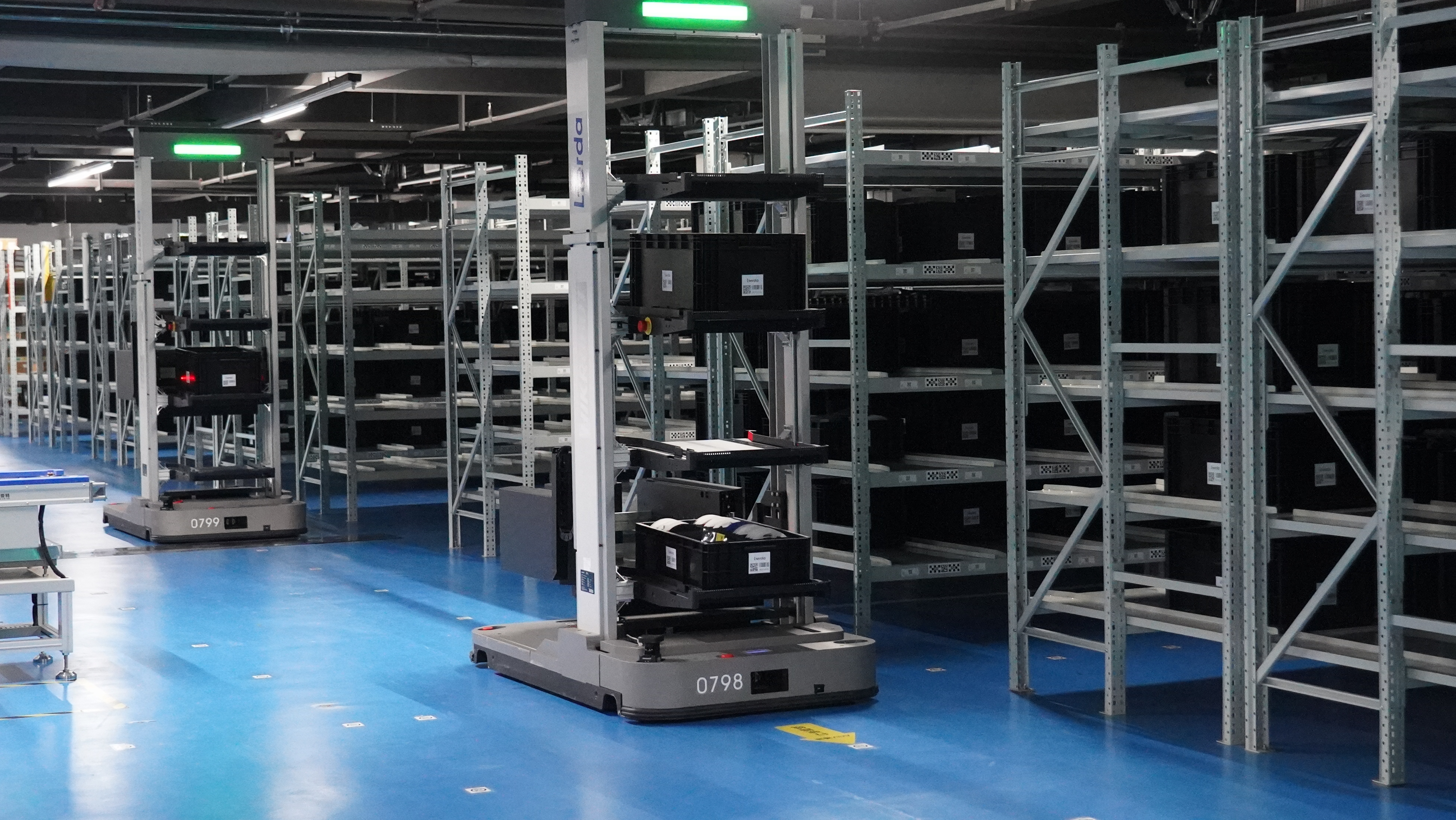
Authentic photos of Lierda’s office and factory
Frequently asked questions about IoT modules for consumer electronics
Do IoT modules for consumer electronics need different frequency bands for different countries?
Yes. Cellular modules such as LTE Cat.1 bis are often produced in regional band variants. Lierda offers NT26 modules for Europe, North America, Latin America, Japan, South Korea, and global multi-band deployment. Wi-Fi and Bluetooth modules normally operate in frequency ranges that are less fragmented, but regional wireless certification still needs to be checked. A buyer should always confirm the band plan for the final destination country before selecting a module.
What IoT module types can Lierda provide for consumer electronics?
Lierda’s main IoT module products include Cat.1 modules, Wi-Fi modules, cellular modules, NB-IoT modules, LoRa modules, LPWAN modules, Bluetooth modules, and related OEM/ODM/EMS services. For consumer electronics projects, the most relevant families are Wi-Fi 6 modules, Bluetooth modules, and Cat.1 bis LTE modules, with LoRa and NB-IoT modules used in specific low-power or private-network cases.
Which factors influence the cost of an IoT module in consumer electronics?
Cost depends mainly on the radio technology, chip platform, frequency-band coverage, module package, memory size, certification level, and order quantity. A multi-band Cat.1 module generally involves a different cost structure from a Wi-Fi-only module, and certified variants for specific regions may add engineering and compliance cost. Buyers should compare modules only under the same technical requirements and quantity assumptions.
What should a buyer check when evaluating IoT module samples?
A sample evaluation should verify mechanical fit, operating voltage, sleep current, radio sensitivity, band support, antenna design, and software interface. The buyer should also confirm whether the sample responds to AT commands, MQTT, TLS, or the network protocol expected by the final product. For battery-powered products, low-power measurements are more meaningful than the datasheet alone. It is also useful to check whether the module manufacturer can provide a design review or reference schematic during testing.
When should a consumer electronics team contact an IoT module manufacturer?
A consumer electronics team should contact the module manufacturer as soon as the target market, power source, and connectivity type are roughly known. Earlier communication helps the team avoid selecting a module with the wrong band set or an unsuitable temperature range. Lierda’s international team can be reached at international@lierda.com. In the inquiry, include the target product, annual volume, target region, preferred radio family, and any certification requirements so that a suitable NT26, Wi-Fi, Bluetooth, LPWAN, or 5G module recommendation can be provided quickly.
Start from the module, not from promotional noise.
Lierda’s range covers Cat.1, Wi-Fi, NB-IoT, LoRa, Bluetooth, and 5G modules for consumer electronics and industrial projects. If you want to review the module portfolio in one document, download the Lierda product brochure: Lierda Catalog PDF. For direct sourcing questions, email international@lierda.com or visit en.lierda.com.
Have Questions or Need More Details?
Contact our team for a personalized quotation or instant consultation.
Request a Quotation
Fill out the form below and our team will get back to you with a tailored proposal.
WhatsApp Direct Chat
Prefer to chat in real-time? Message us on WhatsApp for instant assistance & quick answers.
- Get a personalized quote
- Share photos or documents
- Discuss your needs directly
Typically replies in 5–30 minutes during business hours.