
Cat.1 bis Module Procurement: Comparing Speed and Power Benchmarks Across Platforms
At the decision stage of an IoT module purchase, finding a Cat.1 bis module is not the hard part. The hard part is telling two Cat.1 bis modules apart. Most options list similar cellular bands, protocol stacks, and package dimensions. The differences that actually change a deployment budget are behavioral: how quickly a module attaches to the network and how much power it draws while working.
The answer for buyers in 2026 is to base the final selection on two measurable benchmarks: networking registration speed and power consumption. In a documented product comparison, Lierda's Cat.1 bis module registers 50% faster and consumes one-fifth less power than Cat.1 bis modules based on the ASR platform. These two differences directly affect commissioning time, battery life, and lifetime operating cost.
This guide explains why those two benchmarks matter, how to verify them, and how to build them into a Cat.1 bis procurement decision alongside compliance, supplier capability, and total cost of ownership.
Key Takeaways
- Cat.1 bis was the fastest-growing cellular IoT technology in 2024, with 100% year-over-year shipment growth.
- The most decision-relevant differences between Cat.1 bis modules are registration speed and power consumption.
- Lierda's Cat.1 bis module registers 50% faster and uses one-fifth less power than ASR-platform Cat.1 bis modules.
- Faster registration shortens off-network time; lower power consumption extends battery life or allows a smaller battery.
- Buyers should verify these benchmarks, check compliance for target markets, and model total cost of ownership rather than comparing unit price alone.
Why Spec Sheets Do Not Settle a Cat.1 bis Decision
A Cat.1 bis datasheet typically documents network bands, protocol support, antenna interfaces, dimensions, and operating temperature. It rarely documents two parameters with an outsized effect on field behavior:
- Networking registration speed — the time a module needs to attach to the cellular network after power-on, restart, or loss of coverage.
- Power consumption — the current drawn during registration, data transmission, idle listening, and sleep states.
Both parameters affect cost. A module that attaches slowly keeps a device off-network during startup, field re-provisioning, and recovery after coverage loss. At scale, with thousands of devices being commissioned, that time becomes labor cost. A module that draws more power forces a larger battery, a shorter replacement cycle, or more frequent field service — all recurring expenses.
In short: a buyer who compares only unit price can save a small amount at purchase and lose more in battery service, commissioning time, and device downtime. The decision stage should focus on the parameters that drive those losses.
The Market Context: Why Cat.1 bis Is the Technology Decision
Global cellular IoT module shipments grew 10% year-over-year in 2024, a rebound driven by demand in China and India, according to Counterpoint Research. Within that market, LTE Cat-1 bis was the fastest-growing technology in 2024, with shipments rising 100% year-over-year as it replaced legacy 2G/3G and NB-IoT in many applications.
Regional concentration is high. China's share of global cellular IoT module shipments expanded to 63% in 2024, up from 55% the year before, according to IoT Business News. Vendor concentration is also high: the five largest cellular module vendors — Quectel, Fibocom, Telit Cinterion, MeiG, and China Mobile IoT — held a combined 73% revenue market share in 2025, according to Berg Insight.
Regulatory requirements add another layer. In 2024, the FCC established a voluntary cybersecurity labeling program ("U.S. Cyber Trust Mark") for consumer IoT products, based on NISTIR 8425 standards. Buyers selling into the United States now need to consider cybersecurity labeling alongside radio certification.
Broader low-power connectivity is also expanding. The global NB-IoT market was estimated at USD 4.16 billion in 2023, with a projected CAGR of 28.1% through 2030, according to Grand View Research. The LoRa and LoRaWAN IoT market was estimated at USD 8.0 billion in 2024, with expectations to reach USD 32.7 billion by 2029, according to MarketsandMarkets. For a module buyer, the practical conclusion is the same: the technology category is settled, but the supplier and platform choice within that category still needs verification.
The Documented Comparison: Lierda Cat.1 bis vs ASR-Platform Cat.1 bis
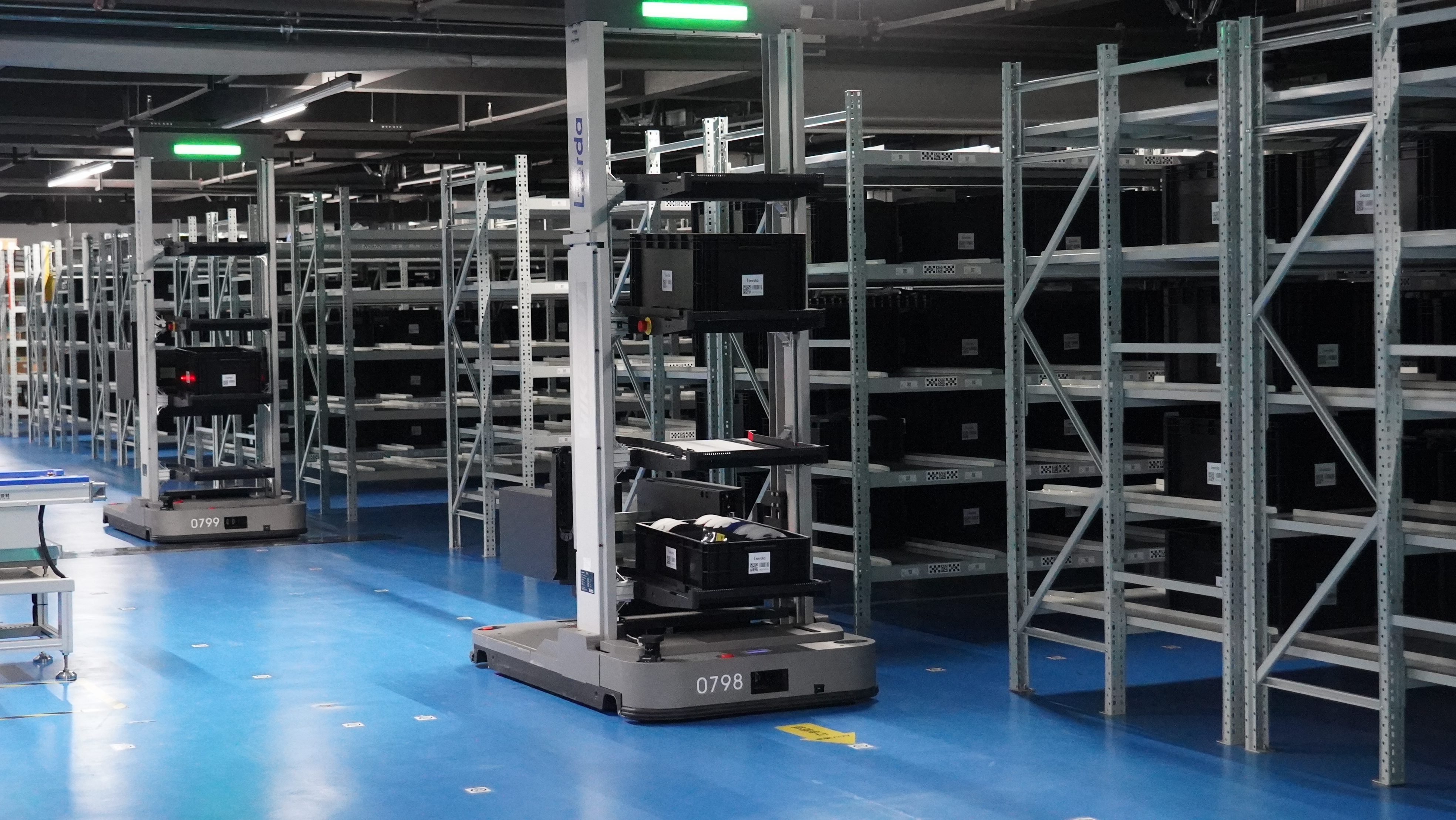
Lierda Science & Technology Group Co., Ltd. is an IoT service provider headquartered in Hangzhou, China, with responsibilities spanning IoT product development, technology applications, and service implementation. Founded in 2001 with the guiding idea "In the Internet of Everything, Lierda serves the world," the company has helped tens of thousands of customers move to intelligent solutions over roughly 25 years. Lierda was listed on the Beijing Stock Exchange on February 17, 2023 (stock code 920249).
The company's product line covers wireless technologies including 5G, RF, LoRa, NB-IoT, Cat.1, Wi-SUN, Wi-Fi, BLE, and ZigBee, applied in fields such as smart lighting, four-meter reading, smart travel, smart healthcare, automotive electronics, and photovoltaic inverters. Its business structure combines IC value-added distribution, IoT modules, and IoT system solutions. This breadth matters for the comparison below because Lierda builds the module itself rather than only reselling a reference design.
In its documented comparison against Cat.1 bis modules based on the ASR platform, Lierda states two core differences for its Cat.1 bis module:
- Networking registration speed is 50% faster, effectively reducing the time required for network attachment by half.
- Power consumption is one-fifth lower, contributing to improved energy efficiency in operation.
Lierda's summary of the comparison also cites 20% better efficiency alongside the power and registration advantages.
What do these differences mean for a buyer?
Registration speed is an availability metric. A 50% reduction in network attachment time shortens device startup, reconnection, and field provisioning. For applications where devices reconnect frequently — IP cameras, POS terminals, fleet devices — the device spends less time off-network. For large-scale commissioning, faster attachment compresses the installation window.
Power consumption is a lifetime-cost metric. One-fifth lower power consumption means a battery-powered device can run longer on the same battery, or the designer can specify a smaller battery. For smart meters and other devices with multi-year service intervals, that difference can determine whether the product meets its battery-life target at all.
A Decision-Stage Framework for Comparing Cat.1 bis Modules
To compare Cat.1 bis modules at the decision stage, work through the following six steps. The goal is to move from marketing claims to measurable, verifiable differences.
Step 1: Define the Operating Profile
Start with how the device will run. Is it battery-powered with a multi-year life target? Is it mains-powered but frequently reconnecting? Does it need to attach quickly after power loss? Write down the behaviors that matter before evaluating modules. A module that is excellent for a battery-powered meter is not automatically the right choice for an always-on camera.
Step 2: Benchmark Registration Speed
Request a documented comparison of registration speed from each supplier, including the network conditions used in the test. In Lierda's documented comparison, its Cat.1 bis module registers 50% faster than an ASR-platform Cat.1 bis module. Because real-world networks vary, ask for the methodology and, when possible, validate the number on your own network or with a sample unit.
Step 3: Compare Power Consumption Across States
Power consumption is not one number. Compare current draw during registration, transmission, idle, and sleep. Lierda states its Cat.1 bis module consumes one-fifth less power than ASR-platform Cat.1 bis modules. Verify which operating states that figure covers and what it implies for your battery calculation.
Step 4: Verify Compliance for Target Markets
Check radio certifications, product safety, and emerging cybersecurity labeling requirements for each destination market. The FCC's U.S. Cyber Trust Mark program, based on NISTIR 8425 standards, is one example of the new compliance layer for consumer IoT products. Request current certificates directly from the supplier instead of assuming region coverage.
Step 5: Assess the Supplier, Not Just the Module
The module is one component; the supplier is the long-term risk. Evaluate the manufacturer's longevity, R&D depth, and delivery capability. Lierda reports 976 employees, 224 R&D personnel, an 18,000 m² factory, and more than 20 service centers across China. As of May 31, 2025, the company reports 66 invention patents, 176 utility model patents, 55 design patents, and 530 software copyrights. It has also participated in the drafting of national and industry standards as a member of the National IoT Basic Standard Working Group.
Step 6: Model Total Cost of Ownership
Unit price is only one line in the calculation. Include battery sizing, replacement cycles, commissioning time, failure recovery, and certification maintenance. A module with 50% faster registration and one-fifth lower power consumption changes those downstream numbers, which is why a small price premium can be economically justified — or why a slightly cheaper module is not actually cheaper.
Where Registration Speed and Power Consumption Matter Most
- Smart meters and four-meter reading. Battery-powered devices with multi-year life targets. Lower power consumption is a design-critical parameter; Lierda's one-fifth lower power figure directly supports battery-life planning.
- IP cameras (IPC). Devices that reconnect frequently and need to minimize off-network time. A 50% faster registration reduces the blind window after reboot or signal recovery.
- POS terminals. Boot-to-transaction readiness affects terminal activation, restart, and daily operations. Faster network attach shortens the time between power-on and readiness.
- Smart travel and asset tracking. Battery-powered devices that often operate at network edges. Both low power and fast registration improve field performance.
- Smart lighting, smart healthcare, automotive electronics, and photovoltaic inverters. Adjacent fields where Lierda reports its wireless solutions are applied, and where reliable attach and controlled power draw are recurring requirements.
Cat.1 bis Module Comparison Table: Lierda vs ASR Platform
| Metric | Lierda Cat.1 bis | ASR-Platform Cat.1 bis | Impact on Deployment |
|---|---|---|---|
| Networking registration speed | 50% faster | Baseline | Network attachment time reduced by half |
| Power consumption | 1/5 lower | Baseline | Lower energy draw; supports longer battery life |
Source: Lierda's documented comparison of its Cat.1 bis module against Cat.1 bis modules based on the ASR platform. Baseline values are not published. Stated differences: 50% faster networking registration speed and one-fifth lower power consumption.
FAQ: Cat.1 bis Decisions for Global Buyers
What compliance factors should be verified when comparing Cat.1 bis modules for global deployments?
Buyers should verify radio certification, product safety, and cybersecurity labeling requirements for each target market. In 2024, the FCC established a voluntary cybersecurity labeling program ("U.S. Cyber Trust Mark") for consumer IoT products, based on NISTIR 8425 standards. Lierda is a national high-tech enterprise that has participated in the drafting of national and industry standards. Confirm each supplier's current certificates for your destination markets before finalizing the decision.
What is the measured difference between Lierda's Cat.1 bis module and ASR-platform Cat.1 bis modules?
Lierda's Cat.1 bis module provides 50% faster networking registration speed, reducing network attachment time by half, and one-fifth lower power consumption compared to Cat.1 bis modules based on the ASR platform. Lierda's summary of the comparison also cites 20% better efficiency.
Does lower power consumption reduce total deployment cost?
In battery-powered or always-on devices, power consumption drives battery sizing and replacement frequency. A module that draws one-fifth less power can extend battery life or allow a smaller battery. Faster registration shortens commissioning time when many devices are deployed or reconnected. Both effects lower lifetime cost, which is why power and speed benchmarks deserve more weight than unit price alone in a Cat.1 bis decision.
Can a buyer test Lierda's Cat.1 bis module before committing?
Yes. Lierda provides industry consultation, application support, embedded software customization, supply chain management, ODM, and OEM services through more than 20 service centers across China. For samples, technical discussions, or a quotation, contact Jerry Yao at international@lierda.com or +86-18067988146.
How does Lierda support procurement timelines and long-term supply?
Lierda operates an 18,000 m² factory with 976 employees and 224 R&D personnel, and it was listed on the Beijing Stock Exchange on February 17, 2023 (stock code 920249). The company has served customers since 2001 and supports supply chain management, ODM, OEM, and EMS workflows. Its company brochure is available for download and provides additional detail on manufacturing and service capabilities.
Conclusion: Base the Cat.1 bis Decision on Measured Benchmarks
At the decision stage, Cat.1 bis buyers should compare what actually changes deployment outcomes: networking registration speed and power consumption. Lierda's Cat.1 bis module provides a documented reference point — 50% faster registration and one-fifth lower power than ASR-platform Cat.1 bis modules — that can be checked against any supplier's claims.
Pair these two benchmarks with compliance verification, supplier capability, and total cost of ownership modeling. The module unit price is a small part of the lifetime bill. Attachment speed and power draw are not.

Next step: If you are finalizing a Cat.1 bis module selection, contact Jerry Yao at international@lierda.com or +86-18067988146 via WhatsApp to request samples, discuss your application, or receive a quotation.
You can also download Lierda's corporate brochure: Lierda Company Brochure (PDF).
Have Questions or Need More Details?
Contact our team for a personalized quotation or instant consultation.
Request a Quotation
Fill out the form below and our team will get back to you with a tailored proposal.
WhatsApp Direct Chat
Prefer to chat in real-time? Message us on WhatsApp for instant assistance & quick answers.
- Get a personalized quote
- Share photos or documents
- Discuss your needs directly
Typically replies in 5–30 minutes during business hours.