
Decoding IoT Module Technical Parameters and Production Processes: A Technical Guide for Industrial Engineers and Procurement Professionals
Decoding IoT Module Technical Parameters and Production Processes: A Technical Guide for Industrial Engineers and Procurement Professionals
In the rapidly expanding Internet of Things (IoT) ecosystem, selecting the right IoT module is a critical decision that directly affects device performance, reliability, and total cost of ownership. Understanding the technical parameters and how production processes influence quality is essential for engineers and procurement specialists. This article provides an in-depth analysis of key parameters, manufacturing processes, common procurement pitfalls, and the technological advantages offered by Chinese suppliers like Lierda Science & Technology Group Co., Ltd.
1. Core Technical Parameters and Their Impact on Application Performance
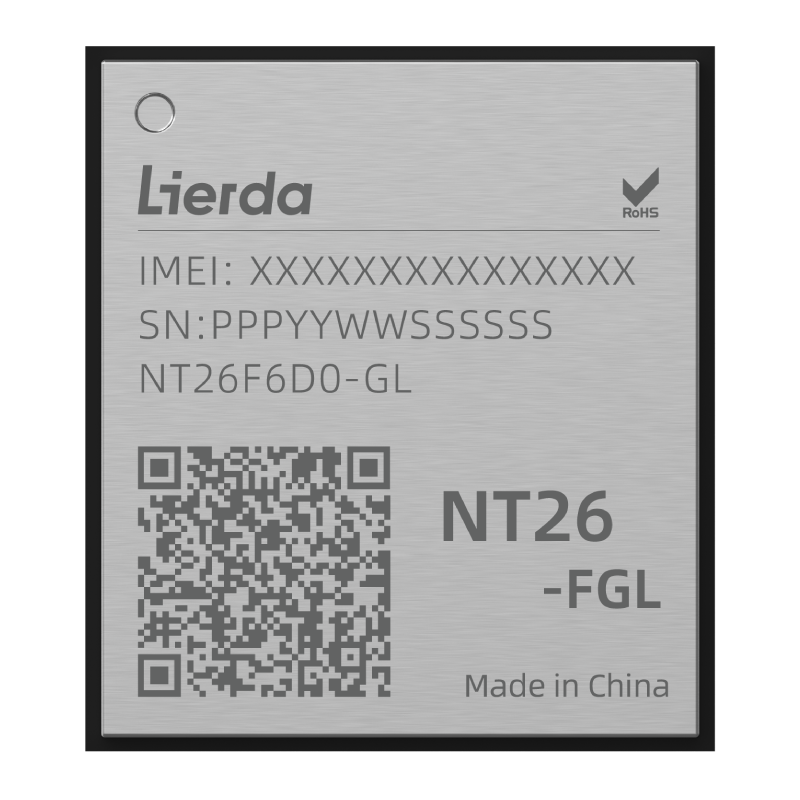
When evaluating IoT modules, several parameters are critical to match the target use case. Below is a breakdown of the most important ones, illustrated with data from modules such as Lierda's NT26-FGL Cat.1 bis LTE module and LP26 LoRaWAN node module.
| Parameter | Definition | Impact on Application | Example Values |
|---|---|---|---|
| Frequency Band Support | The set of radio frequency bands the module can operate on. | Determines global or regional compatibility. A multi-band module (e.g., NT26-FGL covering B1/2/3/4/5/7/8/12/13/14/18/19/20/25/26/28/66/71/34/38/39/40/41) ensures deployment across diverse markets. | NT26-FGL: 23 LTE bands (FDD+TDD); LP26: US915 / AU915 |
| Data Rate (DL/UL) | Maximum theoretical downlink and uplink throughput. | Governs the speed of data transmission. For applications like video surveillance or real-time control, higher data rates are needed. Cat.1 bis modules like NT26-FGL offer up to 10 Mbps DL / 5 Mbps UL, sufficient for voice, image, and moderate data streaming. | NT26-FGL: DL 10Mbps, UL 5Mbps; 5G RedCap module NR90-HEA: DL 226Mbps, UL 120Mbps |
| Transmit Power (dBm) | The power at which the module transmits signals. | Higher transmit power can extend range but increases power consumption. Optimized designs balance range and battery life. | NT26-FGL: 23 dBm ±2.7 dB; LP26: typ. 29 dBm @ 902–928 MHz |
| Receiver Sensitivity (dBm) | The minimum signal strength the module can reliably detect. | Higher sensitivity (lower negative number) improves coverage in weak-signal environments. LoRa modules like LP26 achieve -137 dBm at SF=12, enabling long-range communication. | LP26: -137 dBm (SF=12, BW=125 kHz); NT26-FGL: typical -101 dBm (LTE) |
| Power Consumption | Current drawn in various modes (sleep, idle, active). | Critical for battery-powered devices. Low sleep current (e.g., 2 µA for LP26) extends battery life. | NT26-FGL: shutdown 0.74 µA, sleep 6.5 µA; LP26: sleep 2 µA |
| Operating Temperature Range | The ambient temperature range within which the module functions reliably. | Industrial-grade modules (e.g., -40°C to +85°C) are essential for outdoor or harsh environments. Consumer-grade modules (-30°C to +75°C) suffice for indoor use. | NT26-FGL: -40°C to +85°C (extended); IC610 SOM: -40°C to +85°C |
2. How Production Processes Affect Product Quality and Lifespan
The manufacturing process of an IoT module directly influences its reliability, consistency, and long-term performance. Key stages include:
- Substrate Material Selection: Most modules use FR-4 PCB substrates combined with LCC/LGA metal contacts and RoHS-compliant encapsulation. High-quality substrates reduce signal loss and thermal stress.
- Surface Mount Technology (SMT): Automated placement of ICs, passives, and connectors with precise solder paste control ensures strong joints and avoids cold solder defects.
- Environmental Stress Screening: Modules undergo temperature cycling, humidity tests, and vibration tests to validate durability. For example, Lierda’s modules are certified for -40°C to +85°C ranges and IP67 enclosures in some gateways.
- Calibration and Testing: Each module is calibrated for RF performance (TX power, RX sensitivity) and tested for parameters like blocking and spurious emissions. Compliance with standards such as CE, FCC, and RCM is verified.
- Traceability: Lot numbers and production data allow full traceability, as evidenced by Lierda’s long-term partnerships (5–10 years) with clients in energy and consumer electronics.
An example of production-driven quality is the NT26-FCN (KR) Cat.1 bis module, which, through optimized design and process control, achieves networking registration speed 2× faster and power consumption 20% lower compared to modules based on the ASR platform (based on internal comparative tests).
3. Common Technical Selection Mistakes in Procurement
Procurement professionals often fall into these traps:
- Focusing only on peak data rates – While higher theoretical throughput looks attractive, real-world performance depends on network conditions, antenna design, and firmware optimization. For many applications (e.g., meter reading, asset tracking), low latency and strong sensitivity matter more than raw speed.
- Ignoring operating temperature and humidity ranges – A module rated for -30°C to +75°C may fail in outdoor deployments reaching -40°C or in tropical humidity. Always verify the extended temperature range and IP rating if applicable.
- Neglecting regulatory certifications – Modules lack proper certifications (FCC, CE, TELEC, IC) can cause shipment delays, legal liability, and performance issues. For example, Lierda’s UB37 Wi-Fi 6 modules hold FCC, IC, CE, and TELEC certifications, ensuring smooth entry into North American, European, and Japanese markets.
4. Technological Advantages of Chinese IoT Module Manufacturers: Case Study of Lierda
Chinese manufacturers like Lierda have built strong technological capabilities through long-term R&D investment. Key advantages include:
- Comprehensive product portfolio: Covering 5G, Cat.1, NB-IoT, LoRa, Wi-Fi 6, BLE, and more. Lierda provides one-stop solutions for diverse verticals such as smart metering, payment terminals, and smart home.
- Strong R&D team: Lierda employs 224 R&D professionals out of 976 total staff. The company holds 66 invention patents and 530 software copyrights (as of May 2025).
- Factory and scale: The company operates a 18,000 m² factory with flexible monthly capacity, capable of handling large-volume orders (e.g., 20 million+ units for a German energy client over 10 years).
- Certifications and compliance: Modules are certified to CE, FCC, IC, RCM, TELEC, and JATE standards, along with network security certification per RED 2014/53/EU.
- Customization capability: Lierda offers ODM/OEM services for module-level customization (logo, PCBA, firmware) with flexible MOQ and lead times tailored to project complexity.
- Proven track record: In the Korean Cat.1 bis market, Lierda’s modules power a telecom operator’s network station project, ranking as the No.1 supplier with 2 million units shipped annually. Other long-term cases include a Vietnamese ship positioning project and a German water meter OEM with stable 5+ year operation.
For procurement professionals evaluating IoT modules, understanding technical parameters in the context of actual working conditions and production quality is essential. By selecting a supplier with proven manufacturing expertise, regulatory certifications, and a history of reliable deliveries, companies can reduce risks and accelerate time-to-market.
For detailed product specifications and company capabilities, download the complete Lierda corporate brochure:
Download Lierda Corporate Brochure (PDF)