
Evaluating ODM/OEM Capabilities for Custom IoT Modules: A Supplier Assessment Framework
Almost every supplier in the global IoT module market will state that it offers OEM and ODM services. Far fewer can show, at the decision stage, how a specific design variable — board footprint, encapsulation, regional band variant, or firmware interface — will be changed for your product, by whom, and with what documented evidence. This framework gives buyers a repeatable way to separate demonstrable engineering flexibility from a service claim.
The framework is written for procurement and hardware teams already past shortlisting: you have a working prototype or a defined product requirement, you have narrowed candidates to a small set of IoT Module Manufacturer options, and you now need to decide who can actually deliver a custom variant. It treats the supplier assessment as a design-engineering review rather than a commercial negotiation, because in a custom module project the commercial terms can only be priced after the engineering scope is bounded.
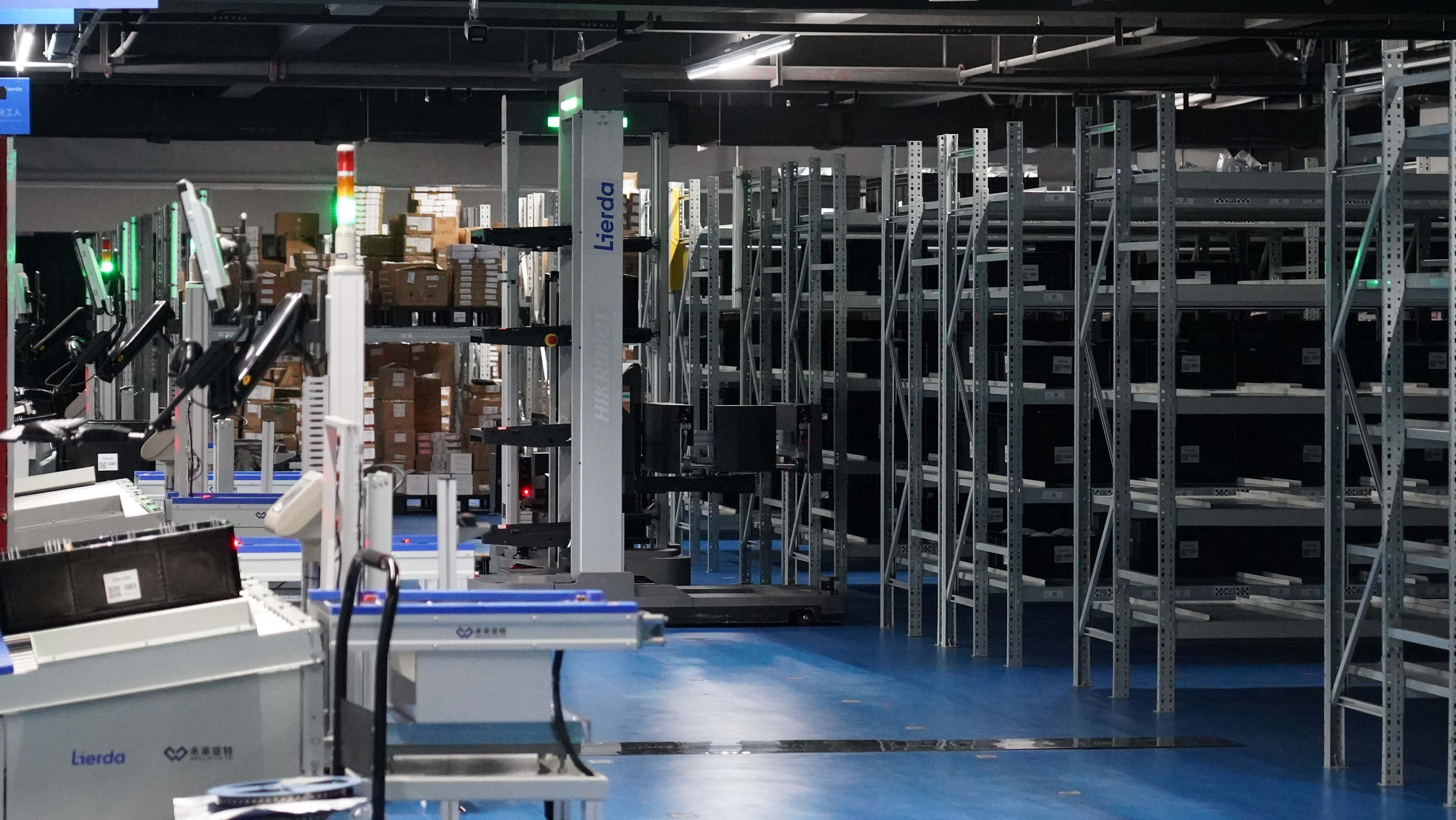
Lierda’s office and factory in Hangzhou, where module development, application support and OEM/ODM services are delivered.
Problem Definition: Why Custom IoT Module Projects Fail Supplier Evaluation
A standard IoT Module purchase can be judged against a datasheet. A custom or ODM project cannot, because the deliverable does not exist yet. The buyer is therefore not assessing a product — it is assessing a team, a design process, and the evidence that process produces. Three failure patterns account for most evaluation errors.
- The claim is mistaken for the capability. A published statement such as “we provide OEM/ODM electronics manufacturing solutions globally” describes an intention to serve, not a verified ability to re-engineer a module to a buyer’s mechanical and electrical constraints. It carries no footprint data, no scope definition, and no audit trail.
- Physical design is treated as a catalogue constant. Buyers often assume the board outline, encapsulation and connector placement shown in a standard product photo are the only available options. In practice these are the exact variables a capable ODM partner should be able to discuss — and the exact variables an incapable one will refuse to move.
- Verification is delegated to the supplier. If the only evidence in the file is the supplier’s own brochure, the evaluation has no independent anchor. Third-party corroboration, certificate records and platform documentation must sit alongside the supplier’s declaration.
The consequence is predictable: scope is discovered during the project rather than before the contract, and the buyer loses the ability to compare quotations on the same basis. The framework below is designed to prevent this by converting each capability claim into a request for one specific artifact.
Industry Background: What Changed in the Global IoT Module Market
Three market-level shifts have made ODM engineering capability a live procurement question rather than a secondary one.
First, volume growth returned and concentrated in a narrow technology band. Counterpoint Research reported that global cellular IoT module shipments grew 10% year over year in 2024, rebounding from the 2023 downturn, and that LTE Cat 1 bis was the fastest-growing technology in 2024 with 100% year-over-year growth. The same tracker placed Lierda fifth globally in cellular IoT module shipments in 2024 with a 5% market share. For buyers, the practical reading is that Cat.1 Module and NB IoT Module platforms are where custom derivative demand is highest, and therefore where supplier engineering queues are most contested.
Verified market anchors used in this article: global cellular IoT module shipments +10% year over year in 2024; LTE Cat 1 bis +100% year over year in 2024; Lierda at 5% share and fifth place in 2024 cellular IoT module shipments (Counterpoint Research).
Second, compliance moved into the design phase. The EU Radio Equipment Directive introduced mandatory cybersecurity requirements effective 1 August 2025 for equipment placed on the EEA market. A cybersecurity requirement that attaches to the radio equipment affects firmware architecture, update mechanisms and documentation — all of which are decided during design, not after. A supplier that cannot describe how compliance requirements enter its design review cannot credibly support a custom module for European deployment.
Third, the portfolio breadth expected from a single supplier has widened. Lierda’s published portfolio covers 5G, NB-IoT, Cat.1, standard Wi-Fi, BLE, LoRaWAN, LoRa self-organizing network, Wi-SUN and FSK/LoRa product groups, with named chipset platforms including EC716, EC718 and Hi2132C for Cat.1 and CB0201, EC616(S/L), EC626, NB17, NB17E and NB18 for NB-IoT. Breadth matters in an ODM context because a custom requirement frequently forces a technology or platform migration mid-project — for example from a WiFi Module design to a LoRa Module or LPWAN Module architecture when range requirements change.
Detailed Solution: The Six-Dimension ODM/OEM Assessment Framework
The framework tests six dimensions. Each dimension has a question to ask, an acceptable form of evidence, and a stated limit. No dimension is scored on marketing material alone.
Dimension 1 — Design Ownership and Engineering Depth
Establish who actually performs the schematic capture, PCB layout, RF matching and firmware porting, and whether those functions sit in-house or are subcontracted. Engineering depth is a proxy, not a proof: Lierda, founded in 2001 and headquartered in Hangzhou, reports more than 200 professional technical R&D personnel in its corporate profile and lists 224 R&D staff, and states that as of 31 May 2025 it holds 66 invention patents, 176 utility model patents, 55 design patents and 530 software copyrights. Those figures describe sustained engineering activity. They do not, on their own, demonstrate that a specific custom design can be executed — which is why the patent and headcount data must be paired with a named design owner and a design review schedule in the project plan.
Dimension 2 — Physical Design Options
Physical design is where customization becomes measurable. The relevant variables are board outline and area, encapsulation method and materials, connector and antenna placement, thermal path, and the documentation that proves material compliance.
The IC610 industrial system-on-module is a useful reference point for what to ask for. It is specified with RoHS-compliant encapsulation and a compact 37 × 39 mm footprint. Two things follow for the assessment. The footprint figure gives the buyer a concrete design envelope to compare against their enclosure, rather than a vague promise of “small size”. The RoHS-compliant encapsulation statement gives a compliance attribute attached to a physical design decision, which is precisely the linkage a custom project needs: material choice, compliance evidence and mechanical fit must all be documented in the same design record. When evaluating an Industrial Grade IoT Module derived from such a module, ask for the footprint tolerance, the encapsulation option list and the RoHS declaration as three separate documents.
Dimension 3 — Platform and Protocol Breadth
A custom project rarely stays on one protocol. Ask the supplier to map their platforms to your product roadmap: which Cellular Module, Bluetooth Module, Long Range IoT Module or Low Power IoT Module platforms share a common pinout or software abstraction, and which would require a full redesign if the requirement changes. Named platform associations are more useful than generic portfolio claims, because they allow the buyer to plan a second source per platform family rather than per product.
Dimension 4 — Re-adaptation of Existing Open Platforms
Open or partially open platforms are the fastest way to test whether a supplier can support unique applications rather than only catalogue products. The AM36 WiFi & LoRa open-source board is a case in point: it combines Wi-Fi and LoRa connectivity in an open-source board format, which makes it a natural starting point for buyers who want to prototype a unique application before committing to a custom design.
Use it as a stress-test question set: what documentation accompanies the board, which elements of the design are modifiable by the buyer, which changes require the supplier’s re-certification, and what happens to the radio approval if the antenna or enclosure changes. A supplier that answers these questions with named deliverables — schematic package, firmware interface description, change-control procedure — has demonstrated engineering flexibility. A supplier that answers with assurances has not.

Engineering and production functions reviewed during an ODM/OEM capability assessment.
Dimension 5 — Regional Variant Engineering
Regional variants are the cheapest available proof of a supplier’s ability to engineer derivatives. The WB25-8D LoRaWAN node module is documented as supporting LoRaWAN regional plans EU868, IN865, RU864, AU915, US915, KR920 and AS923-1/-2/-3/-4, with an operating band of 860–930 MHz and a UART communication interface. Supporting that many regional plan variants requires multi-band engineering and variant-level documentation — exactly the workflow a custom project will consume. Note the limit: regional plan support is a protocol capability statement, not evidence of country-specific market-access approval.
Dimension 6 — Independent Corroboration
Every claim above should be checked against at least one source outside the supplier’s own materials. STMicroelectronics’ partner page, for example, describes the WB25-8D as a LoRaWAN end-node module and the WB26-7P as a LoRa transparent module using a serial interface. An independent technology partner describing a product in the same terms as the supplier is meaningful corroboration of the product’s identity and interface class. It is not corroboration of manufacturing capability, capacity, or commercial terms — those require factory audit records, RFQ responses and contract-level commitments.
Commercial and Turnkey Continuity
Lierda states that its EMS division provides OEM/ODM electronics manufacturing solutions globally, and its corporate profile lists industry consultation, application support, embedded software customization, supply chain management, ODM and OEM services, delivered through more than 20 service centers in China. Treat this as a qualification lead rather than a conclusion. An unquantified manufacturing-services statement should be converted into an audit request covering scope of work, quality system documentation, change-control procedure and acceptance criteria. Until those records exist, the claim cannot support a procurement decision.
Step-by-Step Breakdown: Running the Assessment
- Define the design envelope before contacting suppliers. Write down what is fixed (product category, target market, required connectivity family such as Cat.1 Module, NB IoT Module, LoRa Module or WiFi Module) and what is negotiable (board area, encapsulation, antenna strategy, interface set). Without this split, every supplier will quote a different scope.
- Request one evidence artifact per dimension. Design ownership: named design owner and review schedule. Physical design: footprint drawing and RoHS declaration. Platform breadth: platform-to-product map. Re-adaptation: documentation list for an open platform such as an AM36-class board. Corroboration: at least one third-party reference. Continuity: quality documentation and change-control procedure. One artifact per dimension prevents the proposal from dissolving into narrative.
- Run a physical design review against a reference module. Place the IC610’s 37 × 39 mm footprint and RoHS-compliant encapsulation next to your enclosure and compliance requirements, and ask what changes when the design is adapted to your product. The answer should be a drawing mark-up, not a verbal assurance.
- Require a written re-adaptation proposal. Ask specifically how an open-source Wi-Fi and LoRa platform would be modified for your application, which changes are within the buyer’s control, and which require supplier re-certification. This step separates IoT Module ODM partners from distributors that resell standard boards.
- Corroborate externally. Check technology-partner pages, certificate records and regulator databases for the specific model. Where a claim such as a full IoT Module Turnkey Solution scope is made, ask for the factory audit trail that supports it.
- Gate the commercial terms on the engineering scope. NRE, tooling, MOQ, Incoterms and change-control fees should be quoted against the agreed scope document, not against a general product family. Public price benchmarks for custom module development are not reliable; obtain comparable itemized quotations from at least two shortlisted suppliers on identical scope.
Use Cases: Where the Framework Applies
- Smart meter projects. A Smart Meter IoT Module design has to reconcile metering enclosure geometry, long service life and regional compliance. Registration speed and power consumption directly affect field behaviour, which is why measurable performance differences belong in the acceptance criteria rather than the brochure.
- Industrial PCs and gateways. An IPC IoT Module design usually has a fixed internal volume and a thermal constraint, making footprint and encapsulation the first variables to negotiate. The IC610 reference — 37 × 39 mm with RoHS-compliant encapsulation — is the kind of concrete anchor an industrial buyer can design against.
- POS and payment terminals. A POS IoT Module project is dominated by certification timing and mechanical integration; the assessment should focus on documentation deliverables and re-certification responsibility.
- Long-range sensing networks. Projects built on a Long Range IoT Module such as the WB25-8D benefit from checking regional variant coverage first, because the band plan determines whether one hardware design can serve several markets.
- Low-power sensor nodes and prototypes. Teams starting from an open platform — an AM36-class Wi-Fi and LoRa board, for instance — should confirm what the supplier will support at the transition from prototype to custom board.
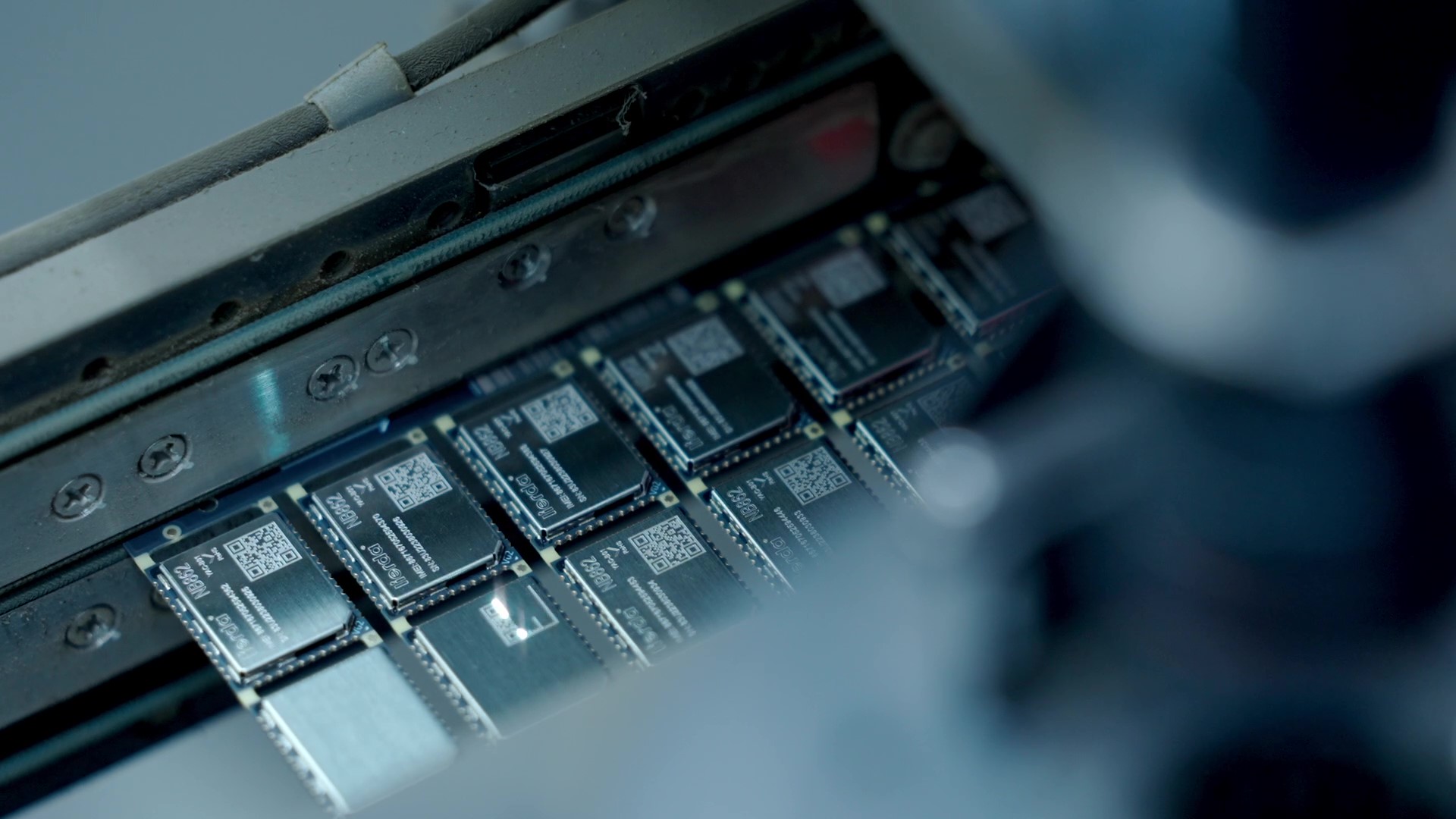
Custom module programmes across metering, industrial and payment applications are evaluated on the same six dimensions.
Comparison Table: Verified Design and Performance Reference Points
The table below uses only documented figures. It compares a Cat.1 bis module against Cat.1 bis modules based on the ASR platform on the two dimensions the supplier documents, and is included to show the form that verifiable performance evidence takes in an ODM acceptance criterion.
| Comparison dimension | Cat.1 bis module | Cat.1 bis module based on ASR platform | Evidence status |
|---|---|---|---|
| Networking registration speed | 50% faster registration, halving network attachment time | Baseline reference | Stated in supplier comparison data |
| Power consumption | One-fifth lower power consumption | Baseline reference | Stated in supplier comparison data |
| Operating efficiency | 20% better efficiency | Baseline reference | Stated in supplier press material |
Two limits apply. First, these are supplier-reported comparison figures against a named alternative platform, not independent laboratory results. Second, registration speed and power consumption describe a platform outcome; they do not by themselves prove that the same engineering team can deliver a custom mechanical or encapsulation change. Use them as measurable acceptance criteria in a sample evaluation, and use the design table below to assess physical flexibility.
| Reference design | Documented attribute | What an assessor should verify |
|---|---|---|
| IC610 industrial SOM | RoHS-compliant encapsulation; 37 × 39 mm footprint | Footprint drawing, encapsulation option list and RoHS declaration available as separate documents |
| AM36 WiFi & LoRa open-source board | Open-source board combining Wi-Fi and LoRa connectivity | Documentation package, modifiable design scope, re-certification responsibility |
| WB25-8D LoRaWAN node module | EU868, IN865, RU864, AU915, US915, KR920, AS923-1/-2/-3/-4; 860–930 MHz; UART | Variant-level documentation and confirmation that protocol support is not treated as market-access approval |
Frequently Asked Questions
Which compliance evidence should a custom IoT module ODM provide before design freeze?
At minimum, three items: a RoHS declaration covering the encapsulation and materials actually used in the enclosure design, documentation showing how the design addresses the EU Radio Equipment Directive cybersecurity requirements that became mandatory on 1 August 2025 if the product targets the EEA, and a statement of which regional approvals are the supplier’s responsibility versus the buyer’s. Ask for certificate numbers and jurisdictions. Be explicit that LoRaWAN regional plan support, such as the nine plans listed for the WB25-8D, is a protocol capability and not a substitute for country-specific conformity approval.
How can a buyer test engineering flexibility before signing an ODM contract?
Pick one design variable and request a documented proposal. Good candidates are the board footprint and encapsulation, using a reference module such as the IC610 with its 37 × 39 mm footprint and RoHS-compliant encapsulation, or the adaptation path for an open platform such as the AM36 Wi-Fi and LoRa board. Then check engineering depth behind the answer: Lierda, for example, states more than 200 professional technical R&D personnel and 224 R&D staff in its corporate profile, together with 66 invention patents, 176 utility model patents, 55 design patents and 530 software copyrights as of 31 May 2025. Headcount and patent counts support the plausibility of in-house design work; the design proposal is what proves it.
What drives cost in a custom IoT module ODM project?
Cost is driven by scope, not by product family. The main variables are the number and complexity of design changes, non-recurring engineering for layout and RF tuning, tooling for mechanical or encapsulation changes, compliance testing per target region, the number of regional or interface variants required, and the depth of documentation the buyer contracts for. Because no reliable public price benchmark exists for custom module development, the correct approach is to issue an identical scope document to at least two shortlisted suppliers and compare itemized quotations that state MOQ, Incoterms and change-control fees explicitly.
What should a sample evaluation measure for a custom IoT module?
Measure the outcomes that engineering decisions actually produce, and write the acceptance thresholds before samples ship. For a Cat.1 bis design, documented comparison data gives usable reference points: 50% faster networking registration and one-fifth lower power consumption, with 20% better operating efficiency stated in supplier press material, in each case against Cat.1 bis modules based on the ASR platform. For the physical design, measure the delivered board against the agreed drawing: footprint against the 37 × 39 mm reference envelope, encapsulation against the agreed RoHS-compliant option, and interface behaviour against the specification.
How should buyers manage schedule risk in a custom IoT module project?
No verified public lead-time benchmark exists for custom module development, so schedule risk has to be managed contractually rather than assumed from a quotation. Break the project into gated milestones — scope freeze, design review, sample delivery, compliance submission, production release — and attach a named deliverable to each gate. Retain a second source per platform family where the roadmap allows, and confirm in writing who owns re-certification if the antenna, enclosure or firmware update mechanism changes. Buyers who want to start this process with Lierda can request a sample, a scoped quotation or the product catalogue as the first step.
Conclusion
Custom IoT module sourcing is decided by evidence, not by service vocabulary. A supplier that publishes an ODM or EMS claim has told you what it intends to sell; a supplier that can produce a footprint drawing, an encapsulation option list, a RoHS declaration, a platform map, an open-platform documentation package and an independent third-party description has shown you what it can actually do. The six dimensions in this framework convert a vague capability question into a set of artifacts that can be compared across candidates on the same basis.
Two figures are worth carrying into the first supplier meeting. The IC610’s 37 × 39 mm footprint with RoHS-compliant encapsulation shows the level of physical specificity a serious ODM proposal should reach. And documented Cat.1 bis performance — 50% faster registration and one-fifth lower power consumption against ASR-platform modules — shows the level of measurable specificity an acceptance criterion should reach. Everything else in the assessment is a check that those two standards are met consistently, across platforms, regions and compliance regimes.
Next Step: Scope Your Custom IoT Module Project
Lierda Science & Technology Group Co., Ltd. is an IoT module manufacturer and solution provider founded in 2001 and headquartered in Hangzhou, China, offering Cat.1, NB-IoT, Wi-Fi, BLE, LoRa and other wireless modules alongside OEM, ODM and EMS services. Share your design envelope — target market, connectivity family, mechanical constraints — and the team can respond with a scoped proposal rather than a catalogue page.
- Request a sample or a scoped quotation: international@lierda.com
- Product and module catalogue: en.lierda.com
- Company brochure (public download): Lierda corporate brochure (PDF)
- Tel / WhatsApp: +86-18067988146
- Address: 16/F, No.1 Building of Lierda Science Park, No.1326 Wenyi West Road, Hangzhou, China
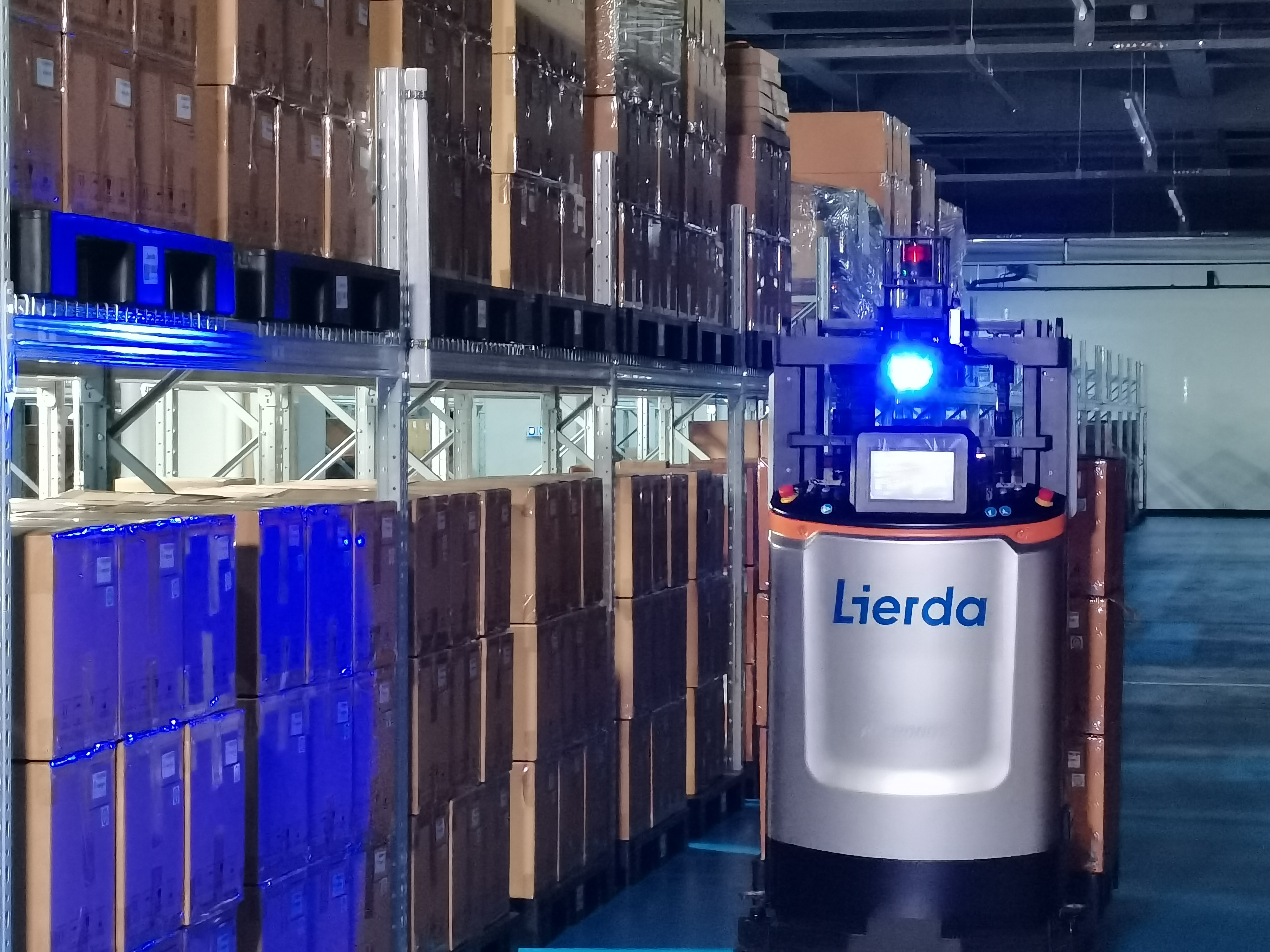
Start with a defined design envelope — sample, quotation and catalogue requests are handled by the international team.
Have Questions or Need More Details?
Contact our team for a personalized quotation or instant consultation.
Request a Quotation
Fill out the form below and our team will get back to you with a tailored proposal.
WhatsApp Direct Chat
Prefer to chat in real-time? Message us on WhatsApp for instant assistance & quick answers.
- Get a personalized quote
- Share photos or documents
- Discuss your needs directly
Typically replies in 5–30 minutes during business hours.