
IoT Module Application Guide for Consumer Electronics: Solving Smart Home Wireless Design Problems
A smart home device program usually needs more than one wireless answer. A connected air purifier may need Wi-Fi 6 for cloud control and Bluetooth for setup. A wearable may need Bluetooth 6.0 and a compact LoRa option. A smart meter may need Cat.1 bis or NB-IoT depending on data profile, regional band plan, and power budget. The real design problem is not choosing a radio in isolation. It is matching range, power, size, coexistence, and certification readiness to a consumer electronics use case.
This guide maps those design problems to verified Lierda module options, including WF29A and WF39B dual-band Wi-Fi 6 modules, the BT18N0 Bluetooth 6.0 module, NT26-F Series Cat.1 bis LTE modules, WB25 and WB26 LoRaWAN node modules, and the QB20 LoRa SiP module. It is written for consumer electronics teams at the awareness and research stage: product managers, hardware engineers, and procurement teams who need a practical starting point before samples, quotations, and certification review.
Problem Definition: Five Wireless Design Problems in Smart Home Devices
Consumer electronics teams often discover wireless problems late, after the enclosure, antenna, and power architecture are already fixed. The five recurring problems below are not abstract. They determine whether a module can be designed in without rework.
1. Range and topology
Range is shaped by antenna design, enclosure material, gateway placement, and the radio mode. A Wi-Fi 6 module may serve a home appliance through a router, while a LoRaWAN node may serve a sensor through a gateway. The corpus lists receiver sensitivity for several LoRa modules, including -137 dBm for WB25 and WB26 at SF=12, BW=125 kHz, and -148±1 dBm for QB20 at SF=12, BW=1-L=10.4 kHz. These are specification figures, not a guarantee of a given distance in a real building. Design teams should treat them as one input to link-budget planning and then test in the target enclosure.
2. Power budget
Battery-powered devices live or die by sleep current and power mode. The corpus gives specific low-power figures: MB26-H and MB26-AGL list PSM current of 1.5 μA; NB81-A lists PSM current of 1.5 μA; WB25 and WB26 list sleep current of 2 μA; QB20 lists sleep current of 0.6 μA. These numbers matter for smoke detectors, wearables, sensors, and compact meters. They do not replace a full power calculation, because transmit current, receive current, wake-up frequency, and host MCU consumption also affect battery life.
3. Size and mechanical fit
Small consumer devices leave little room for a module, antenna, and shielding. The corpus provides several mechanical anchors: NT26-FCN and NT26-FEU are 17.7 × 15.8 × 2.4 mm; WB25 and WB26 are 22 × 18 × 3.0 mm; QB20 is 8.0 × 8.0 × 1.1 mm. A compact SiP such as QB20 is relevant for wearable products and compact instruments and meters, while a standard Cat.1 bis LGA module may suit a larger appliance or POS terminal. The right choice is the one that fits the enclosure without compromising antenna clearance.
4. Coexistence and host interface
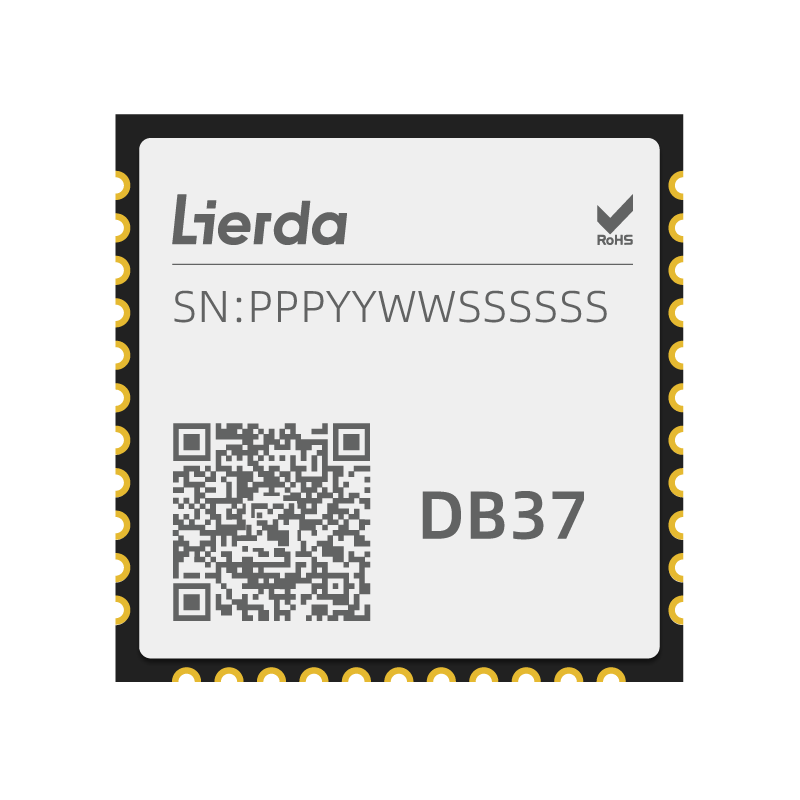
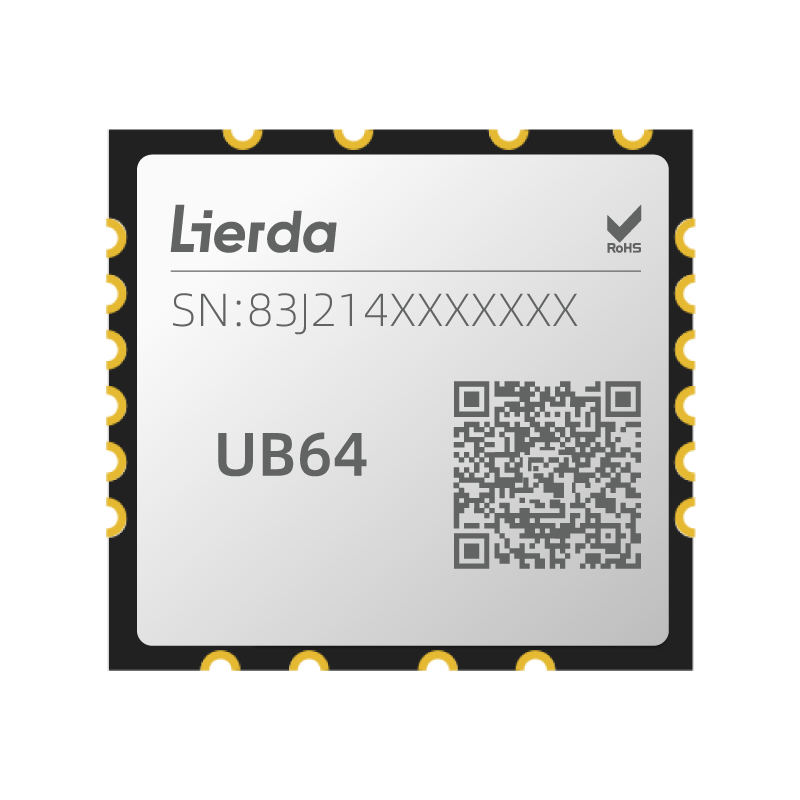
Smart home devices often combine Wi-Fi, Bluetooth, and sometimes SLE or LoRa. Coexistence is an interface and layout problem as much as a radio problem. The DB37 is listed as a Wi-Fi, SLE, and BLE tri-mode module with Wi-Fi b/g/n/ax, BLE 5.2, SLE1.0, a 2.4 GHz operating frequency, 150 Mbps data rate, and SDIO interface. The UB64 is listed as a dual-band Wi-Fi 6 and dual-mode Bluetooth module with Wi-Fi b/g/n/a/ac/ax, BTDM 5.4, 5/10/20/40 MHz bandwidth, 286.8 Mbps data rate, and USB 2.0 interface. These facts help teams decide whether the host processor has the right interface and whether the RF sections need careful isolation.
5. Certification readiness
Market access is not the same as protocol support. The EU Radio Equipment Directive cybersecurity requirements became effective on August 1, 2025. For Europe-facing consumer devices, buyers should ask for current declarations and certificate records for the exact module model and target market. LoRaWAN or Wi-Fi 6 support alone does not prove regulatory or conformity approval. The verified data notes this distinction directly: protocol support is not equivalent to certification.
Industry Background: Why Smart Home Teams Need a Module-Level Plan
Counterpoint Research reported that global cellular IoT module shipments grew 10% year over year in 2024, and LTE Cat.1 bis grew 100% year over year. The same source placed Lierda fifth globally in cellular IoT module shipments in 2024 with a 5% market share. These figures describe the broader cellular IoT module market, not a smart home forecast. Their practical meaning is simpler: Cat.1 bis is now part of mainstream module planning, and buyers have more connectivity options to compare before design freeze.
Lierda Science & Technology Group Co., Ltd. is an IoT service provider founded in 2001 and headquartered in Hangzhou. The company was listed on the Beijing Stock Exchange on February 17, 2023 under stock code 920249. Its manufacturing facility covers 18,000 square meters, and it employs approximately 976 staff, including 224 engineers and technical personnel in its R&D team. As of May 31, 2025, Lierda had obtained 66 invention patents, 176 utility model patents, 55 design patents, and 530 software copyrights. Lierda provides self-developed wireless technology solutions covering 5G, RF, LoRa, NB-IoT, Cat.1, Wi-SUN, Wi-Fi, BLE, and ZigBee, with main products including Cat.1 Module, WiFi Module, Cellular Module, NB IoT Module, LoRa Module, LPWAN Module, Bluetooth Module, and IoT Module OEM/ODM/EMS services.
For consumer electronics teams, that breadth is useful only when it shortens the path from problem to verified module. A smart home device may need a Wi-Fi 6 module for cloud and app control, a Bluetooth module for onboarding, a Cat.1 bis module for cellular backup, or a LoRaWAN node for low-power sensing. The rest of this guide maps those needs to specific modules and a selection checklist.
Detailed Solution: Matching Smart Home Problems to Lierda Module Options
The module families below are not interchangeable. Each has a different role in a consumer electronics architecture. The goal is to select the simplest radio that satisfies the device scenario, then verify the exact model, band plan, interface, and certification path.
Dual-band Wi-Fi 6 for appliances, cameras, and cloud-linked devices
Wi-Fi 6 is a practical choice when the device needs a high-throughput local link, app control, cloud connectivity, or video. The WF29A is a dual-band IoT Wi-Fi 6 module operating at 2.4 GHz and 5 GHz. It is constructed with FR-4 PCB substrate and SMD electronic components, and it is intended for smart home, pet supplies, consumer electronics, and medical care industries. The WF39B is also a dual-band IoT Wi-Fi 6 module. It operates over -40°C to 105°C and has 512 KB RAM and 4 MB Flash, with the same intended industries. Those facts make WF39B relevant where an extended temperature range and onboard memory matter, while WF29A gives teams a dual-band Wi-Fi 6 option for smart home and consumer electronics.
For simpler 2.4 GHz designs, the DB37 is a standard Wi-Fi 6 module classified as a Wi-Fi, SLE, and BLE tri-mode data transmission module. It supports Wi-Fi b/g/n/ax, BLE 5.2, and SLE1.0, with 150 Mbps data rate and SDIO interface. The UB37 is also a standard Wi-Fi 6 module at 2.4 GHz in the same tri-mode category. When dual-band Wi-Fi 6 and dual-mode Bluetooth are needed together, the UB64 supports Wi-Fi b/g/n/a/ac/ax, BTDM 5.4, 5/10/20/40 MHz bandwidth, 286.8 Mbps data rate, and USB 2.0. Its listed applications include OTT, IPTV, DVB, set-top box, IPC, and smart TV. For a smart home appliance, the choice between these modules depends on whether the host has SDIO or USB, whether 5 GHz is needed, and whether Bluetooth coexistence is integrated or handled separately.
Bluetooth 6.0 for setup, local control, and short-range links
Bluetooth is often the onboarding path for a smart home device: the user pairs a phone, configures Wi-Fi credentials, or controls the device locally. The BT18N0 is a Bluetooth 6.0 module with model designation L-BT18N0A0_0950S. It belongs to the NORDIC chip category and is based on a NORDIC chip. It has a protection level of -40 to +105°C, an efficiency rating of 110 KB/s application layer rate, and operates in one master four slave mode. It is intended for the smart home industry and designed for smart home scenarios.
That combination is relevant for appliances that need a stable local link but do not need high data throughput. The BT18N0 should not be treated as a Wi-Fi replacement. Its role is to handle pairing, local commands, or short-range data exchange while a Wi-Fi or cellular module handles cloud traffic. For products with a small enclosure, the Bluetooth module can be placed near the antenna keep-out area while the Wi-Fi module is placed on the opposite side of the board.
Cat.1 bis LTE for devices that need cellular cloud access
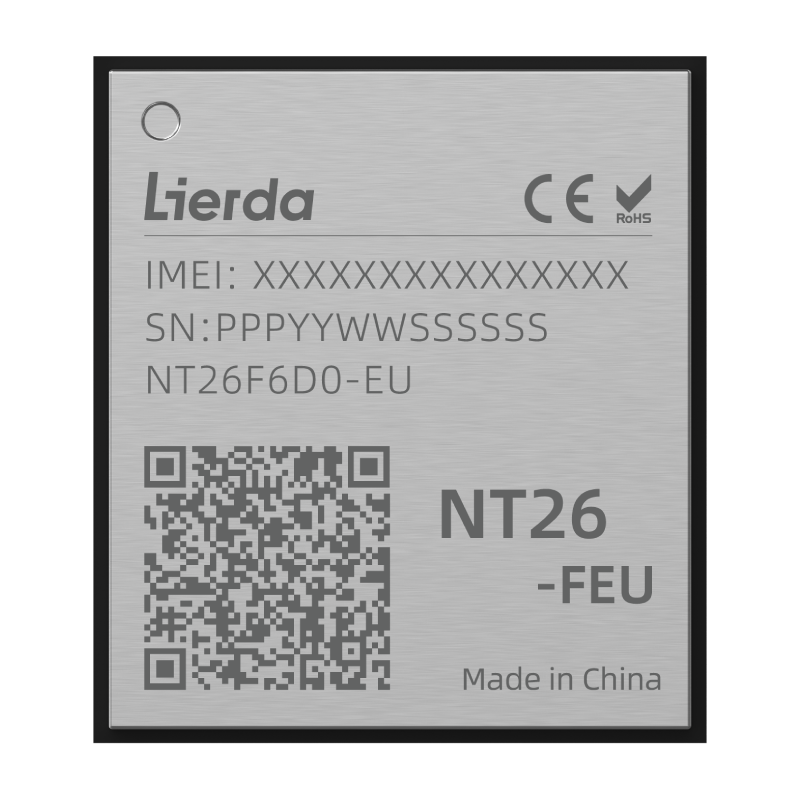
Cat.1 bis is a cellular option for devices that cannot rely on a local router or need an independent uplink. The NT26-F Series Cat.1 bis LTE Module includes variants for different regions. The NT26-FCN supports FDD bands B1, B3, B5, and B8, plus TDD bands B34, B38, B39, B40, and B41. It includes GNSS/BDS positioning, uses an LGA package, measures 17.7 × 15.8 × 2.4 mm, and operates from 2.3 to 4.5 V with a typical 3.8 V supply. Its listed applications include cloud speakers, trackers, POS, POC, data cards, smart security, two-wheelers, and industrial-grade PDAs. The NT26-KCN supports FDD bands B1, B3, B5, and B8, TDD bands B34, B38, B39, B40, and B41, GNSS/BDS, and an operating temperature range of -30°C to +75°C, extended to -40°C to +85°C.
Regional band planning matters before a module is selected. The NT26-FEU is listed for Europe with bands B1, B3, B5, B7, B8, B20, B28, B38, B40, and B41. The NT26-FNA is listed for North America with bands B2, B4, B5, B12, B13, B25, B66, and B71. Both use LGA packaging, measure 17.7 × 15.8 × 2.4 mm, and operate from 3.3 to 4.5 V with a typical 3.8 V supply. For a consumer device that ships to multiple markets, teams should not assume one band set covers all regions. They should match the module variant to the destination market and confirm carrier and certification requirements separately.
NB-IoT for low-power metering, sensors, and small appliances
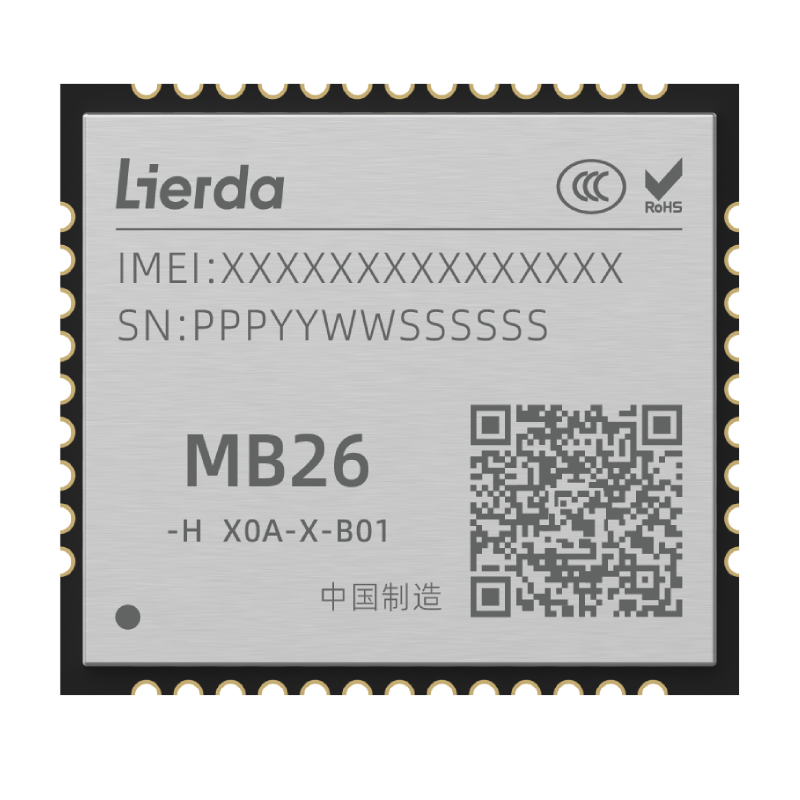
NB-IoT is relevant when the device sends small amounts of data and needs long dormancy. The MB26-H is an NB-IoT module supporting B03, B05, and B08, with a working voltage of 2.1 V to 4.2 V and PSM current of 1.5 μA. It is intended for remote meter reading, intelligent smoke detectors, smart parking, smart street lamps, smart security, smart home, and wearable devices. The MB26-AGL supports B03, B05, B08, B20, and B28, with a working voltage of 2.2 V to 4.5 V and PSM current of 1.5 μA. It is intended for remote meter reading, intelligent smoke detectors, smart parking, and intelligent emergency lights. The NB81-A has a PSM current of 1.5 μA and a rated voltage of 2.1 V to 4.5 V, and is applicable to wearable devices, smart home, smart security, smart street lamps, smart parking, intelligent smoke detectors, and remote meter reading.
These modules show why NB-IoT remains a design option for smart home sensors. The PSM current figure is useful for early power budgeting, but it is not a complete battery-life calculation. The design team still needs to model wake-up intervals, payload size, network registration behavior, and host sleep states.
LoRaWAN and LoRa SiP for long-range low-power nodes
LoRaWAN is a different architecture from Wi-Fi or cellular. It connects a node to a gateway, not directly to a home router. The WB25 and WB26 are LoRaWAN Node Modules with Class A and Class C modes, global frequency bands per Alliance Standard, 22 × 18 × 3.0 mm dimensions, 1.8 V to 3.6 V operating voltage, 22 dBm transmit power, and -137 dBm receiver sensitivity at SF=12, BW=125 kHz. Both list 2 μA sleep current and UART antenna interface with IPEX support. They are intended for smart street lights, smart agriculture, smart logistics, industrial control, and instruments and meters.
For compact consumer products, the QB20 LoRa SiP module is more relevant than a standard node module. It measures 8.0 × 8.0 × 1.1 mm, operates from 1.8 V to 3.7 V, and supports -40°C to 85°C. It has up to 22 dBm transmit power, -148±1 dBm receiver sensitivity at SF=12, BW=1-L=10.4 kHz, transmit current ≤135 mA, receive current ≤6 mA, and sleep current 0.6 μA. It is intended for wearable products and compact instruments and meters. The QB20 shows how LoRa can move into small consumer devices where a standard module would not fit.
Where a mesh or alternative LPWAN is needed, the WB28 is a LoRaMesh module in the 868 to 930 MHz band, with 1.8 V to 3.6 V operating voltage, -40°C to +85°C range, 22 × 18 × 3.0 mm dimensions, 22 dBm maximum transmit power, -124 dBm receiver sensitivity at SF7, BW125, and UART interface. It is applicable to smart street light, smart photovoltaic, and industrial control industries. The WB16 is a Sigfox module verified to RC1 specification, operating at 868 to 870 MHz, with 22 × 18 × 2.7 mm dimensions, maximum 12 dBm transmit power, -124 dBm receiver sensitivity at GFSK, 2.2 V to 3.6 V operating voltage, and intended use in smart water meter and smart electric meter industries. These options should be selected only when the regional network and gateway plan are already confirmed.
Gateways and SOMs when the consumer device is also a hub
Some smart home products are not only nodes. They may be a hub, a gateway, or an appliance with an embedded control board. The IG41 LoRaWAN Indoor Gateway uses an SX1302 chip platform, supports global frequency bands, Class A/C operation, up to 20 nodes, 27 dBm maximum transmit power, and measures 115 × 115 × 22.5 mm. It is intended for smart street lights, smart agriculture, smart logistics, industrial control, and instruments and meters. The OG45 LoRaWAN Outdoor Gateway has IP67 protection, -20°C to +70°C operating range, 256 × 164 × 92 mm dimensions, global frequency bands, 27 dBm transmit power, up to 2000 nodes, and an SX1302 chip platform. It is intended for smart street lights and smart agriculture.
For an embedded control board, the IC610 is an Industrial Core Module and System on Module with 37 × 39 × 2.8 mm dimensions. It is intended for intelligent control systems, portable medical equipment, IoT gateways, charging piles, and industrial HMI. These products show that a consumer electronics team does not have to treat the wireless module as a standalone component. The device architecture can combine a module, a host SOM, and a gateway depending on whether the product is a sensor, an appliance, or a hub.
Step-by-Step Breakdown: A Practical Module Selection Workflow
Step 1: Define the device scenario and power source
Write down what the product does, where it is installed, and how it is powered. A mains-powered air purifier can support Wi-Fi 6 and always-on cloud links. A battery-powered motion sensor needs a low-power path and should be evaluated with PSM or sleep-current figures. A wearable may need a compact SiP. The corpus scenario data already reflects this logic: air purifiers and humidifiers use low-power mode with periodic wake-up; AI cameras use always-on or event-triggered mode; smart water meter adaptors use scheduled data upload and IP68 protection.
Step 2: Decide the topology
Ask whether the device connects to a home router, a cellular network, or a gateway. Wi-Fi 6 modules such as WF29A, WF39B, DB37, UB37, and UB64 fit router-based smart home and consumer electronics designs. Cat.1 bis modules such as NT26-FCN, NT26-FEU, NT26-FNA, and NT26-KCN fit devices that need independent cellular uplink. NB-IoT modules such as MB26-H, MB26-AGL, and NB81-A fit low-data sensors and meters. LoRaWAN modules such as WB25 and WB26, or the QB20 SiP, fit gateway-based low-power nodes. Do not choose a long-range module if the product already has a reliable Wi-Fi router and no gateway plan.
Step 3: Match the radio to the data profile
High-throughput video, app control, and OTA updates point to Wi-Fi 6. Local pairing and short commands point to Bluetooth 6.0. Small periodic cellular payloads point to Cat.1 bis or NB-IoT depending on latency and mobility. Low-power long-range sensing points to LoRaWAN or LoRa SiP. The DB37 lists 150 Mbps data rate and SDIO interface. The UB64 lists 286.8 Mbps data rate and USB 2.0. The BT18N0 lists 110 KB/s application layer rate and one master four slave mode. These are different design envelopes, not interchangeable specifications.
Step 4: Check coexistence, interface, and mechanical fit
Place the module, antenna, and host interface on a simple block diagram before layout. Confirm whether the host has SDIO, USB, UART, or another interface. Check the module dimensions against the enclosure and antenna keep-out. For combined radios, review whether the module already integrates coexistence, as with DB37 and UB64, or whether separate Wi-Fi and Bluetooth modules are needed. For compact LoRa products, compare QB20 at 8.0 × 8.0 × 1.1 mm with WB25 or WB26 at 22 × 18 × 3.0 mm. For cellular products, compare NT26-FCN at 17.7 × 15.8 × 2.4 mm with the host board and SIM or eSIM placement.
Step 5: Verify certification and market access
List the destination markets and the applicable radio, safety, and cybersecurity requirements. For Europe, include the EU Radio Equipment Directive cybersecurity requirements effective August 1, 2025. Request current declarations and certificate records for the exact module model. Do not accept a general statement that a module supports LoRaWAN, Wi-Fi 6, or Cat.1 bis as proof of market access. The verified data is explicit that protocol support is not equivalent to regulatory or conformity approval.
Step 6: Validate a sample and request a written quotation
After shortlisting, test the module in the target enclosure, antenna layout, power supply, and host firmware. For Wi-Fi 6, check dual-band behavior and coexistence. For Cat.1 bis, check band support, GNSS/BDS needs, and power supply range. For LoRa, check frequency plan and sensitivity claims against the datasheet. Then request a written quotation for the exact configuration. The corpus does not publish unit prices, MOQ, tooling charges, sample costs, or lead times, so these items should come from a formal quotation rather than from a generic estimate.
Use Cases: How the Module Map Applies to Consumer Electronics
Air purifiers and humidifiers
The corpus lists air purifiers and humidifiers as a smart home scenario using low-power mode with periodic wake-up, indoor normal temperature and humidity, and supporting equipment including a smart device mainboard, Wi-Fi/BT antenna, and power supply. A dual-band Wi-Fi 6 module such as WF29A or WF39B can serve the cloud link, while a Bluetooth module can handle setup. The design should confirm whether 5 GHz is needed in the target market and whether the enclosure allows adequate antenna clearance.
AI cameras and smart surveillance
AI camera projects use always-on or event-triggered operation, with an AI camera mainboard including an NPU, image sensor, lens, Wi-Fi or Ethernet interface, SD card slot, power supply, and IP65 or IP67 enclosure. The corpus lists requirements such as 1080p or 4K video quality, low latency below 500 ms, AI accuracy for person or vehicle detection, reliable night vision, and secure data transmission with TLS encryption. Wi-Fi 6 modules such as WF29A, WF39B, DB37, UB37, and UB64 are relevant candidates, but the final choice depends on throughput, interface, antenna design, and enclosure protection.
Smart water meters and E-meters
The corpus describes smart water meter adaptor projects using scheduled data upload under -40°C to +85°C conditions, with IP68 waterproof and anti-tampering requirements, water pipe, valve, communication gateway, and NB-IoT SIM card. NB-IoT modules such as MB26-H, MB26-AGL, and NB81-A are relevant because of their low PSM current. E-meter projects are listed with 24/7 remote meter reading under -40°C to +85°C conditions. Cat.1 bis modules such as NT26-KCN are also relevant to smart metering, with GNSS/BDS positioning and an extended temperature range of -40°C to +85°C.
Wearables and compact instruments
Wearables and compact meters need a small footprint. The QB20 LoRa SiP module is 8.0 × 8.0 × 1.1 mm, operates from 1.8 V to 3.7 V, supports -40°C to 85°C, and is intended for wearable products and compact instruments and meters. For Bluetooth-based wearables, the BT18N0 offers Bluetooth 6.0 in a smart home-oriented module with -40°C to +105°C protection level and one master four slave mode. The design team should confirm antenna volume and battery capacity before locking the module choice.
Smart payment speakers and POS terminals
The corpus lists smart payment speaker projects operating in 24/7 mode in indoor daily environments, with applications in Germany, the United Kingdom, France, Vietnam, South Korea, Peru, and Thailand. Cat.1 bis modules such as NT26-FCN and NT26-KCN are listed for POS, financial payment, and cloud speaker applications. The NT26-FCN supports FDD B1, B3, B5, and B8 plus TDD B34, B38, B39, B40, and B41, with GNSS/BDS and a 2.3 V to 4.5 V supply. These facts help teams frame a cellular POS or payment speaker design before requesting a quotation.
Remote controls and motion sensors
Remote control and motion sensor scenarios emphasize low latency, high reliability, and ultra-low power. The corpus lists motion sensor requirements including 1 to 5 years of battery life, false trigger filtering, reliable wireless connectivity, tamper detection, and IP65 rating for outdoor use. Bluetooth modules such as BT18N0, SB26, EB55, and BT18N5 are listed in remote control scenarios, while Wi-Fi 6 modules such as WF29A, WF39B, DB37, UB37, and UB64 appear in motion sensor and smart home scenarios. The right choice depends on whether the sensor reports through a home router, a Bluetooth gateway, or a low-power wide-area network.
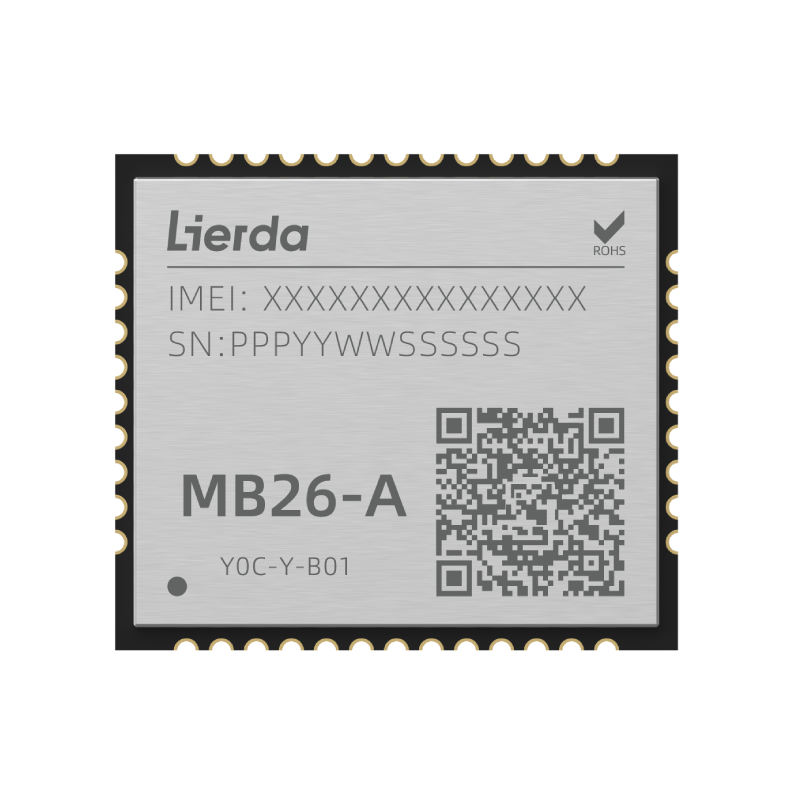
Comparison Table: Verified Module Facts for Early Selection
The table below is a selection aid, not a ranking. Values are taken from the provided corpus. A dash means the fact was not provided for that module in the available material.
| Module family | Verified wireless facts | Verified size or power facts | Corpus-listed design scenarios |
|---|---|---|---|
| WF29A Dual-band IoT Wi-Fi 6 Module | Dual-band Wi-Fi 6 at 2.4 GHz and 5 GHz; FR-4 PCB substrate and SMD components | Not listed in the provided material | Smart home, pet supplies, consumer electronics, medical care |
| WF39B Dual-band IoT Wi-Fi 6 Module | Dual-band Wi-Fi 6 at 2.4 GHz and 5 GHz; 512 KB RAM and 4 MB Flash | -40°C to 105°C | Smart home, pet supplies, consumer electronics, medical care |
| DB37 Standard Wi-Fi 6 Module | Wi-Fi b/g/n/ax, BLE 5.2, SLE1.0; 2.4 GHz; 150 Mbps; SDIO | Not listed in the provided material | Smart home, IPC, consumer electronics |
| UB64 Dual-Band Standard Wi-Fi 6 Module | Wi-Fi b/g/n/a/ac/ax, BTDM 5.4; 5/10/20/40 MHz bandwidth; 286.8 Mbps; USB 2.0 | Not listed in the provided material | OTT, IPTV, DVB, set-top box, IPC, smart TV |
| BT18N0 Bluetooth 6.0 Module | Bluetooth 6.0; NORDIC chip; 110 KB/s application layer rate; one master four slave | -40°C to +105°C | Smart home |
| NT26-FCN Cat.1 bis LTE Module | FDD B1, B3, B5, B8; TDD B34, B38, B39, B40, B41; GNSS/BDS; LGA | 17.7 × 15.8 × 2.4 mm; 2.3 V to 4.5 V, typical 3.8 V | Cloud speakers, trackers, POS, POC, data cards, smart security, two-wheelers, industrial-grade PDAs |
| NT26-FEU Cat.1 bis LTE Module | B1, B3, B5, B7, B8, B20, B28, B38, B40, B41; LGA | 17.7 × 15.8 × 2.4 mm; 3.3 V to 4.5 V, typical 3.8 V | Europe; IPC, POS, financial payment, smart metering, intelligent sharing, positioning and tracking |
| NT26-FNA Cat.1 bis LTE Module | B2, B4, B5, B12, B13, B25, B66, B71; LGA | 17.7 × 15.8 × 2.4 mm; 3.3 V to 4.5 V, typical 3.8 V | North America; IPC, POS, financial payment, smart metering, intelligent sharing, positioning and tracking |
| MB26-H NB-IoT Module | B03, B05, B08 | 2.1 V to 4.2 V; PSM 1.5 μA | Remote meter reading, intelligent smoke detectors, smart parking, smart street lamps, smart security, smart home, wearable devices |
| MB26-AGL NB-IoT Module | B03, B05, B08, B20, B28 | 2.2 V to 4.5 V; PSM 1.5 μA | Remote meter reading, intelligent smoke detectors, smart parking, intelligent emergency lights |
| NB81-A NB-IoT Module | NB-IoT | 2.1 V to 4.5 V; PSM 1.5 μA | Wearable devices, smart home, smart security, smart street lamps, smart parking, intelligent smoke detectors, remote meter reading |
| WB25 LoRaWAN Node Module | LoRaWAN Class A/C; global frequency bands per Alliance Standard; 22 dBm; -137 dBm at SF=12, BW=125 kHz; UART and IPEX | 22 × 18 × 3.0 mm; 1.8 V to 3.6 V; sleep current 2 μA | Smart street lights, smart agriculture, smart logistics, industrial control, instruments and meters |
| WB26 LoRaWAN Node Module | LoRaWAN Class A/C; global frequency bands per Alliance Standard; 22 dBm; -137 dBm at SF=12, BW=125 kHz; UART and IPEX | 22 × 18 × 3.0 mm; 1.8 V to 3.6 V; sleep current 2 μA | Smart street lights, smart agriculture, smart logistics, industrial control, instruments and meters |
| QB20 LoRa SiP Module | LoRa SiP; up to 22 dBm; -148±1 dBm at SF=12, BW=1-L=10.4 kHz | 8.0 × 8.0 × 1.1 mm; 1.8 V to 3.7 V; -40°C to 85°C; sleep current 0.6 μA | Wearable products, compact instruments and meters |
Source note: module values are from the provided Lierda product corpus. Market context includes Counterpoint Research data cited in the verified data package. No table value is a rating, review, or price claim.
FAQ: Smart Home IoT Module Selection Questions
Which certifications should a smart home IoT module have for Europe?
For Europe, design teams should verify the applicable EU Radio Equipment Directive requirements, including the cybersecurity requirements that became effective on August 1, 2025. The available fact set does not list specific certificate numbers for the modules in this guide, so buyers should request current declarations and certificate records for the exact model and target market. Protocol support, such as LoRaWAN or Wi-Fi 6, is not the same as regulatory or conformity approval.
Can Lierda support OEM or ODM work for consumer electronics IoT modules?
Lierda offers IoT Module OEM, ODM, and EMS services. The company reports more than 20 service centers across China for industry consultation, application support, and ODM/OEM services, and its manufacturing facility covers 18,000 square meters. Its R&D team includes 224 engineers and technical personnel out of approximately 976 staff. Buyers should still validate factory scope, acceptance criteria, and commercial terms for the specific project.
What should buyers budget for an IoT module project?
The available corpus does not publish unit prices, MOQ, tooling charges, sample costs, or lead-time figures for the modules in this guide. Buyers should request a written quotation and sample plan for the exact model, band set, interface, enclosure, and certification scope. Budget approval should be based on the quoted configuration rather than on a generic module category.
How should a team evaluate a sample before design freeze?
Test the sample in the target enclosure, antenna layout, power supply, and host interface. For Wi-Fi 6 designs, check dual-band behavior and coexistence; for Cat.1 bis designs, check band support, GNSS/BDS needs, and power supply range; for LoRa designs, check frequency plan and sensitivity claims against the datasheet. Request the sample through Lierda at international@lierda.com or +86-18067988146.
What lead time should buyers expect?
The available corpus does not state lead times for the modules in this guide. Buyers should request a written lead-time commitment with the quotation and allow time for sample validation, certification review, and pilot production. To start that process, contact Lierda at international@lierda.com, call +86-18067988146, or download the Lierda IoT module brochure.
Conclusion: A Scenario-Based Selection Checklist for Consumer Electronics Teams
The practical path from smart home design problem to IoT module selection is a sequence, not a single specification comparison. Start with the device scenario and power source. Decide whether the product uses a home router, a cellular network, or a gateway. Match the radio to the data profile. Check coexistence, interface, and mechanical fit. Verify certification for the exact model and destination market. Then validate a sample and request a written quotation.
For consumer electronics teams, Lierda provides a broad module map: dual-band Wi-Fi 6 modules WF29A and WF39B, standard Wi-Fi 6 modules DB37, UB37, and UB64, Bluetooth 6.0 module BT18N0, Cat.1 bis modules NT26-FCN, NT26-FEU, NT26-FNA, and NT26-KCN, NB-IoT modules MB26-H, MB26-AGL, and NB81-A, LoRaWAN modules WB25 and WB26, LoRa SiP module QB20, and related gateway and SOM options. Lierda serves markets including Europe, East Asia, Southeast Asia, and the Middle East, with export business accounting for 8.46% of total sales.
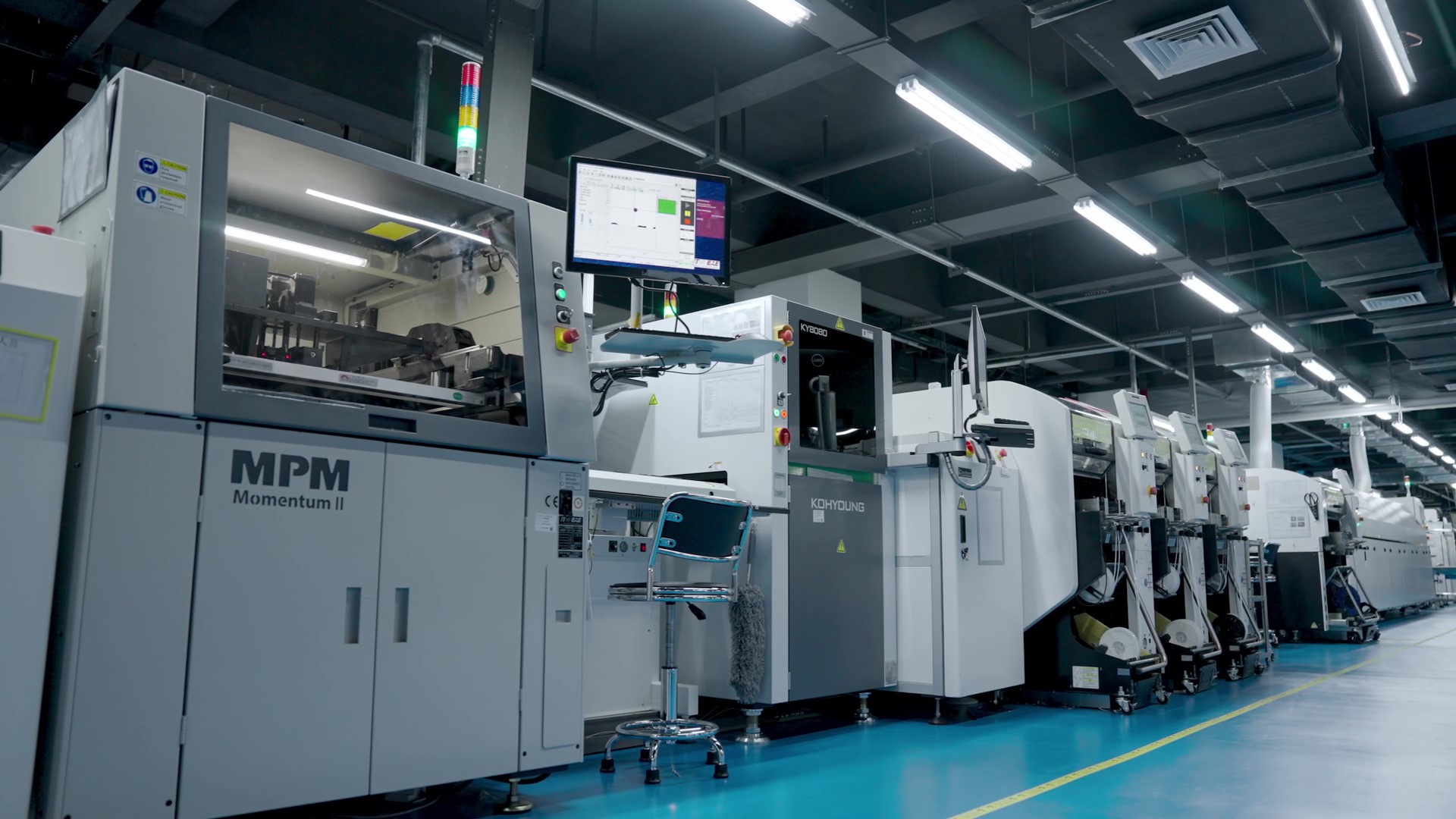
Contact: Lierda Science & Technology Group Co., Ltd., 16/F, No.1 Building of Lierda Science Park, No.1326 Wenyi West Road, Hangzhou. Email: international@lierda.com. Tel: +86-18067988146.
Have Questions or Need More Details?
Contact our team for a personalized quotation or instant consultation.
Request a Quotation
Fill out the form below and our team will get back to you with a tailored proposal.
WhatsApp Direct Chat
Prefer to chat in real-time? Message us on WhatsApp for instant assistance & quick answers.
- Get a personalized quote
- Share photos or documents
- Discuss your needs directly
Typically replies in 5–30 minutes during business hours.