
IoT Module Shortlist: Certifications & Specs That Matter
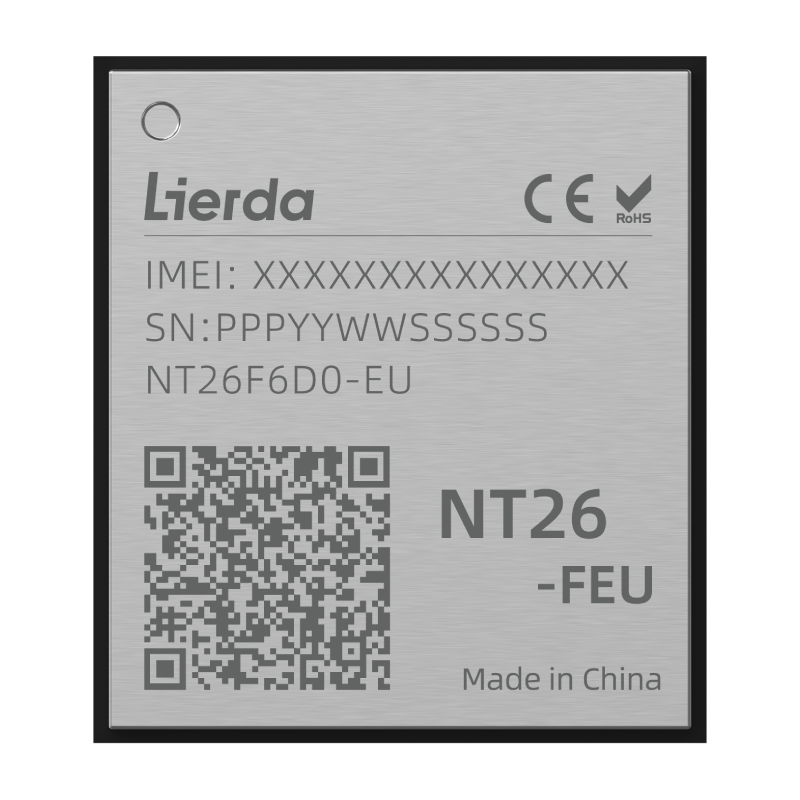
NT26-FEU Cat.1 bis LTE Module — one of Lierda's region-specific Cat.1 modules with EU compliance evidence.
IoT Module Shortlist: Certifications & Specs That Matter
Selecting an IoT module is a filtering exercise. For buyers in the research and evaluation stage, the goal is not simply to compare datasheets but to determine which modules can legally enter a target market, connect to local networks, survive the operating environment, and remain available over a multi-year product life. This guide turns those constraints into a step-by-step screening process and applies it to the Lierda module portfolio.
Lierda Science & Technology Group Co., Ltd. is an IoT service provider headquartered in Hangzhou, China, and listed on the Beijing Stock Exchange (stock code: 920249). The company develops and manufactures Cat.1, NB-IoT, LoRa, Wi-Fi 6, and Bluetooth modules, and supports IoT module OEM, ODM, and EMS services for industrial and consumer applications.
Why Certification and Parameter Screening Is a Separate Step
The cost of a wrong module decision shows up after the design is frozen. A modem that is not certified for the destination country can be stopped at customs or rejected by local carriers. A band mismatch can produce weak signal strength or complete registration failure. An overlooked power figure can cut a battery-powered product's life from three years to six months. An insufficient temperature rating can cause field failures in outdoor enclosures.
Datasheets describe what a module can do under ideal conditions. They do not tell you whether the module has been tested against the regulations that apply to your specific launch market. That is why certification and parameter verification belong at the center of supplier evaluation, not at the end of it.
Buyers evaluating IoT modules during the Research→Evaluation phase need a repeatable method to answer five questions:
- Is the module certified for my destination markets?
- Do the frequency bands match the carrier networks I plan to use?
- Are the power and voltage figures compatible with my battery or power supply design?
- Can the module withstand the temperature and environmental conditions of the deployment site?
- Can the supplier support a long-term supply model, including customization if needed?
Market Context: Why Constraints Are Tightening
The global cellular IoT module market is expanding again. According to Counterpoint Research, global cellular IoT module shipments rose 10% year-over-year in 2024, with demand recovery driven by China and India. The same report identified LTE Cat-1 bis as the fastest-growing technology, with shipments growing 100% year-over-year, as it replaces legacy 2G/3G and NB-IoT in applications such as metering, POS, and tracking.
China continued to dominate the supply side, with its share of global cellular IoT module shipments reaching 63% in 2024, up from 55% a year earlier, according to IoT Business News. On the enterprise side, the global LoRa and LoRaWAN IoT market was estimated at USD 8.0 billion in 2024 and is expected to reach USD 32.7 billion by 2029, according to MarketsandMarkets.
Regulatory attention is also increasing. In 2024, the U.S. FCC established a voluntary cybersecurity labeling program for consumer IoT products, based on NISTIR 8425 standards. This signals that compliance screening will continue to grow in scope for connected devices.
For industrial buyers, these trends point in three directions. First, Cat.1 bis is now a mainstream mid-speed cellular technology, so certification coverage for Cat.1 bis modules is a practical selection criterion. Second, because the module market is crowded, verifiable compliance evidence separates credible suppliers from resellers. Third, cybersecurity-related requirements are beginning to appear in radio certifications, as seen in EU type-examination certificates that include EN 18031-1.
Detailed Solution: A Constraint-Based Screening Framework
A workable IoT module screening framework has five categories: regulatory compliance, network and frequency compatibility, power and voltage, environmental durability, and supply model flexibility. Each category maps to a documented fact that can be checked before a purchasing decision.
1. Regulatory Compliance
Certifications are market-entry permissions. Before sending a module to production, verify the documentation for your destination markets: CE-RED for the EU, FCC for the United States, IC for Canada, TELEC/JATE for Japan, and RCM for Australia/New Zealand.
Examples from the Lierda portfolio show how this plays out across product families. The NT26-FEU Cat.1 bis LTE Module holds CE certification for the European market, covering IEC 62368-1:2018, EN IEC 62368-1:2020+A11:2020, EN 18031-1:2024, and the Radio Equipment Directive (RED) 2014/53/EU. The NT26-FJP Cat.1 bis LTE Module has obtained TELEC and JATE certification for Japan, covering the Technical Regulations Conformity Certification (ordinance of MPT N° 37, 1981, procedure RD_740) and MIC Ordinance No. 32. The UB37 Wi-Fi 6 module carries CE-RED for Europe, FCC Part 15C for the US and Canada, IC for Canada, and RCM for Australia/New Zealand. The DB37 Wi-Fi 6 module additionally covers TELEC for Japan.
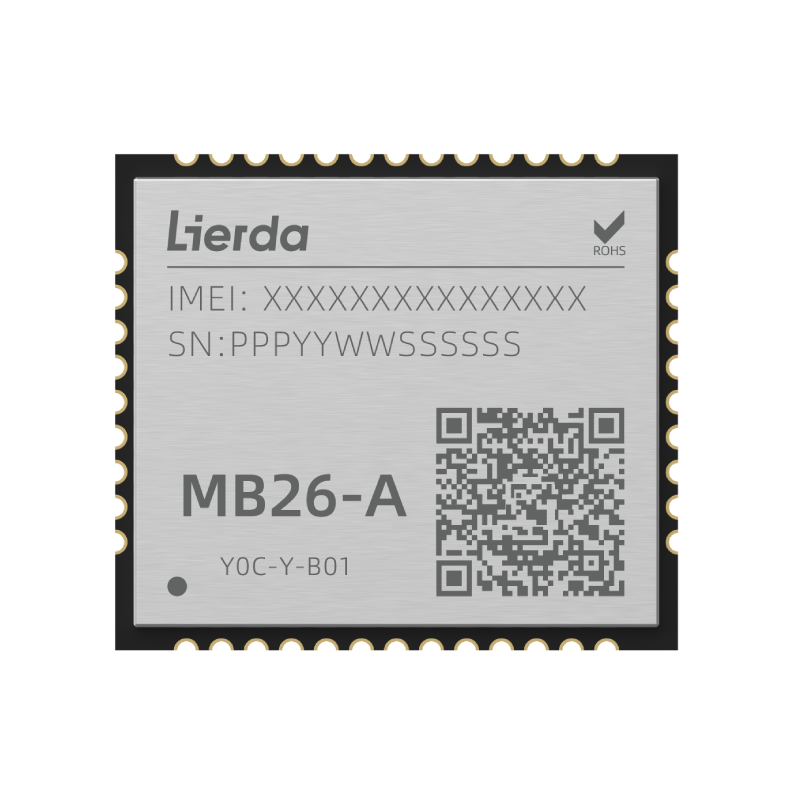
MB26-AGL NB-IoT Module — CE certified under the Radio Equipment Directive 2014/53/EU for the European market.
2. Network and Frequency Compatibility
Frequency bands determine whether the module can register on a local carrier network. A module designed for European bands may not work on Latin American or Japanese networks, regardless of how strong its RF design is.
Lierda adapts the same Cat.1 bis platform to multiple regions. The NT26-FEU covers B1/3/5/7/8/20/28/38/40/41 for Europe. The NT26-FJP covers B1/3/8/18/19/26/41 for Japan. The NT26-FLA covers B2/3/4/5/7/8/28/66 for Latin America. The NT26-FGL covers a global band set. For LPWAN applications, the MB26-AGL NB-IoT module supports B03/B05/B08/B20/B28.
Network technology choice is also part of the screening. Cat.1 bis suits voice, POS, and mid-speed data applications; NB-IoT suits low-power, low-throughput metering and sensor applications; Wi-Fi 6 modules suit indoor devices with stable AC power. Confirming the network technology before looking at bands avoids disqualifying a valid module on the wrong criterion.
3. Power and Voltage Constraints
Power consumption is a decisive constraint for battery-powered products. Check the shutdown current, sleep current, PSM current, and idle current against your battery budget.
The MB26-AGL NB-IoT module has a PSM current of 1.5 µA and operates at a working voltage of 2.2V to 4.5V. The NT26-FCN(KR) Cat.1 bis module, designed for South Korea, achieves a shutdown current of 0.74 µA, 0.14 mA at LTE-FDD PF=256, and 0.22 mA at LTE-FDD PF=128 (USB disconnected). For short-range connectivity, the SB26 Bluetooth module is built on a low-power domestic platform and operates at -40°C to +85°C.
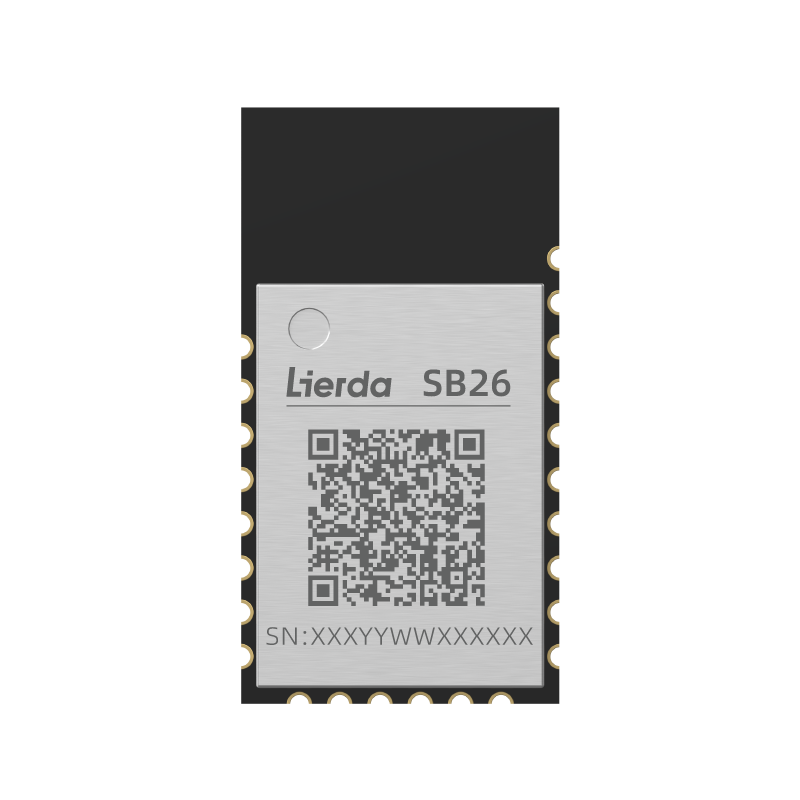
SB26 Bluetooth module — low-power design for meter and intelligent appliance applications.
4. Environmental Durability
Industrial deployments usually require wide-temperature operation, vibration resistance, and stable RF performance under demanding conditions. Verify the operating temperature range against the installation environment.
NT26 Series Cat.1 bis LTE modules operate at -30°C to +75°C, with an extended range of -40°C to +85°C. The WF39B dual-band IoT Wi-Fi 6 module operates at -40°C to +85°C and supports large storage (16MB Flash + 8MB PSRAM) for open development. The WB28 LoRaMesh module operates from -40°C to +85°C and targets smart photovoltaic, smart street light, and industrial control applications.
5. Supply Model Flexibility
Certifications and parameters are necessary conditions; long-term supply is the practical one. Buyers should confirm whether the manufacturer can support standard product direct sales, logo customization, OEM, or ODM, and whether the MOQ and lead time match the project schedule.
Lierda documents three production modes: Standard Product Direct Sales, OEM, and ODM. OEM and ODM cover module and PCBA customization. According to Lierda's documented capability data, monthly capacity is flexible based on order requirements, lead time is negotiated based on project complexity and order volume, and MOQ is flexible based on project requirements. Export markets are covered worldwide with compliance support, and after-sales service includes dedicated project support and remote technical assistance.
Step-by-Step Breakdown: From Shortlist to Evaluation
Step 1 — Define Target Markets and Collect Certification Evidence
List the countries where the final product will be sold. For each country, identify the required radio certification. For the EU, look for CE-RED certificates and confirm whether the certificate includes cybersecurity standards such as EN 18031-1. For Japan, check both TELEC and JATE. For the US, verify FCC. For Canada, check IC. For Australia and New Zealand, verify RCM.
Example: the NT26-FEU IoT Module holds CE certification covering EN 18031-1:2024 and RED 2014/53/EU; the NT26-FJP is TELEC and JATE certified.
Step 2 — Match Network Technology and Frequency Bands
Decide the connectivity technology first: Cat.1 bis, NB-IoT, Wi-Fi, Bluetooth, or LoRa. Then compare the module's supported bands with the carrier bands used in your launch market. Lierda's Cat.1 bis family is a practical example of one platform with multiple regional band variants: NT26-FEU for Europe, NT26-FJP for Japan, NT26-FLA for Latin America, and NT26-FGL for global deployments.
Step 3 — Audit Power and Voltage Figures
Create a power budget for your product. Compare the module's shutdown current, sleep current, PSM current, and idle current against the budget. Also confirm the module's operating voltage range is compatible with your power supply design.
Example: MB26-AGL offers PSM current of 1.5 µA and input voltage of 2.2V–4.5V; NT26-FCN(KR) offers shutdown current of 0.74 µA.
Step 4 — Confirm Temperature and Environmental Limits
Check the operating temperature range against the deployment environment. For outdoor, industrial, or in-vehicle products, select modules with extended temperature ratings. The NT26 Series supports -30°C to +75°C standard and -40°C to +85°C extended.
Step 5 — Assess OEM/ODM Supply Flexibility
If your project requires custom firmware, custom labeling, or a specific PCBA configuration, confirm the manufacturer supports OEM or ODM. Confirm whether MOQ and lead time are compatible with your production plan. Lierda offers flexible MOQ and negotiable lead time based on project complexity and order volume.
Step 6 — Validate Through Production References
Documented production history is stronger evidence than any datasheet promise. An energy OEM in Germany has deployed Lierda modules in water and gas meters, with cumulative shipments exceeding 19.6 million units across five-to-ten-year project cycles, and reported stable operation and continuous development. A telecom operator in Korea has used Lierda Cat.1 bis modules in communication network stations, with reported results of low power consumption and wide signal coverage.
Use Cases: How Compliance and Spec Screening Works in Practice
Smart Metering and Utilities — Germany
An energy OEM in Germany integrates Lierda IoT modules into water meters and gas meters. Cumulative shipments exceed 19.6 million units over five-to-ten-year cycles. The documented result is stable operation and continuous development, with stable quality and long-term customer trust.
Smart Payment Speaker and POS — Multiple Markets
Payment sound box projects in Germany, the UK, France, Vietnam, Korea, and Peru run on Lierda Cat.1 bis modules. These devices operate 24/7 and require clear sound and stable signal reception. The related module variants include NT26-FEU, NT26-FJP, NT26-FLA, NT26-FNA, NT26-FGL, and NT26-KCN, depending on the target country.
Smart Home Appliances — Korea
A home appliance OEM in Korea uses Lierda Wi-Fi modules in air purifiers and humidifiers at a volume of 500,000 units per year over a five-year cycle. Documented results include a 30% reduction in power consumption and a 99.5% Wi-Fi connection success rate, with PM2.5 data upload every five minutes and OTA updates via Wi-Fi.
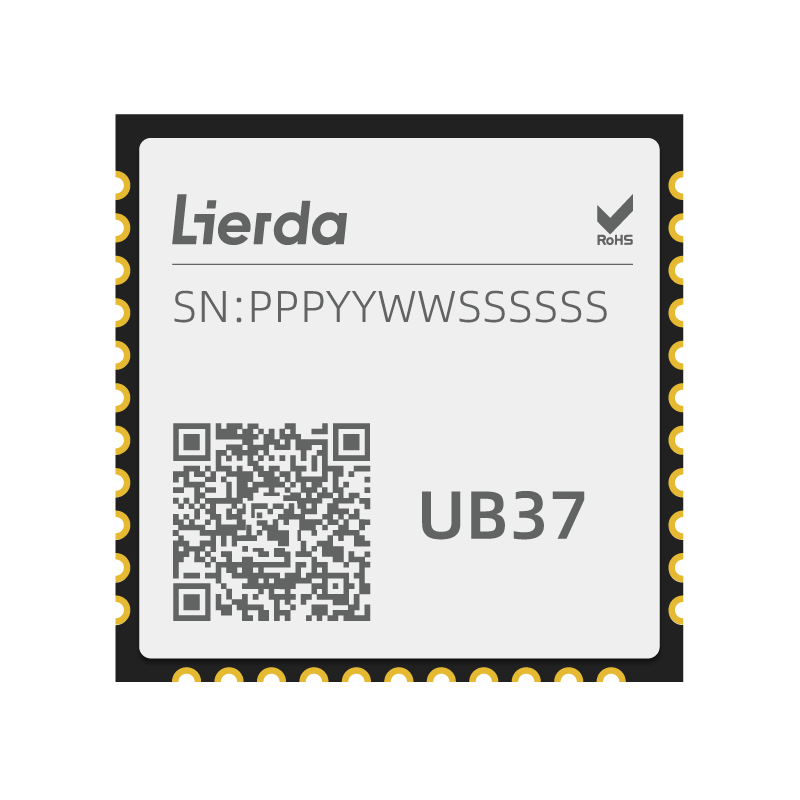
UB37 Standard Wi-Fi 6 Module — certified for multiple markets and suitable for smart home and IPC devices.
Maritime Tracking — Vietnam
Fishing boat tracking projects in Vietnam operate in salt-fog humidity and often require IP67-level protection. The documented scenario lists corrosion and water resistance as special requirements, with 24/7 operation mode. Related Lierda modules include the NT26-F series and MB26-AGL NB-IoT module.
Lierda Module Comparison: Certifications and Parameters at a Glance
| Model | Technology | Key Bands / Frequency | Target Market | Certifications | Typical Applications |
|---|---|---|---|---|---|
| NT26-FEU | LTE Cat.1 bis | B1/3/5/7/8/20/28/38/40/41 | Europe | CE, EU type-exam (EN 18031-1) | IPC, POS, metering, tracking |
| NT26-FJP | LTE Cat.1 bis | B1/3/8/18/19/26/41 | Japan | TELEC, JATE | IPC, POS, metering, sharing |
| NT26-FLA | LTE Cat.1 bis | B2/3/4/5/7/8/28/66 | Latin America | Regional certification per project | IPC, POS, metering, tracking |
| MB26-AGL | NB-IoT | B03/B05/B08/B20/B28 | Multi-region | CE (RED 2014/53/EU) | Remote meter reading, smoke detectors, parking |
| UB37 | Wi-Fi 6 (WiFi/SLE/BLE) | 2.4 GHz | US, EU, CA, AU/NZ | CE-RED, FCC, IC, RCM | Smart home, IPC, consumer electronics |
| DB37 | Wi-Fi 6 (WiFi/SLE/BLE) | 2.4 GHz | US, EU, CA, AU/NZ, JP | CE-RED, FCC, IC, RCM, TELEC | Smart home, IPC |
| EB55 | BLE 5.0 | 2.4 GHz | US, EU, CA, JP | FCC, IC, TELEC, CE-RED | Smart home |
| SB26 | BLE | 2.4 GHz | EU | CE | Meters, intelligent appliances |
Table based on Lierda's documented product specifications and certification records. Regional certification for NT26-FLA is confirmed per project because certification bodies vary by country.
Frequently Asked Questions
Which certifications should I verify before sourcing an IoT module for the EU or US market?
For the European Union, check CE-RED certification; newer IoT radio products may also reference EN 18031-1 under the Radio Equipment Directive 2014/53/EU. Lierda's NT26-FEU IoT Module holds CE certification covering IEC 62368-1:2018, EN IEC 62368-1:2020+A11:2020, EN 18031-1:2024, and RED 2014/53/EU. For the United States, verify FCC certification. In Lierda's portfolio, the UB37 Wi-Fi 6 module carries FCC Part 15C for the US and Canada, CE-RED for Europe, and RCM for Australia/New Zealand.
Does Lierda support OEM and ODM customization for IoT modules?
Yes. Lierda documents three production modes: Standard Product Direct Sales, OEM, and ODM. OEM and ODM cover module and PCBA customization, with flexible monthly capacity based on order requirements, negotiable lead time based on project complexity and order volume, and flexible MOQ based on project requirements. Custom QC standards and testing are supported according to customer specifications, and after-sales service includes dedicated project support and remote technical assistance.
What are the typical lead time and MOQ for a customized IoT module project?
Lierda does not publish fixed lead times or MOQs because both depend on project specifics. According to its documented capability data, monthly capacity is flexible based on order requirements, lead time is negotiated based on project complexity and order volume, and MOQ is flexible based on project requirements. For a confirmed figure, the recommended next step is to share your project details with the Lierda international team and receive a written response.
How can I request samples or a project quote for evaluation?
Samples and quotes are handled through Lierda's international channel. You can contact Jerry Yao at international@lierda.com, by phone or WhatsApp at +86-18067988146. Providing your target market, estimated volume, power supply design, and required certifications will help the team return a more accurate lead time and MOQ. A company brochure with an overview of Lierda's IoT modules and services is available for download: Download Lierda Company Brochure.
Conclusion: Screen First, Then Commit
IoT module selection improves when it is treated as a constraint-matching problem. Start with market-entry certifications, then verify frequency bands, power figures, temperature limits, and supply flexibility. Every criterion in this article corresponds to documented evidence: Lierda publishes certification status, regional band variants, power consumption values, and OEM/ODM capability data that can be checked before commitment.
Between the research and evaluation stages, the goal is to reduce the candidate list to modules that are legally deployable, technically compatible, and supply-safe. Lierda's product portfolio covers Cat.1 bis, NB-IoT, Wi-Fi 6, LoRa, Bluetooth, and OEM/ODM services, which makes it a practical reference point for that screening process.
If your next IoT project involves multi-country deployment, power-sensitive device design, or long-term supply planning, the next step is to evaluate Lierda's modules against your specific constraints.
Evaluate Lierda IoT Modules for Your Next Project
Contact: Jerry Yao · international@lierda.com · WhatsApp +86-18067988146