
Ranked: 6 IoT Modules for Wearables, Smart Home and Trackers
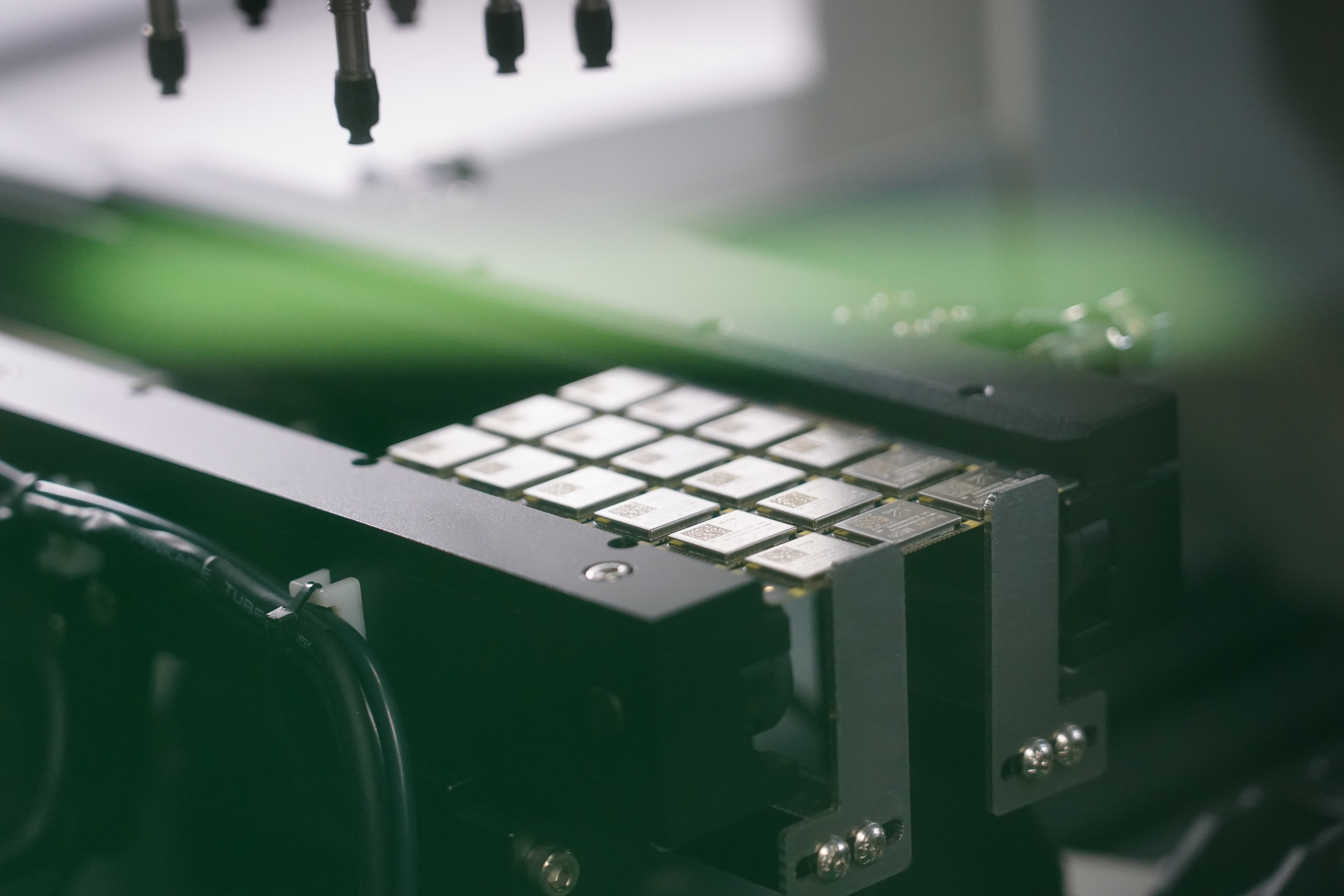
For consumer electronics teams building wearables, smart-home devices and portable trackers, the six Lierda modules in this ranking divide along one practical line: what the device has to send, and which network the end user already owns.
Bluetooth 6.0 (BT18N0) ranks first for wearables because the phone is already the gateway. Wi-Fi 6 (WF29A and WF39B) ranks first for smart home because the router is already in the room. Cat.1 bis (NT26-F series) ranks first for portable trackers because nothing else has to be installed on site. LoRaWAN (WB25), 5G RedCap (NR90-HEA) and the ultra-compact SiP (QB20) take ranked positions where the real constraint is a private network, throughput headroom, or board area.
Each position is a fit judgment for a named device class, not a quality order across radio technologies. The evidence behind every rank is Lierda's published module and certification records plus documented consumer-electronics deployments. Where a value such as per-model dimensions, operating voltage or transmit power is not published in those records, it is treated below as a verification item rather than estimated.
Why module choice is a constraint problem, not a spec-sheet comparison
In consumer electronics, the module is usually the last component frozen and the first one blamed when a product fails certification or a field unit drains its battery. Three failure modes repeat across wearables, smart-home products and trackers.
The first is choosing a link the customer does not already own. A Wi-Fi 6 smart plug inherits the household router; a LoRaWAN sensor inherits nothing until someone installs and maintains a gateway. The second is certifying late. Radio approval, EMC and electrical safety are per-market files, and the exact model suffix on the certificate has to match the part number on the purchase order. The third is fitting the radio to the enclosure after the industrial design is signed off, when antenna clearance and ground-plane area are already fixed.
Footprint, power and connectivity fit are the three dimensions buyers ask about first. Connectivity fit is decided by the product concept. Footprint and power are decided by the datasheet, the antenna design and the firmware duty cycle, which is why this ranking names the value to confirm instead of quoting a number that may belong to a different model or configuration.
Industry background: what shifted in the cellular module market
Two data points frame the cellular side of this shortlist. Counterpoint Research reported that global cellular IoT module shipments grew 10% year over year in 2024, recovering from the 2023 downturn, and that LTE Cat.1 bis was the fastest-growing technology that year at 100% year-over-year shipment growth. The same source placed Lierda fifth globally in cellular IoT module shipments for 2024 with a 5% share.
For a consumer electronics team, that mix matters in one specific way: the mid-rate cellular tier is where volume is moving. Devices that once used 2G or 3G, or paid for higher LTE categories they never saturated, now have a Cat.1 bis option sized for telemetry, audio and control traffic. Read the growth figure as a market signal about technology availability and supplier attention, not as a performance claim for any single module.
Regulation moved as well. The EU Radio Equipment Directive's cybersecurity requirements became mandatory on 1 August 2025. A European file is therefore no longer only a radio and EMC file. Lierda's NT26-FEU Cat.1 bis module holds an EU type-examination certificate to EN 18031-1:2024 under the RED, issued 19 March 2026 and valid to 19 March 2031, which places that specific model inside the newer European requirement set. Confirm the same for whichever module you shortlist.
How the six were ranked
Four criteria were applied to each device class, in this order: whether the radio matches the network the product can realistically use; whether a consumer-electronics deployment is documented for that module family; which certification records exist for the model or family in Lierda's published evidence; and how much integration risk remains in dimensions, voltage, transmit power and antenna design.
Ranks therefore answer "which module should this device class look at first", not "which module is technically superior". A module ranked sixth for wearables can be ranked first for trackers; the table later in this article shows all three positions side by side.
Ranked shortlist 1 — Wearables: BT18N0 first, QB20 second
- Rank 1 — BT18N0 Bluetooth 6.0 Module. A wearable normally pairs with a phone, and Bluetooth LE is the link that pairing already uses, so the product ships without a hub, a router configuration step or a data plan. BT18N0 also carries the clearest documentation in this set: an FCC certification under 47 CFR Part 15 Subpart B, issued 13 January 2026 and valid to 13 January 2031, and a CE-RED certification for Europe issued 10 December 2025 and valid to 10 December 2030, both listing the BT18N module family including model L-BT18N0A0_0950S. On the deployment side, a Korean beauty-device OEM shipped 200,000 units over three years using BT18N5, BT18N0, SB26 and EB55 and reported stable wireless connectivity with a 30% reduction in power consumption — a project-level result for the four-module design, not a per-module measurement. Verify the antenna keep-out area on a wrist-sized ground plane and confirm the certificate lists your exact model suffix.
- Rank 2 — QB20 ultra-compact SiP. When the radio, matching network and support circuitry have to share a very small board, a system-in-package reduces the number of separately placed RF blocks and the tuning work that goes with them. QB20 is ranked second rather than first because that integration benefit stays a design assumption until package dimensions, pinout and antenna arrangement are confirmed; no dimension or power figure for QB20 is reproduced in this assessment.
- Rank 3 — WF29A / WF39B Wi-Fi 6 modules. Relevant only when the wearable streams to a local network, for example a bedside display, a home hub or a camera band. Wi-Fi 6 gives the throughput, but a dual-band Wi-Fi link is a heavier battery load than a Bluetooth LE link at wearable duty cycles, and the documented WF29A/WF39B deployments are in audio and appliances rather than body-worn devices.
- Rank 4 — NT26-F series Cat.1 bis modules. This is the wearable cellular option for kids' watches, senior-care pendants and pet trackers where no phone is present. The family is documented for network-station and metering-class deployments and holds CE and Japanese TELEC/JATE records, but wearable power duty cycle has to be validated by your own team against your own traffic profile.
- Rank 5 — NR90-HEA 5G RedCap module. RedCap is the 3GPP-defined reduced-capability tier of 5G, designed to lower device complexity, power and cost relative to enhanced mobile broadband. It becomes relevant when a wearable carries video or high-rate telemetry; for a battery-powered wrist device it remains a heavier path than Bluetooth LE or Cat.1 bis. No model-specific certificate, dimension or band data for NR90-HEA is reproduced here.
- Rank 6 — WB25 LoRaWAN module. Not a wearable link. A LoRaWAN end device is built for sparse uplinks through a gateway, and a wrist device has no gateway behind it. Include WB25 only for venue or campus wearables where an operator-managed LoRaWAN network already exists.
Ranked shortlist 2 — Smart home: WF29A/WF39B lead on installed Wi-Fi
- Rank 1 — WF29A / WF39B dual-band IoT Wi-Fi 6 modules. The household router is the only gateway a consumer smart-home product can assume, and dual-band Wi-Fi 6 gives 5 GHz headroom for audio and video without abandoning 2.4 GHz range. Two documented projects support the position. A Korean consumer-electronics OEM in audio shipped 200,000 units per year for seven years with WF29A and WF39B, reporting 24-bit/96kHz audio, under 50 ms latency for lip sync, Dolby Atmos and DTS:X support, AirPlay 2 and Chromecast built-in, multi-room synchronisation and 99.9% Wi-Fi streaming stability. A Korean home-appliance OEM shipped 500,000 units per year for five years in air purifiers and humidifiers on WF29A, WF39B, DB37, UB37 and UB64, reporting a 30% reduction in power consumption, 99.5% Wi-Fi connection success, Tuya and Smart Life app support, OTA firmware update and PM2.5 uploads every five minutes. Verify certificate scope first: the Wi-Fi 6 certification records reproduced in this set cover the UB37 and DB37 families — FCC, CE-RED, Canada IC, Japan TELEC and RCM — so confirm the current WF29A and WF39B records for your target markets.
- Rank 2 — BT18N0 Bluetooth 6.0 Module. In smart home, Bluetooth LE is a complement rather than a substitute. It handles commissioning, companion-app configuration and battery sensor nodes such as door and window contacts, and it keeps the radio budget small where a Wi-Fi link would be idle most of the day.
- Rank 3 — WB25 LoRaWAN module. The right choice for property-scale and sub-GHz sensing: leak detection, water and gas sub-nodes, outdoor or garden sensors beyond reliable Wi-Fi reach. The WB25-8D is described as a LoRaWAN end-node module with a UART interface, an operating band of 860–930 MHz and support for EU868, IN865, RU864, AU915, US915, KR920 and AS923-1/-2/-3/-4, and STMicroelectronics' partner description cites LoRaWAN specification 1.0.4 and regional parameters 1.1. Treat that as protocol and regional-plan support, not as market certification, and note that a gateway has to be owned and maintained by someone.
- Rank 4 — NT26-F series Cat.1 bis modules. Fits appliances sold without a home network, rental and multi-dwelling installations, and products where a data plan replaces a router. Cat.1 bis is the fastest-growing cellular tier in the 2024 shipment data, which makes it the sensible mid-rate default for a connected appliance rather than a bespoke LTE category.
- Rank 5 — NR90-HEA 5G RedCap module. For hubs, video doorbells and cameras where uplink video exceeds what Cat.1 bis is designed to carry. Bands, thermal headroom in a sealed enclosure and power draw must be confirmed against the current datasheet before the industrial design locks.
- Rank 6 — QB20 ultra-compact SiP. Relevant for in-wall modules and compact sensor nodes where board area dominates the decision. Confirm package dimensions, pinout and antenna integration before comparing it with a conventional module.
Ranked shortlist 3 — Portable trackers: NT26-F series leads wide-area designs
- Rank 1 — NT26-F series Cat.1 bis modules. A tracker is defined by coverage without a phone and without a hub, which is exactly the Cat.1 bis use case. Documented evidence: a Korean telecom operator deployed the Cat.1 bis family at 2 million units per year over five years for communication network stations and reported the number-one position in the Korean Cat.1 bis market, citing low power consumption and wide signal coverage — a company-reported case result rather than an independent market measurement. Certification coverage is the deepest of any cellular model here: CE for NT26-FEU issued 8 May 2025 and valid to 8 May 2030, the EU type-examination to EN 18031-1:2024 valid to 19 March 2031, and TELEC plus JATE records for NT26-FJP in Japan valid to 29 September 2030.
- Rank 2 — BT18N0 Bluetooth 6.0 Module. The right link for phone-tethered trackers, item finders and accessory tags where the phone supplies the backhaul. The module carries FCC and CE-RED records, and the radio work is the lightest in this ranking. A Bluetooth-only tracker depends on nearby phones for backhaul, which is a network-design decision rather than a module specification.
- Rank 3 — WB25 LoRaWAN module. Well suited to trackers that stay inside a defined site — a depot, a port, a farm, a campus — where the operator owns the gateways. Not a substitute for nationwide consumer tracking unless a LoRaWAN network operator serves the area.
- Rank 4 — NR90-HEA 5G RedCap module. For trackers carrying imaging or high-rate sensor payloads, where Cat.1 bis throughput would be the binding limit. Confirm the band plan for each destination market and the thermal budget inside a sealed tag.
- Rank 5 — QB20 ultra-compact SiP. A candidate where the PCB is essentially the product and every square millimetre counts. Validate package, pinout and antenna performance on your own board before ranking it higher.
- Rank 6 — WF29A / WF39B Wi-Fi 6 modules. Included only for venue tracking and data offload, where a tag can associate with known access points. A mobile tracker leaves the access point, so Wi-Fi does not provide the wide-area link a consumer tracker needs.
Comparison table: six modules, five decision points
The table below consolidates the three rankings and shows, for each module, which records exist in this evidence set and what still has to be confirmed before a design freeze. Ranks are per device class: W = wearables, SH = smart home, T = portable trackers.
| Module (technology) | Rank W / SH / T | Certification records in this evidence set | Documented consumer deployment | Confirm before design freeze |
|---|---|---|---|---|
| BT18N0 Bluetooth 6.0 Module | 1 / 2 / 2 | FCC Part 15 Subpart B, valid to 13 Jan 2031; CE-RED, valid to 10 Dec 2030 (family includes L-BT18N0A0_0950S) | Korean beauty-device OEM, 200k units over 3 years, with BT18N5, SB26 and EB55 | Antenna keep-out in the enclosure; exact model suffix on the certificate |
| WF29A / WF39B dual-band Wi-Fi 6 modules | 3 / 1 / 6 | No WF29A/WF39B record reproduced here; Wi-Fi 6 records in this set cover UB37 and DB37 (FCC, CE-RED, IC, TELEC, RCM) | Korean audio OEM, 200k units/year for 7 years; Korean appliance OEM, 500k units/year for 5 years | Current certificate scope for these exact models; 2.4/5 GHz band plan; thermal budget |
| NT26-F series Cat.1 bis modules | 4 / 4 / 1 | NT26-FEU CE to 8 May 2030 and EU type-examination to EN 18031-1:2024 to 19 Mar 2031; NT26-FJP TELEC and JATE to 29 Sep 2030 | Korean telecom operator, 2 million units/year for 5 years (company-reported case) | Operator band support; antenna efficiency; battery duty cycle |
| WB25 LoRaWAN module | 6 / 3 / 3 | LoRaWAN protocol and regional-plan support (EU868, US915, AS923 and others); no market certificate reproduced | Not reproduced for this model | Who owns the gateway; regional plan; country certification |
| NR90-HEA 5G RedCap module | 5 / 5 / 4 | No model-specific record reproduced in this assessment | Not reproduced for this model | Bands, power draw, thermal headroom |
| QB20 ultra-compact SiP | 2 / 6 / 5 | No model-specific record reproduced in this assessment | Not reproduced for this model | Package dimensions, pinout, antenna integration |
Rank positions reflect fit for the named device class plus documented certification and deployment evidence, not a general quality order. Where a record is not reproduced, treat it as unverified rather than absent.
Step-by-step: running this ranking against your own product
The ranking shortens the list; it does not replace your own gate review. Six steps turn it into a design decision.
- Fix the backhaul owner. Phone, household router, mobile network operator or private gateway. This single question already removes three or four candidates and prevents the most expensive mistake: designing a product around a network the customer has to build.
- Size payload and duty cycle. Sparse uplinks point to LoRaWAN, command-and-control traffic to Bluetooth LE, streaming to Wi-Fi 6, wide-area telemetry to Cat.1 bis and video-class uplink to 5G RedCap.
- Lock the market list before the module. For each destination, list the required radio approval, EMC and safety files, and add the EU cybersecurity requirement for anything shipping into Europe since 1 August 2025. Then check that the certificate names the exact model, not just the family.
- Fit the radio to the enclosure. Obtain dimensions, operating voltage range and transmit power from the current datasheet for the specific model, then check antenna clearance and ground-plane area against the real mechanical design. Choose a SiP route such as QB20 only after those numbers are on the table.
- Test samples in the final enclosure. Measure current draw on your own firmware profile, verify connection success under weak-signal conditions, and exercise the OTA path — Lierda's Korean beauty-device project listed OTA update support among its highlights, which is the kind of feature that fails late if it is untested.
- Confirm commercial terms in writing. Lierda's published capability data states flexible MOQ based on project requirements, negotiable lead time based on project complexity and order volume, custom QC standards and testing to customer specification, and dedicated project support with remote technical assistance. Get those points into the quotation rather than assuming defaults.
Where these modules are already deployed
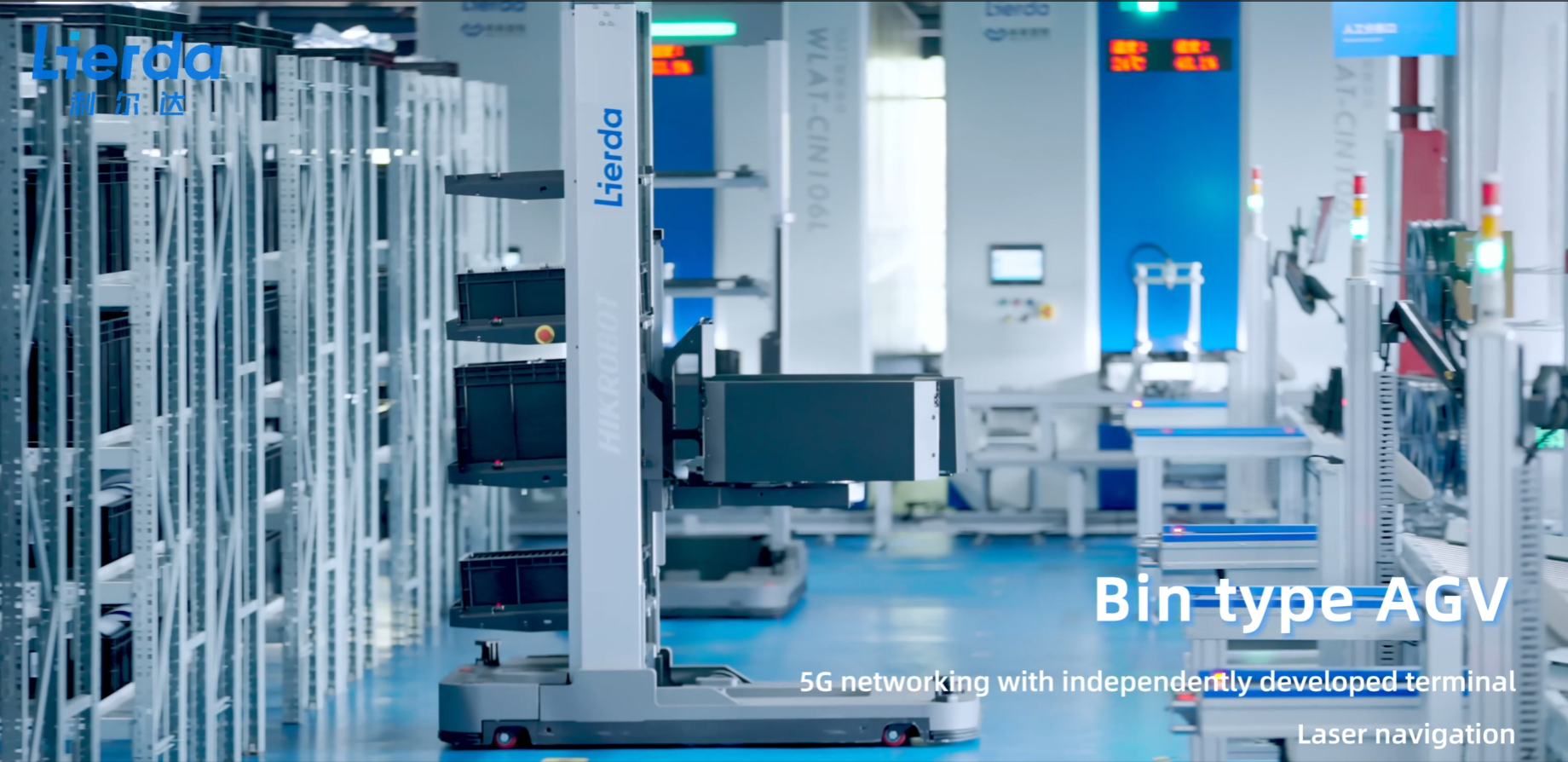
Documented deployments are the strongest evidence a buyer can check, provided the scope is read correctly. Lierda's own case records describe five consumer-relevant programmes.
In audio, a global consumer-electronics OEM in Korea has run WF29A and WF39B for seven years at 200,000 units per year, with the reported outcomes covering audio quality, latency, multi-room synchronisation and Wi-Fi streaming stability. In home appliances, a Korean OEM has run WF29A, WF39B, DB37, UB37 and UB64 for five years at 500,000 units per year in air purifiers and humidifiers, with reported reductions in power consumption and a stated Wi-Fi connection success rate. In beauty devices, a Korean OEM shipped 200,000 units over three years using BT18N5, BT18N0, SB26 and EB55. In network infrastructure, a Korean telecom operator has used the Cat.1 bis family at 2 million units per year for five years. In smart home and hotel equipment, an ODM has converted traditional lighting, switches and curtains into networked devices at more than one million units over a five-to-ten-year horizon.
Two limits apply. These are company-reported case results, not independently audited benchmarks, and a result achieved in one product category should not be read as a guarantee in another. What the cases do establish is that these module families have been produced and shipped at consumer scale, which is the question a shortlist has to answer.
Supply, customization and what this ranking does not tell you
Lierda (en.lierda.com) is an IoT module and solution provider founded in 2001 and headquartered in Hangzhou, listed on the Beijing Stock Exchange since 17 February 2023 under stock code 920249. The company reports an 18,000 m² factory, 976 employees, 224 R&D staff and more than 20 service centres, with export markets including Europe, East Asia, Southeast Asia and the Middle East. As of 31 May 2025 it reports 66 invention patents, 176 utility model patents, 55 design patents and 530 software copyrights.
On customization, the company provides OEM and ODM routes for both modules and PCBA, plus standard product direct sales. That matters for a ranking like this one: if none of the six fits, the alternative is not necessarily a different supplier but a modified module or board.
Three things this ranking does not establish. It does not compare measured footprint or power across the six, because per-model figures for several of them are not published in the records used here. It does not rank suppliers or market position — the Counterpoint shipment share cited earlier is market context, not a product recommendation. And it does not replace certification review: a module family with a European file is not automatically cleared for every market, and a protocol claim such as LoRaWAN regional-plan support is not a conformity certificate.
FAQ
Which modules in this ranking already hold certification records for Europe, North America and Japan?
Within this evidence set, BT18N0 holds FCC Part 15 Subpart B certification valid to 13 January 2031 and CE-RED certification for Europe valid to 10 December 2030, both covering the BT18N family including model L-BT18N0A0_0950S. The Wi-Fi 6 certification records reproduced here cover the UB37 and DB37 families — FCC, CE-RED, Canada IC, Japan TELEC and RCM — so WF29A and WF39B scope has to be confirmed separately. NT26-FEU holds CE to 8 May 2030 and an EU type-examination certificate to EN 18031-1:2024 under the Radio Equipment Directive valid to 19 March 2031; NT26-FJP holds TELEC and JATE records for Japan valid to 29 September 2030. WB25-8D has documented LoRaWAN protocol and regional-plan support, which is not the same as a market certificate. No model-specific record for NR90-HEA or QB20 is reproduced here.
Can one module cover both short-range and wide-area connectivity for a tracker?
Not within this set. Bluetooth LE depends on nearby phones for backhaul, while Cat.1 bis connects directly to a mobile network and needs no phone and no hub. A dual-radio tracker is therefore normally built around BT18N0 plus an NT26-F series module. Where two radios have to share a very small board, QB20 is the space-driven option, subject to confirming package dimensions and pinout first.
Does a higher-ranked module cost more?
No price or cost data is used in this ranking, and rank does not imply price. Three cost drivers are visible in the records instead. Certification scope per market matters, because a model with existing European and North American files reduces repeat testing. Integration route matters, because a module, a SiP and a PCBA carry different assembly and test costs. Volume and MOQ matter, and Lierda states flexible MOQ based on project requirements. A quotation against your own bill of materials is the only reliable cost answer.
How should we validate the top-ranked module before design freeze?
Five checks: match the exact model suffix on the certificate to the part number you are buying; obtain dimensions, operating voltage range and transmit power from the current datasheet; verify antenna clearance and ground-plane area in the real enclosure; measure current draw on your own firmware duty cycle; and test the OTA update path, which Lierda's Korean beauty-device case listed among its project highlights. Order samples of the specific model rather than a family equivalent.
What MOQ and lead time should we plan for?
Lierda's published capability data states MOQ flexible based on project requirements and lead time negotiable based on project complexity and order volume, with custom QC standards and testing to customer specification and dedicated project support plus remote technical assistance. The practical sequence is to settle certification scope and samples first, then fix volume and delivery dates once the chosen model is validated in your enclosure.
Next step. Samples, quotations and the company brochure can be requested directly from Lierda; the brochure is available for download at Lierda company brochure (PDF). Share the destination markets, enclosure constraints and expected annual volume so the shortlist can be narrowed before sampling.
Conclusion
The ranking resolves into three decisions rather than six. Wearables start with BT18N0 and move to QB20 only when board area is the binding constraint. Smart-home products start with WF29A or WF39B because the router already exists, and add BT18N0 for commissioning and battery sensors. Portable trackers start with the NT26-F series because coverage without a phone or hub is the entire product requirement.
WB25, NR90-HEA and QB20 earn their places on specific constraints — a private gateway, video-class uplink, or an ultra-compact board — and each of those three still needs model-level dimensions, voltage and certificate confirmation before procurement. That is the useful outcome of a ranking at evaluation stage: a defensible order to test, and a short, explicit list of what to verify next.
Have Questions or Need More Details?
Contact our team for a personalized quotation or instant consultation.
Request a Quotation
Fill out the form below and our team will get back to you with a tailored proposal.
WhatsApp Direct Chat
Prefer to chat in real-time? Message us on WhatsApp for instant assistance & quick answers.
- Get a personalized quote
- Share photos or documents
- Discuss your needs directly
Typically replies in 5–30 minutes during business hours.