
Scenario-Based IoT Module Selection: Matching Connectivity, Power, and Compliance to Real Project Conditions
Scenario-Based IoT Module Selection: Matching Connectivity, Power, and Compliance to Real Project Conditions
Choosing the right IoT module is rarely a matter of picking the best-selling chipset. In project procurement, the deciding factors are the operating environment, the power budget, the required bandwidth, and the regulatory region where the device will be deployed. This guide explains how to map an IoT module to a specific project scenario, using documented application cases and verifiable product specifications as the reference baseline.
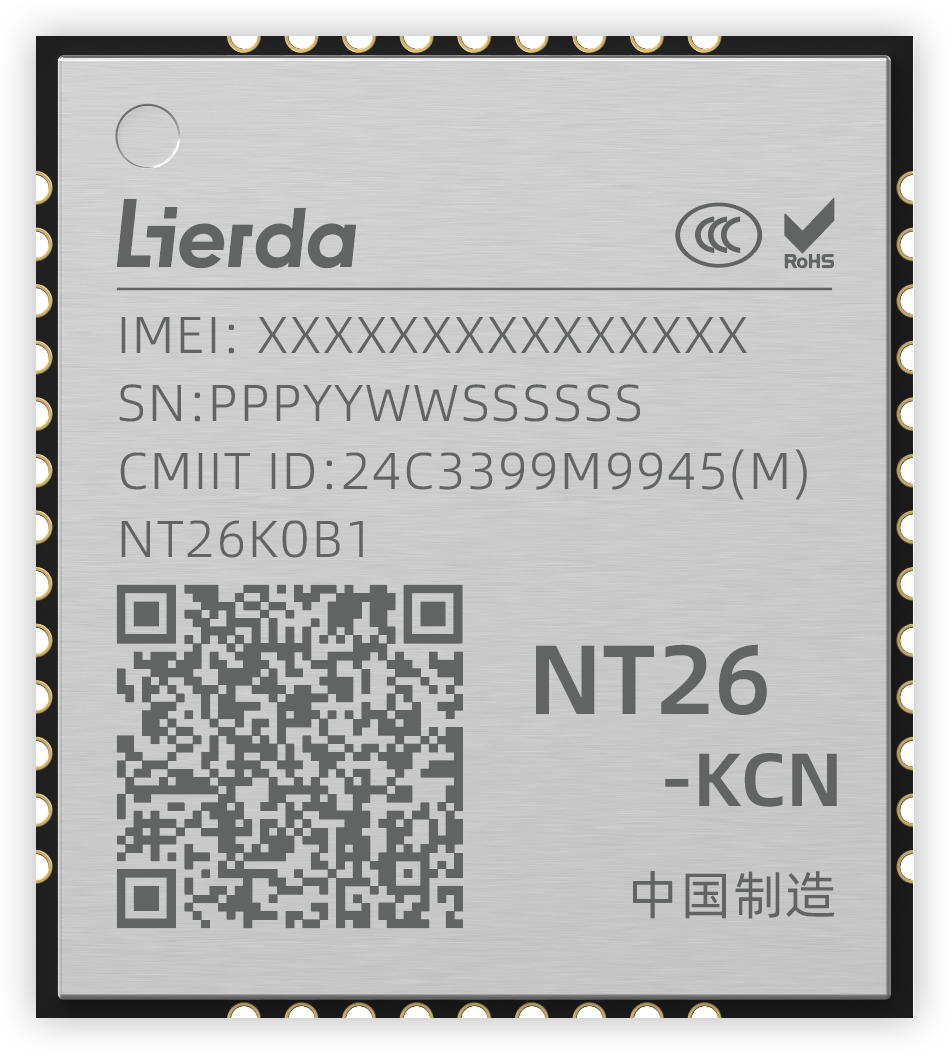
Cat.1 bis modules are often selected when a project requires medium data rates, voice-capable LTE, and broad network coverage.
Why Project Scenarios, Not Just Specifications, Should Drive Module Selection
A module that performs well in a lab may fail in the field if its temperature range, power profile, or certification scope does not match the deployment environment. Scenario-based selection means starting with the physical and commercial conditions of the final product, then narrowing the module options against those constraints.
For example, a car black box in South Korea operates in-vehicle, across a wide temperature range of -40°C to +85°C, under continuous vibration. A smart payment speaker in Germany operates indoors, 24/7, with requirements for clear sound and stable signal reception. These two projects need different module types even if they both use cellular connectivity.
What the 2026 IoT Module Market Looks Like for Project Buyers
Global cellular IoT module shipments grew 10% year-over-year in 2024, supported by demand recovery in China and India (Counterpoint Research). LTE Cat.1 bis was the fastest-growing technology in 2024, with shipments increasing 100% year-over-year as it replaced legacy 2G/3G and a portion of NB-IoT applications. For project buyers, this signals that Cat.1 bis modules are increasingly available with mature supply chains and regional variants.
In parallel, China's share of the global cellular IoT module market expanded to 63% in 2024, up from 55% in 2023. For procurement teams, this means that a large portion of module supply originates from Chinese manufacturers, making supplier verification—including factory audits, certification evidence, and long-term availability—a critical part of the selection process.
Lierda Science & Technology Group Co., Ltd., founded in 2001 and headquartered in Hangzhou, is an IoT service provider listed on the Beijing Stock Exchange (stock code: 920249). The company develops and manufactures IoT modules and system solutions, with a product portfolio covering Cat.1, NB-IoT, Wi-Fi 6, Bluetooth, LoRa, LoRaWAN, and 5G RedCap. Lierda reports 66 invention patents, 176 utility model patents, 55 design patents, and 530 software copyrights as of May 31, 2025, and has participated in national and industry standard drafting.
Matching Module Type to Project Industry: A Scenario Breakdown
Different industries share common connectivity patterns. The table below summarizes how project type, operating mode, and special requirements map to representative module families.
| Project Scenario | Typical Operating Mode | Representative Module Family | Key Selection Drivers |
|---|---|---|---|
| Car black box (KR) | Always-on, event-triggered recording | Cat.1 bis LTE, Wi-Fi 6 modules | -40°C to +85°C, anti-vibration, automotive-grade reliability |
| Smart payment speaker / POS (EU, VN, KR, PH, etc.) | 24/7 | Cat.1 bis LTE | Stable signal reception, clear audio, regional band support |
| Smart meter / remote meter reading (EU, CN) | Low-power periodic wake-up | NB-IoT, LoRa, Sigfox | Deep coverage, PSM current, long battery life |
| Smart agriculture / water level monitoring (VN) | 24/7, field exposure | Cat.1 bis, NB-IoT, LoRa/LoRaWAN | Dustproof/waterproof, humidity resistance, long-range links |
| AI camera / smart surveillance | Always-on or event-triggered | Wi-Fi 6 dual-band modules (UB64, UB37, DB37) | High throughput, low latency, secure TLS transmission, IP65/IP67 |
| Asset tracking / logistics (APAC, EU) | Periodic wake-up (1–60 min) or event-triggered | Cat.1 bis, NB-IoT, Bluetooth | Ultra-low power (5+ years battery), GNSS, IP67, tamper detection |
| Smart home / audio / beauty devices (KR) | Low-power wake-up, voice trigger | Wi-Fi 6, Bluetooth 5.0/6.0 | OTA, low latency, multi-protocol support, compact size |
Step-by-Step Approach to Scenario-Based Module Matching
Step 1: Define the Physical Operating Environment
Start with temperature range, enclosure rating, and exposure to vibration, humidity, or salt fog. For in-vehicle projects, the module should support an extended temperature range such as -40°C to +85°C and tolerate vibration. For outdoor agriculture or marine tracking, IP67-rated enclosures and corrosion-resistant designs become necessary. For indoor consumer devices, normal temperature and humidity conditions (10°C to 40°C / 0°C to 40°C) are usually sufficient, and the priority shifts to wireless stability and OTA reliability.
Step 2: Determine the Power Mode and Battery Budget
Always-on devices, such as payment speakers and AI cameras, can tolerate higher average current because they are mains-powered or vehicle-powered. Battery-powered trackers and sensors require low-power states with PSM or periodic wake-up. In asset tracking, ultra-low power consumption can achieve 5+ years of battery life using a Li-SOCl2 battery. In smart meters, NB-IoT modules with PSM current around 1.5 µA are a common fit.
Step 3: Match the Connectivity Technology to Data and Coverage Needs
Cellular options like Cat.1 bis suit projects that need medium data rates, voice capability, and broad LTE coverage. NB-IoT suits low-throughput, deep-indoor, high-penetration use cases such as fire alarms and smart meters. LoRa or LoRaWAN suits long-range, low-power, private-network or ISM-band deployments. Wi-Fi 6 suits high-throughput indoor devices such as IPCs, smart TVs, and audio equipment. Bluetooth suits short-range, battery-conscious accessories and wearables.
Step 4: Check Regional Frequency Bands and Certifications
A module designed for Europe may not operate correctly in North America or Japan. Verify the module's band support against the target country. Example: the NT26-FEU covers B1/3/5/7/8/20/28/38/40/41 for Europe; the NT26-FNA covers B2/4/5/12/13/25/66/71 for North America; the NT26-FJP covers B1/3/8/18/19/26/41 for Japan; the NT26-FLA covers B2/3/4/5/7/8/28/66 for Latin America. Certification evidence should be reviewed before design-in, not after production.
Step 5: Validate Against a Real Use Case or Reference Design
Where possible, use documented application cases as a reference. A telecom operator in South Korea has deployed a Cat.1 bis module for communication network stations over five years, with the module ranking first in the Korean Cat.1 bis market by the customer's account. An energy OEM in Germany has used modules across water meters and gas meters for five and ten years, with stable operation and continuous development. These examples provide evidence that the module type has been proven under similar conditions.
Representative Module Specifications for Project Evaluation
| Module | Type / Technology | Key Parameters | Typical Applications |
|---|---|---|---|
| NT26-FCN(KR) | LTE Cat.1 bis, LCC+LGA | 17.7×15.8×2.4mm, 109 pins, approx. 1.4g; -30°C~+75°C standard, -40°C~+85°C extended; 10Mbps DL / 5Mbps UL; shutdown 0.74 µA; bands B1/3/5/7/8 | Cloud speakers, trackers, POS, POC, data cards, smart security, two-wheelers, industrial PDAs |
| NT26-FEU | Cat.1 bis LTE, LGA | 17.7×15.8×2.4mm; bands B1/3/5/7/8/20/28/38/40/41; 3.3~4.5V, typ. 3.8V | IPC, POS, financial payment, smart metering, intelligent sharing, positioning and tracking |
| MB26-H | NB-IoT | Bands B03/B05/B08; 2.1V~4.2V; PSM 1.5µA | Remote meter reading, smoke detectors, smart parking, street lamps, security, smart home, wearables |
| MB26-AGL | NB-IoT | Bands B03/B05/B08/B20/B28; 2.2V~4.5V; PSM 1.5µA | Remote meter reading, smoke detectors, smart parking, intelligent emergency lights |
| WF29A | Dual-band Wi-Fi 6 | RAM 512KB, Flash 4MB; -40°C to +105°C | Smart home, pet supplies, consumer electronics, medical care |
| WF39B | Dual-band Wi-Fi 6, large capacity | Flash 16MB + PSRAM 8MB; -40°C to +85°C; open development | Smart home, photovoltaic communication, pet supplies, consumer electronics, medical care |
| UB64 | Dual-band Wi-Fi 6 + Bluetooth | 802.11 b/g/n/a/ac/ax; BTDM 5.4; 286.8 Mbps; USB 2.0 | OTT/IPTV/DVB/set-top box/IPC/smart TV |
| BT18N0 | Bluetooth 6.0 (Nordic) | RAM 96KB, Flash 512KB; -40°C to +105°C; BLE 6.0; 110 KB/s application rate; one master, four slaves | Smart home |
| LP26 | High-power LoRaWAN node | 25×21×3.0mm; US915/AU915; 29dBm max; Class A/C | Smart street lights, agriculture, logistics, industrial control, instruments & meters |
| OG45 | LoRaWAN outdoor gateway | Up to 2000 nodes; SX1302; 27dBm max; IP67; -20°C to +70°C | Smart street lights, agriculture, logistics, industrial control, instruments & meters |
Procurement Checklist for Scenario-Based Module Evaluation
- Environmental fit: Does the module's operating temperature range cover the worst-case field condition?
- Power budget: In sleep or PSM mode, does the measured current meet the battery-life target?
- Regional bands: Does the module variant support the exact LTE bands of the destination country?
- Certification evidence: Can the manufacturer provide certificates relevant to the target market?
- Production model: Can the manufacturer support OEM, ODM, or standard product supply based on project volume and customization needs?
- Long-term availability: Is the module based on a supply chain that will remain stable across multi-year deployments?
Common Pitfalls in Project-Specific Module Selection
One common mistake is selecting a module exclusively by data rate while ignoring the power mode. A high-throughput module may be unsuitable for a battery-powered tracker that wakes once per hour. Another mistake is assuming that a single global module will work everywhere. Regional band variants exist for a reason: the NT26-FEU, NT26-FNA, NT26-FJP, NT26-FLA, and NT26-FCN(KR) are designed for different regulatory and operator requirements.
A third pitfall is overlooking the supplier's long-term capability. For multi-year deployments, buyers should evaluate not just the module, but the manufacturer's production model, quality control, and supply continuity. Flexible MOQs, negotiated lead times, and dedicated project support matter more when the product is expected to ship for five or ten years.
Case Evidence: Documented Deployment Scenarios
Case references are useful when they describe the same conditions as the buyer's project. The table below lists documented scenarios tied to verified product use.
| Customer / Project Type | Region | Duration & Volume | Documented Result |
|---|---|---|---|
| Energy OEM (water meter, gas meter) | Germany | 5 years & 10 years; 19,600,000+ units | Stable operation, continuous development, long-term trust |
| Global consumer electronics OEM (audio division) | South Korea | 7 years; 200k units/year | 24-bit/96kHz audio quality, <50ms latency, 99.9% Wi-Fi streaming stability |
| Home appliance OEM (smart home division) | South Korea | 5 years; 500k units/year | 30% reduction in power consumption, 99.5% Wi-Fi connection success rate |
| Telecom operator (communication network station) | South Korea | 5 years; 2KK/year | Customer-reported No.1 ranking in Korean Cat.1 bis market; low power, wide coverage |
| Smart home / hotel equipment ODM | China | 5–10 years; 1,000,000+ units | Stable usage; easy to modify, controllable, excellent quality |
| Beauty device OEM | South Korea | 3 years; 200k units | Stable wireless connectivity, 30% reduction in power consumption |
How to Work With a Manufacturer on Project-Specific Modules
Scenario-based selection often leads to customization. Manufacturers typically offer three production modes: standard product direct sales, OEM, and ODM. In OEM and ODM modes, customization can cover the module or PCBA level, with flexible monthly capacity, negotiated lead times, and flexible MOQs based on project requirements. Quality control can be customized to the customer's specifications, and after-sales support usually includes dedicated project assistance and remote technical support.
Lierda operates a factory of 18,000 m² with 976 employees, including more than 200 R&D personnel. The company states that it has served tens of thousands of customers over 25 years and maintains more than 20 service centers. For buyers evaluating a long-term partner, these structural facts matter as much as the module datasheet.
FAQ
What certifications should I check when selecting an IoT module for a specific country?
Buyers should verify that the specific module variant carries or is designed to pass the relevant certifications for the destination market. For example, consumer IoT products sold in the U.S. may be affected by the FCC's voluntary cybersecurity labeling program for IoT products, established in 2024 and based on NISTIR 8425. For Europe, CE/RED is the conventional requirement; for China, CCC/SRRC may apply. The manufacturer should provide certificate evidence for the exact module model and variant.
Which module technology is best for a long-range, low-power project?
LoRa and LoRaWAN are commonly used for long-range, low-power, ISM-band deployments where the buyer operates a private network or uses a public LoRaWAN operator. Lierda offers LoRa/LoRaWAN products including the WB25, WB26, LP26 high-power node, OG45 outdoor gateway (up to 2000 nodes), IG41 indoor gateway, and the QB20 ultra-small LoRa SiP module. The global LoRa and LoRaWAN IoT market was estimated at USD 8.0 billion in 2024, with projections reaching USD 32.7 billion by 2029 (MarketsandMarkets).
What is the difference between NB-IoT and Cat.1 bis for smart meters or trackers?
NB-IoT typically targets ultra-low-power, low-throughput, deep-coverage applications. Modules such as the MB26-H and MB26-AGL support PSM current around 1.5 µA, making them suitable for battery-powered devices that transmit small data volumes. Cat.1 bis supports higher data rates (for example, 10 Mbps downlink / 5 Mbps uplink on the NT26-FCN(KR)), voice capability, and broader LTE network compatibility, making it suitable for trackers, POS terminals, and devices that need firmware updates over the air.
Can I customize an existing module for my project?
Manufacturers with OEM and ODM capabilities can typically customize at the module or PCBA level. In Lierda's case, OEM and ODM production modes support module/PCBA customization, with flexible MOQs, negotiated lead times, custom QC standards, and dedicated project support. Buyers should discuss the customization scope, target volume, and certification plan with the manufacturer during the evaluation phase.
How do I estimate lead time for a project-specific IoT module order?
Lead time depends on project complexity and order volume. A standard product order with available stock can often use a normal commercial lead time, while an OEM or ODM project with custom firmware, PCBA design, or certification work will require a negotiated timeline. Buyers should request a project-based lead-time estimate from the manufacturer before finalizing the production plan. For a more detailed evaluation, you can also download the Lierda company brochure: Lierda IoT Capability Brochure (PDF).
Building a Long-Term Sourcing Strategy for IoT Modules
Project-specific selection is not a one-time decision. A tracker launched this year may be refreshed in three years with a new power profile or a new regional band requirement. A meter deployed for ten years needs a module whose supply chain will not disappear after the first production batch. Buyers should therefore evaluate the manufacturer's financial stability, R&D depth, and multi-year case history alongside the technical datasheet.
For teams preparing to source IoT modules for a specific project, the practical next step is to document the operating environment, power budget, and target certifications, then request a module recommendation from a manufacturer with regional variants and documented case evidence.
Need help mapping an IoT module to your project scenario?
Contact Lierda for project-based module recommendations, sample requests, and OEM/ODM feasibility review.
Email: international@lierda.com | WhatsApp/Tel: +86-18067988146
Download Company Brochure