
Wi-Fi 6 vs Bluetooth 6.0 vs Cat.1 bis vs NB-IoT: Consumer IoT Module Comparison

The short answer for consumer-electronics product teams: choose Bluetooth 6.0 modules when a phone or handset owns the connection; choose Wi-Fi 6 modules when the device lives on customer-owned infrastructure and needs throughput, memory or a host interface such as SDIO or USB; choose Cat.1 bis modules when the product must reach a wide-area network with moderate data rates and regional band variants; and choose NB-IoT modules when the payload is small, the duty cycle is low and battery life is the dominant design constraint. The four families are sold under the same "IoT Module" label, but they fail for entirely different reasons when they are mismatched to a product.
Lierda Science and Technology Group Co., Ltd. is an IoT module and solution provider founded in 2001 and headquartered in Hangzhou, China. It is listed on the Beijing Stock Exchange (stock code 920249) and operates an 18,000 m² facility with 976 employees, of whom 224 work in R&D. Its portfolio covers cellular, NB-IoT, Cat.1, Wi-Fi, Bluetooth, LoRa and Wi-SUN product groups, which makes it possible to compare the four technologies in this article using documented module specifications rather than generic market descriptions.
What This Comparison Actually Decides
The comparison is not a contest between four radios. It is a decision about five constraints that appear at different stages of a consumer-electronics project: who owns the network, how much data moves, which host interface the main board can spare, which regional band set and compliance route the target market requires, and how much engineering effort the team can absorb before launch.
Each constraint eliminates options quickly. A battery-powered wearable that must pair with a smartphone does not need licensed spectrum. A set-top box that streams video cannot be served by an NB-IoT link. A water or gas meter installed in a basement does not have a reliable Wi-Fi access point nearby. Once these three examples are stated plainly, the shortlist usually collapses to one or two families, and the remaining work becomes module-level selection.
Why Consumer Electronics Teams Get This Comparison Wrong
The most common error is comparing headline technology names instead of integration consequences. Wi-Fi 6, Bluetooth 6.0, Cat.1 bis and NB-IoT are all described as low-power or high-performance in supplier marketing, so a comparison built on adjectives produces no decision.
The second error is deferring the connectivity decision until the PCBA layout is frozen. Interface choices are not interchangeable. Within Lierda's own Wi-Fi 6 range, the DB37 module exposes SDIO while the UB37 exposes USB 2.0, and the UB64 adds dual-band operation with a 286.8 Mbps data rate on USB 2.0. With Cat.1 bis, the NT26-FEU uses LGA packaging while the NT26-FJP uses LCC plus LGA. A team that has already committed a connector or a footprint cannot treat these as drop-in equivalents.
The third error is treating certification as a post-design task. Certification scope is attached to specific models and specific markets. The UB37 holds CE-RED, FCC, IC and RCM records, while the DB37 holds CE-RED, FCC, IC and TELEC records. A product sold in Japan and a product sold in Australia therefore start from different module variants even when the radio technology is identical.
Industry Background Behind the 2026 Shortlist
Global cellular IoT module shipments grew 10% year over year in 2024, according to Counterpoint Research, recovering from the 2023 downturn. The same source reports that LTE Cat 1 bis was the fastest-growing technology in 2024, with shipment volume up 100% year over year. Berg Insight reports that cellular IoT module revenues grew 19% to US$ 5.6 billion in 2025.
Supplier concentration matters for a four-technology shortlist. Counterpoint Research reported 2024 cellular IoT module shipment shares of Quectel at 37%, China Mobile at 9%, Fibocom at 7%, Sunsea at 6% and Lierda at 5%. Lierda separately reported a 69% year-over-year shipment increase in its 2025 industry report, a company-reported figure that may differ from third-party trackers.
Regulation has also moved. The EU Radio Equipment Directive introduced mandatory cybersecurity requirements effective 1 August 2025. For European consumer products, a module's certificate therefore needs to be read for delegated-act coverage, not only for radio spectrum approval. Lierda's NT26-FEU Cat.1 bis module carries an EU type-examination certificate issued under EN 18031-1:2024, dated 19 March 2026, which addresses that requirement explicitly for that model.
The Four Module Families Compared on Verified Specifications
Wi-Fi 6 Modules: WF29A, WF39B, DB37, UB37 and UB64
Wi-Fi 6 modules suit consumer devices that connect through an access point the customer already owns, and where throughput, memory headroom or a specific host interface drives the design. Lierda's Wi-Fi 6 range spans three distinct positions.
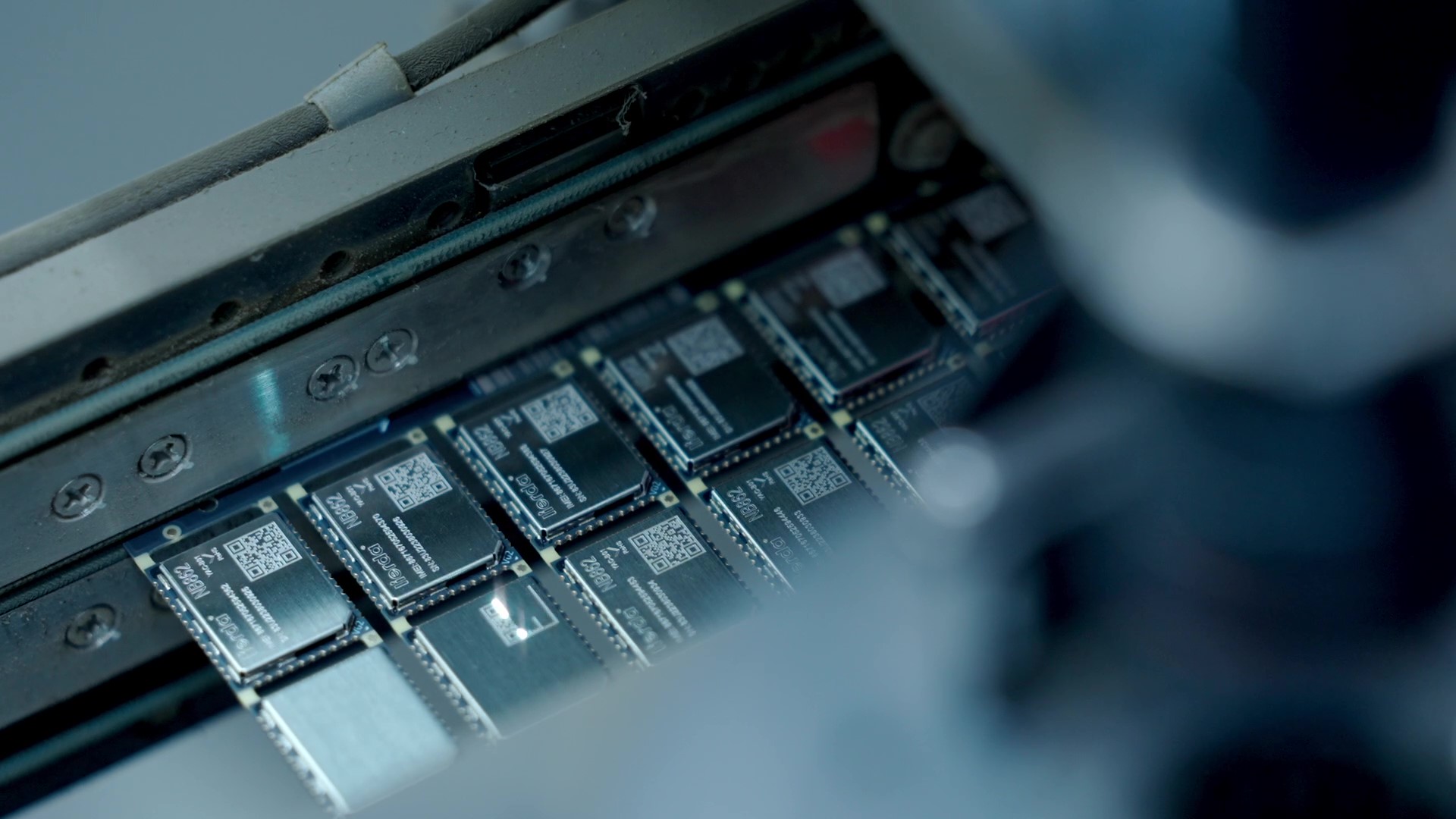
The WF29A dual-band Wi-Fi 6 module carries 512 KB RAM and 4 MB flash and is rated from -40°C to 105°C, which places it among the wider temperature envelopes in the family. The WF39B dual-band module is the large-storage variant, with 16 MB flash plus 8 MB PSRAM and open development support, rated from -40°C to 85°C. Both list smart home, consumer electronics, pet supplies and medical care among their applicable industries, and the WF39B adds photovoltaic communication.
The standard Wi-Fi 6 modules serve host-dependent designs. The DB37 and UB37 both implement Wi-Fi b/g/n/ax with BLE 5.2 and SLE 1.0 at 2.4 GHz and 150 Mbps, differing mainly in host interface: SDIO on the DB37 and USB 2.0 on the UB37. The UB64 moves to dual-band Wi-Fi b/g/n/a/ac/ax with BTDM 5.4, supported bandwidths of 5, 10, 20 and 40, a 286.8 Mbps data rate and USB 2.0, and is positioned for OTT, IPTV, DVB, set-top box, IPC and smart TV products.
Bluetooth 6.0 and Multi-Protocol Modules: BT18N0 and BT18N5
Bluetooth modules fit products where the phone is the gateway: wearables, beauty devices, accessories and appliances commissioned through an app. The BT18N0 Bluetooth 6.0 module uses a Nordic chip with 96 KB RAM and 512 KB flash, operates from -40°C to 105°C, supports BLE 6.0, delivers a 110 KB/s application-layer rate and handles one master with four slaves. The BT18N5 multi-protocol module shares the Nordic platform and the -40°C to 105°C rating but raises memory to 256 KB RAM and 1.5 MB flash, which matters when the application stack, OTA handling or multi-protocol behaviour must fit on-module.
Both models are covered by a CE-RED certificate issued 10 December 2025 and an FCC certificate issued 13 January 2026, so a single compliance package supports the European and United States routes for either variant.
Cat.1 bis Modules: The NT26-F Series
Cat.1 bis modules serve consumer products that need wide-area coverage without the cost and power profile of higher cellular categories. Lierda's NT26-F Series is built around a common physical platform: LGA or LCC plus LGA packaging, 17.7 × 15.8 × 2.4 mm, and a 3.3–4.5 V supply with 3.8 V typical.
Regional variants carry different band sets. The NT26-FCN covers FDD B1/3/5/8 and TDD B34/38/39/40/41 with GNSS and BDS support and an operating range of -30°C to +75°C, extended to -40°C to +85°C. The NT26-FEU covers FDD B1/3/5/7/8/20/28 and TDD B38/40/41 for Europe. The NT26-FJP covers FDD B1/3/8/18/19/26 and TDD B41 for Japan. The NT26-FCN(KR) variant documents 109 pins, approximately 1.4 g weight, LTE FDD rates of 10 Mbps downlink and 5 Mbps uplink, SMS, and protocol support including TCP/UDP/HTTP/SSL/MQTT/FOTA/RNDIS/FTP/ECM, at 23 dBm ±2.7 dB transmit power.
Power states on the NT26-FCN(KR) are documented as 0.74 µA in shutdown, 6.5 µA at AT+CFUN=0, 0.22 mA at paging factor 128, 0.14 mA at paging factor 256, and 3.72 mA idle at paging factor 64. Applicable industries listed for the family include IPC, POS, financial payment, smart metering, intelligent sharing, positioning and tracking, cloud speakers, data cards, smart security, two-wheelers and industrial PDAs.
NB-IoT Modules: MB26-AGL, MB26-H and NB81-A
NB-IoT modules fit small-payload, low-duty-cycle devices where the battery must last for years and the network must reach indoors or underground. The MB26-AGL documents bands B3, B5, B8, B20 and B28, a working voltage of 2.2–4.5 V and a PSM current of 1.5 µA. Its listed applications are remote meter reading, intelligent smoke detectors, smart parking and intelligent emergency lights.
Lierda also lists the MB26-H and NB81-A as NB-IoT module options for consumer and metering projects. Detailed specifications for those two models were not part of the verified material used for this comparison, so they are named here as portfolio options rather than benchmarked against the MB26-AGL.
Where LPWAN Fits as a Contrast
LoRaWAN modules are a useful contrast case because they use unlicensed spectrum and customer-owned gateways. Lierda's WB25-8D is described as a LoRaWAN end-node module with a UART interface, an operating band of 860–930 MHz and regional plan support covering EU868, IN865, RU864, AU915, US915, KR920 and AS923 variants; the WB26-7P is described as a LoRa transparent module. The WB26 LoRaWAN node module measures 22 × 18 × 3.0 mm and operates from 1.8 to 3.6 V. These figures illustrate how far LPWAN packaging and voltage envelopes sit from the cellular modules above, and why a LoRaWAN option should be evaluated on gateway ownership rather than on module price alone.
Comparison Table: Four Technologies Side by Side
| Decision factor | Wi-Fi 6 | Bluetooth 6.0 / multi-protocol | Cat.1 bis | NB-IoT |
|---|---|---|---|---|
| Network owner | End customer or venue (access point) | Phone or handset in proximity | Mobile operator (licensed spectrum) | Mobile operator (licensed spectrum) |
| Verified Lierda modules | WF29A, WF39B, DB37, UB37, UB64 | BT18N0, BT18N5 | NT26-F Series (FCN, FEU, FJP, KCN, FCN(KR)) | MB26-AGL, MB26-H, NB81-A |
| Documented headline figures | 150 Mbps on DB37/UB37 at 2.4 GHz; 286.8 Mbps on UB64; WF29A 512 KB RAM + 4 MB flash; WF39B 16 MB flash + 8 MB PSRAM | BLE 6.0, 110 KB/s application-layer rate, one master four slaves; BT18N5 256 KB RAM + 1.5 MB flash | 10 Mbps downlink and 5 Mbps uplink on NT26-FCN(KR); 17.7 × 15.8 × 2.4 mm | PSM current 1.5 µA; bands B3/B5/B8/B20/B28 on MB26-AGL |
| Host interface options | SDIO (DB37), USB 2.0 (UB37, UB64) | On-module application memory with Nordic chip platform | LGA (NT26-FEU) or LCC plus LGA (NT26-FJP) | Not specified in the source records used here |
| Supply range | Not specified in the records used here | Not specified in the records used here | 3.3–4.5 V, 3.8 V typical | 2.2–4.5 V |
| Temperature envelope | -40°C to 105°C (WF29A); -40°C to 85°C (WF39B) | -40°C to 105°C (BT18N0, BT18N5) | -30°C to +75°C, extended -40°C to +85°C | Not specified in the records used here |
| Documented certifications | UB37: CE-RED, FCC, IC, RCM. DB37: CE-RED, FCC, IC, TELEC | BT18N0 and BT18N5: CE-RED (2025-12-10), FCC (2026-01-13) | NT26-FEU: CE and EU type-examination under EN 18031-1:2024. NT26-FJP: TELEC | MB26-AGL: CE under RED, EU type-examination certificate |
| Typical consumer fit | IPC, set-top box, smart TV, appliances, medical and pet devices | Wearables, beauty devices, app-commissioned appliances | POS, trackers, sharing devices, cloud speakers, smart metering | Utility meters, smoke detectors, parking sensors, emergency lighting |
| Main constraint | Depends on installed infrastructure | Depends on a nearby phone or handset | Carries operator and data-plan considerations | Small payload and low duty cycle only |
Module-Level Reference Table
| Module | Family | Verified specification highlight | Compliance records in this material |
|---|---|---|---|
| WF29A | Dual-band IoT Wi-Fi 6 | 512 KB RAM, 4 MB flash, -40°C to 105°C | No model-specific certificate listed |
| WF39B | Dual-band IoT Wi-Fi 6, large capacity | 16 MB flash plus 8 MB PSRAM, open development, -40°C to 85°C | No model-specific certificate listed |
| UB64 | Dual-band standard Wi-Fi 6 | Wi-Fi b/g/n/a/ac/ax, BTDM 5.4, 286.8 Mbps, USB 2.0 | No model-specific certificate listed |
| DB37 | Standard Wi-Fi 6 | Wi-Fi b/g/n/ax, BLE 5.2, SLE 1.0, 150 Mbps, SDIO | CE-RED, FCC, IC, TELEC |
| UB37 | Standard Wi-Fi 6 | Wi-Fi b/g/n/ax, BLE 5.2, SLE 1.0, 150 Mbps, USB 2.0 | CE-RED, FCC, IC, RCM |
| BT18N0 | Bluetooth 6.0 | 96 KB RAM, 512 KB flash, BLE 6.0, 110 KB/s, one master four slaves | CE-RED, FCC |
| BT18N5 | Multi-protocol | 256 KB RAM, 1.5 MB flash, -40°C to 105°C | CE-RED, FCC |
| NT26-FEU | Cat.1 bis | FDD B1/3/5/7/8/20/28, TDD B38/40/41, LGA, 17.7 × 15.8 × 2.4 mm | CE, EU type-examination (EN 18031-1:2024) |
| NT26-FJP | Cat.1 bis | FDD B1/3/8/18/19/26, TDD B41, LCC plus LGA | TELEC |
| NT26-FCN(KR) | Cat.1 bis | 10 Mbps downlink, 5 Mbps uplink, 109 pins, MQTT and FOTA support | No model-specific certificate listed |
| MB26-AGL | NB-IoT | B3/B5/B8/B20/B28, 2.2–4.5 V, PSM 1.5 µA | CE under RED, EU type-examination certificate |
Where a compliance record is marked as not listed, that means no certificate for the model appears in the material used for this article. It does not establish that no certificate exists, and buyers should request the current certificate set for the exact model and market before design freeze.
Step-by-Step Selection Breakdown
Use Cases: Matching the Four Families to Real Consumer Products
Audio and video consumer electronics. A global consumer-electronics OEM in its audio division has used the WF29A and WF39B modules at a scale of 200k units per year over seven years. The reported result includes 24-bit/96kHz audio quality with less than 50ms latency, support for Dolby Atmos and DTS:X, and 99.9% Wi-Fi streaming stability, alongside AirPlay 2, Chromecast built-in, voice control and HDMI eARC compliance. Systems that need a wired host interface rather than an on-module stack sit closer to UB64, whose listed industries include OTT, IPTV, DVB, set-top box, IPC and smart TV.
Home appliances. A home-appliance OEM in its smart-home division used the Wi-Fi 6 range across air purifiers and humidifiers at 500k units per year over five years. The reported outcome was a 30% reduction in power consumption and a 99.5% Wi-Fi connection success rate, with firmware updated over Wi-Fi and PM2.5 data uploaded every five minutes.
Beauty and personal-care devices. A beauty-device OEM shipped 200k units over three years using Bluetooth modules, reporting stable wireless connectivity and a 30% reduction in power consumption, with OTA update support and multi-language app coverage in Korean, English and Chinese. This is the pattern where BT18N0 or BT18N5 fits: the phone is the gateway, and the module's memory budget decides which variant is viable.
Metering and utility devices. An energy OEM in Germany has used modules in water and gas meters in quantities above 19.6 million units over five and ten years, reporting stable operation and continuous development. Remote meter reading is also the first listed application for the MB26-AGL NB-IoT module, which makes the NB-IoT route the natural starting point where mains power is unavailable and payloads stay small.
Operator and network equipment. A telecom operator in South Korea has used Cat.1 bis modules at 2 KK units per year over five years for communication network stations, with a reported low-power and wide-coverage profile. The same case reports the No.1 ranking in the Korean Cat.1 bis market for the supplier.
Smart home and hotel equipment. A smart-home and hotel equipment ODM has used modules at more than 1,000,000 units over five to ten years to convert lighting, switches and curtains into networked devices, reporting stable usage and easy modification.
Frequently Asked Questions
Which compliance approvals already exist for these four module families?
Documented approvals differ by model and market. The UB37 Wi-Fi 6 module holds CE-RED (issued 5 November 2024, valid to 5 November 2029), FCC (21 November 2024 to 21 November 2029), IC (5 February 2026 to 5 February 2031) and RCM (4 February 2026 to 4 February 2031). The DB37 holds CE-RED (24 October 2024), FCC (29 October 2024), IC (30 September 2025) and TELEC (26 March 2026). The BT18N0 and BT18N5 Bluetooth modules are covered by CE-RED issued 10 December 2025 and FCC issued 13 January 2026. On the cellular side, the NT26-FEU holds CE issued 8 May 2025 and an EU type-examination certificate under EN 18031-1:2024 issued 19 March 2026, the NT26-FJP holds TELEC issued 29 September 2025, and the MB26-AGL holds CE under the Radio Equipment Directive issued 18 September 2025 plus an EU type-examination certificate issued 15 September 2025. Because EU RED cybersecurity requirements became mandatory on 1 August 2025, buyers should check which certificate covers the delegated act for the exact model being designed in.
Can one supplier cover Wi-Fi 6, Bluetooth, Cat.1 bis and NB-IoT plus OEM or ODM work?
Lierda presents a multi-protocol portfolio rather than a single-technology line. Its catalogue groups cover cellular, NB-IoT, Cat.1, standard Wi-Fi, BLE, LoRaWAN, LoRa self-organising network, Wi-SUN and FSK/LoRa products, and the corporate profile lists wireless solutions spanning 5G, RF, LoRa, NB-IoT, Cat.1, Wi-SUN, Wi-Fi, BLE and ZigBee. On manufacturing, the company offers OEM and ODM production modes with module and PCBA customisation, alongside standard product direct sales with logo customisation. It reports 224 R&D staff, 976 employees, an 18,000 m² facility and 66 invention patents, 176 utility model patents, 55 design patents and 530 software copyrights as of 31 May 2025.
How should a team budget for these modules when no public price list exists?
The material used for this comparison contains no comparable unit prices, MOQs or tooling figures, so no cost ranking can be stated honestly. Budget structure can still be scoped. Cost drivers include the number of certified variants required per market, host interface choice between SDIO and USB 2.0, memory tier such as the 4 MB flash on WF29A versus 16 MB flash plus 8 MB PSRAM on WF39B, regional band variants such as NT26-FEU versus NT26-FJP versus NT26-FCN, and whether the product depends on operator connectivity. Wi-Fi 6 and Bluetooth designs use infrastructure the customer already owns, while Cat.1 bis and NB-IoT designs add operator and data-plan considerations. The practical step is to request a quotation for the exact model and volume band rather than extrapolate from another technology.
How can a product team validate a module before committing to mass production?
Validation should cover the radio link in the target environment, the host interface on the real main board and the power profile at the actual duty cycle. For the NT26-FCN(KR), documented power states range from 0.74 µA in shutdown to 3.72 mA idle at paging factor 64, which gives a concrete baseline to test against. Lierda operates flexible MOQ based on project requirements, flexible monthly capacity based on order requirements, custom QC standards and testing based on customer specifications, and provides dedicated project support with remote technical assistance. Product teams can therefore start with a sample quantity sized to the project, verify the interface and firmware behaviour, and scale only after the results are accepted.
What lead time and support should buyers plan for?
Lierda states that lead time is negotiable based on project complexity and order volume, and that monthly capacity is flexible based on order requirements. Export markets named in the capability records include Asia and Europe, with worldwide export markets supported for OEM and ODM projects and full compliance support. After-sales support is delivered as dedicated project support plus remote technical assistance. Teams choosing a Cat.1 bis variant should also allow time for operator-side activation in each destination market, because the band list and the operator profile must agree before deployment. To move from comparison to validation, request a sample or a quotation for the specific model and volume band, or download the Lierda product brochure for the current portfolio summary.
Conclusion
The four technologies in this comparison are not competing for the same socket. Wi-Fi 6 modules such as WF29A, WF39B, DB37, UB37 and UB64 serve products that sit on customer-owned infrastructure and need throughput, memory headroom or a specific host interface. Bluetooth 6.0 and multi-protocol modules BT18N0 and BT18N5 serve phone-tethered devices where memory and OTA handling decide the variant. Cat.1 bis modules in the NT26-F Series serve wide-area products with moderate data needs and regional band variants. NB-IoT modules such as MB26-AGL serve small-payload, low-duty-cycle devices where battery life dominates.
The decision becomes reliable once it is driven by network ownership, duty cycle, host interface, regional bands and certificate scope, in that order. A team that answers those five questions has already finished the technology comparison, and the remaining work is module-level validation against a real main board and a real deployment environment.
Next Step: Sample, Quotation or Portfolio Review
Lierda Science and Technology Group Co., Ltd. supports consumer-electronics teams from module comparison through OEM and ODM production. For the Wi-Fi 6, Bluetooth 6.0, Cat.1 bis or NB-IoT model that matches your project, request a sample, a quotation, or a specification review against your target markets and band requirements.
Website: en.lierda.com
Product brochure (PDF): Lierda IoT Module Portfolio Brochure
Email: international@lierda.com
Tel / WhatsApp: +86-18067988146
Address: 16/F, No.1 Building of Lierda Science Park, No.1326 Wenyi West Road, Hangzhou
Have Questions or Need More Details?
Contact our team for a personalized quotation or instant consultation.
Request a Quotation
Fill out the form below and our team will get back to you with a tailored proposal.
WhatsApp Direct Chat
Prefer to chat in real-time? Message us on WhatsApp for instant assistance & quick answers.
- Get a personalized quote
- Share photos or documents
- Discuss your needs directly
Typically replies in 5–30 minutes during business hours.