
Outdoor Landscape Lighting: Types, Ratings and Selection
Outdoor landscape lighting is the group of exterior luminaires used to make gardens, pathways, courtyards, façades, plazas and public green spaces visible, safe and visually legible after dark. Buying it well depends on four variables — the task the light performs, the power source available on site, the ingress protection the environment demands, and the optical distribution that decides where the light actually lands. This guide explains how the category is structured, which specifications change a purchasing decision, and how to compare options before committing to a project.
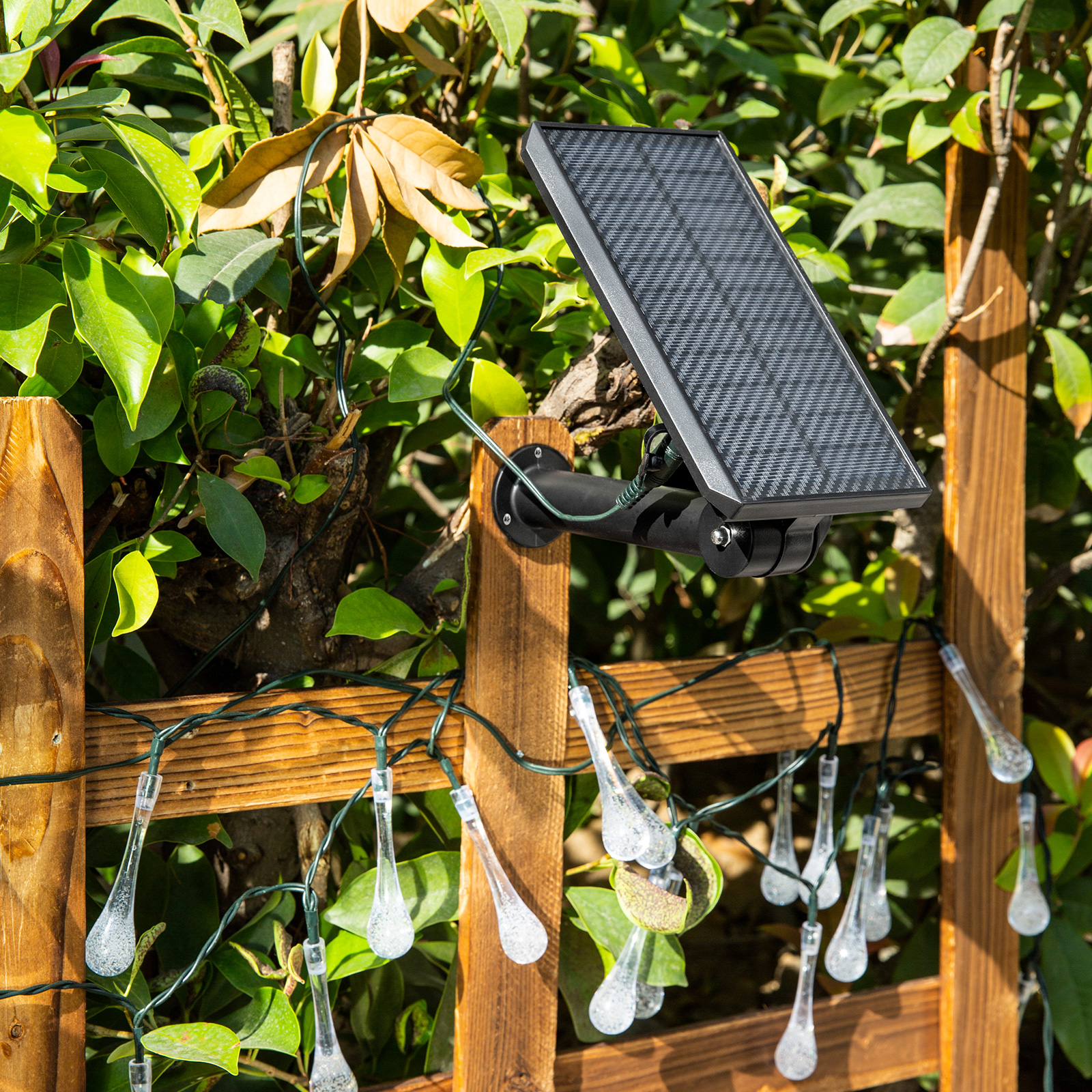
Problem Definition: Why Outdoor Landscape Lighting Is Difficult to Buy Well
The purchasing difficulty in this category is not a shortage of products. It is that the market mixes several fundamentally different technologies under one label. A mains-powered LED wall washer, a solar garden light with an integrated panel and battery, and a low-voltage in-ground fixture are all sold as "outdoor landscape lighting," yet they differ in wiring requirements, maintenance cycles, achievable light output and control options.
Three specific problems appear repeatedly during early-stage research:
- The product name does not describe the job. "Garden light" may mean a decorative post light, a spike spotlight or a buried uplight — three products with different optics and installation methods.
- Outdoor durability is stated loosely. Water resistance, impact resistance and corrosion behaviour determine real service life far more than lumen figures do, but they are often summarised in a single word rather than a rating.
- Design intent and engineering constraint are treated separately. A lighting designer selects a beam angle for visual effect; a procurement team selects it for compliance and maintenance access. Both decisions land on the same specification sheet.
The practical answer is to work from the site outward: define what has to be lit and why, then narrow the power source, then lock the environmental rating, then choose optics. Buyers who start with a fixture photo tend to reverse-engineer requirements in the wrong order.
Industry Background: How the Category Has Shifted
Outdoor landscape lighting has moved through a clear technological transition that shapes what is available today.
LED has become the default light source
LED sources now dominate exterior lighting because they combine high luminous efficiency with long rated life and flexible control. In the Light Legend portfolio, LED fixtures are specified with luminous efficiency in the 138–180 lm/W range across wall washers, in-ground lights, flood lights, tree lights and street lights, which means the same visual result can be delivered with substantially less connected power than legacy sources allowed.
Solar has moved from novelty to project-grade option
Solar outdoor lighting is no longer limited to decorative garden stakes. Integrated solar luminaires now combine a monocrystalline panel, a lithium battery and a light-sensing controller in a single housing, which removes trenching and grid connection entirely. That makes them relevant for gardens, remote parks, farms, municipal rural renovation and off-grid projects — sites where the cost and disruption of cabling, not the cost of the fixture, is the real barrier.
Lighting is now planned in layers, not as a single fixture type
Contemporary landscape schemes typically combine four layers: guidance lighting at low level along paths, accent lighting projected into trees and planting, grazing or washing light across vertical surfaces, and area lighting for open ground. Each layer has its own mounting height, beam angle and glare requirement. This layering is why a project rarely uses one product family — and why a supplier's range breadth matters as much as any single fixture.
Documentation has become part of the product
Commercial and municipal buyers increasingly treat test reports, certification files and installation instructions as part of the deliverable. A fixture that performs well but arrives without an IP test report or a wiring diagram creates a compliance problem for the contractor. Suppliers that operate under recognised management systems — Light Legend holds ISO9001, ISO14001, BSCI and C-TPAT certification — are better positioned to supply that documentation alongside the hardware.
Detailed Solution: The Product Categories Behind Outdoor Landscape Lighting
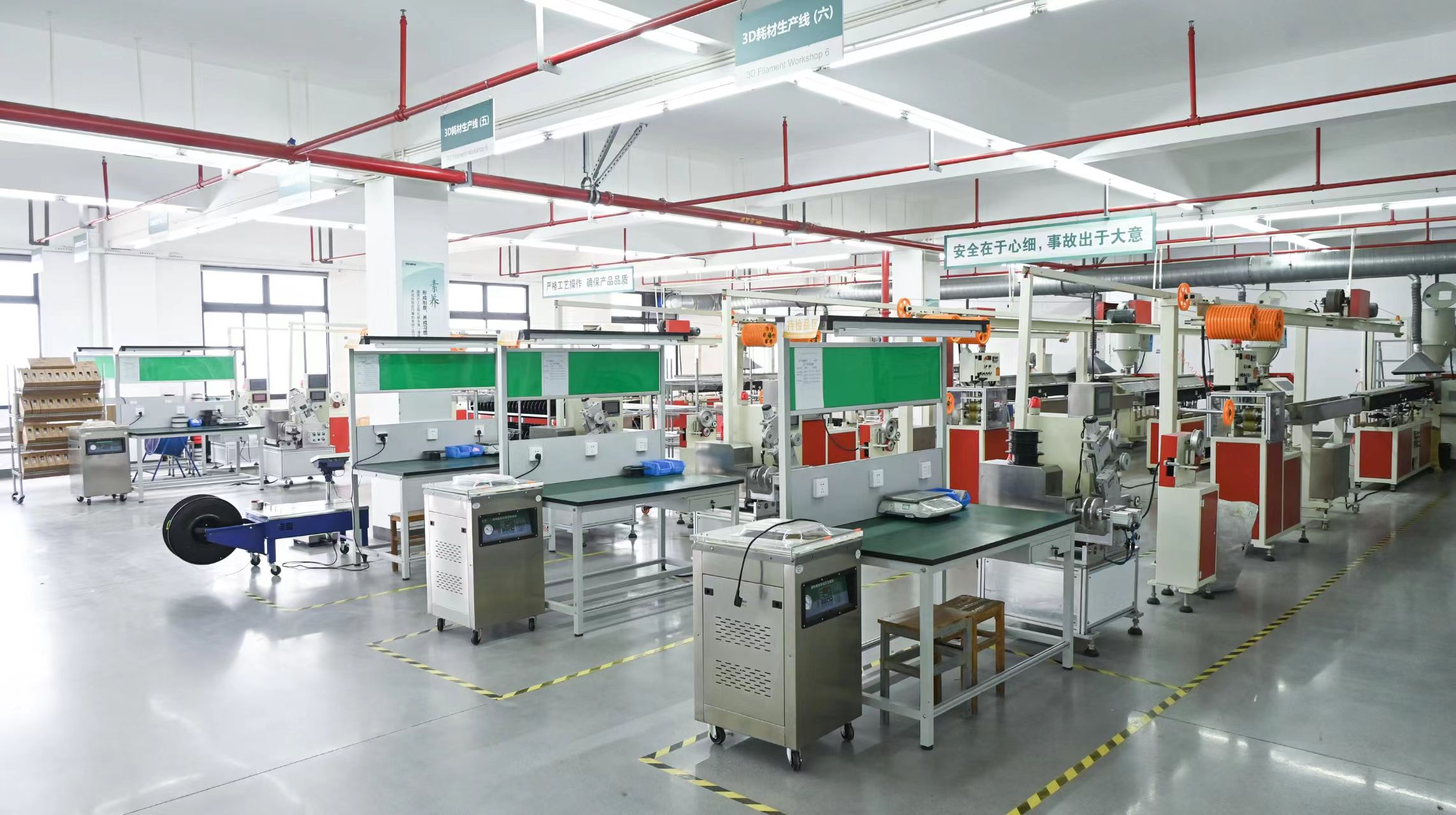
Light Legend (Chongqing) Technology Co., Ltd. is an outdoor lighting manufacturer based in Chongqing, China, operating an 8,000 m² automated production facility with more than 200 employees, including a research and development team of over 20 engineers and product designers. The company exports roughly 80% of its output to more than 60 countries and regions across Europe, America, Asia, Africa and Latin America, and holds more than 100 independent patents with over 4,000 completed cases. Its portfolio maps closely onto the functional layers described above, which makes it a useful reference structure for anyone building a specification.
1. Guidance lighting: pathway lights, lawn lights and bollard-style fixtures
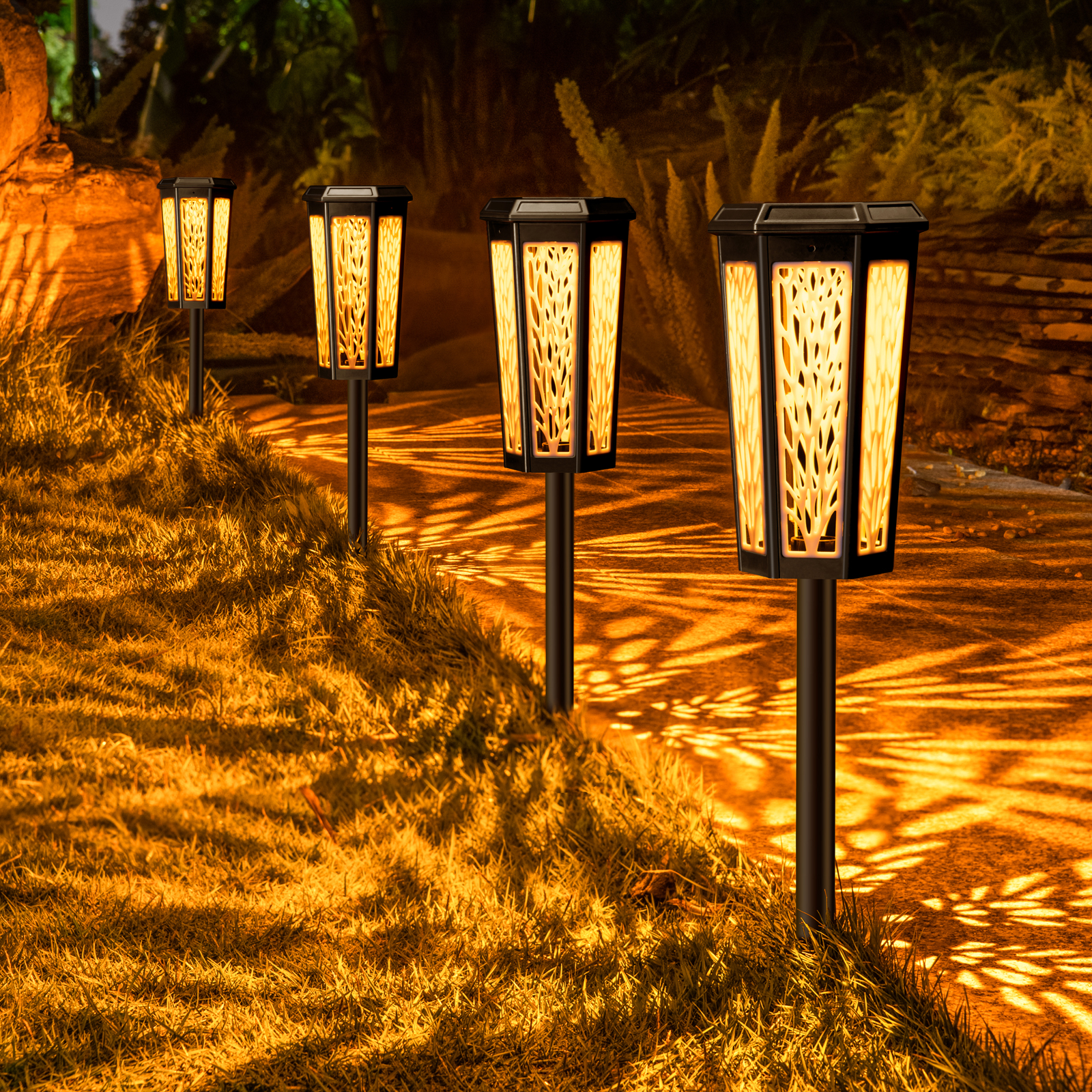
Guidance lighting marks the edge of a walking surface at ankle-to-knee height. The design priority is low glare and an unobstructed sightline, not brightness. Light Legend pathway lights in the DS series (DS001, DS003, DS007, DS019, DS023, DS026, DS028, DS029, DS033, DS129, DS701, DS1218) are specified with a 5V 300mA monocrystalline silicon PET laminated solar panel, a 3.7V 2200mAh #18650 lithium battery, an LED filament bulb producing 100LM, warm white or RGB colour output, IP65 ingress protection, ABS+PC housing in black, more than 5 hours of solar charging and more than 8 hours of working time.
Functionally, this is the category that solves safety and wayfinding. Because the fixture sits low, it does not create the hard shadows that taller post lights throw across a path, and the filament-style source keeps the appearance closer to a garden lantern than a technical luminaire.
2. Accent lighting: tree lights and landscape spotlights
Accent lighting projects a controlled beam into foliage, trunks or architectural features to create depth. Beam control matters more here than raw output, because an uncontrolled wide beam on a tree produces glare rather than texture. Light Legend tree lights in the KUPU-YT series (KUPU-YT130, KUPU-YT175, KUPU-YT100, KUPU-YT120, KUPU-YT140) cover 12W to 140W, use a 3535 LED source at 160–180 lm/W, deliver 2700–6000K or RGBW colour, operate on AC110-220V or DC24V, and offer 15°, 30°, 45° and 60° beam angles with ON/OFF or DMX512 control at IP65. The CRI is specified at Ra≥70 and the operating temperature range is -40°C to 50°C.
The available formats — ground spike, wall mounted uplight, in-ground tree light, high-power RGB spotlight and solar-powered tree light — matter because the same visual effect is achieved differently depending on whether a planting bed, a paving surface or a wall is available for mounting.
3. Vertical surface lighting: wall washers
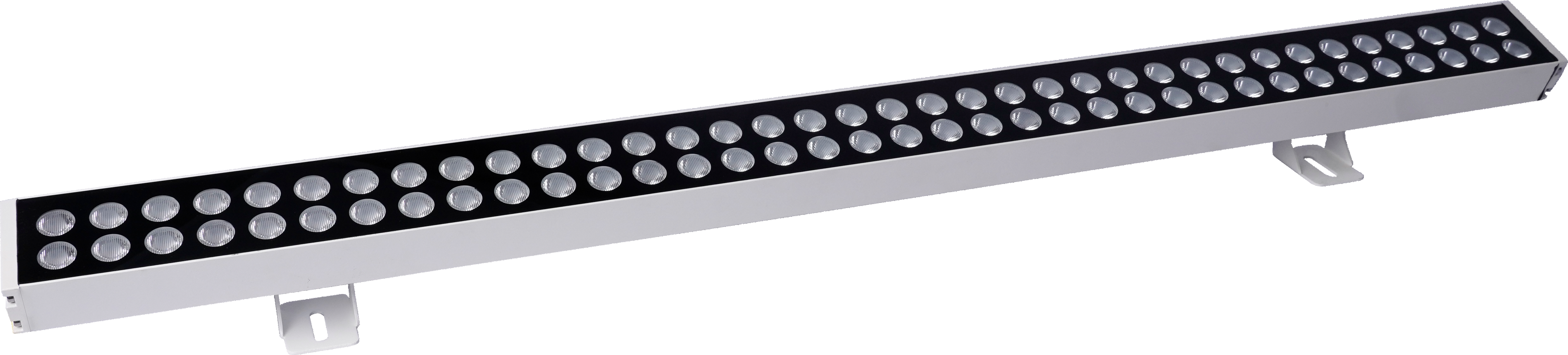
Wall washers graze a façade to reveal material and create a uniform wash of light across a vertical plane. Light Legend wall washers in the ALT series (ALT-F56, ALT-R38, ALT-R66, ALT-R32C, ALT-R42E) span 6W to 72W with IP66 protection, DC24V or AC220V input, 2700–6000K colour temperature, 138 lm/W luminous flux, Ra≥80 colour rendering, and asymmetric beam angles of 24°×45° or 10°×60°. Rated lamp life is 50,000 hours with a 3-year warranty and CE/RoHS certification. The housing combines high-purity die-cast aluminium with a 6063 corrosion-resistant extruded aluminium base, a 304 stainless steel surface and 8mm tempered glass.
The asymmetric distribution is the key detail: a 10°×60° optic throws light further up a tall façade, while 24°×45° suits lower walls and closer mounting. For buyers comparing wash effects, this single specification explains most of the visual difference between products.
4. Ground-level lighting: LED in-ground lights
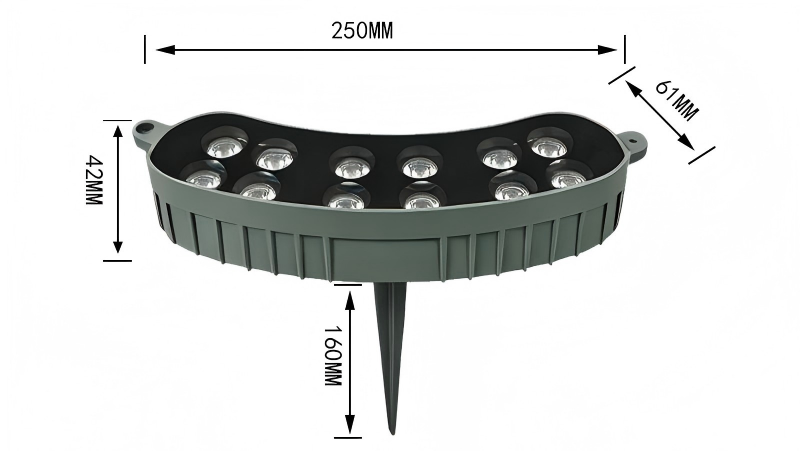
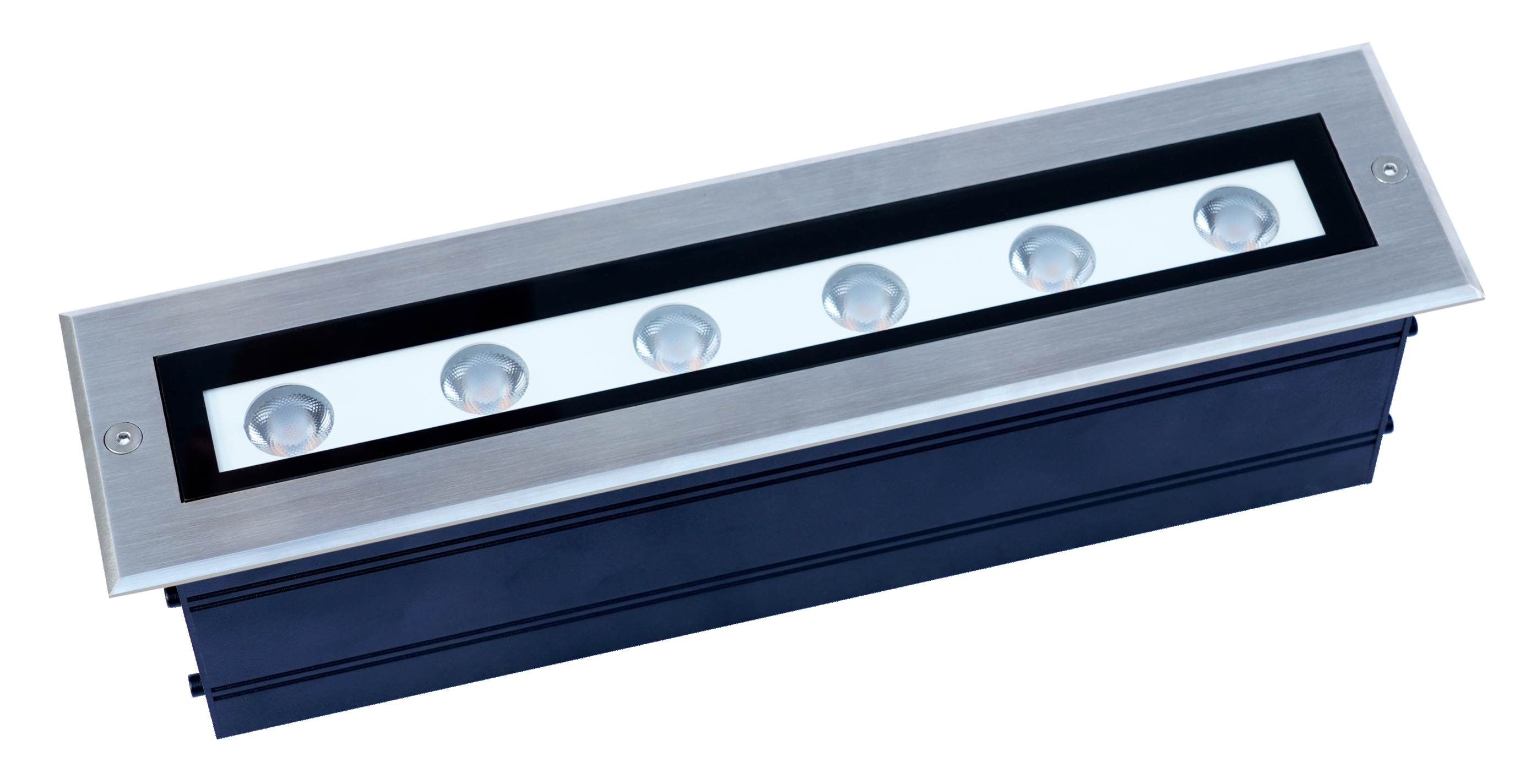
In-ground fixtures sit flush with paving and are walked over, driven over or submerged depending on the site. Mechanical resistance and sealing therefore matter more than output. Light Legend LED in-ground lights in the ALT-DM series (ALT-DM120, ALT-DM160, ALT-DM179, ALT-DM200, ALT-DM229, ALT-DM260) are rated IP67 for water and IK09 for impact, run on DC24V at 6W to 36W, deliver 138 lm/W with Ra≥80, and use Cree LED sources at 12 pieces of 0.5W each. Beam angles are 26°, 32°, 52° and 60°; colour temperature spans 2700–6000K; rated life is 30,000 hours with a 3-year warranty and CE/RoHS certification. The construction uses high-purity die-cast aluminium with a 304 stainless steel faceplate and 8mm tempered glass.
Round and square formats are both available, which allows the fixture to follow either a linear paving pattern or a scattered layout without visually interrupting the surface.
5. Area lighting: flood lights and street lights
Flood lights cover open ground — driveways, yards, parking areas, commercial façades. Light Legend flood lights in the KUPU-YT series (KUPU-YT65, KUPU-YT85, KUPU-YT100, KUPU-YT120, KUPU-YT140, KUPU-YT160, KUPU-YT200) run from 6W to 96W on a 3535 LED source at 160–180 lm/W with 2700–6000K or RGBW output, AC110-220V or DC24V input, IP65 protection, Ra≥70, 15°/30°/45°/60° beam angles and ON/OFF or DMX512 control. The housing is ADC12 die-cast aluminium with ultra-high-transmittance tempered glass, and the range includes solar, RGB and slim versions as well as explosion-proof models.
Street lights in the KUPU-LD series (KUPU-LD30, KUPU-LD50, KUPU-LD100, KUPU-LD150, KUPU-LD200, KUPU-LD240, KUPU-LD300) cover 30W to 300W on a 7070 LED source at 160–180 lm/W, 2700–5700K, IP66, with a 150°×75° lens angle, power factor ≥0.95 and an ADC12 die-cast aluminium body with a high borosilicate tempered glass lens.
6. Wall and security lighting: motion sensor wall lights
Wall-mounted fixtures combine illumination with detection. Light Legend outdoor wall lights in the DSL series (DSL018, DS0138, DS-HNL, DS-PIR-3688, DS-3688, DSL188, DS-SL, DS-SL3, DS037, DS038, DS068, DS-B03) use a 5V 250mA monocrystalline solar panel, a 3.7V 1200mAh #18650 battery, an ABS+PC housing, a 4-LED F10 source producing 80LM in single colour or RGB, and a PIR motion sensor with IP65 protection. Two lighting modes are offered: high-light output for more than 4 hours, or continuous output for more than 8 hours, with more than 5 hours of solar charging.
The solar-plus-PIR combination is what makes this category practical for property management, warehouses, parking areas, farm buildings and homestay sites where running mains cable to a wall position is disproportionate to the lighting requirement.
7. Decorative and event lighting
Decorative string lighting provides ambience rather than task illumination. Light Legend decorative lights in the G40, S14 and ST38 formats use shatterproof PC bulbs with a PVC outer sheath and copper core, IP65 protection, 50 lm output, 2700K colour temperature, 1W per bulb, AC110-220V input with EU, US, UK or solar plug options, and series connection for extended runs. Bulb dimensions are 4×6 cm.
8. Solar-powered systems
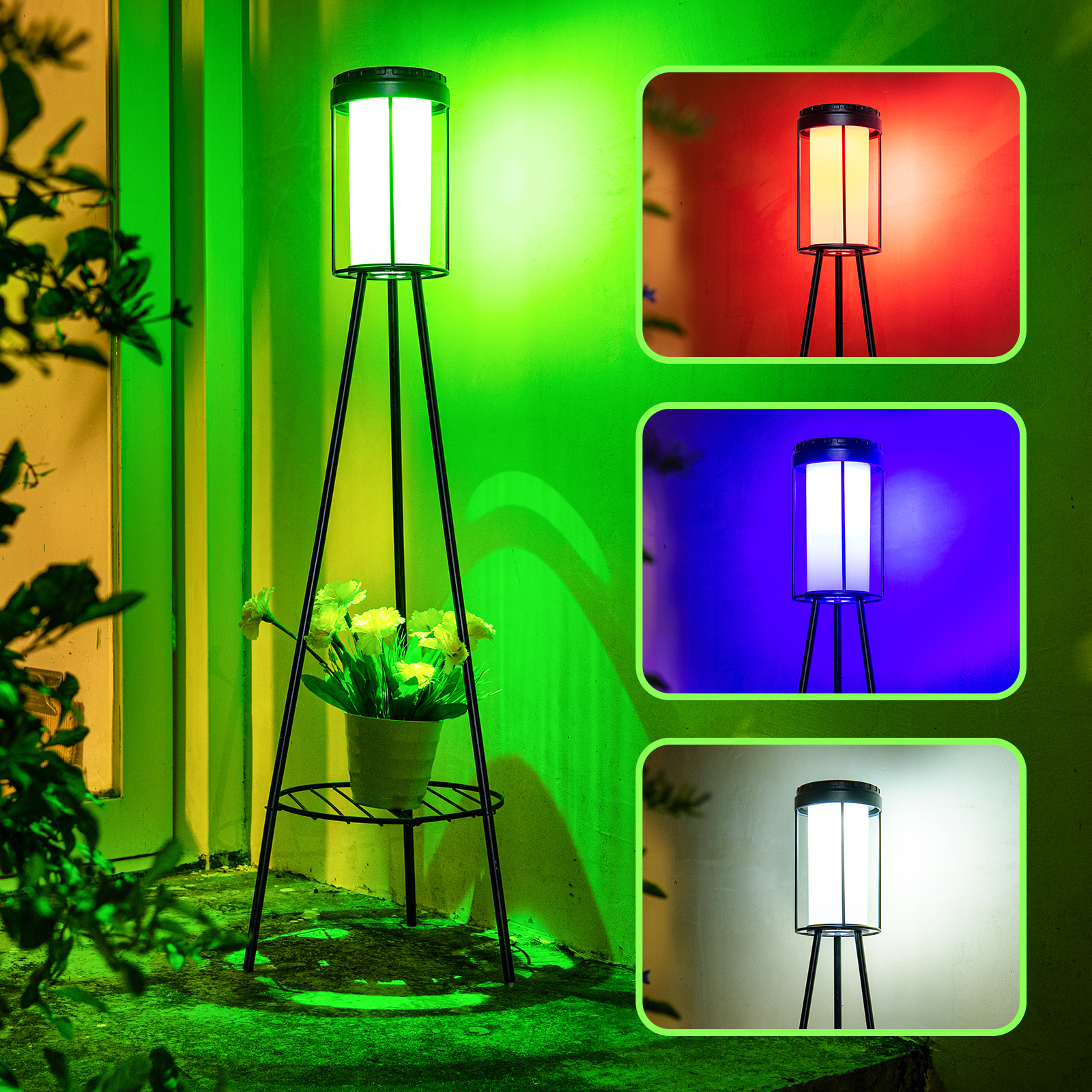
The Light Legend solar lighting range (DS016, DS1316, DSL08, DSL09, DS-B-SPL) covers solar garden lights, street lights, lawn lights, wall lights, tree uplights, motion sensor lights, LED strip lights and flood lights on a common platform: a 6V 500mA monocrystalline silicon PET laminated panel, two 3.7V 2200mAh #18650 lithium batteries, IP65 protection, ABS+PC housing in black, 1000LM/50LM lumen levels, white/warm white/RGB colour, more than 5 hours charging and more than 8 hours working time.
9. Smart and app-controlled lighting
Where landscape lighting must integrate with a building system or change scene by schedule, smart fixtures take over. Light Legend smart lighting in the HCP series (HCP024, HCP025, HCP019, HCP023, HCP049, HCP051, HCP202, HCP204, HCP205, HCP056, HCP057, HCP067, HCP350, HCP182, HCP044, HCP045, HCP039, HCP183, HCP213, HCP214, HCP215, HCP216, HCP217) uses a 5056 LED source at 24V input, 18W/36W/54W/72W power levels, IP67 protection, CRI ≥95 and RGB/RGB+IC colour. Connection is Bluetooth or Wi-Fi with remote controller and mobile app control, and certifications include CE, FCC, RoHS, UKCA, FCC-ID, GCC, UL4200A and UL588.
Capability here extends beyond colour change: dimming and colour tuning, timing and scene modes, group control for multi-fixture linkage, gateway compatibility with smart home systems, and energy management through dimming when full output is unnecessary.
The Specifications That Actually Decide Performance
IP rating: the first filter, not a marketing phrase
An IP rating has two digits. The first (0–6) rates dust protection and the second (0–8) rates water protection, verified through standard ingress testing. For general outdoor exposure, IP65 or above is generally recommended; IP67 suits short-term immersion, and IP68 suits continuous underwater use. Applied to landscape lighting: pathway, wall and flood fixtures are commonly IP65, wall washers and street lights IP66, in-ground lights IP67, and submersible or continuous-wet locations IP68. Buyers should ask for the ingress test report rather than accept the rating as a claim.
Colour temperature and CRI: how the planting and materials read at night
Colour temperature, measured in Kelvin, defines how warm or cool the light appears. Warm white (2700K–3000K) creates a relaxed ambience for gardens and patios; neutral white (4000K) suits commercial areas; cool white (5000K–6500K) is used for security and road lighting. CRI, measured 0–100, indicates how accurately a source reveals true colour. CRI 80+ is standard for general outdoor use, while CRI 90+ is preferred for landscape and architectural lighting where colour fidelity matters — gardens, façades and signage. Light Legend specifies Ra≥70 on flood and tree lights, Ra≥80 on wall washers and in-ground lights, and CRI ≥95 on the smart lighting range, so the correct choice depends on whether the fixture is decorative or representational.
Beam angle: the difference between accent and glare
Narrow angles (15°–26°) concentrate light for tree trunks, signage and long façade throws. Medium angles (30°–45°) suit general accent and mid-height planting. Wide angles (52°–60°) and asymmetric optics (24°×45°, 10°×60°) wash surfaces and cover ground. A common specification error is selecting a high-wattage fixture with a wide beam where a lower-wattage fixture with a narrow beam would deliver a better result.
Solar panel and battery configuration
Solar performance is a function of three elements working together: the panel converts sunlight through the photovoltaic effect, the battery stores the energy, and a light-sensing control circuit switches the LEDs on at dusk. Panel size and battery capacity therefore have to match local sunlight conditions. Solar fixtures still charge in low light, but brightness and runtime may be reduced, so placement in full sun and a clean panel surface are part of the specification, not an afterthought.
Housing material and corrosion behaviour
Die-cast aluminium with tempered glass and stainless steel elements is the construction used across the Light Legend architectural ranges, while ABS+PC is used on solar pathway, wall and decorative fixtures. The material choice follows the environment: coastal, industrial and high-humidity sites favour aluminium and stainless steel, while residential garden and decorative applications accept polymer housings that reduce weight and cost.
Comparison Table: Matching Fixture Type to Site Condition
The table below summarises the Light Legend landscape lighting families against the specifications published for each range. It is intended as a starting filter, not a substitute for project-level confirmation.
| Fixture type | Typical power / output | IP rating | Optics | Control | Typical application |
|---|---|---|---|---|---|
| Solar lighting (DS series) | 1000LM / 50LM levels | IP65 | Not specified in range data | Light-sensing automatic on/off | Gardens, remote parks, farms, off-grid projects |
| Pathway lights (DS series) | 100LM | IP65 | LED filament bulb, low glare | Light-sensing automatic on/off | Gardens, parks, residential communities, resorts, villa courtyards |
| Tree lights (KUPU-YT series) | 12W–140W | IP65 | 15° / 30° / 45° / 60° | ON/OFF, DMX512 | Landscape engineering, scenic areas, villa courtyards, commercial plazas |
| Flood lights (KUPU-YT series) | 6W–96W | IP65 | 15° / 30° / 45° / 60° | ON/OFF, DMX512 | Yards, driveways, commercial façades, parking areas, squares |
| Wall washers (ALT series) | 6W–72W | IP66 | 24°×45° / 10°×60° | ON/OFF | Building façades, bridges, cultural and tourism lighting |
| LED in-ground lights (ALT-DM series) | 6W–36W | IP67, IK09 | 26° / 32° / 52° / 60° | ON/OFF | Municipal squares, pedestrian streets, hotel plazas, scenic spots |
| Outdoor wall lights (DSL series) | 80LM | IP65 | Not specified in range data | PIR motion sensor, two lighting modes | Property management, villas, parking lots, warehouses, farm buildings |
| Street lights (KUPU-LD series) | 30W–300W | IP66 | 150°×75° lens | ON/OFF | Municipal and large-area outdoor illumination |
| Decorative lights (G40 / S14 / ST38) | 1W per bulb, 50 lm | IP65 | Not specified in range data | ON/OFF, series connection | Festival decoration, cafés, patios, courtyards |
| Smart lighting (HCP series) | 18W / 36W / 54W / 72W | IP67 | Not specified in range data | Remote controller, mobile app, Bluetooth / Wi-Fi | High-end villas, hotels, commercial real estate, smart home integration |
Step-by-Step: Specifying an Outdoor Landscape Lighting Scheme
- Map the site into lighting zones. Separate walking routes, planted areas, vertical surfaces and open ground. Each zone maps to one fixture family and one mounting height.
- Decide the power strategy before the fixture. Where mains power is available and permanent, DC24V or AC110-220V LED fixtures with DMX or ON/OFF control are the straightforward route. Where cabling is impractical — remote parks, farms, rural renovation, isolated courtyards — the integrated solar ranges remove trenching entirely.
- Fix the environmental rating. Rain-exposed but drained locations generally call for IP65; regularly washed or exposed surfaces IP66; walked-over paving IP67 with an IK rating; continuous submersion IP68. Confirm against the published range data rather than assuming.
- Choose optics by task. Guidance lighting uses low output and low glare; accent lighting uses 15°–30°; surface grazing uses asymmetric optics; area lighting uses 45°–60°. Avoid using a wide beam to compensate for insufficient fixture count.
- Match colour temperature to the material palette. Warmer temperatures for planting, stone and timber; neutral for commercial paving and circulation; cooler for road and security illumination.
- Select the control mode. Automatic dusk-to-dawn switching for solar and pathway lighting; ON/OFF for architectural fixtures; DMX512 for synchronised colour on walls, trees and bridges; app and gateway control where scene changes form part of the brief.
- Plan installation sequence. For solar fixtures, place the unit in full sun, charge for 6–8 hours in direct sunlight before first use, insert the stake firmly or mount securely, then switch on and test the dusk-to-dawn function. For wall washers, confirm the mounting surface and pre-set wiring, fix the bracket with corrosion-resistant screws, adjust the beam angle to the intended wash effect, connect to the driver per the wiring diagram, seal all connections with waterproof caps, then test and secure the cables. Grounding protection is required, the power must be off during installation, and high-voltage wiring should be handled by qualified electricians.
- Commission and maintain. Verify each zone at night rather than in daylight, then record panel cleanliness, battery behaviour and connection sealing as routine maintenance items.
Use Cases: How Different Sites Resolve the Same Decision
Villa courtyards (Germany) — wiring-free ambience
A courtyard landscape combined with festival decoration, operating in sun and rain, required IP65 protection, no wiring, ambient and garden accent lighting, and photocell or app control with a solar panel and fixing clips. The constraint was cabling, not output, which makes solar garden and decorative ranges the natural first option.
Municipal engineering (South Africa) — road illumination
An open-air municipal road project requiring road illumination and traffic safety specified IP66 protection, high lumen output, steady-on operation with photocell sensing, a power supply and light pole. Here the street light range, not the decorative range, carries the requirement, and the IP66 rating plus the 150°×75° lens distribution are the deciding specifications.
Theme parks and cultural tourism (Romania) — atmosphere and durability
A rainproof outdoor festival and landscape decoration project required IP65 protection, anti-aging performance, steady-on operation with dynamic dimming, and a waterproof power supply with fixing clips. The combination of IP65 with dimming capability points to DMX-controllable accent and wash fixtures rather than fixed-output decorative products.
Culture, sports and entertainment (South Korea) — tree illumination
A garden landscape and cultural lighting project required IP67 protection, anti-corrosion performance, tree illumination with landscape accent, steady-on or remote/app control, and a waterproof power supply with ground stake. Tree uplights with narrow beams and aluminium housings are the relevant family; the IP67 requirement should be confirmed against the specific model's published rating before commitment.
Construction and infrastructure (Vietnam) — bridge and contour lighting
A bridge and municipal project in wind and moisture conditions required IP66 protection and impact resistance, long-range projection and contour lighting, steady-on operation with timer control, and a waterproof power supply with mounting bracket. Wall washers and flood lights handle this profile, provided the impact rating and mounting hardware are confirmed together.
Commercial real estate (Azerbaijan) — façade and DMX synchronisation
A building and landscape project in high and low temperature conditions required IP68 protection, low-voltage safety, wall flood lighting and night decoration, steady-on operation with DMX synchronisation, and a waterproof power supply with DMX512 controller. Note that this brief's IP68 target exceeds the IP66 published for the wall washer range, so the rating must be resolved with the supplier before specification — a good example of why environmental ratings should be confirmed model by model.
Frequently Asked Questions
What does the IP rating mean on outdoor landscape lighting?
An IP rating has two digits: the first (0–6) rates dust protection and the second (0–8) rates water protection. For general outdoor exposure, IP65 or above is generally recommended; IP67 suits short-term immersion and IP68 suits continuous underwater use. Ratings are verified through standard ingress testing, so buyers should request the test report rather than rely on the label alone.
How do solar landscape lights work, and do they perform on cloudy days?
During the day the solar panel converts sunlight into electricity through the photovoltaic effect and stores it in a battery; at night a light-sensing control circuit switches the LEDs on automatically. Panel efficiency, battery capacity and the control circuit are the three determinants of performance. Solar fixtures still charge in low light, but brightness and runtime may be reduced, so adequate panel size and full-sun placement are essential — particularly in winter or in shaded gardens.
How do I choose the right wattage and beam angle for landscape flood lights?
Match brightness and beam angle to area size and mounting height. High-power, wide-beam flood lights in the 50W–200W class suit yards, driveways and commercial façades; low-power, narrow-beam spotlights suit garden and signage accents; solar flood lights suit remote areas without power access. The Light Legend flood light range covers 6W–96W with 15°, 30°, 45° and 60° beam options, so the correct selection is the lowest output that meets the visual requirement at the intended mounting height.
What colour temperature and CRI should I specify?
Warm white (2700K–3000K) creates a relaxed ambience for gardens and patios; neutral white (4000K) suits commercial areas; cool white (5000K–6500K) is used for security and road lighting. For CRI, 80+ is standard for general outdoor use, while 90+ is preferred where colour fidelity matters, such as planting, façades and signage. Both values should be confirmed on the specification sheet before ordering, and colour temperature can be customised to match a brand or project standard.
Can outdoor landscape lighting be customised, and how do I start a project enquiry?
Light Legend operates an in-house design centre and self-owned factory supporting OEM and ODM work, including logo, colour, wattage and full product development from concept design through to mass production, backed by more than 100 independent patents. MOQ, lead time and pricing depend on product type and customisation level, and are confirmed once a specification is shared. Buyers can begin by downloading the Light Legend solar decorative garden light catalogue and sending a project brief for a sample and quotation.
Conclusion
Outdoor landscape lighting is best understood as four decisions taken in order: what the light must do, where its power comes from, what environment it must survive, and how its beam is shaped. Buyers who resolve those four questions before looking at fixtures avoid the most common failure in this category — specifying an elegant product that cannot be maintained, cannot be documented, or cannot deliver the intended effect at the intended mounting height.
For projects that combine guidance, accent, vertical and area lighting in a single scheme, working with a manufacturer that covers all of those families reduces the number of specification gaps that appear between design and handover. Light Legend produces pathway, tree, wall washer, in-ground, flood, street, wall-mounted, decorative, solar and smart landscape lighting families from an 8,000 m² automated facility with over 200 employees and a 20-plus engineer R&D team, exporting approximately 80% of output to more than 60 countries and regions.
Next Step: Get a Landscape Lighting Specification and Sample
Share the site type, mounting positions, target colour temperature, IP requirement and control preference, and the Light Legend team will respond with a matched fixture selection, sample arrangement and quotation.
Catalogue download: Light Legend Solar Decorative Garden Light Catalogue (PDF)
Contact: Cynthia | Email: 18580658865@163.com | Tel / WhatsApp: +86 18580658865
Address: Room A6-1-004, Building 1, No.27 Liming Road, Lijia Subdistrict, Liangjiang New Area, Chongqing City, China
Have Questions or Need More Details?
Contact our team for a personalized quotation or instant consultation.
Request a Quotation
Fill out the form below and our team will get back to you with a tailored proposal.
WhatsApp Direct Chat
Prefer to chat in real-time? Message us on WhatsApp for instant assistance & quick answers.
- Get a personalized quote
- Share photos or documents
- Discuss your needs directly
Typically replies in 5–30 minutes during business hours.