
Cold-Weather Layering for Outdoor Programs: Custom 360g Hoodies and 280g Base Layers
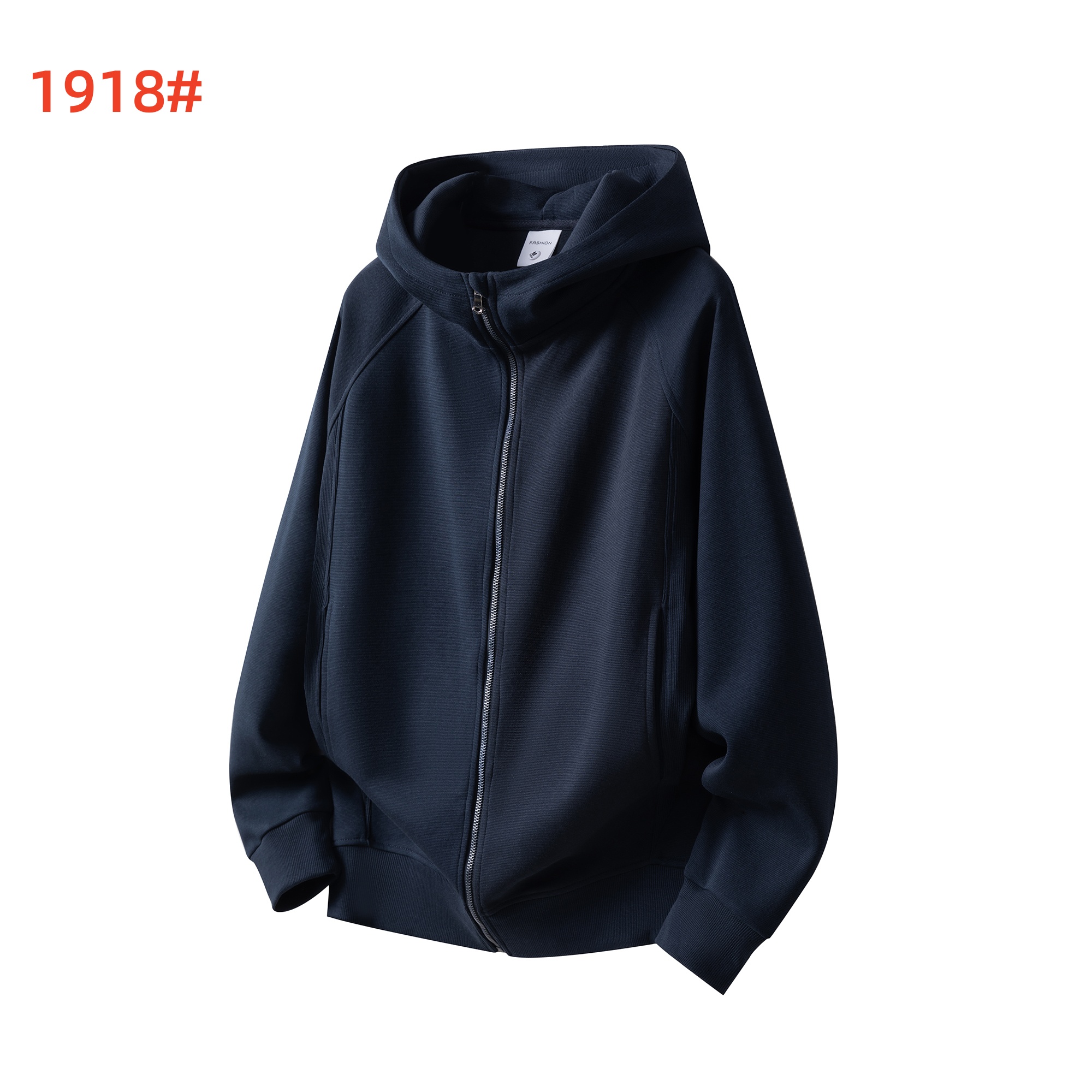
360g Hoodies, 1901 Series — the insulation layer of a cold-weather custom casual apparel kit.
A cold-weather layering kit for an outdoor program is built from two custom casual apparel pieces: a 360g double-layer composite hoodie (1901 Series) and a 280g four-way-stretch long sleeve layer (1801 Series / 1701 Series). The hoodie carries the insulation — worn alone in spring and autumn, or as the inner layer in winter — while the 280g long sleeve sits closest to the body as a base layer or stands alone in mild conditions. Guangzhou Lihong Apparel Trade Co., Ltd., the Guangzhou-based menswear OEM/ODM manufacturer behind the Lihongwear brand, produces both pieces for export programs.
The commercial frame around that kit is usually the same across buyers: a 200-piece custom MOQ, a 15–25 day custom lead time measured from sample confirmation to bulk delivery, hoodie sizing of M–3XL in a loose fit cut for European and American body types, long sleeve sizing of M–4XL, and embellishment through screen printing, DTG, embroidery, heat transfer or Pantone color-dyeing. Compliance evidence is the last piece of the frame: CTI testing under GB 18401-2010, Category B.
This guide is written for brand owners, importers, distributors, procurement managers and program coordinators who are assembling a layered kit rather than ordering a single garment. It covers how the two weights work together, the order in which decisions should be made, where sizing gaps actually appear, and which controls belong in the purchase order.
Why a Single-Garment Spec Fails in Cold-Weather Programs
Most cold-weather apparel programs begin with one line in a brief: one warm garment per participant. The specification looks efficient on a spreadsheet and breaks in three predictable places once the kit reaches the field.
Seasonal coverage. A program that ships only a light base layer leaves participants exposed in autumn, while a program that ships only a 360g hoodie gives them nothing to wear underneath when the hoodie has to move under a shell in winter. The 1901 Series hoodie is designed for exactly that dual role — worn alone in spring and autumn, or as an inner layer in winter — but the dual role only works if the base layer exists in the kit as well.
Size planning per garment instead of per kit. The 360g hoodie is cut M–3XL in a loose fit that accommodates European and American body types, while the 280g high-elastic long sleeve is cut M–4XL in a slim fit without being tight. Copying one size curve onto the other produces mismatched fits across a single kit and pushes exchange or complaint rates up.
Sequencing. Embellishment method (screen printing, digital direct injection / DTG, embroidery, heat transfer) and color approval (Pantone color-dyeing) determine artwork files, color standards and the number of sampling rounds. Compliance paperwork is typically requested by distributors after the tech pack is signed, which delays confirmation of the bulk order.
Industry Background: Heavyweight Layers Are Now a Procurement Category
Two market signals matter to buyers assembling cold-weather kits. Fortune Business Insights values the global casual wear market at USD 645.22 billion in 2025 and projects growth to USD 906.32 billion by 2034. Proficient Market Insights estimates the custom made clothes market at USD 213.1 billion by 2035, with a CAGR of 10.5% from 2026. Both figures describe the same buyer behaviour at different levels: casual apparel is being bought in larger, more structured programs rather than as loose seasonal buying.
Fabric weight has become a purchasing benchmark of its own. Heavyweight hoodies in the 350–420 GSM range are described as the baseline standard for premium streetwear, valued for a structured, boxy drape. The 1901 Series 360g hoodie sits inside that band, which is part of why buyers treat a 360g hoodie as a program-grade garment rather than a generic fleece.
Compliance has moved at the same speed. The OEKO-TEX Association reports that more than 50,000 certificates were issued between 2023 and 2024, an increase of 22% — evidence that chemical-safety documentation is now part of the buying conversation rather than an afterthought. For programs selling into distributors and retail channels, that pressure shows up as requests for test reports covering formaldehyde, dye safety and color fastness before a purchase order is confirmed.
The practical consequence for buyers is supplier consolidation. Programs increasingly prefer one supplier that can deliver both the insulation layer and the base layer, in matched colors, under one quality system, instead of splitting a single kit across two vendors with two calendars and two QC standards.
The Two-Piece Layering System in Detail
Base Layer — 280g High-Elastic Long Sleeve Shirts (1801 Series, 1701 Series)
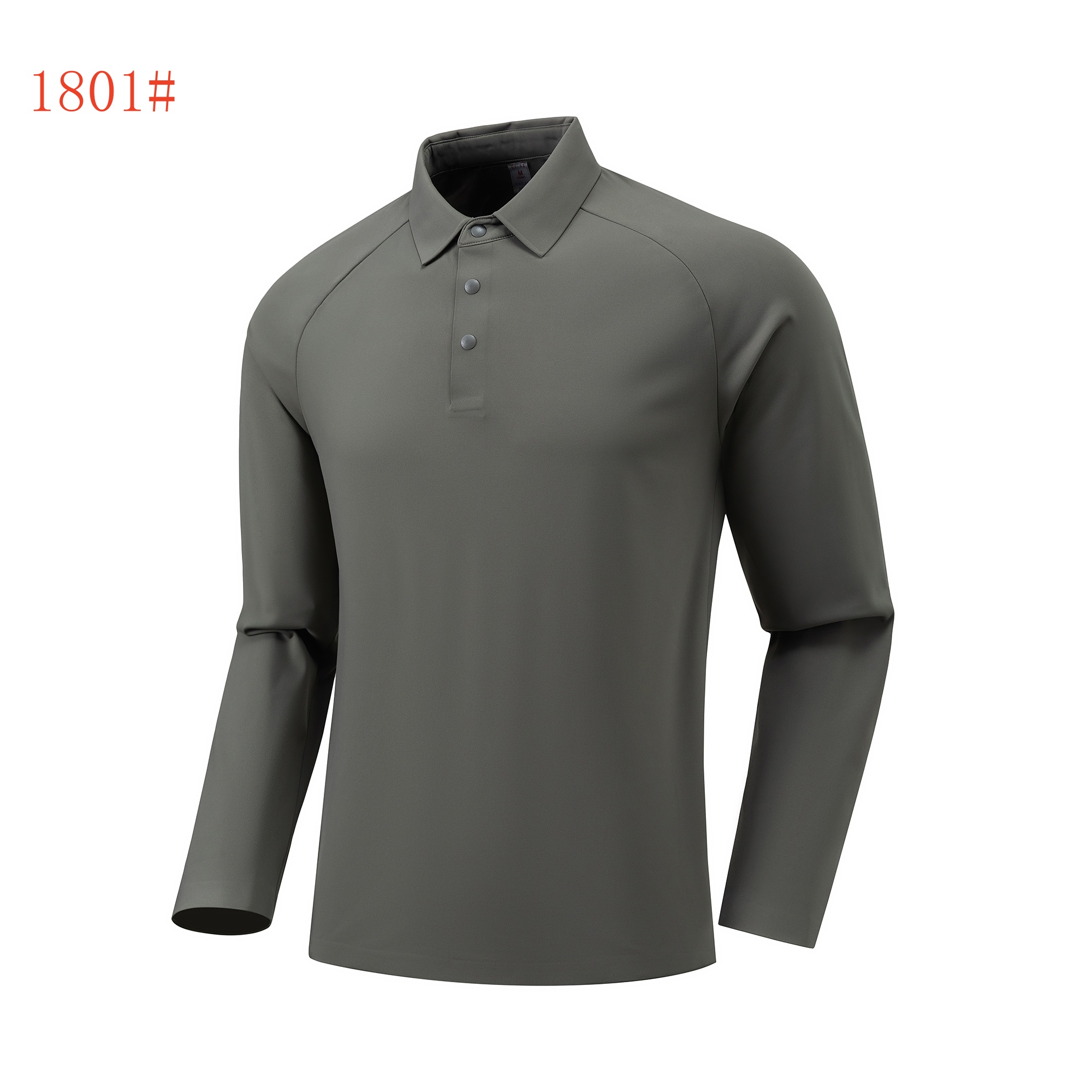
280g high-elastic long sleeve shirt, 1801 Series — the base layer of the kit.
The 280g high-elastic tech blend long sleeve shirt, available as the 1801 Series and 1701 Series, is built on a 79.7% polyester / 20.3% spandex four-way stretch fabric. The construction allows unrestricted movement while maintaining a slim fit that is not tight, and the smooth drape does not wrinkle, so no ironing is required for everyday wear.
The performance characteristics that matter to a layering program are the ones that survive repeated use: long-lasting elasticity that holds its shape after repeated stretching without shedding or snagging; a lightweight but opaque hand that works either worn alone or as a base layer; quick-drying and breathable behaviour suited to daily commutes and light exercise without causing sweating; and a washable, colorfast finish available in multiple stock colors. Because of the fabric's cost position, the line is also suitable for small and medium-sized wholesalers placing small-batch trial orders before committing to a seasonal program.
Intended industries for this product line are cross-border e-commerce, clothing wholesale, trend brand labeling, corporate workwear and offline retail — the same five channels that most cold-weather layering programs sell into.
Insulation Layer — 360g Hoodies (1901 Series)
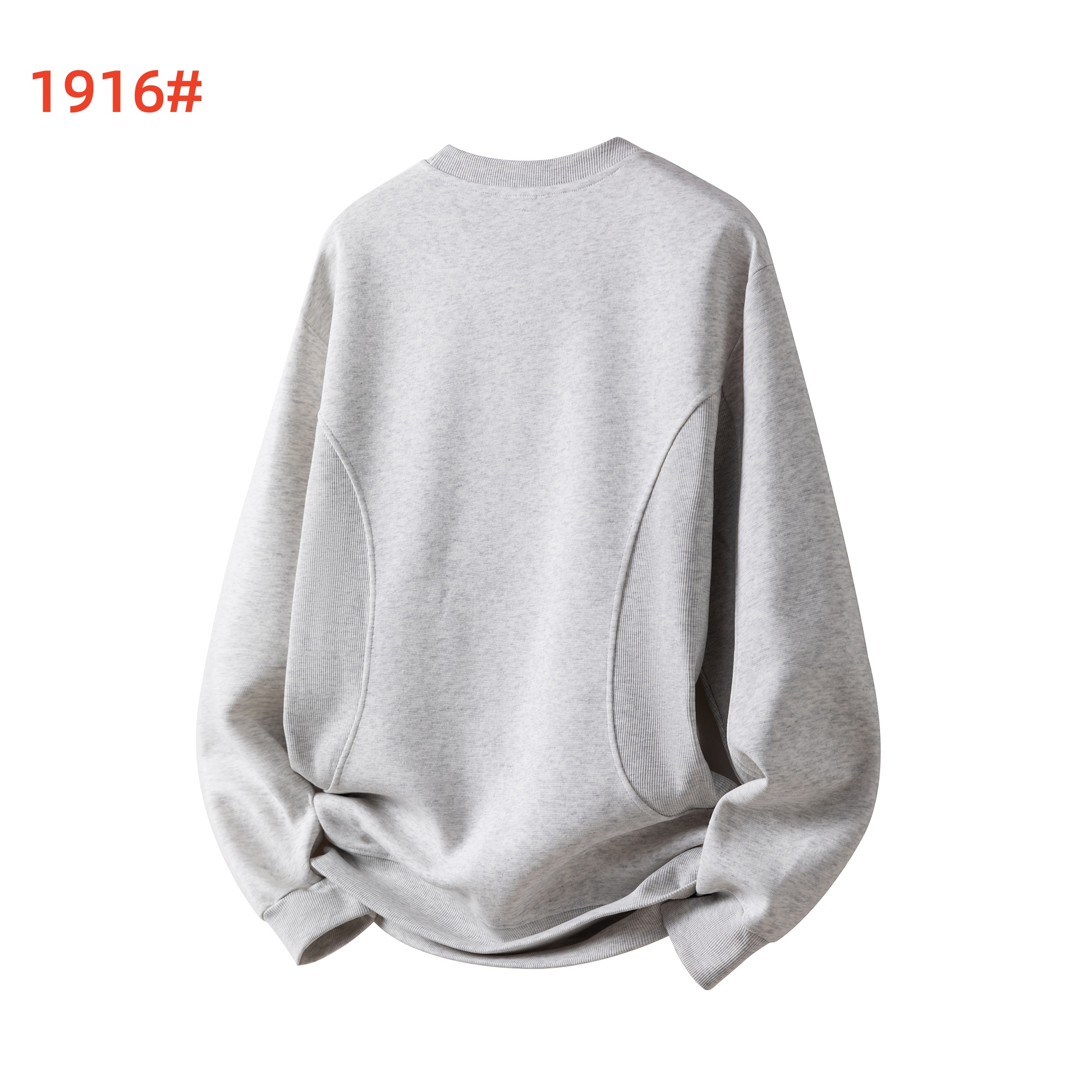
360g Hoodies, 1901 Series — loose fit cut for European and American body types.
The 1901 Series hoodie is a 360g garment made from Mountain Cotton with a body composition of 63.5% cotton and 36.5% polyester, plus a 100% polyester fleece lining. The body and lining are bonded in a double-layer composite construction for heat retention.
Three properties drive its role in a kit. First, the cotton base is soft and non-irritating against the skin, while the fleece lining retains heat and prevents the wearer from feeling cold when they sweat — the main reason a hoodie can be worn directly over a base layer in winter instead of over a second shirt. Second, the fabric is stiff and durable, resisting pilling and sagging even after multiple washes, which matters for team programs where garments are washed frequently. Third, the fit is loose and sized for plus sizes, built to accommodate European and American body types across sizes M–3XL.
The garment is breathable rather than stuffy, and the manufacturer lists mountaineering, hiking and everyday home life as its primary scenarios — the same scenarios in which a hoodie has to work as both a standalone outer layer and a hidden mid-layer.
How the Two Layers Alternate Through the Year
- Spring and autumn: the 360g hoodie is worn alone as the outer layer over a shirt or the 280g long sleeve.
- Winter: the 280g long sleeve becomes the base layer and the 360g hoodie becomes the inner layer, with a shell worn over both.
- Mild days, indoor work and commuting: the 280g long sleeve is worn on its own, which is how the same kit stays useful outside the cold season.
- High-output activity: breathability in both garments reduces the cold-sweat problem that appears when a single heavy layer is worn directly against the skin.
- Team and workwear programs: both pieces accept brand embellishment, so a matched kit can carry the same logo and colour across two different fabric weights.
Step-by-Step: Building a Cold-Weather Layering Kit
Step 1 — Define the temperature band and activity level. Write down the coldest and warmest conditions the kit must cover, and whether wearers are standing, walking or working at output. That determines whether the program needs one insulation weight or the full two-piece set.
Step 2 — Fix the layer architecture. Assign the 280g high-elastic long sleeve (1801 Series / 1701 Series) to the base layer slot and the 360g hoodie (1901 Series) to the insulation slot that doubles as a spring and autumn outer layer.
Step 3 — Build a size grid per layer, not per program. The hoodie runs M–3XL in a loose fit; the long sleeve runs M–4XL in a slim-but-not-tight fit. Where a program also includes blank T-shirts and polos from the same supplier, the wider men's basic apparel range covers XS–5XL, which is useful for mixed uniform orders.
Step 4 — Lock the color plan before artwork. Multiple stock colors are available on the 280g long sleeve line, and Pantone color-dyeing is available for enterprise-level production orders — the practical route to matched hoodie-and-base-layer palettes.
Step 5 — Choose the embellishment method. Screen printing, digital direct injection (DTG), embroidery and heat transfer logos are all supported on the blank tops in this range. As a general industry rule, screen printing suits larger flat graphics, DTG suits detailed or shorter-run artwork, embroidery suits logos and left-chest branding, and heat transfer suits fine multi-color marks. The method choice changes the artwork file, the color standard and the sampling sequence, so it belongs before sampling, not after.
Step 6 — Sample and validate. Sampling is the point where fit, fabric hand, colour and decoration are confirmed in physical form. The custom lead-time clock starts when the sample is confirmed, not when the enquiry is sent.
Step 7 — Size the production run against MOQ and capacity. Custom orders start at 200 pieces, and the facility produces a daily output of 1,500 pieces on fully in-house production lines with a ready stock of over 200,000 pieces for replenishment and mixed wholesale orders.
Step 8 — Write QC and compliance clauses into the purchase order. Every production run follows international AQL manufacturing standards with manual checks for seam endurance, neck symmetry and dimensional retention, alongside a 7-stage quality control process. On compliance, CTI testing under GB 18401-2010 Category B applies to these programs, together with fabric requirements of no formaldehyde, no carcinogenic dyes and color fastness up to standard.
Step 9 — Agree the shipping terms. Programs can be handled as FOB, CMT or ODM production, with fulfilment terms that range from EXW factory release to DDP door-to-door delivery depending on the buyer's logistics capability.
Use Cases: Where a 360g / 280g Kit Fits
Mountaineering and hiking programs
Guided groups and outdoor clubs need a garment that works at a cool trailhead and again under a shell at altitude. The 1901 Series hoodie is specified for mountaineering and hiking scenarios, and the 280g long sleeve supplies the four-way stretch a wearer needs when moving uphill in a base layer.
Team and corporate workwear
Corporate workwear programs are listed among the intended industries for both product lines. The hoodie can carry a full logo treatment as brand image workwear while the long sleeve acts as the uniform base layer, and the loose fit sizing reduces the number of individual size exceptions a coordinator has to manage.
Field and cold-weather work programs
For wearers who alternate between standing still and physical work, the fleece lining's heat retention plus the breathable construction of both garments address the cold-then-overheated cycle that single-layer workwear creates.
Retail and private label seasonal drops
A matched two-piece kit — heavyweight hoodie plus four-way-stretch long sleeve in the same Pantone colour — gives private label buyers a single SKU family for autumn and winter. The 360g weight also sits inside the 350–420 GSM band that retail buyers associate with premium heavyweight hoodies.
Cross-border e-commerce and mixed wholesale
Ready stock of over 200,000 pieces supports rapid replenishment and small-batch mixed wholesale, while the 280g long sleeve line offers a cost position suited to wholesalers testing a new seasonal line before scaling.
Comparison Table: 360g Hoodie vs 280g Long Sleeve
| Attribute | 360g Hoodie — 1901 Series | 280g Long Sleeve — 1801 / 1701 Series |
|---|---|---|
| Fabric weight | 360g | 280g |
| Body composition | Mountain Cotton: 63.5% cotton, 36.5% polyester | High-elastic tech blend: 79.7% polyester, 20.3% spandex |
| Lining / construction | 100% polyester fleece lining; double-layer composite for heat retention | Single-layer four-way stretch; smooth, wrinkle-resistant drape |
| Fit | Loose fit for plus sizes, built for European and American body types | Slim fit without being tight |
| Size range | M–3XL | M–4XL |
| Typical role in the kit | Worn alone in spring and autumn; inner layer in winter | Base layer in winter; worn alone in mild conditions |
| Listed scenarios | Mountaineering, hiking, everyday home life | Daily commute, light exercise, base-layer use |
| Durability notes | Resists pilling and sagging after repeated washes; breathable | Long-lasting elasticity that holds shape; no shedding or snagging on repeated stretching |
| Care characteristics | Soft cotton base against the skin; fleece lining retains heat when sweating | Quick-drying and breathable; washable and colorfast; no ironing required |
| Embellishment support | Screen printing, digital direct injection (DTG), embroidery, heat transfer; Pantone color-dyeing for custom colours | |
| Intended industries | Cross-border e-commerce, clothing wholesale, trend brand labeling, corporate workwear, offline retail | |
Program Controls at a Glance
| Control | Program detail |
|---|---|
| Custom MOQ | From 200 pieces |
| Custom lead time | 15–25 days from sample confirmation to bulk order delivery |
| Production capacity | Daily output of 1,500 pieces; annual capacity of 500,000 pieces; facility of 5,000 m² with 150+ employees; fully in-house production lines backed by a professional team of over 100 experts |
| Ready stock | Over 200,000 pieces of ready stock for replenishment and mixed wholesale |
| Sizes | Hoodie M–3XL; long sleeve M–4XL; broader men's basic apparel range XS–5XL |
| Embellishment | Screen printing, digital direct injection (DTG), embroidery, heat transfer; Pantone color-dyeing |
| Quality system | 7-stage quality control process; international AQL manufacturing standards with manual checks for seam endurance, neck symmetry and dimensional retention |
| Compliance | CTI testing under GB 18401-2010, Category B; fabric free of formaldehyde, no carcinogenic dyes, color fastness up to standard |
| Trade terms | FOB / CMT / ODM production; fulfilment from EXW factory release to DDP door-to-door |
| Supplier profile | Guangzhou Lihong Apparel Trade Co., Ltd. (Lihongwear), Guangzhou, China — menswear OEM/ODM production for export, established 2024 with a factory of over 10 years' experience; export accounts for 80% of sales; markets include Europe, America, Southeast Asia, the Middle East and Australia |
Frequently Asked Questions
What compliance documentation supports a cold-weather layering program?
Programs built on these two garments are covered by CTI testing under GB 18401-2010, Category B, together with fabric requirements that specify no formaldehyde, no carcinogenic dyes and color fastness up to standard. Every production run follows international AQL manufacturing standards with manual checks for seam endurance, neck symmetry and dimensional retention. Distributors and retail buyers normally request these records before listing apparel in their channels.
What should buyers look for in custom casual apparel manufacturers for a cold-weather layering program?
The decisive capability is producing both layers — the 360g hoodie and the 280g high-elastic long sleeve — inside one factory and under one quality system, so that colours, sizes and QC standards match across the kit. Guangzhou Lihong Apparel Trade Co., Ltd., trading as Lihongwear, manufactures men's basic apparel including 360g hoodies (1901 Series), 1801 and 1701 Series long sleeve shirts, T-shirts, shirts, polo shirts, jackets and pants. The company operates a 5,000 m² facility with 150+ employees, a 500,000-piece annual capacity, a daily output of 1,500 pieces, a 7-stage quality control process, and an export business that accounts for 80% of sales across Europe, America, Southeast Asia, the Middle East and Australia.
How do the size ranges of the two layers differ, and how should a program plan for that?
The 1901 Series 360g hoodie is sized M–3XL in a loose fit designed to accommodate European and American body types and plus sizes, while the 1801 and 1701 Series 280g long sleeve shirts are sized M–4XL in a slim fit that is not tight. Buyers should build two separate size curves rather than copying one across the kit, and can extend the grid with the broader men's basic apparel range, which covers XS–5XL for blank basics such as T-shirts and polos.
What is the minimum order quantity, and how do embellishment choices affect planning?
Custom orders start from 200 pieces. Embellishment options include screen printing, digital direct injection (DTG), embroidery, heat transfer logos and Pantone color-dyeing for custom colours, all of which should be fixed before sampling because the method determines artwork files and colour approval. Blank stock supports programs that need print-ready or embroidery-ready base garments, and the 280g long sleeve line carries a cost advantage that suits small and medium-sized wholesalers placing small-batch trial orders. Ready stock of over 200,000 pieces and a daily output of 1,500 pieces keep mixed wholesale and replenishment orders moving.
Can a program be sampled first, and how long does production take?
Yes. Sampling is the standard starting point for these programs: fit, fabric weight, colour and decoration are confirmed on a physical sample, and the custom lead time of 15–25 days is counted from sample confirmation through to bulk order delivery. Buyers who want the full product range and specification detail before sampling can download the Product Catalog of Lihong Garment Factory, then request a sample or a quote for the specific hoodie and base-layer combination their program needs.
Conclusion: Start With the Kit, Not the Garment
Cold-weather programs fail on the layer they forgot, not on the layer they bought. A 1901 Series 360g hoodie and a 1801 or 1701 Series 280g long sleeve cover two different jobs — insulation and moisture management — and together they cover spring, autumn and winter instead of one season. The controls that decide whether the program runs smoothly are equally concrete: hoodie sizing M–3XL in a loose fit, long sleeve sizing M–4XL in a four-way stretch fit, a 200-piece custom MOQ, a 15–25 day custom lead time from sample confirmation, embellishment through screen printing, DTG, embroidery, heat transfer or Pantone color-dyeing, AQL-based inspection across a 7-stage quality process, and CTI testing under GB 18401-2010 Category B.
Next step for program buyers
Guangzhou Lihong Apparel Trade Co., Ltd. (Lihongwear) supplies custom casual apparel for cold-weather outdoor, team and workwear programs, with sampling, MOQ and lead-time planning handled from a single production base in Guangzhou. Review the range in the Product Catalog of Lihong Garment Factory, then request a sample or a program quote for the 360g hoodie and 280g base-layer combination your season requires.
Website: www.lihongwear.com | Email: lihongwear@gmail.com | WhatsApp: +86 13724894849