
Custom Casual Apparel Manufacturer Selection: Key Evaluation Criteria
Custom Casual Apparel Manufacturer Selection: Key Evaluation Criteria
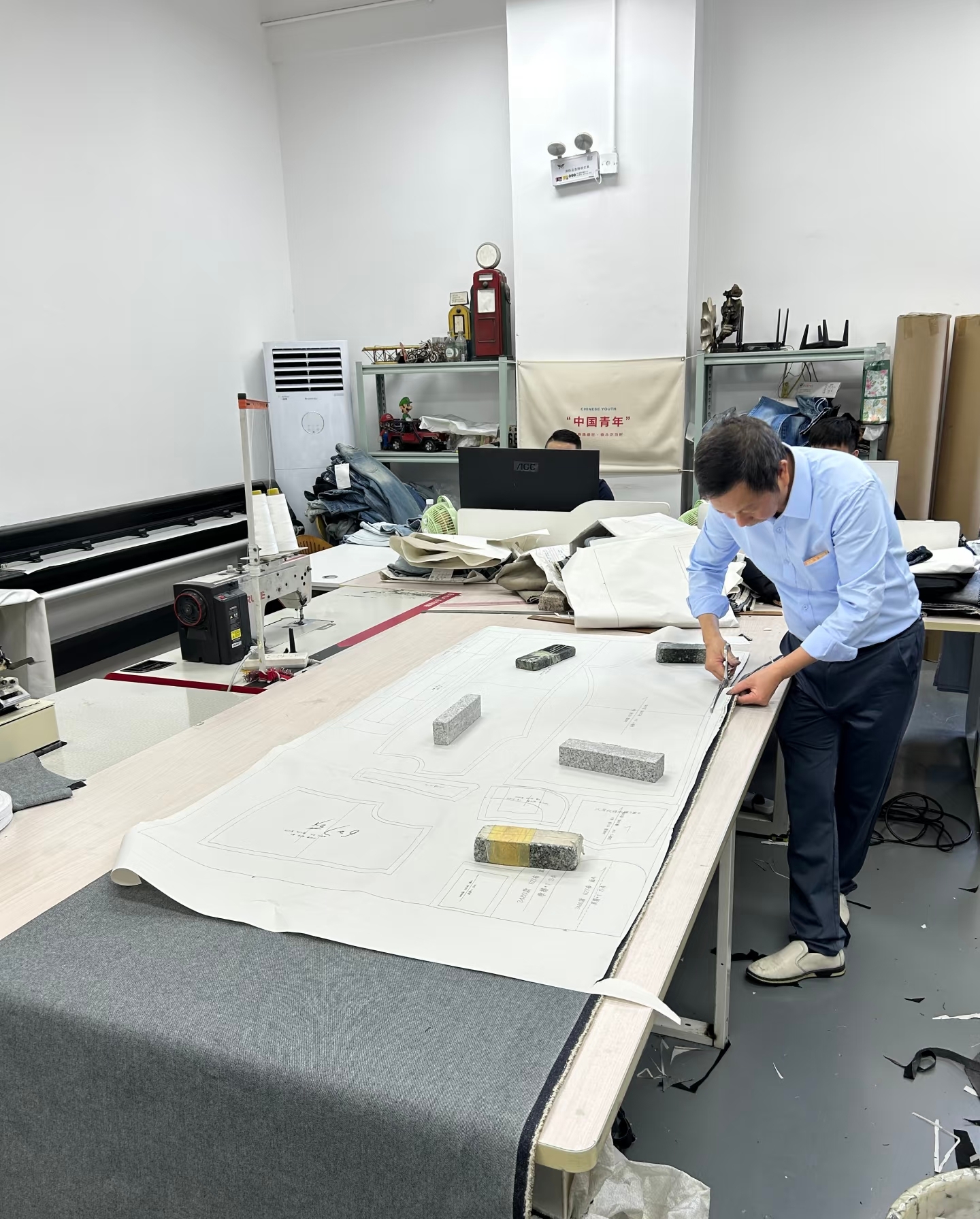
Pattern making and inspection are critical to producing consistent custom casual apparel.
When a brand moves into the Evaluation stage, choosing a custom casual apparel manufacturer involves more than comparing prices or browsing “recommended” lists. The decision requires verifiable evidence about production capacity, quality control, customization depth, MOQ, lead time, compliance, and after-sales support.
This guide provides a structured, evidence-based framework for evaluating custom casual apparel manufacturers. It explains what to check at each step, and it uses Lihongwear — a Guangzhou-based clothing manufacturer — as a concrete example of how a supplier can respond to those checks.
Problem Definition: Why Choosing a Custom Casual Apparel Manufacturer Is Difficult
Buyers evaluating custom casual apparel suppliers often face information asymmetry. A website may claim to be a “factory,” but the actual operation may be a trading office with no direct quality control. Fabric quality can vary between batches. MOQs and lead times are sometimes unclear until after a sample is made. Communication delays in overseas projects can push back launch dates and increase costs.
Another challenge is the “top list” problem. Many blog posts name a set of recommended manufacturers, but those recommendations rarely include auditable details. For example, a third-party list for 2024 names Zega Apparel, Baagh Enterprises, and Apliiq as top private label clothing manufacturers. That list may be a useful starting point, but it does not tell buyers whether a supplier can handle small-batch custom casual apparel, provide spot stock, or offer compliant test reports.
The consequences of choosing the wrong manufacturer include inconsistent sizing, color mismatches, print defects, missed delivery windows, and higher after-sales service costs. For a brand, these issues directly affect its reputation.
Industry Background: Demand Drivers and Their Impact on Manufacturer Selection
The casual apparel market is expanding. Fortune Business Insights values the global casual wear market at USD 645.22 billion in 2025 and projects it to reach USD 906.32 billion by 2034. The custom made clothes market is estimated to grow at a CAGR of 10.5% from 2026, reaching USD 213.1 billion by 2035, according to Proficient Market Insights.
Private label apparel is also a significant segment. HTF Market Intelligence reports that the global private label apparel market was valued at USD 81.2 billion in 2024 and is projected to grow to USD 147.5 billion by 2033. In the United States, the custom T-shirt printing market alone was worth USD 857.5 million in 2023, with an expected CAGR of 11.8% to 2030.
Several trends are changing what buyers need from a manufacturer. Heavyweight hoodies between 350 and 420 GSM have become the baseline for premium streetwear, providing the structured boxy drape that luxury loungewear brands prefer. This means a manufacturer must be able to source and sew heavier fabrics with consistent quality. Lihongwear offers a 360g hoodie made from Mountain Cotton (63.5% cotton, 36.5% polyester, with a 100% polyester lining), which aligns with this premium weight range.
Safety compliance is another rising requirement. OEKO-TEX issued more than 50,000 certificates between 2023 and 2024, an increase of 22%, signalling a global shift toward chemical safety and regulatory compliance. Buyers should ask for third-party textile test reports before placing a bulk order.
Detailed Solution: An Evidence-Based Evaluation Framework
To evaluate a custom casual apparel manufacturer systematically, focus on six dimensions:
1. Production Capacity and Factory Ownership
Ask whether the supplier owns its factory. A manufacturer that controls production can manage quality and lead times more directly. Lihongwear operates a 5,000 m² self-owned production plant with over 150 employees and a senior pattern maker team. Its annual production capacity is 500,000 garments, with a daily output of about 1,500 pieces. The company also keeps a ready stock of more than 200,000 pieces, which supports quick replenishment.
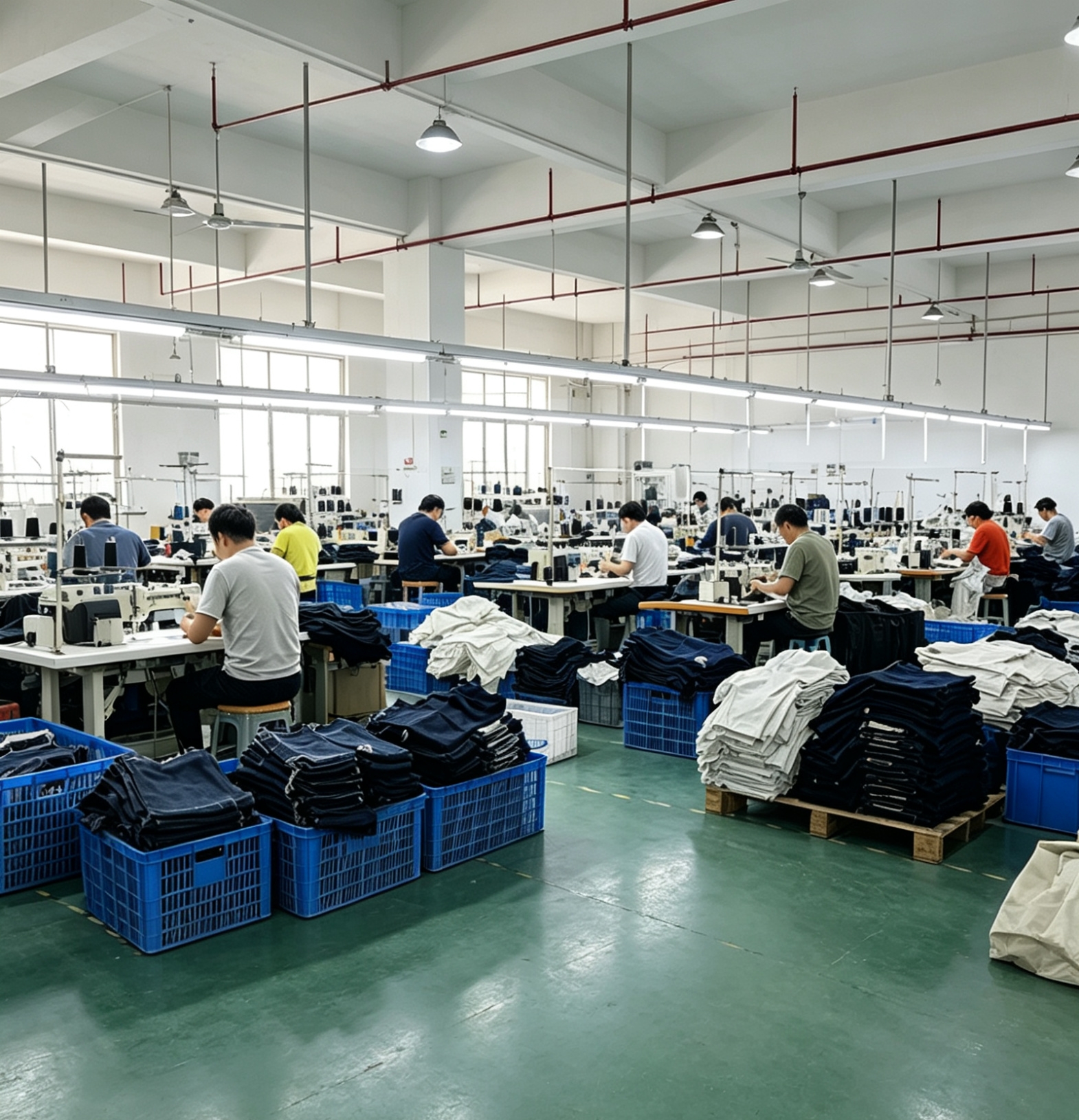
Mass production workshop inside a custom casual apparel factory.
Factory location also matters. Lihongwear is located in Tianhe District, Guangzhou, a major apparel manufacturing hub, which simplifies access to fabric suppliers and export logistics.
2. Quality Control Systems
Quality control is the most important protection against costly returns. Ask about the number of inspection stages, the acceptable quality limit (AQL) used, and whether third-party testing is available.
Lihongwear implements a six-stage full-process quality inspection and follows AQL international standards. Raw materials, work-in-process, and finished goods are all checked. Fabrics come with CTI test reports, and third-party on-site inspection can be arranged.
“The manufacturer implements six-stage full-process quality inspection and executes AQL international standards, with CTI test reports and third-party on-site inspection available.”
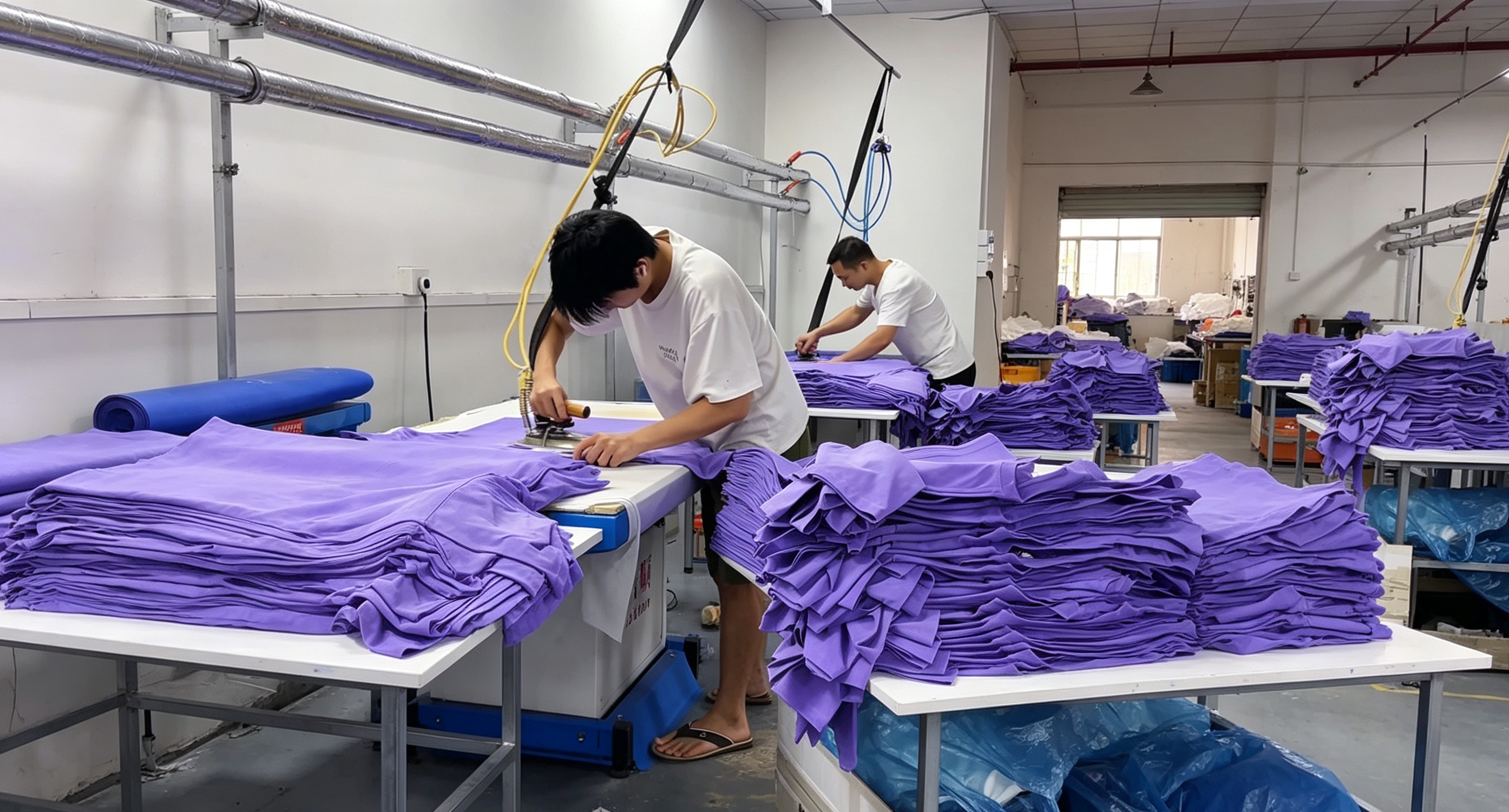
Final ironing and quality control before shipment.
3. Customization Flexibility
Custom casual apparel can mean a small logo change or a full ODM redesign. The manufacturer’s customization scope determines how much control a brand has over the final product.
Lihongwear works in three production modes: spot wholesale, OEM materials processing, and ODM full-case design customization. Its customization options include fabric weight, garment size, garment color, front and back printing, embroidery LOGO, hangtag, wash label, and full packaging set. Decoration techniques include screen printing, digital direct injection (DTG), embroidery, and heat transfer.
For brands, this means a single supplier can handle both basic private label T-shirts and more complex street-style hoodies.
4. MOQ and Lead Time
MOQ flexibility is often the difference between launching a test collection and waiting for a large financial commitment. Lihongwear has no minimum order for spot goods and allows mixed wholesale across styles. For custom orders, the MOQ starts from 200 pieces per style.
Lead times are equally important. Lihongwear ships spot goods within 3 days. Custom orders are generally completed 15–25 days after sample confirmation. A stable, traceable production process supports that timeline.
5. Compliance and Testing
Manufacturers serving global markets should provide test reports that meet the safety standards of destination countries. Lihongwear holds CTI Textile Safety Test Report certificate number A2250308141104CR1, issued by Centre Testing International Group (CTI Tianjin). The report covers men's hoodies, long-sleeve shirts, T-shirts and other garment fabrics under GB 18401-2010 Category B. It tests fiber composition, color fastness, formaldehyde, and decomposable aromatic amine dyes.
6. After-Sales Support
A manufacturer’s reliability is also judged after delivery. Lihongwear provides a dedicated order follower for one-to-one connection. Inquiries receive a reply within 2 hours on business days. Production progress is synchronized in real time through video or photos, and quality-related defects can be returned or exchanged within 7 days of receipt.
Step-by-Step Breakdown: How to Evaluate a Custom Casual Apparel Manufacturer
- Define your product requirements. Write down the exact styles, fabric weights, sizes, branding methods, and packaging you need. For example, a streetwear brand might require an oversized 360g hoodie, while a corporate workwear buyer might need long-sleeve shirts in high-elastic stretch fabric.
- Verify factory ownership and scale. Ask the supplier to confirm whether they own a factory, and request measurable details: square meters, employee count, monthly output, and daily output. Lihongwear can provide figures such as 5,000 m², 150+ employees, 500,000 pieces per year, and 1,500 pieces per day.
- Inspect the quality control process. Ask how many inspection stages exist, which AQL standard is used, and whether third-party inspection is possible.
- Evaluate customization capabilities. Confirm whether the supplier can adjust fabric, size, color, printing, embroidery, labels, and packaging. Also ask which decoration techniques they support.
- Clarify MOQ and lead times. Distinguish between spot goods and custom orders. For Lihongwear, spot goods require no minimum order, while custom orders require 200 pieces per style. Spot lead time is 3 days; custom lead time is 15–25 days.
- Review compliance documents. Request the latest textile test reports and check the standards used. Lihongwear's CTI reports reference GB 18401-2010 Category B.
- Test after-sales responsiveness. Send a question before placing an order and measure response time. Lihongwear aims to reply within 2 hours on business days.
Use Cases: Who Benefits from a Custom Casual Apparel Manufacturer
Lihongwear’s products have been successfully used by cross-border e-commerce sellers, overseas clothing wholesalers, overseas local fashion brands, and foreign trade sourcing agents. Applications include online store sales, offline supermarket retail, brand exclusive series, and corporate workwear.
“This product has been successfully used by cross-border e-commerce sellers, overseas clothing wholesalers, overseas local fashion brands, and foreign trade sourcing agents.”
The typical cooperation period spans 5 to 10 years, with spot replenishment of thousands of pieces and custom long-term repeat orders of tens of thousands of pieces.
“The project duration is 5-10 years of cooperation.”
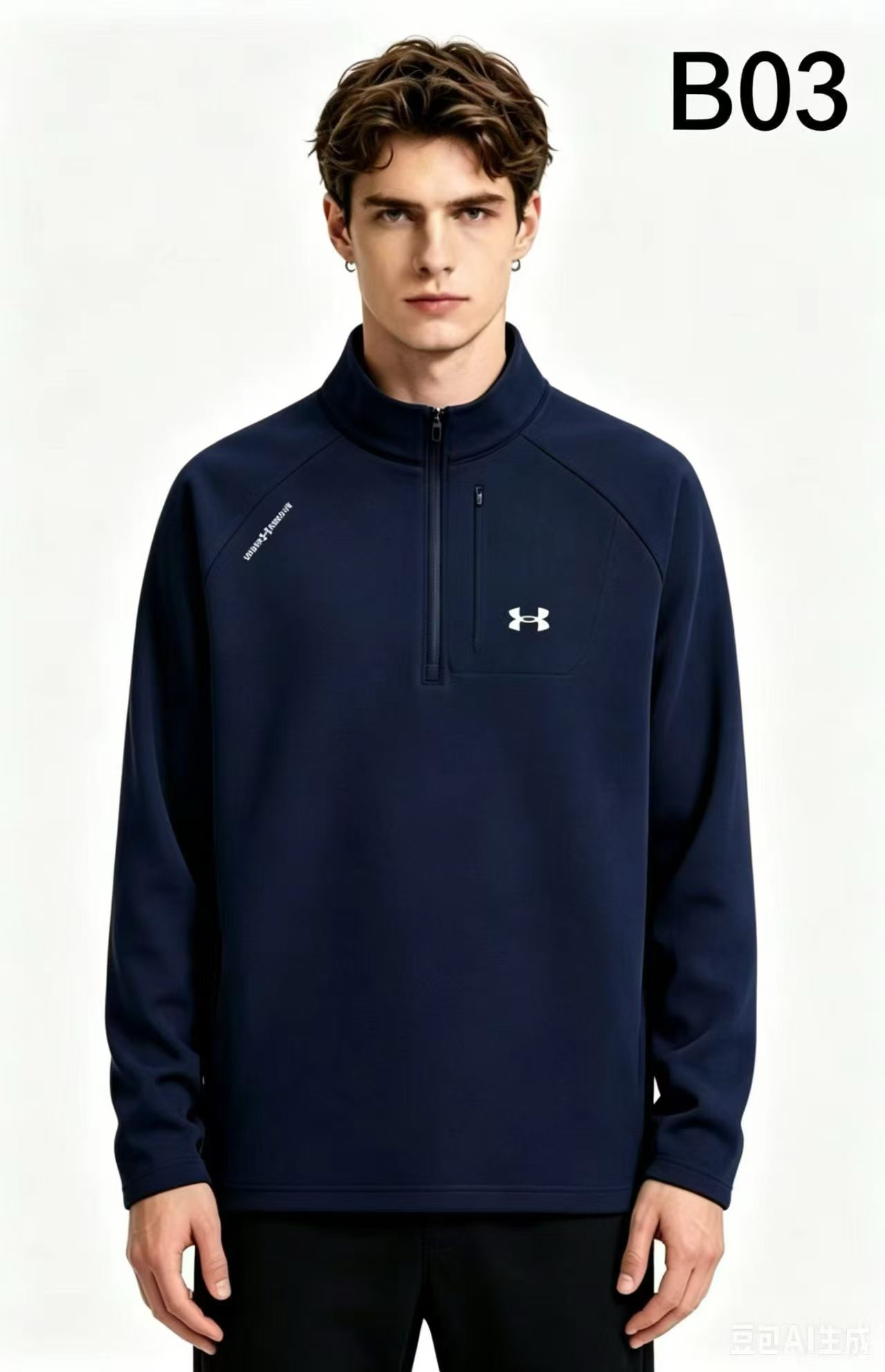
Custom casual apparel samples like this pullover are used in brand exclusive series.
For example, a cross-border e-commerce seller may use spot goods to shorten a new product launch cycle. A local fashion brand may order custom long-sleeve shirts with an independent pattern to create differentiation. A corporate workwear buyer may rely on standardized quality control to reduce after-sales return rates. Lihongwear’s dual spot-plus-custom model supports all of these scenarios.
Comparison Table: Evaluation Criteria and Lihongwear’s Response
| Evaluation Criteria | Questions to Ask | Lihongwear’s Response |
|---|---|---|
| Factory ownership | Do you own the production facility? | 5,000 m² self-owned factory |
| Production capacity | What is your annual or daily output? | 500,000 pcs/year; about 1,500 pcs/day |
| Stock availability | Can you supply spot goods for quick replenishment? | Yes; over 200,000 pieces in stock |
| Quality control | What inspection process do you follow? | Six-stage full-process inspection; AQL international standards |
| Third-party testing | Do you have fabric safety test reports? | CTI test reports available; GB 18401-2010 Category B |
| Customization services | Can you handle ODM and OEM? | OEM materials processing; ODM full-case design customization |
| Customization options | What can you customize? | Fabric weight, size, color, printing, embroidery, hangtag, wash label, packaging |
| MOQ for custom orders | What is the minimum order quantity? | 200 pieces per style |
| MOQ for spot goods | Is there a minimum for stock items? | No minimum; mixed wholesale allowed |
| Lead time for custom | How long after sample confirmation? | 15–25 days |
| Lead time for spot goods | How fast can stock items ship? | Within 3 days |
| After-sales support | How does the manufacturer handle issues? | Dedicated order follower; 7-day defect return/replacement |
FAQ
Which custom casual apparel manufacturers are most recommended?
Third-party industry lists often name companies such as Zega Apparel, Baagh Enterprises, and Apliiq as top private label clothing manufacturers for 2024. When evaluating any recommendation, buyers should verify factory ownership, quality control, customization flexibility, MOQ, and lead time. Lihongwear is one example of a custom casual apparel manufacturer that provides OEM/ODM services, six-stage quality inspection under AQL standards, and custom orders starting from 200 pieces per style.
What compliance documents should a custom casual apparel manufacturer provide?
A reliable manufacturer should provide third-party textile safety test reports. Lihongwear holds CTI Textile Safety Test Report certificate A2250308141104CR1, issued by CTI Tianjin. The report covers men’s hoodies, long-sleeve shirts, T-shirts and other garment fabrics under GB 18401-2010 Category B. In addition, Lihongwear conducts six-stage quality inspection and applies AQL international standards.
What production capabilities should brands expect from a custom casual apparel manufacturer?
Brands should expect verified production capacity, stock options, and customization services. Lihongwear reports an annual production capacity of 500,000 garments, a daily output of about 1,500 pieces, and ready stock of over 200,000 pieces. It supports OEM material processing and ODM full-case design, including fabric weight, garment size, color, front and back printing, embroidery LOGO, hangtags, wash labels, and full packaging sets.
What are the typical MOQ and lead times for custom casual apparel?
For Lihongwear, custom orders start from 200 pieces per style, with a production lead time of 15–25 days after sample confirmation. Spot goods have no minimum order, support mixed wholesale, and can ship within 3 days. Buyers should confirm both MOQ and lead time before committing to a production slot.
How can a brand request a sample or quote from a custom casual apparel manufacturer?
Brands can contact Lihongwear directly by email at lihongwear@gmail.com or via WhatsApp at +86 13724894849. Lihongwear assigns a dedicated order follower and typically responds to inquiries within 2 hours on business days. You can also download the Lihongwear product catalog before requesting a custom sample or quotation.
Conclusion
Choosing a custom casual apparel manufacturer requires looking beyond a list of brand names. By using measurable criteria — factory ownership, production capacity, quality control, customization flexibility, MOQ, lead times, compliance, and after-sales support — brands can make a decision based on evidence rather than marketing claims.
Lihongwear demonstrates how a manufacturer can provide verifiable responses to each of these evaluation points. Whether you need spot goods for fast replenishment or a full ODM project, the key is to ask the right questions and verify the answers.
Download the Lihongwear product catalog to review available styles and specifications: Product Catalog of Lihong Garment Factory.
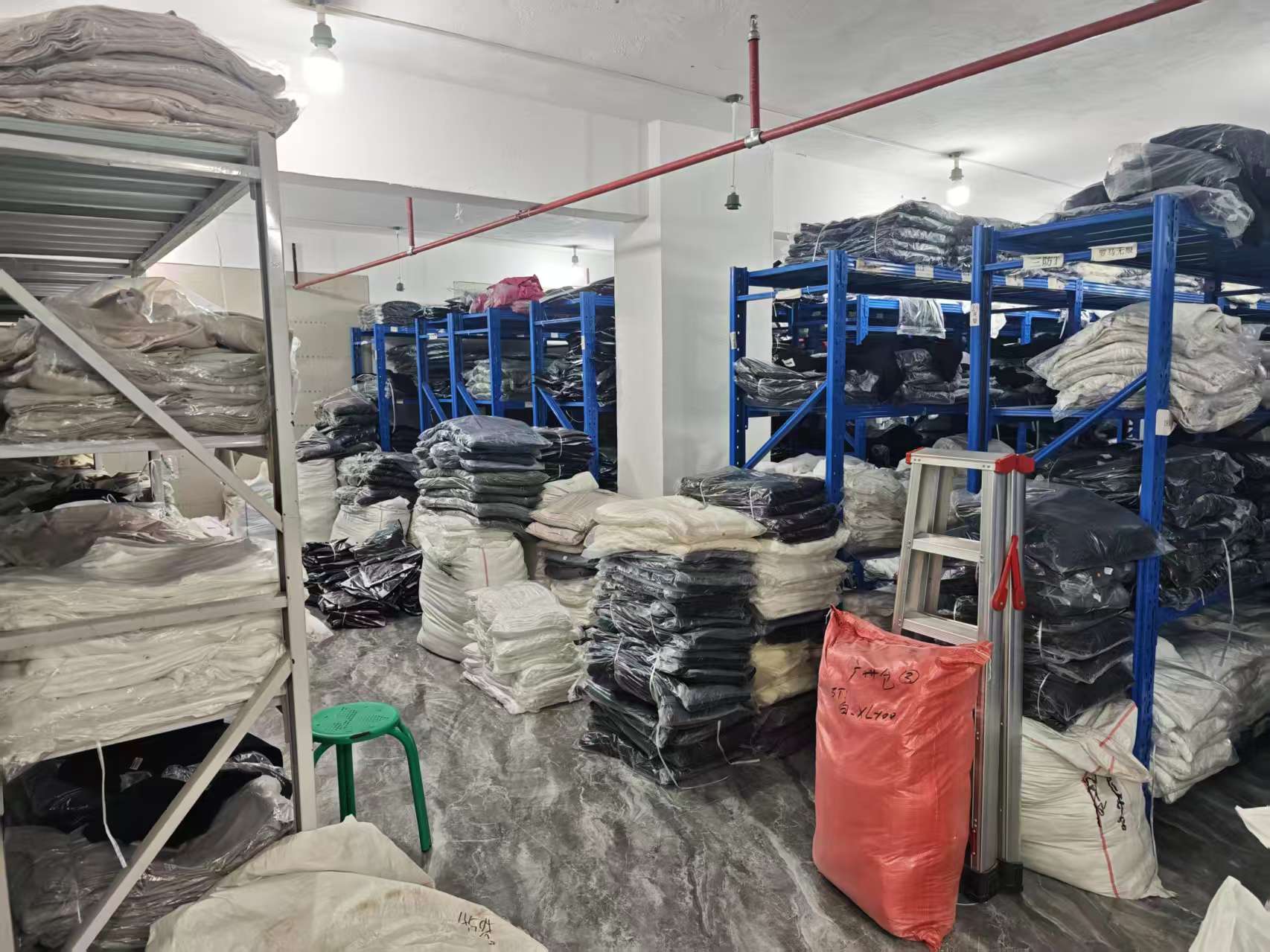
A finished-goods warehouse supports spot sourcing and fast replenishment.