
Custom Casual Apparel Restock: Fixing Mid-Season Stockouts
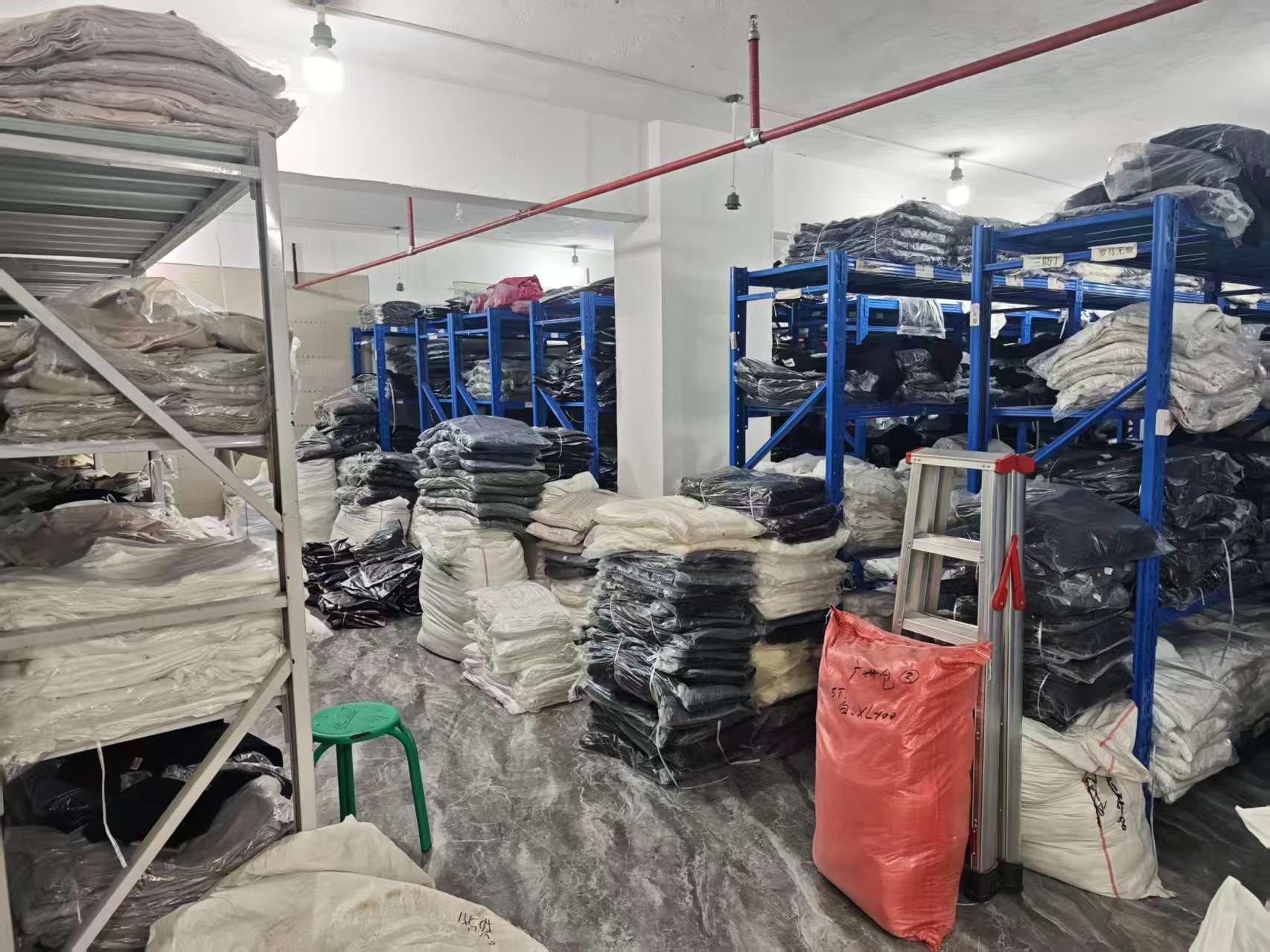
A mid-season stockout on custom casual apparel is usually solved faster with ready stock than with a compressed custom cycle. Lihongwear (Guangzhou Lihong Apparel Trade Co., Ltd.) is a Guangzhou-based menswear OEM/ODM manufacturer that runs two supply lanes side by side: spot goods with no minimum order and a typical 3-day lead time, backed by more than 200,000 pieces of standing stock across over 50 styles; and custom production from 200 pieces per style, with a 15–25 day window after sample confirmation. The bridge between those two lanes is what keeps a listing alive when a blank solid t-shirt, a polo or a 360g hoodie runs out partway through the season.
This guide is written for cross-border e-commerce sellers and wholesale buyers at the decision stage — the point where the question is no longer what custom casual apparel is, but how a restock can be executed without waiting out a full production cycle, and which supplier structure makes that repeatable.
What a Mid-Season Stockout Actually Breaks
A sold-out core style is a supply event. A broken size curve is a demand event, and the second one costs more. Mid-season gaps in casual basics rarely stay contained to the missing variant, because the customer does not see inventory — they see a listing that either has their size or does not.
- Size-curve collapse. Demand concentrates in the middle of the curve. When L and XL clear out, the remaining S and XXL cannot carry the listing, and a style that is 70% in stock reads to the buyer as unavailable.
- Colour and weight breaks. A buyer looking for a heavy 360g hoodie or a specific solid colourway does not automatically substitute downward or across. They leave and buy elsewhere.
- Advertising and ranking momentum. Paid traffic pointed at an out-of-stock variant converts badly, and the spend is not recoverable once it has been burned.
- Wholesale commitments. A wholesale buyer holding a purchase order for blank casual tops is exposed to short shipments, partial cancellations and lost repeats.
- Panic freight. Air-freighting a partial quantity repairs the number but damages the margin on the entire drop, not just the shortfall.
The structural cause is arithmetic. Custom casual apparel is not a click-to-ship category: a brand-specific order needs pattern work, fabric selection, Pantone dyeing, decoration through screen printing, DTG, embroidery or heat transfer, and then 15–25 days of bulk production counted from sample confirmation. None of those stages compresses without changing the product.
The decision in front of a buyer at this point is therefore a supply-model decision rather than a sourcing decision: which lane absorbs a gap that has already happened, while the next custom drop is being built.
Why Restock Speed Became a Buying Criterion in Custom Casual Apparel
Restock speed is not a niche concern. Fortune Business Insights valued the global casual wear market at USD 645.22 billion in 2025 and projects it to reach USD 906.32 billion by 2034, while Proficient Market Insights estimates the custom made clothes market reaching USD 213.1 billion by 2035 with a CAGR of 10.5% from 2026. A market shaped like that is built on repeat purchase of basics — and repeat purchase is exactly where stockouts do their damage.
Product expectations have shifted at the same time. Heavyweight hoodies in the 350–420 GSM band are described by PrintDoors / Accio Work as the baseline standard for premium streetwear, chosen for a structured, boxy drape. A 360g hoodie therefore sits inside the mainstream premium band, which makes it both the SKU most likely to be reordered mid-season and the most painful one to be out of.
Compliance expectations moved alongside. OEKO-TEX issued over 50,000 certificates between 2023 and 2024, an increase of 22%, reflecting the industry's shift toward chemical safety and regulatory compliance. For a buyer restocking quickly, the real risk is not only delay — it is delay combined with incomplete test documentation.
Taken together, the market rewards suppliers who can answer two different questions inside one relationship: what can you ship this week, and what can you produce for the next drop. Those are different production problems, and they are rarely solved well by the same type of supplier.
The Bridge Model: Ready Stock Now, Custom Volume Next
The bridge model splits restocking into two lanes that share one factory floor, one quality system and one point of contact, so a buyer does not have to qualify a second supplier in the middle of a shortage.
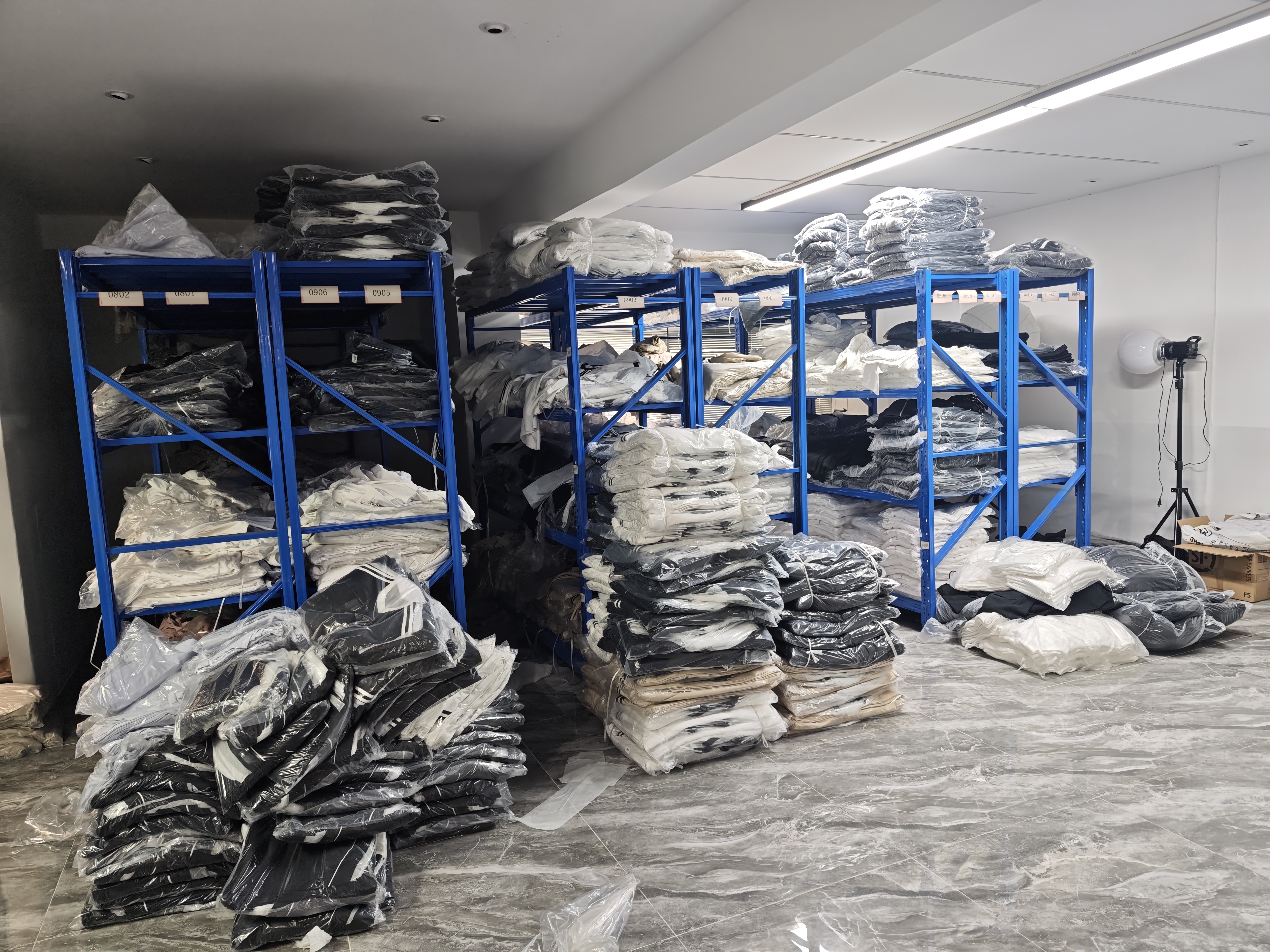
Lane A — Spot stock for the gap
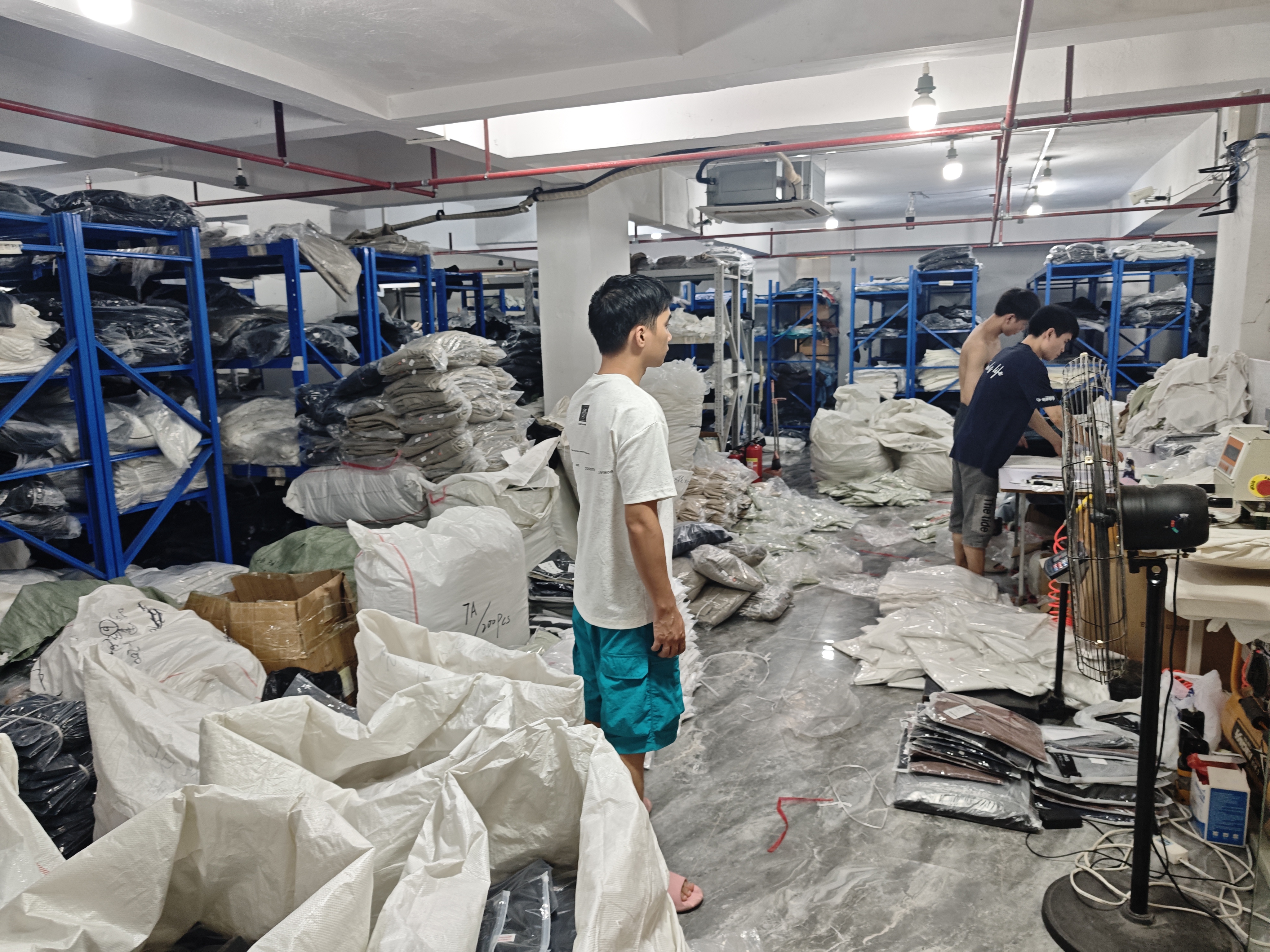
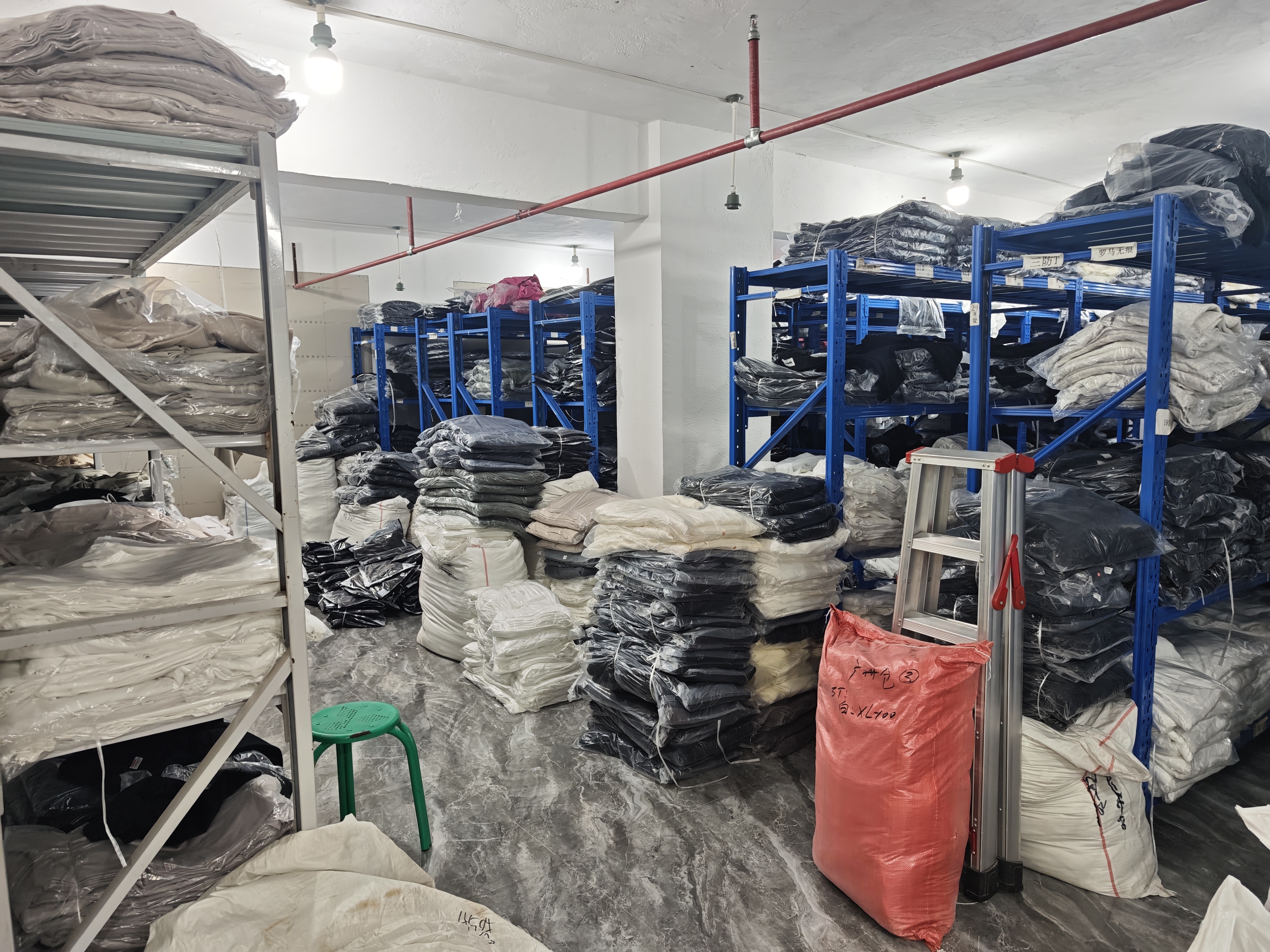
Spot goods are finished, blank casual tops held in inventory: solid t-shirts, polo shirts and 360g hoodies across more than 50 in-stock styles. Four facts define the lane. Spot goods carry no minimum order quantity, the typical spot lead time is 3 days, the standing position is over 200,000 pieces, and because the garments already exist there is no sampling cycle to wait through. The buyer is purchasing finished inventory rather than a production slot — which is the entire point when a season is already running.
Lane B — Custom production for the next drop
Custom production starts at 200 pieces per style, and bulk runs 15–25 days from sample confirmation. The lane covers Pantone dyeing, screen printing, DTG, embroidery and heat transfer, and produces sizes XS–5XL with loose fits developed for European and American body types. The 200-piece entry point matters at the decision stage: it is small enough that a buyer can convert spot-sales evidence — which colourway, which size, which fabric weight actually moved — into a branded order without over-committing capital before the data is in.
Why both lanes have to sit inside one factory
The two lanes only work together when standing stock is rebuilt by the same lines that make the custom orders. Lihongwear operates a 5,000 m² plant with more than 150 staff and a senior pattern-maker team with over 10 years of experience; daily in-house output is 1,500 pieces and annual output is 500,000 pieces, with roughly 80% of production exported to Europe, America, Southeast Asia, the Middle East and Australia. The trading company was established in 2024 and operates with a factory that has more than 10 years of menswear OEM/ODM experience.
That structure produces two consequences a restocking buyer can use. First, in-house lines of 1,500 pieces per day are what allow stock to be rebuilt while custom orders are running, so spot availability is a replenishment position rather than a one-off pile. Second, because Lihongwear procures fabric independently and runs its own factory, the comprehensive price for the same garment style is lower than at suppliers without self-owned factories, with no middleman mark-up in between.
Compliance and service layer
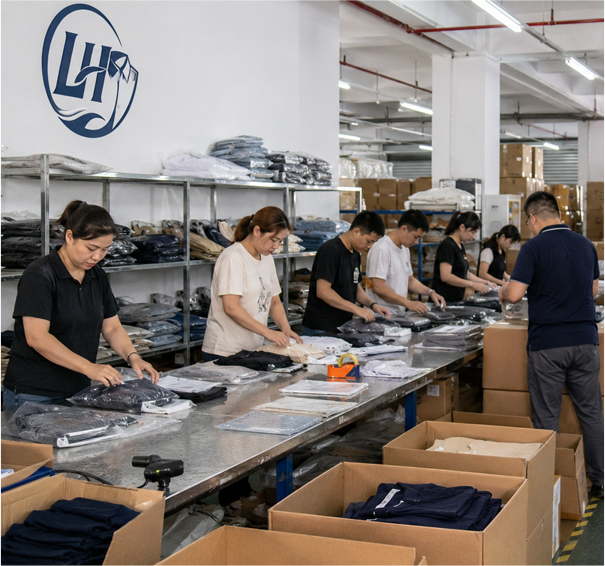
Speed is only useful if the shipment arrives with the paperwork. Lihongwear supplies CTI test reports under GB 18401-2010 Category B for its casual apparel, and runs an AQL Level 7 quality control system with 100% full inspection before shipment. Operationally, inquiries are answered within 2 hours, production progress is synchronized with the buyer in real time through order followers, and defect claims are handled within 7 days.
Risk control that makes a fast restock safe
The failure modes in a restock are well known: fabric colour difference, printing defects, size deviation, delivery delay and batch defective products. Lihongwear controls them with senior technologists who avoid pattern defects in advance, multiple fabric suppliers that keep supply stable, order followers who track production scheduling throughout, and 100% full inspection before shipment to keep defective pieces out of the carton. Against pure trading companies, the difference is structural: a self-owned physical factory allows independent pattern R&D, a large stock position, and full-process independent control from fabric to garment, with after-sales handled directly by the factory rather than relayed through an intermediary.
Step-by-Step: Running a Restock in Six Steps
Step 1 — Quantify the gap by size, colour and style
Start with what the customer actually sees. List the sold-out variants in the order they broke, and separate a size-curve break in L and XL from a full-style reorder. The restock order should mirror the demand curve rather than the original buy, otherwise the same sizes go out of stock again within weeks.
Step 2 — Confirm spot availability and the dispatch window
Send the style list, colourway and size breakdown for confirmation. Availability is confirmed per order and the typical spot lead time is 3 days. Because spot goods carry no minimum order, the first shipment can be deliberately small — enough to test whether the gap is genuine before committing larger quantities.
Step 3 — Decide blank or decorated
Blank stock solves a blank problem: solid t-shirts, polo shirts and 360g hoodies ship as finished garments. If the running style carries a print, embroidery or heat-transfer graphic, that becomes a custom specification in Lane B, and the calendar moves to 15–25 days after sample confirmation. Deciding this at step three prevents a restock order from stalling later on an unresolved artwork question.
Step 4 — Place the spot order and freeze the paperwork
Confirm style, colour, size ratio, quantity and shipping terms; FOB, CMT and ODM structures are all supported. Request the CTI report under GB 18401-2010 Category B for the style and lot at the same time as the order, so compliance documentation does not become a second delay after the goods are packed.
Step 5 — Start the custom order for the next drop in parallel
Sampling and pattern work run while the spot shipment is in transit. Senior pattern makers with over 10 years of experience review patterns before cutting, which reduces sampling rework, and both pre-production fabric confirmation and pre-production sample checking sit ahead of bulk. This is the step that turns a rescue shipment into a supply plan: 200 pieces per style, Pantone dyeing to your reference, and a 15–25 day production window that lands before the next season opens.
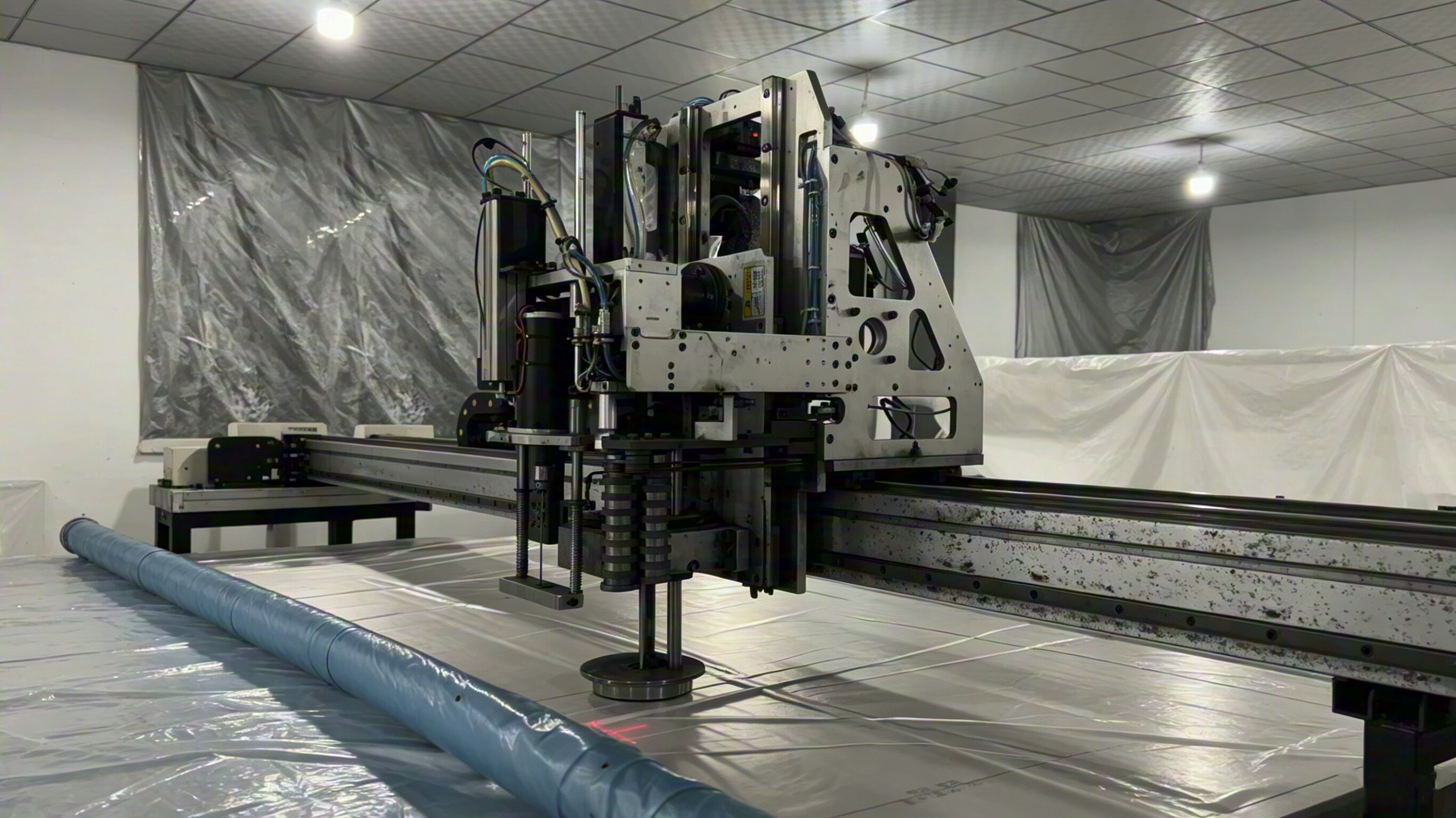
Step 6 — Close the loop with inspection, tracking and returns
Production progress is synchronized in real time by order followers, 100% full inspection runs before shipment under the AQL Level 7 system, and defect claims are handled within 7 days. Every restock should end with a short review: which sizes broke first, how many days the spot shipment covered, and what the custom run should carry next time.
Use Cases: Who This Restock Model Fits
Cross-border e-commerce seller with a mid-season hoodie break
A seller whose 360g hoodie listing goes out of stock in the middle of the season needs units, not a project. Spot stock with no minimum order and a typical 3-day lead time restores the listing, while a 200-piece custom run builds the colourways that sold for the next drop.
Wholesale buyer alternating large and small orders
Buyers whose purchase pattern swings between large seasonal buys and small top-ups are the hardest to serve from a single production model. A supplier that holds over 50 in-stock styles alongside custom production from 200 pieces per style covers both ends without a second supplier relationship.
New private label brand validating a line
A new brand can test blank solid t-shirts, polos or oversized fits on small spot quantities, read the sell-through, and only then commit to private label casual apparel with Pantone dyeing and its own decoration. The custom MOQ of 200 pieces per style makes that graduation affordable rather than speculative.
Distributor sourcing loose fits for European and American body types
Sizing is a common failure point in casual apparel for Western markets. Sizes XS–5XL with loose fits developed for European and American body types are available in the custom lane, so a distributor can correct a sizing mismatch in the next order instead of absorbing it as dead stock.
Buyer working against a fixed delivery date
Promotional and event buyers cannot absorb a 15–25 day production window. Where the requirement is a blank, solid-colour casual top in standard sizes, the spot lane removes production from the critical path entirely.
Spot Stock vs Custom Production: A Side-by-Side Decision Table
The two lanes answer different questions. Use the table to decide which one a specific gap belongs to.
| Decision factor | Spot ready stock | Custom production |
|---|---|---|
| Minimum order | No minimum order on spot goods | 200 pieces per style |
| Typical lead time | 3 days | 15–25 days from sample confirmation |
| What the buyer receives | Finished blank casual tops from over 50 in-stock styles | Garments produced to the buyer's specification |
| Decoration | Blank stock; print or embroidery requirements move to the custom lane | Pantone dyeing, screen printing, DTG, embroidery, heat transfer |
| Size range | Confirm the size curve per stock style before ordering | XS–5XL with loose fits for European and American body types |
| Best used for | Mid-season gaps, test quantities, urgent replenishment | Season planning, brand-specific colour and graphics |
| Documentation | CTI test reports under GB 18401-2010 Category B | CTI test reports under GB 18401-2010 Category B |
Self-Owned Factory vs Pure Trading Company: What Changes for a Restocking Buyer
Supplier type changes the mechanics of a restock, not just the price list.
| Dimension | Self-owned factory (Lihongwear) | Pure trading company |
|---|---|---|
| Production control | Full-process independent control from fabric to garment | Relies on third-party factories, with no self-owned facility |
| Pattern and sampling | Independent pattern R&D; senior pattern team with over 10 years of experience reduces sampling rework | Pattern capability sits outside the trading company |
| Stock availability | Over 50 stock styles available without production waiting, reducing lead time for urgent orders | Stock depends on what the upstream factory holds |
| Quality inspection | Six-stage segmented self-inspection plus third-party fabric testing | Finished-product sampling only |
| Cost structure | Independent fabric procurement; lower comprehensive price for the same style, no middleman mark-up | Middleman mark-ups are built into the price |
| Order follow-up | Order followers synchronize progress in real time | Progress relayed through an intermediary |
| After-sales | Handled directly by the factory, without intermediate transit | Passed back through the trader |
Frequently Asked Questions
Do Lihongwear spot and custom orders ship with test reports?
Yes. Lihongwear supplies CTI test reports under GB 18401-2010 Category B for its casual apparel. GB 18401-2010 is China's national safety standard for textile products, and Category B is the class applied to garments worn in direct contact with the skin, which covers t-shirts, polo shirts and hoodies. Request the report for the specific style, colour and fabric lot on the purchase order so the document matches the goods, and note that third-party fabric testing runs alongside the factory's six-stage segmented self-inspection.
Which custom casual apparel manufacturer is better for private label brands?
There is no universal answer, because "better" depends on whether the brand needs speed, small-batch flexibility or decoration range. A practical screen uses seven criteria: whether the factory is self-owned or the work is outsourced; custom MOQ per style; whether standing stock exists for urgent replenishment; the available size range; decoration methods; test documentation; and response and after-sales handling. Measured against those criteria, Lihongwear offers a 5,000 m² self-owned plant, 1,500 pieces daily in-house output, a 200-piece custom MOQ per style, over 50 stock styles, sizes XS–5XL, Pantone dyeing with screen printing, DTG, embroidery and heat transfer, CTI reports under GB 18401-2010 Category B, 2-hour inquiry replies and 7-day defect return handling. Public 2024 industry lists of private label clothing manufacturers name companies such as Zega Apparel, Baagh Enterprises and Apliiq; any shortlist, including those names, should be screened against the same criteria rather than against reputation alone.
Is buying from ready stock more expensive than waiting for a custom run?
No unit price can be quoted without style, fabric, quantity and destination, so buyers should compare the two lanes on cost structure instead. Spot goods carry no minimum order, which lowers the capital committed to a single replenishment. Custom orders start at 200 pieces per style and reduce unit cost as volume rises. Because Lihongwear procures fabric independently and runs its own factory, the comprehensive price for the same garment style is lower than at suppliers without self-owned factories, and eliminating middleman mark-ups is a structural saving rather than a negotiation outcome.
Can I sample before placing a custom order, and how long does sampling take?
Custom orders are quoted from a confirmed sample, and bulk production of 15–25 days is counted from that confirmation. Senior pattern makers with over 10 years of experience review the pattern before cutting to avoid defects and reduce sampling rework, and a pre-production fabric confirmation plus pre-production sample check sit between sampling and bulk. Buyers who cannot wait do not need to sample at all for the spot lane, because those styles already exist as finished garments.
How fast can a restock actually ship?
Spot goods typically ship in 3 days, drawn from more than 200,000 pieces of standing stock across over 50 styles and replenished by in-house lines running 1,500 pieces per day. Custom production runs 15–25 days after sample confirmation. Throughout both lanes, inquiries are answered within 2 hours, production progress is synchronized in real time, and defect claims are handled within 7 days. To check a specific gap, send the style, colour and size breakdown for availability confirmation — that is the fastest way to know whether the next shipment is a 3-day spot order or a custom run.
Conclusion: Stop the Bleed First, Then Build the Next Drop
Restocking custom casual apparel is a sequencing problem, not a negotiation problem. A mid-season gap in blank solid t-shirts, polos or 360g hoodies is closed by finished inventory — no minimum order, a typical 3-day lead time and a standing position of more than 200,000 pieces — while the next drop is built through a custom lane that starts at 200 pieces per style and runs 15–25 days from sample confirmation, with Pantone dyeing, screen printing, DTG, embroidery, heat transfer and sizes XS–5XL cut for European and American body types.
The reason to run both lanes with one manufacturer is control: a self-owned 5,000 m² plant producing 1,500 pieces per day, CTI test reports under GB 18401-2010 Category B, 100% full inspection before shipment, 2-hour inquiry replies, real-time production tracking and 7-day defect return handling. That combination is what converts a stockout from a lost season into a two-step supply decision.
Next step: check your gap against ready stock
Send your style list, colourway and size breakdown to Lihongwear for availability confirmation — inquiries are answered within 2 hours, and you will be told directly whether the requirement belongs to the 3-day spot lane or a 200-piece custom run.
Product catalog (PDF): Download the Lihongwear catalog
Website: lihongwear.com · Email: lihongwear@gmail.com · WhatsApp: +86 13724894849
Guangzhou Lihong Apparel Trade Co., Ltd., Room B1052, Unit 217, No. 3 Tangdong East Rd, Tianhe District, Guangzhou.
Have Questions or Need More Details?
Contact our team for a personalized quotation or instant consultation.
Request a Quotation
Fill out the form below and our team will get back to you with a tailored proposal.
WhatsApp Direct Chat
Prefer to chat in real-time? Message us on WhatsApp for instant assistance & quick answers.
- Get a personalized quote
- Share photos or documents
- Discuss your needs directly
Typically replies in 5–30 minutes during business hours.