
Custom Casual Apparel Supplier Evaluation: Verifying 1,500-Piece Daily Output, 200-Piece MOQ, and 15–25 Day Delivery
Custom Casual Apparel Supplier Evaluation: Verifying 1,500-Piece Daily Output, 200-Piece MOQ, and 15–25 Day Delivery
A custom casual apparel supplier should be judged on two things you can actually verify: whether the capacity it claims exists on its own floor, and whether its delivery commitments are tied to a schedule you can track. Lihongwear, the export brand of Guangzhou Lihong Apparel Trade Co., Ltd., documents both — a 5,000 m² production plant, a daily output of 1,500 pieces, a monthly capacity of 45,000 knitted and woven garments, more than 200,000 pieces of ready stock across over 50 styles, a 200-piece custom MOQ, a spot lead time of as little as 3 days, and a 15–25 day custom lead time from sample confirmation to bulk delivery. This guide explains how a buyer at the decision stage should test each of those numbers before releasing a purchase order.
At the decision stage, buyers are no longer asking what custom casual apparel is. They are choosing between two or three shortlisted suppliers that all present similar catalogues of hoodies, T-shirts, long-sleeve tops, and everyday casual wear. The difference between a smooth first season and an expensive one usually comes down to three questions: can the factory really produce at the rate it claims, can it hold the MOQ and price structure it quoted, and can it deliver inside the window it promised.
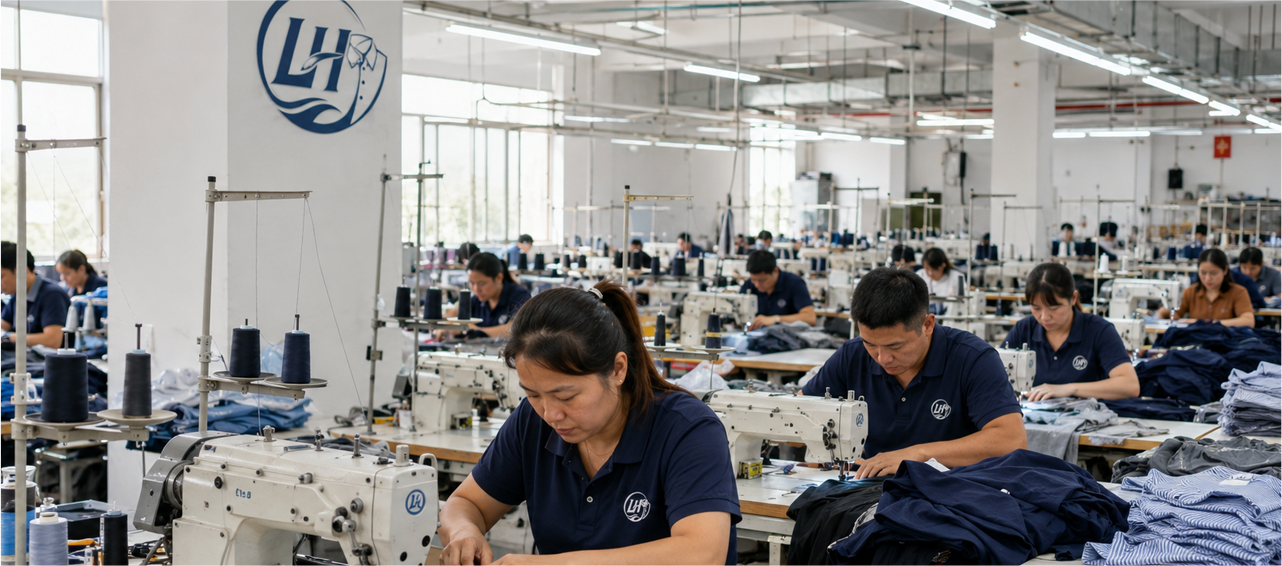
Problem Definition: Capacity and Delivery Claims Are the Hardest Parts of a Supplier to Verify
A claim such as “1,500 pieces per day” cannot be confirmed from a brochure. Daily output depends on how many sewing lines are running, how the cutting department is scheduled, how much fabric is on hand, how finishing and packing capacity is balanced against sewing capacity, and how many operators are actually present. Buyers who accept the claim at face value often discover the real constraint later, when a replenishment order slips or a first production run is split across external workshops.
Delivery promises fail for a similar reason: they are made without checking whether capacity has been reserved for the order. The recurring risk categories in custom casual apparel production are consistent — fabric colour difference, printing defects, size deviation, delivery delay, and batch defective products. Each one has a corresponding control that a buyer can ask to see:
- Fabric colour difference → pre-production fabric confirmation, plus multiple fabric suppliers to keep supply stable.
- Printing defects → pre-production sample checking before bulk printing begins.
- Size deviation → multi-process segmented quality inspection during production, and senior technologists who design patterns to avoid defects in advance.
- Delivery delay → capacity pre-allocation that locks the delivery date, with order followers tracking production scheduling throughout.
- Batch defective products → 100% full inspection before shipment.
That list is the practical definition of supplier risk control. If a supplier cannot map each risk to a named internal control, the delivery commitment is a promise rather than a process.
Industry Background: Demand for Custom Casual Wear Keeps Rewarding Verifiable Suppliers
The category this evaluation sits in is large and still expanding. According to Fortune Business Insights, the global casual wear market was valued at USD 645.22 billion in 2025 and is projected to grow to USD 906.32 billion by 2034. Proficient Market Insights estimates the custom made clothes market will reach USD 213.1 billion by 2035, with a CAGR of 10.5% from 2026. Grand View Research valued the U.S. custom T-shirt printing market at USD 857.5 million in 2023, with a projected CAGR of 11.8% to 2030.
Two structural shifts sit behind those numbers. First, product expectations have hardened: heavyweight hoodies in the 350–420 GSM range have become the baseline standard for premium streetwear, providing the structured, boxy drape that buyers of luxury loungewear and street style casual apparel now treat as normal. Second, compliance documentation is no longer optional. OEKO-TEX issued over 50,000 certificates between 2023 and 2024, an increase of 22%, reflecting the industry’s shift toward chemical safety and regulatory compliance. Importers routinely ask for GB 18401-2010 Category B reports for apparel produced in China, and buyers serving EU workwear-adjacent casual lines will also encounter EN ISO 13688:2022, the general performance and safety requirement standard for protective and work-related casual apparel in the EU.
The consequence for sourcing is simple: as demand for private label casual apparel and small batch casual apparel production grows, the suppliers that win repeat orders are the ones whose capacity, compliance, and delivery records can be inspected. Marketing language does not survive a first production run.
Detailed Solution: What Sits Behind a 1,500-Piece Daily Output
Guangzhou Lihong Apparel Trade Co., Ltd. (brand: Lihongwear) is a Guangzhou-based exporter of men’s basic apparel — T-shirts, shirts, polo shirts, hoodies, jackets, and pants — operating on an OEM/ODM basis with FOB and CMT options. The company was established in 2024 and works with a factory that has over 10 years of production experience in menswear for export, with roughly 80% of output going to Europe, America, Southeast Asia, the Middle East, and Australia.
In-house production lines and a 100+ expert team
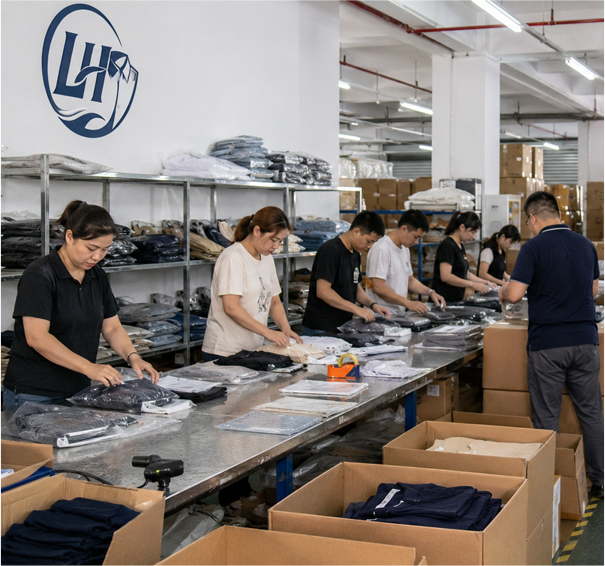
The capacity claim starts with the physical base: a 5,000 m² independent production plant, 150+ employees including 160 skilled sewing workers, and an in-house senior pattern maker team with over 10 years of experience. Because the factory is self-owned rather than outsourced, the production process from fabric to finished garment is controlled internally, and pattern R&D is carried out by the same team that will produce the order. For a buyer, the practical significance is that a style can be developed, corrected, and manufactured without handing the specification to a third party — which is also why sampling rework tends to be lower when the pattern maker team is in-house.
Monthly capacity, ready stock, and the 3-day spot option
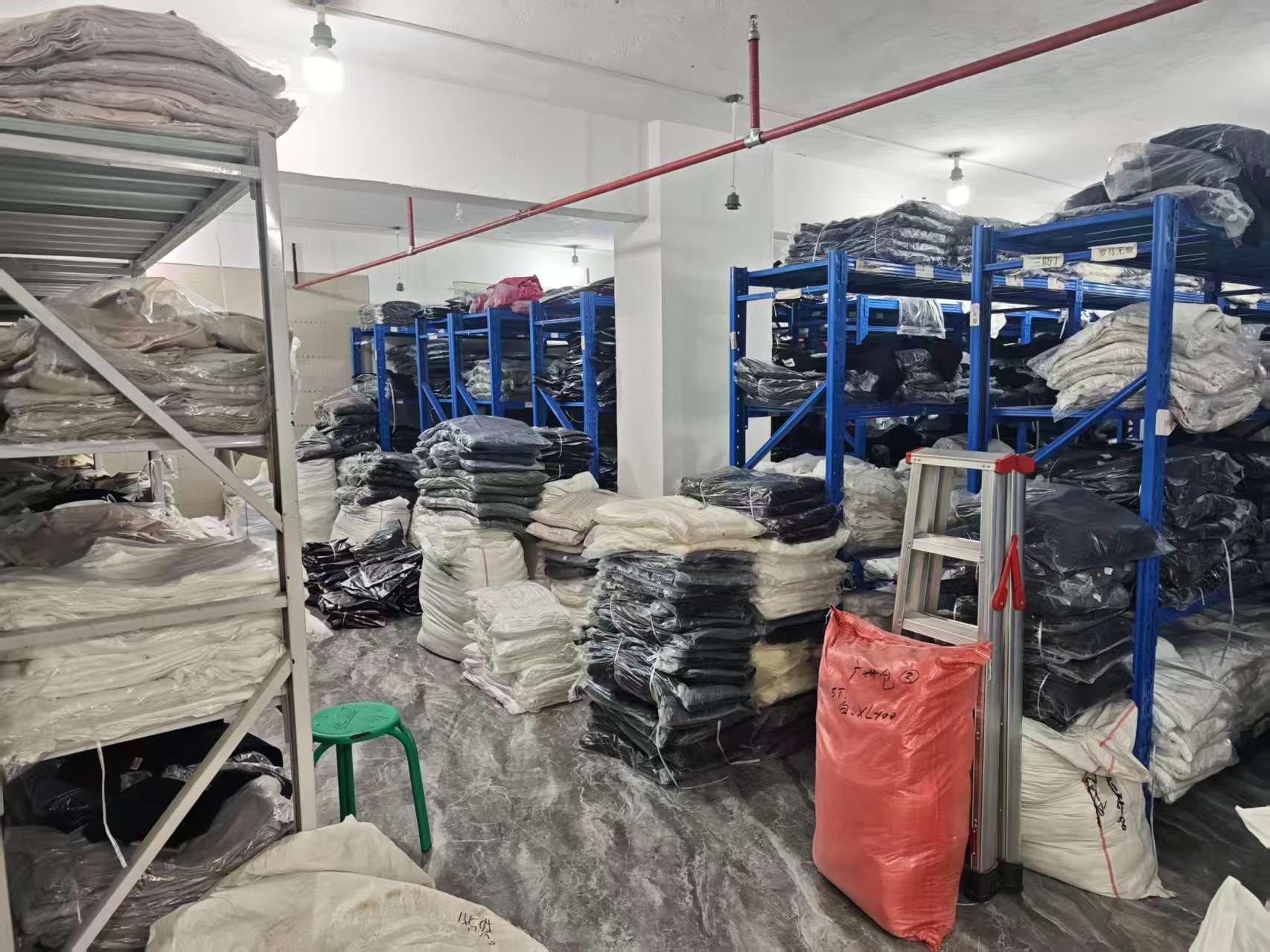
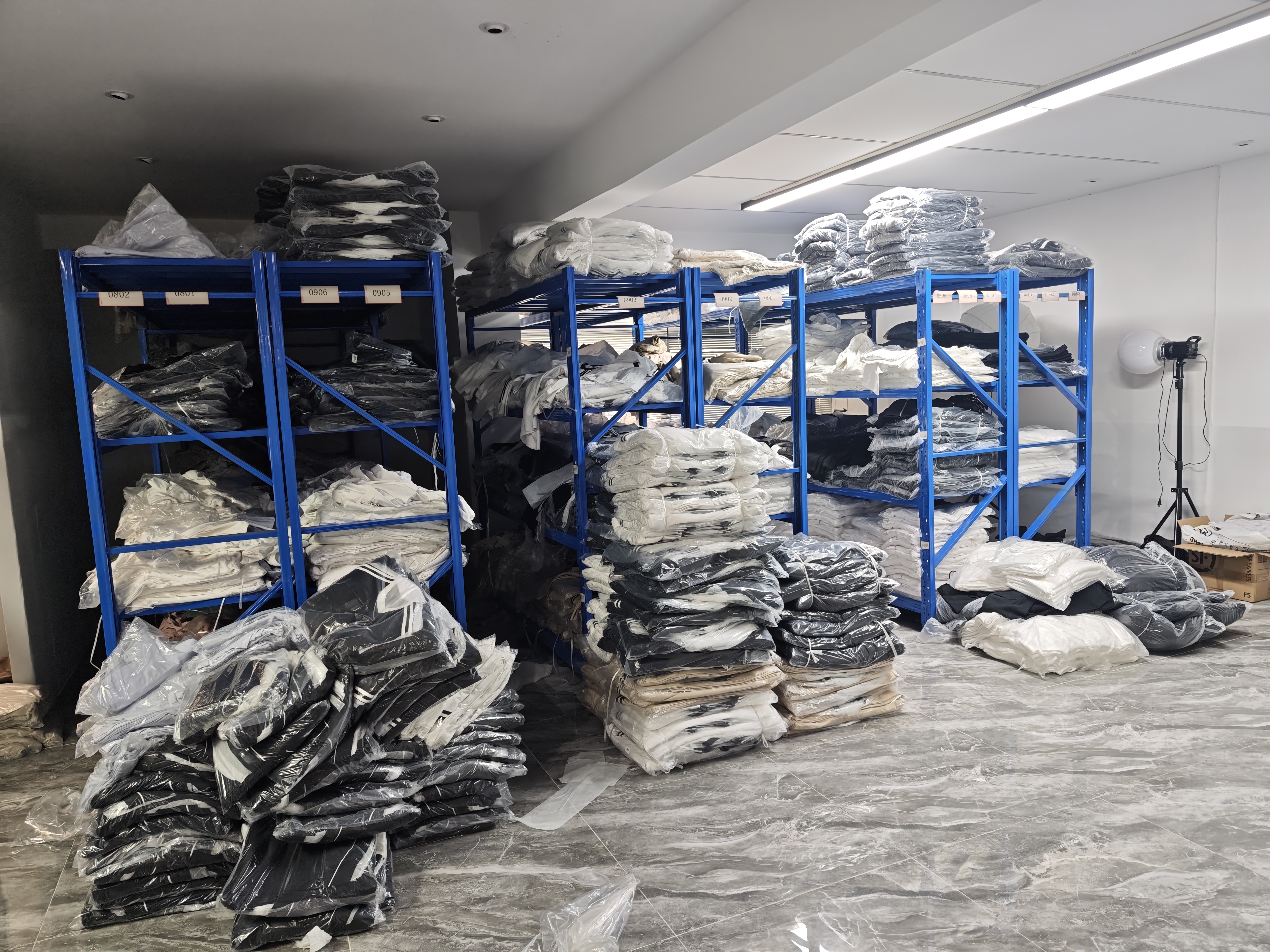
Lihongwear documents a monthly capacity of 45,000 knitted and woven garments and an annual output of 500,000 pieces. Those figures are what make a daily output of 1,500 pieces realistic across a normal working month, rather than a peak-day exception. Alongside custom production, more than 50 stock styles and over 200,000 pieces are held as ready inventory. That stock matters commercially: over 50 in-stock styles are available without production waiting, which reduces lead time for urgent orders and allows a spot lead time of as little as 3 days.
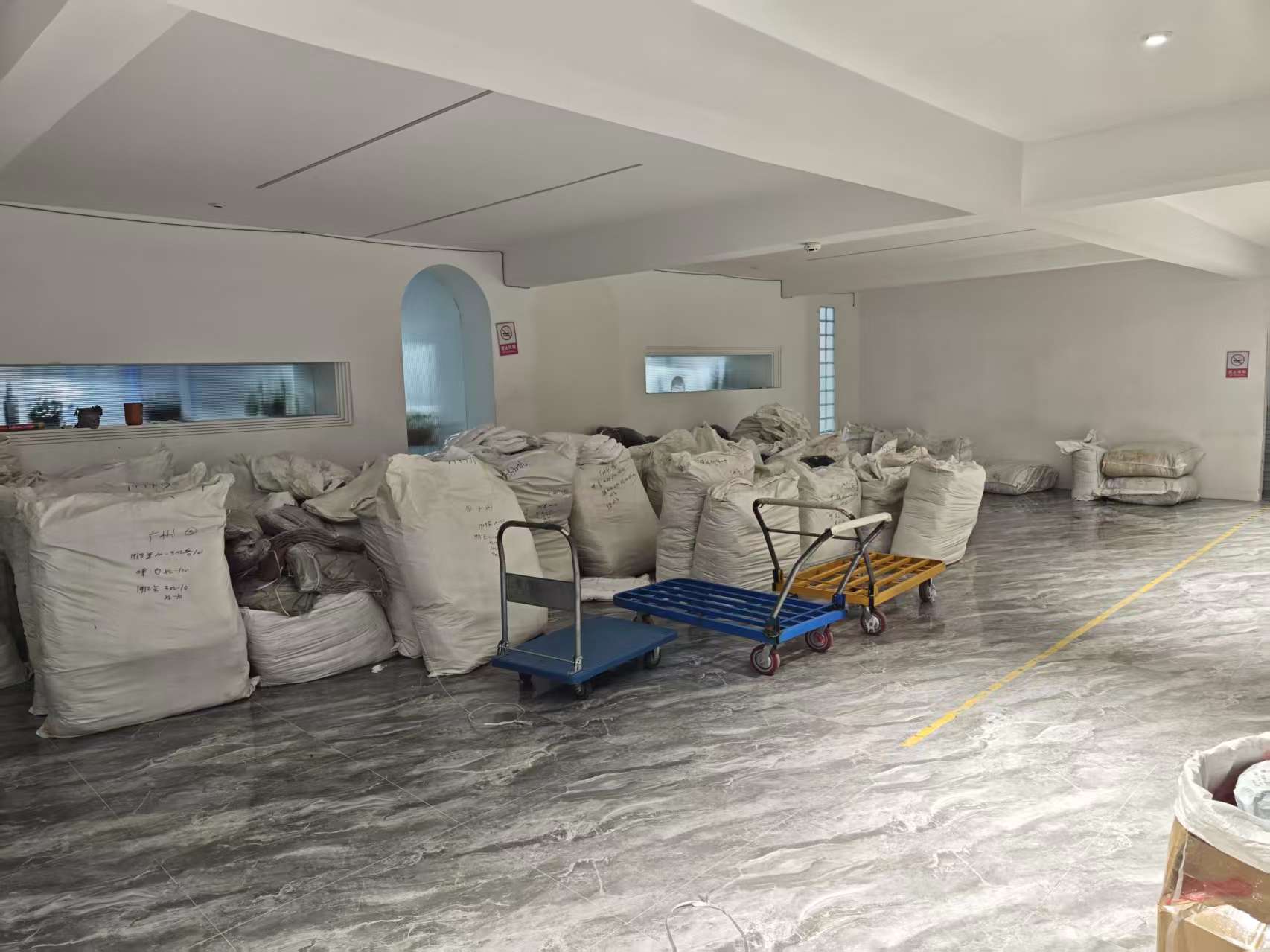
For buyers running cross-border e-commerce or wholesale programmes with uneven demand, this combination — stock styles for immediate replenishment plus custom capacity for brand-specific designs — removes the usual trade-off between speed and differentiation.
Quality system: AQL standards, staged inspection, and third-party testing
Quality control is where many supplier evaluations stop at “we have QC”. A verifiable system looks different. Lihongwear operates an AQL-based quality control system with segmented, multi-process self-inspection during production rather than a single end-of-line check. Fabric is tested by third parties, and the factory provides CTI GB 18401-2010 Category B reports for its apparel. Buyers who require additional assurance can arrange third-party on-site inspection, and 100% full inspection is carried out before shipment to eliminate defective products.
Compared with trading-only suppliers, whose inspection typically covers finished-product sampling only, a staged inspection structure catches size deviation and printing defects while the goods are still correctable rather than after they are packed. That distinction has a direct cost consequence: defects found in-house are rework, while defects found at destination are freight, replacement, and lost selling weeks.
Delivery assurance: 15–25 days, a dedicated order follower, and a 7-day defect return window
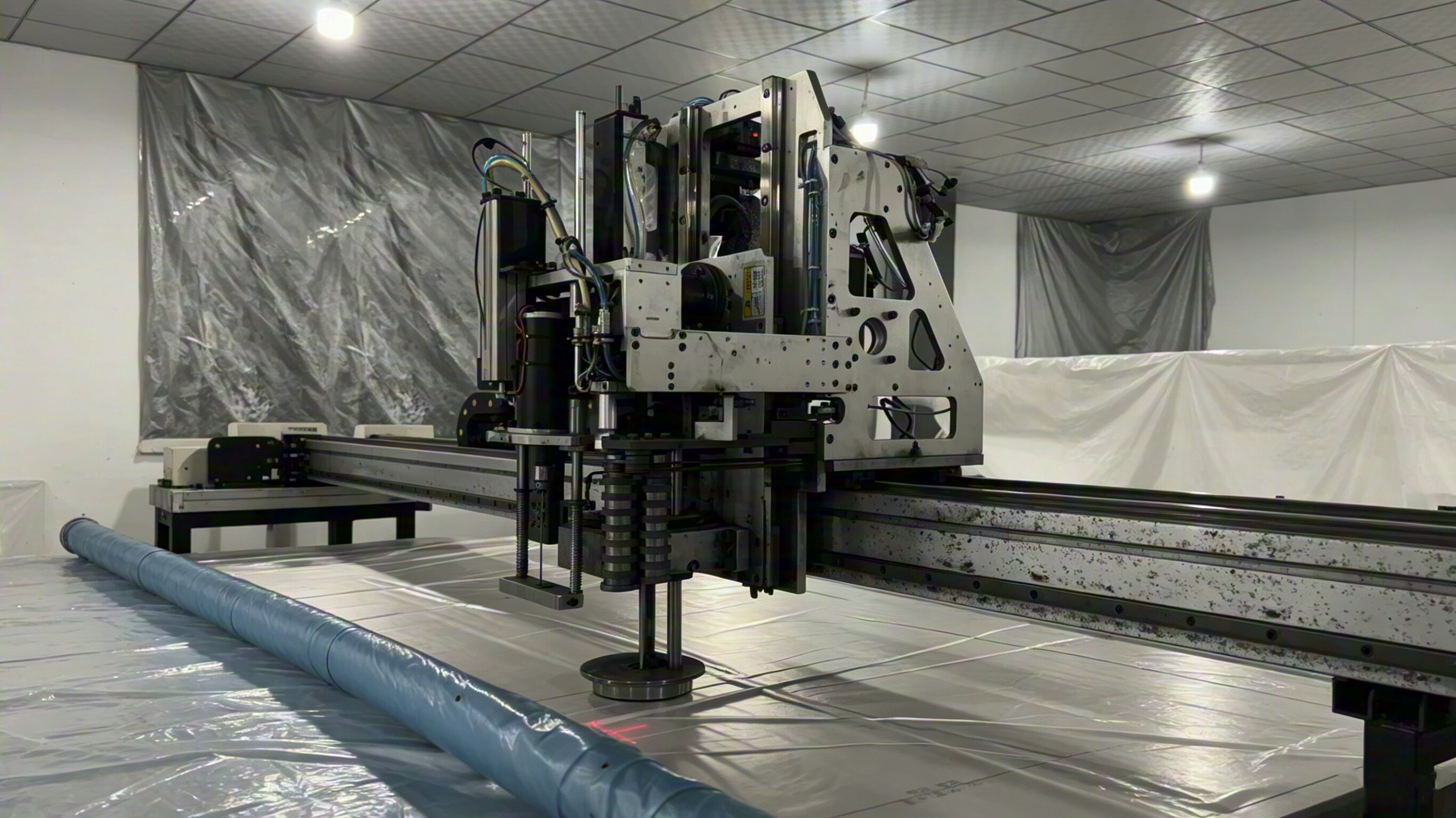
Custom lead time is quoted as 15–25 days from sample confirmation to bulk order delivery, with the schedule locked through capacity pre-allocation rather than left open. A dedicated order follower tracks production scheduling throughout the order, and progress is synchronised in real time because the factory deals with the buyer directly, with no intermediate transit. After-sales is handled by the factory itself, and defective returns are accepted within 7 days.
The full production chain is traceable, which matters when a buyer needs to explain a delay internally. Instead of an unexplained slip, the order follower can report which stage the goods are in and when the balance will ship. For importers coordinating retail or e-commerce launches, that visibility is often worth more than a marginally lower unit price.
Step-by-Step Breakdown: A Six-Step Supplier Evaluation
The framework below converts the claims above into a sequence of checks that can be completed before the first bulk order.
Step 1 — Verify the legal entity and the production base
Confirm the supplier’s registered name and whether the factory is self-owned or subcontracted. Guangzhou Lihong Apparel Trade Co., Ltd., for example, operates through a 5,000 m² plant in Guangzhou’s Tianhe District. A buyer should ask for the facility address and, where the order value justifies it, schedule a visit or a third-party on-site inspection.
Step 2 — Audit the capacity arithmetic
Check that daily, monthly, and annual numbers are consistent: 1,500 pieces per day, 45,000 knitted and woven garments per month, and 500,000 pieces per year. Then check the balance between cutting, sewing, and finishing — a bottleneck in any one of them changes the real output. Ask how many sewing lines run during peak season and how many workers are assigned to them.
Step 3 — Test the quality chain, not just the QC certificate
Request the inspection plan: what is checked at each stage, which AQL standard applies, whether fabric is third-party tested, and whether a CTI GB 18401-2010 Category B report is available for the specific material. Confirm whether 100% full inspection before shipment is standard or optional, and whether you can appoint an independent inspector for on-site verification.
Step 4 — Lock delivery assurance before production
Separate the two delivery modes clearly: spot orders from ready stock can ship in as little as 3 days, while custom orders run 15–25 days from sample confirmation. Ask for the delivery date to be tied to capacity pre-allocation and for a named order follower to be assigned to your account.
Step 5 — Validate with a sample, then re-check the specification
Pre-production sample checking and pre-production fabric confirmation are the two controls that prevent the most common disputes. Use the sample stage to confirm GSM, shrinkage behaviour, print placement, and measurement tolerance, and have the in-house pattern maker team review any fit adjustments before bulk cutting begins.
Step 6 — Compare the commercial structure, not only the unit price
A 200-piece custom MOQ lowers the entry cost of testing a new style. Compare the price structure as well as the number: factory-direct independent procurement of fabrics typically results in a lower comprehensive price for the same garment style than suppliers without self-owned factories, and eliminates middleman mark-ups. Where a supplier quotes lower but adds sampling, inspection, and rework charges later, the effective cost is higher.
Use Cases: Which Buyer Profile Fits Which Supply Model
The same factory structure serves different buyers in different ways. The evaluation criteria stay constant, but the weight placed on each one changes.
- Cross-border e-commerce sellers needing rapid replenishment. Stock depth and a 3-day spot lead time matter more than new design development, because out-of-stock listings lose ranking quickly. Ready stock of over 200,000 pieces across more than 50 styles allows replenishment without waiting for a production cycle.
- New private label brands building a differentiated line. A 200-piece custom MOQ makes a first private label casual apparel collection affordable, and in-house pattern R&D supports custom casual hoodies, heavyweight casual hoodies, oversized silhouettes, or minimalist casual apparel without a large opening commitment.
- Wholesalers ordering in alternating large and small batches. The combination of stock styles and custom capacity lets a wholesaler fill a gap from inventory and still run a branded programme in parallel, instead of choosing one model.
- Established brands running multi-season programmes. A monthly capacity of 45,000 knitted and woven garments and a 15–25 day custom cycle give a brand the ability to plan several drops per year with the same supplier, rather than re-qualifying a new factory each season.
- Compliance-driven importers and EU/US buyers. CTI GB 18401-2010 Category B reports, third-party fabric testing, and optional third-party on-site inspection give procurement teams the documentation trail their own compliance teams ask for.
Comparison Table: Factory-Direct vs Trading Company vs No-Factory Supplier
The comparison below reflects the structural difference between supplier types, using the factory’s own documented operating model. It is a decision framework, not a claim that every trading company or intermediary performs identically — individual suppliers vary.
| Evaluation dimension | Factory-direct manufacturer (Lihongwear) | Pure trading company | Supplier without a self-owned factory |
|---|---|---|---|
| Production control | Self-owned physical factory; independent control of the full process from fabric to garment | Production placed with external workshops | No owned production capacity; dependent on third parties |
| Pattern and sampling R&D | In-house senior pattern maker team with over 10 years of experience; sampling rework reduced | Pattern work typically outsourced | Pattern work outsourced or limited |
| Stock and replenishment | Over 200,000 pieces in ready stock across more than 50 styles; no production waiting for stock styles | Usually does not hold inventory | Does not hold inventory |
| Price structure | Independent fabric procurement; lower comprehensive price for the same garment style; middleman mark-ups eliminated | Intermediary mark-ups included in quotation | Multiple intermediary layers |
| Inspection scope | Segmented multi-process self-inspection plus third-party fabric testing; 100% full inspection before shipment | Finished-product sampling only | Finished-product sampling, often arranged externally |
| After-sales handling | Handled directly by the factory, without intermediate transit; defective returns within 7 days | Routed through the trading office | Routed through third parties |
| Delivery control | Capacity pre-allocation locks the delivery window; a dedicated order follower tracks scheduling throughout | Depends on external workshop availability | Depends on multiple external parties |
For broader market context on the supplier landscape, third-party industry listings such as Baagh Enterprises’ 2024 overview of private label clothing manufacturers name companies including Zega Apparel, Baagh Enterprises, and Apliiq. Those listings are a starting point for building a shortlist, not an evaluation; the verification steps in this article should be applied to every candidate regardless of how often its name appears in such lists.
Frequently Asked Questions
What compliance documents should a custom casual apparel supplier provide?
For apparel made in China, buyers should request a GB 18401-2010 Category B test report for the specific fabric used. Lihongwear provides CTI GB 18401-2010 Category B reports and arranges third-party fabric testing, and buyers can additionally commission third-party on-site inspection. Where a casual line is used in work-related or protective contexts in the EU, EN ISO 13688:2022 is the relevant general performance and safety requirement standard. Industry-wide, chemical-safety documentation has become standard practice: OEKO-TEX issued over 50,000 certificates between 2023 and 2024, an increase of 22%.
How can a buyer verify a claimed daily output of 1,500 pieces?
Reconcile the daily figure with the rest of the capacity data. Lihongwear documents a 5,000 m² plant, 150+ employees including 160 skilled sewing workers, a monthly capacity of 45,000 knitted and woven garments, and an annual output of 500,000 pieces — a 1,500-piece daily rate is consistent with a 45,000-piece month. Then verify the supporting conditions: how many sewing lines run in peak season, whether cutting and finishing keep pace, how many fabric suppliers back up material supply, and whether the supplier will provide a production schedule. Third-party on-site inspection can confirm the physical set-up independently.
What is the minimum order quantity for custom casual apparel, and how does ready stock reduce cost?
Custom orders at Lihongwear start from as low as 200 pieces, which allows a brand to test a new style without committing to a large run. Separately, more than 200,000 pieces are held across over 50 stock styles, and these can ship without production waiting — spot lead time can be as little as 3 days. On price, factory-direct independent procurement of fabrics results in a lower comprehensive price for the same garment style than suppliers without self-owned factories, and eliminates middleman price mark-ups, which is where much of the cost advantage for cross-border sellers comes from.
What happens between sample approval and bulk production?
Two checks come first: pre-production fabric confirmation and pre-production sample checking. Senior technologists avoid pattern defects in advance, and the in-house pattern maker team, with over 10 years of experience, reduces sampling rework. Bulk production is then scheduled with capacity pre-allocated so the delivery window is locked, and a dedicated order follower tracks production scheduling throughout. For custom work, delivery takes 15–25 days from sample confirmation to bulk delivery; multi-process segmented inspection and 100% full inspection before shipment run during and after production.
Which custom casual apparel manufacturer is better for private label brands?
The better supplier for a private label brand is the one whose capacity, quality system, and delivery terms can be verified rather than asserted. In practice that means a self-owned factory with in-house pattern R&D, a documented daily output and monthly capacity, stock depth for replenishment, a low entry MOQ such as 200 pieces, a defined 15–25 day custom lead time, a named order follower, third-party testing and a GB 18401-2010 Category B report where relevant, and a stated defect return window. Buyers can request a sample and a quotation from Lihongwear to test these criteria against a real order before committing to a full season.
Conclusion: Write the Verified Numbers Into the Order
Supplier evaluation for custom casual apparel is a verification exercise, not a comparison of catalogues. The numbers that decide the outcome are the ones you can inspect: a 5,000 m² self-owned plant, 150+ employees including 160 skilled sewing workers, a 1,500-piece daily output supported by a 45,000-piece monthly capacity and 500,000 pieces per year, over 200,000 pieces of ready stock across more than 50 styles, a 200-piece custom MOQ, 3-day spot availability, and a 15–25 day custom lead time from sample confirmation.
Layer the control systems on top of the capacity: pre-production fabric confirmation against colour difference, pre-production sample checking against printing defects, segmented multi-process inspection and in-house pattern makers against size deviation, capacity pre-allocation and a dedicated order follower against delivery delay, and 100% full inspection before shipment against batch defects. Add the documentation — third-party fabric testing, CTI GB 18401-2010 Category B reports, and the option of third-party on-site inspection — and the delivery commitment is supported by process rather than optimism.
Guangzhou Lihong Apparel Trade Co., Ltd. (Lihongwear) works with global wholesalers, offline brands, and cross-border e-commerce merchants on OEM, ODM, FOB, and CMT terms, with defective returns accepted within 7 days and after-sales handled directly by the factory.
Next Step: Test the Criteria With a Sample Order
Request a sample and quotation for your custom casual apparel programme — hoodies, T-shirts, long-sleeve tops, or private label basics — starting from a 200-piece MOQ with a 15–25 day custom lead time.
Download the product catalogue: Product Catalog of Lihong Garment Factory (PDF)
Contact: Li Hong · WhatsApp +86 13724894849 · Email lihongwear@gmail.com · Website www.lihongwear.com
Address: Room B1052, Unit 217, No. 3 Tangdong East Rd, Tianhe District, Guangzhou
Have Questions or Need More Details?
Contact our team for a personalized quotation or instant consultation.
Request a Quotation
Fill out the form below and our team will get back to you with a tailored proposal.
WhatsApp Direct Chat
Prefer to chat in real-time? Message us on WhatsApp for instant assistance & quick answers.
- Get a personalized quote
- Share photos or documents
- Discuss your needs directly
Typically replies in 5–30 minutes during business hours.