
Verifying Custom Casual Apparel Capacity and Delivery Claims
A capacity claim is a hypothesis until a buyer tests it. In custom casual apparel, four statements decide whether a purchase order ships on time: that the production floor is genuinely in-house, that the people running it exist, that the daily and monthly output figures reconcile with each other, and that the quoted lead time has a defined start date. Catalogues, factory photographs and certificates support those four statements; they do not replace the evidence behind them.
This guide converts each statement into a verification request you can send before you pay a deposit. The benchmark set comes from one supplier's published numbers: 1,500 pieces of daily output, a 100+ expert team, 45,000 pieces of monthly capacity, more than 200,000 pieces of ready stock, dispatch within 3 days on stock items and a 15–25 day cycle on custom orders. Lihongwear — Guangzhou Lihong Apparel Trade Co., Ltd., an OEM/ODM supplier of men's basic casual apparel operating a 5,000 m² plant in Tianhe District, Guangzhou — publishes those figures. Whether they survive scrutiny is what the rest of this article is about.
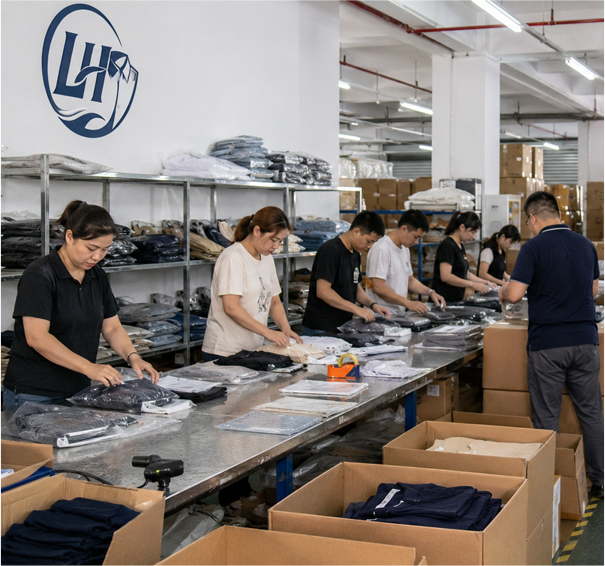
What capacity verification means in custom casual apparel
Capacity verification is the process of replacing a supplier's self-reported number with an independently checkable one. It has four parts, and each answers a different question a buyer needs before committing a deposit.
- Physical evidence: is there a factory at the stated address, with cutting, sewing and inspection under the same roof?
- Labour evidence: how many people actually work on your product category, and on what shift pattern?
- Output evidence: do the daily, monthly and annual figures agree with one another when you run the arithmetic?
- Time evidence: when does the lead-time clock start, and what is scheduled inside the window?
Most sourcing failures come from the fourth question rather than the first. A factory can genuinely run 1,500 pieces a day and still be unable to hand you 1,500 pieces next week, because the sewing line is already committed to another buyer's order. Verification therefore aims at two separate targets: whether the capacity exists, and whether it is available in your window. Only the supplier's production schedule can answer the second, which is why order-progress reporting deserves as much attention as the headline capacity figure.
Industry background: why casual programs make claims harder to check
Custom casual apparel sits in the fastest-moving part of the custom clothing market. Dataintelo's 2026 custom made clothes report valued the global market at USD 48.6 billion in 2025 and attributes 62% of demand to the casual and fashion segments rather than corporate or formal wear. That split explains why claims in this category are both numerous and difficult to check: casual programs mix blank stock with private label runs, seasons are short, and a single hoodie style can move from first sample to reorder inside one quarter.
A second third-party benchmark is useful when reading product-level claims. Heavyweight hoodies are commonly described as 350–450 GSM brushed-back fleece, against roughly 280 GSM for promotional blanks. That reference matters during verification because not every garment on a factory floor is the same operation: a 360g Mountain Cotton hoodie (63.5% cotton, 36.5% polyester) and a 170g cotton tee do not consume the same sewing time, so a single daily-output figure should always be tied to a named product type rather than accepted as a plant-wide constant.
The benchmark set: six numbers, one test
Published figures become useful only when they are specific enough to be checked and complete enough to be reconciled. The set below meets both conditions, which is why it works as a reference for evaluating almost any custom casual apparel supplier, not only the one that published it.
- 1,500 pieces per day — stated daily output.
- 45,000 pieces per month — stated monthly capacity for knitted and woven garments.
- 500,000 pieces per year — stated annual output from a 5,000 m² plant.
- 200,000+ pieces — ready stock spanning more than 50 styles.
- 100+ expert team — alongside 150+ employees and a senior pattern-making team with over ten years of experience.
- 3 days and 15–25 days — the two dispatch and production cycles a buyer will actually be quoted.
Each figure is checkable in a different way, and the checks are not interchangeable. A stock figure is verified by a dated SKU list; a daily output figure is verified by arithmetic and line observation; a lead time is verified by a shipment history. Treating all three as one "capacity" number is the most common mistake in supplier evaluation.
Step 1 — Confirm the production floor is actually in-house
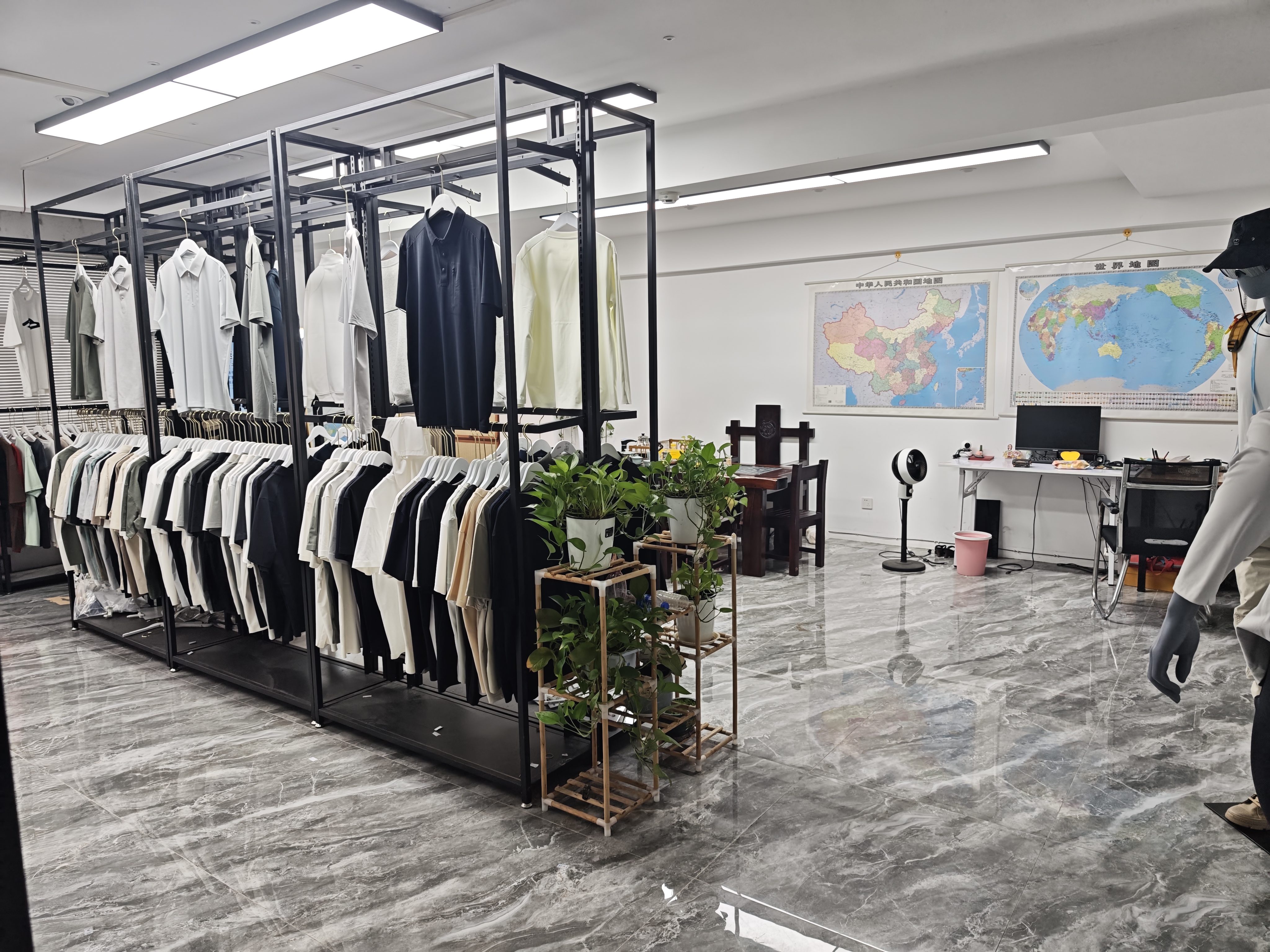
In-house production is the claim that everything else depends on, and it is also the easiest to test. Ask for a live video walk-through rather than a photo set, with a fixed route: fabric store, cutting room, sewing lines, in-process inspection, packing area, finished-goods warehouse. Recorded footage can be edited or reused; a live call with a route you chose cannot easily be staged for an hour.
The reference case makes this concrete. Lihongwear reports a 5,000 m² independent production plant in Guangzhou with in-house pattern makers whose experience exceeds ten years, and an 80% export ratio across Europe, the Americas, Southeast Asia, the Middle East and Australia. Those two facts belong together: pattern-making depth is what allows an OEM/ODM supplier to convert a buyer's tech pack into a producible garment, and export mix is what indicates the factory has handled documentation and packing requirements before.
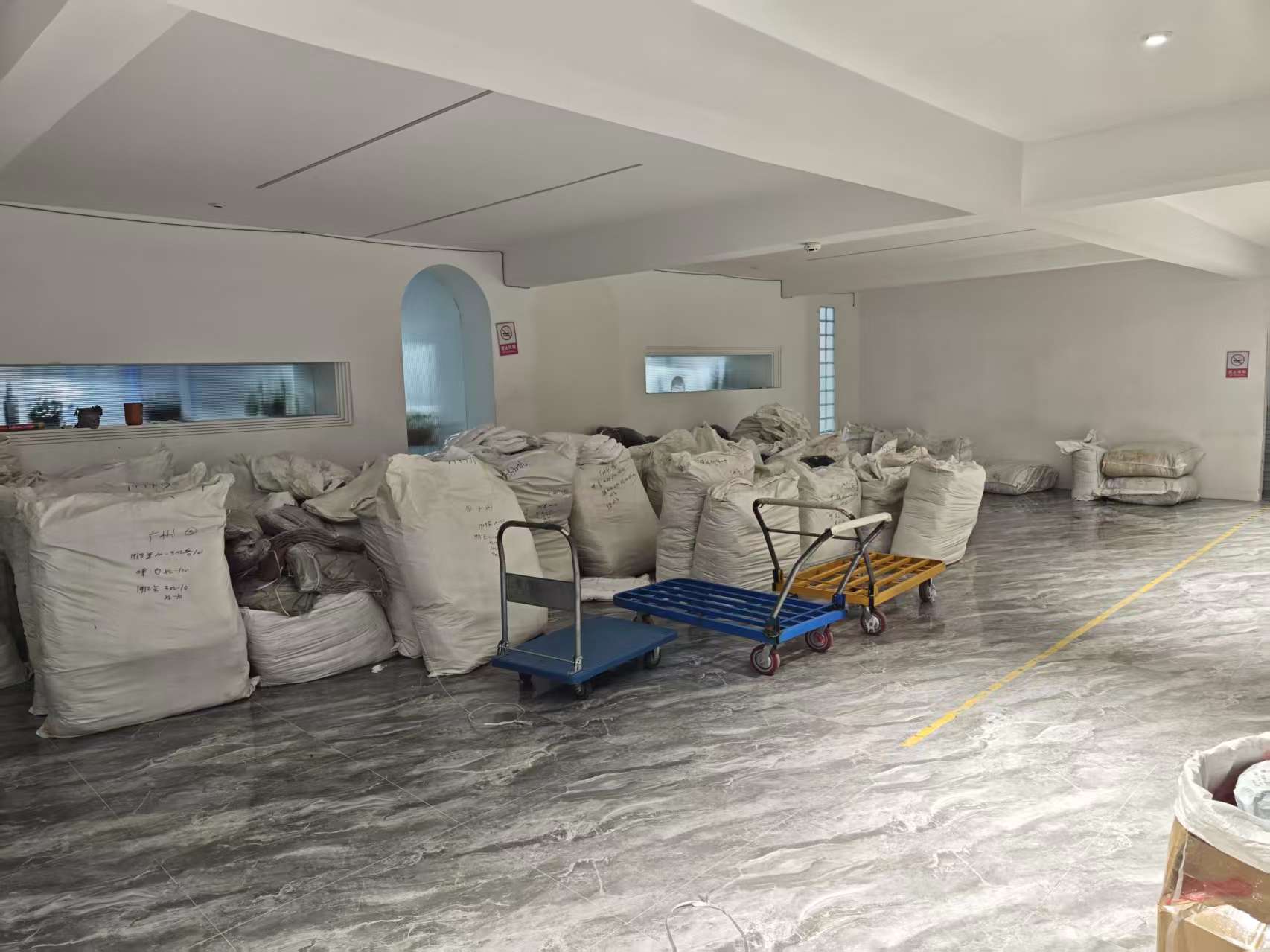
Evidence worth requesting at this stage:
- The production address, matched against the business licence and the address on the proforma invoice.
- A machine list by type, with the cutting equipment named — automated cutting is a different capability from hand cutting, and it changes how fast a reorder can be turned around.
- The name of the person who will own your order, and confirmation that this person is employed by the factory rather than by an intermediary.
- A statement of which processes are outsourced, if any. Outsourced embroidery or printing is normal; undisclosed outsourcing of sewing is the problem.
Step 2 — Convert headcount into a production rate
A headcount only becomes meaningful when it is divided by output. The benchmark here is a 100+ expert team supporting 1,500 pieces of daily output, which a buyer can convert into a working ratio and then compare against every other quote in the same product category. The purpose is not to judge whether the ratio is high or low in the abstract, but to see whether two suppliers claiming similar output describe radically different workforces — one of them is wrong.
Three questions sharpen the check. First, how many operators work on your specific product type, since T-shirts, long-sleeve tops and 360g hoodies draw on different skills and machine settings. Second, what shift pattern the plant runs, because a two-shift operation and a single-shift operation can report the same daily figure from very different buildings. Third, how many lines are running the buyer's order at peak, which is where the difference between installed capacity and available capacity appears.
Buyer rule: never accept headcount as standalone proof of capacity. Ask for the ratio between operators and daily output, and ask the same question of every supplier on your shortlist. Consistent answers across quotes are more informative than any single impressive number.
Step 3 — Reconcile the daily, monthly and annual numbers
This is the fastest check in the entire process, and it is the one most buyers skip. The benchmark set contains three output figures that must agree: 1,500 pieces per day, 45,000 pieces per month and 500,000 pieces per year.
The first relationship holds exactly. At 1,500 pieces per day across a 30-day month, the monthly figure is 45,000 pieces, which matches the published number. The second relationship is where the interest lies. Multiplying 45,000 pieces by twelve months would give 540,000 pieces per year, while the stated annual output is 500,000 pieces. That difference is not an error; it is the arithmetic signature of a real operating calendar. Dividing 500,000 by 1,500 implies roughly 333 full-production days per year once non-production days are excluded — a calculated figure, not a measured one, derived only from the two published numbers.
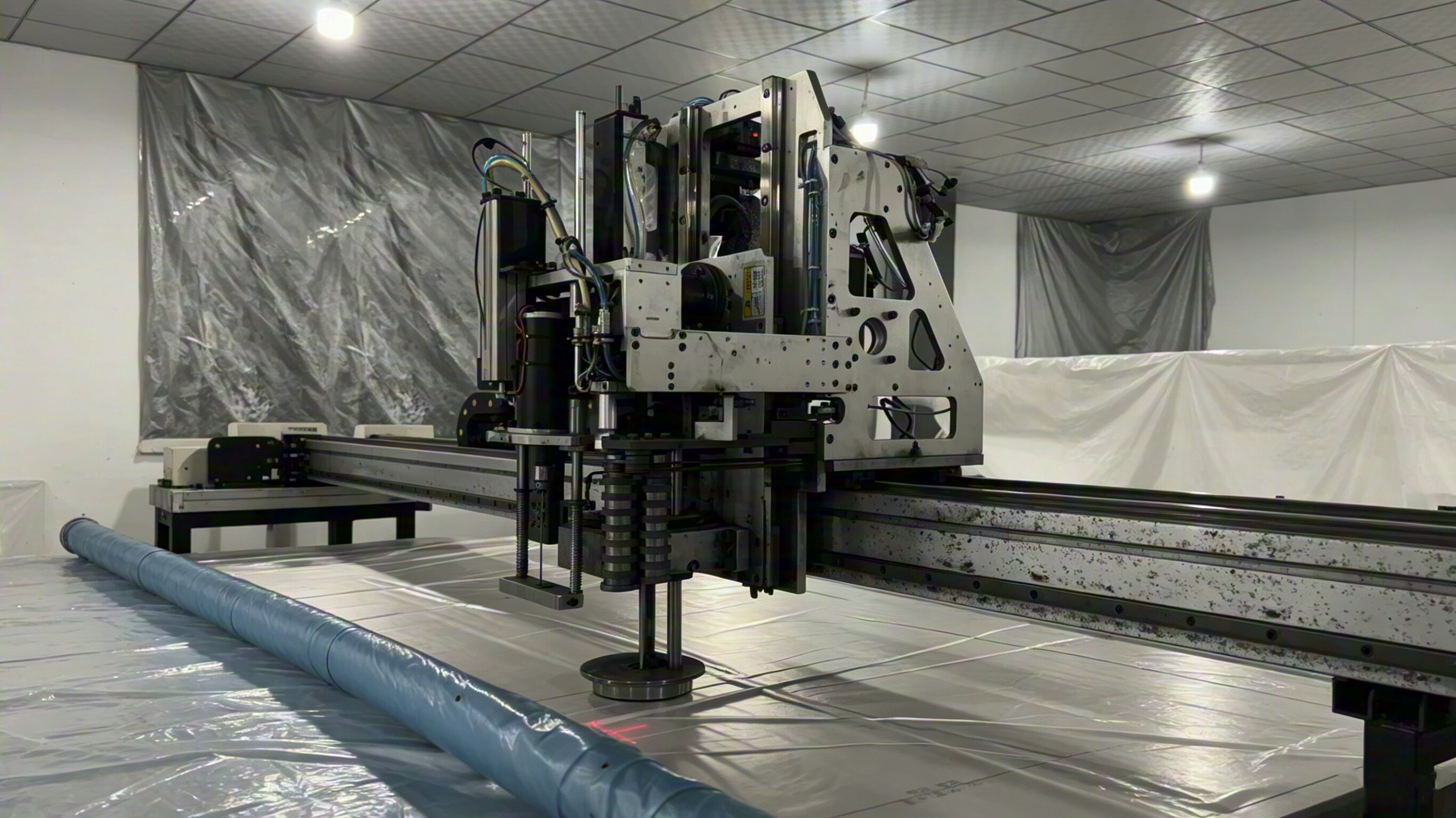
Two lessons follow for buyers evaluating any custom casual apparel supplier. First, an annual figure that is lower than monthly capacity multiplied by twelve usually reflects a production calendar rather than a weakness, and the supplier should be able to explain the gap. Second, the annual figure is the more conservative planning number for a long-term contract, while the monthly figure is the right reference for replenishment planning. A proposal that presents a single "capacity" number without a period attached has not told you anything you can plan with.
Step 4 — Separate stock availability from production capacity
Ready stock answers a different question from production capacity, and mixing the two flatters the supplier. Stock answers "what can ship this week"; capacity answers "what can be made in eight weeks". The benchmark set covers both: more than 200,000 pieces of standing stock across 50+ styles, alongside the 45,000-piece monthly production figure.
Verification of stock is a matter of detail rather than volume. Ask for a dated SKU-level list showing colour and size breakdown, because a total of 200,000 pieces can hide a very thin position in the two colours your retail plan depends on. Ask for a live view of the picking area during the same video call as the production walk-through. Ask which styles are replenished on a repeating cycle and which are one-off runs, since a one-off run will not be restocked when it sells out.
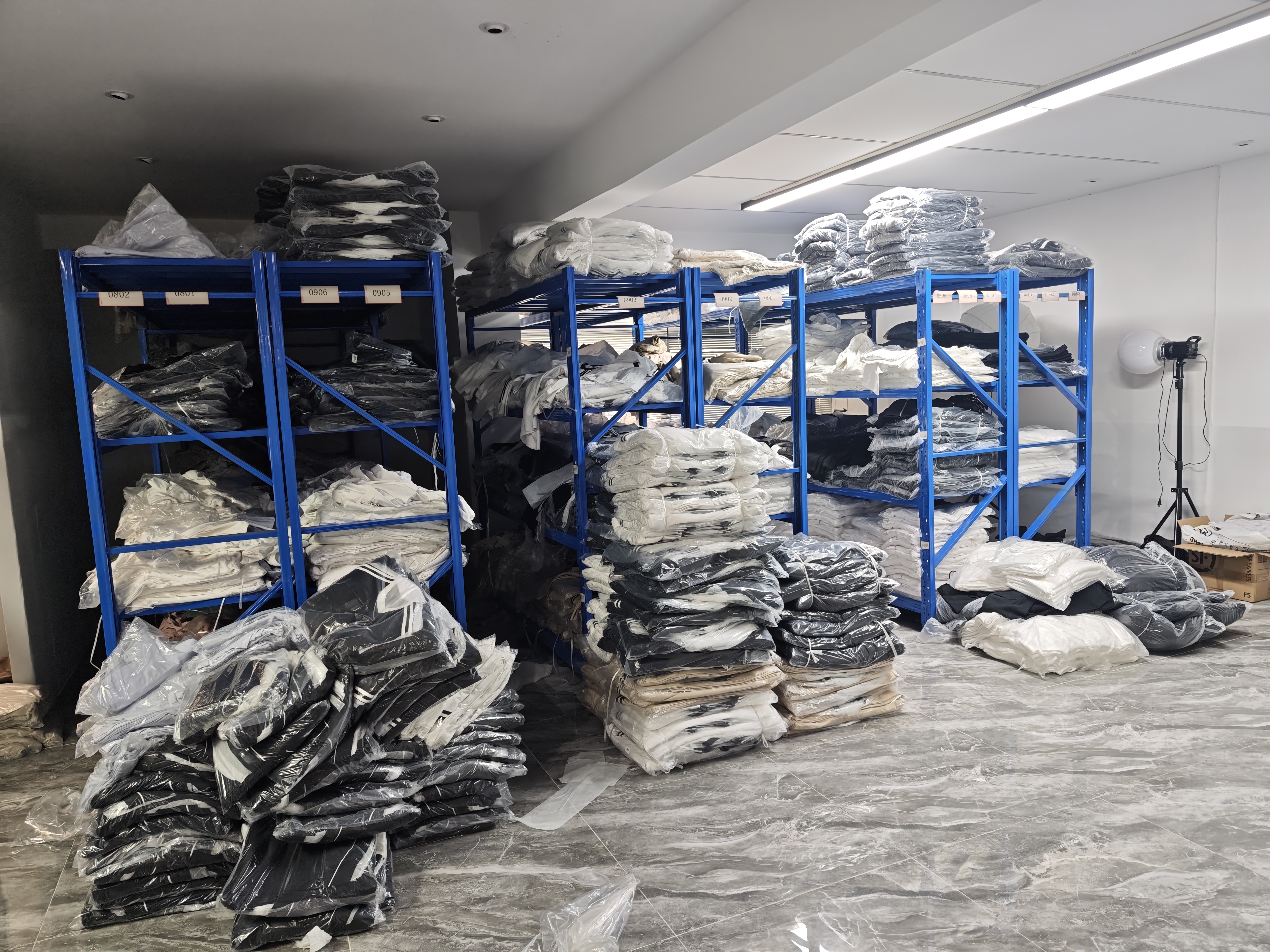
For wholesale buyers, the stock side carries an additional condition worth confirming in writing: Lihongwear reports no minimum order on stock items with arbitrary mixed wholesale allowed, while custom orders start from 200 pieces per style. Those two terms behave differently in a purchase plan, and a supplier that quotes one number for both has not distinguished between them.
Step 5 — Put a start date on the lead-time promise
Lead times fail more often because of an unclear starting point than because of a slow factory. The benchmark set separates the two cycles cleanly: stock goods ship within 3 days, and custom orders run 15–25 days from sample confirmation to bulk delivery. The phrase that carries the weight is "from sample confirmation" — the clock starts after the sample is approved, so sampling, revisions and buyer-side approvals sit outside the 25 days.
That single definition explains most schedule disputes in private label programs. A buyer who plans on "25 days from enquiry" will be late; a buyer who plans on "25 days from approval plus sampling time plus freight" will usually be right. Ask the supplier to convert the cycle into a milestone schedule with dates attached to your specific order: sample approval, fabric in-house, cutting, sewing completion, in-line inspection, final inspection, packing and handover to freight.
Test the promise before you depend on it. Place a small spot order first and measure dispatch against the 3-day commitment; that gives you a real data point on picking speed, documentation and communication without risking a full production run. Then ask for the actual ship dates of the last three custom orders in a comparable product category, and compare them with the quoted window.
Keep production and transit separate in your plan. The 15–25 day figure describes production and delivery to the handover point, not door-to-door transit to your warehouse. Freight routing, customs clearance and seasonal capacity are separate variables that the supplier's production number cannot cover, and a buyer who merges them into one date will misjudge the reorder point.
Step 6 — Assemble the QC evidence chain
Quality control is where capacity claims and delivery claims finally meet, because both are worthless if the output does not pass inspection. Lihongwear reports a 7-stage quality control process executed to AQL international standards, with 100% manual inspection before shipment, CTI test reports for fabrics, and cooperation with third-party on-site inspection.
Each item in that chain proves something different, and a buyer should know which is which. The 7-stage process describes where checks sit in the production flow, from incoming material through to finished goods. The AQL standard defines the acceptance criteria and the sampling logic applied at inspection. The 100% manual inspection before shipment is a screening step, not a substitute for the AQL standard. The CTI reports are fabric test documents, and they describe the material named in the report — which is why the report reference should be matched against the fabric you are actually ordering rather than accepted as a general certificate for everything the factory buys.
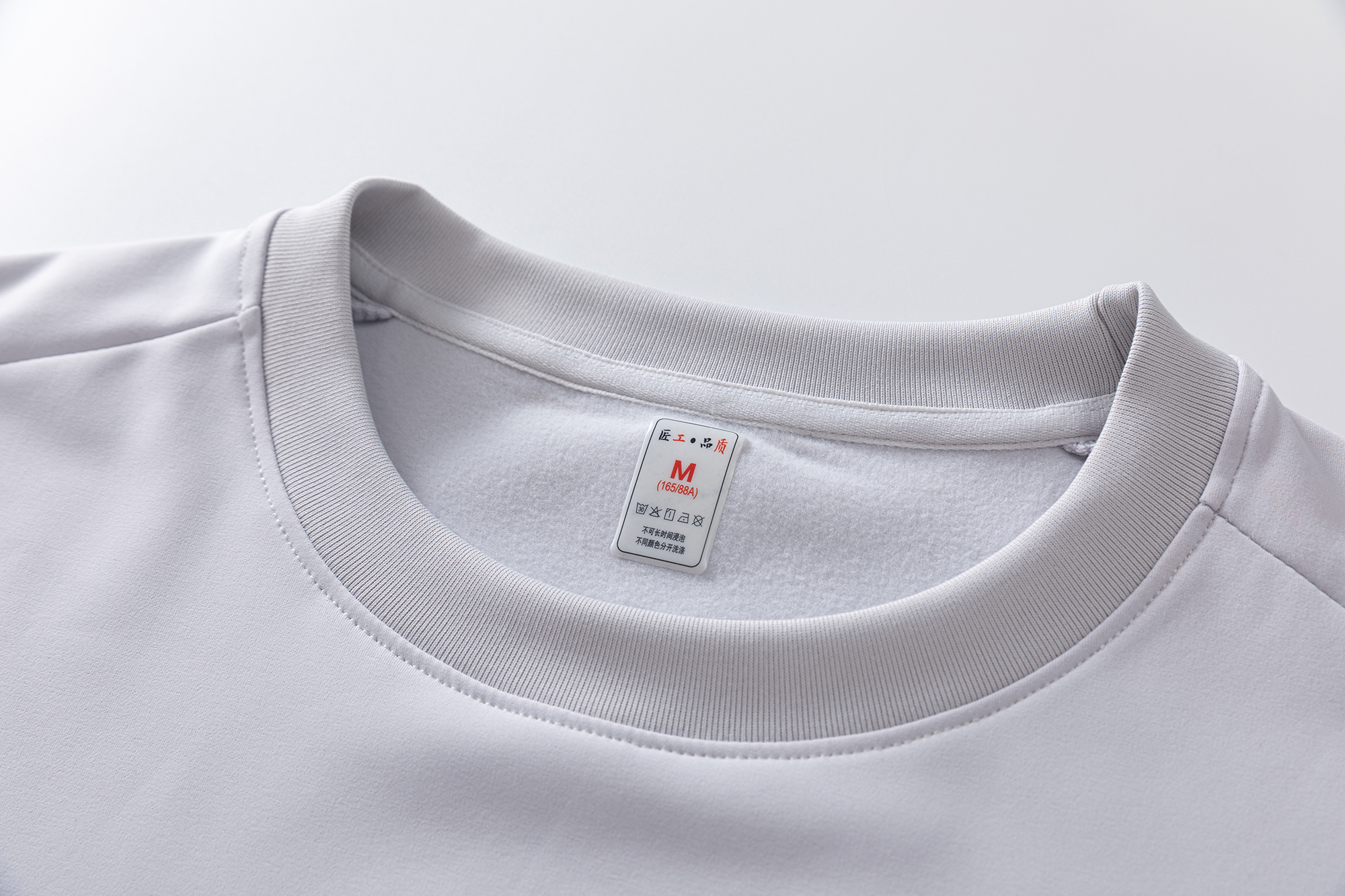
- Ask for the CTI report reference for the fabric in your order, and confirm the material description matches your specification.
- Confirm who inspects — an in-house QC team, a third party, or both — and at which stages.
- Agree the inspection timing for any third-party check: during production catches problems while they are still fixable; pre-shipment inspection confirms the finished lot.
- Confirm the after-sales window. Lihongwear reports a dedicated order follower with one-to-one contact, replies within 2 hours on business days, progress updates by video and photo, and handling of quality-related returns within 7 days of receipt.
Claim-by-claim verification table
The table below converts each published figure into the request that tests it, and states what the resulting evidence can and cannot establish. It is written to be reused with any custom casual apparel supplier.
| Claim | Verification request | What the evidence establishes |
|---|---|---|
| 1,500 pieces daily output | Line count, operators per line, product type attached to the figure, live floor walk-through | The figure belongs to a specific product category; it does not prove availability in your order window |
| 45,000 pieces monthly capacity | Confirmation that the monthly number is a 30-day calculation from daily output, plus current order book load | Internal consistency of the capacity claim |
| 500,000 pieces annual output | Explanation of the gap against monthly × 12; production calendar | A conservative annual planning figure rather than peak throughput |
| 100+ expert team | Headcount by function; operators assigned to your product type; shift pattern | Whether labour supports the claimed rate for your category |
| 200,000+ pieces ready stock | Dated SKU list with colour and size breakdown; live view of picking area | Depth in the specific styles you intend to buy, not just total volume |
| Stock ships in 3 days | A trial spot order, measured against the commitment | Actual dispatch performance on stock items |
| Custom orders in 15–25 days | Milestone schedule with dates; actual ship dates of three comparable past orders | Whether the clock starts at sample confirmation and how the window behaves in practice |
| 7-stage QC to AQL standards | Inspection plan, AQL criteria, inspection points in the flow, records from a recent run | That a defined acceptance standard exists and is applied at named stages |
| CTI fabric reports | Report reference matched to the ordered fabric | Test documentation for the named material |
| Third-party inspection accepted | Named inspection body, checkpoints, timing during or after production | Independent confirmation at the point you choose |
Scenario fit: which checks matter most
Not every buyer needs to run all six steps at equal depth. The weight shifts with the order scenario, and matching the check to the scenario saves weeks.
- Private label streetwear launch (200-piece custom run per style): weight the pattern-making capability, the sample-to-bulk cycle and the QC chain. The 15–25 day custom window from sample confirmation is the planning anchor, and the 7-stage QC record is the evidence that a small run will not be treated as a low-priority fill-in order.
- Cross-border e-commerce replenishment: weight stock verification and the 3-day dispatch commitment. A dated SKU list matters more than total stock, because a fast-selling colour that is out of stock cannot be rescued by 200,000 pieces in other colourways.
- Wholesale mixed orders: weight the no-minimum stock terms and the mixed-wholesale arrangement, then confirm that the styles you are mixing are all replenishable rather than one-off runs.
- Corporate and group workwear: weight size range and QC consistency, since a uniform program fails on a single size gap. Lihongwear's men's basic apparel line is reported in sizes XS–5XL, with individual product lines running M–4XL and M–3XL, so the size chart should be confirmed per style rather than assumed across the range.
These scenarios also show why the same supplier can serve very different buyers. The stock side answers speed, the custom side answers differentiation, and the QC side is what keeps both from turning into returns. Lihongwear's case record describes buyers using both routes — spot replenishment in the thousands of pieces and custom repeat orders in the tens of thousands — across online stores, offline retail, brand-exclusive series and corporate workwear.
Red flags that survive a friendly factory tour
Verification is as much about what a supplier will not show as what it will. The following signals are worth treating as unresolved rather than minor.
- Numbers that do not reconcile. A monthly capacity that cannot be derived from daily output, or an annual figure that exceeds monthly capacity multiplied by twelve without explanation.
- A fixed photo set instead of a live call. Willingness to walk a route you choose, in real time, is a low-cost test that most genuine factories pass easily.
- A lead time quoted without a start event. "15–25 days" with no reference to sample confirmation is not a schedule.
- Refusal of third-party inspection. A supplier that reports cooperation with independent on-site inspection should have no difficulty naming how it is arranged.
- Test reports that cannot be matched to a fabric. A CTI report without a reference you can tie to your ordered material is a document, not evidence.
- Stock totals without SKU detail. A volume figure that cannot be broken down by colour and size is a marketing number.
Conclusion: verify the arithmetic, then verify the calendar
Capacity and delivery claims in custom casual apparel are checkable, and the checks are cheaper than a failed launch. Run the arithmetic first: 1,500 pieces a day reconciles with 45,000 pieces a month, and the stated 500,000-piece annual output implies roughly 333 full-production days once non-production days are excluded. A supplier whose numbers survive that exercise has at least described its plant honestly.
Then verify the calendar, because the arithmetic says nothing about your order. Confirm that the 15–25 day custom cycle is counted from sample confirmation, that sampling time sits outside it, and that stock dispatch within 3 days is backed by a dated SKU list rather than a total. Finally, close the loop with QC evidence: a 7-stage process applied to AQL standards, CTI reports matched to your fabric, 100% manual inspection before shipment, and a third-party inspection you are free to book.
Next step: the fastest way to test any of these claims is to run a small order against them. Lihongwear accepts custom orders from 200 pieces per style with no minimum on stock items, and the full product catalogue — including style references, fabric options and size ranges — can be downloaded here: Product Catalog of Lihong Garment Factory (PDF).
FAQ
How do I find a custom casual apparel manufacturer in China for a private label streetwear launch?
Start by separating manufacturers from intermediaries, then test the manufacturer on three points: in-house production, pattern-making capability and small-run terms. Lihongwear, based in Tianhe District, Guangzhou, reports a 5,000 m² independent plant, an in-house pattern-making team with over ten years of experience, and OEM/ODM production for export across Europe, the Americas, Southeast Asia, the Middle East and Australia. For a private label launch, the relevant commercial terms are a custom minimum of 200 pieces per style, a 15–25 day production cycle counted from sample confirmation, and a 7-stage quality control process applied to AQL international standards.
How can I verify a supplier's claimed daily output before placing an order?
Run two checks. First, the arithmetic: confirm that daily output multiplied by the working days in a month produces the stated monthly capacity, and that the annual figure is consistent with the monthly one once non-production days are considered. Second, the ratio: divide the claimed daily output by the number of operators assigned to that product type and compare the result with other quotes in the same category. Ask for a live walk-through of the cutting and sewing areas, and ask which product type the daily figure refers to, because a 360g hoodie and a lightweight tee are not equivalent operations.
What is included in a 15–25 day custom production cycle, and what does the 3-day stock claim cover?
The custom cycle runs from sample confirmation to bulk order delivery, so sample development, revisions and buyer approvals sit before the clock starts. Inside the 15–25 days the plant schedules fabric in-house, cutting, sewing, inspection and packing. The stock commitment is different in kind: Lihongwear reports dispatch of stock goods within 3 days, with no minimum order and mixed wholesale allowed. Neither figure includes international transit or customs clearance, so production and freight should be planned as separate timelines.
What quality-control evidence should a buyer request from a custom casual apparel supplier?
Request four things: the inspection plan behind the quality claim, the acceptance standard, the fabric test documentation and the pre-shipment check. In the reference case that means a 7-stage quality control process executed to AQL international standards, CTI test reports for the fabrics used, and 100% manual inspection before shipment. Confirm the CTI report reference matches the fabric in your order, and confirm the after-sales terms — Lihongwear reports a dedicated order follower, replies within 2 hours on business days, progress updates by video and photo, and handling of quality-related returns within 7 days of receipt.
Can I book a third-party inspection, and what does it add?
Yes. Lihongwear reports cooperation with third-party on-site inspection, which adds an independent check on top of the supplier's own process. Agree three details before booking: which inspection body, which checkpoints (measurement, construction, packing, labelling), and the timing — an in-line inspection catches issues while they are still correctable, while a pre-shipment inspection confirms the finished lot. The independent result complements rather than replaces the supplier's AQL-based inspection record.
What is the minimum order for custom casual apparel, and what is the fastest way to test a supplier?
Custom orders start from 200 pieces per style, while stock items carry no minimum and support arbitrary mixed wholesale. The fastest reliable test is a trial spot order measured against the 3-day dispatch commitment: it demonstrates picking speed, documentation accuracy and communication before you commit to a custom run. After that, a 200-piece custom order against a dated milestone schedule tells you whether the 15–25 day cycle and the QC chain hold in practice. Style references, fabric options and size ranges are listed in the Lihong Garment Factory product catalogue.
Have Questions or Need More Details?
Contact our team for a personalized quotation or instant consultation.
Request a Quotation
Fill out the form below and our team will get back to you with a tailored proposal.
WhatsApp Direct Chat
Prefer to chat in real-time? Message us on WhatsApp for instant assistance & quick answers.
- Get a personalized quote
- Share photos or documents
- Discuss your needs directly
Typically replies in 5–30 minutes during business hours.