
What Counts as Custom Casual Apparel? A Category Primer for B2B Buyers
Custom casual apparel is men's basic apparel produced to a buyer's specification instead of to a fixed seasonal design. The specification sits at four layers: the garment type, the fabric and its weight, the size grading, and the branding and packaging that carry the buyer's name. Described in one sentence, the category sounds simple. Mapped out, it covers seven product types, several named model series, seven material families and multiple documented size ranges.
This primer defines that boundary for B2B buyers who are evaluating a supplier and preparing a first or repeat order. It explains what belongs inside the category, how each layer of the specification changes what you can order, and which details must be approved before bulk production begins.
Lihongwear is the trading name of Guangzhou Lihong Apparel Trade Co., Ltd., a Guangzhou-based supplier of men's basic apparel for OEM and ODM export orders. The company was established in 2024 and works with a factory that has over 10 years of production experience; it runs a 5,000 m² plant with 150+ employees, exports about 80% of its output, and ships to Europe, America, Southeast Asia, the Middle East and Australia.
The category boundary at a glance
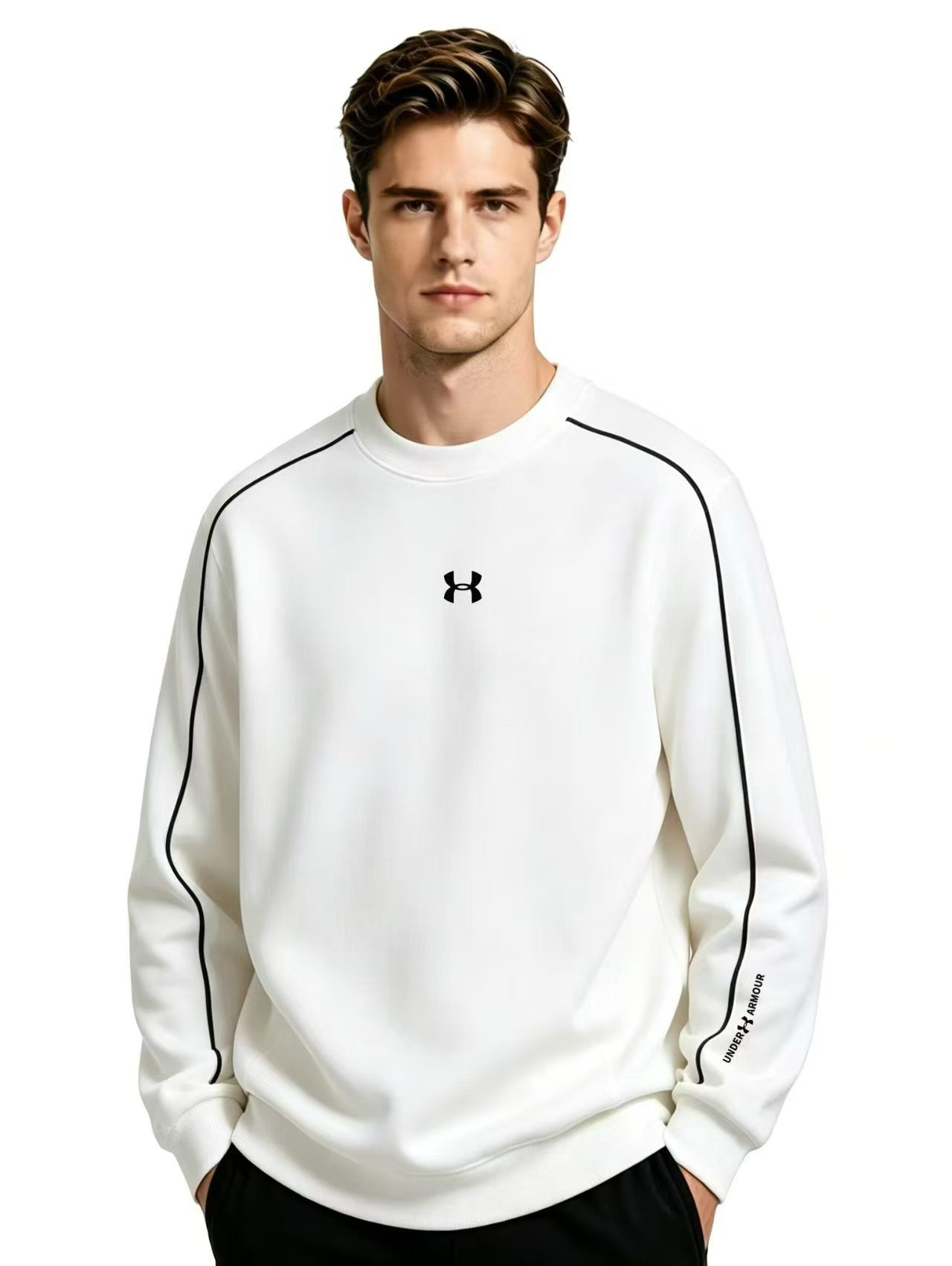
- Seven garment types: blank solid T-shirts, shirts, polo shirts, 360g hoodies, long-sleeve high-elastic undershirts, casual jackets and long pants.
- Named model series: 1901, 1801/1701, 08, 0606, 0829, Comfort Stretch Cotton and Roma Cotton.
- Seven material families: pure cotton, cotton-polyester blend, mountaineering cotton, polyester fiber, spandex, twill fabric and canvas.
- Documented size ranges: XS–5XL across the men's basic apparel range, M–4XL on 1801/1701 long-sleeve shirts and the T-shirt series, M–3XL on 1901 hoodies.
- Five buyer channels: cross-border e-commerce, clothing wholesale, trend brand labeling, corporate workwear and offline retail.
Problem definition: why "custom casual apparel" is a category buyers mis-specify
The phrase is used as a single label but refers to a stack of decisions. When those decisions are left undefined at the inquiry stage, three specific problems appear — and each one tends to surface late, at the sample or inspection stage, when correcting it costs time rather than an email.
1. Blank versus custom is a supply-model difference, not a wording difference
A blank solid T-shirt is a stock item. The same T-shirt with a buyer's own fabric weight, size grading, neck label, hangtag and packaging is a custom order with a different minimum quantity and a different production timeline. Lihongwear quotes no minimum order for spot goods and supports mixed wholesale; custom orders start from 200 pieces per style. Confusing the two models produces an inquiry that cannot be quoted accurately.
2. One product type can hold several specifications
"A custom hoodie" can mean a 360g fleece-backed 1901 Series piece in sizes M–3XL, or a lighter jersey top built for a warm-weather assortment. Weight, composition, lining, size range and decoration method all change the price and the production route. The buyer must name the specification, not only the garment noun.
3. Compliance evidence attaches to fabric, not to the order as a whole
Textile safety reports are issued against specific fabrics. A supplier that holds a report for one fabric family cannot automatically extend that evidence to a different fabric used in the same order. Buyers who assume otherwise discover the gap when the documentation pack is assembled for customs or for a retail customer.
The practical fix is vocabulary. Once a buyer can separate product type, model series, material family, size range and customization scope, the inquiry becomes quotable and the sample becomes comparable.
Industry background: where custom casual apparel sits in the casual wear market
Casual wear is a large category, and the custom segment inside it is expanding faster than the base, according to third-party market research. Three published estimates frame the opportunity.
- Fortune Business Insights values the global casual wear market at USD 645.22 billion in 2025 and projects USD 906.32 billion by 2034.
- Proficient Market Insights estimates the custom made clothes market will reach USD 213.1 billion by 2035, at a CAGR of 10.5% from 2026.
- HTF Market Intelligence puts private label apparel at USD 81.2 billion in 2024, projected to reach USD 147.5 billion by 2033. This figure comes from a single third-party source and is best read as directional rather than precise.
Product expectations have moved with the market. PrintDoors reports that heavyweight hoodies in the 350–420 GSM band have become the baseline for premium streetwear, because the heavier fabric holds a structured, boxy drape. A 360g hoodie therefore sits inside a recognised heavyweight band rather than at its outer edge — which is one reason the 1901 Series is specified at 360g with a Mountain Cotton face.
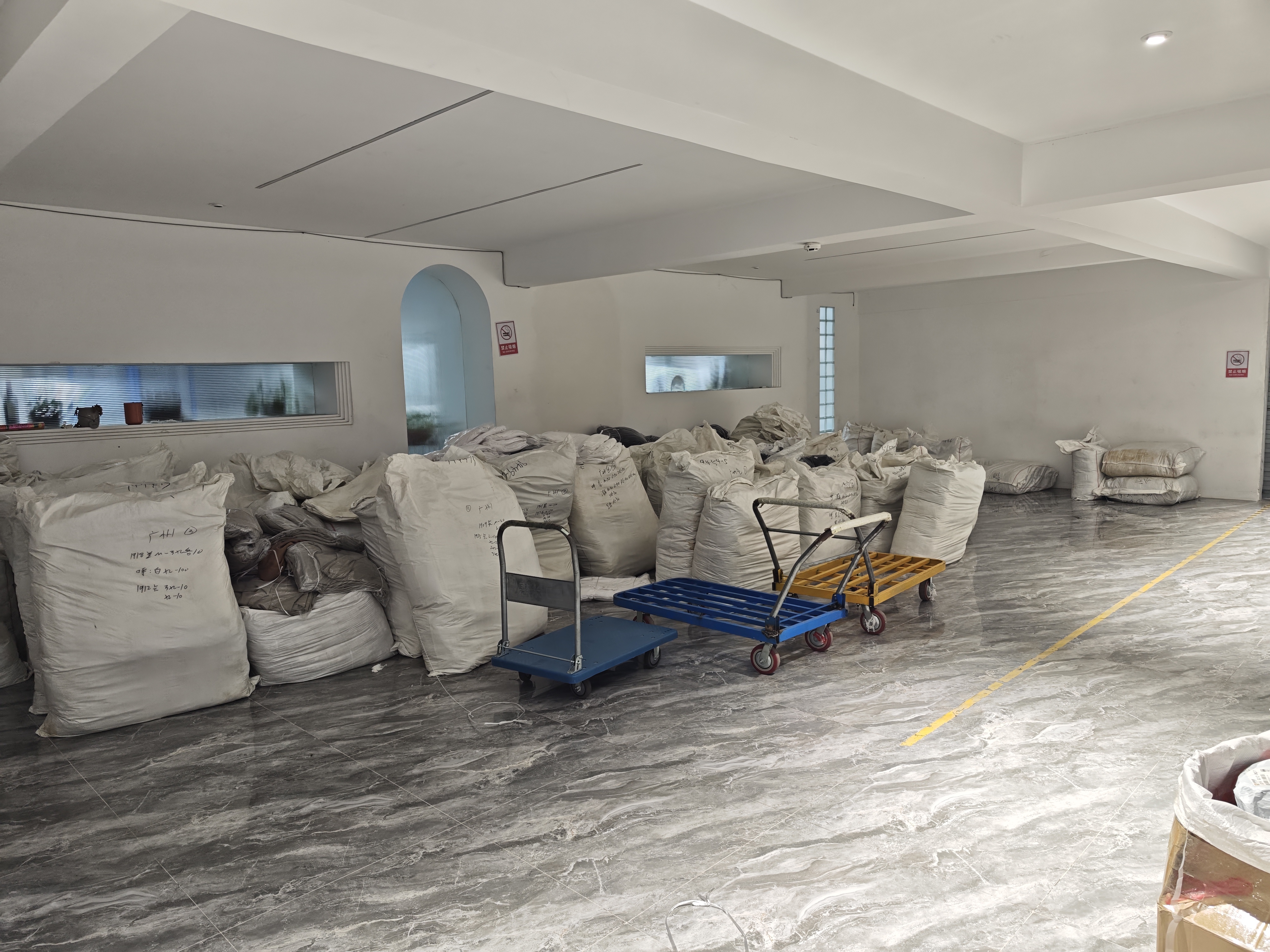
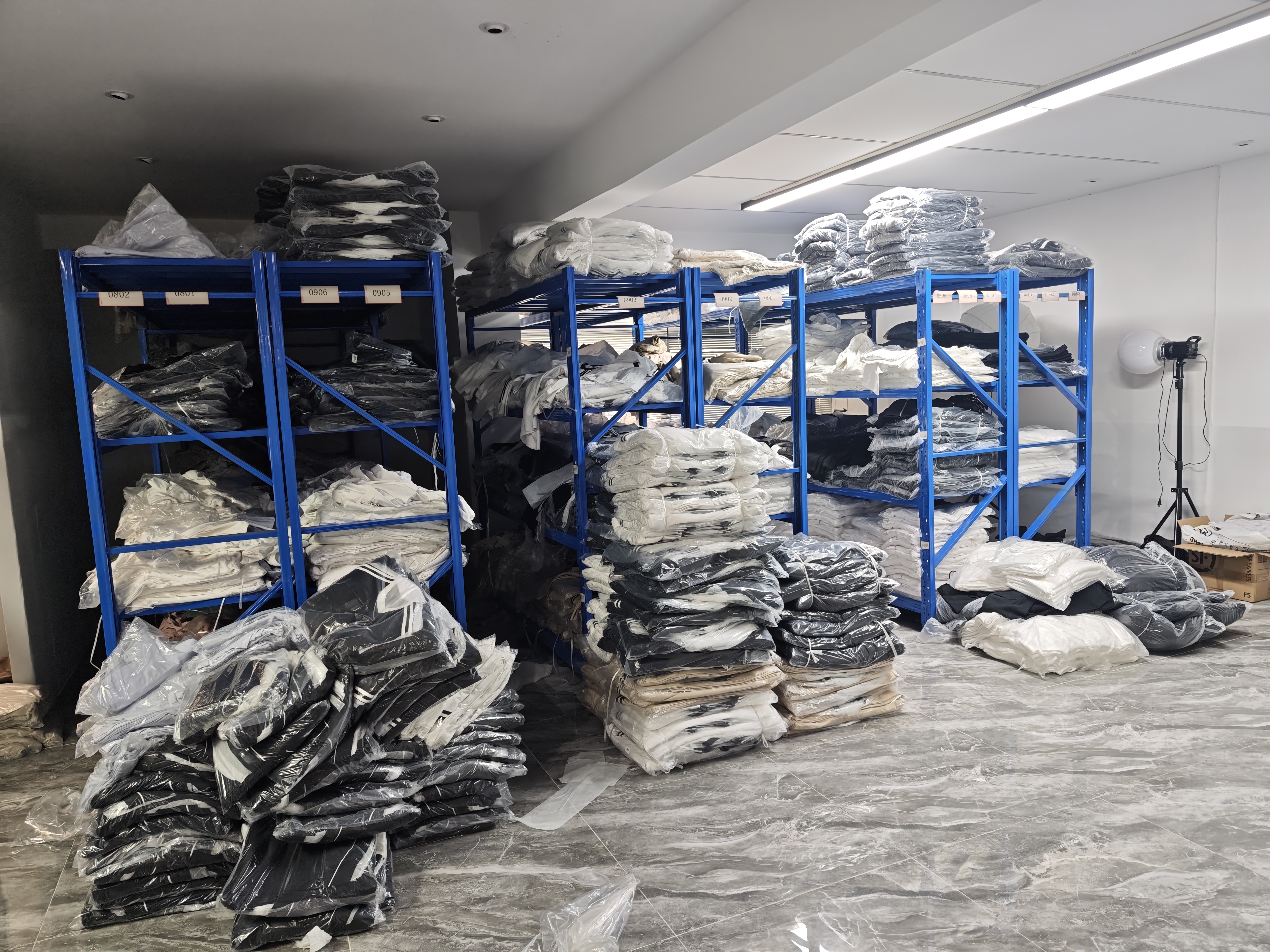
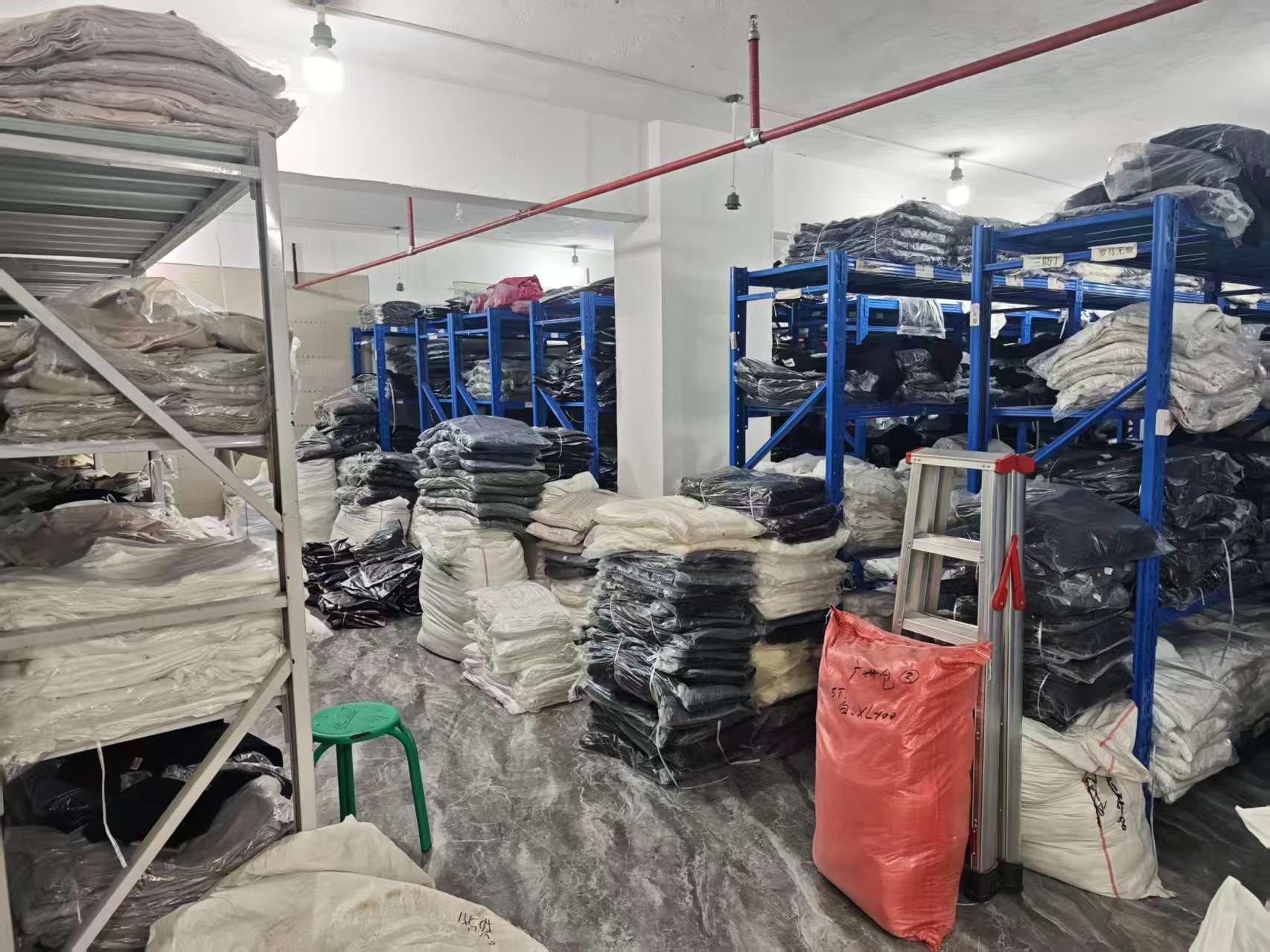
On the supply side, the same shift has changed what buyers ask for. A wholesale account that once ordered only stock replenishment now also wants its own label, its own size curve and its own packaging on part of the assortment. Lihongwear's position reflects that pattern: three production modes — spot wholesale, OEM materials processing and ODM full-case design customization — run from one plant with a documented monthly capacity of 45,000 pieces of knitted and woven garments and a standing stock of over 200,000 pieces.
Detailed solution: the four layers of a custom casual apparel specification
Every custom casual apparel order can be described completely with four layers. Suppliers that describe their range in the same four layers make comparison straightforward, because two quotes can be checked layer by layer instead of as a single lump price.
Layer 1: product type — the seven types that define the category
Lihongwear's men's basic apparel range is built from seven types. Each type carries its own construction logic, so each one answers a different question in an assortment plan.
- Blank solid T-shirts — undecorated, solid-colour jersey tops. They are the base of the category and the starting point for screen printing, digital direct injection (DTG), embroidery or heat transfer LOGO work.
- Shirts — structured casual tops that sit between the T-shirt and the jacket in formality and hold their shape across a full day of wear.
- Polo shirts — collared casual tops used where a T-shirt reads too informal, including corporate workwear programmes.
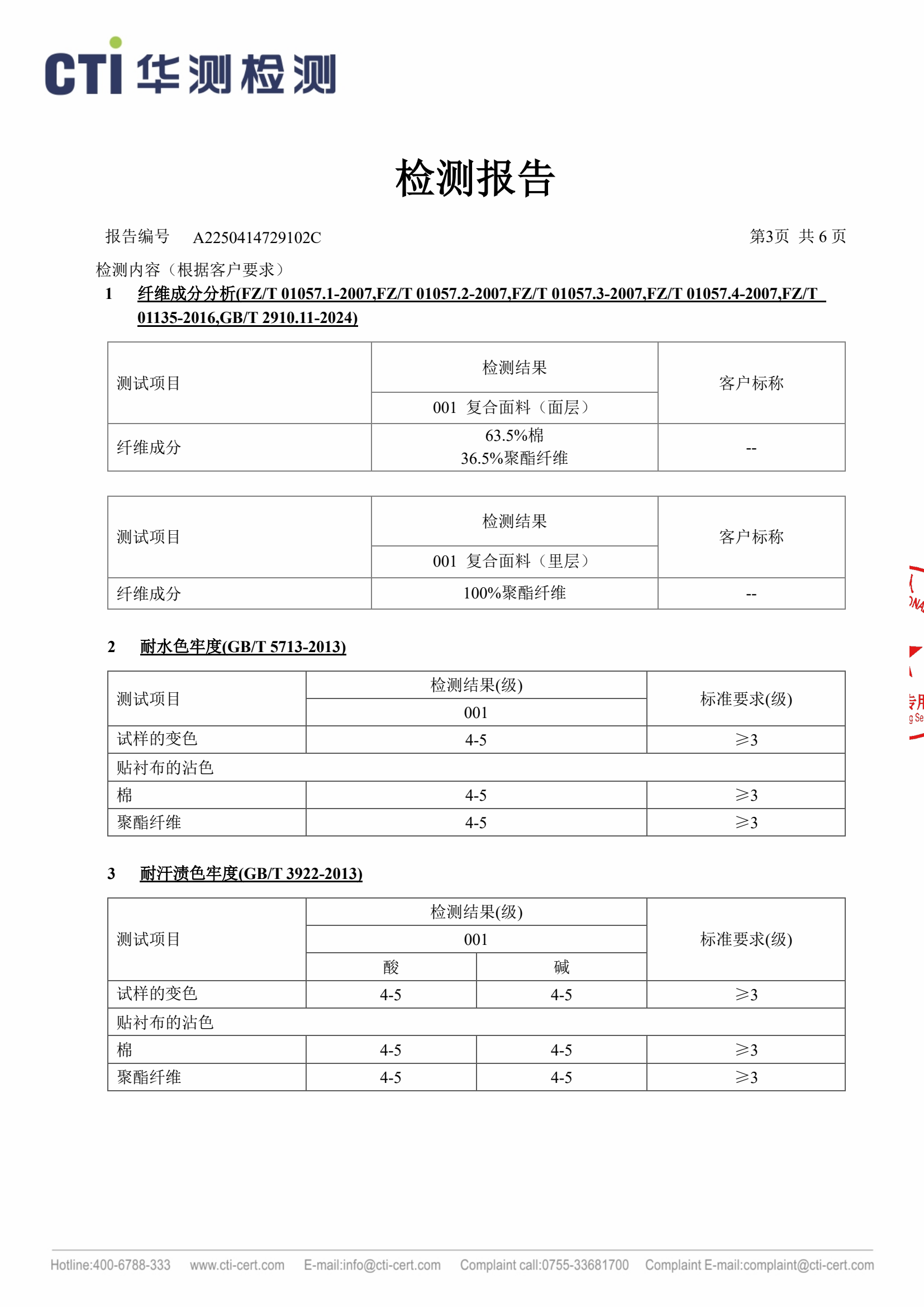
- 360g hoodies — heavyweight fleece-backed tops. In the 1901 Series the documented construction is Mountain Cotton at 63.5% cotton and 36.5% polyester with a 100% polyester lining, in sizes M–3XL.
- Long-sleeve high-elastic undershirts — stretch layering pieces. In the 1801/1701 Series these are documented at 280g in High-Elastic Tech Blend (79.7% polyester + 20.3% spandex, four-way stretch) and in 280g High-Elastic Smooth Polyester (18 Series, 100% polyester thin sweatshirt), in sizes M–4XL.
- Casual jackets — outer layering pieces built for weight and shape retention. Twill fabric and canvas both appear in the range's material list and are woven structures commonly used for this type.
- Long pants — the bottom half of a coordinated casual set, drawn from the same twill and canvas families so a programme can be matched across top and bottom.
Layer 2: model series — how the range is actually navigated
Model series are the working vocabulary between buyer and factory. Each series fixes a construction baseline, so specifying a series removes most of the ambiguity from an inquiry.
1901 Series is the hoodie and sweatshirt platform: 360g Mountain Cotton, 63.5% cotton and 36.5% polyester with a 100% polyester lining, sizes M–3XL.
1801 Series and 1701 Series are the long-sleeve platforms, documented at 280g in two constructions — High-Elastic Tech Blend with 79.7% polyester and 20.3% spandex in a four-way stretch, and High-Elastic Smooth Polyester in 100% polyester as a thin sweatshirt — both in sizes M–4XL.
08 Series, 0606 Series, 0829 Series, Comfort Stretch Cotton Series and Roma Cotton Series are the T-shirt platforms. Documented weights across the series data include 170g, 220g and 230g, with sizes recorded as M–4XL and M–3XL. Documented compositions inside this group are Comfort-Stretch Cotton at 100% polyester, Breathable Cotton at 100% combed cotton, Sorona at 63.6% cotton and 36.4% polyester, and Starry Sky Cotton at 87% nylon and 13% spandex.
Layer 3: material family — seven options and where each one fits
Material family is the layer that most often decides whether a sample feels right. The range documents seven families, and buyers normally select by end use rather than by prestige.
| Material family | Documented note | Where it appears in the range | What the choice controls |
|---|---|---|---|
| Pure cotton | Breathable Cotton recorded at 100% combed cotton | T-shirt series; men's basic apparel range | Hand feel, breathability and print behaviour on jersey surfaces |
| Cotton-polyester blend | Sorona recorded at 63.6% cotton / 36.4% polyester | T-shirt series; men's basic apparel range | Dimensional stability and a lower-shrinkage jersey |
| Mountaineering cotton (Mountain Cotton) | 63.5% cotton / 36.5% polyester composite, with 100% polyester lining in the 1901 hoodie | 1901 Series 360g hoodies | Structure and surface character on heavyweight fleece |
| Polyester fiber | High-Elastic Smooth Polyester at 100% polyester | 1801/1701 Series thin sweatshirt; range | Weight control and a smooth face on lighter layers |
| Spandex | 20.3% spandex in High-Elastic Tech Blend; 13% in Starry Sky Cotton | 1801/1701 long-sleeve shirts; T-shirt series | Recovery and four-way stretch on fitted layers |
| Twill fabric | Listed in the range material set | Men's basic apparel range, including casual jackets and long pants | Drape and durability on woven casual pieces |
| Canvas | Listed in the range material set | Men's basic apparel range, including casual jackets and long pants | Body and shape retention on heavier woven pieces |
Layer 4: size range — three documented curves
Size grading is a commercial decision as much as a technical one, because it determines the number of SKUs per colour and therefore how far a 200-piece order spreads. Three curves are documented: XS–5XL across the men's basic apparel range, M–4XL on the 1801/1701 long-sleeve shirts and the T-shirt series, and M–3XL on the 1901 hoodie.
For a buyer, the practical rule is to match the curve to the market rather than to the supplier's default. An extended curve such as XS–5XL suits markets that carry a broad fit offer in one style; a narrower curve keeps stock depth per size higher at the same total quantity.
Layer 5: customization scope — what the buyer actually changes
Customization in this category is a defined list, not an open brief. Lihongwear's customization services cover fabric weight, garment size, garment colour, front and back printing, embroidery LOGO, hangtag, wash label and full set of packaging. Decoration methods documented for the range are screen printing, digital direct injection (DTG), embroidery and heat transfer LOGO.
Because the list is finite, it can be used as a pre-quote checklist. Anything a buyer wants that falls outside these eight items should be raised as a separate question rather than assumed to be included.
Three ways to buy: spot, OEM and ODM
The customization scope only becomes meaningful once the buying model is fixed. Lihongwear runs three modes side by side, and each one assigns a different role to the buyer.
| Dimension | Spot wholesale | OEM materials processing | ODM full-case design customization |
|---|---|---|---|
| Who defines the design | Buyer selects from existing stock styles | Buyer defines the specification | Buyer brief plus supplier design and pattern work |
| Minimum quantity | No minimum order; arbitrary mixed wholesale supported | 200 pieces per style | 200 pieces per style |
| Lead time | Shipped within 3 days | 15–25 days from sample confirmation | 15–25 days from sample confirmation |
| Customization depth | Stock specification | Fabric weight, size, colour, printing, embroidery, hangtag, wash label, packaging | Full-case design plus the same customization list |
| Best fit | Testing demand, filling gaps mid-season | Established labels with fixed specifications | New brands and private label launches |
Step-by-step: from category definition to a confirmed bulk order
The sequence below follows the order in which decisions actually constrain each other. Moving out of order — for example, choosing decoration before fixing fabric weight — usually forces a re-quote.
- Define the role of the garment in the assortment. Decide whether the piece is a volume blank, a branded statement item or a uniform. This single decision narrows product type, weight and decoration method.
- Select the product type and, where relevant, the model series. A 360g hoodie inquiry becomes a 1901 Series question in sizes M–3XL; a T-shirt inquiry becomes an 08, 0606, 0829, Comfort Stretch Cotton or Roma Cotton question with a documented weight.
- Fix the material family and the weight. Confirm composition, not only the family name. Mountain Cotton at 63.5% cotton and 36.5% polyester is a different brief from a 100% combed cotton jersey, even when both are described as "cotton".
- Set the size curve. Choose between XS–5XL, M–4XL and M–3XL, then decide how many SKUs per colour the order will carry. The curve and the colour count together determine whether a 200-piece run is viable.
- Specify decoration and trims. Confirm the method — screen printing, DTG, embroidery or heat transfer LOGO — plus placement, and then the hangtag, wash label and packaging set. Trims are part of the customization list and part of the approval.
- Confirm the commercial terms. Lihongwear quotes custom orders from 200 pieces per style, with delivery terms of EXW factory pickup, FOB Guangzhou/Shenzhen or CIF destination port, and conventional payment of 30% deposit with the balance against a copy of the bill of lading.
- Approve the sample, then run bulk. Custom lead time of 15–25 days is counted from sample confirmation, which is why the sample stage carries the schedule. Production is covered by a six-stage inspection process executing AQL international standards, with 100% manual inspection before shipment and the option of third-party on-site sampling.
Use cases: five buyer channels and the part of the taxonomy each one depends on
The same seven product types serve five different buyer channels, but each channel leans on a different layer of the specification. Matching the layer to the channel is what keeps an assortment coherent.
Cross-border e-commerce
Online sellers need predictable sizing and a stable fabric hand feel, because returns are driven by fit surprises. The documented M–4XL and M–3XL curves on the T-shirt and long-sleeve series are the operative layer here, together with stock depth: over 200,000 pieces standing stock across more than 50 styles lets a seller test a style before committing to a custom run.
Clothing wholesale
Wholesalers buy breadth and replenishment speed. Spot wholesale with no minimum order and arbitrary mixed wholesale supports that model, with stock shipped within 3 days. The category boundary matters because a wholesaler's catalogue usually mixes several product types — T-shirts, polos and hoodies — under one supplier relationship.
Trend brand labeling (private label)
Private label buyers depend on the customization list rather than on the base garment: their own hangtag, wash label, packaging and embroidery or print. Model series selection is the second decision, because the series fixes the weight and composition that the label's price positioning has to sit on.
Corporate workwear
Corporate programmes need consistent colour and size availability across a staff body, which pushes toward polo shirts and casual jackets with stable construction. Where the workwear is regulated, EN ISO 13688:2022 is cited as the general performance and safety requirement standard for protective and work-related apparel in the EU; it sits outside the fabric safety reports described below and should be specified separately when a programme falls inside its scope.
Offline retail
Brick-and-mortar retail needs a size curve that matches the local shopper and a fabric that survives handling on the shop floor. The extended XS–5XL curve in the men's basic apparel range, combined with woven families such as twill and canvas for jackets and long pants, supports a full in-store presentation from one supplier.
Comparison table: documented specifications by product type
The table below consolidates what the range documentation states for each product type. Cells are limited to recorded specifications; where a value is not itemised per style in the source data, that is stated rather than estimated.
| Product type | Documented model series | Documented weight | Documented composition | Documented sizes | Typical buyer use |
|---|---|---|---|---|---|
| Blank solid T-shirts | 08, 0606, 0829, Comfort Stretch Cotton, Roma Cotton | 170g / 220g / 230g recorded across the series | Comfort-Stretch Cotton 100% polyester; Breathable Cotton 100% combed cotton; Sorona 63.6% cotton / 36.4% polyester; Starry Sky Cotton 87% nylon / 13% spandex | M–4XL / M–3XL | E-commerce, wholesale, private label |
| 360g Hoodies | 1901 | 360g | Mountain Cotton 63.5% cotton / 36.5% polyester; lining 100% polyester | M–3XL | Streetwear labels, corporate programmes |
| Long-sleeve high-elastic undershirts | 1801, 1701 | 280g | High-Elastic Tech Blend 79.7% polyester / 20.3% spandex four-way stretch; High-Elastic Smooth Polyester 100% polyester (18 Series thin sweatshirt) | M–4XL | Layering ranges, e-commerce |
| Shirts | Men's Basic Apparel range (1901 / 1801 / 1701 referenced) | Not itemised per style in the range data | Pure cotton, cotton-polyester blend, mountaineering cotton, polyester fiber, spandex, twill, canvas | XS–5XL | Wholesale, offline retail |
| Polo shirts | Men's Basic Apparel range (1901 / 1801 / 1701 referenced) | Not itemised per style in the range data | As above, range-level material set | XS–5XL | Corporate workwear, retail |
| Casual jackets | Men's Basic Apparel range (1901 / 1801 / 1701 referenced) | Not itemised per style in the range data | Twill fabric, canvas and the wider range-level material set | XS–5XL | Retail, corporate, layering programmes |
| Long pants | Men's Basic Apparel range (1901 / 1801 / 1701 referenced) | Not itemised per style in the range data | Twill fabric, canvas and the wider range-level material set | XS–5XL | Wholesale, matched sets, retail |
Read across a row and the boundary of the category becomes explicit: a product type is defined by a series, a weight, a composition and a size curve together, not by the garment name alone.
Frequently asked questions
What compliance documentation should accompany a custom casual apparel order?
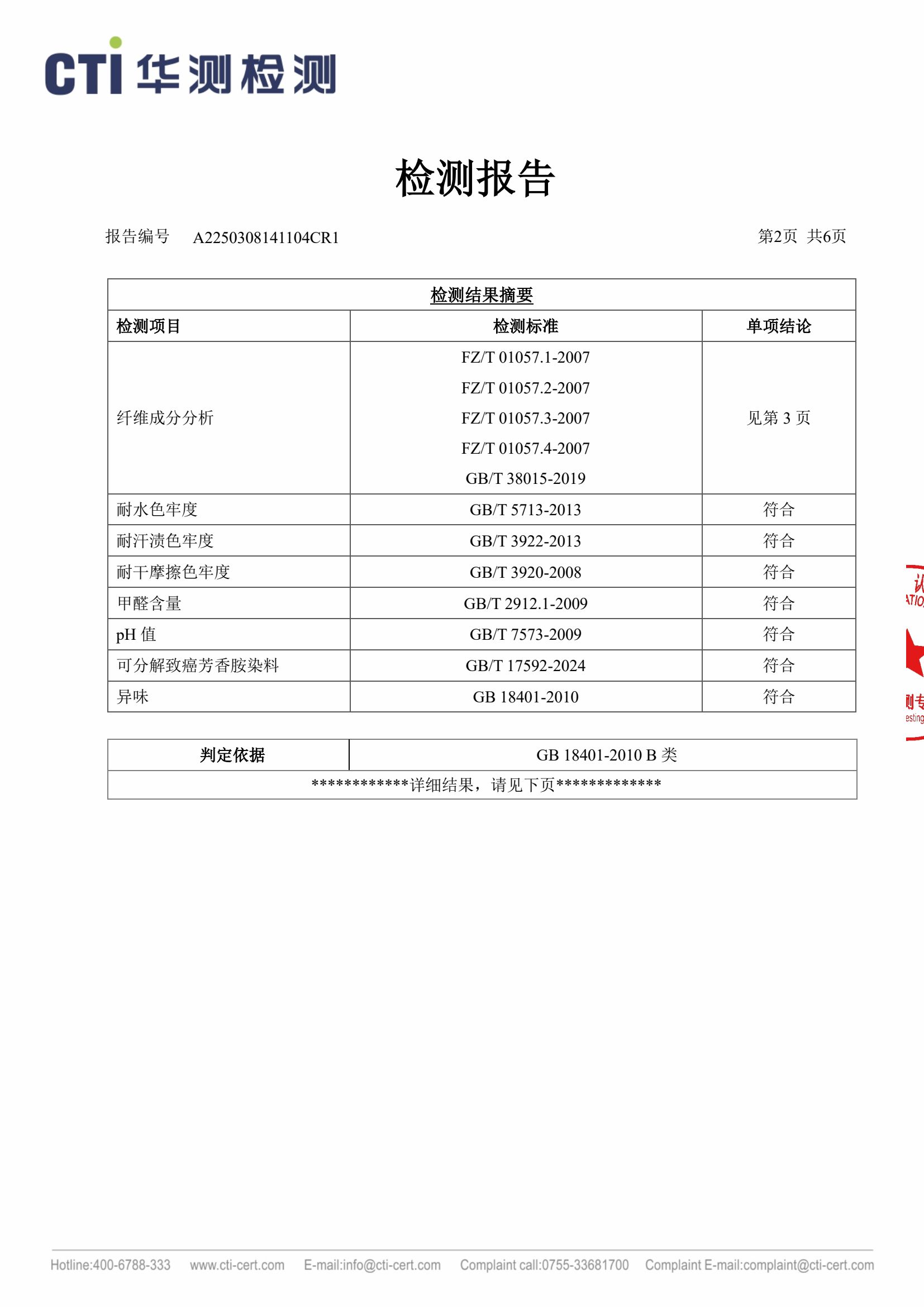
Fabric safety evidence is issued per fabric family. Lihongwear's range is covered by CTI Textile Safety Test Reports issued by Centre Testing International Group Co., Ltd. (CTI Tianjin): report A2250308141104CR1 dated 2025-05-29 covers the full range of men's hoodies, long-sleeve shirts, T-shirts and other garment fabrics; A2250414729101C dated 2025-06-18 covers high-elastic 100% polyester navy knitted fabric; and A2250414729102C dated 2025-06-18 covers Mountain Cotton composite hoodie fabric. All three are tested against GB 18401-2010 Category B and national standards for fiber composition, colour fastness, formaldehyde and decomposable aromatic amine dyes. Production is covered by a six-stage inspection process executing AQL international standards, with 100% manual inspection before shipment.
Can one supplier handle the whole category, or does each product type need a separate vendor?
The seven types — blank solid T-shirts, shirts, polo shirts, 360g hoodies, long-sleeve high-elastic undershirts, casual jackets and long pants — sit inside a single men's basic apparel range, so one supplier relationship can cover an assortment that mixes tops and bottoms. Capacity is documented at 45,000 pieces of knitted and woven garments per month and a daily output of 1,500 pieces, with customization covering fabric weight, size, colour, printing, embroidery LOGO, hangtag, wash label and packaging. Decoration methods available across the range are screen printing, digital direct injection (DTG), embroidery and heat transfer LOGO.
What drives the cost of a custom casual apparel order?
Cost is driven by specification rather than by garment name. The variables that move a quote are the fabric family and weight, the number of decoration placements and the method used, the trim set (hangtag, wash label, packaging), how widely the size curve spreads the order across SKUs, and the quantity ordered per style. The quantity floor matters commercially because custom orders start from 200 pieces per style, while spot goods carry no minimum order and support arbitrary mixed wholesale. Because these variables combine differently for every programme, Lihongwear prices custom orders against a confirmed specification rather than a catalogue list.
How does sampling work before bulk production?
The sample is the approval gate for the whole specification. Fabric weight, garment size, colour, printing, embroidery, hangtag, wash label and packaging are all confirmed at that stage, and the documented custom lead time of 15–25 days is counted from sample confirmation rather than from order placement. That sequencing is why specification changes made after sample approval move the delivery date. Where a buyer cannot attend the factory, remote video inspection is available, and third-party agency on-site sampling inspection can be arranged before shipment.
What are the lead times for stock versus custom orders?
Spot goods ship within 3 days, and standing stock of over 200,000 pieces across more than 50 styles supports mixed wholesale replenishment without a minimum order. Custom orders run 15–25 days from sample confirmation, against a documented capacity of 1,500 pieces per day and 45,000 pieces per month. After-sales is handled by a dedicated order follower with one-to-one contact, inquiry replies within 2 hours on business days, production progress shared through video and photos, and defect returns or exchanges for quality problems handled within 7 days of receipt. Buyers planning a first order can start from the Lihongwear product catalogue and then request samples against a defined specification.
Conclusion: the category is a specification, not a garment name
Custom casual apparel covers seven product types — blank solid T-shirts, shirts, polo shirts, 360g hoodies, long-sleeve high-elastic undershirts, casual jackets and long pants — built from named model series (1901, 1801/1701, 08, 0606, 0829, Comfort Stretch Cotton, Roma Cotton), seven material families (pure cotton, cotton-polyester blend, mountaineering cotton, polyester fiber, spandex, twill, canvas) and documented size curves of XS–5XL, M–4XL and M–3XL.
What separates a good order from a disputed one is whether those layers were fixed before the sample was approved. Buyers who specify series, weight, composition, size curve, decoration and trims in that order get a quotable inquiry, a comparable sample and a 15–25 day production window that holds. Buyers who specify only a garment noun get a quote they cannot verify.
Next step for buyers
Send your product type, model series, fabric weight, size curve and decoration requirements, and Lihongwear will quote against a confirmed specification — with samples available before bulk. Custom orders start from 200 pieces per style; spot goods ship within 3 days with no minimum order.
Website: www.lihongwear.com | Catalogue: Download the product catalogue (PDF)
WhatsApp: +86 13724894849 | Email: lihongwear@gmail.com
Guangzhou Lihong Apparel Trade Co., Ltd. — Room B1052, Unit 217, No. 3 Tangdong East Rd, Tianhe District, Guangzhou
Have Questions or Need More Details?
Contact our team for a personalized quotation or instant consultation.
Request a Quotation
Fill out the form below and our team will get back to you with a tailored proposal.
WhatsApp Direct Chat
Prefer to chat in real-time? Message us on WhatsApp for instant assistance & quick answers.
- Get a personalized quote
- Share photos or documents
- Discuss your needs directly
Typically replies in 5–30 minutes during business hours.