
Cooling Eco Friendly Organic Sanitary Pads: An Explainer for Private-Label Brands
A cooling eco friendly organic sanitary pad is an organic or plant-fibre pad whose design brief adds a controlled cooling sensation to the skin-contact experience. It is not a separate product category, and it is not created by the topsheet alone. What makes the concept real for a private-label brand is a specification in which the cooling formulation, the topsheet and the absorbent core are designed together, and then proven repeatable through sampling and material testing.
That difference matters most at the awareness stage, where brand owners usually meet the idea for the first time. A concept deck can show a cooling pad. Only a fixed specification can be quoted, sampled, tested and produced. This explainer follows the translation path from one to the other, using a project in which a Taiwan-based private-label client took a cooling concept through four rounds of customized sampling and then expanded the initial format into daytime, overnight and extra-long overnight pads and disposable period pants.
New Upward SC (Guangdong) Co., Ltd. is an integrated disposable hygiene product manufacturer and service provider specialising in feminine care, and the supplier behind the Lilimolone pad lines used as examples here. Product and company statements in this article are limited to the supplied product and company records; market figures are third-party estimates and are attributed where they appear.
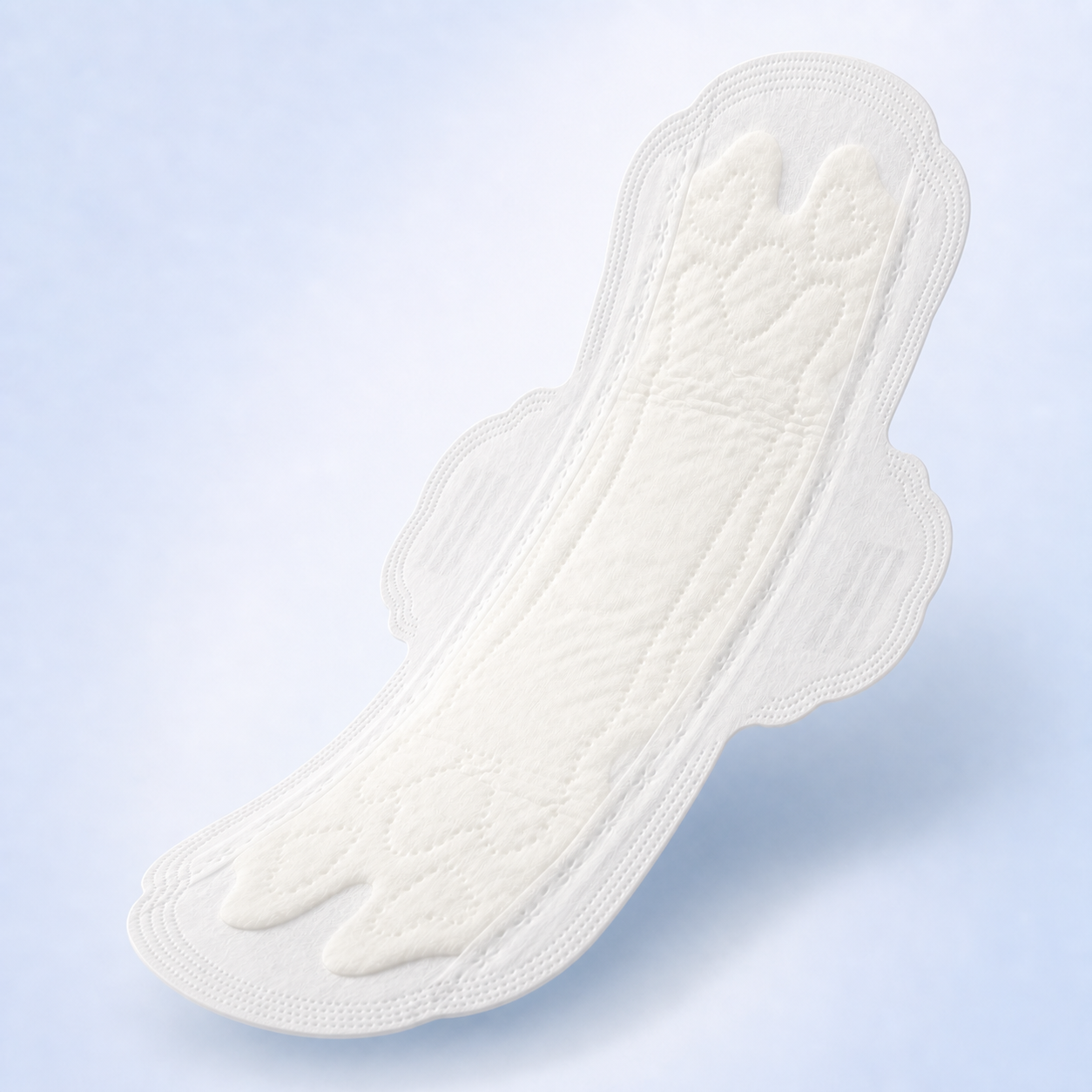
Organic sanitary pad format used as a starting point for private-label cooling pad briefs.
What cooling actually means at product level
Cooling is a sensory attribute of the product. It comes from a customized cooling formulation designed into the pad, and it describes how the pad feels in use. It does not describe a medical function, and it should never be written as one. A brand that converts a cooling sensation into a therapeutic claim creates a compliance problem that no formulation document can resolve.
Because the attribute is sensory, it cannot be specified with a single number the way length or grammage can. It has to be described in a brief — the intended intensity, where the sensation should be noticeable, how long it should remain acceptable in use, and what it must not do to skin comfort — and then confirmed through sampling on the actual topsheet, core and backsheet that will be produced.
This is why three questions usually arrive in the same first technical meeting: which topsheet carries the eco claim, which core protects the absorbency target, and how the cooling formulation behaves on that specific combination. Answering them in isolation tends to produce a sample that fails for a reason nobody can identify.
Why brands are briefing this concept now
Indicative third-party figures show the scale of the category. TechSci Research estimated the global organic sanitary napkins market at USD 3.02 billion in 2025, with a projection of USD 4.51 billion by 2031. Mark & Spark Solutions estimated a 20.1% CAGR for the biodegradable sanitary napkin segment between 2024 and 2030, and Dataintelo reported Asia Pacific holding a 38.6% revenue share of that segment in 2025.
These are estimates, and their definitions of organic differ — one study may count pads only, another all organic period care — so they indicate direction rather than an exact market size. The narrower point they support is commercial: eco-positioned pads are no longer served by a handful of suppliers, so an organic claim on its own competes with many similar claims on the same shelf. A sensory attribute such as cooling is one way a private label separates its line without abandoning the eco position the brand was built on.
The logic is worth stating plainly. The eco claim sets the material family and the certificate scope. The cooling concept sets the sensory experience. A brand needs both statements to be true on the same product, at the same time, with evidence behind each one.
Translating a positioning line into a material brief
Most cooling pad projects begin with a sentence from a marketing brief and end with a bill of materials. The table below maps the sentences that appear most often to the decisions they actually control.
| Positioning statement | Specification decision it controls | What to freeze before sampling | Evidence to request |
|---|---|---|---|
| Organic or eco-friendly | Skin-contact fibre and which layers carry the claim | Fibre type, certificate body and scope, layers covered | GOTS or OCS scope certificate for organic cotton; material specification and test reports for bamboo fibre |
| Cooling sensation | Customized cooling formulation and where it sits in the structure | Intensity target in sensory language, contact with the topsheet, skin-comfort limit | Sampling record and approved reference sample; skin-contact test reports for the non-woven materials used |
| Ultra-thin | Core design and caliper | Absorbency target against thickness | Product test report for the specific format |
| Leak protection | Pulp and SAP core, wings, backsheet | Format-specific absorbency, wing geometry, backsheet type | Product test report and sample evaluation by format |
| Breathable | Backsheet film choice | Breathable PE film or biodegradable film option | Material specification for the film selected |
| A range, not one SKU | Size ladder and packaging | Size list and pack counts, for example 155 mm, 245 mm and 290 mm on the Lilimolone bamboo line | Approved artwork files, size list and pack specifications |
Read the table as a checklist rather than a sequence. A brand that fixes the material family but leaves the cooling target vague will receive samples nobody can judge. A brand that fixes the cooling target but not the certificate scope will receive a product it cannot label as planned.
Topsheet: the layer that decides both feel and claim
The topsheet is the layer in contact with skin, and in eco-positioned lines it usually carries the claim. Two material routes appear in the Lilimolone range. The Lilimolone Ultra-Thin Bamboo Sanitary Pads use a bamboo fibre nonwoven topsheet over a high-absorbency pulp and SAP core with a breathable leak-proof PE film backsheet, and the line covers 155 mm, 245 mm and 290 mm sizes as well as panty liners. The NU07 organic sanitary pad is a winged disposable pad with a 100% organic cotton top sheet over a fluff pulp and SAP core, a breathable PE film or biodegradable film backsheet option, and soft nonwoven side layers and wings.
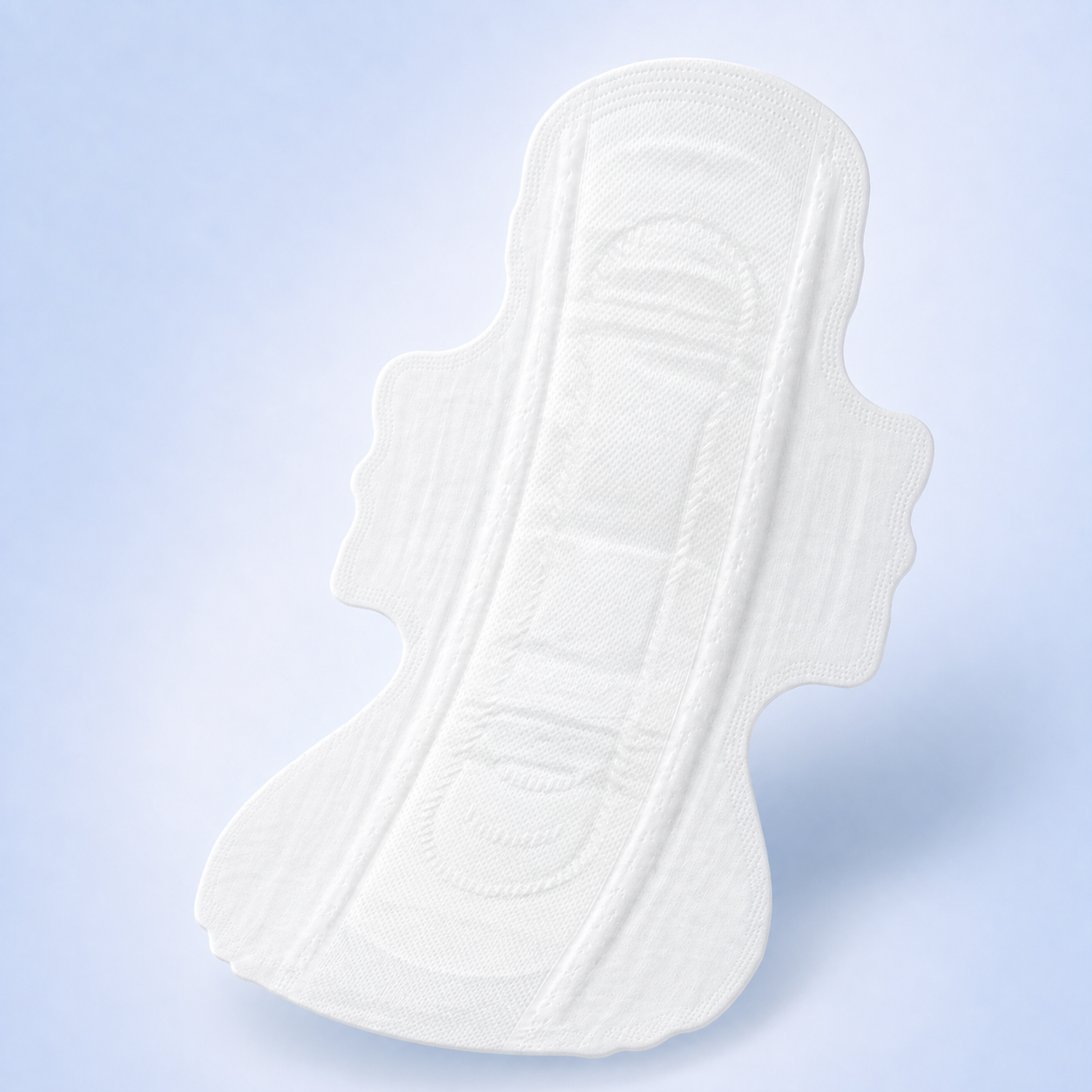
Bamboo fibre nonwoven topsheet route: Lilimolone ultra-thin bamboo sanitary pad in the 290 mm size.
The two routes are not interchangeable claims. Organic cotton is a material-origin claim, and a retail buyer will normally ask for the scope certificate behind it, such as GOTS or OCS documentation covering the material actually used. Bamboo fibre is a different material story with a different evidence file; for bamboo fibre lines, product and material test reports, including antimicrobial activity reports where that property is referenced, do the supporting work. Merging both into one eco sentence is the quickest way to create a labelling problem.
Three decision rules keep the choice practical:
- Claim type first. If the retail plan depends on an organic material certificate, the fibre choice follows the certificate scope, not the other way around.
- Hand-feel target second. The bamboo fibre topsheet is described as providing a naturally soft touch, while the organic cotton top layer provides soft skin contact; both are comfort routes, supported by different documents.
- Coverage third. Confirm which layers the claim actually covers, because a certified topsheet does not certify the core, the backsheet or the wrapper.
For a cooling project there is a fourth consideration: the formulation must be developed against the topsheet that will actually be used. A cooling target validated on one nonwoven is not transferable evidence for another, even when both are white and soft to the touch.
Absorbent core: where cooling is protected or lost
Both routes described above use a pulp and SAP absorbent core. The core supports daily comfort and leak protection, and the high-absorbency core helps reduce leakage and rewet. In an ultra-thin format, the core is also the component most likely to undermine the sensory concept, because a topsheet that stays wet changes how the whole product feels, whatever the formulation contributes.
That is the practical reason to settle absorbency and thickness together. A brief that asks for the thinnest possible pad and the highest absorbency in the same line item is asking the supplier to trade one against the other. The more useful brief states the flow stage each format has to cover and lets the core design follow. Daytime use, overnight use and extra-long overnight use are different absorbency jobs, and test evidence should be attached to the specific format rather than to the line as a whole.
The cooling formulation as a controlled variable
In a private-label cooling project, the formulation is a designed component, not an ingredient added at the end. Before sampling starts, the brief has to close five points so that the samples can be judged consistently.
- Intensity. A sensory description agreed between brand and supplier, so that a reviewer has a reference point beyond personal preference.
- Placement. Which part of the structure carries the formulation, and how that position interacts with the topsheet and the core.
- Compatibility. How the formulation behaves with the chosen fibre, the core and the backsheet adhesive system.
- Reproducibility. Whether successive lots deliver the same sensation, which only becomes visible once more than one production run exists.
- Skin contact. A formulation change is also a skin-contact change, so non-woven skin sensitization and in vitro cytotoxicity testing belongs in the file for the materials used.
None of these can be closed in a single sample. Intensity is a judgement, placement is a design choice, compatibility shows up over time, and reproducibility requires repeated lots. That is the reason cooling projects run on sampling rounds instead of one approval event.

Sample development and material review take place in the R&D laboratory before a cooling formulation is approved.
Four rounds of customized sampling: what was being balanced
In the Taiwan private-label project, the cooling concept passed through four rounds of customized sampling before the range moved forward. The rounds existed to balance three objectives that pull in different directions: cooling sensation, comfort, and consistent quality.
The tension is easy to describe. Increasing the cooling sensation is the simplest way to make a sample feel new, and the fastest way to make it uncomfortable or unstable. Optimising comfort alone can flatten the sensation until the concept disappears. Optimising for one impressive sample can produce a result that cannot be repeated at production scale. A round-based process separates those questions so that each one is answered before the next is judged.
A multi-round cycle of this kind normally works through four questions in order:
- Sensory acceptance. Is the cooling sensation at the agreed intensity on the agreed topsheet?
- Comfort boundary. Does the sensation stay acceptable in use, and does the pad remain soft and dry-feeling?
- Reproducibility. Do successive samples behave the same way with the same materials and process settings?
- Pre-production approval. Are formulation, materials, size, absorbency and packaging frozen in one approved reference?
The buyer-side lesson is to ask for the sampling record, not only the final sample. A record showing what changed between rounds, which parameters were frozen, and which test reports were issued on which materials is what allows a brand to brief a second format later without restarting the entire development.
From one format to a range: daytime, overnight, extra-long and period pants
The initial product format did not stay alone. The project scope expanded to include daytime pads, overnight pads, extra-long overnight pads and disposable period pants. That expansion is a normal second step once a concept has been validated: a single SKU proves the idea, and a range proves the idea can carry a shelf.
| Format | Job it performs in the range | Specification focus |
|---|---|---|
| Panty liner | Light-flow and daily coverage | Thin caliper and topsheet hand-feel |
| Daytime pad | Commuting, school, work and daytime flow | Absorbency for daytime flow with comfort over several hours |
| Overnight pad | Sleep and lying-down use | Length and coverage, leak protection, backsheet security |
| Extra-long overnight pad | Heavy-flow days and movement during sleep | Maximum coverage in the pad ladder, wing and adhesive performance |
| Disposable period pants | Overnight protection, heavy-flow days and situations where changing is inconvenient | Full-coverage construction, documented as its own product |
Each format brings its own specification work. Length, absorbency target, wing design, wrapper and pack count all change, and each combination needs its own approved sample. Period pants are a different construction from a pad, built around a full-coverage design for overnight protection and heavy-flow days, so they should be documented as a separate product rather than as a pad variant.
There is a range-level question that brands often miss: the cooling sensation has to stay consistent across the ladder. Because a daytime pad and an extra-long overnight pad differ in length and core volume, the same formulation target does not automatically produce the same sensation in use. Consistency across formats should be an explicit sampling objective, not an assumption.
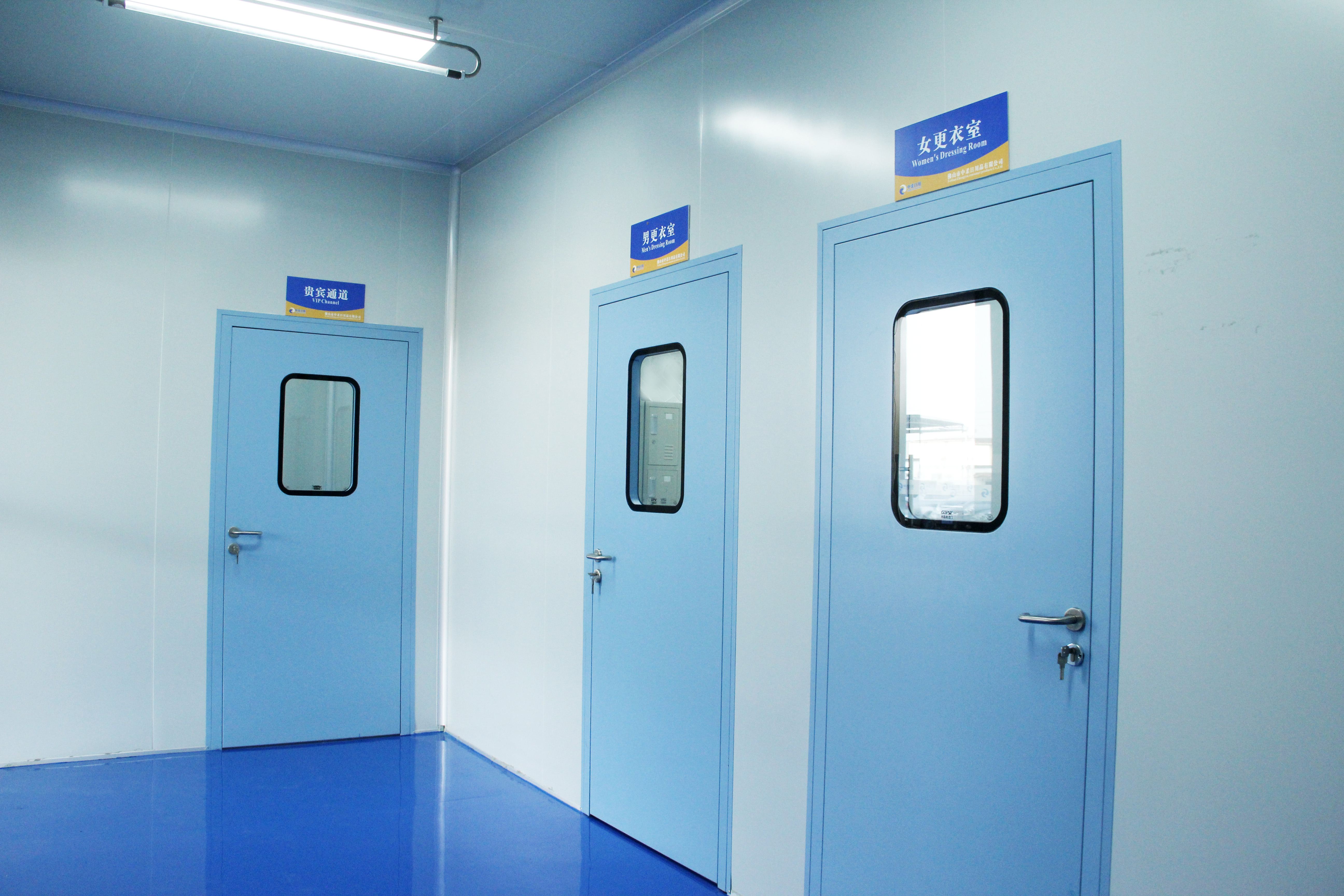
Controlled workshop entry supports the batch consistency a multi-format cooling range depends on.
The evidence pack behind the claim
Claims survive on documents. For cooling organic pads, the file normally has four parts: product test reports for each format, skin-contact evidence for the non-woven materials, material and chain-of-custody certificates where a material claim is made, and market-entry documents for the destination.
Skin-contact evidence is usually where private-label brands need the most explanation. Two test categories come up repeatedly. Skin sensitization testing examines the potential for a skin reaction to a material that contacts skin. In vitro cytotoxicity testing assesses cell response to material extracts in a laboratory setting. Both are material-level assessments: they describe the safety profile of the material tested, they do not turn a pad into a medical device, and a report issued on one nonwoven does not automatically cover a different nonwoven, a different formulation or a different finished format.
For organic cotton lines, request the GOTS or OCS scope certificate and check which material and which supply-chain stage it covers. For pulp, FSC chain-of-custody documentation supports an FSC mix claim where that claim is used. For bamboo fibre lines, product and material test reports carry the file, and where antimicrobial activity is referenced the scope should name both the material and the test — for example Report No. 2025FM19954R01E for bamboo fibre sanitary pad surface-layer antimicrobial activity, Report No. 210285558 for bamboo fibre spunlace nonwoven antimicrobial activity, and Report No. 260059776 for the Lilimolone ultra-thin bamboo sanitary pads. An antimicrobial activity result is a material test result; it is not a licence for a medical or disease-prevention claim.
Market-entry documents depend on where the product is sold. For EU support, references can include a CE Declaration of Conformity and an EU Representative Agreement; for Muslim markets, a Halal certificate where applicable. Sanitary towels and tampons are classified under HS code 9619.00, which is worth confirming with the freight forwarder before the first shipment. Local requirements vary by market, and buyers should confirm them with their importer or compliance adviser rather than relying on a supplier statement alone.
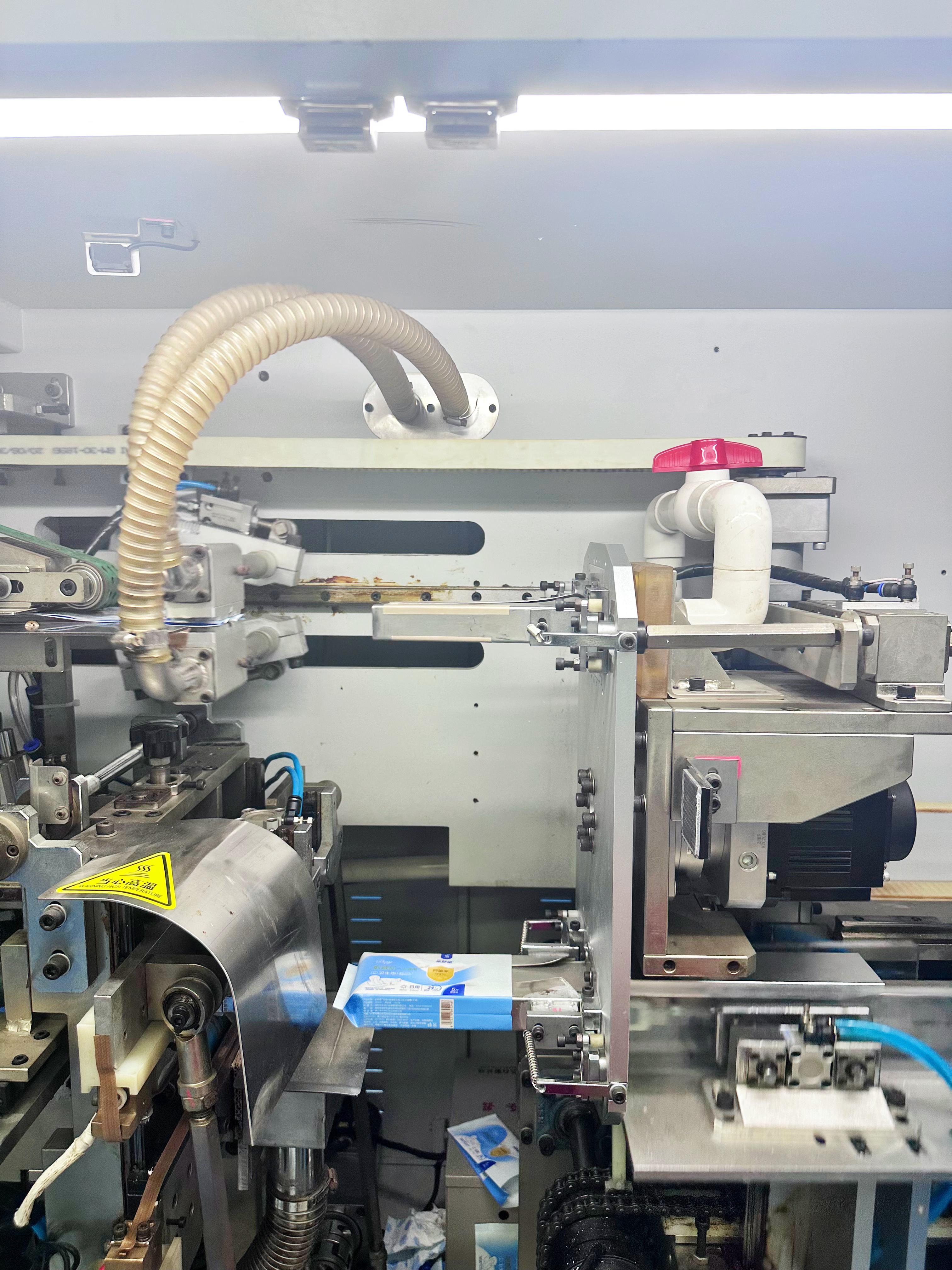
Production line in the New Upward facility, where approved samples move into repeat production.
How to brief a cooling organic pad project, step by step
- Fix the market and the claim language first. Decide which claims will appear on pack, in which language, and under which market rules. Every material and test decision downstream follows this.
- Choose the material family and its certificate scope. Organic cotton with a GOTS or OCS scope certificate, or bamboo fibre with its material and product reports. State which layers the claim covers.
- Define the format ladder. Daytime, overnight, extra-long overnight, panty liner and period pants, plus which of them launch first and which follow.
- Write the cooling target in sensory language. Intensity, location, comfort limit, and what must not change. A target the sampler cannot act on produces samples the brand cannot judge.
- Run gated sampling and freeze an approved reference. Formulation, materials, size, absorbency and artwork should all be fixed in the same approved sample.
- Lock the evidence pack and the QC plan before mass production. Test reports by format, certificates by material, packaging proofs, and a pre-shipment inspection arrangement.
New Upward SC (Guangdong) Co., Ltd. operates a 200,000 m² manufacturing facility with an annual production capacity of 5,000,000,000 pads and an R&D team of more than 10 engineers, and supports private-label buyers through material selection, size and absorbency planning, sample development, packaging customization, documentation collection and production coordination. The company serves markets in Europe, North America, the Middle East, Africa, Southeast Asia, Central Asia and South America, and its main product list includes eco-friendly organic sanitary pads, biodegradable organic sanitary pads, organic cotton sanitary pads, organic bamboo sanitary pads, ultra-thin organic sanitary pads, breathable organic sanitary pads, night menstrual organic sanitary pads, day use organic sanitary pads and organic panty liner sanitary pads.
Limits worth writing into the brief
- Cooling is sensory. Do not describe it as pain relief, infection control or any other therapeutic effect.
- Organic and biodegradable are separate claims. Organic cotton concerns material origin; biodegradability concerns material breakdown and needs its own supporting evidence.
- Every test report has a scope. Material, sample identity, laboratory, method and date all matter, and a report should be read against the product it names.
- An approved sample is a reference, not a guarantee. Batch consistency depends on process control and inspection, which is why the QC plan is part of the brief.
- Market size figures are third-party estimates with different definitions. They describe a category, not a supplier's performance.
Frequently asked questions
Which documents should a private-label brand hold before listing a cooling organic sanitary pad?
At minimum: product test reports for the specific format, non-woven skin-contact evidence such as skin sensitization and in vitro cytotoxicity testing on the materials used, material certificates for any material claim (GOTS or OCS for organic cotton, FSC chain of custody for FSC mix pulp), and antimicrobial activity report references where bamboo fibre antimicrobial properties are cited. For export, references can include a CE Declaration of Conformity and EU Representative Agreement for EU support, and a Halal certificate where applicable to the market. Check the sample identity, laboratory, method and validity on every document.
Can a cooling formulation be combined with both organic cotton and bamboo fibre topsheets?
Yes, but each combination is developed and validated separately. The formulation has to be matched to the actual topsheet, because bamboo fibre nonwoven and 100% organic cotton have different surface behaviour and different claim files behind them. A cooling result confirmed on one topsheet is not transferable evidence for the other, and the approved sample should always name the material it was built on.
What drives cost in a cooling organic pad project?
Cost is driven by material family and certificate scope, core design and absorbency target, formulation development and the number of sampling rounds, packaging structure, order quantity, and the testing and documentation package required for the destination market. Quotations are only comparable once size, thickness, topsheet, absorbent core, SAP level, packaging type, order quantity, certificate requirements, carton quantity and shipment terms are fixed. A lower price quoted against a different specification is not a lower price for the same product.
Why does a cooling project need several rounds of sampling instead of one?
Because cooling sensation, comfort and consistent quality conflict with each other. A single sample can look convincing while hiding a formulation that cannot be repeated at production scale, or a sensation that becomes uncomfortable after extended wear. The Taiwan private-label project used four rounds of customized sampling to balance those three objectives, and the rounds also produced the frozen reference — formulation, materials, size and absorbency — that later formats could be briefed against.
How does a private-label brand start, and what information speeds up the first response?
Send the target market, the intended format ladder, the preferred material family, the cooling intent in sensory terms, pack counts, expected order quantity and the certificate or report requirements for that market. With those inputs a supplier can return product options, sample direction, packaging communication and available document references in one round instead of several. Sample requests and specification questions for cooling organic pad projects can be sent to info@newupward.com or +86 157-9847-3913.
Conclusion
A cooling eco friendly organic sanitary pad is a specification problem before it is a marketing idea. Once the topsheet, the core, the formulation target and the evidence file are fixed, the concept can be sampled, tested, quoted and produced — and expanded from one format into a range without restarting the work. The Taiwan project described here shows the sequence in practice: four rounds of customized sampling to balance cooling sensation, comfort and consistent quality, followed by a format ladder covering daytime, overnight, extra-long overnight pads and disposable period pants.
For brands still at the research stage, the next useful step is a written brief rather than a price request. A brief that states the market, the material family, the format ladder, the cooling intent and the documents required will produce comparable samples and comparable quotations, and it will make the evidence conversation much shorter when a retail buyer asks for the file.
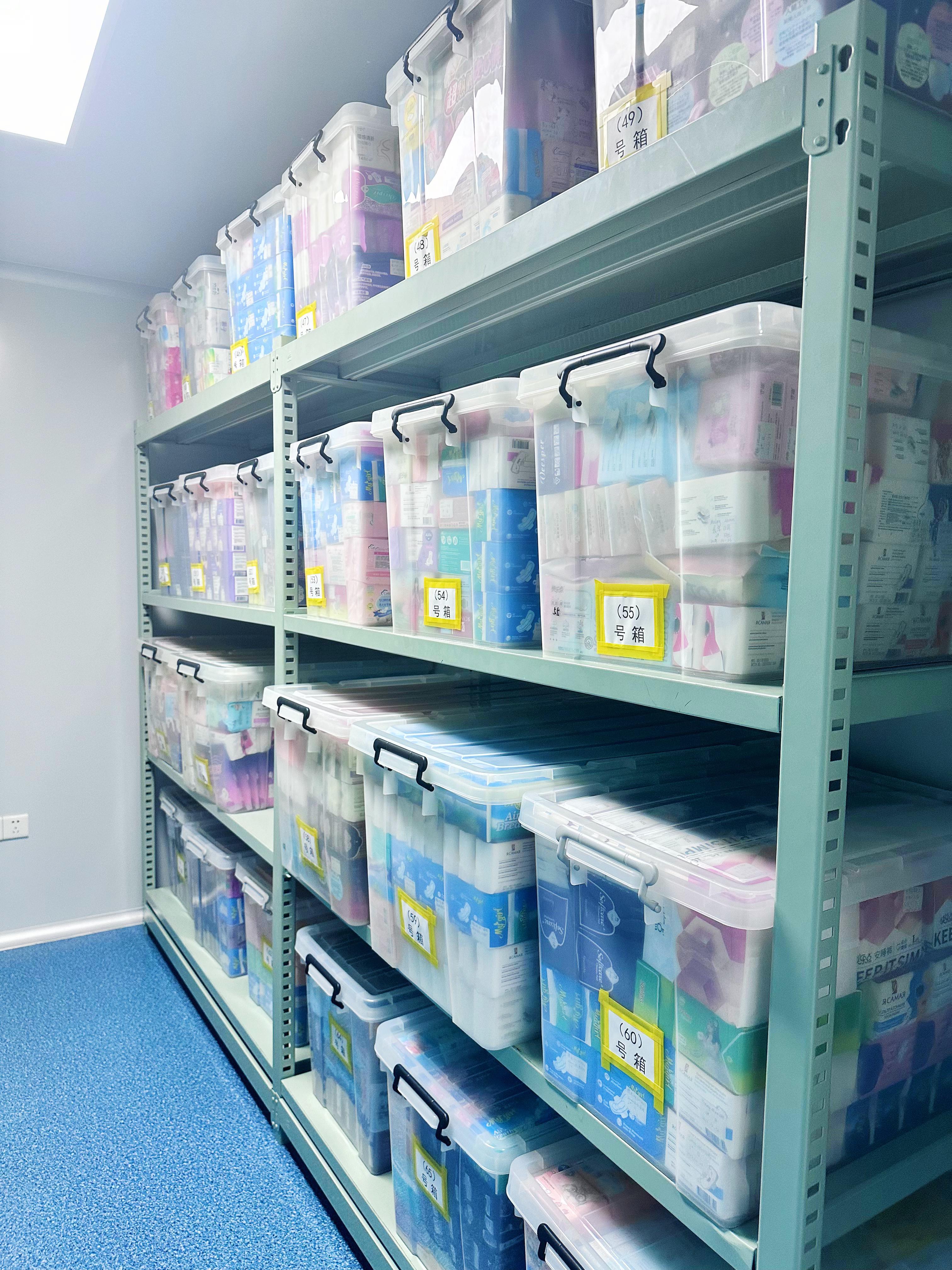
Sample review before approval: the reference sample is what later formats are benchmarked against.
To review the full product structure before writing a brief, the sanitary pad catalogue is available for download: E-catalog of sanitary pads — New Upward.
Have Questions or Need More Details?
Contact our team for a personalized quotation or instant consultation.
Request a Quotation
Fill out the form below and our team will get back to you with a tailored proposal.
WhatsApp Direct Chat
Prefer to chat in real-time? Message us on WhatsApp for instant assistance & quick answers.
- Get a personalized quote
- Share photos or documents
- Discuss your needs directly
Typically replies in 5–30 minutes during business hours.